
Sponsored

JBee

Well-known member
First Name
JB
Joined
Nov 22, 2019
Threads
18
Messages
4,913
Reaction score
6,362
Location
Australia
Vehicles
Cybertruck
Occupation
. Professional Hobbyist
Country flag
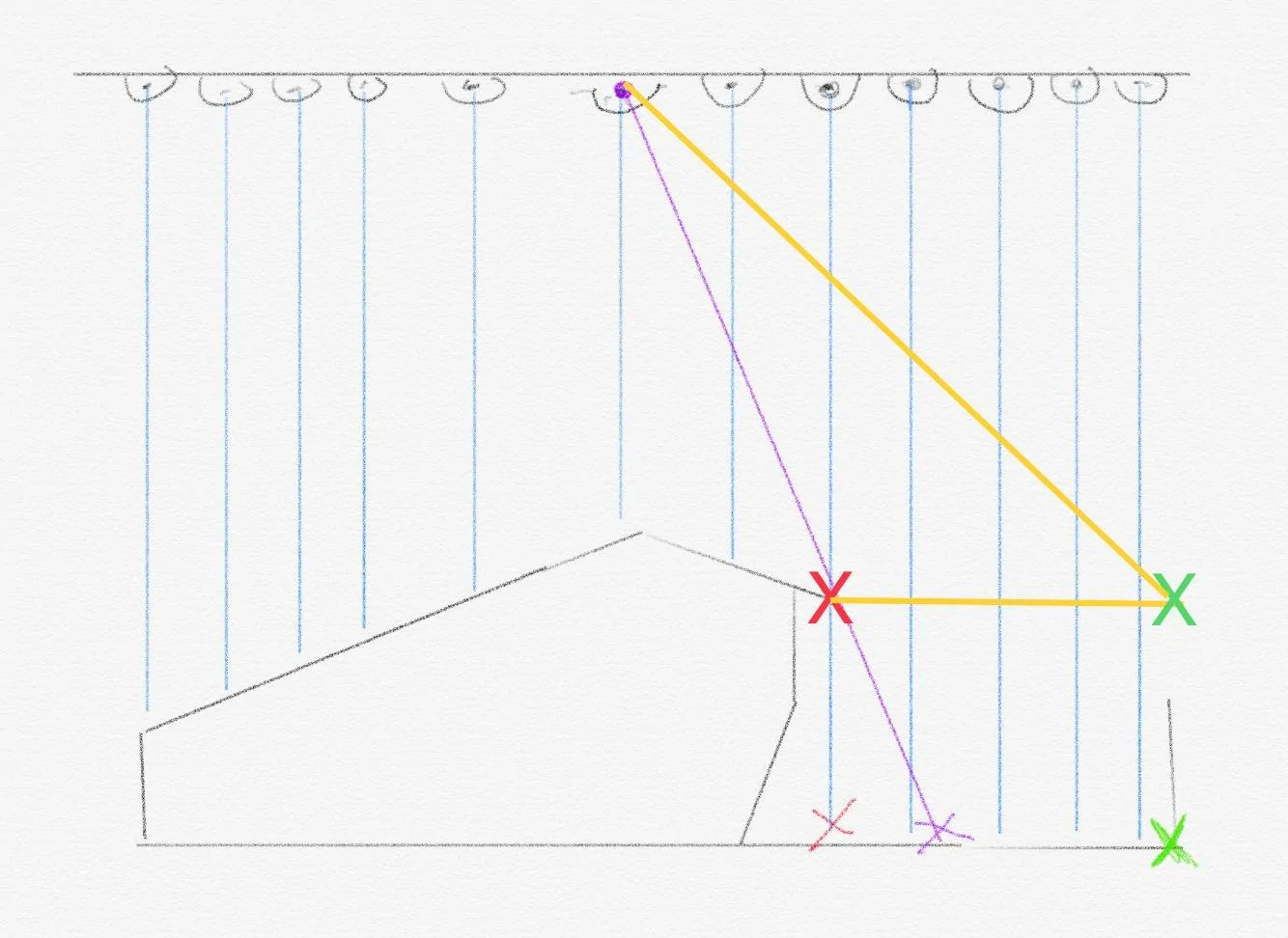
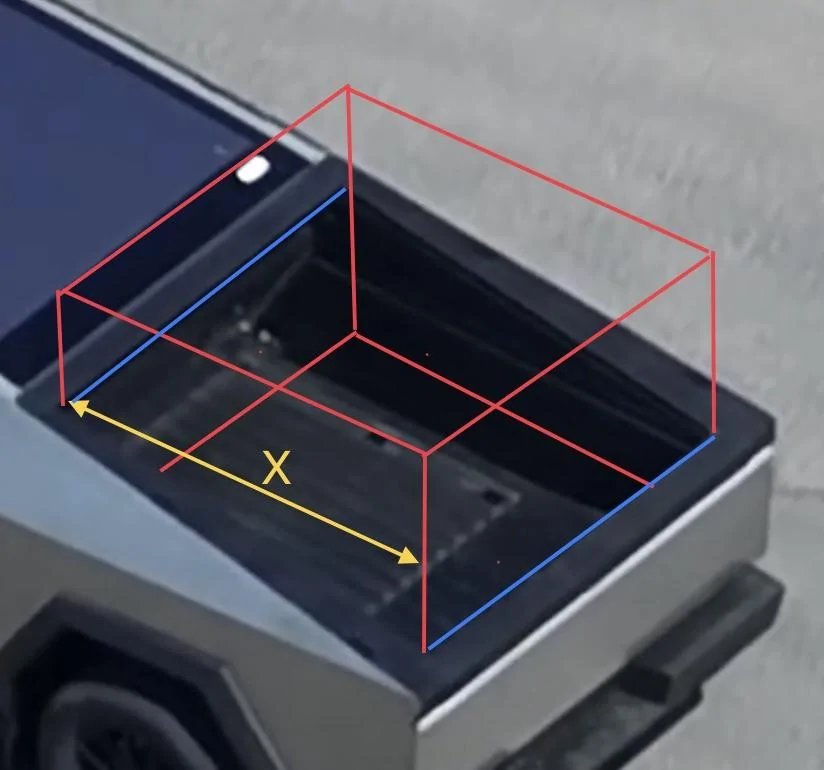
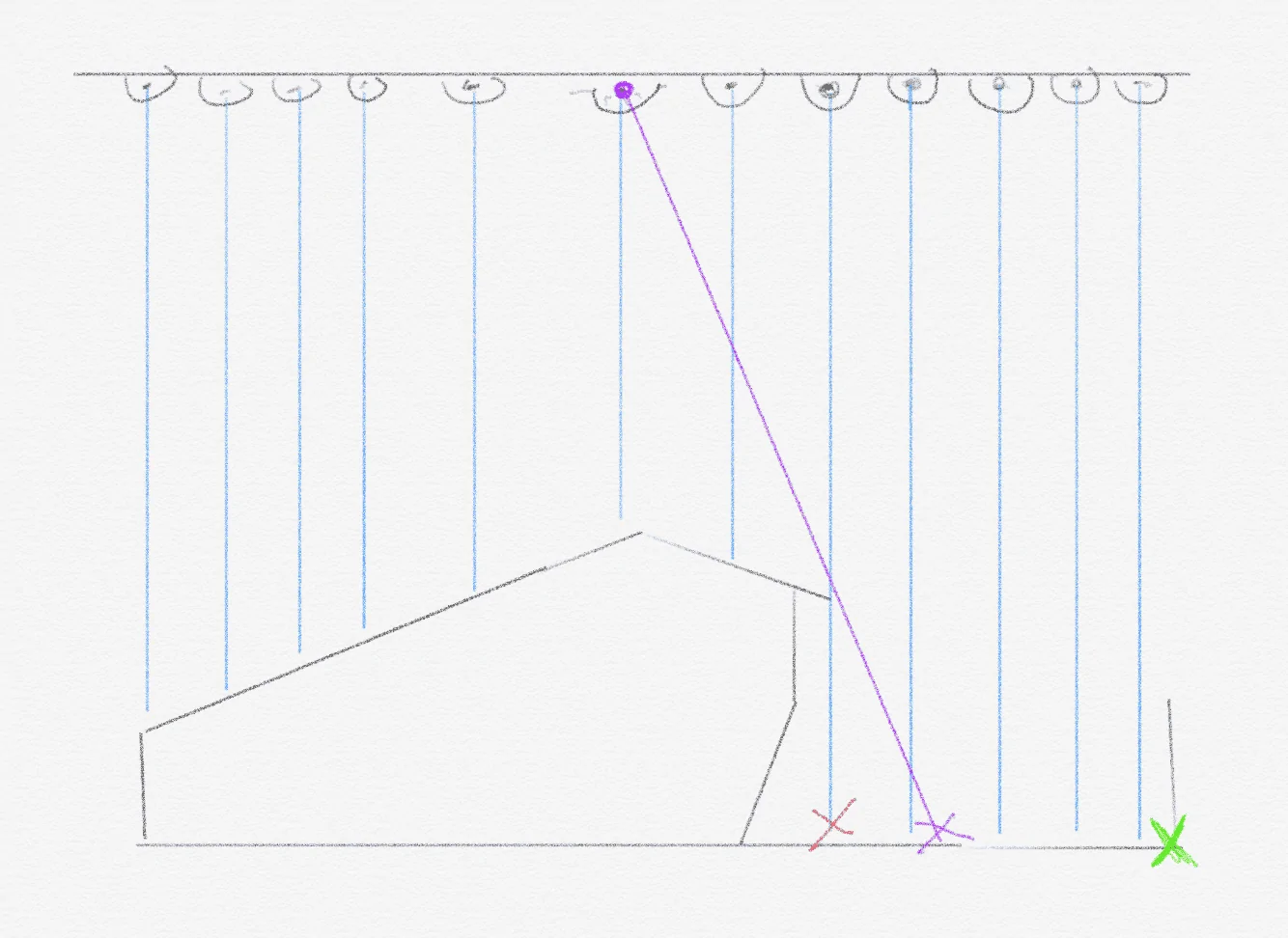
In order to get accurate images for measuring obscured objects across multiple heights you’d need a series of cameras taking images in sync, then your need to computationally combine those images.

The camera over the center of the cab literally cannot see the red X. There is no “bend light” lens that would allow this. You may have a very accurate measurement from the purple X to the green X. The purple camera literally cannot see the red X which is the actual endpoint we care about.

1680478590355.png
Can you redo the drawing and place the camera 3x further away? Then 5x?
Sponsored


Dusty

Well-known member
First Name
Mike
Joined
Jul 29, 2021
Threads
7
Messages
704
Reaction score
2,220
Location
Lorton VA
Vehicles
2023 Model Y Performance
Occupation
Creator
Country flag
@cvalue13 Hat tip. Nice logical walkthrough and elbow grease. Thanks for that!

Glad to see i did 1/3 the work and got the same result on figuring out the length between 220-225 inches!

*Note: just Injured shoulder patting self on the back

I think the length will be one of the big surprises on announcement. Elon will say "...the best part is no part. We got rid of length and weight we didn't need, yet still beat the competition in capacity and cargo dimensions."
 

Ogre

Well-known member
First Name
Dennis
Joined
Jul 3, 2021
Threads
166
Messages
10,735
Reaction score
27,050
Location
Ogregon
Vehicles
Model Y
Country flag
Can you redo the drawing and place the camera 3x further away? Then 5x?
How high do you think the roof in the crash test center is? And the scaffolding the camera is mounted on?

You know what I’m getting at here.
 
OP
OP
cvalue13

cvalue13

Well-known member
Joined
Aug 17, 2022
Threads
74
Messages
7,153
Reaction score
13,769
Location
Austin, TX
Vehicles
F150L
Occupation
Fun-employed
Country flag
The camera over the center of the cab literally cannot see the red X.
Ok this is at least least part of the miscommunication

Of course it can’t see your red X. But
what it can see, is the exact point in space that is directly above your red X. Put differently:

Tesla Cybertruck Crash Test Video Measurements For Cybertruck Dimensions 87935258-0CB9-4E47-9427-102630601955


I wasn’t measuring the bed floor. I was measuring the length in space directly above the edge of the sill, to the place in space on the same plane directly above the inner edge of the tailgate - which by necessity of geometry measures - in real world - an identical space directly below this floating plane.


Tesla Cybertruck Crash Test Video Measurements For Cybertruck Dimensions FC46D73A-8BB2-49F5-A28B-69DE7BE52A2F


Any error from radial distortion in the above would come from the tailgate edge of the measurement (furthest from camera center), not at the sill edge (nearest camera center).

But, where we depart, is that you don’t believe my understanding of lenses, focal lengths, distance from object, and the purposes of these videos.

I know theses cameras to be set up as follows:

Tesla Cybertruck Crash Test Video Measurements For Cybertruck Dimensions 35035021-E08C-4FF2-A3C2-8D1AD124E0DB


You keep implicitly assuming in all your comments that these cameras are set up as follows:

Tesla Cybertruck Crash Test Video Measurements For Cybertruck Dimensions 75EADEA2-A0FC-4386-9E93-48EDAB4C7859


The difference in size is likely due to the camera angle.
See two cartoons immediately above.

You are wrong, at least to any degree that makes radial distortion the source of any material errors in my measurements rather than measure point selection.

You also don’t appear to follow the math behind your own point.

I’ll do only breadcrumbs:

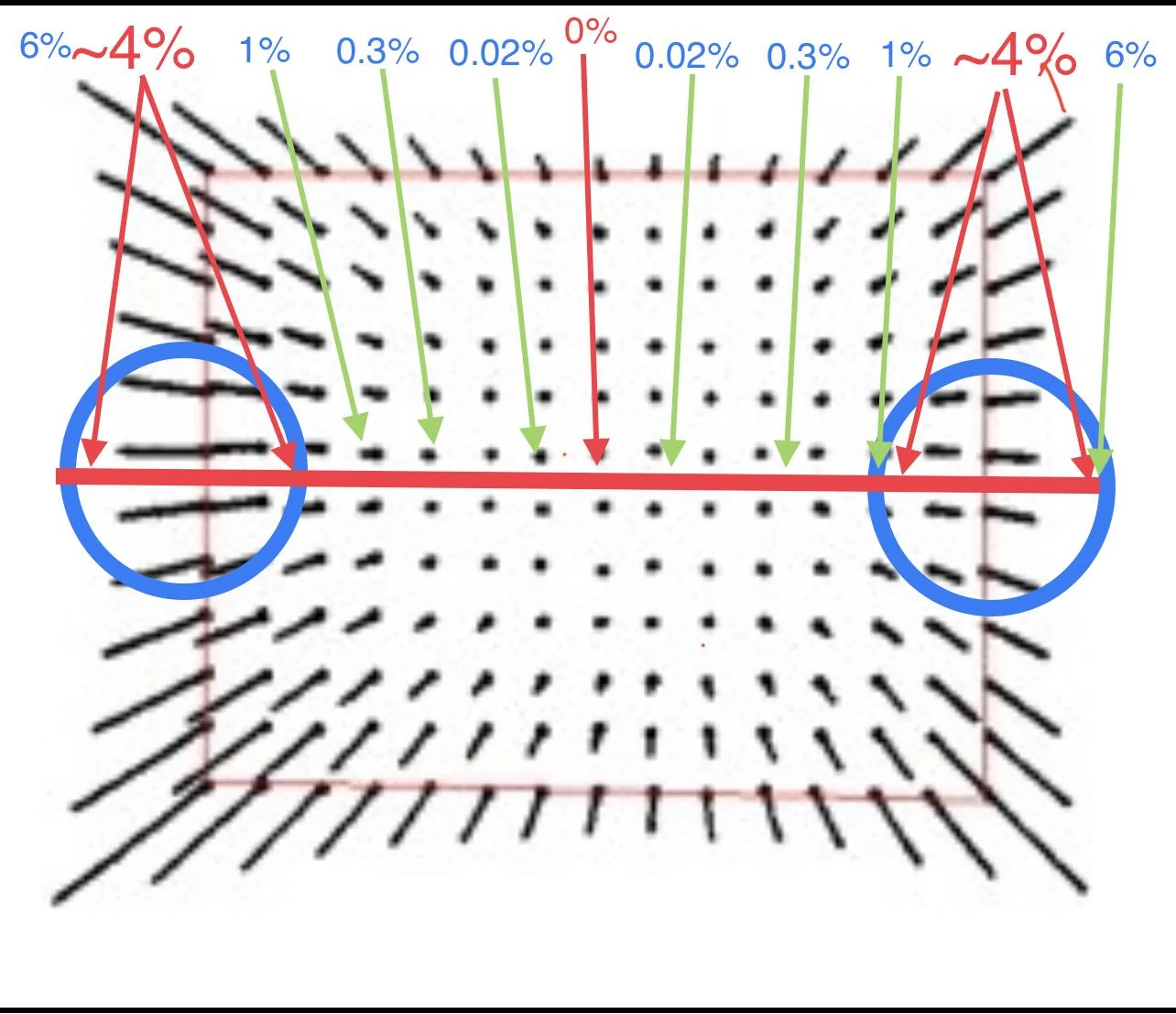
(1) the degree of radial distortion, if any, in the measurement across the rim is not a consistent error, but instead an average of an infinite number of fractionally increasing error rate along the line in question

(2) so let’s assume your (incorrect) 4% (I already stated the correct % above) - this is not a flat 4% across the measurement, but instead the average % of error across the length of measure

(3) even if material radial distortion exists in the photo at a rate that causes an averafe 4% error at that rear wheel area, it does not mean the entirety of the photo is 4% distorted: it’s actually exactly zero at center frame, increasing non-linearly outward toward from center to greater degrees.

(thank gawd I have this cartoon or I’d never explain this math from my iPHone keyboard)

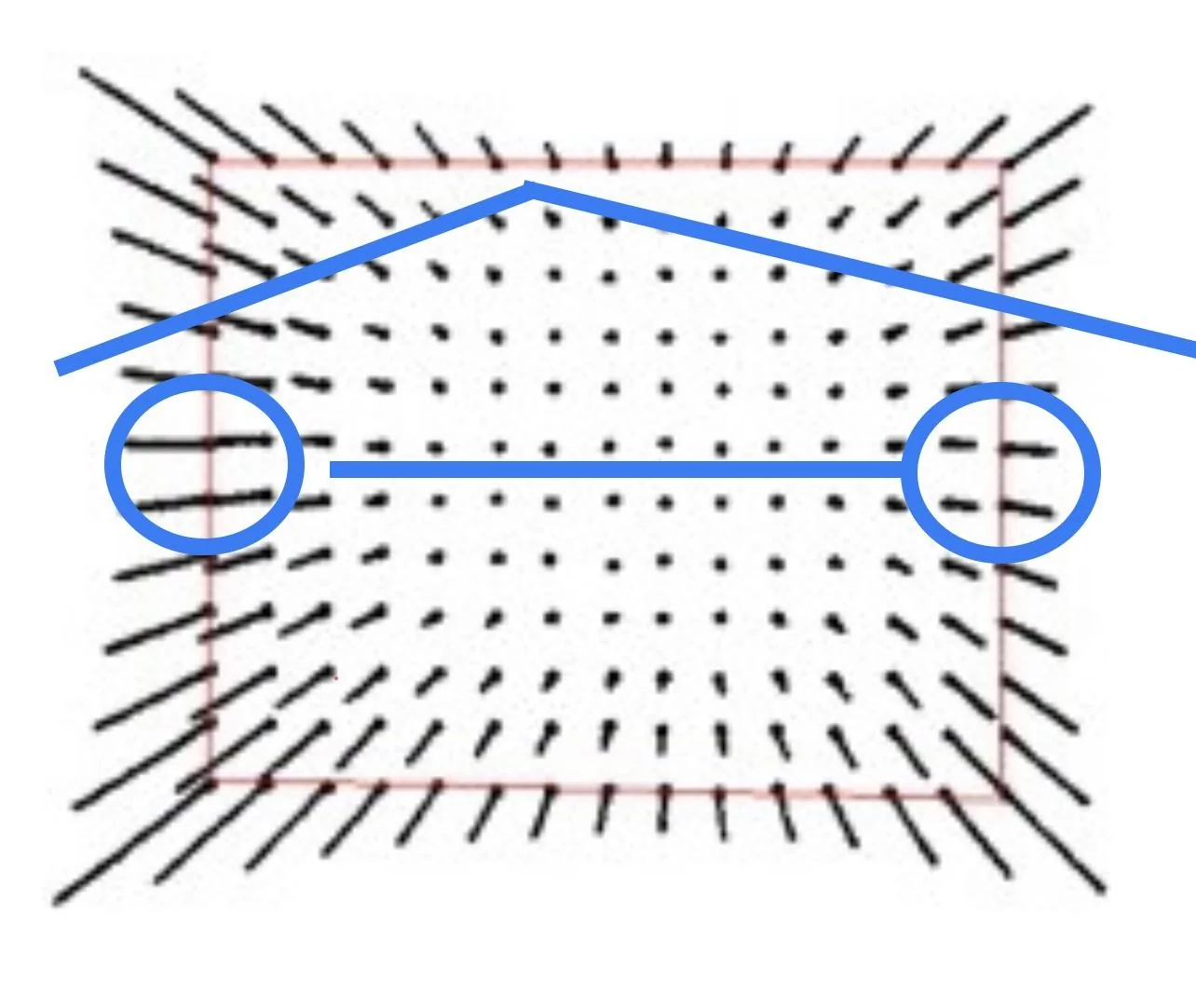
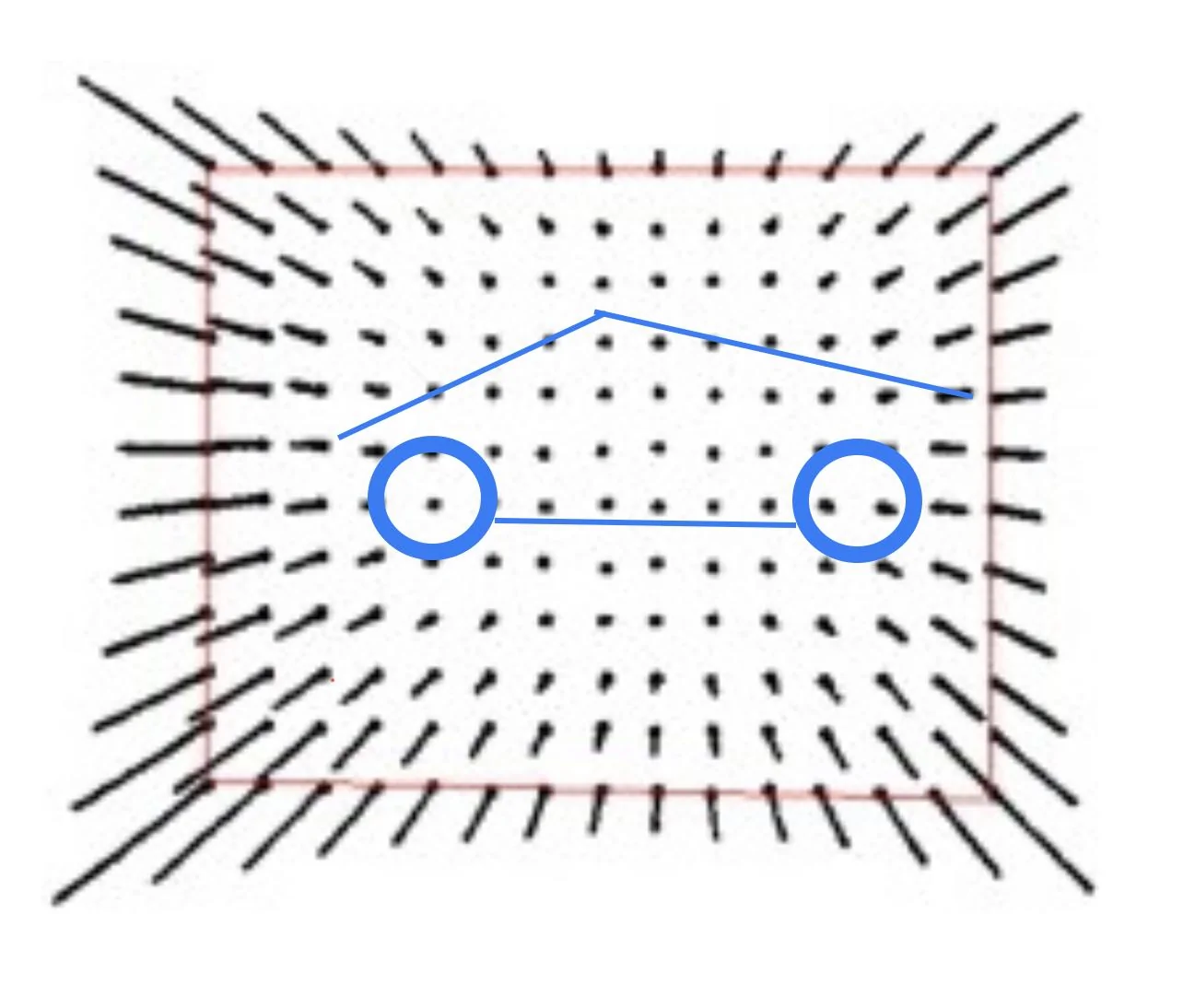
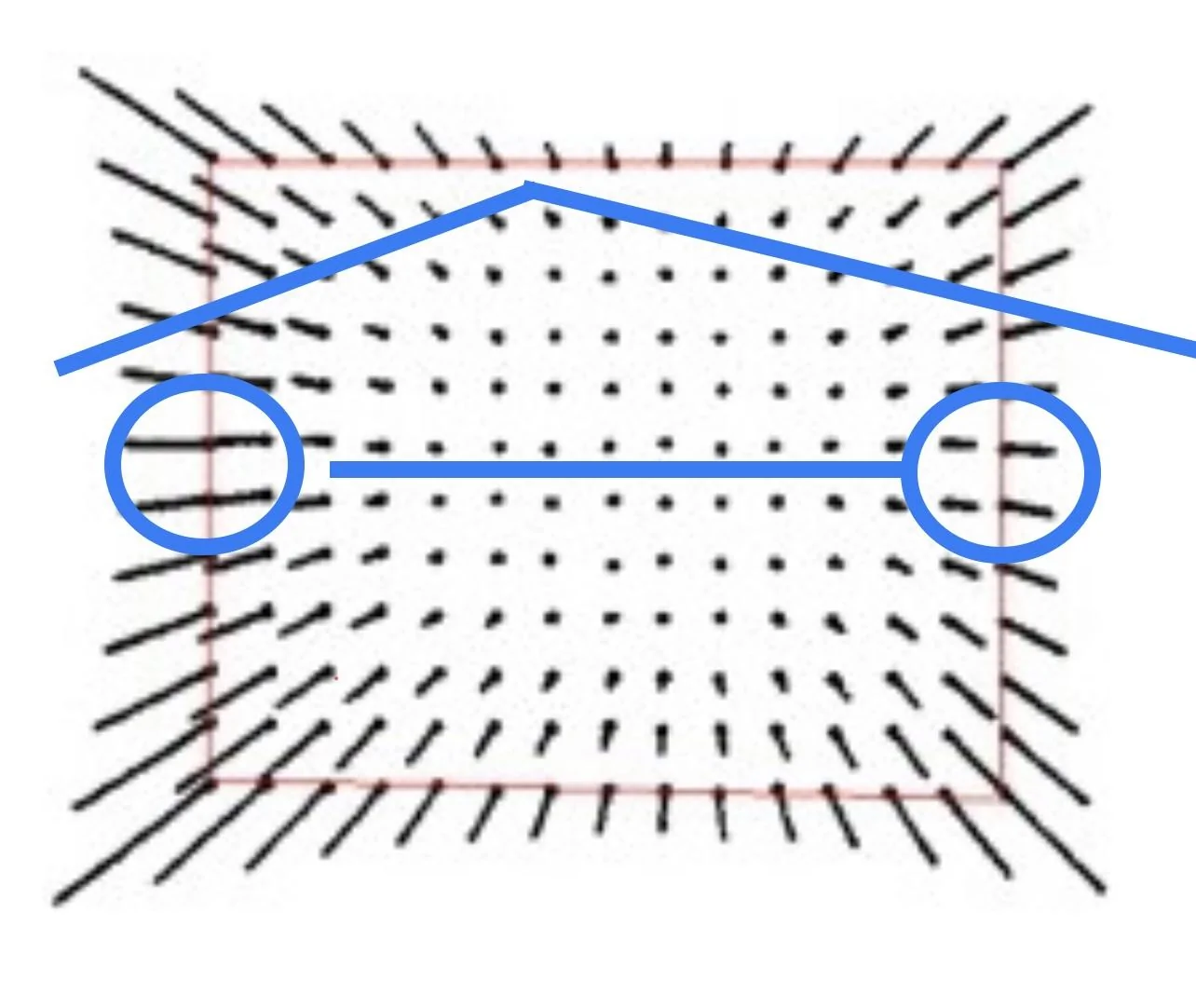
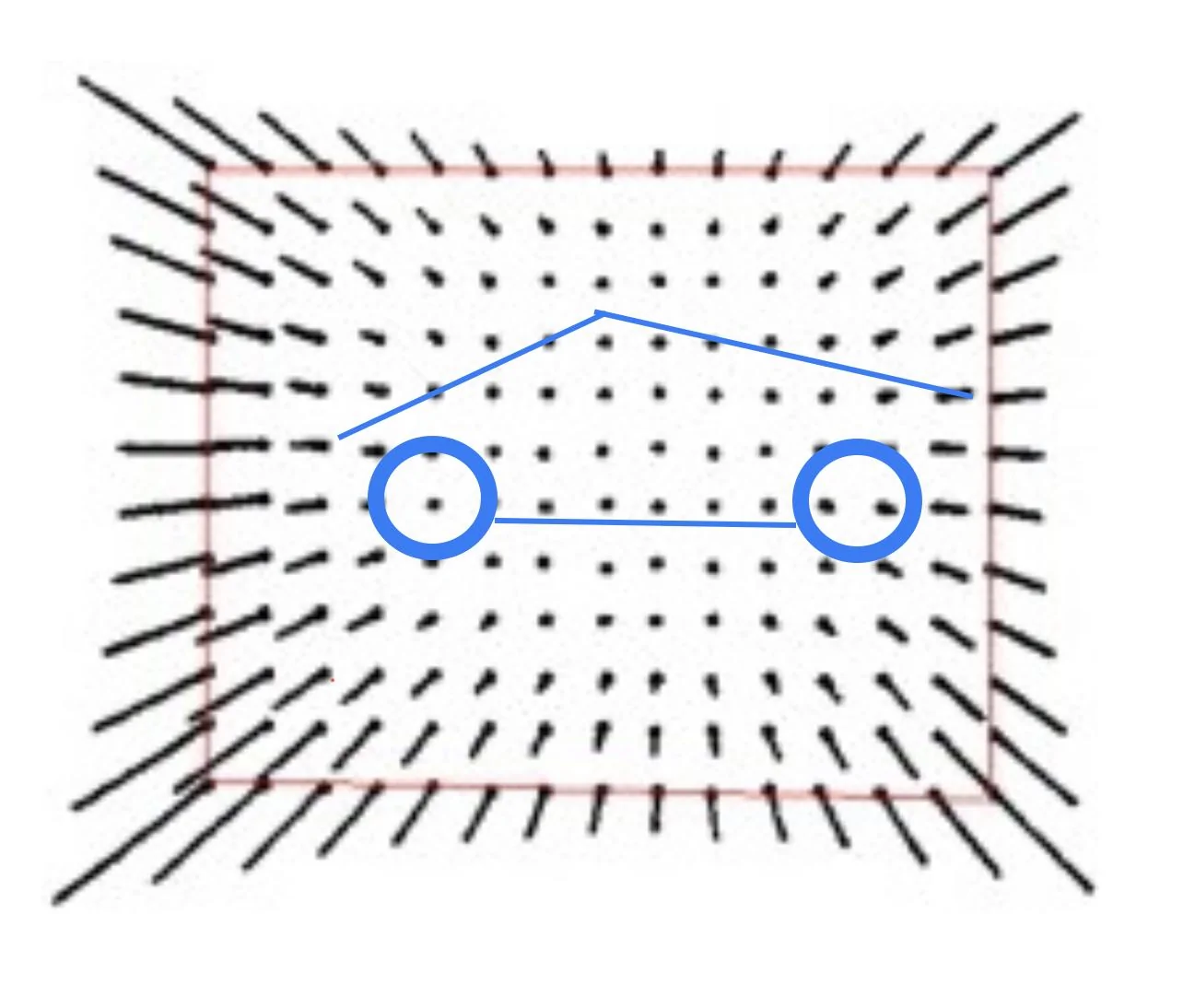
Tesla Cybertruck Crash Test Video Measurements For Cybertruck Dimensions 19A31859-963D-4E90-A03E-2D2D2F9D4E7E


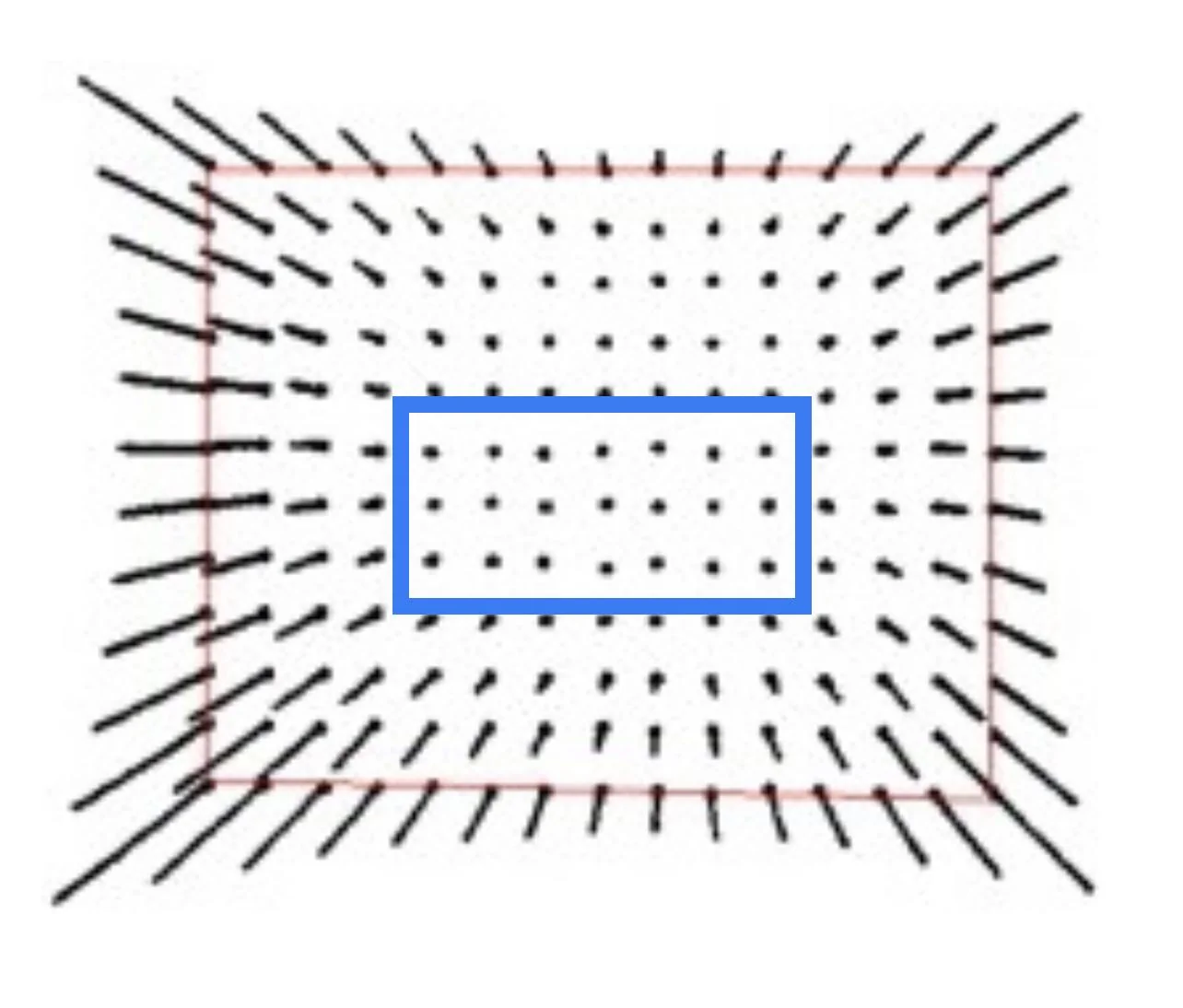
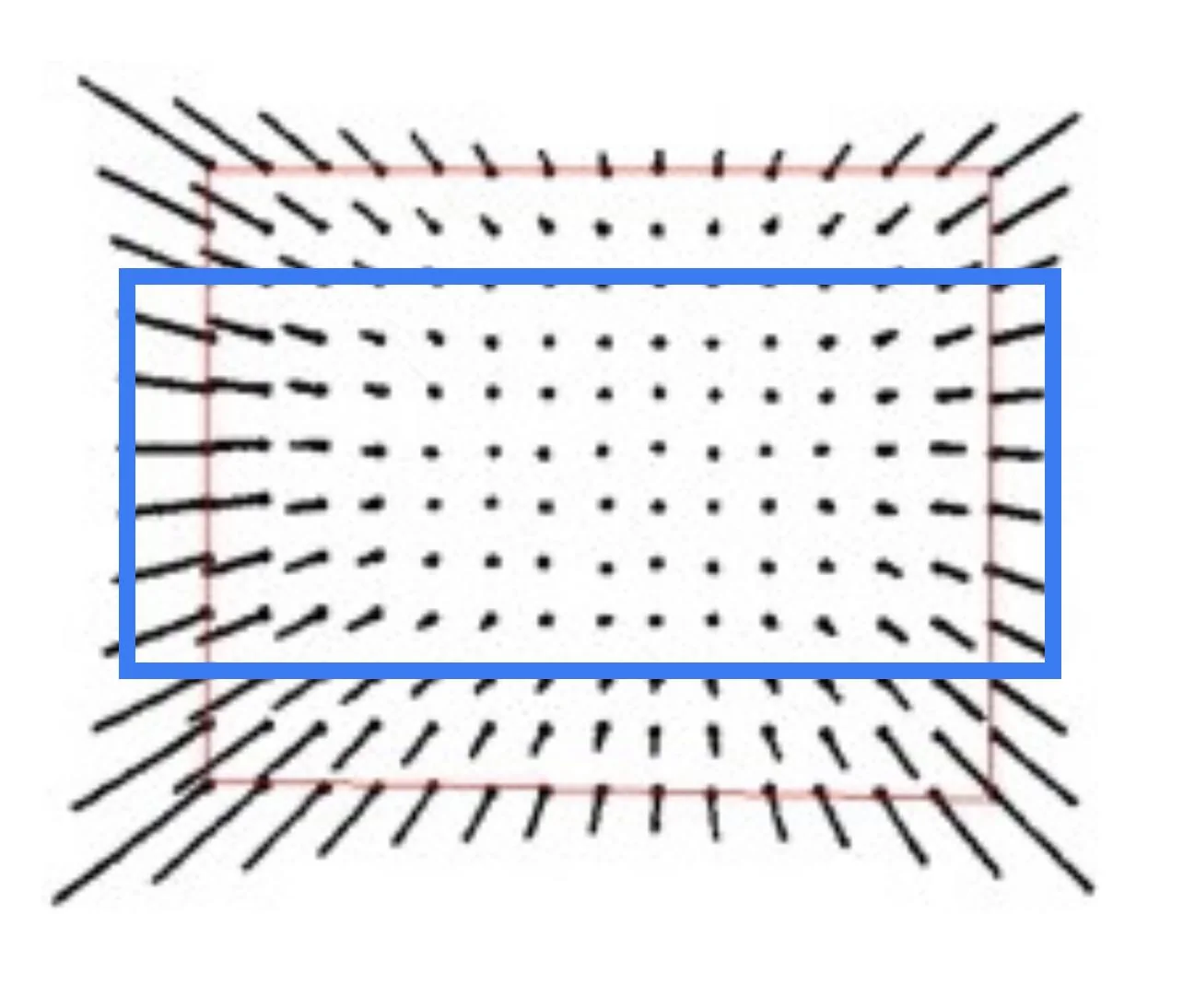
Now, in a “fish eye” type lens, the only point of no radial distortion would be right near the exact center of the frame. That is not the cartoon above.

The cartoon above is in a different type of lens - the ones like the use for these crash tests - where whole swaths of the center of frame are near zero, and the percentage climbs only very slowly outward towards edges non-linearly.

Accordingly, the cumulative distortion % across the red centerline is not also 4%, but instead the average of across the entire length of the line. And since I’m these lenses the radial distortion is near zero or minimal for a lot of the frame, even if the average across the wheel portion of the photo were 4%, the average across the entire red line would a far smaller number - let’s call it a cumulative average of 1.25% for directional example.

Go back, then, to this:

That 4% difference in rims applies to the rest of the vehicle along the line. Well it applies on a scale, less so to the left, moreso for the far right beyond the tire. This is why I'm saying your measurements are close, but probably a bit small. On the length I'd add 2-4%, or 4-8"
You hit at all this in bold, but forget to add that “except it’s zero in the middle, and near zero for much of the rest of the middle, and only a little more after that, before finally beginning to materially distort at the far edges”

But you then say the average is between 4% across the entire line (“8””) or 2% across the entire line (“4””)

Two problems:

First the average distortion in the rim area was not 4%, but instead at most 2.3% (I performed the math for you, above) - even if you assume that the entire error is from radial distortion rather than my measure point selection error.

Even assuming that 2.3% at the outer bounds of the photo, that by no means averages to even your 2% …. more like 0.5% across the entire waistline measurement … we’ll within my margin of error. (But that’s not the issue in my photo; thr issue

And that’s all BEFORE we get to the fact that your clearly assuming - incorrectly - that the lens, focal length, and distance from camera is set up like this:

Tesla Cybertruck Crash Test Video Measurements For Cybertruck Dimensions 55A46E9F-C4C1-4A78-B911-24D8D0E5B832


And what I’m trying to get across to you is that the cameras, etc., are in fact set up like:

Tesla Cybertruck Crash Test Video Measurements For Cybertruck Dimensions C0E90742-8699-4D74-9019-17FC252FF9C4


Feel free to bring something on hand that shows that crash test videography is set up to materially distort the object they are messing, only because they enjoy the challenge of piecing it together completely with software post-hoc.

What’s really gonna blow your mind is satellite imagery that can measure the length of a vehicle from a few miles above earth’s surface. Turns out, if you place the measured object within the field absent radial distortion, you can measure them!
 

TheLastStarfighter

Well-known member
Joined
Jul 6, 2020
Threads
9
Messages
1,660
Reaction score
4,307
Location
Canada
Vehicles
Dodge Challenger, Tesla Model 3
Occupation
Industrial Engineer
Country flag
Ok this is at least least part of the miscommunication

Of course it can’t see your red X. But
what it can see, is the exact point in space that is directly above your red X. Put differently:

87935258-0CB9-4E47-9427-102630601955.jpeg


I wasn’t measuring the bed floor. I was measuring the length in space directly above the edge of the sill, to the place in space on the same plane directly above the inner edge of the tailgate - which by necessity of geometry measures - in real world - an identical space directly below this floating plane.


FC46D73A-8BB2-49F5-A28B-69DE7BE52A2F.jpeg


Any error from radial distortion in the above would come from the tailgate edge of the measurement (furthest from camera center), not at the sill edge (nearest camera center).

But, where we depart, is that you don’t believe my understanding of lenses, focal lengths, distance from object, and the purposes of these videos.

I know theses cameras to be set up as follows:

35035021-E08C-4FF2-A3C2-8D1AD124E0DB.jpeg


You keep implicitly assuming in all your comments that these cameras are set up as follows:

75EADEA2-A0FC-4386-9E93-48EDAB4C7859.jpeg


See two cartoons immediately above.

You are wrong, at least to any degree that makes radial distortion the source of any material errors in my measurements rather than measure point selection.

You also don’t appear to follow the math behind your own point.

I’ll do only breadcrumbs:

(1) the degree of radial distortion, if any, in the measurement across the rim is not a consistent error, but instead an average of an infinite number of fractionally increasing error rate along the line in question

(2) so let’s assume your (incorrect) 4% (I already stated the correct % above) - this is not a flat 4% across the measurement, but instead the average % of error across the length of measure

(3) even if material radial distortion exists in the photo at a rate that causes an averafe 4% error at that rear wheel area, it does not mean the entirety of the photo is 4% distorted: it’s actually exactly zero at center frame, increasing non-linearly outward toward from center to greater degrees.

(thank gawd I have this cartoon or I’d never explain this math from my iPHone keyboard)

19A31859-963D-4E90-A03E-2D2D2F9D4E7E.jpeg


Now, in a “fish eye” type lens, the only point of no radial distortion would be right near the exact center of the frame. That is not the cartoon above.

The cartoon above is in a different type of lens - the ones like the use for these crash tests - where whole swaths of the center of frame are near zero, and the percentage climbs only very slowly outward towards edges non-linearly.

Accordingly, the cumulative distortion % across the red centerline is not also 4%, but instead the average of across the entire length of the line. And since I’m these lenses the radial distortion is near zero or minimal for a lot of the frame, even if the average across the wheel portion of the photo were 4%, the average across the entire red line would a far smaller number - let’s call it a cumulative average of 1.25% for directional example.

Go back, then, to this:


You hit at all this in bold, but forget to add that “except it’s zero in the middle, and near zero for much of the rest of the middle, and only a little more after that, before finally beginning to materially distort at the far edges”

But you then say the average is between 4% across the entire line (“8””) or 2% across the entire line (“4””)

Two problems:

First the average distortion in the rim area was not 4%, but instead at most 2.3% (I performed the math for you, above) - even if you assume that the entire error is from radial distortion rather than my measure point selection error.

Even assuming that 2.3% at the outer bounds of the photo, that by no means averages to even your 2% …. more like 0.5% across the entire waistline measurement … we’ll within my margin of error. (But that’s not the issue in my photo; thr issue

And that’s all BEFORE we get to the fact that your clearly assuming - incorrectly - that the lens, focal length, and distance from camera is set up like this:

55A46E9F-C4C1-4A78-B911-24D8D0E5B832.jpeg


And what I’m trying to get across to you is that the cameras, etc., are in fact set up like:

C0E90742-8699-4D74-9019-17FC252FF9C4.jpeg


Feel free to bring something on hand that shows that crash test videography is set up to materially distort the object they are messing, only because they enjoy the challenge of piecing it together completely with software post-hoc.

What’s really gonna blow your mind is satellite imagery that can measure the length of a vehicle from a few miles above earth’s surface. Turns out, if you place the measured object within the field absent radial distortion, you can measure them!
They aren't trying to calculate the size of the CT with the cameras. They are just observing the crash.


OP
OP
cvalue13

cvalue13

Well-known member
Joined
Aug 17, 2022
Threads
74
Messages
7,153
Reaction score
13,769
Location
Austin, TX
Vehicles
F150L
Occupation
Fun-employed
Country flag
How high do you think the roof in the crash test center is? And the scaffolding the camera is mounted on?
He asked the question in terms of feet away, but it’s not literal, it’s a thought experiment for you to understand basically [lens sizes+focal length+distance]

I don’t know how else to explain to you except to say that the following two images can be taken from identical distances from the object:

Tesla Cybertruck Crash Test Video Measurements For Cybertruck Dimensions 1A6BA5B4-7591-4EA4-AF75-834B52EAEE33
Tesla Cybertruck Crash Test Video Measurements For Cybertruck Dimensions B7A7F802-E36A-4C45-B3C1-4413A07AFCB8
 
Last edited:

JBee

Well-known member
First Name
JB
Joined
Nov 22, 2019
Threads
18
Messages
4,913
Reaction score
6,362
Location
Australia
Vehicles
Cybertruck
Occupation
. Professional Hobbyist
Country flag
They aren't trying to calculate the size of the CT with the cameras. They are just observing the crash.
They also use the cameras to measure deformation, which is the point of crash testing?
 
OP
OP
cvalue13

cvalue13

Well-known member
Joined
Aug 17, 2022
Threads
74
Messages
7,153
Reaction score
13,769
Location
Austin, TX
Vehicles
F150L
Occupation
Fun-employed
Country flag
Why is the back rim smaller than the front?
Camera lenses do that. Which is closer to the camera, or closer to the center of the frame? Or both?
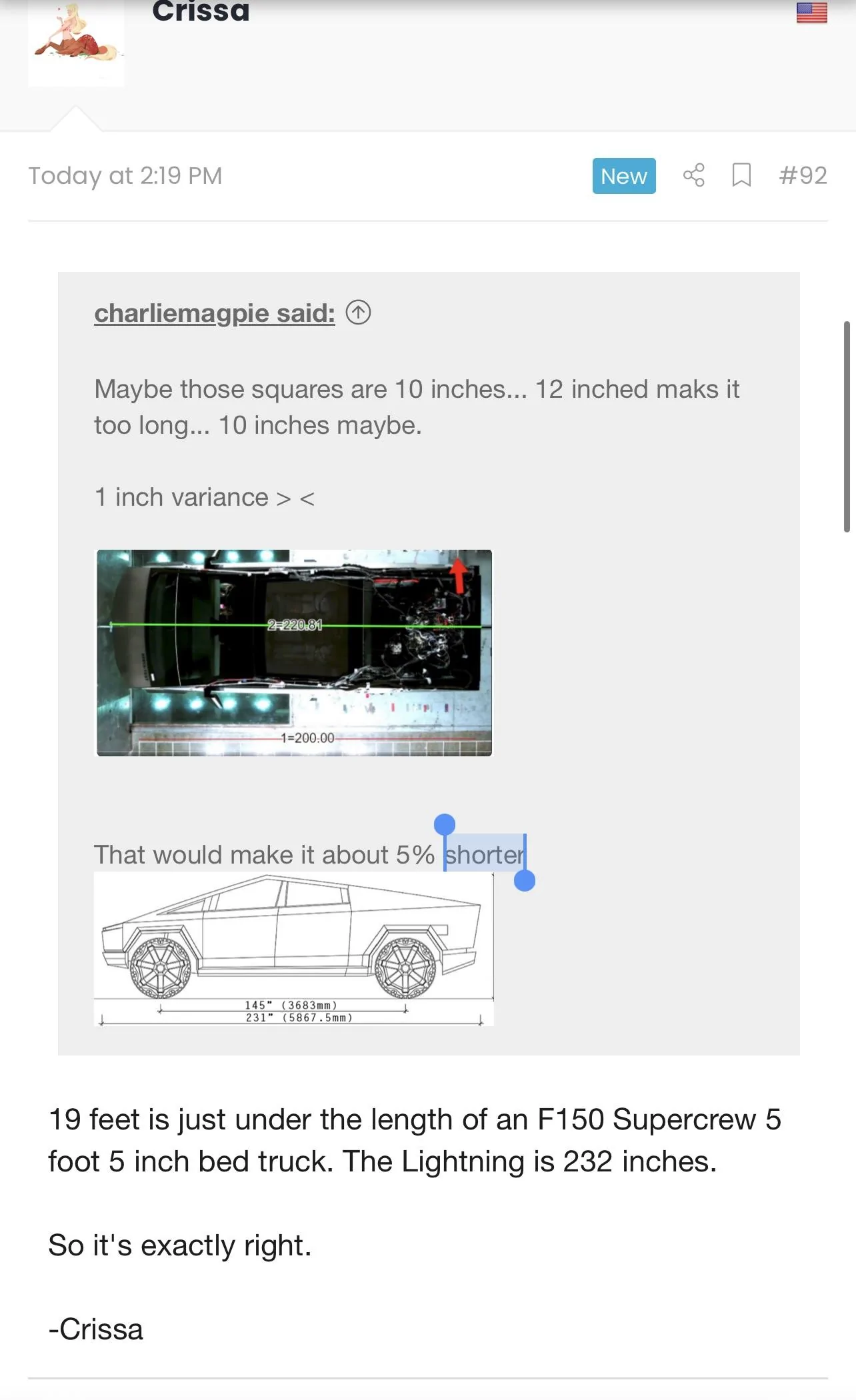
Since in other threads, people are quite accepting and unskeptical (relevant to here) r grading using the on-floor grid marks as reference…

Tesla Cybertruck Crash Test Video Measurements For Cybertruck Dimensions 43E1D3EB-0FB6-42F4-81A7-ECF38AE081A1


… I’ll use the same methodology in that other thread, which is to assume the test center’s grid pattern on the floor are a 12” grid.

This is a good and reasonable assumption, and I believe it is a 12” grid. However, I believe the grid is used for placing test equipment objects on the floor in known locations as well as being able to roughly measure the distance any debris travels, etc. In other words, the floor grid is not optimized for truck measurements. They do this only for rough measure (or else the grid itself wouldn’t have such thick/error-prone lines for lower detail)

This, and the fact that it’s difficult to extrapolate from the floor to places high on the truck, are reasons I didn’t rely on on the floor directly in my work. But I’ll come back to that “inaccuracy” and the effect it would have on measurement.

But since it’s now being taken seriously elsewhere, and it’s still instructive here, let’s do eet!

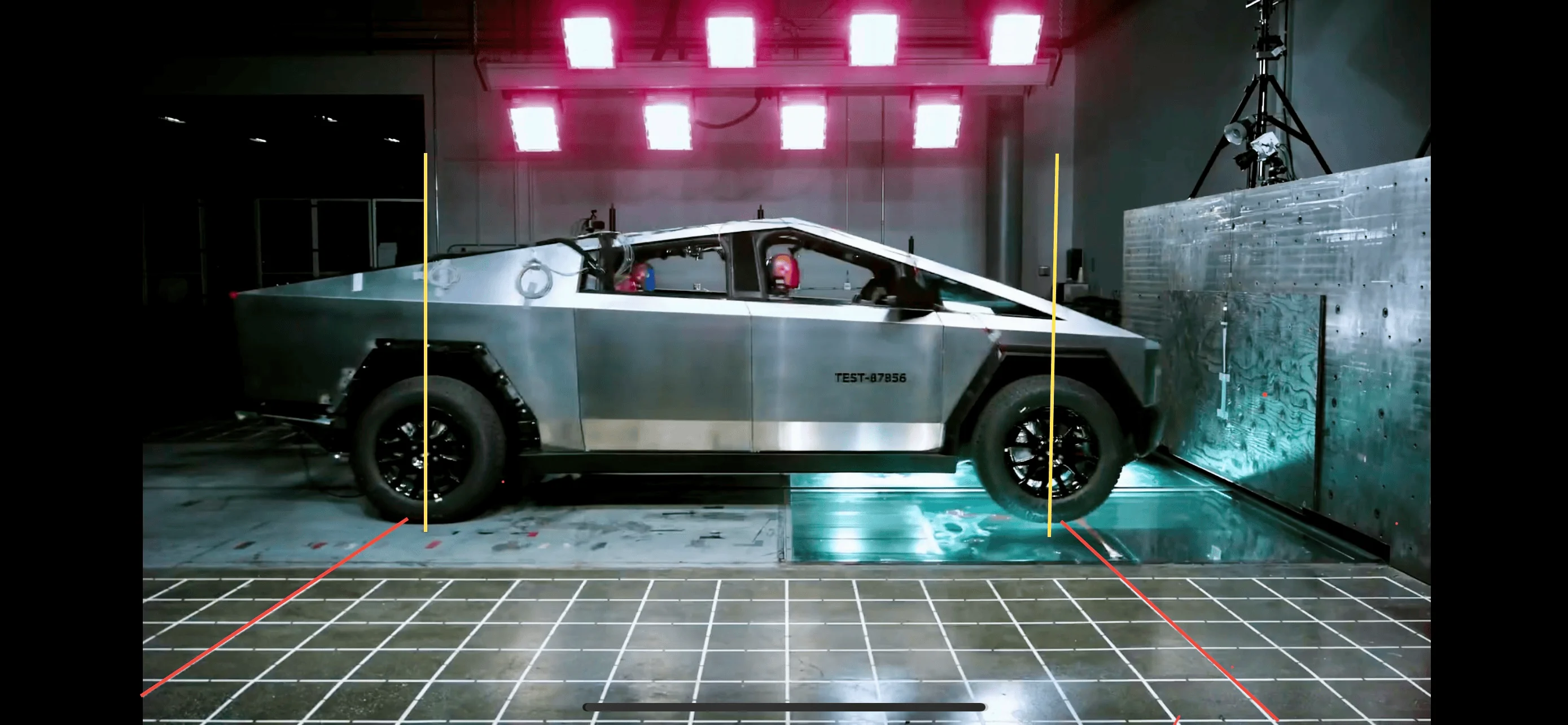
In the following photo, I selected a frame where

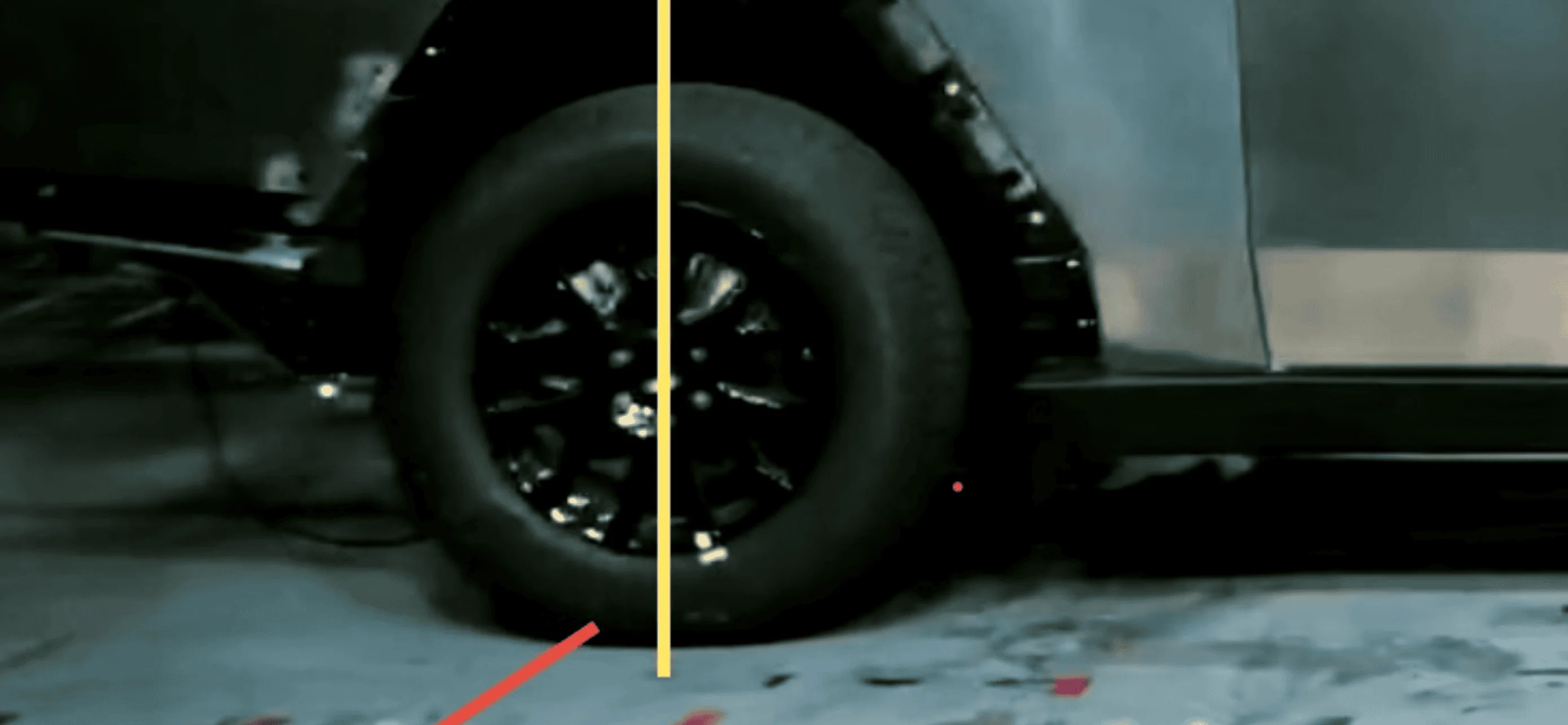
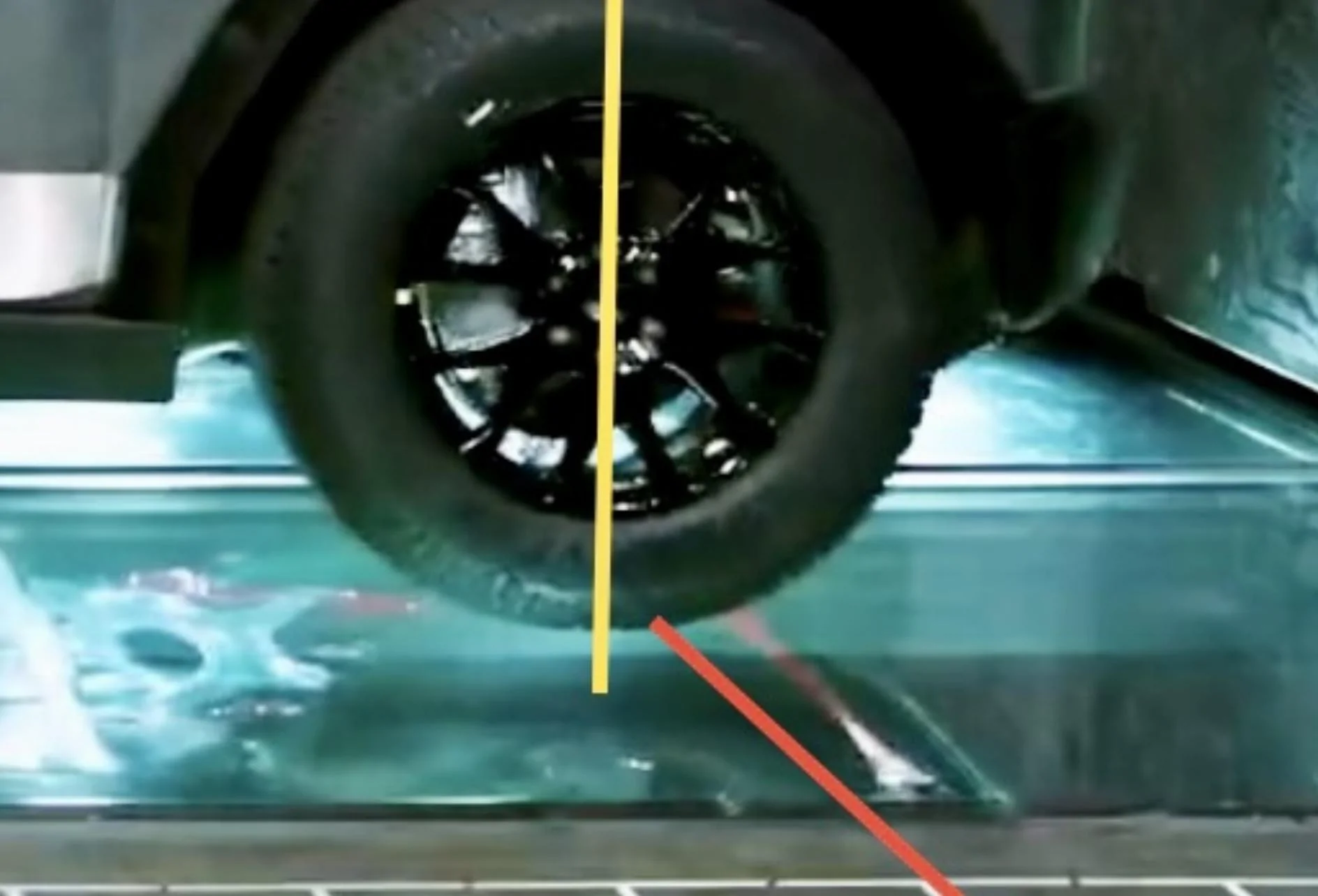
(1) the CT rim’s bolt patterns each had a pair straight up and down, from which to reference and confirm the centerline of the tire set and a vertical line to the floor (yellow lines below), and

(2) both wheels were as near as possible to a pair of the floor’s grid lines (red lines below)

here’s that photo followed by the relevant detail pics at the floor

Tesla Cybertruck Crash Test Video Measurements For Cybertruck Dimensions E40795D7-D329-496A-A544-1EB4E3D1B4CE
Tesla Cybertruck Crash Test Video Measurements For Cybertruck Dimensions 98A2B0D1-4F0B-4E7B-8AB5-D9D186AB3BE5
Tesla Cybertruck Crash Test Video Measurements For Cybertruck Dimensions 4C4DACAC-5819-47C5-8F43-07CB38DB1667


Now let’s run those numbers.

The red lines above are 12 grid squares apart, or 144” apart.

The wheel center lines are (take your pick, folks, but) I’ll call it “about” 2” behind the front most wheel, and “about” 2” in front of the rearmost wheel.

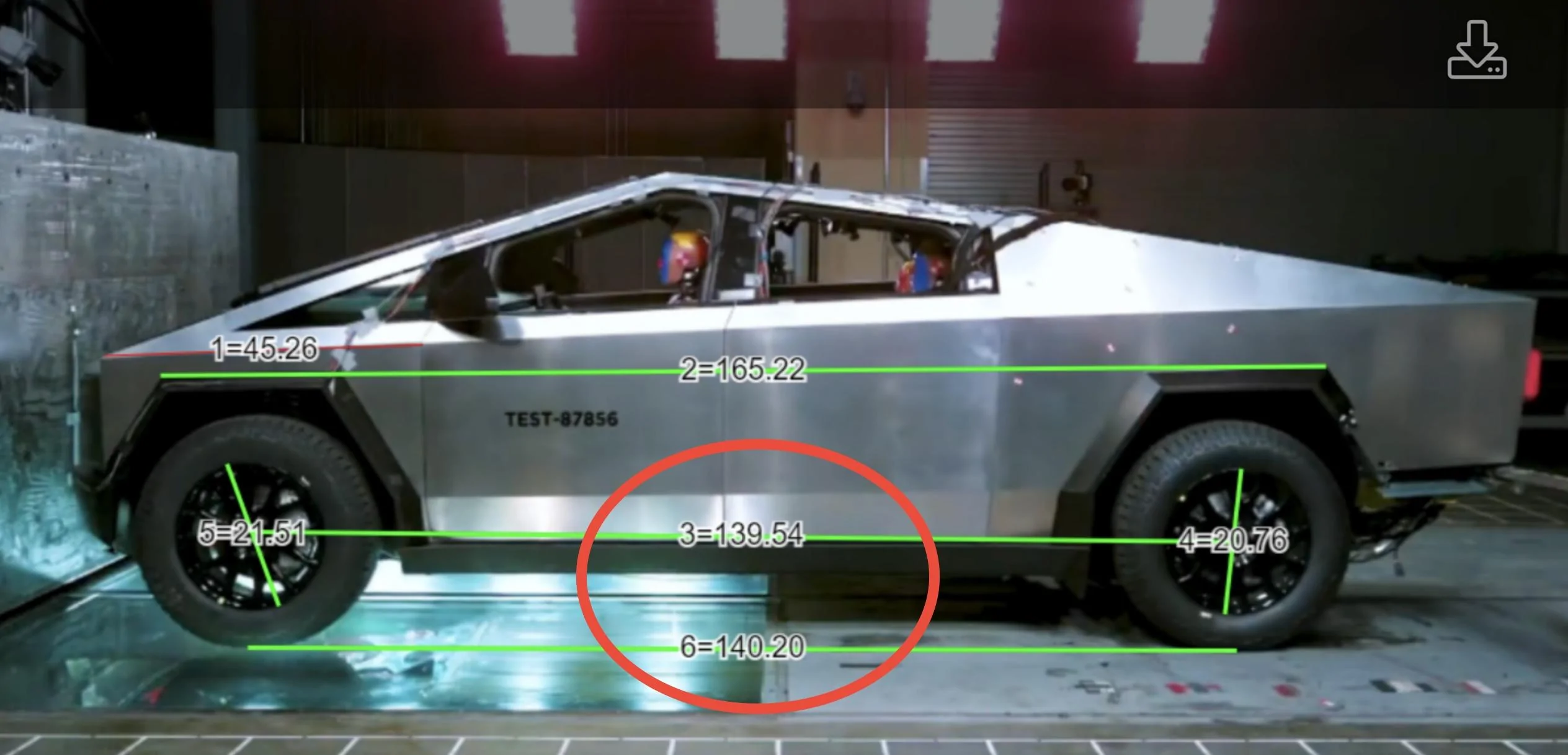
Weird, using the ground grid marks assumed to be 12”, that amounts to a CT wheelbase of just at 140” (+/- 1-2”). Definitely not 149.9” (the unveil stat for wheelbase) - 10” shorter nose-tail than unveil.

Sounds so familiar:

Tesla Cybertruck Crash Test Video Measurements For Cybertruck Dimensions 41F21CA9-AC08-461D-881B-D160138DCE15


It’s almost as if someone has thought through this.

Two additional opportunities while we’re here:

(1) if your (@Ogre @Crissa @TheLastStarfighter ) insistent misunderstanding of radial distortions we’re correct when using the floor grid as reference: it would mean that in the above photo the in-photo wheelbases would appear further distant from each other than actual in-world measurements, so the CT wheelbase in-world would be even smaller than ~140” … but don’t worry, that’s not how these pictures work!

(2) going back to this attempt at overhead measurement:

Tesla Cybertruck Crash Test Video Measurements For Cybertruck Dimensions 43E1D3EB-0FB6-42F4-81A7-ECF38AE081A1


Despite in this thread all insistence on distortions of perspective, etc., over in that thread someone takes the grid from the floor then uses it to measure an object (the CT waistline/max length) we know to be ~4’ above the floor, and arrives at a measure of 220” - to which the same sort of person who is incredulous in this thread respond’s that it’s “exactly right” … despite the unveil stat stating the length is 231.7” - so 12” shorter.

Here again, if your (@Ogre @Crissa @TheLastStarfighter ) insistent misunderstanding of radial distortions we’re correct when using the floor grid as reference:
it would mean that in the above photo the in-photo nose-tail length would appear further distant from each other than actual in-world measurements, so the CT nose-tail length in-world would be even smaller than ~220” … but don’t worry, that’s not how these pictures work!

And my numbers for nose-tail are a hair longer, at 222” (but +/-1-2”) - go figure.

Let’s then summarize and find a few more interesting cross-confirmations. Using the grid as measurement reference as gospel, we’ve determined (1) the wheelbase is ~140” (identical to mine) and (2) according to the other thread’s overhead measurement, the total nose-tail length is 220” (222” according to mine)

Since using and assuming the floor grid line as gospel, we’ve determined:

(A) the CT wheelbase is ~140” (~identical to my measurements), and 10” shorter than unveil stats (149.9”), but if material radial distortion is at play the in-world measure would be less than 140” wheelbase (but don’t worry, that’s not how these picture work)

(B) the CT nose-tail is ~220” (2” shorter than my measurements), and so 12-10” shorter than unveil stats (231.7”), but if material radial distortion is at play the in-world measure would be less than 220”-222” (but don’t worry, that’s not how these pictures work)

(3) let’s for sh*t’s and giggle’s see how those two reduced proportions would be roughly proportionate to unveil bed length stats
  • 149.9” (unveil wb) -> (140” crash wb) = -9.3% reduction in wb length

  • 231.7” (unveil total length) -> (222” crash total length) = -4.2% shrink
And we’re Tesla to have also proportionately shrunk the bed between 9.3% and 4.2%, from known on-stage max bed depth (6.5’) you get about a 6’ deep bed (at floor).


S.H.Peterson

Well-known member
First Name
Scott
Joined
Mar 23, 2023
Threads
11
Messages
270
Reaction score
453
Location
Alabama
Vehicles
Currently Dodge Truck owner
Occupation
Insurance
Country flag
Hey @S.H.Peterson

Can you folks point your thingy up in the sky at the test track real quick like?

:ROFLMAO:
I would love to, but I lost my clearance and access ratings when I left that company. BTE, they can see way better than you would EVER believe.
 
OP
OP
cvalue13

cvalue13

Well-known member
Joined
Aug 17, 2022
Threads
74
Messages
7,153
Reaction score
13,769
Location
Austin, TX
Vehicles
F150L
Occupation
Fun-employed
Country flag
I would love to, but I lost my clearance and access ratings when I left that company. BTE, they can see way better than you would EVER believe.
I have some familiarity.

Lead engineers in my company are 30 year vets of the DOE departments/contractors that developed both hardware and algos for (surely) similar equip.

We use similar methods instead for in-city … things. Sort of like FSD for city security. :alien:
 

TheLastStarfighter

Well-known member
Joined
Jul 6, 2020
Threads
9
Messages
1,660
Reaction score
4,307
Location
Canada
Vehicles
Dodge Challenger, Tesla Model 3
Occupation
Industrial Engineer
Country flag
Using the grid on the floor is better than measuring a part and extending it over the image, but we don't know how big the squares are. Probably a foot, but they could also be 12" squares + 1cm lines.
Sponsored


Top