
Sponsored

Another article spreading Cybertruck FUD

GlockandRoll

Banned
Well-known member
Banned
Joined
Aug 19, 2022
Threads
3
Messages
303
Reaction score
302
Location
Area S4: Papoose Lake
Vehicles
Porsche on the weekends, diesel truck mon-fri
Occupation
Arms dealer and musician
Country flag
He's written a lot of previous articles which I won't bother to read, because he conveniently has No Sources for most of his points in this one.

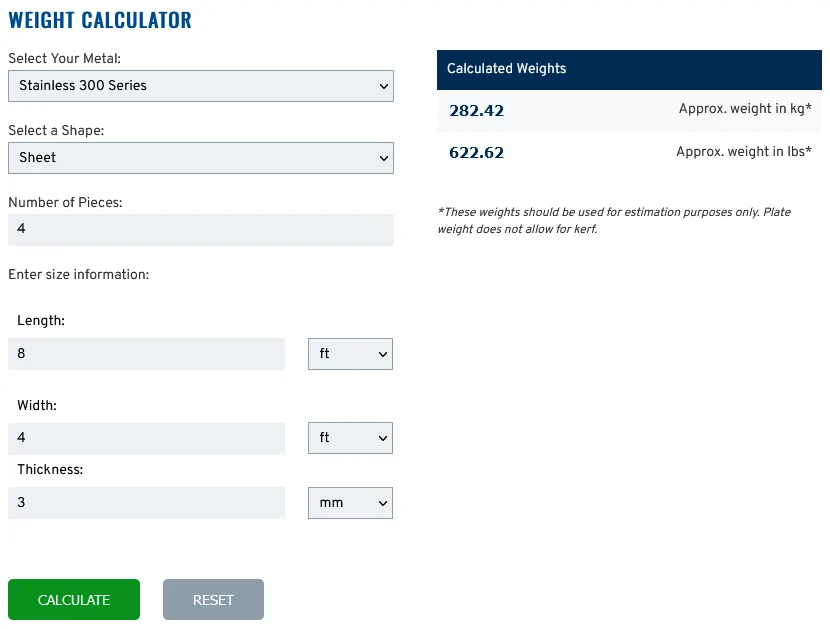
I don't think his weight FUD points are totally valid either, even though it's always preferable to reduce weight whenever possible. Of course we don't know the actual weight of the BIW or Stainless Steel portions, but I'd estimate the 3mm thickness sections would be roughly equivalent to the area of four each 4 by 8 foot sheets 3mm thick. I know the stainless likely comes in different dimensions from that, but this is just using a familiar representative example of surface area. Actually I think it's a little generous as the CT surface area of 3mm stainless is likely a bit less. But using that surface area for sheet stainless 3mm thick, and a Metal Weight Calculator from TW Metals, we get the following:

1697307427802.png


https://www.twmetals.com/resources/calculators.html

I don't think 622 lbs is a range killing weight for the stainless steel at all, because any body skin material is going to have to weigh something. Even if the material is reduced to half thickness, that's only 311 lbs of saved weight, which is a tangible difference, but not a major one, considering what the overall weight of the Cybertruck will be. We should remember the skin weight is likely less anyway as the estimates above were being generous.

We also have to consider this is a truck, and the weight will always vary a lot also due to cargo and passengers. Then there's the obvious point that Tesla didn't choose this material and thickness blindly, without already realizing its weight during their initial designs years ago before any of us knew even about it. The article's author attempts to paint Tesla as somehow being naive to basic engineering factors.

I believe Tesla makes up a lot of weight reduction in the castings, and they already knew about the weight of thick stainless and thick Armour Glass years ago while the CT was still in early design phases. The thickness of the side windows seen recently in the sightings at Baja, don't suggest that Tesla has 'abandoned' using thick glass all.

IMO, like the OP noted, this is but another attempt at FUD even though they're trying to include some obvious points to sound credible in the article. I think much of this type FUD will be coming out because they know the Cybertruck is about ready to launch. The competition (both legacy and startups) have more to lose as the Cybertruck scales in production.

- ÆCIII
Good info, thanks.
Sponsored


HaulingAss

Well-known member
Joined
Oct 3, 2020
Threads
28
Messages
10,329
Reaction score
20,750
Location
Western Washington, USA
Vehicles
Cybertruck DM, 2010 F-150, 2018 Performance Model 3, 2024 Performance Model 3
Country flag
Now if they had pulled off a real full exoskeleton structure, it would of really knocked the competition out of the park. I expect that the "next-gen" vehicle will accomplish more of this, by not conforming to a common vehicle class, rather by making a class of it's own to avoid the pitfalls of irrelevant features, in a effort to maximise the parts it has for the intended task.
Huh? It's inexplicable why you think the skin of the vehicle is not load bearing. You really need evidence of that before you contradict everything Elon and Franz have said about Cybertruck's design and engineering.

It's like some people's brains just up and left reality and went into their own dreamworld and it's based on nothing more than their lack of understanding of structures and how loads are carried. Elon doesn't even have a degree in Engineering, and he understands that the skin is load bearing. It's like you only see things that support your misunderstanding.

For example, citing the size of two visible tabs as evidence that the skin could not be load-bearing (without knowing how many total tabs there, what the purpose of the tabs are, or whether structural adhesives/welds are used, alone or in conjunction with other attachment methods). It's nonsensical how sure you seem to be that Elon is living in a fantasy as to the engineering of his truck.

You are essentially aligning with the narritive used by TSLAQ types to try to take the shine off Elon's latest creation. They make the same claims as you, similarly, without supporting evidence. Mark my words, the Cybertrunk's skin will be load-bearing to maximize the useage of materials and to prevent the skin from being dead weight, carried by the rest of the chassis.
 

JBee

Well-known member
First Name
JB
Joined
Nov 22, 2019
Threads
18
Messages
4,913
Reaction score
6,362
Location
Australia
Vehicles
Cybertruck
Occupation
. Professional Hobbyist
Country flag
Huh? It's inexplicable why you think the skin of the vehicle is not load bearing. You really need evidence of that before you contradict everything Elon and Franz have said about Cybertruck's design and engineering.

It's like some people's brains just up and left reality and went into their own dreamworld and it's based on nothing more than their lack of understanding of structures and how loads are carried. Elon doesn't even have a degree in Engineering, and he understands that the skin is load bearing. It's like you only see things that support your misunderstanding.

For example, citing the size of two visible tabs as evidence that the skin could not be load-bearing (without knowing how many total tabs there, what the purpose of the tabs are, or whether structural adhesives/welds are used, alone or in conjunction with other attachment methods). It's nonsensical how sure you seem to be that Elon is living in a fantasy as to the engineering of his truck.

You are essentially aligning with the narritive used by TSLAQ types to try to take the shine off Elon's latest creation. They make the same claims as you, similarly, without supporting evidence. Mark my words, the Cybertrunk's skin will be load-bearing to maximize the useage of materials and to prevent the skin from being dead weight, carried by the rest of the chassis.
So did you read the rest of my post why the SS made sense to use for the CT?

Or are you just cherry picking one of my comments to start an old worn out argument, where you don't address the load paths at all?

"If" the skin was the primary structure for load bearing, why does it need a cast then, or cabin frame, or structural pack?

Was EM and Franz so wrong they needed to add all the rest of that structure to the exoskeleton? Or should we deny what we have actually seen with our own eyes and believe you instead?

So please, if you can, determine which SS parts of the vehicle can have the exoskeleton attached structurally. (Hint theres only 4) Then demostrate which parts have a load on them and from what source. Ideally, a simple single line diagram to show load paths would suffice.

Then lastly, give me a rough percentage of how much the max load is the skin will carry in a worst case scenario. (I say less than 5%)

Then reread and understand what I'm saying in my post and respond in kind.

As for all the "narrative" and fanboi criticisms, I don't really care who's side YOU think I should be on. So please can them if you want to have a real discussion with me. Rather I will always firmly be on MY side, until I have been persuaded, with relevant facts and information of something else.
 

firsttruck

Well-known member
Joined
Sep 25, 2020
Threads
205
Messages
2,761
Reaction score
4,441
Location
mx
Vehicles
none
Country flag
So did you read the rest of my post why the SS made sense to use for the CT?

Or are you just cherry picking one of my comments to start an old worn out argument, where you don't address the load paths at all?

"If" the skin was the primary structure for load bearing, why does it need a cast then, or cabin frame, or structural pack?
....

Where is it said that the exo skin had to be the only structure for load bearing or even the "primary structure for load bearing".

When the structure is under load from payload in cabin+bed (rated upto 3,000lbs), and/or towing (rated upto 14,000lbs), and/or resisting dynamic flexing/twisting forces, the exo skin could be be helping the structure resist those forces.
 

CyberCowboy

Well-known member
First Name
Collis
Joined
Jun 27, 2023
Threads
3
Messages
56
Reaction score
59
Location
North Carolina
Vehicles
2020 M3P, 2023 M3 (red), 2023 M3 (grey), MazdaCX-9
Occupation
Cowboy
Country flag
There are NO EV truck "alternatives" for THIS cowboy...(and no EV truck alternative stocks as well)...


JBee

Well-known member
First Name
JB
Joined
Nov 22, 2019
Threads
18
Messages
4,913
Reaction score
6,362
Location
Australia
Vehicles
Cybertruck
Occupation
. Professional Hobbyist
Country flag
Where is it said that the exo skin had to be the only structure for load bearing or even the "primary structure for load bearing".

When the structure is under load from payload in cabin+bed (rated upto 3,000lbs), and/or towing (rated upto 14,000lbs), and/or resisting dynamic flexing/twisting forces, the exo skin could be be helping the structure resist those forces.
I don't make up physics to explain what I say, rather I'd like someone to explain to me how the physics work, to do what they "claim".

1sr step: Explain how a force is applied to the SS fender that ends up going into the tyre, that is the only thing touching the ground? If you sat on the fender it would have a load. The fender is only connected to the cast, not to the motor subframe, suspension nor cabin frame or bed. Now how does the force or load get to the fender if you don't sit on it directly, and the cast is inbetween the bed and the fender?

Wouldn’t it make sense that the force loadpath is simply bed>cast>suspension>wheel and NOT bed>cast>fender>cast>suspension>wheel?

Once you understand that, then graduate to the next problem: how do forces interact between the wheel.

Now worst case torsional twist on the frame is simply two wheels supporting the load and the other two not touching the ground. (If u can balance it there). Now given that the fender is outside of where the suspension airspring is (its on the inside of the wheel) the load path would be wheel>suspension>rear cast>cabin+pack>front cast>suspension>wheel. Now open a door or take off a fender...it doesn't matter because both are outside the load path.

Now if you had wheel>suspension>cast>"fender">cabin etc. and the cast was not connected to the cabin itself, then sure you'd have a load path, and something for the SS fender to do. Like it is in reality though, how is load diverted and making a detour to the fenders between the airsprings and wheels.

Without a fulcrum to act against no lever works, neither can a force be applied. At a minimum the lever has to connect the load to the fulcrum so a force (effort) can be applied. Neither 3 lever types work in this scenario because the fender is geometricly not in the right place to do so.

This also ignores the problem of thermal expansion between the aluminium cast and the SS fender, which in itself cause more force than any load in the bed.
 
Last edited:

HaulingAss

Well-known member
Joined
Oct 3, 2020
Threads
28
Messages
10,329
Reaction score
20,750
Location
Western Washington, USA
Vehicles
Cybertruck DM, 2010 F-150, 2018 Performance Model 3, 2024 Performance Model 3
Country flag
So did you read the rest of my post why the SS made sense to use for the CT?

Or are you just cherry picking one of my comments to start an old worn out argument, where you don't address the load paths at all?
There was no point in commenting on the parts of your post that you got right. I don't want to waste my time commenting on that. So, yes, I "cherry-picked" the parts that you have misunderstandings about.

"If" the skin was the primary structure for load bearing, why does it need a cast then, or cabin frame, or structural pack?

Was EM and Franz so wrong they needed to add all the rest of that structure to the exoskeleton? Or should we deny what we have actually seen with our own eyes and believe you instead?
I didn't say the skin was the "primary" structure for load bearing, I said the skin was an essential structural component for load bearing. Why do you continue to misconstrue my position?

The reason the skin needs underlying structure is the same reason an aircraft fuselage with a stressed skin needs underlying structure. The skin is just to stiffen the structure and increase it's load-bearing capacity. An airplane's fuselage is an exoskeleton, but the skin is not the only component of the exoskeleton. The fuselage ribs and stringers count as part of the exoskeleton too, because they enclose the cabin. Elon explained this during the Cybertruck reveal when he spoke of the engineering and the stressed-skin design of the Cybertruck. There is no indication the basics have changed, the misunderstandings were caused by those who never understood the exoskeleton concept to begin with. The skin was never going to be the primary structure, do you think Elon doesn't understand these things better than you?

So please, if you can, determine which SS parts of the vehicle can have the exoskeleton attached structurally. (Hint theres only 4) Then demostrate which parts have a load on them and from what source. Ideally, a simple single line diagram to show load paths would suffice.
I've explained this in detail in previous posts and you ignored it (or it flew right over your head, not sure which). I'm not inclined to repeat again for your benefit because you have shown you are not interested. The fact that you think load paths are static are probably at the root of your misunderstandings.

Then lastly, give me a rough percentage of how much the max load is the skin will carry in a worst case scenario. (I say less than 5%)
That you speak of "max load" in the singular, highlights your misunderstanding and your apparent belief that loads are static, not dynamic. Most of the loads on a vehicle's chassis are dynamic and will move around in dramatic fashion as the vehicle is in motion. It's impossible to classify the load on the skin as a percentage of the maximum load on the chassis because there is not one "max load", the loads on the chassis are complex and intricate and always changing. Loads often change from compression to tension in a fraction of a second. Unless you suddenly understand intricacies, you will continue to misunderstand how the skin on the Cybertruck greatly increases its load carrying abilities and performance and handling dynamics off-road.

I am not privy to all stainless components that are structural, but there is no doubt the four quarterpanels are structural in that they transfer loads as the stiffen the structure created with the upper and lower gigacastings (in the rear) and the front quarter panels will stiffen the structure relative to the front gigacasting that the suspension is mounted to and the passenger safety cage, in addition to between the frontal crash structure (bumper) and the front gigacasting. The utility here goes beyond crash safety, as loads are transfered through the front of the chassis as it twists over irregular ground. Adding loads to the bed will increase the amount of load trasfered through the front of the chassis over unever ground.

You will have to stop thinking of the primary load being simple gravity in a direct line to the ground in order to comprehend this. Because all automotive chassis systems flex as they are loaded and driven. That is why load paths spread themselves throughout the chassis.

The door panels are likely to be the thickest of all in order to transfer side impacts effectively to the passenger safety cage with minimal point loads on the safety cage. This is of benefit in reducing the weight of the safety cage and battery protection reinforcements, even if it doesn't stiffen the chassis in anything but a crash.

Tesla has world-class engineers because they have their pick of the best of the best, and it pains me to see how you think you grasp it better than they do. The engineering embedded in the Cybertruck will be recognized for its extensive and ground-breaking innovation, but it will take years for the full significance of what was actually done here to leak out to the broader market. It's likely that even those who do complete teardowns will not be able to understand the full structural significance of what the engineers have done with the chassis, until it is explained to them by those who designed it.
 

JBee

Well-known member
First Name
JB
Joined
Nov 22, 2019
Threads
18
Messages
4,913
Reaction score
6,362
Location
Australia
Vehicles
Cybertruck
Occupation
. Professional Hobbyist
Country flag
There was no point in commenting on the parts of your post that you got right. I don't want to waste my time commenting on that. So, yes, I "cherry-picked" the parts that you have misunderstandings about.


I didn't say the skin was the "primary" structure for load bearing, I said the skin was an essential structural component for load bearing. Why do you continue to misconstrue my position?

The reason the skin needs underlying structure is the same reason an aircraft fuselage with a stressed skin needs underlying structure. The skin is just to stiffen the structure and increase it's load-bearing capacity. An airplane's fuselage is an exoskeleton, but the skin is not the only component of the exoskeleton. The fuselage ribs and stringers count as part of the exoskeleton too, because they enclose the cabin. Elon explained this during the Cybertruck reveal when he spoke of the engineering and the stressed-skin design of the Cybertruck. There is no indication the basics have changed, the misunderstandings were caused by those who never understood the exoskeleton concept to begin with. The skin was never going to be the primary structure, do you think Elon doesn't understand these things better than you?


I've explained this in detail in previous posts and you ignored it (or it flew right over your head, not sure which). I'm not inclined to repeat again for your benefit because you have shown you are not interested. The fact that you think load paths are static are probably at the root of your misunderstandings.


That you speak of "max load" in the singular, highlights your misunderstanding and your apparent belief that loads are static, not dynamic. Most of the loads on a vehicle's chassis are dynamic and will move around in dramatic fashion as the vehicle is in motion. It's impossible to classify the load on the skin as a percentage of the maximum load on the chassis because there is not one "max load", the loads on the chassis are complex and intricate and always changing. Loads often change from compression to tension in a fraction of a second. Unless you suddenly understand intricacies, you will continue to misunderstand how the skin on the Cybertruck greatly increases its load carrying abilities and performance and handling dynamics off-road.

I am not privy to all stainless components that are structural, but there is no doubt the four quarterpanels are structural in that they transfer loads as the stiffen the structure created with the upper and lower gigacastings (in the rear) and the front quarter panels will stiffen the structure relative to the front gigacasting that the suspension is mounted to and the passenger safety cage, in addition to between the frontal crash structure (bumper) and the front gigacasting. The utility here goes beyond crash safety, as loads are transfered through the front of the chassis as it twists over irregular ground. Adding loads to the bed will increase the amount of load trasfered through the front of the chassis over unever ground.

You will have to stop thinking of the primary load being simple gravity in a direct line to the ground in order to comprehend this. Because all automotive chassis systems flex as they are loaded and driven. That is why load paths spread themselves throughout the chassis.

The door panels are likely to be the thickest of all in order to transfer side impacts effectively to the passenger safety cage with minimal point loads on the safety cage. This is of benefit in reducing the weight of the safety cage and battery protection reinforcements, even if it doesn't stiffen the chassis in anything but a crash.
Buddy it seems your retorts are still the same fluff peices about how I should just trust YOU telling me what YOU think the "grand Tesla engineers" have done.

I don't doubt Teslas ability at all.

I doubt your ability to explain how it actually is, and with that if the panels offer any load bearing structure beyond a crash impact, which btw I've highlighted many times.

Your plane analogy is correct IF it were a complete structure, but 4 disconnected quarter panels don't make a fuselage in anyway.

Further please explain what causes a load on the vehicle in operation that does not originate from the wheels?

For clarity I don't doubt the SS skin has impact protection qualities on the CT, rather I don't beleive they form any meaningful structure to support operational load.

In the end you will have to decide how much those 4 quaterpanels do or don't, but it is clear to any onlooker that those 4 quarter panels are not in any way significant in their load capacity, due to their location, size, attachment method, lack of load and dissimilar thermal properties with the cast. The differentiation between static and dynamic loads is simply time, but the underlying structure can be assessed one frame at a time, so has no relevance or bearing here, especially since a dynamic load won't produce an alternative load path that is not connected to the wheels as well.

But you explained YOUR understanding yourself the best:

Tesla has world-class engineers because they have their pick of the best of the best, and it pains me to see how you think you grasp it better than they do. The engineering embedded in the Cybertruck will be recognized for its extensive and ground-breaking innovation, but it will take years for the full significance of what was actually done here to leak out to the broader market. It's likely that even those who do complete teardowns will not be able to understand the full structural significance of what the engineers have done with the chassis, until it is explained to them by those who designed it.
So maybe you could dial down the rhetoric and fanaticism until you know exactly how it was done. Until then the rest of us can continue on in reality, like so many more knowledgeable people have done, that it's not as good as we (me included) first thought.

I'm only trying to highlight the faulty dogma that echo's in these forum halls, and get to the bottom of why we were all so erroneous in the beginning.

I believe half of it was because we didn't understand what parts were meant and exactly how they work together, and that together with a good dose of hype (from Monroe etc) helped us believe something that never existed, outside of some sale jargon to highlight the differences of a then "weird looking truck".

So for now, unless you can give me a simple load path diagram of how "any" loads even manage to get to the quaterpanels then we don't really have that much to discuss, except hypertheticals, in the firm belief that Tesla engineers are alien technologists that have mastered the art of extra-dimensional physics.

In the meantime I'm happy to discuss the physics we know of, on a dedicated thread to finally come to some agreement on the matter, and understand the true nature of how the CT struture actually works.
 
Last edited:

HaulingAss

Well-known member
Joined
Oct 3, 2020
Threads
28
Messages
10,329
Reaction score
20,750
Location
Western Washington, USA
Vehicles
Cybertruck DM, 2010 F-150, 2018 Performance Model 3, 2024 Performance Model 3
Country flag
Buddy it seems your retorts are still the same fluff peices about how I should just trust YOU telling me what YOU think the "grand Tesla engineers" have done.

I don't doubt Teslas ability at all.

I doubt your ability to explain how it actually is, and with that if the panels offer any load bearing structure beyond a crash impact, which btw I've highlighted many times.

Your plane analogy is correct IF it were a complete structure, but 4 disconnected quarter panels don't make a fuselage in anyway.

Further please explain what causes a load on the vehicle in operation that does not originate from the wheels?

For clarity I don't doubt the SS skin has impact protection qualities on the CT, rather I don't beleive they form any meaningful structure to support operational load.

In the end you will have to decide how much those 4 quaterpanels do or don't, but it is clear to any onlooker that those 4 quarter panels are not in any way significant in their load capacity, due to their location, size, attachment method, lack of load and dissimilar thermal properties with the cast. The differentiation between static and dynamic loads is simply time, but the underlying structure can be assessed one frame at a time, so has no relevance or bearing here, especially since a dynamic load won't produce an alternative load path that is not connected to the wheels as well.

But you explained YOUR understanding yourself the best:


So maybe you could dial down the rhetoric and fanaticism until you know exactly how it was done. Until then the rest of us san continue on in reality, like so many more knowledgeable people have done, that it's not as good as we (me included) first thought.

I'm only trying to highlight the faulty dogma that echo's in these forum halls, and get to the bottom of why we were all so erroneous in the beginning.

I believe half of it was because we didn't understand what parts were meant and exactly how they work together, and that together with a good dose of hype (from Monroe etc) helped us believe something that never existed, outside of some sale jargon to highlight the differences of a then "weird looking truck".

So for now, unless you can give me a simple load path diagram of how "any" loads even manage to get to the quaterpanels then we don't really have that much to discuss, except hypertheticals, in the firm belief that Tesla engineers are alien technologists that have mastered the art of extra-dimensional physics.

In the meantime I'm happy to discuss the physics we know of, on a dedicated thread to finally come to some agreement on the matter, and understand the true nature of how the CT struture actually works.
You keep repeating the same silly objections ad naseum. You obviously don't understand how a stressed skin functions.

I'm done.
 

JBee

Well-known member
First Name
JB
Joined
Nov 22, 2019
Threads
18
Messages
4,913
Reaction score
6,362
Location
Australia
Vehicles
Cybertruck
Occupation
. Professional Hobbyist
Country flag
You keep repeating the same silly objections ad naseum. You obviously don't understand how a stressed skin functions.

I'm done.
That's ok. It doesn't have to be solved today, so take your time and get back to me when you have something that might be persuasive to your argument.

Let me leave you with this thought though:

If it were a stressed skin structure, then please demonstrate how in fact it is "stressed" by a non-existent load? Please understand the difference here, I'm not arguing the SS quarterpanel has "no structure" in the skin itself, rather I'm arguing it needs no structure there in that location in the frame to carry load, so it doesn't need to have load carrying capacity there for no reason.

For example: you only have to build a bridge to get over it, but if there is no river to cross, you don't need a bridge structure at all. Likewise, the quaterpanels are not built in such a way that they can carry any load from point a to b, so do not work as a bridge to do so, because they don't connect to either side of the load bearing parts ramparts of the bridge directly, being the suspension springs.


HaulingAss

Well-known member
Joined
Oct 3, 2020
Threads
28
Messages
10,329
Reaction score
20,750
Location
Western Washington, USA
Vehicles
Cybertruck DM, 2010 F-150, 2018 Performance Model 3, 2024 Performance Model 3
Country flag
That's ok. It doesn't have to be solved today, so take your time and get back to me when you have something that might be persuasive to your argument.

Let me leave you with this thought though:

If it were a stressed skin structure, then please demonstrate how in fact it is "stressed" by a non-existent load? Please understand the difference here, I'm not arguing the SS quarterpanel has "no structure" in the skin itself, rather I'm arguing it needs no structure there in that location in the frame to carry load, so it doesn't need to have load carrying capacity there for no reason.

For example: you only have to build a bridge to get over it, but if there is no river to cross, you don't need a bridge structure at all. Likewise, the quaterpanels are not built in such a way that they can carry any load from point a to b, so do not work as a bridge to do so, because they don't connect to either side of the load bearing parts ramparts of the bridge directly, being the suspension springs.
I've already explained that at least three times, I can't help it if you don't understand chassis flex and how a skin distributes dynamic loads to other parts of the chassis.

I'm really done with this, but keep carrying on, some might find it entertaining.
 

cvalue13

Well-known member
Joined
Aug 17, 2022
Threads
74
Messages
7,153
Reaction score
13,769
Location
Austin, TX
Vehicles
F150L
Occupation
Fun-employed
Country flag
I didn't say the skin was the "primary" structure for load bearing, I said the skin was an essential structural component for load bearing.
to be fair…

… you have no clue if that’s true

the only ‘evidence’ you point to are vague references to Musk/Franz comments, not one of which am I aware of that back up that the skin is “essential structure” in a load bearing sense

Setting aside whether Musk/Franz’s comments whenever they were continue to be relevant today (they’ve said a lot of things that are no longer relevant, and that’s ok) - upon what comments exactly are you hanging all your hats?
Sponsored


Top