

BannedByTMC
Well-known member

I'm not buying his critiques. From other replies:From the Cybertruck lead engineer replying to OP:
Sponsored
I'm not buying his critiques. From other replies:From the Cybertruck lead engineer replying to OP:

You beat me to posting that, a few people on X have already substantiated the numbers with how the Tesla calculates. Also way to many other posts, reports, videos, and livestreams in that same ballpark with people being able to extrapolate it.I'm not buying his critiques. From other replies:


he did get kind of softened there ?I'm not buying his critiques. From other replies:
I’ve been banging this drum for a minuteI didn’t see the largest variable in EV efficiency stated - tire pressure.

I tried googling and found a good source. Underinflation causes a 2-4% loss in one test depending on speed. Wonder if this gets worse with AT tires.I’ve been banging this drum for a minute
and if you think it’s important in a M3, try it in a BEV truck
That said, can’t help but say it: bunch of these same dudes didn’t want to hear it when it was about ragging on an F150 Lightning
CT takes 50 PSI which is pretty high compared to other similar size trucks.I tried googling and found a good source. Underinflation causes a 2-4% loss in one test depending on speed. Wonder if this gets worse with AT tires.
https://www.reddit.com/r/electricvehicles/s/B8tGwH7tX1
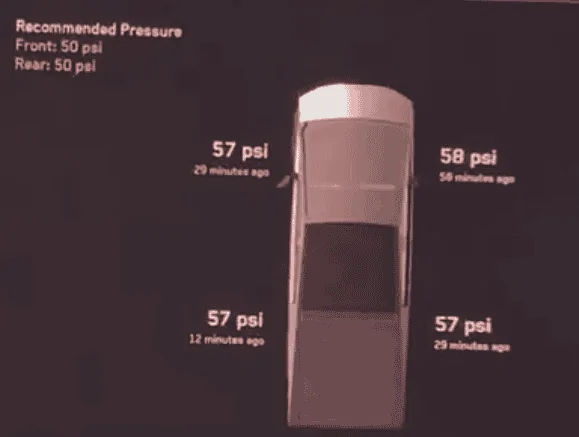
I can tell you from many years of experience, this is partially incorrect. 2-4% may be accurate at slow speeds, but friction is a multiplier and it will have a larger effect the faster you travel.I tried googling and found a good source. Underinflation causes a 2-4% loss in one test depending on speed. Wonder if this gets worse with AT tires.
https://www.reddit.com/r/electricvehicles/s/B8tGwH7tX1
the link I sourced had a test at higher speeds that showed a 4% loss.2-4% may be accurate at slow speeds, but friction is a multiplier and it will have a larger effect the faster you travel.
Would suggest reading through the big pile of replies on X, some are tribal from one side or the other but quite a few help substantiate the #s and some are pretty detailed.Saw this review getting called out on X, I find the numbers highly suspicious, giving it 1/10 shot of being real.
123kWh/320 miles = 384Wh/mi rated range
123kWh/340 mies = 362Wh/mi rated range
10k miles in this short of a time means lots of long distance highway drives, which often tends to be better in the real world than many short drives because the cabin/battery get conditioned for max efficiency.
In my S, on summer days driving 70-75mph average trip (read: this is actually hard to do on _average_, means trying to cruise at 85 as possible) I see deratings of 15%. Now "summer" for me doesn't really compare to Florida, should be warmer and more humid (less drag) more of the time there, and "summer" is just when I keep my summer tires on which is right up to the night of the first snow storm, which this year was a whopping January 6th, 2024. This data was collected with teslafi.
15% derating comes to 362/(1-.15) = 426Wh/mi
Not buying 599 Wh/mi
wasn’t clear what vehicle or its weight was being referencedI tried googling and found a good source. Underinflation causes a 2-4% loss in one test depending on speed. Wonder if this gets worse with AT tires.
https://www.reddit.com/r/electricvehicles/s/B8tGwH7tX1
If you have temperate conditions and leave the HVAC off, then "city" can be better than highway. What's actually better than highway is rural/extra-urban areas where you just cruise at 35-45 mph for long distances, as in the limit consumption is just a result of drag.The one disagreement I would have with you is that for BEVs highway driving is almost always WAY worse efficiency or Wh/mile than city driving. Some of the reports we have seen Wh/mile as high as 800 on the highway, which again helps explain the overall average.

HVAC blasting at full power (like preconditioning) is no more than 2-3kW. That's 'like' going 6mph. (not exactly since there's other overhead, rolling resistance, air resistance, which isn't a constant.)If you have temperate conditions and leave the HVAC off, then "city" can be better than highway. What's actually better than highway is rural/extra-urban areas where you just cruise at 35-45 mph for long distances, as in the limit consumption is just a result of drag.
What actually happens in the "city" is that HVAC ramp up, battery preconditioning, and excessive starts/stops take a huge hit. I had a drive last monday derated by 62%. Of course, small number of miles, but still.
PS, EPA test cycle sucks.


