
dalton108
Well-known member
- First Name
- Dalton
- Joined
- Oct 17, 2020
- Threads
- 132
- Messages
- 3,966
- Reaction score
- 7,912
- Location
- USA
- Vehicles
- ‘24 FS/CB; ‘24 MX; ‘23 MS PLAID (Prior: ‘20-MY; ‘21-M3P) (Also: ‘14-FJ; ‘21-C8)
- Occupation
- Lawyer

- Thread starter
- #1
https://www.independent.co.uk/news/...cybertruck-lawsuit-faulty-doors-b2838453.html
I couldn’t find the original post about this accident. Otherwise, I would’ve dropped it in that discussion.
This gives a little bit more detail about the original discussion in terms of who the “good Samaritan” was and what he did in terms of trying to get people out.
He was friends with them and following the cybertruck when it crashed into the tree.
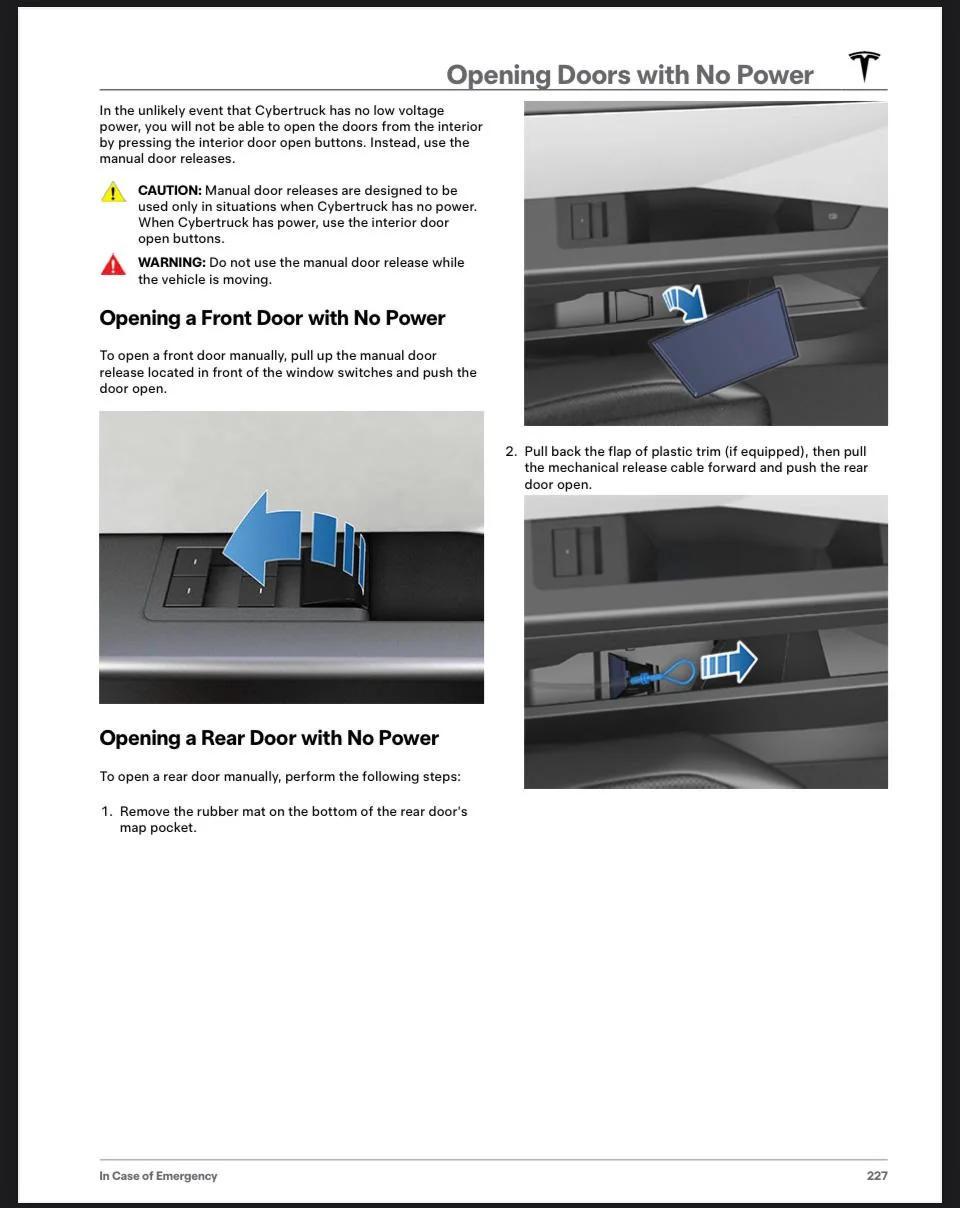
1. Is anybody doing a safety briefing with passengers to make sure they know how to access the release?
2. Do my lawyer friends think that it would be required of a “reasonable person” to do so?
3. People have died in their driveways in their Corvettes from heat exposure because it’s not entirely obvious how to get out if the battery dies (lever on the floor). When does this become a design flaw vs. a a failure to take personal responsibility?
4. Does the ethos of avoiding the accident in the first place make escape options less important?
I couldn’t find the original post about this accident. Otherwise, I would’ve dropped it in that discussion.
This gives a little bit more detail about the original discussion in terms of who the “good Samaritan” was and what he did in terms of trying to get people out.
He was friends with them and following the cybertruck when it crashed into the tree.
1. Is anybody doing a safety briefing with passengers to make sure they know how to access the release?
2. Do my lawyer friends think that it would be required of a “reasonable person” to do so?
3. People have died in their driveways in their Corvettes from heat exposure because it’s not entirely obvious how to get out if the battery dies (lever on the floor). When does this become a design flaw vs. a a failure to take personal responsibility?
4. Does the ethos of avoiding the accident in the first place make escape options less important?
Sponsored