
Sponsored
OP
OP

hemiarch
Well-known member
- First Name
- Ace
- Joined
- Jan 22, 2025
- Threads
- 115
- Messages
- 8,355
- Reaction score
- 9,582
- Location
- Arizona
- Vehicles
- 2024 foundation AWD, 2024 model x
- Occupation
- Trauma Surgeon

- Thread starter
- #2
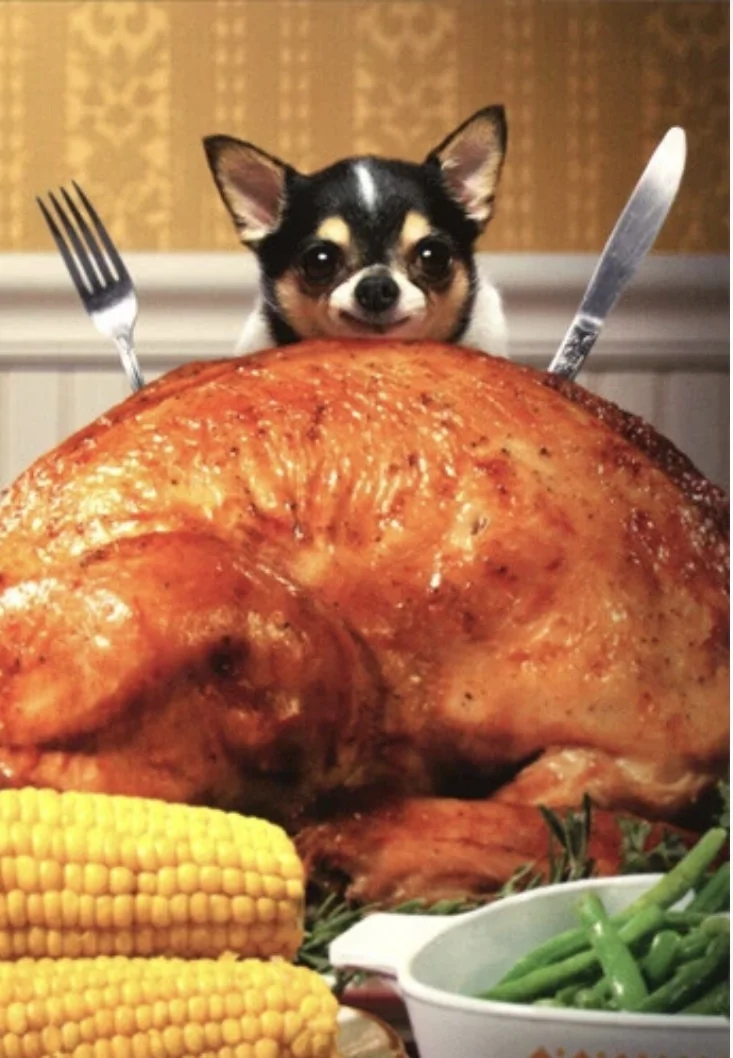
Public service warning:
Every year without fail despite the warnings on both turkeys and fryers, I take care of some jackass that tried to deep fry an inadequately thawed turkey. The results are epically bad.
So please, you’re intelligent enough to buy a Cybertruck, don’t be a turkey, you WILL die if you rush to fry.
Every year without fail despite the warnings on both turkeys and fryers, I take care of some jackass that tried to deep fry an inadequately thawed turkey. The results are epically bad.
So please, you’re intelligent enough to buy a Cybertruck, don’t be a turkey, you WILL die if you rush to fry.

CyberGus
Well-known member
- First Name
- Gus
- Joined
- May 22, 2021
- Threads
- 91
- Messages
- 10,236
- Reaction score
- 33,888
- Location
- Austin, TX
- Vehicles
- 1981 DeLorean, 2024 Cybertruck
- Occupation
- IT Specialist
I'm an oven man myself, but whenever deep-frying you always shut off the burner before adding the bird! Even if adequately thawed, there's always a possibility of overflow or spillage of the oil. With the burner on, even a small splash of oil will erupt into a conflagration.Public service warning:
Every year without fail despite the warnings on both turkeys and fryers, I take care of some jackass that tried to deep fry an inadequately thawed turkey. The results are epically bad.


HaulingAss
Well-known member
- Joined
- Oct 3, 2020
- Threads
- 28
- Messages
- 10,298
- Reaction score
- 20,703
- Location
- Western Washington, USA
- Vehicles
- Cybertruck DM, 2010 F-150, 2018 Performance Model 3, 2024 Performance Model 3
I tried deep-frying years ago, it was good but a royal pain in the butt. A good oven is golden. Electric (or wood) is best.Public service warning:
Every year without fail despite the warnings on both turkeys and fryers, I take care of some jackass that tried to deep fry an inadequately thawed turkey. The results are epically bad.
So please, you’re intelligent enough to buy a Cybertruck, don’t be a turkey, you WILL die if you rush to fry.
Just don't tell me I will get sick if I let the turkey sit out to come up in temperature. I use fresh turkeys (which are getting harder to find) wash them up, inside and out, salt them up good, inside and out, then let it sit out in a 60 degree room all night long. with both ends of the cavity open for airflow. A fan on low speed is a good idea. In the morning, rub it down good with olive oil. You can stick it in a fridge for an hour or two if you're not ready to cook it. Cook in a very hot oven (~450 degrees) and let it coast down to 325 degrees until it just hits 160 degrees using an instant read probe. If your oven is well insulated, and has enough thermal mass, it will get beautiful and brown. If not, you might have to set it on 400 degrees for a half hour at the beginning of the roast.
Turkeys cook best when they are cooling down, not warming up (before roasting). It will come out juicy and delicious and cook considerably faster than a turkey right out of the fridge. Make sure the cavity is open on both ends so the hot air can circulate inside. If your oven is big enough, roast it on a vertical turkey stand.
I would venture to say that well over 90% of Thanksgiving turkeys in America are not cooked very well. Which is to say most parts are over-cooked (sometimes with under-cooked portions inside). Roasting them flat also helps solve that problem, but that requires different techniques.
Happy Thanksgiving!
CyberGus
Well-known member
- First Name
- Gus
- Joined
- May 22, 2021
- Threads
- 91
- Messages
- 10,236
- Reaction score
- 33,888
- Location
- Austin, TX
- Vehicles
- 1981 DeLorean, 2024 Cybertruck
- Occupation
- IT Specialist
That's exactly what I'm going to tell you.Just don't tell me I will get sick if I let the turkey sit out to come up in temperature.
Above 40º, pathogens will actively multiply. The cooking process will eradicate them, but not the toxins they may have emitted. I'm glad you've not gotten sick but the risk is real.
I do dry my turkey overnight, but in the fridge, which is a dry environment anyway. That's how you get the crispy skin!
OP
OP
hemiarch
Well-known member
- First Name
- Ace
- Joined
- Jan 22, 2025
- Threads
- 115
- Messages
- 8,355
- Reaction score
- 9,582
- Location
- Arizona
- Vehicles
- 2024 foundation AWD, 2024 model x
- Occupation
- Trauma Surgeon
- Thread starter
- #6
Skipping this year because we’re going to someone else’s house but turducken breast has been our go to that last few years. Super delicious.
I wonder if sous vide would be a good approach to turkey. All you’d need is a pretty large container. (Tesla vault tote maybe?)
They make ziplocks big enough to function as oven bags so you could just use one of those.
Then put your herbs and an unreasonable amount of butter in the bag with it and let it go overnight to 165 on the nose. Safe temp, but not a hair over.
Then I’d take it out and brown the skin in an oven set to “fires of mount doom” temperature for color and crunch only.
I bet that would be juicy.
I wonder if sous vide would be a good approach to turkey. All you’d need is a pretty large container. (Tesla vault tote maybe?)
They make ziplocks big enough to function as oven bags so you could just use one of those.
Then put your herbs and an unreasonable amount of butter in the bag with it and let it go overnight to 165 on the nose. Safe temp, but not a hair over.
Then I’d take it out and brown the skin in an oven set to “fires of mount doom” temperature for color and crunch only.
I bet that would be juicy.
Last edited:
OP
OP
hemiarch
Well-known member
- First Name
- Ace
- Joined
- Jan 22, 2025
- Threads
- 115
- Messages
- 8,355
- Reaction score
- 9,582
- Location
- Arizona
- Vehicles
- 2024 foundation AWD, 2024 model x
- Occupation
- Trauma Surgeon
- Thread starter
- #7
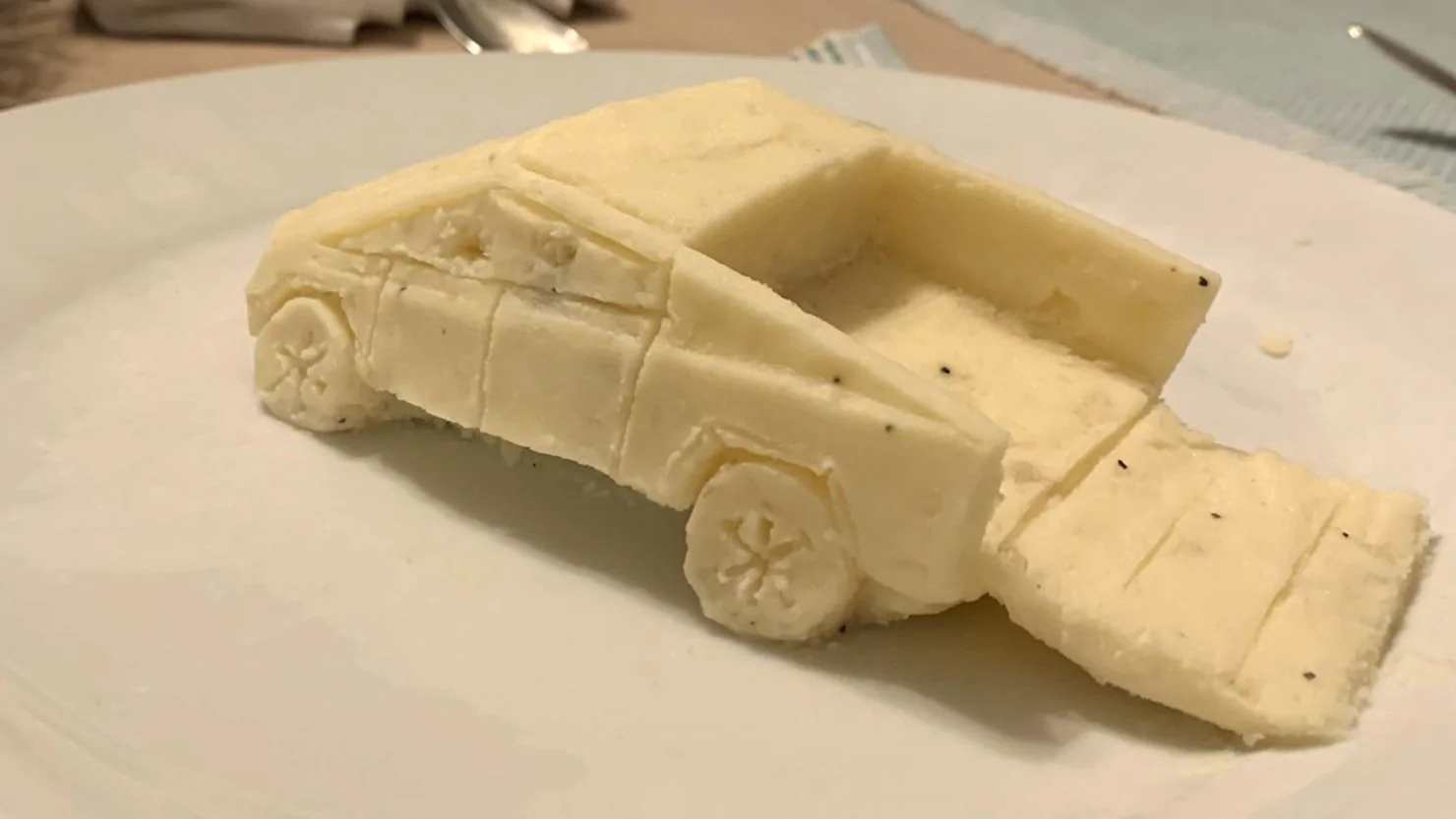
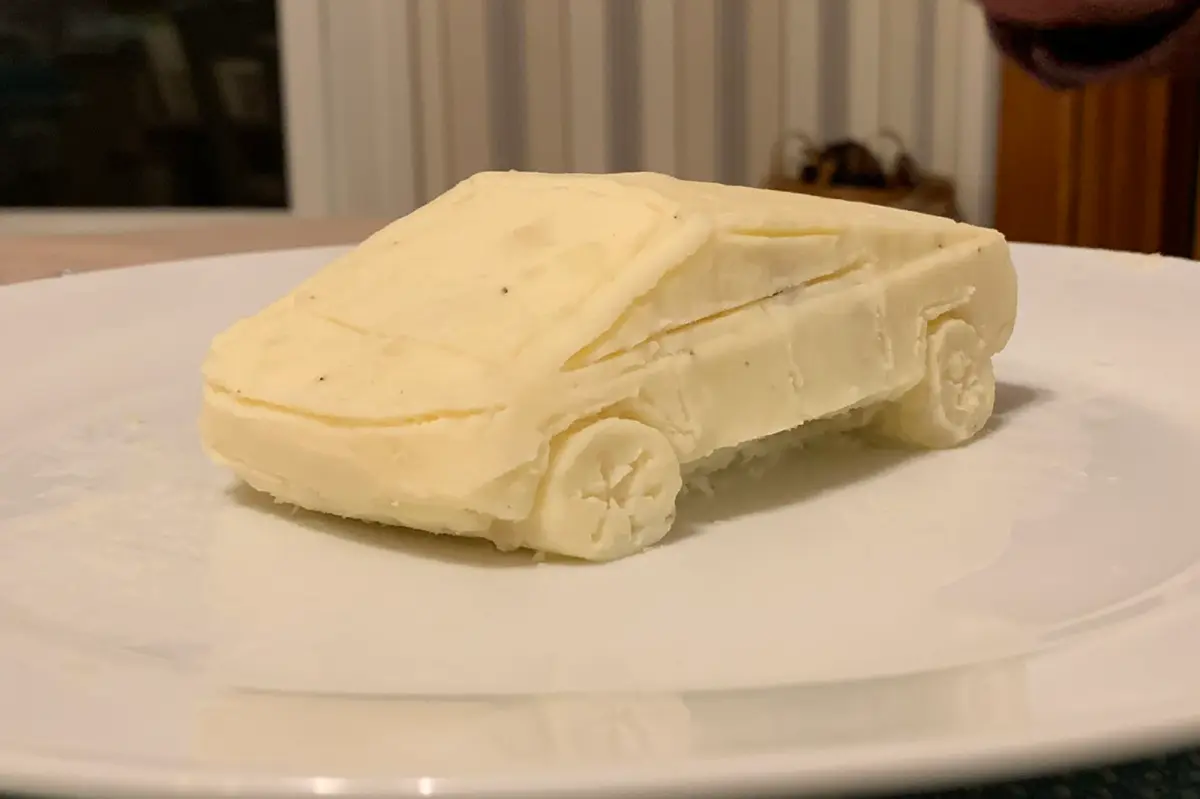
So…mashed potato sculpture

Artist was unaware the ramp never made it to production but otherwise pretty awesome

Artist was unaware the ramp never made it to production but otherwise pretty awesome
CyberGus
Well-known member
- First Name
- Gus
- Joined
- May 22, 2021
- Threads
- 91
- Messages
- 10,236
- Reaction score
- 33,888
- Location
- Austin, TX
- Vehicles
- 1981 DeLorean, 2024 Cybertruck
- Occupation
- IT Specialist
CyberGus
Well-known member
- First Name
- Gus
- Joined
- May 22, 2021
- Threads
- 91
- Messages
- 10,236
- Reaction score
- 33,888
- Location
- Austin, TX
- Vehicles
- 1981 DeLorean, 2024 Cybertruck
- Occupation
- IT Specialist
https://share.google/aimode/6hWvWW5vulvR1tkOII wonder if sous vide would be a good approach to turkey.
The turkey must be broken down, since the dark and white meats have different target temperatures. It will take many hours but is waaaaaay safer than deep-frying lol
OP
OP
hemiarch
Well-known member
- First Name
- Ace
- Joined
- Jan 22, 2025
- Threads
- 115
- Messages
- 8,355
- Reaction score
- 9,582
- Location
- Arizona
- Vehicles
- 2024 foundation AWD, 2024 model x
- Occupation
- Trauma Surgeon
- Thread starter
- #10
Definitely. And something to do with the $250 Tupperware many of us bought with FS credit .https://share.google/aimode/6hWvWW5vulvR1tkOI
The turkey must be broken down, since the dark and white meats have different target temperatures. It will take many hours but is waaaaaay safer than deep-frying lol
I might try that next year. I think if you put a little seasoning in the bag you could really liven the meat up a bit too.
CyberGus
Well-known member
- First Name
- Gus
- Joined
- May 22, 2021
- Threads
- 91
- Messages
- 10,236
- Reaction score
- 33,888
- Location
- Austin, TX
- Vehicles
- 1981 DeLorean, 2024 Cybertruck
- Occupation
- IT Specialist
#TWSSif you put a little seasoning in the bag you could really liven the meat
OP
OP
hemiarch
Well-known member
- First Name
- Ace
- Joined
- Jan 22, 2025
- Threads
- 115
- Messages
- 8,355
- Reaction score
- 9,582
- Location
- Arizona
- Vehicles
- 2024 foundation AWD, 2024 model x
- Occupation
- Trauma Surgeon
- Thread starter
- #12
Or just use a turkey baster if you can’t liven it enough.#TWSS

Wait…what are we talking about again Gus?

BlueLightning
Well-known member
- First Name
- Thomas
- Joined
- Mar 4, 2024
- Threads
- 1
- Messages
- 768
- Reaction score
- 459
- Location
- Oklahoma
- Vehicles
- Model Y, Yukon, GM 1500, Tacoma, and Road King
- Occupation
- Retired USA, Army
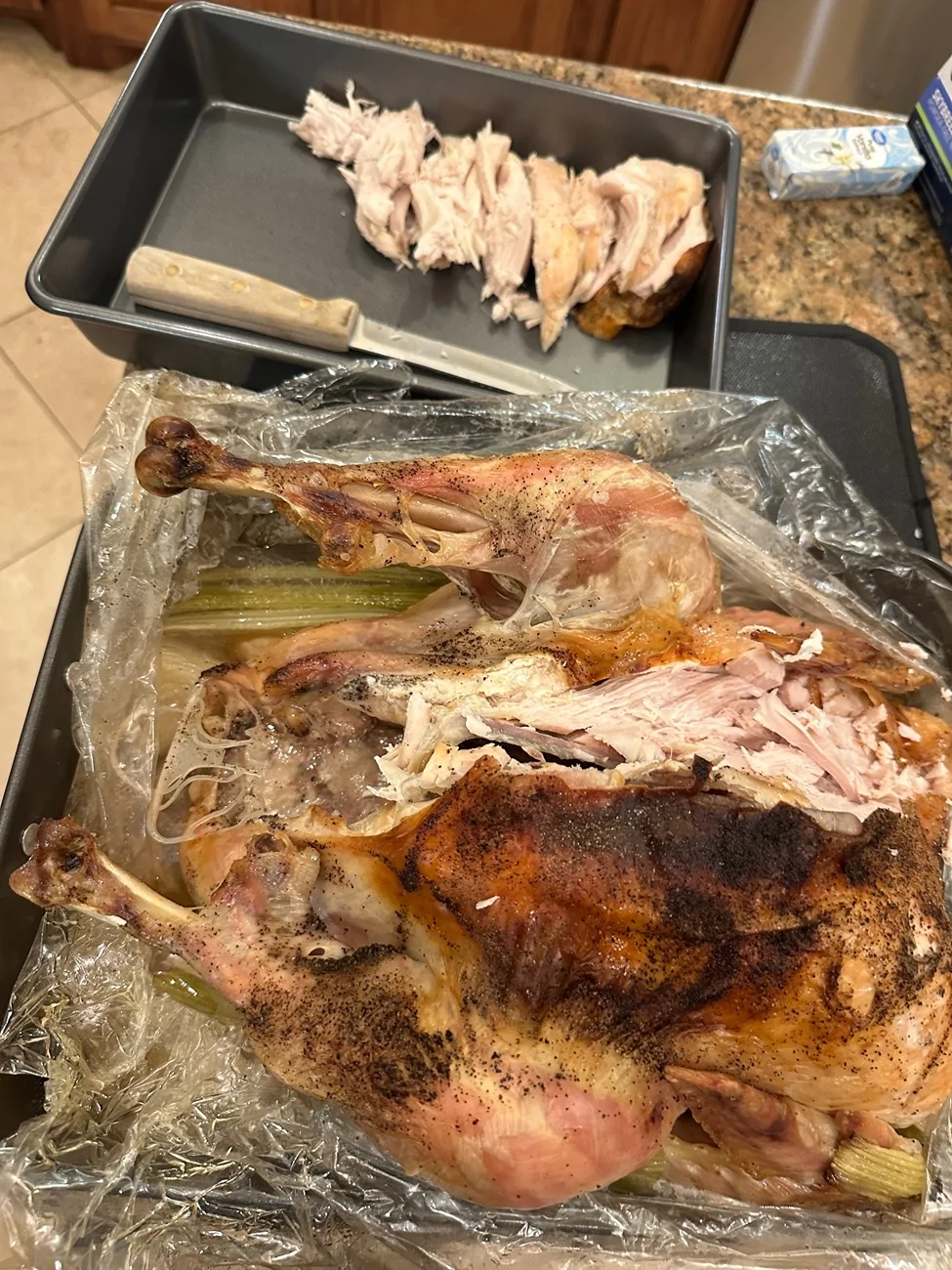
350 degree 2.5 hours and done!
Happy Thanksgiving to all!!


Happy Thanksgiving to all!!
OP
OP
hemiarch
Well-known member
- First Name
- Ace
- Joined
- Jan 22, 2025
- Threads
- 115
- Messages
- 8,355
- Reaction score
- 9,582
- Location
- Arizona
- Vehicles
- 2024 foundation AWD, 2024 model x
- Occupation
- Trauma Surgeon
- Thread starter
- #14
Noice!!350 degree 2.5 hours and done!
I’m so excited for tomorrow. It’s one of my favorite holidays. Just have to make it through this call shift.

cyberos
Well-known member
- Joined
- Jul 9, 2024
- Threads
- 23
- Messages
- 216
- Reaction score
- 439
- Location
- Austin, TX
- Vehicles
- RX 350h, Cybertruck AWD
- Occupation
- Generative AI
The secret is actually the salting/brining of the turkey. It preserves the meat, in addition to adding flavor. This is why you can get away with counter thawing (or even leaving fresh meat out overnight).I tried deep-frying years ago, it was good but a royal pain in the butt. A good oven is golden. Electric (or wood) is best.
Just don't tell me I will get sick if I let the turkey sit out to come up in temperature. I use fresh turkeys (which are getting harder to find) wash them up, inside and out, salt them up good, inside and out, then let it sit out in a 60 degree room all night long. with both ends of the cavity open for airflow. A fan on low speed is a good idea. In the morning, rub it down good with olive oil. You can stick it in a fridge for an hour or two if you're not ready to cook it. Cook in a very hot oven (~450 degrees) and let it coast down to 325 degrees until it just hits 160 degrees using an instant read probe. If your oven is well insulated, and has enough thermal mass, it will get beautiful and brown. If not, you might have to set it on 400 degrees for a half hour at the beginning of the roast.
Turkeys cook best when they are cooling down, not warming up (before roasting). It will come out juicy and delicious and cook considerably faster than a turkey right out of the fridge. Make sure the cavity is open on both ends so the hot air can circulate inside. If your oven is big enough, roast it on a vertical turkey stand.
I would venture to say that well over 90% of Thanksgiving turkeys in America are not cooked very well. Which is to say most parts are over-cooked (sometimes with under-cooked portions inside). Roasting them flat also helps solve that problem, but that requires different techniques.
Happy Thanksgiving!
Sponsored


