Sponsored

Kit - Emergency Shore Power

TheMatrix

New member
First Name
Derrick
Joined
Mar 29, 2025
Threads
0
Messages
3
Reaction score
2
Location
Rush, NY
Vehicles
AWD
Country flag
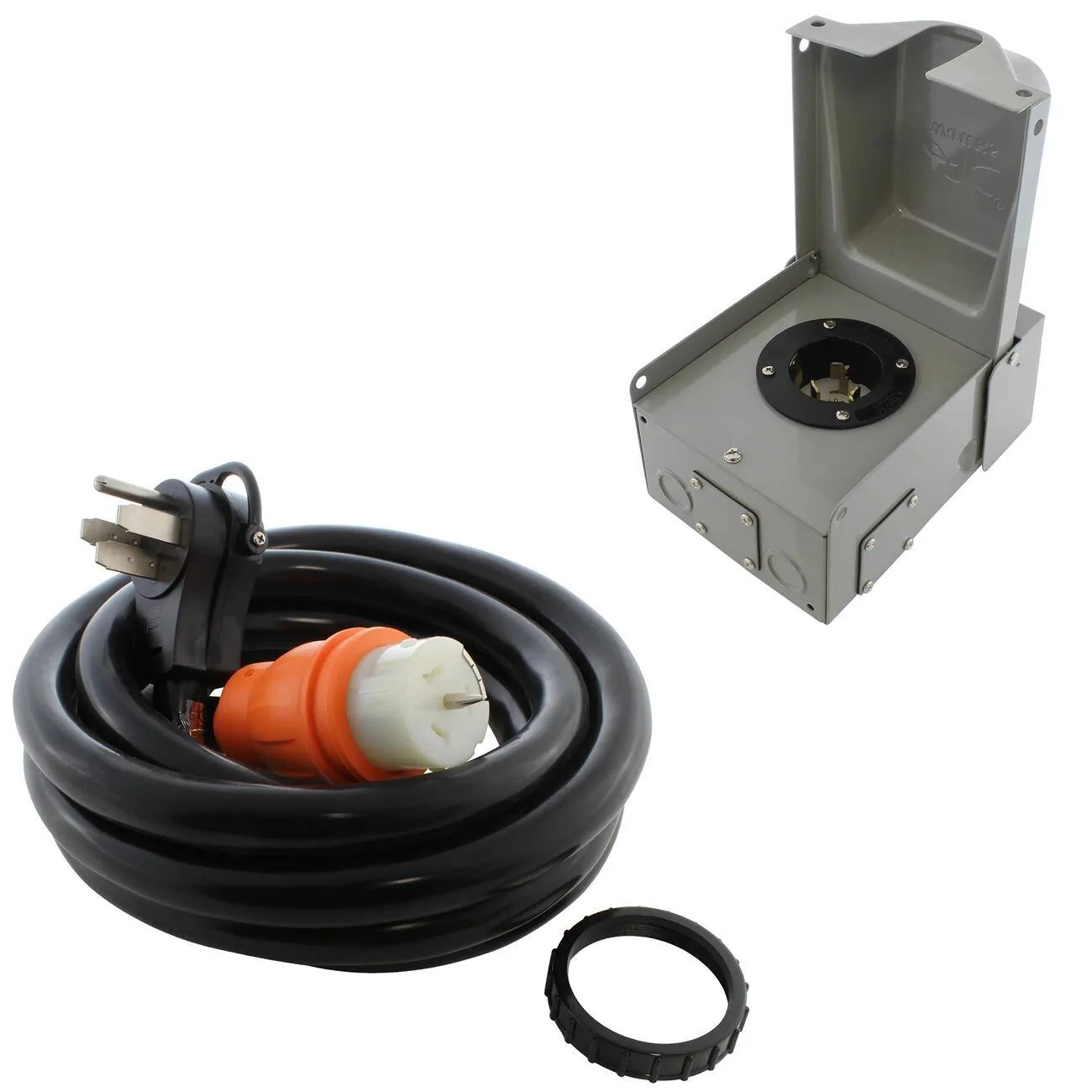
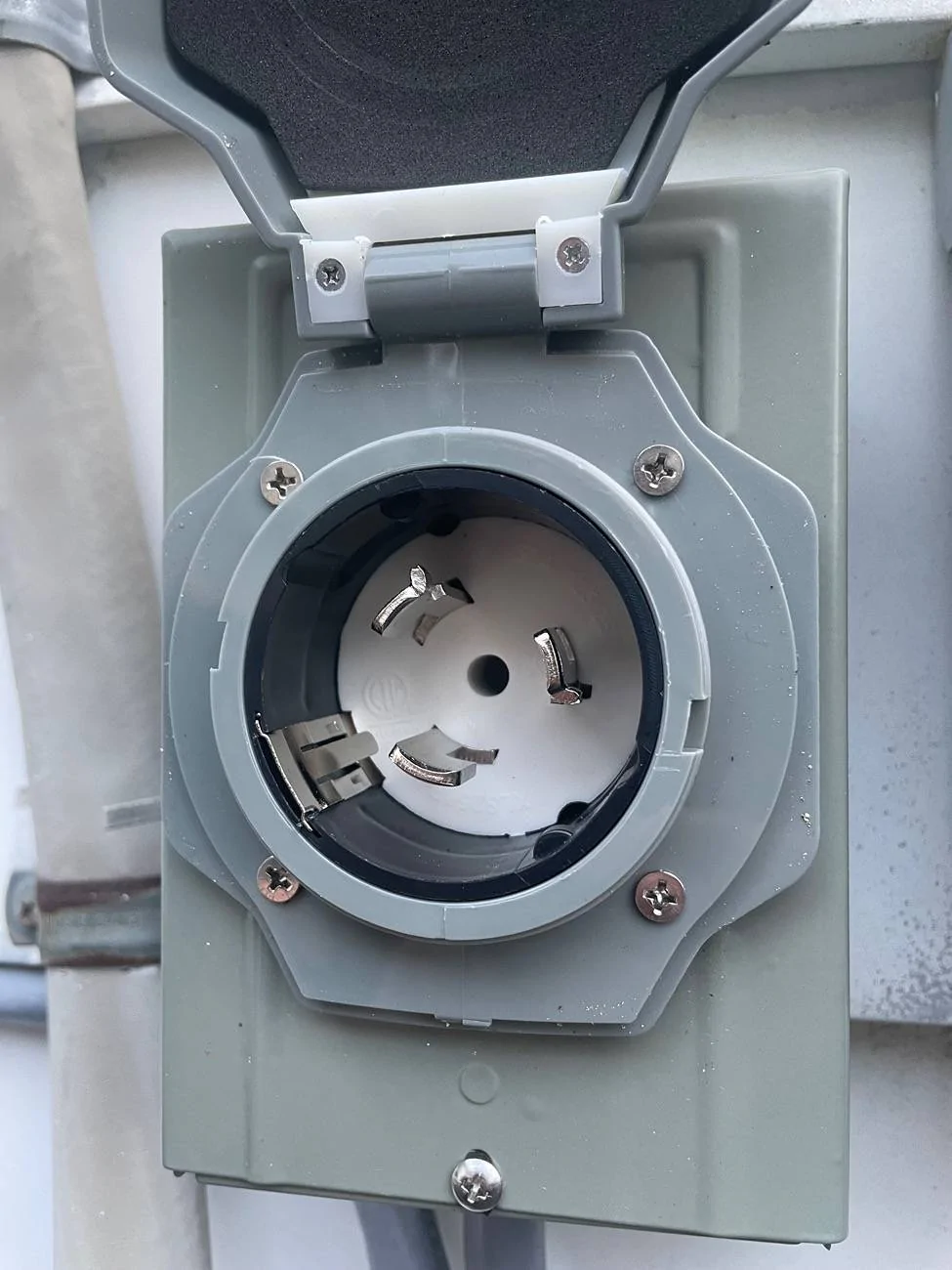
Just purchased this kit to provide emergency backup power to my house. I've been looking for quite a while for a safe and simple solution, and this one seems promising. Hopefully I'll remember to document the whole process for others out there like me who can't really justify spending thousands on materials, labor, and permits for an automatic transfer switch (we have extremely reliable power where I live).

I'm also thinking about implementing a throw switch and/or interlock; not sure yet though. Open to suggestions all around. If nothing else, I'll place a lock on the box to prevent shock or electrocution, should the breaker be flipped on by someone unawares.

1748996712422-b5.webp


Also, here is a great tip for the startup sequence for generators.
Did this. Interlock kit is a must. Double pole breaker located directly below main breaker, fed from receptacle mounted on outside of house.
Interlock forces the main breaker to be disengaged before engaging the new circuit from external outlet. Cybertruck powers the house for critical items not exceeding the current provided by the Cybertruck. For example I wouldn’t energize our hot tub while connected.
Tesla Cybertruck Kit - Emergency Shore Power IMG_3455
Sponsored

 
Last edited:
OP
OP
REM

REM

Well-known member
Joined
Dec 9, 2023
Threads
14
Messages
3,577
Reaction score
6,641
Location
NC
Vehicles
2020 Model 3 Standard Range++ & Diet Cybertruck, Dual Motor
Occupation
Professional Retard
Country flag
I understand that there are ways that will work as long as you do things in a carefully prescribed order. But if you miss a step, or get the order reversed, very bad things can happen.

I have a friend that runs a generator by feeding a subpanel with a 14-30 outlet (not Receptacle) It works. But every time he connects it or disconnects it, he's taking a risk. One that could harm himself or a family member, as likely as a lineman.
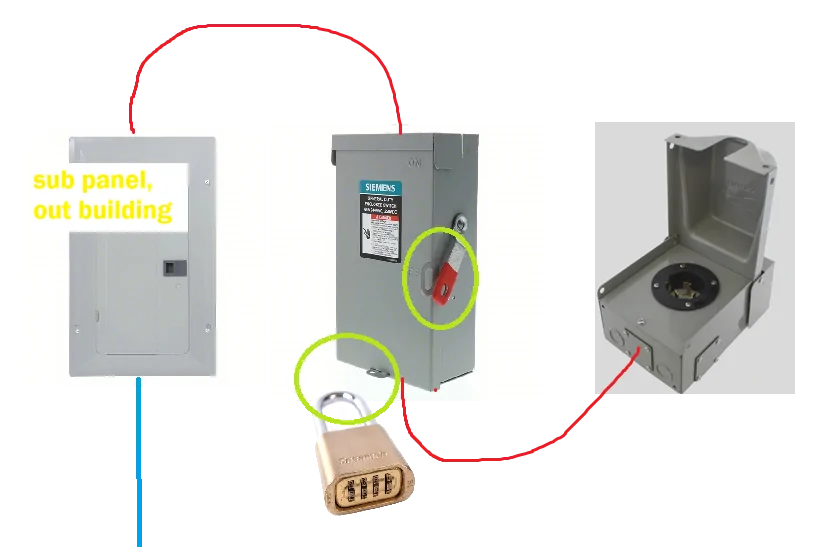
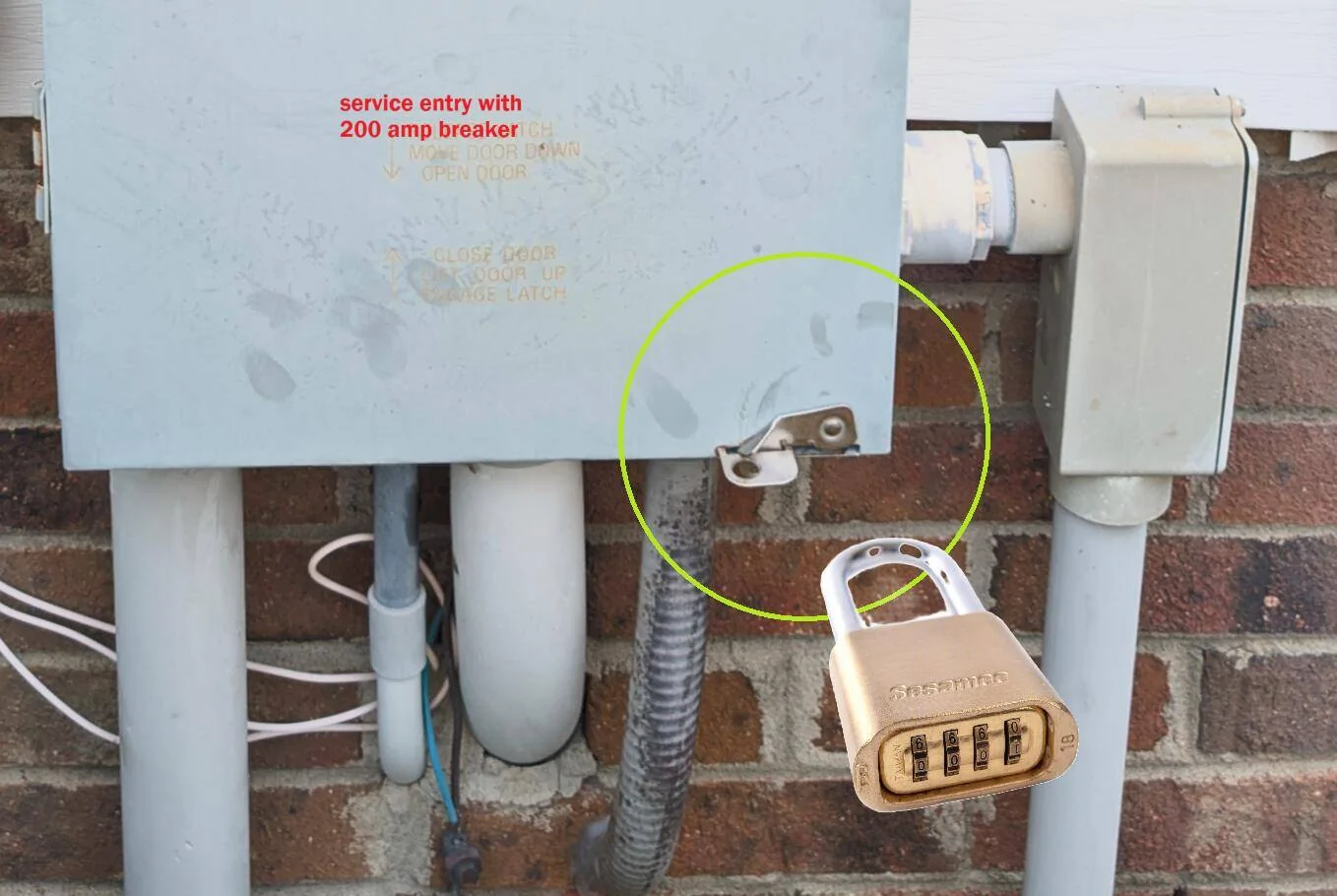
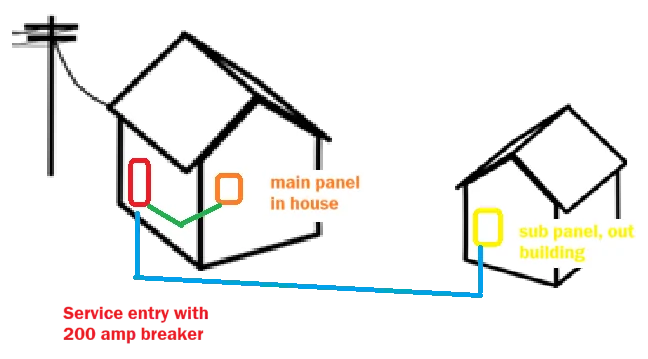
Agreed! it can be super dangerous. That's why I've been mulling over a simple yet safe solution for a while. I don't have solar, but good input on the interlock. In most cases, I would agree with a simple interlock device, but our setup here may differ than what most people are used to. Maybe a couple of pics will help illustrate.

I'm going to draft and print a generator hookup, startup, and safety checklist, and attach it to our house main panel inside, as well as give my family a complete demo of how it all works. It will look something like this [rough draft]:

  1. Total grid power loss is detected, and verified need/want to enable emergency backup power either via gas generator or Cybertruck.
  2. Flip main 200 amp breaker inside the house to the "OFF" position. [preventing harmful brownout situations while you work to isolate the grid connection, in case a tree is laying across a line, which the most likely scenario here]
  3. Flip every branch circuit breaker inside the house to the "OFF" position. [this is done to prevent heavy/unnecessary loads as emergency power comes online]
  4. Go outside and flip external service entry breaker to the "OFF" position.
  5. Padlock the external service breaker panel to prevent unauthorized or accidental actuation. [this completely isolates the house from the grid]
  6. Go to outbuilding and Flip every branch circuit breaker in the sub-panel to the "OFF" position.
  7. Verify that the Cybertruck outlets are turned "OFF" by looking in the "Outlets & Mods" tab.

  8. Verify that the [SIEMENS Safety Switch] is located in the "OFF" position, and padlock is in the locked position, [preventing the arm from being thrown into the "on" position" before we are ready]

  9. Plug male NEMA 14-50 [STW 6/3 + 8/1 Cable] into Cybertruck [or generator cordset into generator].
  10. Plug female end of (CS6364) [STW 6/3 + 8/1 Cable] into [NEMA SS2-50P 50 Amp Power Input Inlet Box]. Ensure that the cable is twist locked into position, and locking ring is tightened [if applicable].
  11. Once the cable to the Cybertruck [or generator] is secure and free of any trip hazard, unlock the actuator arm to the [NEMA SS2-50P 50 Amp Power Input Inlet Box] and place padlock into locking slot at the bottom portion of the [SIEMENS Safety Switch].
  12. Move the [SIEMENS Safety Switch] level to the "ON" position.
  13. Switch the breaker labeled "generator" to the "ON" position.
  14. [Enable] the outlets for the Cybertruck.
  15. Slowly start turning on the branch circuits that you want to run during the outage; enabling the largest load first, and waiting several seconds in between them [to ensure large loads aren't kicking off at the same time; thus gently bringing critical systems back online without having too much inrush current].
And then reverse order from there when grid power is restored. There are of course some nuance and details left out, but that's the main idea. The safety throw lever that stands in between the Cybertruck and the subpanel is what makes this system simple, yet safe in the event of an errant actuation of the "backup generator" circuit"; regardless if the breaker is accidently turned or left in the "on" position. Granted, there is room for error if you utterly fail on all levels to perform the procedure properly, but we don't lose power enough to warrant an ATS. So this is the best course for now.

So for those of you out there with valid concerns about an interlock, I do agree. It's very necessary. But I'm likely going to chose to do lock-out-tag-out using padlocks on the enclosures themselves, rather than finding a way to interlock the inside of the panels. Less confusion this way. Plus I get to "clunk" a throw lever like it's the 1800s lol.


Tesla Cybertruck Kit - Emergency Shore Power 1749151863904-ak


______________________________


Tesla Cybertruck Kit - Emergency Shore Power 1749144614492-x


______________________________


Tesla Cybertruck Kit - Emergency Shore Power 1749142973162-jy
 

L3it3R

Well-known member
First Name
Chris
Joined
Aug 20, 2023
Threads
15
Messages
1,039
Reaction score
2,053
Location
Maryland
Vehicles
'21 Model 3 Performance FSD, '26 Model Y Premium AWD
Occupation
AI | Software | Sales | etc.
Country flag
I wish there was a simple way to implement this w/Solar but I'll just rely on extension cables to the fridge and other stuff if the time comes - we lose power for about 5 minutes every other year or so - buried lines and all that.
 

Mr Sir

Well-known member
First Name
Michael
Joined
Feb 7, 2025
Threads
15
Messages
96
Reaction score
112
Location
23000 Sussex Hwy #162 Seaford, De 19973
Vehicles
2024 CT
Country flag
You should get a permit, my brother-in-Christ.

Seriously, ? you need to make sure that you don’t end up feeding electricity into the grid when a line worker is not anticipating that occurence. It’s as much for the safety of those upstream from your home as it is for the safety of you and your house.

1 amp is sufficient to kill somone. Be careful and enjoy your truck!
.007 of one amp has been determined to be
the minimal amount to kill somebody (UL, NFPA, and others fyi)
 

Stargazer

Member
First Name
Emmett
Joined
Feb 12, 2021
Threads
0
Messages
5
Reaction score
3
Location
Wisconsin
Vehicles
CyberTruck, Jeep, Ranger
Country flag
Danger to line workers is overstated - they already operate as if the wires may be energized either due to a mistake upstream, or some silly goose with a Cybertruck downstream.
We had a lineman die last year trying to help out following a storm because he thought a line was dead when it wasn't. This didn't have anything to do with back-feeding, but shows that lineman make mistakes. I wouldn't want to be responsible for killing one who forgot to check to see if there were any "silly gooses" downstream.
 

Mr Sir

Well-known member
First Name
Michael
Joined
Feb 7, 2025
Threads
15
Messages
96
Reaction score
112
Location
23000 Sussex Hwy #162 Seaford, De 19973
Vehicles
2024 CT
Country flag
As a career "sparky" , I must say that all of us are taught that, "the wire is always hot".

This stated, there are redundant practices " upstream" that one can take.

I rarely did any of these because I knew the wire was hot already.

I could elaborate more, but mistakes happen.

In this field, one will die allowing even a single "mistake" to happen.

Do not get me wrong though.

This is the worst possible way to go, and my thoughts and prayers go out to the survivors and loved ones.

Years ago, I "saw the bright light", but luckily it was not my time to go(thank you God).

I am ranting here simply to state, that whether we are in FSD supervising or connecting up a neighborhood with power, it all can end badly in an instant.

ALWAYS, watch your rear because no one else will.

Enough said.
Sponsored


Top