
TruckElectric
Well-known member
- First Name
- Bryan
- Joined
- Jun 16, 2020
- Threads
- 772
- Messages
- 2,488
- Reaction score
- 3,280
- Location
- Texas
- Vehicles
- Dodge Ram diesel
- Occupation
- Retired

- Thread starter
- #1
How This Tesla-Busting Battery Could Be The ‘Holy Grail’ For Electric Flight

A pilot connects a charging cable to the tiny Pipistrel Velis Electro, the first electric plane ... [+]
AFP VIA GETTY IMAGES
Researchers in Japan say they have developed a battery with almost twice the energy density of the battery used in a Tesla Model 3 car, offering hope that much longer-lived batteries could soon make their way to mobile phones, electric vehicles—and even electric passenger planes.
The new lithium-air battery, developed by Japan’s National Institute for Materials Science (NIMS) and backed by Japanese conglomerate SoftBank, is claimed to have a record-breaking energy density of more than 500 watt hours per kilogram (Wh/kg)—nearly double that of the 260 Wh/kg lithium ion Panasonic battery found in Tesla’s Model 3.
The team also claim the battery holds up well under repeated charges, saying: “the repeated discharge and charge reaction proceeds at room temperature. The energy density and cycle life performance of this battery are among the highest ever achieved.”
The 500 Wh/kg figure is important because engineers regard that as the threshold for the point at which regional electric passenger aircraft become possible. The electrification of aircraft offers the promise of sustainable, efficient and close-to-silent air travel compatible with a zero carbon future. But numerous technological barriers stand in the way of that goal—most significantly the fact that current-generation lithium-ion batteries are heavy relative to the amount of electrical energy they can store.
I asked Patrick Wheeler, Global Director of the Institute of Aerospace Technology and a professor in the Department of Electrical and Electronic Engineering at the University of Nottingham in the U.K., for his views on the significance of the breakthrough.
“The figures they’re talking about are interesting because they’re at that pinch point where it will become feasible to have a medium distance electric flight—that’s a bit of a holy grail,” Wheeler said. “If you want all-electric flight over a large distance, the current lithium ion batteries aren’t going to do it, because they become too big and too heavy.”
But Wheeler emphasized that the news could be at least as relevant to other forms of transport that are already in use.
“What this does is give us a battery that is significantly better in energy storage than we have today,” he said. “Range anxiety is still an issue for electric vehicles, so if you can replace the battery pack an electric car today with something that takes you twice, three times as far, that's going to be a good place to be.”
Wheeler noted that little detailed technical information was currently available on the NIMS unit, but he thought that such a battery, should it hold up under real-world conditions, could be brought to market fairly quickly owing to massive interest in electrification.

The Eviation Alice electric aircraft, on display at the 2019 Paris Air Show.
MARINA LYSTSEVA/TASS
“If it proves that it will scale up, I can imagine that development is going to be fairly rapid, because the demand is there,” he said. “You have governments saying they want all electric vehicles and transport by 2030, 2035. There’s a good reason for a lot of people to want to invest in that—both governmental and commercial.”
Returning to the prospect of electric planes, Wheeler thought that the NIMS announcement was encouraging, but noted many other challenges would have to be overcome before electric aircraft became a common sight on the world’s runways—not least when it comes to charging.
“If you’re going down the route of rechargeable batteries on planes, charging the planes up as they’re sitting at the gate doesn’t look unfeasible,” he said. “But all that electrical energy has to come from somewhere: you need to make sure you have a zero carbon source for all that electrical energy, and the infrastructure to get it to the aircraft. That’s not insignificant, particularly at large airports.”
In the near term, another hurdle could prove to be legislative: the announcement from Japan coincides with news that Israeli company Eviation is gearing up to test what is purported to be the first electric passenger plane, dubbed Alice. But in the U.S., where Alice is due to take test flights in the next few weeks, the Federal Aviation Authority has yet to established any rules for electric aircraft, though it has issued “special conditions” for certain engines produced by MagniX, the firm that makes the engines used in the Alice.
At present, Alice’s specifications are modest. The plane can carry nine passengers a distance of just 506 miles at just under 290 miles per hour, using lithium-ion batteries that the company’s CEO has said make up 65% of the weight of the aircraft. So while these are still early days in the age of electric flight, advances of the sort described by the team at NIMS could prove a game-changer.
https://www.forbes.com/sites/davidr...ly-grail-for-electric-flight/?sh=5e5f7ffc31d3

Figure. (a) New materials for lithium-air batteries developed by ALCA-SPRING project. (b) Cell fabrication technique developed by the NIMS-SoftBank Advanced Technologies Development Center. (c) Demonstration of stable discharge/charge cycles of lithium-air batteries with energy density over 500Wh/kg operated at the room-temperature. CREDIT: Shoichi Matsuda National Institute for Materials Science
Development Of A Lithium-Air Battery With An Energy Density Over 500 Wh/kg
NIMS and Softbank Corp. have developed a lithium-air battery with an energy density over 500Wh/kg—significantly higher than currently lithium ion batteries. The research team then confirmed that this battery can be charged and discharged at room temperature. In addition, the team found that the battery developed by the team shows the highest energy densities and best cycle life performances ever achieved. These results signify a major step toward the practical use of lithium-air batteries.
Lithium-air batteries have the potential to be the ultimate rechargeable batteries: they are lightweight and high capacity, with theoretical energy densities several times that of currently available lithium ion batteries. Because of these potential advantages, they may find use in a wide range of technologies, such as drones, electric vehicles and household electricity storage systems.
NIMS has been carrying out basic research on lithium-air batteries with support from the ALCA-SPRING program (ALCA: Advanced Low Carbon Technology Research and Development Program, SPRING: Specially Promoted Research for Innovative Next Generation Batteries). This program has been funded by the Japan Science and Technology Agency (JST) with the goal of accelerating large-capacity rechargeable battery R&D.
In 2018, NIMS and Softbank co-founded the Advanced Technologies Development Center to conduct research with the goal of putting lithium-air batteries into practical use in mobile phone base stations, the Internet of Things (IoT), HAPS (high altitude platform stations) and other technologies. Despite their very high theoretical energy densities, only a small number of lithium-air batteries with high energy densities have actually been fabricated and evaluated. This limited success is attributed to the fact that a large proportion by weight of lithium-air battery contains heavy inactive components (e.g., separators and electrolytes) that do not directly participate in actual battery reactions.
This research team had previously developed original battery materials that significantly increase the performance of lithium-air batteries in ALCA-SPRING-supported research. The team then developed a technique to fabricate high-energy-density lithium-air cells at the NIMS-SoftBank Advanced Technologies Development Center.
Finally, the team created a new lithium-air battery by combining these new materials and the fabrication techniques. The developed battery exhibited the energy density over 500 Wh/kg—substantially higher than currently lithium ion batteries. Notably, the repeated discharge and charge reaction proceeds at room temperature. The energy density and cycle life performance of this battery are among the highest ever achieved.*
* Based on surveys conducted by NIMS (as of December 14, 2021)
https://www.eurasiareview.com/22012...attery-with-an-energy-density-over-500-wh-kg/
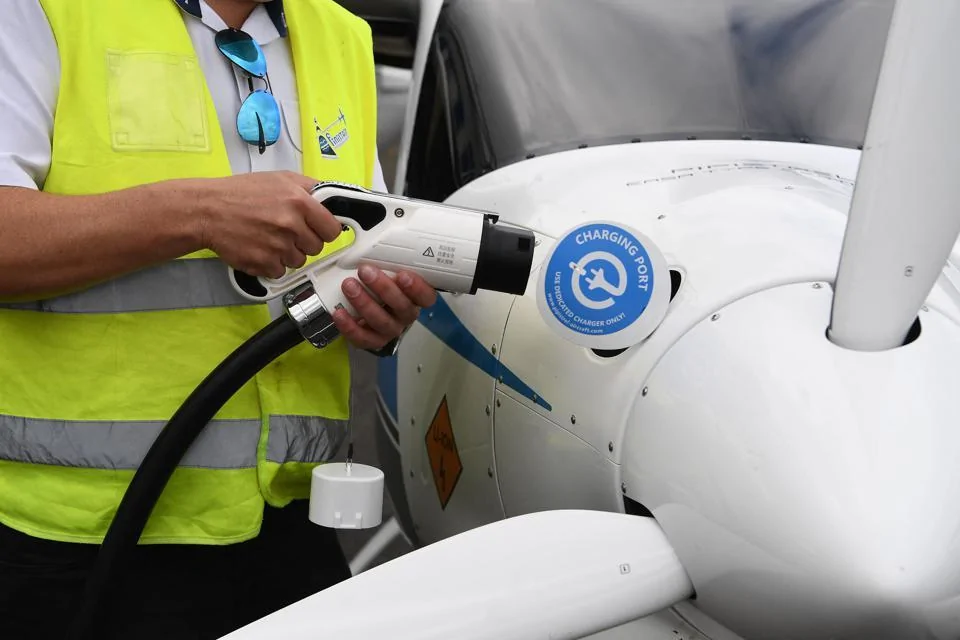
A pilot connects a charging cable to the tiny Pipistrel Velis Electro, the first electric plane ... [+]
AFP VIA GETTY IMAGES
Researchers in Japan say they have developed a battery with almost twice the energy density of the battery used in a Tesla Model 3 car, offering hope that much longer-lived batteries could soon make their way to mobile phones, electric vehicles—and even electric passenger planes.
The new lithium-air battery, developed by Japan’s National Institute for Materials Science (NIMS) and backed by Japanese conglomerate SoftBank, is claimed to have a record-breaking energy density of more than 500 watt hours per kilogram (Wh/kg)—nearly double that of the 260 Wh/kg lithium ion Panasonic battery found in Tesla’s Model 3.
The team also claim the battery holds up well under repeated charges, saying: “the repeated discharge and charge reaction proceeds at room temperature. The energy density and cycle life performance of this battery are among the highest ever achieved.”
The 500 Wh/kg figure is important because engineers regard that as the threshold for the point at which regional electric passenger aircraft become possible. The electrification of aircraft offers the promise of sustainable, efficient and close-to-silent air travel compatible with a zero carbon future. But numerous technological barriers stand in the way of that goal—most significantly the fact that current-generation lithium-ion batteries are heavy relative to the amount of electrical energy they can store.
I asked Patrick Wheeler, Global Director of the Institute of Aerospace Technology and a professor in the Department of Electrical and Electronic Engineering at the University of Nottingham in the U.K., for his views on the significance of the breakthrough.
“The figures they’re talking about are interesting because they’re at that pinch point where it will become feasible to have a medium distance electric flight—that’s a bit of a holy grail,” Wheeler said. “If you want all-electric flight over a large distance, the current lithium ion batteries aren’t going to do it, because they become too big and too heavy.”
But Wheeler emphasized that the news could be at least as relevant to other forms of transport that are already in use.
“What this does is give us a battery that is significantly better in energy storage than we have today,” he said. “Range anxiety is still an issue for electric vehicles, so if you can replace the battery pack an electric car today with something that takes you twice, three times as far, that's going to be a good place to be.”
Wheeler noted that little detailed technical information was currently available on the NIMS unit, but he thought that such a battery, should it hold up under real-world conditions, could be brought to market fairly quickly owing to massive interest in electrification.
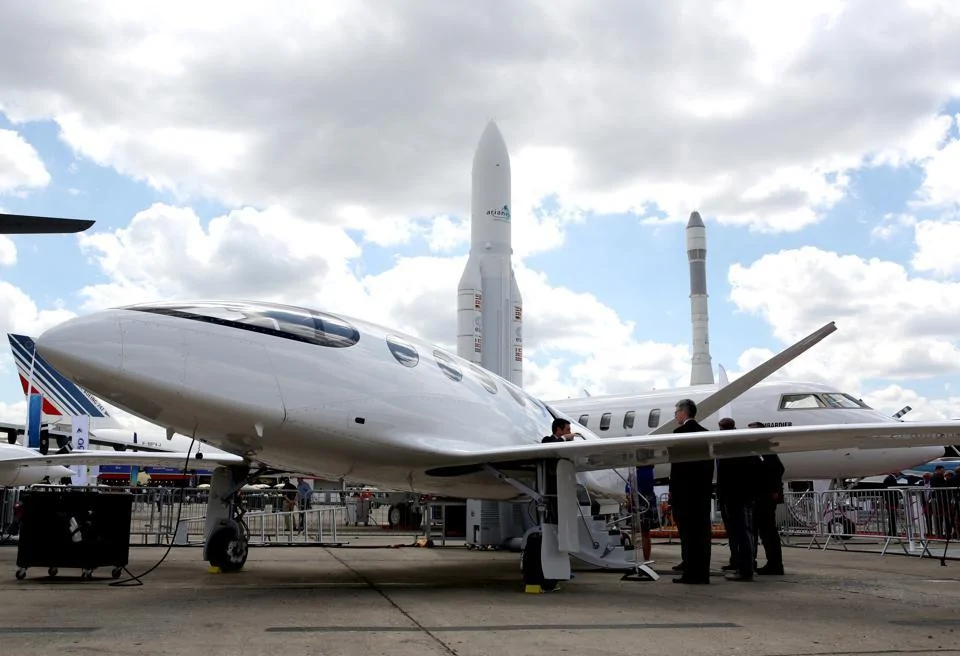
The Eviation Alice electric aircraft, on display at the 2019 Paris Air Show.
MARINA LYSTSEVA/TASS
“If it proves that it will scale up, I can imagine that development is going to be fairly rapid, because the demand is there,” he said. “You have governments saying they want all electric vehicles and transport by 2030, 2035. There’s a good reason for a lot of people to want to invest in that—both governmental and commercial.”
Returning to the prospect of electric planes, Wheeler thought that the NIMS announcement was encouraging, but noted many other challenges would have to be overcome before electric aircraft became a common sight on the world’s runways—not least when it comes to charging.
“If you’re going down the route of rechargeable batteries on planes, charging the planes up as they’re sitting at the gate doesn’t look unfeasible,” he said. “But all that electrical energy has to come from somewhere: you need to make sure you have a zero carbon source for all that electrical energy, and the infrastructure to get it to the aircraft. That’s not insignificant, particularly at large airports.”
In the near term, another hurdle could prove to be legislative: the announcement from Japan coincides with news that Israeli company Eviation is gearing up to test what is purported to be the first electric passenger plane, dubbed Alice. But in the U.S., where Alice is due to take test flights in the next few weeks, the Federal Aviation Authority has yet to established any rules for electric aircraft, though it has issued “special conditions” for certain engines produced by MagniX, the firm that makes the engines used in the Alice.
At present, Alice’s specifications are modest. The plane can carry nine passengers a distance of just 506 miles at just under 290 miles per hour, using lithium-ion batteries that the company’s CEO has said make up 65% of the weight of the aircraft. So while these are still early days in the age of electric flight, advances of the sort described by the team at NIMS could prove a game-changer.
https://www.forbes.com/sites/davidr...ly-grail-for-electric-flight/?sh=5e5f7ffc31d3
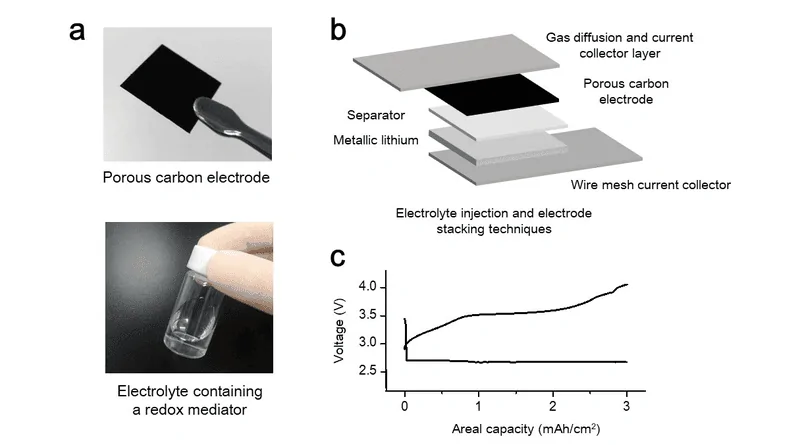
Figure. (a) New materials for lithium-air batteries developed by ALCA-SPRING project. (b) Cell fabrication technique developed by the NIMS-SoftBank Advanced Technologies Development Center. (c) Demonstration of stable discharge/charge cycles of lithium-air batteries with energy density over 500Wh/kg operated at the room-temperature. CREDIT: Shoichi Matsuda National Institute for Materials Science
Development Of A Lithium-Air Battery With An Energy Density Over 500 Wh/kg
NIMS and Softbank Corp. have developed a lithium-air battery with an energy density over 500Wh/kg—significantly higher than currently lithium ion batteries. The research team then confirmed that this battery can be charged and discharged at room temperature. In addition, the team found that the battery developed by the team shows the highest energy densities and best cycle life performances ever achieved. These results signify a major step toward the practical use of lithium-air batteries.
Lithium-air batteries have the potential to be the ultimate rechargeable batteries: they are lightweight and high capacity, with theoretical energy densities several times that of currently available lithium ion batteries. Because of these potential advantages, they may find use in a wide range of technologies, such as drones, electric vehicles and household electricity storage systems.
NIMS has been carrying out basic research on lithium-air batteries with support from the ALCA-SPRING program (ALCA: Advanced Low Carbon Technology Research and Development Program, SPRING: Specially Promoted Research for Innovative Next Generation Batteries). This program has been funded by the Japan Science and Technology Agency (JST) with the goal of accelerating large-capacity rechargeable battery R&D.
In 2018, NIMS and Softbank co-founded the Advanced Technologies Development Center to conduct research with the goal of putting lithium-air batteries into practical use in mobile phone base stations, the Internet of Things (IoT), HAPS (high altitude platform stations) and other technologies. Despite their very high theoretical energy densities, only a small number of lithium-air batteries with high energy densities have actually been fabricated and evaluated. This limited success is attributed to the fact that a large proportion by weight of lithium-air battery contains heavy inactive components (e.g., separators and electrolytes) that do not directly participate in actual battery reactions.
This research team had previously developed original battery materials that significantly increase the performance of lithium-air batteries in ALCA-SPRING-supported research. The team then developed a technique to fabricate high-energy-density lithium-air cells at the NIMS-SoftBank Advanced Technologies Development Center.
Finally, the team created a new lithium-air battery by combining these new materials and the fabrication techniques. The developed battery exhibited the energy density over 500 Wh/kg—substantially higher than currently lithium ion batteries. Notably, the repeated discharge and charge reaction proceeds at room temperature. The energy density and cycle life performance of this battery are among the highest ever achieved.*
* Based on surveys conducted by NIMS (as of December 14, 2021)
https://www.eurasiareview.com/22012...attery-with-an-energy-density-over-500-wh-kg/
Sponsored
Last edited: