Sponsored

Possible idea for active drag reduction?

Diveflyfish

Well-known member
First Name
James
Joined
Feb 21, 2020
Threads
16
Messages
202
Reaction score
182
Location
Wisconsin
Vehicles
2024 CyberBeast 2011 BMW 335d
Occupation
Dentist
Country flag
An interesting video demonstrating fire extinguishing with low frequency sound prompted an idea that may be worth exploring…. (No I am not thinking of putting out a lithium ion fire) In so far as there has been rumor of Active noise cancellation on the cabin sound system of the CT, could that same system produce an active wave cancellation let’s say on the bumper as active boundary control to lower the CD ? Tuned to speed of the vehicle? Could piezoelectric transducers on the bottom of the CT create a boundary layer control at higher suspension settings? The energy required may be feasible ? Perhaps the engineers have already created an architecture to produce a standing wave, but would a tunable system help reduce drag to increase range?

Sponsored

 
OP
OP
Diveflyfish

Diveflyfish

Well-known member
First Name
James
Joined
Feb 21, 2020
Threads
16
Messages
202
Reaction score
182
Location
Wisconsin
Vehicles
2024 CyberBeast 2011 BMW 335d
Occupation
Dentist
Country flag
Well, sure, if you want your truck to look like a golf ball.

-Crissa
Thinking of parabolic lens focused outward or in the vector to optimally focus pressure wave


JBee

Well-known member
First Name
JB
Joined
Nov 22, 2019
Threads
18
Messages
4,913
Reaction score
6,362
Location
Australia
Vehicles
Cybertruck
Occupation
. Professional Hobbyist
Country flag
An interesting video demonstrating fire extinguishing with low frequency sound prompted an idea that may be worth exploring…. (No I am not thinking of putting out a lithium ion fire) In so far as there has been rumor of Active noise cancellation on the cabin sound system of the CT, could that same system produce an active wave cancellation let’s say on the bumper as active boundary control to lower the CD ? Tuned to speed of the vehicle? Could piezoelectric transducers on the bottom of the CT create a boundary layer control at higher suspension settings? The energy required may be feasible ? Perhaps the engineers have already created an architecture to produce a standing wave, but would a tunable system help reduce drag to increase range?

Couple of things.

Firstly how do you propose that air oscillation should improve the boundary layer and keep laminar flow to reduce drag? Wouldn't the oscillations increase and then decrease the height of the boundary layer? Or are you proposing to use the wave effect to reduce skin friction, which is typically not necessary at car speeds?

Secondly to interact with the boundary layer the speaker(s) would have to be focused on areas of the vehicle where it actually has a boundary layer. The boundary layer is only formed in the front of the vehicle where the air is separated, but the boundary layer only exists over the sides, top and bottom of the vehicle as the air flows over it. The critical thing there is to keep it attached for laminar flow so that turbulent vertices don't create drag.

Essentially you want to seperate the air in such a way that the air moves out of the way to let the vehicle pass through it, and so the air returns back to the same location, therefore expending the least amount of energy in moving the air out of the way to let the vehicle pass.

Now seeing it's not possible to reduce the frontal surface area of the CT without physically shrinking it, which essentially is just removing the side mirrors, the only option to reduce drag is by improving it's shape, and with it the CT Cd value.

There are a couple of ways to do this, one would be to elongate the rear with a aero luggage box, either on the fold down tailgate, or plugged into the tow hitch. These "range extenders" already exist for M3/MY etc and also increase luggage volume as well.

The other one is to have an inflatable air dam/extending front spoiler to deflect air around the tyres themselves. Also fully enclosed rear (front?) wheel fenders would help, as a lot of the drag is in those huge wheel wells, as the spinning wheels create a vortex that disrupts airflow down the sides as well as compresses air in front of the wheels, which uses energy. Having big wheels and openings is not doing it any favours here.

In the front the CT grill already creates a high pressure area that acts like a "air nose" and separates the airflow before it comes in contact with the vehicle. It also has active slates that close when radiator cooling is not required. It's important to note here that a water droplet shape is fairly blunt, but tapers smoothly to the tail, as the liquid conforms to air flow. This is similar in a vehicle in that often fixing the tail reduces drag more than what can be done on a blunt front, which could already be ideal. The trick here is to also make that tail a useful part of the vehicle, hence the aero rear luggage box.

Other things can also be done like injecting or sucking air at strategic points on the vehicle to manipulate airflow to keep it laminar, like the poor attempt at a air curtain around the front wheel, created by the gap between the front bumper and frunk hood. These could also be done actively depending on airspeed and direction as these are not always the same. Technically, vehicles should change their shape depending on speed and wind direction as this all changes airflow and how much energy is used to overcome drag.

This leaves the other question you have and that is if a standing wave could be used to manipulate airflow. It probably can, but unless it can do so at power levels equal to that of the incoming airflow, so in the kW range, it's probably only going to be useful for lower power levels and small boundary layer manipulation to overcome surface disturbances. It might just be easier to get rid of those disturbances instead.

One last thing to consider here is that sonic waves can also be loud, and even bad for you health depending on frequency, modulation and the potential for unintended harmonics. One would also have to consider the complexity of parts involved and cost, including the energy used to run them, given that adding some batteries to increase range is trivial and affordable in comparison.

"If" you wanted to pursue this I'd start with a ideal shape, rather than modifying a CT, and then use it as necessary where the 'other' solutions are more complicated. BTW there are vehicles that use something similar to reduce drag, called supercaviting torpedos, for very fast underwater travel.
 

PilotPete

Well-known member
First Name
Pete
Joined
May 8, 2023
Threads
12
Messages
1,578
Reaction score
3,969
Vehicles
Porsche, BMW, M3LR on order
Occupation
Chief Pilot
Country flag
"If" you wanted to pursue this I'd start with a ideal shape, rather than modifying a CT, and then use it as necessary where the 'other' solutions are more complicated. BTW there are vehicles that use something similar to reduce drag, called supercaviting torpedos, for very fast underwater travel.
Before I got to JB’s post, I thought about those torpedos, and then JB pulls out the torpedo. Dang, this guy is good.

So, I’ll just say; “What he said!”
 
OP
OP
Diveflyfish

Diveflyfish

Well-known member
First Name
James
Joined
Feb 21, 2020
Threads
16
Messages
202
Reaction score
182
Location
Wisconsin
Vehicles
2024 CyberBeast 2011 BMW 335d
Occupation
Dentist
Country flag
Couple of things.

Firstly how do you propose that air oscillation should improve the boundary layer and keep laminar flow to reduce drag? Wouldn't the oscillations increase and then decrease the height of the boundary layer? Or are you proposing to use the wave effect to reduce skin friction, which is typically not necessary at car speeds?

Secondly to interact with the boundary layer the speaker(s) would have to be focused on areas of the vehicle where it actually has a boundary layer. The boundary layer is only formed in the front of the vehicle where the air is separated, but the boundary layer only exists over the sides, top and bottom of the vehicle as the air flows over it. The critical thing there is to keep it attached for laminar flow so that turbulent vertices don't create drag.

Essentially you want to seperate the air in such a way that the air moves out of the way to let the vehicle pass through it, and so the air returns back to the same location, therefore expending the least amount of energy in moving the air out of the way to let the vehicle pass.

Now seeing it's not possible to reduce the frontal surface area of the CT without physically shrinking it, which essentially is just removing the side mirrors, the only option to reduce drag is by improving it's shape, and with it the CT Cd value.

There are a couple of ways to do this, one would be to elongate the rear with a aero luggage box, either on the fold down tailgate, or plugged into the tow hitch. These "range extenders" already exist for M3/MY etc and also increase luggage volume as well.

The other one is to have an inflatable air dam/extending front spoiler to deflect air around the tyres themselves. Also fully enclosed rear (front?) wheel fenders would help, as a lot of the drag is in those huge wheel wells, as the spinning wheels create a vortex that disrupts airflow down the sides as well as compresses air in front of the wheels, which uses energy. Having big wheels and openings is not doing it any favours here.

In the front the CT grill already creates a high pressure area that acts like a "air nose" and separates the airflow before it comes in contact with the vehicle. It also has active slates that close when radiator cooling is not required. It's important to note here that a water droplet shape is fairly blunt, but tapers smoothly to the tail, as the liquid conforms to air flow. This is similar in a vehicle in that often fixing the tail reduces drag more than what can be done on a blunt front, which could already be ideal. The trick here is to also make that tail a useful part of the vehicle, hence the aero rear luggage box.

Other things can also be done like injecting or sucking air at strategic points on the vehicle to manipulate airflow to keep it laminar, like the poor attempt at a air curtain around the front wheel, created by the gap between the front bumper and frunk hood. These could also be done actively depending on airspeed and direction as these are not always the same. Technically, vehicles should change their shape depending on speed and wind direction as this all changes airflow and how much energy is used to overcome drag.

This leaves the other question you have and that is if a standing wave could be used to manipulate airflow. It probably can, but unless it can do so at power levels equal to that of the incoming airflow, so in the kW range, it's probably only going to be useful for lower power levels and small boundary layer manipulation to overcome surface disturbances. It might just be easier to get rid of those disturbances instead.

One last thing to consider here is that sonic waves can also be loud, and even bad for you health depending on frequency, modulation and the potential for unintended harmonics. One would also have to consider the complexity of parts involved and cost, including the energy used to run them, given that adding some batteries to increase range is trivial and affordable in comparison.

"If" you wanted to pursue this I'd start with a ideal shape, rather than modifying a CT, and then use it as necessary where the 'other' solutions are more complicated. BTW there are vehicles that use something similar to reduce drag, called supercaviting torpedos, for very fast underwater travel.
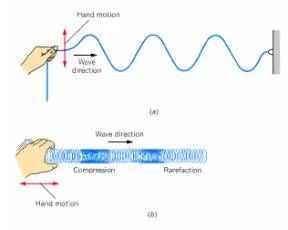
Thank you. Yes the analogy of creating an equivalent of a super cavitation torpedo would be phenomenal. Increasing or rather tuning the high pressure area up front to create a virtual shape would be quite a feat……. They can levitate with sound waves…… creating longitudinal waves, not transverse waves may be the key….huuum Lots to ponder. I am an INTP and inventor so my brain gravitates towards challenges. Thank you for your well delineated response. Cheers.
 

JBee

Well-known member
First Name
JB
Joined
Nov 22, 2019
Threads
18
Messages
4,913
Reaction score
6,362
Location
Australia
Vehicles
Cybertruck
Occupation
. Professional Hobbyist
Country flag
Thank you. Yes the analogy of creating an equivalent of a super cavitation torpedo would be phenomenal. Increasing or rather tuning the high pressure area up front to create a virtual shape would be quite a feat……. They can levitate with sound waves…… creating longitudinal waves, not transverse waves may be the key….huuum Lots to ponder. I am an INTP and inventor so my brain gravitates towards challenges. Thank you for your well delineated response. Cheers.
Sure no worries. Feel free to ping more ideas my way on the subject, happy to discuss possibilities.?

BTW longitudinal and transverse waves are not necessarily different, in that they are two ways to observe similar phenomenon. (Look up how they measure earthquake epiccenters in seismology using both)

Note also that super cavitation forms a underwater "air cushion" vapour bubble by using pressure to vapourise disolved oxygen in the water (what fish breath). This state change is not really repeatable in a compressible fluid like air for lack of a dissolved medium that can be converted to a higher state, so unless you can somehow provoke a state change in air to a higher energy matter state, so say from gas to plasma, it's unlikely that the technique would be directly useful when used in air instead of water.

In saying that though, at smaller scales, gas ionisation using plasma and high voltage discharge, can produce meaningful flow manipulation effects that can be used for modulating laminar flow to the point it can be used as a "control surface" for aircraft. There are also "lifter technology" type aircraft that use this ionisation for a form of propulsion, albeit at fairly low power levels, that currently are barely capable of flight when including the mass of the high voltage supplies.

The interesting part here would be to find out if propelling the air past the vehicle for thrust, through aerodynamic manipulation and ionisation etc is more efficient than forcing a static body through air with wheel propulsion alone.
Essentially, if you could "suck" the vehicle along, or push, or both, by creating a diverging pressure field around the vehicle, would that be more efficient in the overall system of a car, than just a force through the wheel.

You could also use the vehicle angle of attack, by changing the airspring height front and rear, to create either a high pressure cushion underneath, to reduce rolling friction, by pitching back, or more downforce and traction, by pitching forwards. I'd like to experiment with this to see the effects.

Overall though I think the trick here is to incorporate the right airflow geometry to move the air out of the way with the least amount of work.

In that regard, the smoke ring generator in the video you posted is actually way more interesting, in that if you would integrate a ring shape vehicle to move with, and inside the toroidal vortex of the smoke ring, the toroidal vortex would naturally and of its own accord displace the air with minimal disruption, and be able to reuse the energy used for air displacement, as forwad thrust as well, like the smoke ring does.

I have a hyperthetical design for this type of vehicle and it includes harvesting environmental energy as well, through a collapsing void wake vortex. But probably the wrong forum to discuss this on in detail. ? ?
 
Last edited:


OP
OP
Diveflyfish

Diveflyfish

Well-known member
First Name
James
Joined
Feb 21, 2020
Threads
16
Messages
202
Reaction score
182
Location
Wisconsin
Vehicles
2024 CyberBeast 2011 BMW 335d
Occupation
Dentist
Country flag
Sure no worries. Feel free to ping more ideas my way on the subject, happy to discuss possibilities.?

BTW longitudinal and transverse waves are not necessarily different, in that they are two ways to observe similar phenomenon. (Look up how they measure earthquake epiccenters in seismology using both)

Note also that super cavitation forms a underwater "air cushion" vapour bubble by using pressure to vapourise disolved oxygen in the water (what fish breath). This state change is not really repeatable in a compressible fluid like air for lack of a dissolved medium that can be converted to a higher state, so unless you can somehow provoke a state change in air to a higher energy matter state, so say from gas to plasma, it's unlikely that the technique would be directly useful when used in air instead of water.

In saying that though, at smaller scales, gas ionisation using plasma and high voltage discharge, can produce meaningful flow manipulation effects that can be used for modulating laminar flow to the point it can be used as a "control surface" for aircraft. There are also "lifter technology" type aircraft that use this ionisation for a form of propulsion, albeit at fairly low power levels, that currently are barely capable of flight when including the mass of the high voltage supplies.

The interesting part here would be to find out if propelling the air past the vehicle for thrust, through aerodynamic manipulation and ionisation etc is more efficient than forcing a static body through air with wheel propulsion alone.
Essentially, if you could "suck" the vehicle along, or push, or both, by creating a diverging pressure field around the vehicle, would that be more efficient in the overall system of a car, than just a force through the wheel.

You could also use the vehicle angle of attack, by changing the airspring height front and rear, to create either a high pressure cushion underneath, to reduce rolling friction, by pitching back, or more downforce and traction, by pitching forwards. I'd like to experiment with this to see the effects.

Overall though I think the trick here is to incorporate the right airflow geometry to move the air out of the way with the least amount of work.

In that regard, the smoke ring generator in the video you posted is actually way more interesting, in that if you would integrate a ring shape vehicle to move with, and inside the toroidal vortex of the smoke ring, the toroidal vortex would naturally and of its own accord displace the air with minimal disruption, and be able to reuse the energy used for air displacement, as forwad thrust as well, like the smoke ring does.

I have a hyperthetical design for this type of vehicle and it includes harvesting environmental energy as well, through a collapsing void wake vortex. But probably the wrong forum to discuss this on in detail. ? ?
Yes you are on the same wavelength regarding electrostatics as the methodology for altering things a bit. Perhaps instead of gross vortex one could go down the opposite end of the spectrum with micro vortices……. Yes perhaps this is not the best forum ?? cheers
 
OP
OP
Diveflyfish

Diveflyfish

Well-known member
First Name
James
Joined
Feb 21, 2020
Threads
16
Messages
202
Reaction score
182
Location
Wisconsin
Vehicles
2024 CyberBeast 2011 BMW 335d
Occupation
Dentist
Country flag
BTW longitudinal and transverse waves are not necessarily different, in that they are two ways to observe similar phenomenon. (Look up how they measure earthquake epiccenters in seismology using both)
The speed at which they travel perhaps may indicate they are not the same. Parallel movement vs perpendicular movement. As Ken Wheeler would say, A wave is not a thing unto itself, a Wave is something that something does….. the Medium which one decided to wave and the vector that it moves in is the key…. Cheers

Tesla Cybertruck Possible idea for active drag reduction? IMG_2881
 

JBee

Well-known member
First Name
JB
Joined
Nov 22, 2019
Threads
18
Messages
4,913
Reaction score
6,362
Location
Australia
Vehicles
Cybertruck
Occupation
. Professional Hobbyist
Country flag
Exactly. A wave is "propagated though a medium", but doesn't, and can't exist as of itself as a wave. Hence the whole particle/wave nonsense of high school physics books that just convolute and try to deny the basics of electrostatics, by way of ignoring's it entirely, instead of understanding it as a simple field interaction. Simply focusing on transverse waves as the only form is a big mistake on many levels.

However, often the same thing can be cause for both, for example a earthquake etc.

I like the analogy with water and oceans, in that the liquid shows the longitudinal compression wave that is travelling through it, say from dropping a stone in the pond, by causing a transverse wave ripple in the surface of the pond. In the longitudinal direction, the compression wave causes the amplitude of the transverse wave, but none of the water actually moves more than up and down or left to right to do so.

From that perspective, maybe we should just get our surfboards out and find that ultimate wave to ride? :p:)

Sponsored


Top