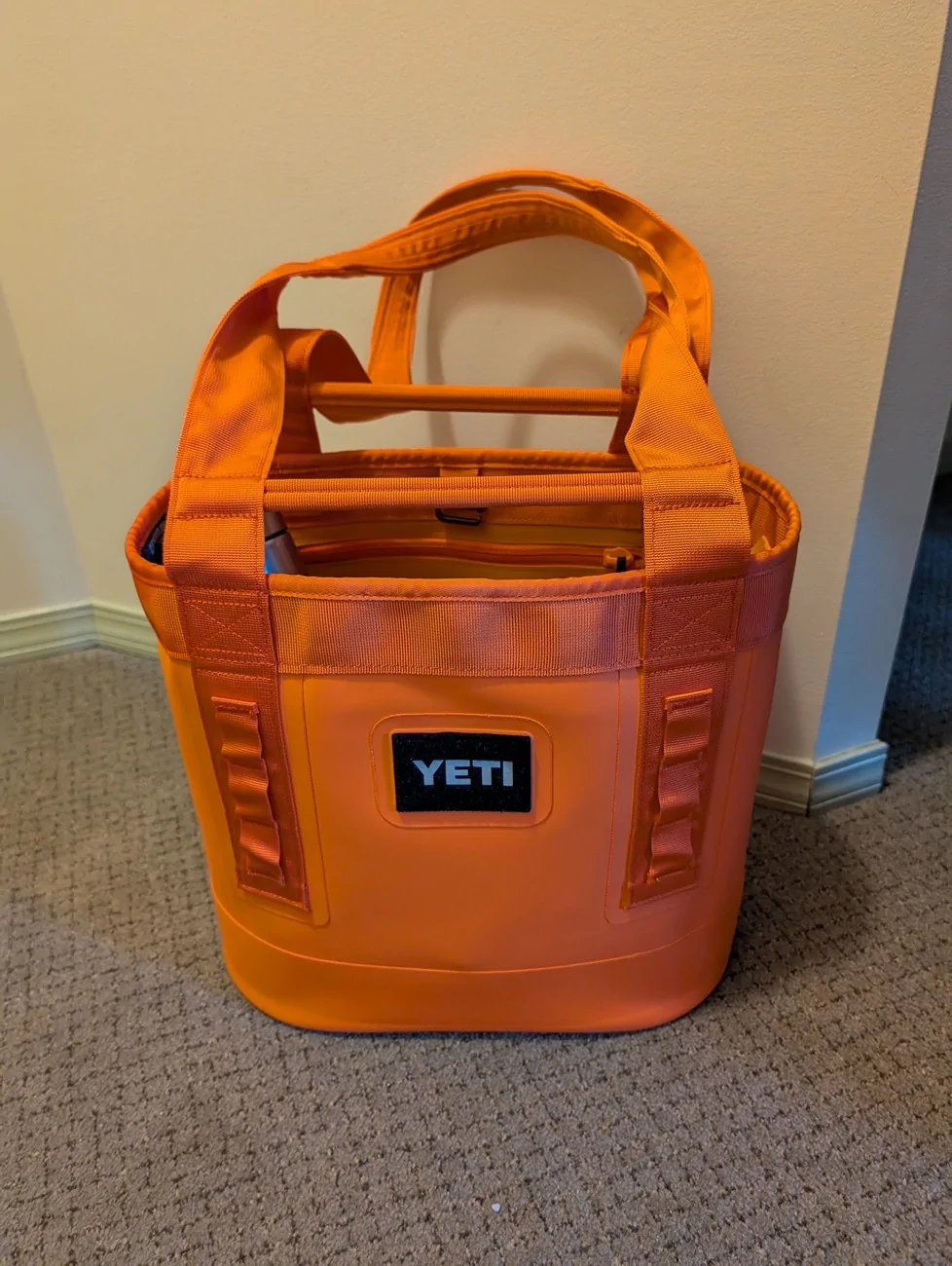
Yeti Camino 20 fits perfectly in the front footwell between the front seats. It is the perfect size to bring into hotel ice machines. Perfect compliment to a Yeti 45 in the bed.
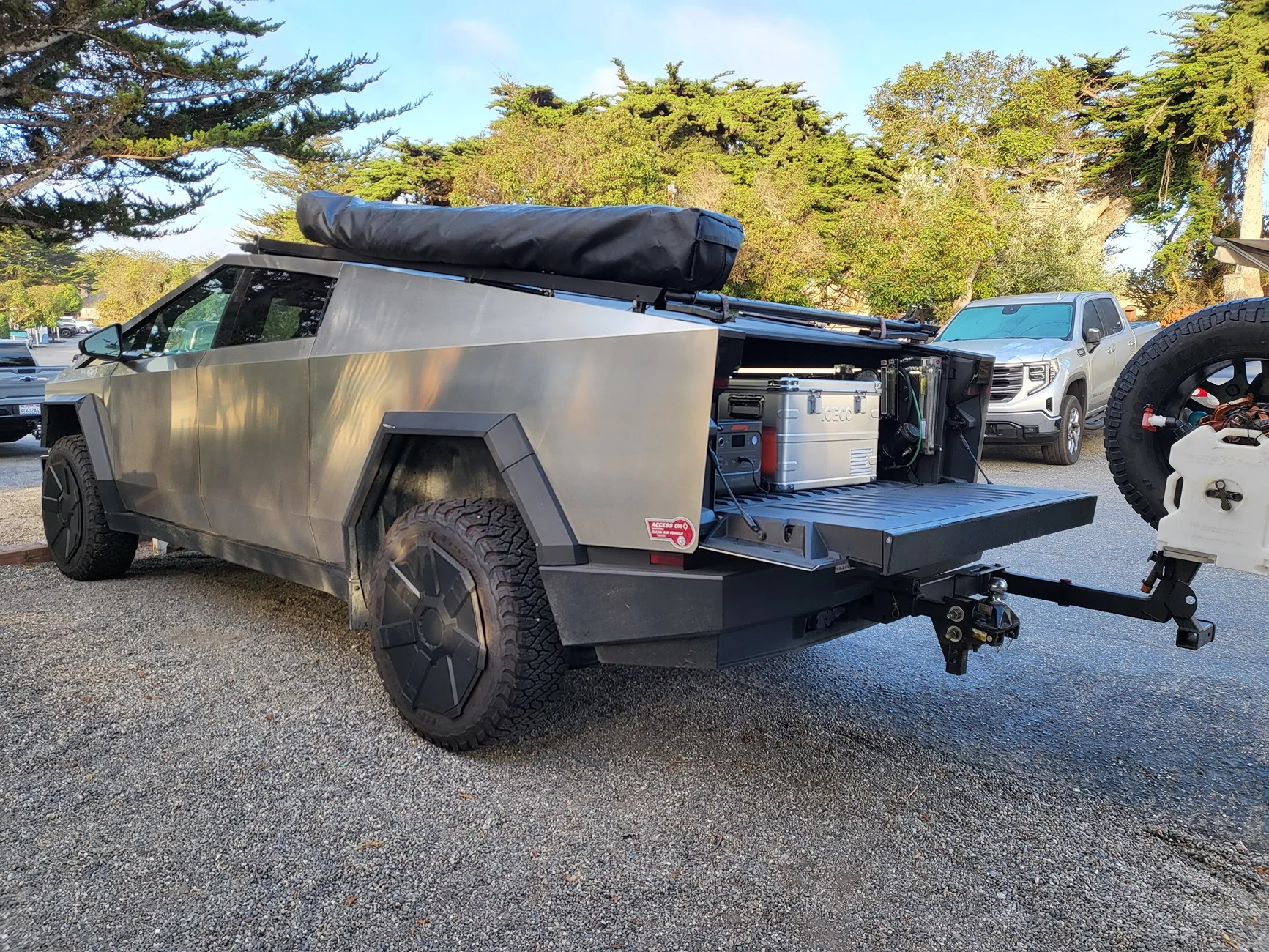
I wish someone would come out with a refrigerator that uses a portion of the frunk. On a side note why in the hell did Tesla opt to de-power the outlets in the bed when the truck is charging. It's a pain as my current fridge won't stay on and warms up. I hope an update will come out to resolve this.
I wish someone would come out with a refrigerator that uses a portion of the frunk. On a side note why in the hell did Tesla opt to de-power the outlets in the bed when the truck is charging. It's a pain as my current fridge won't stay on and warms up. I hope an update will come out to resolve this.
There are people with far greater expertise than me here on this but I’ve always thought maybe it was to prevent dangerous ground loops created by the consumer.
Say you’re powering your house off the 240v with a manual transfer switch and also charging your car with your wall connector wired to the same panel Doesn’t seem like a great idea in concept no?
And yes, a frunk fridge would be great. Someone should mod one of those overpriced Tesla coolers or the eBay knockoff to do it.
I recently got the BougeRV 23 qt fridge. Have used it a couple of times and it’s been good so far. However, one time I had it in the bed with the tonneau closed on a 98 degree day and noticed it shut off after being in the bed for 30 mins. I think the ambient temp got too hot in the bed.
I wish someone would come out with a refrigerator that uses a portion of the frunk. On a side note why in the hell did Tesla opt to de-power the outlets in the bed when the truck is charging. It's a pain as my current fridge won't stay on and warms up. I hope an update will come out to resolve this.
The Tesla Cybertruck’s bed outlets turn off during AC charging (such as when plugged in at a campsite) due to the vehicle’s electrical architecture. Specifically, the AC/DC converter, which converts grid AC power to DC to charge the high-voltage battery, is the same hardware used to generate AC power for the bed outlets. When the Cybertruck is AC charging, this converter is fully dedicated to charging the battery, making it unavailable to power the outlets. Tesla’s lead engineer, Wes Morrill, explained that it might be possible to use the converter for both charging and powering the outlets simultaneously, but this would require additional development. In contrast, the outlets remain operational during DC charging, such as Supercharging, because the AC/DC converter is not involved in that process. This design choice prioritizes efficient battery charging over simultaneous outlet use during AC charging sessions.
The Tesla Cybertruck’s bed outlets turn off during AC charging (such as when plugged in at a campsite) due to the vehicle’s electrical architecture. Specifically, the AC/DC converter, which converts grid AC power to DC to charge the high-voltage battery, is the same hardware used to generate AC power for the bed outlets. When the Cybertruck is AC charging, this converter is fully dedicated to charging the battery, making it unavailable to power the outlets. Tesla’s lead engineer, Wes Morrill, explained that it might be possible to use the converter for both charging and powering the outlets simultaneously, but this would require additional development. In contrast, the outlets remain operational during DC charging, such as Supercharging, because the AC/DC converter is not involved in that process. This design choice prioritizes efficient battery charging over simultaneous outlet use during AC charging sessions.
Thank you for the response. I don’t know why I didn’t just ask Grok myself. It’s a bummer that it’s not a software problem and an actual hardware problem. I was worried about that. Man, I wish there was a 12v outlet in the bed. Oh, well, back to the primary post of mine. When is a fridge coming out for the frunk. As a side question, has anyone found an off the shelf fridge that fits?