Ward L
Well-known member
- First Name
- Ward
- Joined
- Dec 17, 2023
- Threads
- 9
- Messages
- 407
- Reaction score
- 569
- Location
- Camarillo, CA
- Vehicles
- Model 3, FS CT AWD

- Thread starter
- #1
I partly justify the ownership of a truck since winemaking is a retirement hobby. Each year I drive 160 miles to Paso Robles, pick up a ton of grapes and drive home to process the grapes. My 2010 F-150 has done the job well in the past. The bed load rating on the F-150 was 1,000 pounds. It squatted with 2,000, but sprang back to normal after the load was removed (Ford Tough?).
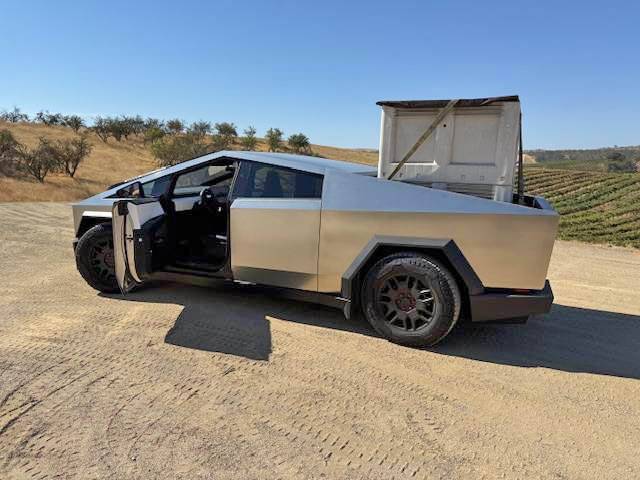
The first wine trip in the Cybertruck was a little exciting. I charged to 80% at home and departed at O' Dark-30. Fortunately, the supervised FSD was installed, and it did a very good job along the way. I never really figured out how the speed control is supposed to work as it was set to 65 Max speed limit and the scroll wheel doesn't change this setting. I would accelerate with the electron pedal to get up to speed, but eventually the truck would slow down. There is some construction and a pretty narrow lane with cement barriers on both sides of the lane and I couldn't allow FSD to drive so close to the driver's side barrier and interrupted FSD to drive myself. I charged up in 38 minutes the Atascadero SC from 30% to 80% (first mistake) before getting the grapes because I wanted to waste no time charging on the way home. My mileage was 383 WHM going up at 70-75 with little traffic. When the 2,000 pounds of grapes were loaded, she squatted, but shortly the air shocks raised it back to level. I tied the bins down with multiple tie-down straps, all the while hoping the D-hooks in the bed were not plastic. I used the Vault Cargo Divider to keep the bins away from the top edge of the roof (second mistake). The vineyard picture shows the 2 bins sticking up past the roofline and providing significant wind resistance.
On the way home, the projected % battery at destination started out at about 25%. I expected it to burn more of the battery but thought I would get home without another charge. I kept the max speed at 60 MPH and FSD held that speed very well. I could use the turn signal if I wanted to change lanes to avoid an even slower truck. As I watched the battery forecast drop, my anticipation increased. I needed to get to the shop for destemming and crushing before 3 PM and I didn't have time to stop and recharge. After the forecast got down to 10% and I was a short distance away, I stopped worrying about a dead battery.
There was an accident 2 miles from my destination and traffic was 5-10 MPH. The CT was slowly creeping along nicely following a Ferrari in front of me. I'm thinking, gee, it really seems like we are pretty close to the Ferrari. ` Within a minute of thinking that, we got REALLY close to the Ferrari! But not for long, the FSD slammed on the brakes to avoid hitting the Ferrari. I did not notice the Ferrari stopping abruptly to cause the CT to brake hard. I did not save a video clipping. The 2,000 pounds of grapes shifted and bumped into the roof overhang of the bed. The Vault Cargo Divider obviously isn't designed to stop a 2,000-pound load and the tie-downs were not configured to hold the load, yeah, my bad. Who knew FSD would slam on the brakes at 5 MPH? Glad it didn't slam on the brakes when I was doing 60! Pure speculation but thinking FSD isn't set up to know you have an extra 30% of weight in the vehicle when it decides to slow down. Maybe it is in the fine print, but I have not seen cautionary statements about not using FSD with heavy load. Does FSD say anything about towing a trailer? The Rivian tells you the weight of your load. Hopefully, Cybertrucks will too someday.
Mr CT is bruised, but not damaged. My Vault Divider's rubber pads need to be straightened (no bent metal parts). The Ferrari will live for another day, unscratched. The drive home with an extra 2,000 pounds at 60 MPH burned 451 WHM. That is only 18% more energy use, but my speed was much lower. The gas for my F-150 would have been about $107, the cost was $80 in the Cybertruck. It required 11 hours to charge from 6% to 80% on my 14-50 240v home charger. The battery got down to 6% by the time I made it back home. That is lower than I should let it get, but I started charging right away when I got home. Mr CT gave me several warnings about running out of battery soon.
Two stacked harvest bins full of Merlot grapes at the winery.

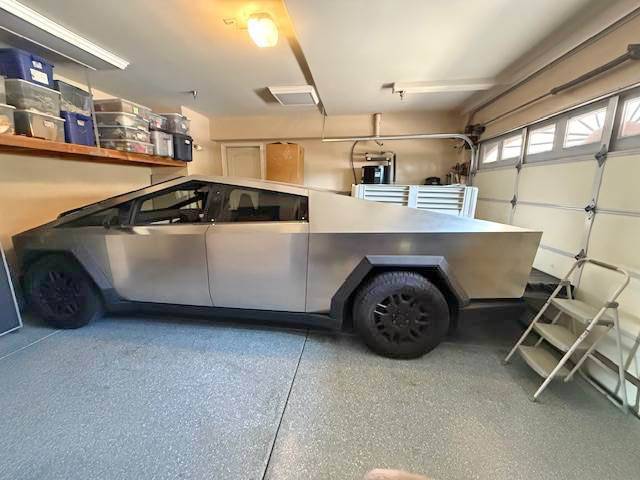
One bin full of wine must fermenting in the garage. I won't drive the truck until after the fermentation step is complete in about 10 days. There is about an 1" of clearance front and back in the garage with the tailgate down.
That is one of my hobbies!
The first wine trip in the Cybertruck was a little exciting. I charged to 80% at home and departed at O' Dark-30. Fortunately, the supervised FSD was installed, and it did a very good job along the way. I never really figured out how the speed control is supposed to work as it was set to 65 Max speed limit and the scroll wheel doesn't change this setting. I would accelerate with the electron pedal to get up to speed, but eventually the truck would slow down. There is some construction and a pretty narrow lane with cement barriers on both sides of the lane and I couldn't allow FSD to drive so close to the driver's side barrier and interrupted FSD to drive myself. I charged up in 38 minutes the Atascadero SC from 30% to 80% (first mistake) before getting the grapes because I wanted to waste no time charging on the way home. My mileage was 383 WHM going up at 70-75 with little traffic. When the 2,000 pounds of grapes were loaded, she squatted, but shortly the air shocks raised it back to level. I tied the bins down with multiple tie-down straps, all the while hoping the D-hooks in the bed were not plastic. I used the Vault Cargo Divider to keep the bins away from the top edge of the roof (second mistake). The vineyard picture shows the 2 bins sticking up past the roofline and providing significant wind resistance.
On the way home, the projected % battery at destination started out at about 25%. I expected it to burn more of the battery but thought I would get home without another charge. I kept the max speed at 60 MPH and FSD held that speed very well. I could use the turn signal if I wanted to change lanes to avoid an even slower truck. As I watched the battery forecast drop, my anticipation increased. I needed to get to the shop for destemming and crushing before 3 PM and I didn't have time to stop and recharge. After the forecast got down to 10% and I was a short distance away, I stopped worrying about a dead battery.
There was an accident 2 miles from my destination and traffic was 5-10 MPH. The CT was slowly creeping along nicely following a Ferrari in front of me. I'm thinking, gee, it really seems like we are pretty close to the Ferrari. ` Within a minute of thinking that, we got REALLY close to the Ferrari! But not for long, the FSD slammed on the brakes to avoid hitting the Ferrari. I did not notice the Ferrari stopping abruptly to cause the CT to brake hard. I did not save a video clipping. The 2,000 pounds of grapes shifted and bumped into the roof overhang of the bed. The Vault Cargo Divider obviously isn't designed to stop a 2,000-pound load and the tie-downs were not configured to hold the load, yeah, my bad. Who knew FSD would slam on the brakes at 5 MPH? Glad it didn't slam on the brakes when I was doing 60! Pure speculation but thinking FSD isn't set up to know you have an extra 30% of weight in the vehicle when it decides to slow down. Maybe it is in the fine print, but I have not seen cautionary statements about not using FSD with heavy load. Does FSD say anything about towing a trailer? The Rivian tells you the weight of your load. Hopefully, Cybertrucks will too someday.
Mr CT is bruised, but not damaged. My Vault Divider's rubber pads need to be straightened (no bent metal parts). The Ferrari will live for another day, unscratched. The drive home with an extra 2,000 pounds at 60 MPH burned 451 WHM. That is only 18% more energy use, but my speed was much lower. The gas for my F-150 would have been about $107, the cost was $80 in the Cybertruck. It required 11 hours to charge from 6% to 80% on my 14-50 240v home charger. The battery got down to 6% by the time I made it back home. That is lower than I should let it get, but I started charging right away when I got home. Mr CT gave me several warnings about running out of battery soon.
Two stacked harvest bins full of Merlot grapes at the winery.
One bin full of wine must fermenting in the garage. I won't drive the truck until after the fermentation step is complete in about 10 days. There is about an 1" of clearance front and back in the garage with the tailgate down.
That is one of my hobbies!
Sponsored