
Sponsored

cyberhero32

Well-known member
First Name
Roger
Joined
Feb 15, 2026
Threads
14
Messages
80
Reaction score
73
Location
AZ
Vehicles
2026 Tesla CyberTruck AWD
Occupation
Cybersecurity
Country flag
Last edited by a moderator:

Gaximus

Well-known member
Joined
Jun 22, 2024
Threads
23
Messages
1,475
Reaction score
2,311
Location
Mead, CO
Vehicles
CyberBeast, Model 3, Jeep Wrangler, Yamaha R6
Occupation
Software Developer
Country flag
Yeah. Almost every car in the world uses springs. I don’t even think it’s the reason for the lower towing capacity. I think the lower towing capacity is not really lower just listed as lower, to help push the sale to the premium model, also less warranty claims. But I bet there is no difference in actually what you can tow. Unless they added some software limit.
 
OP
OP
cyberhero32

cyberhero32

Well-known member
First Name
Roger
Joined
Feb 15, 2026
Threads
14
Messages
80
Reaction score
73
Location
AZ
Vehicles
2026 Tesla CyberTruck AWD
Occupation
Cybersecurity
Country flag
Yeah. Almost every car in the world uses springs. I don’t even think it’s the reason for the lower towing capacity. I think the lower towing capacity is not really lower just listed as lower, to help push the sale to the premium model, also less warranty claims. But I bet there is no difference in actually what you can tow. Unless they added some software limit.
there seems to be a lot of questions as one video showed mile estimate for the smaller wheels to the 20s but this new version doesnt change estimate. I am curious of real like actual stats as some of them may sway me if not true or are inflated.
 

CallsignVega

Well-known member
Joined
Jan 13, 2026
Threads
6
Messages
120
Reaction score
239
Location
Colorado
Vehicles
Cybertruck, Brightdrop 600
Country flag
Well to be clear, he said specifically ride quality wasn't compromised. Obviously air suspension still has the benefits of lowering for more travel efficiency, ingress/egress, raising to level the truck, deep snow/mud/off-roading.
 
OP
OP
cyberhero32

cyberhero32

Well-known member
First Name
Roger
Joined
Feb 15, 2026
Threads
14
Messages
80
Reaction score
73
Location
AZ
Vehicles
2026 Tesla CyberTruck AWD
Occupation
Cybersecurity
Country flag
Well to be clear, he said specifically ride quality wasn't compromised. Obviously air suspension still has the benefits of lowering for more travel efficiency, ingress/egress, raising to level the truck, deep snow/mud/off-roading.
Very true


henchman24

Well-known member
Joined
Jul 19, 2023
Threads
0
Messages
370
Reaction score
614
Location
Wyoming
Vehicles
Dual Motor Cybertruck
Country flag
Yeah. Almost every car in the world uses springs. I don’t even think it’s the reason for the lower towing capacity. I think the lower towing capacity is not really lower just listed as lower, to help push the sale to the premium model, also less warranty claims. But I bet there is no difference in actually what you can tow. Unless they added some software limit.
When towing heavy loads, the air suspension does a lot of work keeping the truck fairly level and reduce how much the rear sags. If they tuned the suspension for more comfort, it will likely be on the softer side. Which with a lot of tongue weight, would cause the rear to sag quite a bit. Combine that with independent rear suspension and it compounds. I'd bet the tow rating decrease is almost entirely due to that. Trucks simply can't accept nearly as much tongue weight.
 

TyPope

Well-known member
First Name
Ty
Joined
Mar 31, 2020
Threads
33
Messages
3,246
Reaction score
4,976
Location
Chesapeake Beach, MD
Vehicles
'23 MYLR, FS Cyberbeast 280xx
Occupation
Current Operations for... an organization
Country flag
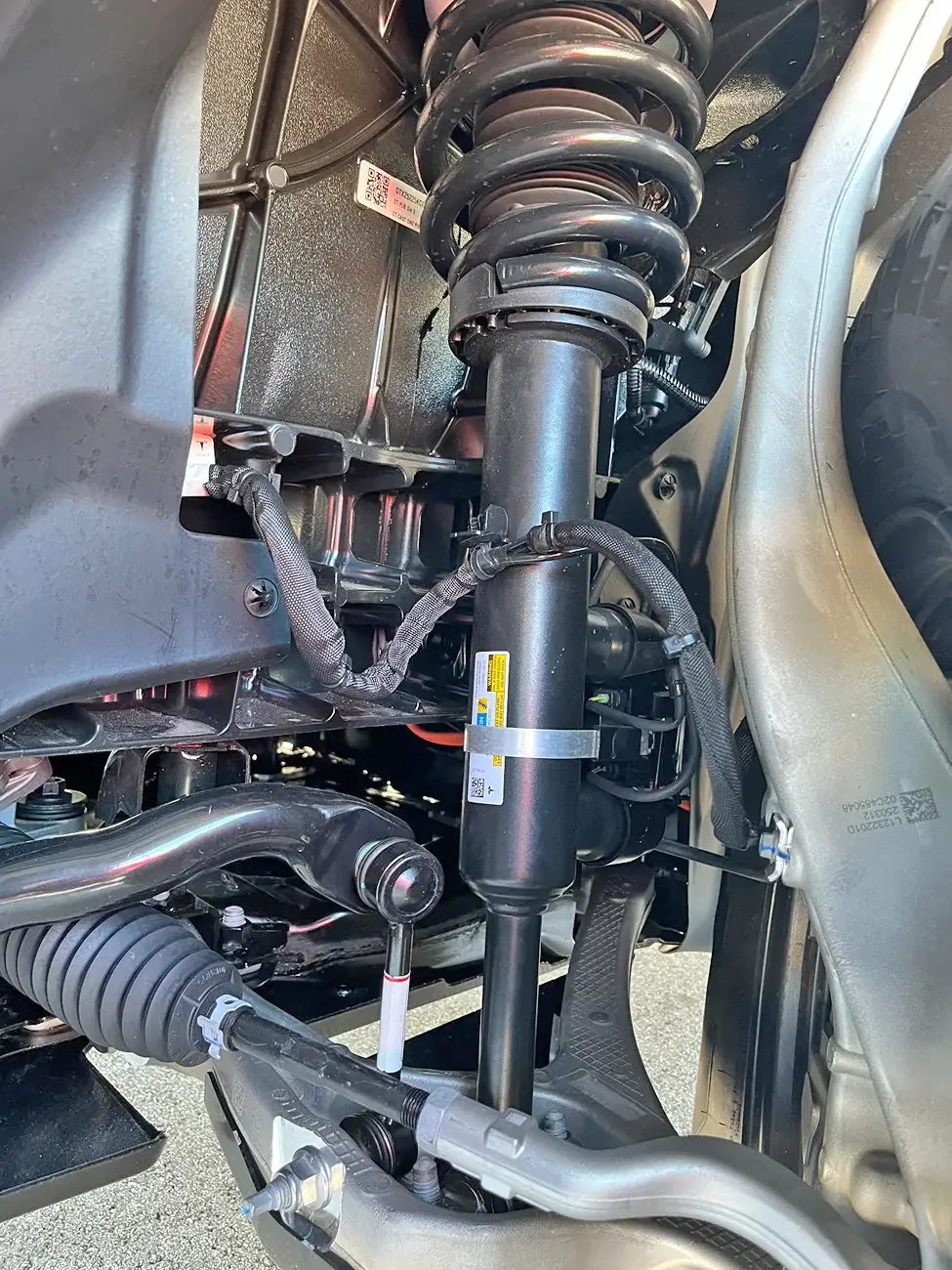
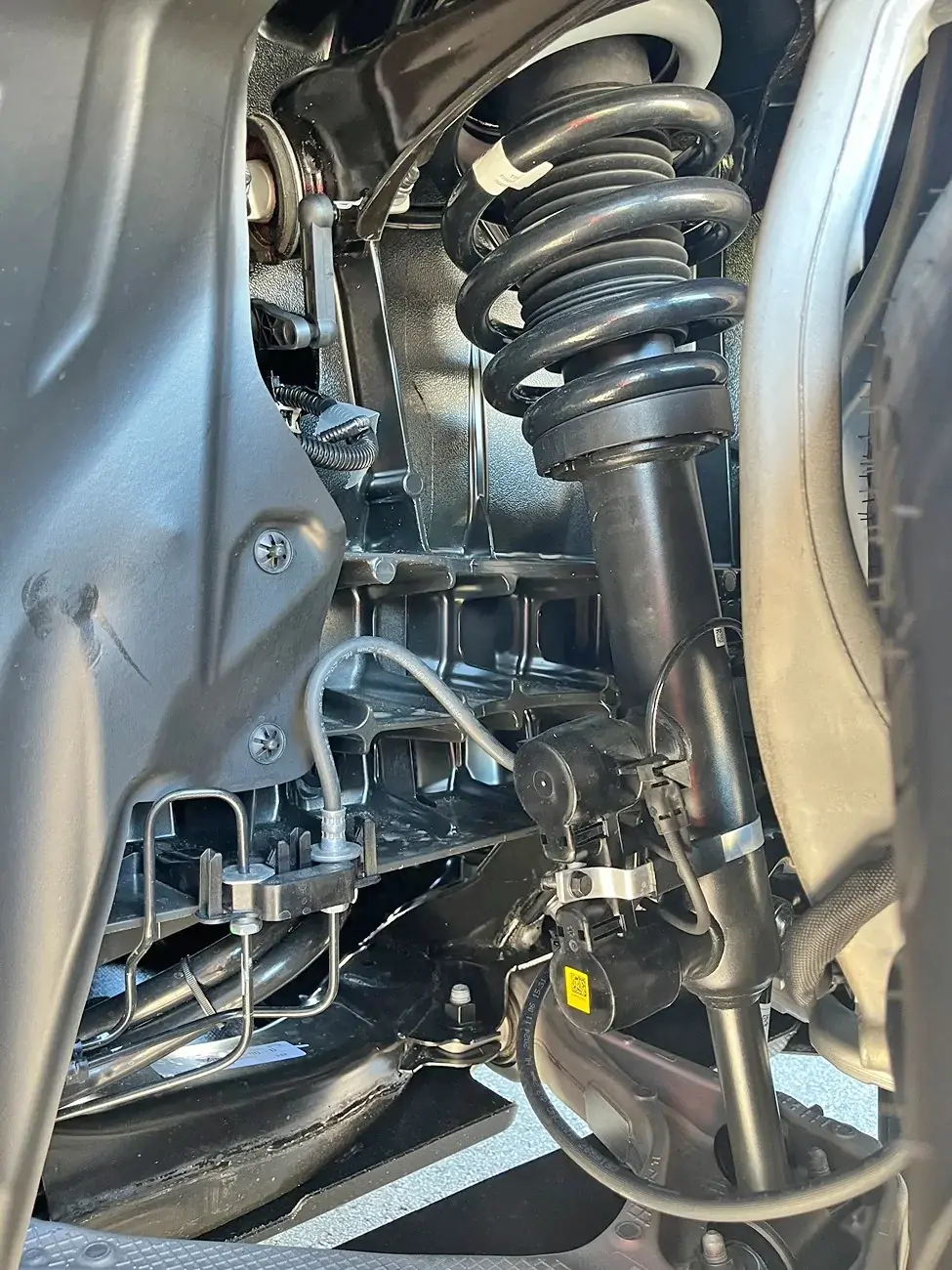
With coil springs, it is difficult to have variable rate springs that can compete with the old leaf springs. Primary reason almost every (maybe every?) heavy hauling pickup truck uses leaf springs in the rear. It would make sense to lower the tow capacity on a truck with coil springs over air suspension.
 

mongo

Well-known member
Joined
May 27, 2024
Threads
6
Messages
4,649
Reaction score
5,652
Location
SE Michigan
Vehicles
Cyberbeast
Country flag
When towing heavy loads, the air suspension does a lot of work keeping the truck fairly level and reduce how much the rear sags. If they tuned the suspension for more comfort, it will likely be on the softer side. Which with a lot of tongue weight, would cause the rear to sag quite a bit. Combine that with independent rear suspension and it compounds. I'd bet the tow rating decrease is almost entirely due to that. Trucks simply can't accept nearly as much tongue weight.
Based on available data, I'm doubtful the number is based on physics first principles.

AWD Payload is direct copy over from LR even though it is carrying the bed cover and front drive unit. Number is still higher than Beast with All Seasons
LR rear axle free capacity was also higher than Beast AS
There is an F-150 trim (leaf spring non adaptive damping) with less payload and 10,800 towing.

LR could have lost capacity due to less motive power, but AWD is still full dual motor.
 

henchman24

Well-known member
Joined
Jul 19, 2023
Threads
0
Messages
370
Reaction score
614
Location
Wyoming
Vehicles
Dual Motor Cybertruck
Country flag
With coil springs, it is difficult to have variable rate springs that can compete with the old leaf springs. Primary reason almost every (maybe every?) heavy hauling pickup truck uses leaf springs in the rear. It would make sense to lower the tow capacity on a truck with coil springs over air suspension.
It can be done... the Lightning, GM EV trucks, and Ram 1500s all use coil springs in various trims. It is simply a compromise of ride quality vs capability. Given how few people tow loads that large, especially with EV trucks, it makes sense to lean towards comfort over capability.

Based on available data, I'm doubtful the number is based on physics first principles.

AWD Payload is direct copy over from LR even though it is carrying the bed cover and front drive unit. Number is still higher than Beast with All Seasons
LR rear axle free capacity was also higher than Beast AS
There is an F-150 trim (leaf spring non adaptive damping) with less payload and 10,800 towing.

LR could have lost capacity due to less motive power, but AWD is still full dual motor.
I'm sure there is some simple carry over so they don't have to recertify anything. This AWD with coil springs is vastly different than the AWD with air suspension. Those are pretty much like for like comparisons. The CB having a lower payload is simply due to weight differences. It is ~230lbs heavier than the premium AWD and ~330lbs heavier than this new AWD trim. That impacts total payload. Tires also play a role in this too.

Outside of the Lightning, all F150s are solid rear axle. A solid axle behaves much differently under load than independent, and is generally more stable under heavy load. With the CT, having air suspension means that the pressure can be increased and the range of motion under load is in the sweet spot. With a coil spring, that compensation doesn't happen and the truck will sag in the rear a lot more under load than the air suspension version would. With independent rear suspension, this will cause geometry changes and make it operate a bit less in the ideal range.
 
Last edited:


mongo

Well-known member
Joined
May 27, 2024
Threads
6
Messages
4,649
Reaction score
5,652
Location
SE Michigan
Vehicles
Cyberbeast
Country flag
I'm sure there is some simple carry over so they don't have to recertify anything. This AWD with coil springs is vastly different than the AWD with air suspension. Those are pretty much like for like comparisons. The CB having a lower payload is simply due to weight differences. It is ~230lbs heavier than the premium AWD and ~330lbs heavier than this new AWD trim. That impacts total payload. Tires also play a role in this too.

Outside of the Lightning, all F150s are solid rear axle. A solid axle behaves much differently under load than independent, and is generally more stable under heavy load. With the CT, having air suspension means that the pressure can be increased and the range of motion under load is in the sweet spot. With a coil spring, that compensation doesn't happen and the truck will sag in the rear a lot more under load than the air suspension version would. With independent rear suspension, this will cause geometry changes and make it operate a bit less in the ideal range.
What makes it vastly different? The coil springs are bolt in replacements for the air springs set to medium height.

Air suspension does counter sag, but the payload and GAWR numbers take that into account. Tesla recommends low ride height when trailering (1.5" below medium).

One could make the argument Beast AS is a 2,500 pound suspension on 2,000 pound tires, and LR was a 2,000 pound suspension. However, the rear axle capacity was still 1,684 which is plenty for an 11k trailer.
Beast AS with 1,100 at the max pin-ball maxes out the rear axle (withouta driver). So Tesla must expect people to use a weight distributing hitch. WD on a base AWD should offset any impact from the lack of air suspension.

I mentioned the F150 leaf to show it wasn't an air system, but I haven't tracked down its free axle capacities .

J2807 towing testing is primarily based on powertrain and brakes, though handling/ understeer are also tested.
 

henchman24

Well-known member
Joined
Jul 19, 2023
Threads
0
Messages
370
Reaction score
614
Location
Wyoming
Vehicles
Dual Motor Cybertruck
Country flag
What makes it vastly different? The coil springs are bolt in replacements for the air springs set to medium height.

Air suspension does counter sag, but the payload and GAWR numbers take that into account. Tesla recommends low ride height when trailering (1.5" below medium).

One could make the argument Beast AS is a 2,500 pound suspension on 2,000 pound tires, and LR was a 2,000 pound suspension. However, the rear axle capacity was still 1,684 which is plenty for an 11k trailer.
Beast AS with 1,100 at the max pin-ball maxes out the rear axle (withouta driver). So Tesla must expect people to use a weight distributing hitch. WD on a base AWD should offset any impact from the lack of air suspension.

I mentioned the F150 leaf to show it wasn't an air system, but I haven't tracked down its free axle capacities .

J2807 towing testing is primarily based on powertrain and brakes, though handling/ understeer are also tested.
The numbers are vastly difference in the coil spring vs air suspension AWD. Tesla has rated the coil spring version far lower than air suspension version. Like for like there is a big difference per Tesla.

IMO Tesla recommends low because the pressures needed to keep the truck level are pretty high when the tongue weight raises. To control the movement adequately you need some range of motion and the suspension at medium or high would have the pressures high enough that the suspension wouldn't control the movements as well. Medium would probably be fine on smaller loads (under 8k), I could see high as a big issue with heavier loads.

On low though, it is moving both front and rear to specific heights. With a coil spring, any sag on the rear is going to elevate the front as well. Both suspensions are at different geometries than ideal as the weight goes up. The rear will be utilizing less than the full contact area of the tire (with a bias towards the inside) and the front will also be utilizing less (with the bias to the outside). It will have a handling and braking difference due to this, let alone the dampening.

Now Tesla could counteract this with stiffer springs and elevate the ride height slightly in the rear (one of the big reasons most full size trucks have a slight rake). That would compromise ride quality though. It seems they went softer to compromise towing vs compromising ride for towing. IMO that is the correct move for the market.

J2807 has a whole section on handling and trailer sway response. The truck has to understeer at a specific rate (which varies if it is a gooseneck/5th wheel vs bumper pull) and control trailer sway. It is as important as the other factors. Given that even the RWD would hit all the power and braking requirements, safe to pin the differences on the suspension.

There is certainly carryover on spec to be cheaper, but if the coil spring suspension had the same (or nearly the same) towing capabilities as the air suspension, it would be a marketing win for Tesla to advertise that. The fact that they don't, in conjunction with them talking about the ride comfort, signals it is a lesser capability. Saying that, 7500 is likely well above what most people use. I tow a decent amount and rarely exceed that (really only when I move a skid steer or tractor around). Car trailer/uhaul/gardening/RV are going to typically fall under 7500.
 

vandytom

Well-known member
First Name
Tom
Joined
Oct 9, 2024
Threads
17
Messages
539
Reaction score
794
Location
Nashville
Vehicles
cybertruck
Country flag
Well to be clear, he said specifically ride quality wasn't compromised. Obviously air suspension still has the benefits of lowering for more travel efficiency, ingress/egress, raising to level the truck, deep snow/mud/off-roading.
Yes and he was careful and didn’t say they’re the same either 🤣. Air is always better…
 

mongo

Well-known member
Joined
May 27, 2024
Threads
6
Messages
4,649
Reaction score
5,652
Location
SE Michigan
Vehicles
Cyberbeast
Country flag
The numbers are vastly difference in the coil spring vs air suspension AWD. Tesla has rated the coil spring version far lower than air suspension version. Like for like there is a big difference per Tesla.
Yeah, the number changed due to fixed spring rate and height, but the LR rear axle/base AWD payload composite has better free capacity than Beast All Season. Rest of suspension geometry is the same.

IMO Tesla recommends low because the pressures needed to keep the truck level are pretty high when the tongue weight raises. To control the movement adequately you need some range of motion and the suspension at medium or high would have the pressures high enough that the suspension wouldn't control the movements as well. Medium would probably be fine on smaller loads (under 8k), I could see high as a big issue with heavier loads.
The air springs need more volume for a higher position, but the pressure stays largely the same (assuming no radical change in effective piston diameter, some impact due to control arm angle). Lower setting does mean a stiffer ride due to higher percentage volume change for the same vertical displacement. Lower CG is more stable and aerodynamic.

On low though, it is moving both front and rear to specific heights. With a coil spring, any sag on the rear is going to elevate the front as well. Both suspensions are at different geometries than ideal as the weight goes up. The rear will be utilizing less than the full contact area of the tire (with a bias towards the inside) and the front will also be utilizing less (with the bias to the outside). It will have a handling and braking difference due to this, let alone the dampening.
For clarity, rear sag doesn't raise the front. Load behind the rear axle raises the front. Air suspension can level the truck but that doesn't change weight distribution. Axle load shift during braking will also be similar between the two types and is impacted by the dampers along with spring rates. Since both are controlled adaptive, should be similar.
 

henchman24

Well-known member
Joined
Jul 19, 2023
Threads
0
Messages
370
Reaction score
614
Location
Wyoming
Vehicles
Dual Motor Cybertruck
Country flag
Yeah, the number changed due to fixed spring rate and height, but the LR rear axle/base AWD payload composite has better free capacity than Beast All Season. Rest of suspension geometry is the same.


The air springs need more volume for a higher position, but the pressure stays largely the same (assuming no radical change in effective piston diameter, some impact due to control arm angle). Lower setting does mean a stiffer ride due to higher percentage volume change for the same vertical displacement. Lower CG is more stable and aerodynamic.


For clarity, rear sag doesn't raise the front. Load behind the rear axle raises the front. Air suspension can level the truck but that doesn't change weight distribution. Axle load shift during braking will also be similar between the two types and is impacted by the dampers along with spring rates. Since both are controlled adaptive, should be similar.
The CB simply has a lot more weight. That’s why it’s numbers are lower. It is a heavier vehicle, which payload is a total number thing. CB and AWD with AT are rated for the same gvwr… their payload difference is simply the difference in their weights. With AS the CB is rated for 29 pounds more GVWR… likely to hit a magic 2000 number.

Been a minute since I checked, but you used to be able to check suspension pressures in service mode. There was a dramatic difference between unloaded and loaded with 10k load (skid steer and trailer) when I checked. That’s how air suspension increases the ‘spring rate’ it did so with higher pressures.

Sure… the cause is the weight. When the rear is sagging the front is raising.

Tesla rated the suspension based on what it could do. They compromised some capability for ride (correct thing to do IMO), but they’d have the incentive to rated the coil spring suspension for what it is capable of. If they felt it could do 9k, they’d have tested and certified that.
Sponsored


Top