Sponsored

10,000+ Miles Driving a Cybertruck – Things learned: range, great sound and full love/hate list after 10k miles

PilotPete

Well-known member
First Name
Pete
Joined
May 8, 2023
Threads
12
Messages
1,578
Reaction score
3,969
Vehicles
Porsche, BMW, M3LR on order
Occupation
Chief Pilot
Country flag
Since there is so much discussion on range and the EPA numbers, allow me a moment to classify the EPA test in a slightly different way…

The EPA numbers weren’t always there. These tests started as a result of the gas crisis of the early 70’s. They didn’t even start this stuff until 1977. Their first effort in that arena was the national 55mph speed limit. (1974) So, although the tests have been updated 4 times since inception (1977), they have never really left their roots. And this latest update to the standards, was the first targeted at BEVs.

Also, if you drive at 75 instead of 55, that 20mph gains you somewhere around 21 minutes every hour. It also increases your drag by around 50% (top of the head math, YMMV) So driving at 75 is a large drag penalty, and if you count the EPA average speed in the test at (if I recall) 48mph, you are increasing the drag by 80% when you go 75. And then if you drive almost all highway, you give a BEV another penalty of no regen.

So just a few mph difference, a wind difference, a temp difference, a gradient difference, ALL compile to make “real world” as meaningless, or even more so, than the EPA numbers. And unless the two vehicles are driving side by side at the same time, even the same route on different days is nearly meaningless.
Sponsored

 

HaulingAss

Well-known member
Joined
Oct 3, 2020
Threads
28
Messages
10,388
Reaction score
20,886
Location
Western Washington, USA
Vehicles
Cybertruck DM, 2010 F-150, 2018 Performance Model 3, 2024 Performance Model 3
Country flag
Have yet to see a perfect range test, but have seen enough to know that the range #s are falling short of even the expected optimistic "Tesla range, subtract 20%"
Comments like this make me aware of just how naive most people are.

I mean, why would you expect the 70-mph freeway range of Cybertruck to be anything but about 80% of the EPA rating? It makes no sense.
 

jookyone

Well-known member
Joined
Jun 20, 2022
Threads
15
Messages
522
Reaction score
1,101
Location
CO
Vehicles
CT AWD
Country flag
I am talking about now because the cars got better over time. No one wants an used 13 S, 16 X, or 18 3, etc. They want the S and X with EAP or FSD capable. They want the new 3 with more range etc. Only reason ppl want 2016 is free superchargers. Cars without it goes for dirt cheap because of no demand.

The pattern will be the same for the Cybertruck. There is demand now for 2024, but in 3 or 4 years, no one wants a used 2023/24 because a new Cybertruck will cost the same or lower as used and will have more range. Plus, possible more features like roll down rear windows, folding mid-gate, or digital rear view mirrors.

My post was in response about someone saying Tesla knew about the range being low. I agreed that they knew because better trucks are coming. It's done on purpose. We do this all the time at my job. We have something ready to release that's even better when we release our new product. Just look at Samsung and Apple for example.
It's like you didn't even read my post. Yes, people want those cars used. Now. Because they are cheaper. You aren't even listening to your own words coming out of your own mouth.

Cheap Tesla = desirable.

There will be thousands of people who want a used 2023/2024 Cybertruck at a huge discount in 3-4 years. The same people that think the FS is overpriced now and think the bump in price from 2019 was too much. They wanted a CT in the $40k-60k price range. You are delusional if you think Tesla can or will bring down CT prices to that range in 2027.

Here is Tesla's pricing over time for all of the current models. They all have the same exact price structure: start high, go low (I assume to empty inventory while switching production lines to a new model) then goes high again, then low again. They have no desire to do a traditional auto manufacturer business model of keeping thousands of cars in storage somewhere.
https://skills.ai/tesla-car-prices-analysis/
 

jookyone

Well-known member
Joined
Jun 20, 2022
Threads
15
Messages
522
Reaction score
1,101
Location
CO
Vehicles
CT AWD
Country flag
It was quite similar to the Rivian test the week before that yielded 317/340 miles on 33"A/S tires but at a lower air density.
Completely ignoring that those tests were on 135kWh and 149kWh batteries using 132kWh and 143kWh respectively. Versus a 123kWh pack in the CT. There's nothing similar about these tests other than the speed, and that they are trucks... of sorts.
 

jookyone

Well-known member
Joined
Jun 20, 2022
Threads
15
Messages
522
Reaction score
1,101
Location
CO
Vehicles
CT AWD
Country flag
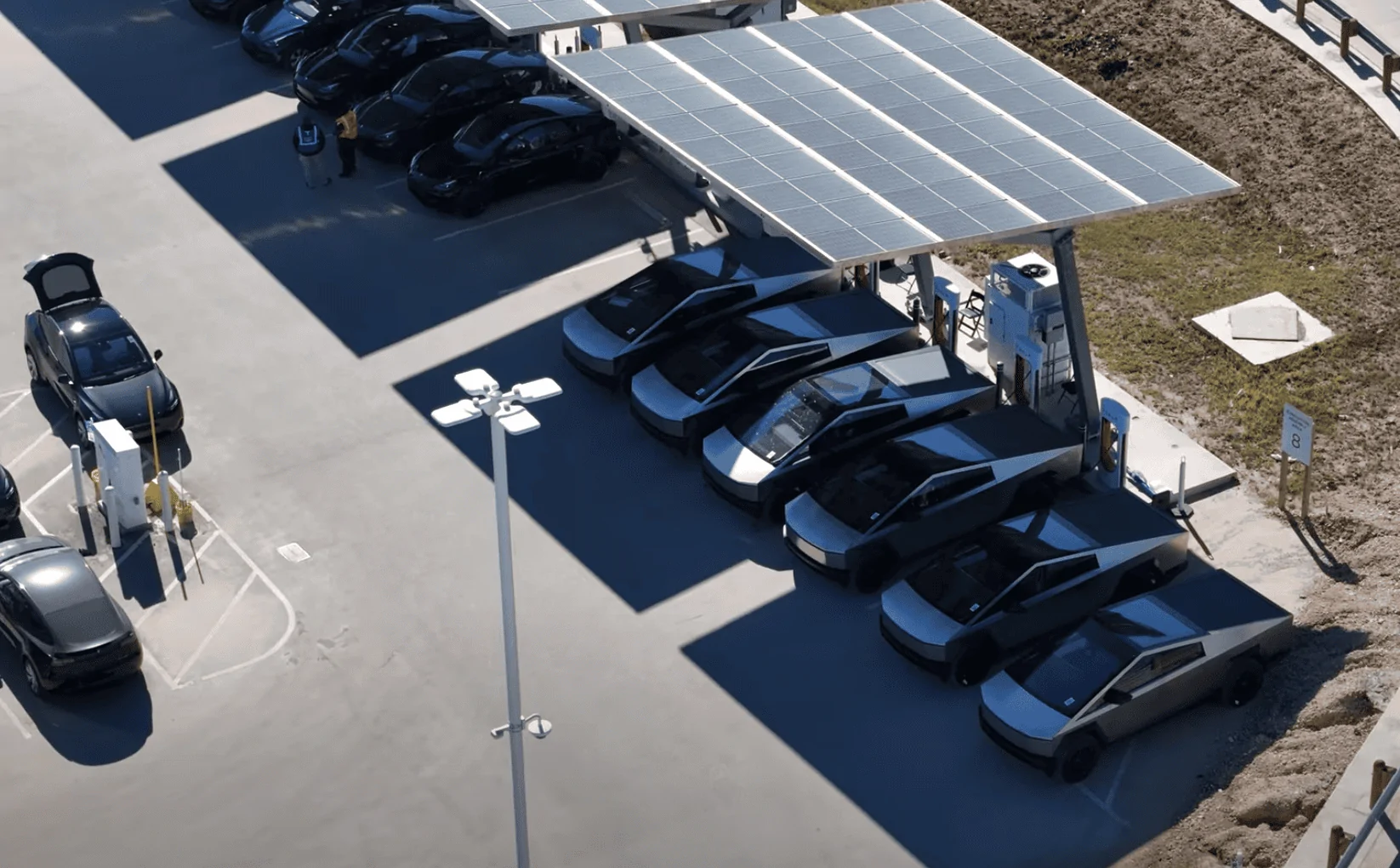
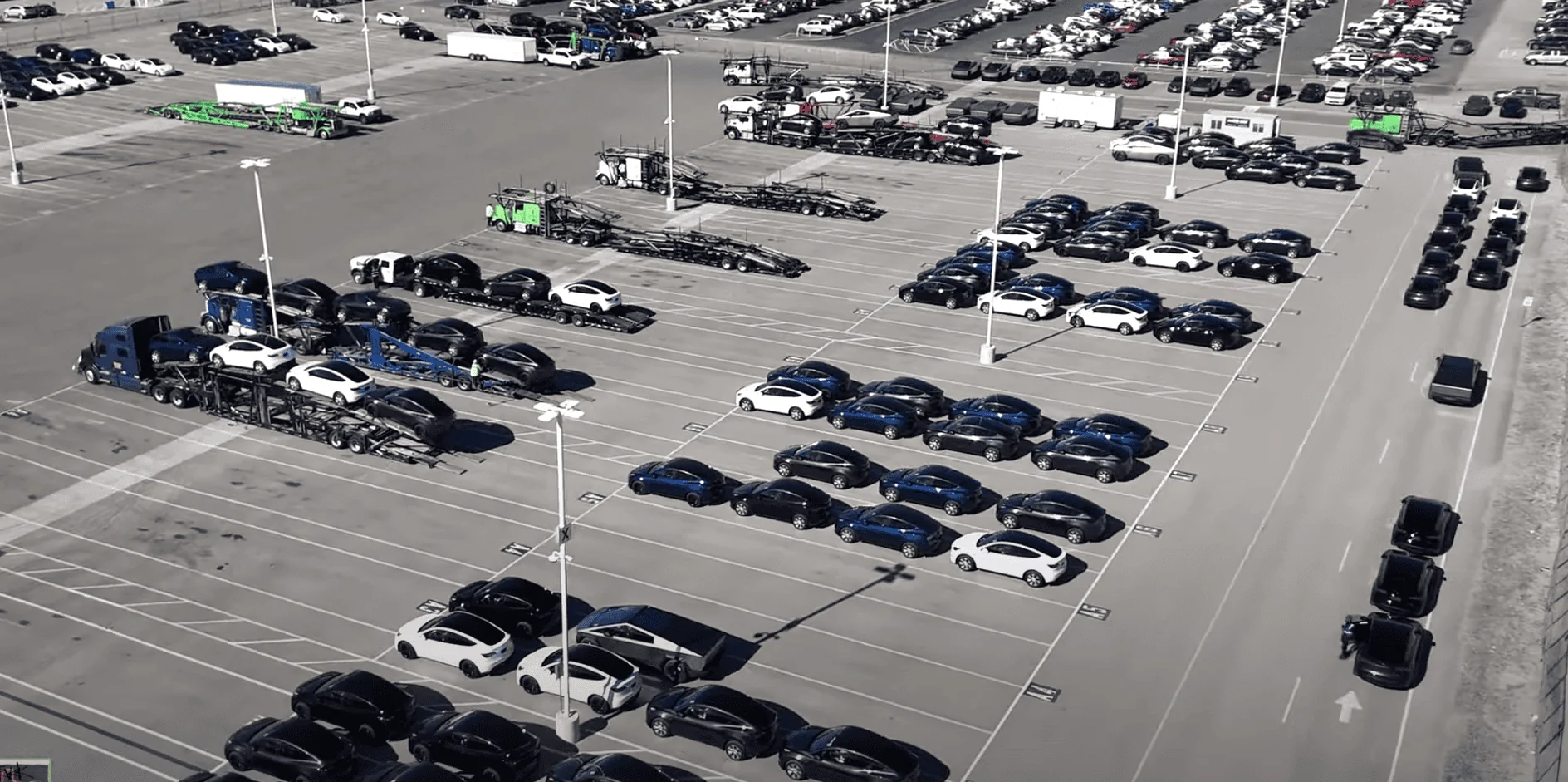
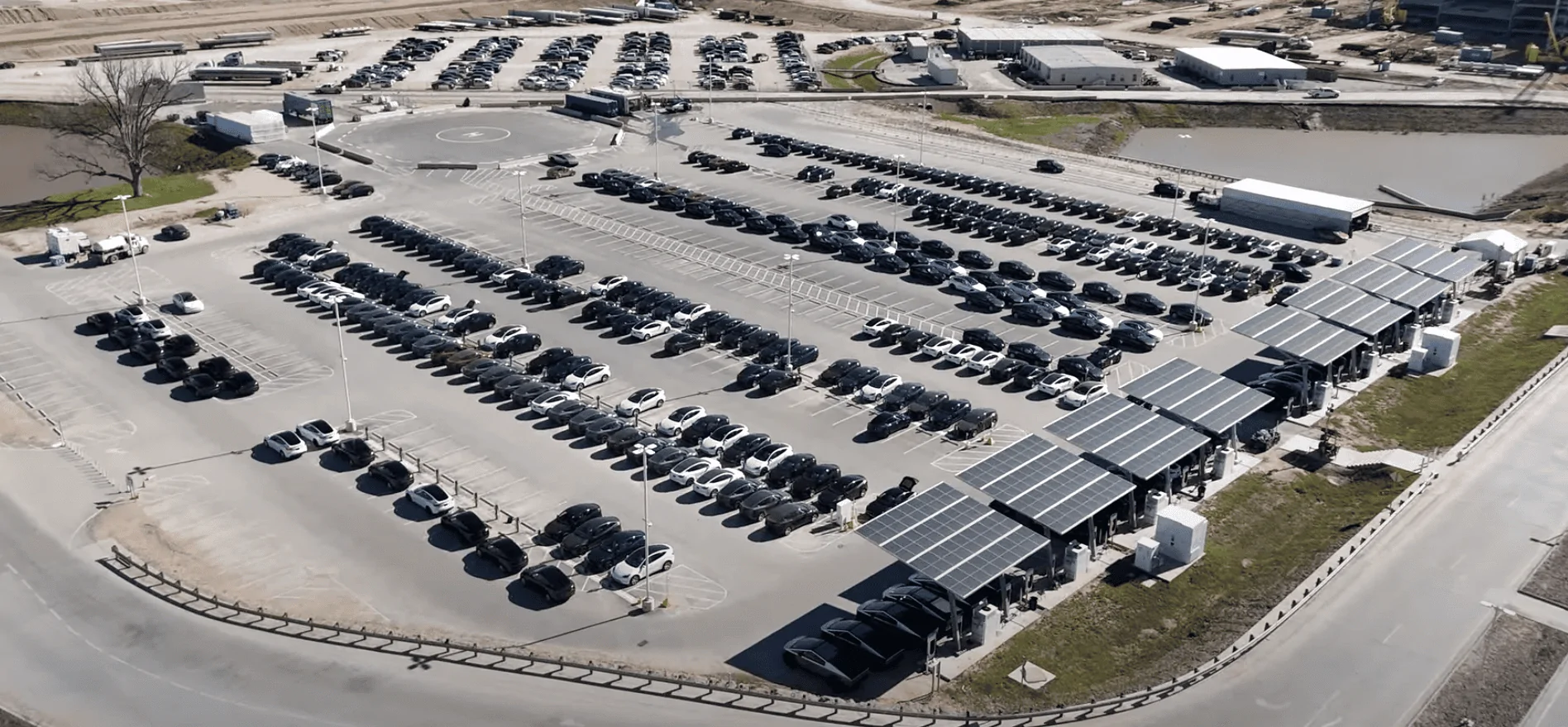
They have no desire to do a traditional auto manufacturer business model of keeping thousands of cars in storage somewhere.
Here's a picture of the "inventory lot" which is literally just cars being charged to the required level for delivery:

Tesla Cybertruck 10,000+ Miles Driving a Cybertruck – Things learned: range, great sound and full love/hate list after 10k miles 1705570109945


Tesla Cybertruck 10,000+ Miles Driving a Cybertruck – Things learned: range, great sound and full love/hate list after 10k miles 1705570091474


And then they are aligned in batches and loaded onto a car carrier. Note that there are two other car haulers pulling in from the the top of the lot. It's constant, it's an assembly line. They are not sandbagging "newer better models to spring on to the public." The line will be adjusted/improved and there's no warning or waiting or otherwise.. that's just how Tesla rolls. Ask all the people that bought Model S Plaid in the first two months whose center screen didn't tilt left or right, or Model 3/Ys that all of a sudden didn't have radar for AutoPilot lol.

Tesla Cybertruck 10,000+ Miles Driving a Cybertruck – Things learned: range, great sound and full love/hate list after 10k miles 1705570057175


Tesla Cybertruck 10,000+ Miles Driving a Cybertruck – Things learned: range, great sound and full love/hate list after 10k miles 1705571489665
 
Last edited:


XCeilidhX

Well-known member
First Name
Drew
Joined
Oct 25, 2022
Threads
10
Messages
405
Reaction score
724
Location
Silicon Valley & Surrounds
Vehicles
Model 3, Model Y, CB 047XXX, previously a Model S
Country flag
What are you talking about? The range on the Cyberbeast at 75 mph is going to be in the mid to lower 200s. Slow it to 55 and you are in the 300s.

You can expect a LOT lower range on a newer vehicle than you can an older one. Why, because your foot gets lighter over time.
Ahhhhh… if only my foot got lighter over time… (*sighs)

I have a perpetually lead foot. I am also an exceedingly cautious driver (sounds incompatible, but strangely true) and my experience with battery degradation is that you can expect very significantly lower range over time unless and until you replace your battery as I did in my Model S at about 108k mi or so on the odometer.

FWIW

Cheers
 

XCeilidhX

Well-known member
First Name
Drew
Joined
Oct 25, 2022
Threads
10
Messages
405
Reaction score
724
Location
Silicon Valley & Surrounds
Vehicles
Model 3, Model Y, CB 047XXX, previously a Model S
Country flag
Sure, there are a bunch of factors that all point to the superiority of a hard-wired solution vs. a wall outlet. I'll cover them in no real order.

Much of the resistance in a charging circuit is at the terminal connections. Resistance means heat and almost all electrical fires happen at these terminal connections. The screw terminals on the breaker to the distribution wire and the distribution wire to the terminal on the Wall Connector. The Wall Connector has higher quality terminals than a typical NEMA 14-50 outlet, But the real problem is the oxidation of the outlet (where it recieved the plug blades) and oxidation of the blades themselves. Copper forms an oxidized layer which is non-conductive. Wherever there is resistance, heat builds. The reason the outlet is problematic is that it has two sources of heat in close proximity, the terminals and the blades. It is quite common for these to melt down. Most of the time this happens a fire doesn't happen, you just have a melted NEMA 14-50. But it certainly can and does burn down garages and attached houses often enough that Sandy Munro did an entire video focused just on this problem.

An unrelated disadvantage of NEMA 14-50 outlets is that they require one more copper conductor be run from the charge station to the breaker panel (compared to a hard-wired charging station). If the run only requires a few feet of wire this is not a big deal, but many installs involve runs of more than a few feet. Copper wire costs time and money to install, yet it goes unused.

The additional cost of the NEMA 14-50 oulet is around $80. If you go with an outlet for EV charging, you definitely don't want one of the inexpensive ones! A Wall Connector attaches directly to the power feed wires and avoids the intermediate outlet. Also, a flush mount outlet requires a square hole be cut in the wall for it to mount into and a faceplate. A Wall connector covers up the small round hole required for the power feed.

Another cost of using a NEMA 14-50 is that code requires an expensive GFCI breaker that the hardwired solution doesn't (even though the both the Wall Connector and the Mobile Connector have their own GFCI protection). Having two GFCI on the same circuit has been known to cause nuisance tripping yet code still requires a GFCI breaker for a NEMA 14-50 outlet. Nothing worse than waking up to an uncharged car when you have a big day planned. The additional cost of a GFCI 60-amp breaker vs. non-GFCI 60-amp breaker can be $70 or more, depending upon the brand of distribution panel you have.

If you have a NEMA 14-50, it can only charge one EV at a time from that power feed. If you have a Wall Connector, a Second Wall Connector can be wired to the same power feed, using an electrical junction box, and two vehicles can be charged simultaneously by sharing the available power using the built-in intelligent load sharing of the Wall Connectors. The 24-foot cord of the Wall Connector can reach 4 feet further than the Mobile Connector which could be handy if you need to charge an EV parked away from the charging station.

The Mobile Connector has additional points of potential resistance where the wall adapter pigtail plugs into the body of the Mobile Connector. And it can come unplugged accidently if the 20 feet isn't quite enough, and the cord must be stretched to reach the car.

Finally, the Cybertruck can benefit from having 48 amps of charging speed, vs the 32 amps of the Mobile Connector. I will always feel more comfortable keeping my EV's at lower states of charge, thus minimizing battery degradation, when I know I have the full 48 amps available to quickly bring it up to 90% SOC before I leave on a longer than normal day trip. It seems like it can take forever if all I have is 32 amps.

Finally, the Foundation Edition comes with both a Mobile Connector and a Wall Connector. Put the Mobile Connector where it belongs, in the Cybertruck, and mount the Wall Connector where it belongs, to the wall. You will save time and money and have a safer, more convenient, more adaptable and slightly more efficient charging solution because that small amount of additional resistance in the Mobile Connector pigtail and the NEMA 14-50 plug blades adds up over years of charging.

To be clear, each of these advantages of using a Wall Connector over a NEMA 14-50 plug tend to be minor, or even inconsequential in some use cases, but reducing the risk of fire is not something to be discounted and the added power, conveniece and flexibility is nice, and it may even save a bit of expense over the inferior solution.

Don't be surprised though to see people claim the 14-50 is the cheaper solution. In most cases the cost and level of effort required is about the same. Go with the superior solution.
Thanks for such a great explanation.

I am often shocked at how cheap people are with the charging solution when safety should be king. Watching that aspect of these conversations makes me cringe.

At my home we have a model S and a model 3. I have two (yes two) 100 amp rated lines with two tesla chargers rated at up to 80 amps each on 220v lines. We upgraded our main panel to accommodate this. Why? Because my Model S is an early adopter version and I opted for the dual chargers so my home charging for that car can run at 80 amps and 220v.

i have never understood why Tesla seemed to have permanently dropped this option from vehicle configurations and it boggles my mind that the CT lacks it from what I am hearing. I love the option to charge at higher amperage at home and will miss this capability dearly when I trade in my Model S for the CT. It was a real shock to me when we got our model 3 and had to cut the amperage essentially in half as the max charging speed. Still makes me shake my head.

Bottom line from my perspective:

stop being cheap with your charger installs all y’alls. For realz. Install the Tesla brand dedicated charger with the highest amperage and voltage you can possibly afford and have it wired in a way that maximizes safety. It will increase the value of your home moving into the future, decrease your fire risk, and make your life easier. Bite the bullet and do it right. This is not the place to skimp under any circumstances.

my two cents, for whatever they are actually worth.

cheers
 

Warbird

Well-known member
First Name
Michael
Joined
Jun 19, 2023
Threads
4
Messages
69
Reaction score
84
Location
Boston, MA
Vehicles
Model S 75
Country flag
Thanks for such a great explanation.

I am often shocked at how cheap people are with the charging solution when safety should be king. Watching that aspect of these conversations makes me cringe.

At my home we have a model S and a model 3. I have two (yes two) 100 amp rated lines with two tesla chargers rated at up to 80 amps each on 220v lines. We upgraded our main panel to accommodate this. Why? Because my Model S is an early adopter version and I opted for the dual chargers so my home charging for that car can run at 80 amps and 220v.

i have never understood why Tesla seemed to have permanently dropped this option from vehicle configurations and it boggles my mind that the CT lacks it from what I am hearing. I love the option to charge at higher amperage at home and will miss this capability dearly when I trade in my Model S for the CT. It was a real shock to me when we got our model 3 and had to cut the amperage essentially in half as the max charging speed. Still makes me shake my head.

Bottom line from my perspective:

stop being cheap with your charger installs all y’alls. For realz. Install the Tesla brand dedicated charger with the highest amperage and voltage you can possibly afford and have it wired in a way that maximizes safety. It will increase the value of your home moving into the future, decrease your fire risk, and make your life easier. Bite the bullet and do it right. This is not the place to skimp under any circumstances.

my two cents, for whatever they are actually worth.

cheers
I too have an 80 amp capable high powered wall connector I installed in 2017 just for fun. I ended up not getting the Dual charger in my model s and have never missed it. I see no reason to charge at higher than 24 amps as that is enough current to fully charge the car overnight. There's no reason to charge any faster at home in my opinion. In fact a slower rate is better for battery longevity. I do agree there's no reason to skimp. A 220 volt 30 amp outlet is a bare minimum, as charging at 110 volts is very inefficient, wastes Heat, and is too slow.
 

XCeilidhX

Well-known member
First Name
Drew
Joined
Oct 25, 2022
Threads
10
Messages
405
Reaction score
724
Location
Silicon Valley & Surrounds
Vehicles
Model 3, Model Y, CB 047XXX, previously a Model S
Country flag
I too have an 80 amp capable high powered wall connector I installed in 2017 just for fun. I ended up not getting the Dual charger in my model s and have never missed it. I see no reason to charge at higher than 24 amps as that is enough current to fully charge the car overnight. There's no reason to charge any faster at home in my opinion. In fact a slower rate is better for battery longevity. I do agree there's no reason to skimp. A 220 volt 30 amp outlet is a bare minimum, as charging at 110 volts is very inefficient, wastes Heat, and is too slow.
in my personal case scenario, I actually use it with significant regularity. I live at the top of a mountain and work irregular hours. My ex wife lives a 40-50 minute drive away and sometimes i get home very late and have a quick turn around for a full day to pick up my kids and drive them to school then pick them up later with multiple trips up and down the mountain in the same 24 hour period.

but the 80 amp 220v charging cannot be beat in the one scenario everyone dreads:

just like your phone, some nights for whatever reason you forget to plug it in before you go to bed. Rare, but it happens. If I realize it before i get in the shower, i just might get enough miles in to make it through the day.

my employer does not provide any charging at all while i am at work. Not free, not paid. So if i forget to charge at night before work the next day, I can be pretty screwed if it is a day i need to do multiple trips up and down the mountain.

I respect your experience, and the experience of those that say they can charge once and drive all week, but that is nowhere close to my life, not even vaguely feasible. So having a pseudo-replacement for a low juice supercharger at home really makes a difference for me.

YMMV (literally)

Cheers
 

VDR

Well-known member
Joined
Nov 23, 2023
Threads
0
Messages
47
Reaction score
53
Location
BC
Vehicles
R1S
Country flag
Completely ignoring that those tests were on 135kWh and 149kWh batteries using 132kWh and 143kWh respectively. Versus a 123kWh pack in the CT. There's nothing similar about these tests other than the speed, and that they are trucks... of sorts.
Really? Were you hoping that they would swap packs to make things more fair? I have never seen a test where they swapped out gas tanks or engines to make things more equal.
I guess I also completely ignored the fact that the aerodynamics are completely different as well?
Do buyers care about range or pack size?
The temperature was virtually the same as well.
How many times does it need to be stated that for many the CT pack is too small?
Fact is a larger pack will go farther at speed for the same efficiency (mi/kwh) especially if it has a lower Cd.
 
Last edited:


agordon117

Well-known member
Joined
Jan 11, 2024
Threads
7
Messages
1,196
Reaction score
2,039
Location
Ohio
Vehicles
cybertruck foundation awd
Country flag
There certainly are some weird opinions around here. If I understand correctly, you aren't allowed to criticize the range, unless you actually ordered a cyberbeast? Quite a remarkable take on things. When announced, cyberbeast was said to be $69990, and FSD was $7000. The mental gymnastics required to say "oh, you only ordered an AWD for 80k (or 100k for foundation), therefore you don't get to criticize the range" are olympic level.

I originally ordered a tri motor with FSD, for $77000. You can say this and that about inflation (and real inflation is quite high), but do you actually understand? Even if you go by real inflation (rather than the calculation they switched to in the 80s), a beast with FSD should be $96250. Okay we're pretty close to that, right? well, no. Because to get the beast you thought you were ordering in 2019, just assuming that we count the 450 mile extended range beast as "the same", you can order a beast for delivery late this year without the extended pack, and then buy the extended pack, for a total of $136000, pre tax. If you want to shave down your options to try to save a little money, it will come eventually.

So, it should not be a stretch for literally anyone to imagine that people who ordered beast for 69990 expecting 500+ miles built in, are instead taking awd models, which have a longer range than the beast, and cost more than the original tri motor tier. People who ended up buying AWD today are allowed to be annoyed that the original tri motor specs were not delivered. The gatekeeping to say that if you didn't spend the extra 20k on a beast today, you aren't allowed to have an opinion about the range... is pretty absurd, and pretentious.
 

Woodrick

Well-known member
First Name
Ed
Joined
Dec 30, 2023
Threads
6
Messages
4,786
Reaction score
4,762
Location
Gainesville Ga
Vehicles
Model 3, Model Y, Cybertruck AWD
Occupation
Consultant
Country flag
Ahhhhh… if only my foot got lighter over time… (*sighs)

I have a perpetually lead foot. I am also an exceedingly cautious driver (sounds incompatible, but strangely true) and my experience with battery degradation is that you can expect very significantly lower range over time unless and until you replace your battery as I did in my Model S at about 108k mi or so on the odometer.

FWIW

Cheers
Let's not add an older Model S to the equation. They had earlier battery chemistries and unless made after the Model 3 introduction 2017/2018, the batteries had some issues.
But after the Model 3 introduction, the batteries on all of the cars have been much better. Sure, there will be some issues, everything has some issues, but they aren't significant.
 
OP
OP
Gigahorse

Gigahorse

Well-known member
Joined
Dec 19, 2023
Threads
19
Messages
2,856
Reaction score
3,225
Location
USA
Vehicles
AWD
If I understand correctly, you aren't allowed to criticize the range, unless you actually ordered a cyberbeast?
Correct, unless you have already purchased one you are not allowed to have an opinion of it unless it is positive. Much like "innocent until proven guilty" these vehicles are "perfect until a personal 5 year test is complete"
 
  • Haha
Reactions: VDR

agordon117

Well-known member
Joined
Jan 11, 2024
Threads
7
Messages
1,196
Reaction score
2,039
Location
Ohio
Vehicles
cybertruck foundation awd
Country flag
Correct, unless you have already purchased one you are not allowed to have an opinion of it unless it is positive. Much like "innocent until proven guilty" these vehicles are "perfect until a personal 5 year test is complete"
*Sobs in FS AWD*
 

PilotPete

Well-known member
First Name
Pete
Joined
May 8, 2023
Threads
12
Messages
1,578
Reaction score
3,969
Vehicles
Porsche, BMW, M3LR on order
Occupation
Chief Pilot
Country flag
Completely ignoring that those tests were on 135kWh and 149kWh batteries using 132kWh and 143kWh respectively. Versus a 123kWh pack in the CT. There's nothing similar about these tests other than the speed, and that they are trucks... of sorts.
Aside from the weight difference, battery pack size has no impact on vehicle efficiency, only max range. And when you consider that is the battery the car comes with, and you can’t order “A CT with the Hummer battery pack”, you get what you get. But like I said, unless you are testing in a controlled environment, or the two cars are driving side by side, there will always be variables that will affect the outcome of the test. I haven’t yet seen a YT “test”, “report”, “evaluation”, or “review” that uses a repeatable standard test. And since there are too many variables affecting results, the oft uttered phrase “real world results” is absolutely meaningless.

Moving out of the realm of BEVs for a moment, and talk about “real world” numbers. My car gives me the average mpg since last reset and miles to empty. I always reset both the mpg and trip mileage at each fill up. By default, the car gives me a “range to empty” based on my recent mileage. This number goes down AND up as I drive, depending on the new mpg average for the tank. I have had to fill up at just over 300 miles on a tank of gas with all local driving. Yesterday, I pulled into Costco with 425 miles on that tank of gas. That’s over a 40% increase. Why the difference? Same driver, Same car. But, the conditions of my drive caused a huge change in my consumption per mile. The average mpg was 37% higher than the lowest tank numbers. Both of those numbers were “real world” averages. I could go on YT and talk about what a great car I have. I got almost 27mpg average through an entire tank of gas. REAL WORLD numbers! I could talk about how this car exceeds the EPA numbers. Or, I could go on YT and whine about the tank that had an 18.4mpg, and how the EPA tests aren’t “real world” and how the company is “optimistic” about the mileage and trying to BS me and just sell cars and they’re all evil money grabbers only out to take advantage of the poor consumer. Sound familiar?

The purpose and intent of the EPA mileage test was NEVER to tell you what kind of mileage you were going to get. Rather, the intent of the test is to give you a controlled test number that you could compare between cars. If car 1 got 20mpg in the EPA test, and car 2 got 25, then the consumer could assume that car 2 will give them better gas mileage under MOST circumstances. But people started assuming that is the mileage they could get. This was further hyped by car salesmen. And so the EPA, rather than correcting the assumption, has tried to make the test more relative to what most people see. It is a number for comparison, and don’t think any more. Range numbers are EXACTLY the same. They are numbers for comparison, not the range you will see. And there is no such number as a “real world” range.
Sponsored


Top