Cyberdoc18
Well-known member

I think I saw the accessory for this and they cut out the spot for the cb radio
Sponsored
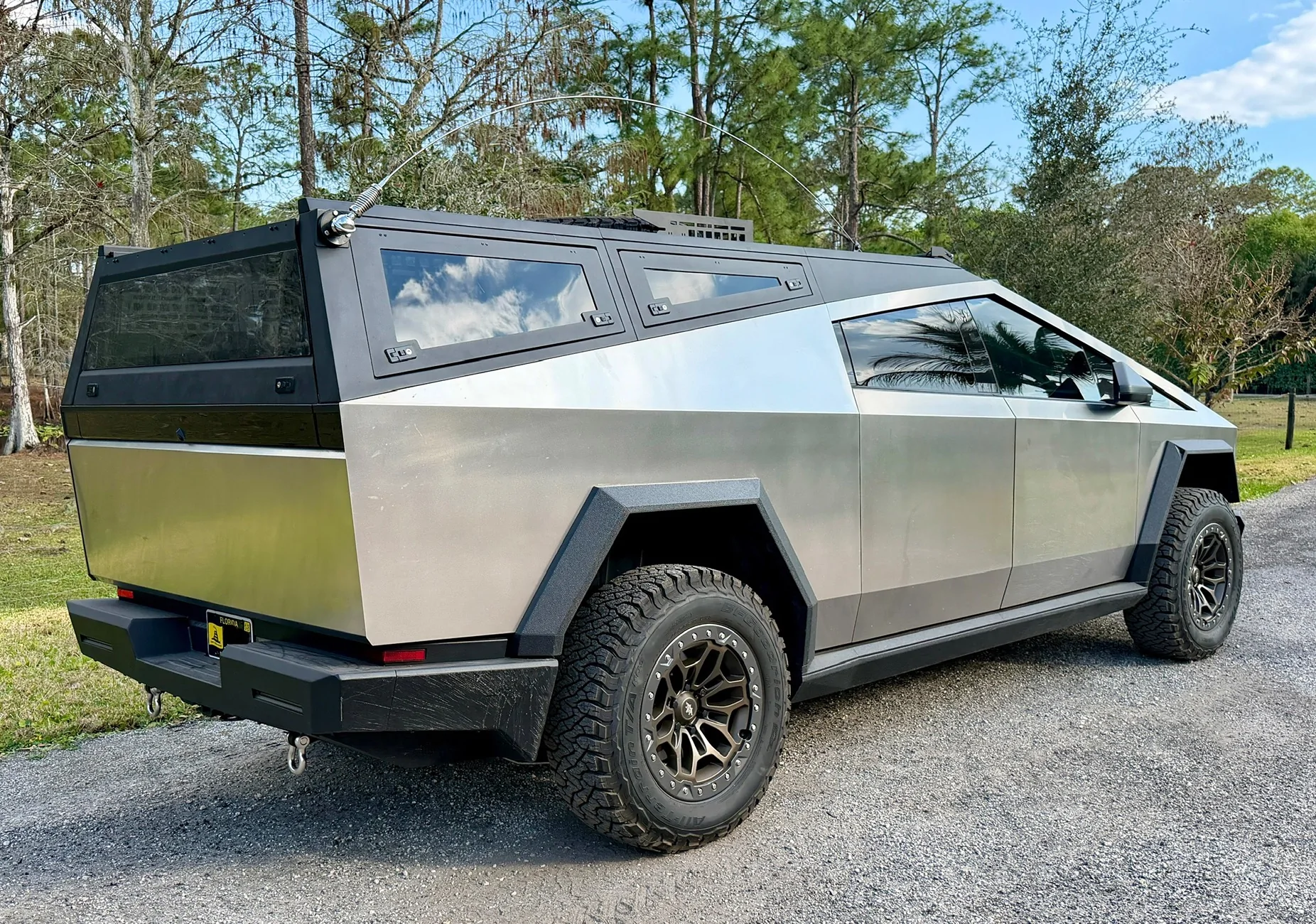
Beautiful build....looks OEM. Nice dog....is that a Coton?Well, it took way longer than anticipated, and many will ask why I even bothered with us all having our cell phones now. Yes, I also have Starlink, which can surely replace a CB too, but I’m inherently a product of the ’70s. I’ve used CBs off-road when cell service often disappeared, and they’ve been an incredibly useful tool leaving and returning home after hurricanes—not to mention listening to trucker conversations on my daily commute (chef’s kiss).
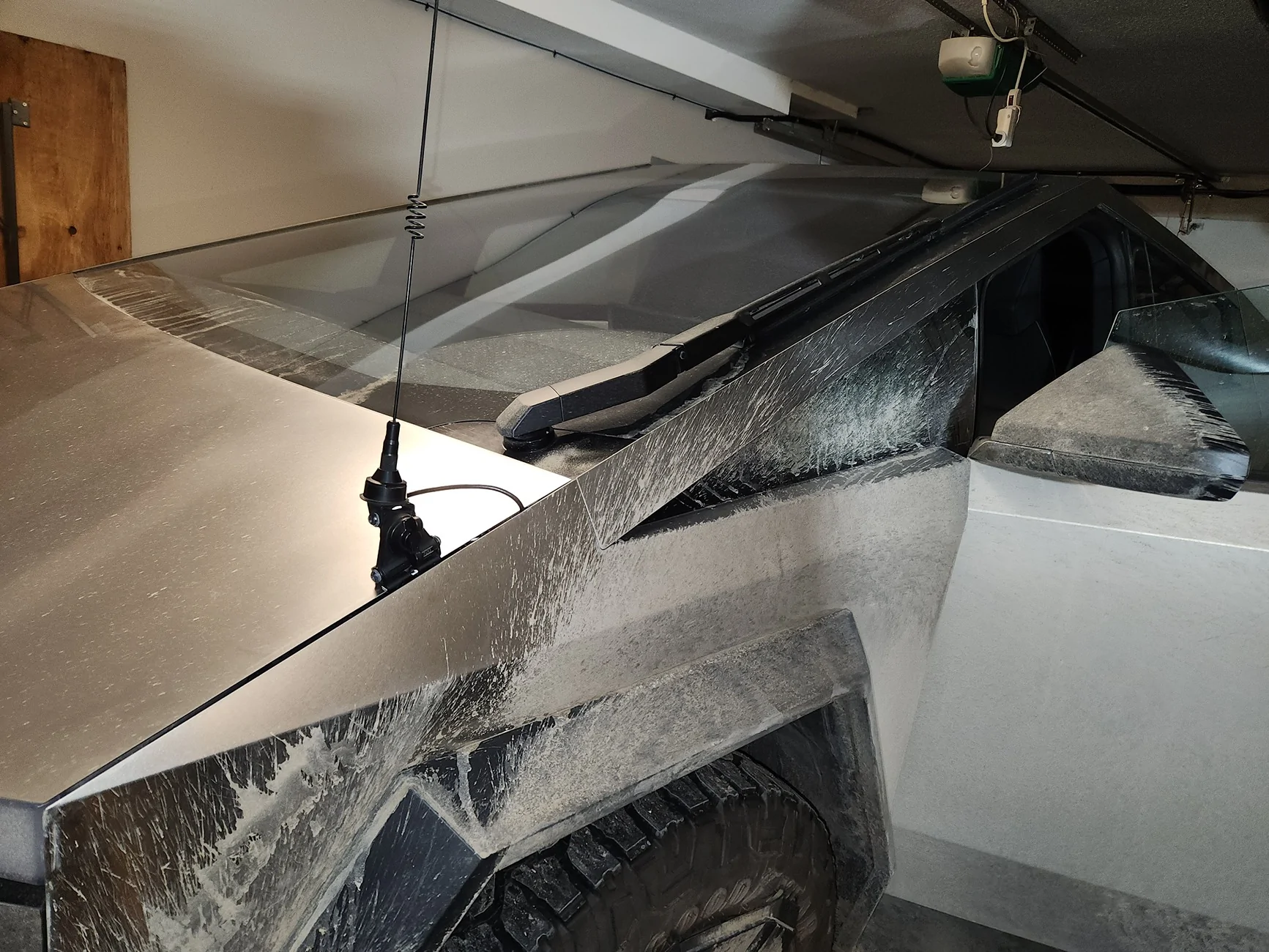
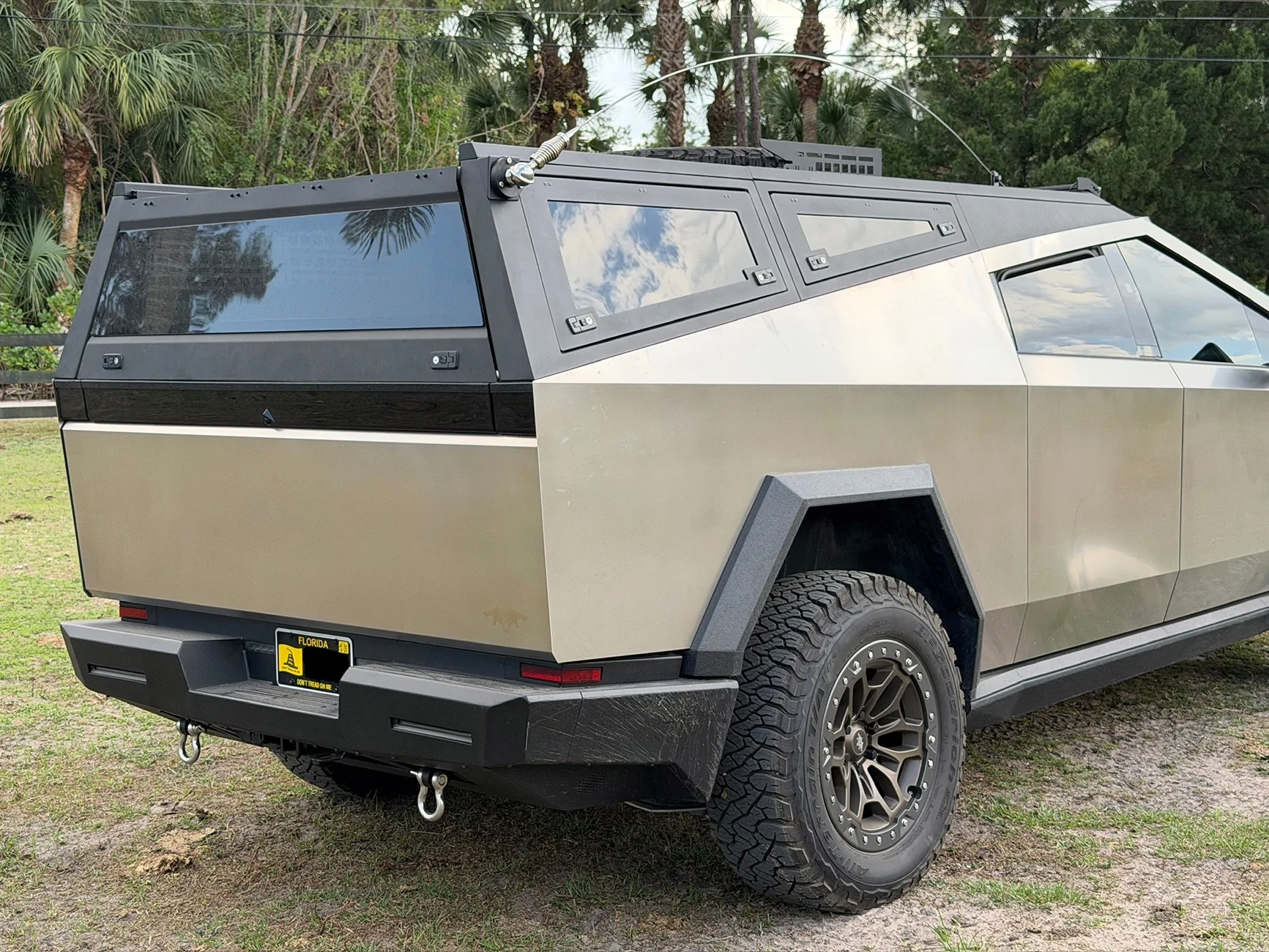
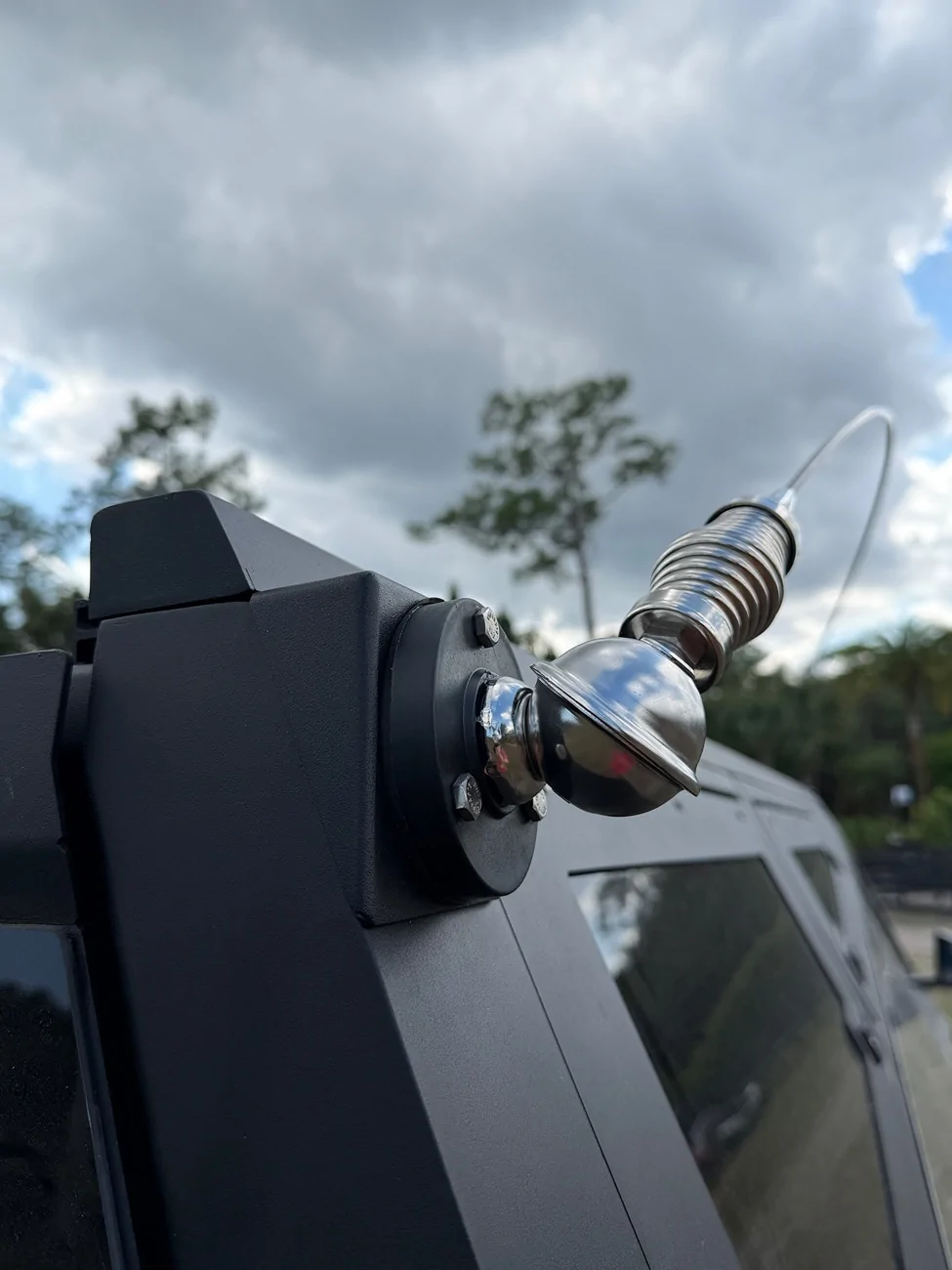
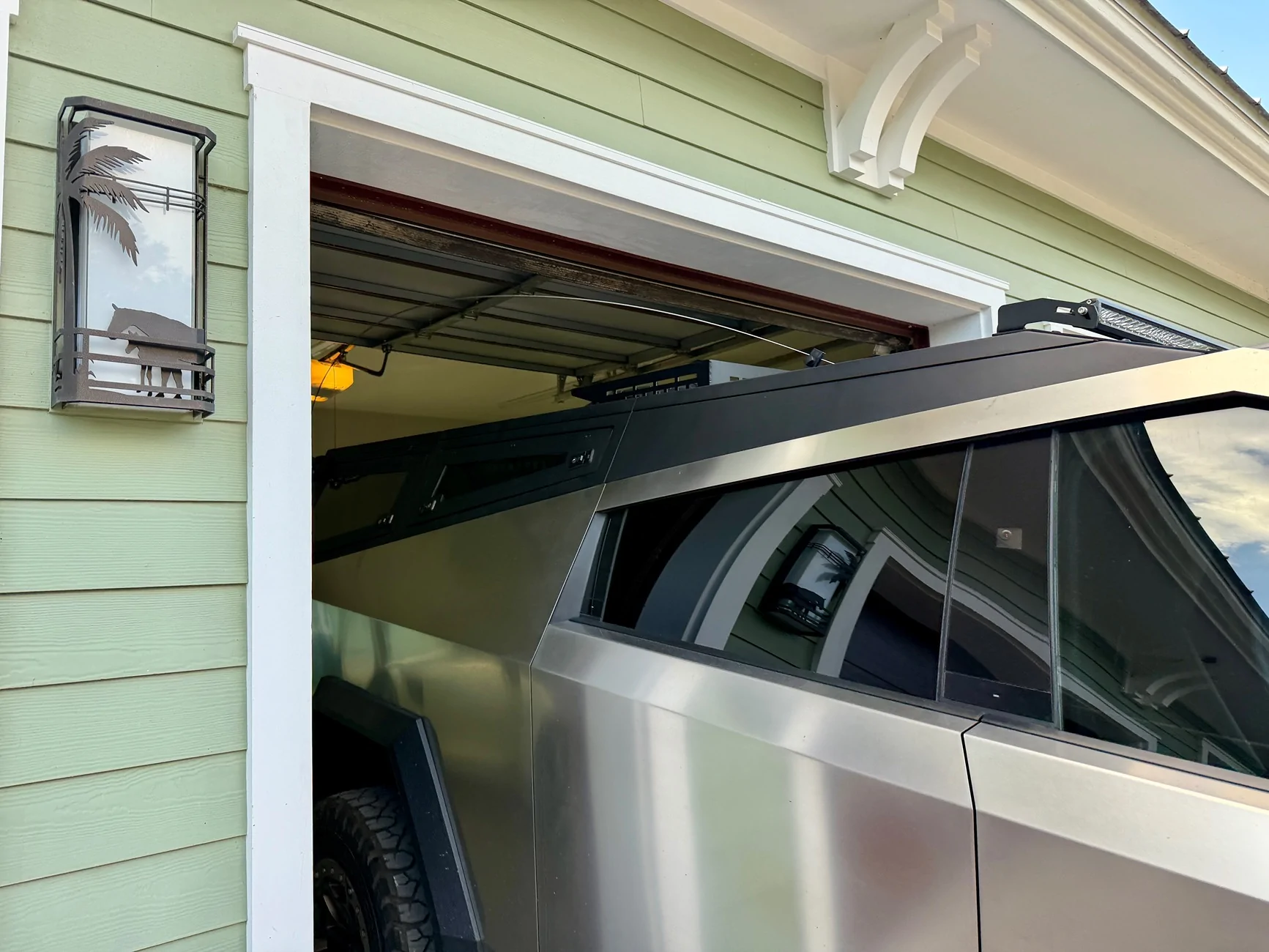
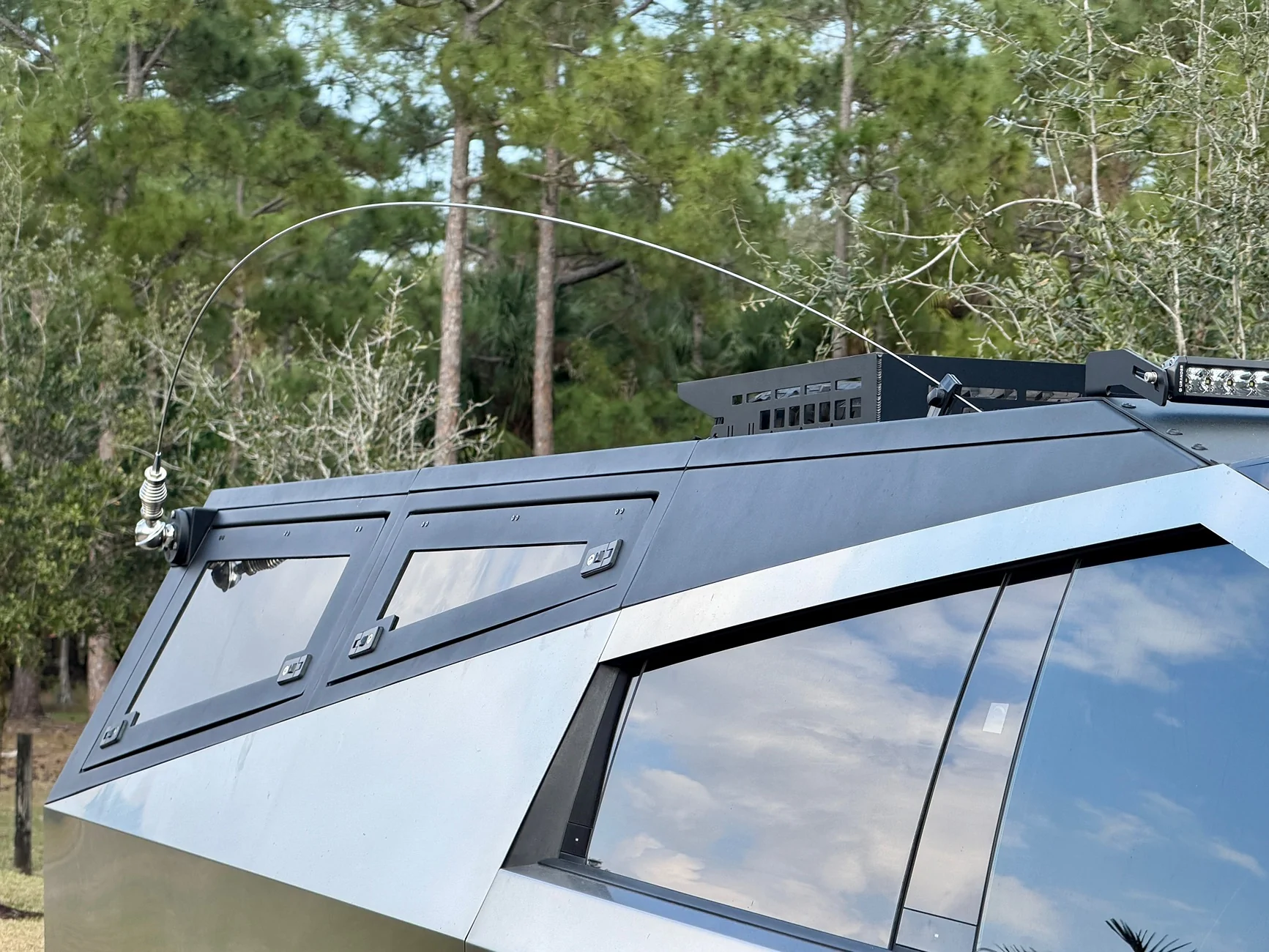
Power runs to the CB from my frunk-located winch battery. The antenna wire runs to the B-pillar base (floor trim removed), up through the center of it, and then out the same hole as the light bar power. Then it continues along my Urander cap’s top rail and terminates at a custom bracket mounted to the top right rear of the Urander bed cap. I went with a full 102” whip (quarter wave) to get the absolute best reception and lowest SWR possible (it’s literally 1.0). The whip is held down for daily driving via an insulated clip. When clipped down, it still fits into my garage without hitting it too.
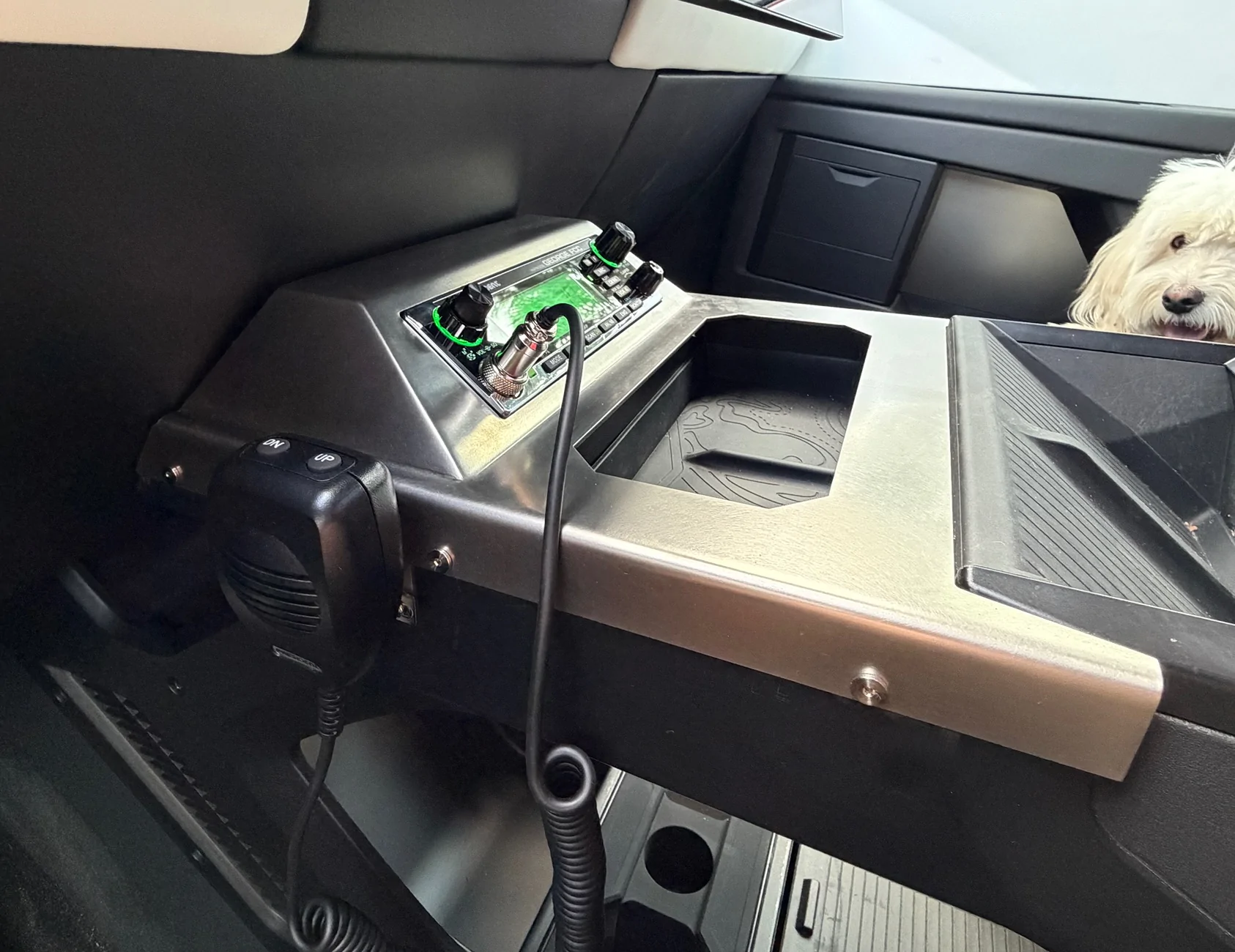
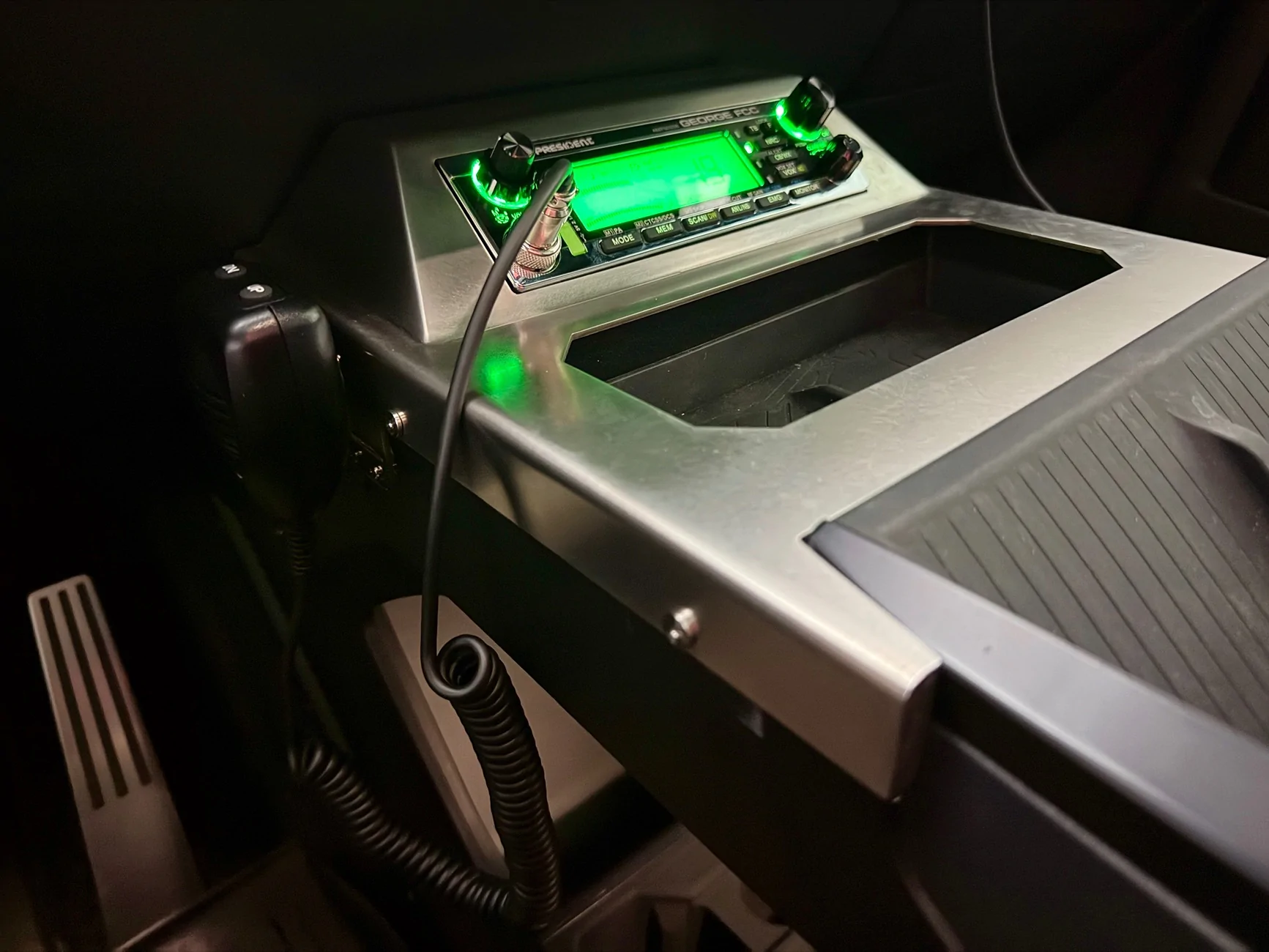
The radio itself is mounted to a custom fabricated top that replaced the stock cap of a Cybergearco center console. I was originally going to fab the console part too, but when I saw the console advertised, it was a no-brainer. It fits the opening perfectly, its aesthetic is way better than anything I could have made, and there’s even storage below it. Radio is a President, model George FCC, and it has been modified for increased power (let’s just say as high as legally allowed).
This project took way more effort than anticipated—three full tries for the console top (fitting it) and two for the antenna mount—but I really do like the final result. Just putting it out there so you can see it’s definitely possible!
https://www.cybergearco.com/products/center-console-organizer-shelf-cybertruck
https://urander.com/products/bed-rack



I can send you the .dxf cut files, and the bend info, any local metal shop could use those to get you the base parts (just those were a bear to figure out), but the absolute time consumer was the tig welding and final finish of the stainless. I used the polishing pads recommended by Tesla for the stainless panel scratch repair / refinishing. It was a labor of love I guess, but it took for ever (hind site I should have just powder coated or painted)Wow amazing! How did you do such a nice install! I was looking to do this for ham radio how do I go about doing this?
 .
.
Havaneese, and the best Christmas present my wife ever got me! He’s become my shadow.Beautiful build....looks OEM. Nice dog....is that a Coton?
I can relateI can send you the .dxf cut files, and the bend info, any local metal shop could use those to get you the base parts (just those were a bear to figure out), but the absolute time consumer was the tig welding and final finish of the stainless. I used the polishing pads recommended by Tesla for the stainless panel scratch repair / refinishing. It was a labor of love I guess, but it took for ever (hind site I should have just powder coated or painted)
Havaneese, and the best Christmas present my wife ever got me! He’s become my shadow.




You would think so, but I'm starting to realize that there needs to be plenty of bonding done before that becomes the case. An electrical ground doesn't always mean an effective RF ground.The CT is going to make an awesome ground plane.
Maybe use an oscilloscope to see the shape of the output waveform of Inverters.And common mode noise might also be a problem. I've ordered a bunch of snap on ferrites to see if it's actually common mode, or something else.
I've discussed some of my thinking on the noise issue in other threads. The inverter that produces 120 volts does seem to be noisy. So much so that I now use a lithium iron phosphate battery to power my VHF/UHF radio. The inverter only needs to on, to generate noise - I don't even need to put a load on it or power the radio from it!Maybe use an oscilloscope to see the shape of the output waveform of Inverters.
Or maybe a spectrum analyser to look at harmonic spikes.

Yes, underneath the stainless fascia is a metal box that gets fastened to it with the small visible fasteners on the sides of the fascia. Those 8-32 fasteners go through the fascia, then through the Cybergearco holes (the original ones that held their top on), and into the inner metal box I made. That box gives the whole structure strength, makes the recess for the sunglasses/phone holder area possible, and has a custom bracket on its front side. Metal bracket angles down and around the radio sides, and I used the fasteners included with the radio to position it on the bracket where I wanted it (how much sticks out from the face).Very cool build. How did you mount the CB in the console? Did you have to create a custom bracket?
Do you need a license for the CB radio like for Ham radio?I've discussed some of my thinking on the noise issue in other threads. The inverter that produces 120 volts does seem to be noisy. So much so that I now use a lithium iron phosphate battery to power my VHF/UHF radio. The inverter only needs to on, to generate noise - I don't even need to put a load on it or power the radio from it!
When I was investigating that noise, I used a spectrum analyzer while sitting inside the vehicle. The radio suffered from noise, but it was tough to detect it with the Spectrum Analyzer. So that's why I went with the battery solution. However, after thinking more about this, I'm suspicious the inverter noise is actually coming down the coax as common mode. I had the SA on its own small antenna when I tested, to keep the radio active, and neglected to test via the coax. So that's why I thought I'd play around with the ferrites. I have other uses for them if that turns out to not be the solution, so no harm, no foul. I will connect the spectrum analyzer to the coax and add ferrites, watching for any improvements. Bonding the body panels might also help but I don't even want to think about how painful it would be to do that.
HF has also proven to be challenging - that will be another investigation. But it's winter and I'm not anxious to go out there with test gear until it warms up. Much easier to order some ferrites from Mouser from the warmth of my den...
No license is required for a CB (I do actually have one for HAM radios, but this does not require one…that license is fairly easy to get though, just reading a prep book and taking a test).Do you need a license for the CB radio like for Ham radio?
How much power is your CB transceiver?
And what kind of range do you get with this antenna
when parked and the antenna fully vertical?
OP described CB range accurately. In my case, I'm using a dual band VHF/UHF radio that will put out 50 watts. The antenna I'm using sits on the edge of the frunk lid and is only about 2 ft tall. With that arrangement, depending on location and terrain, I manage significantly greater distances than CB. And potentially a hundred or more miles if mountain top repeaters (installed and maintained by ham clubs) are used. The frequency used is more likely to bounce the signal around mountains and valleys than send it up into the atmosphere and bounce off of the ionosphere (skip). CB frequency tends to propagate up meaning it is more likely to bounce off the ionosphere and end up a thousand miles away than it is to reach 20 miles down the road. VHF/UHF are exactly the opposite and simply won't bounce off the ionosphere.Do you need a license for the CB radio like for Ham radio?
How much power is your CB transceiver?
And what kind of range do you get with this antenna
when parked and the antenna fully vertical?