
Sponsored

ADVICE - on a generator charge

the43k

Banned
Well-known member
Banned
First Name
Eddie
Joined
Nov 22, 2019
Threads
35
Messages
149
Reaction score
220
Location
Boulder, Colorado
Website
www.youtube.com
Vehicles
Model S, CyberTruck
Occupation
Career Fire Fighter / Owner NJ Renewable Energy LLC
Country flag
  • Thread starter
  • Banned
  • #1
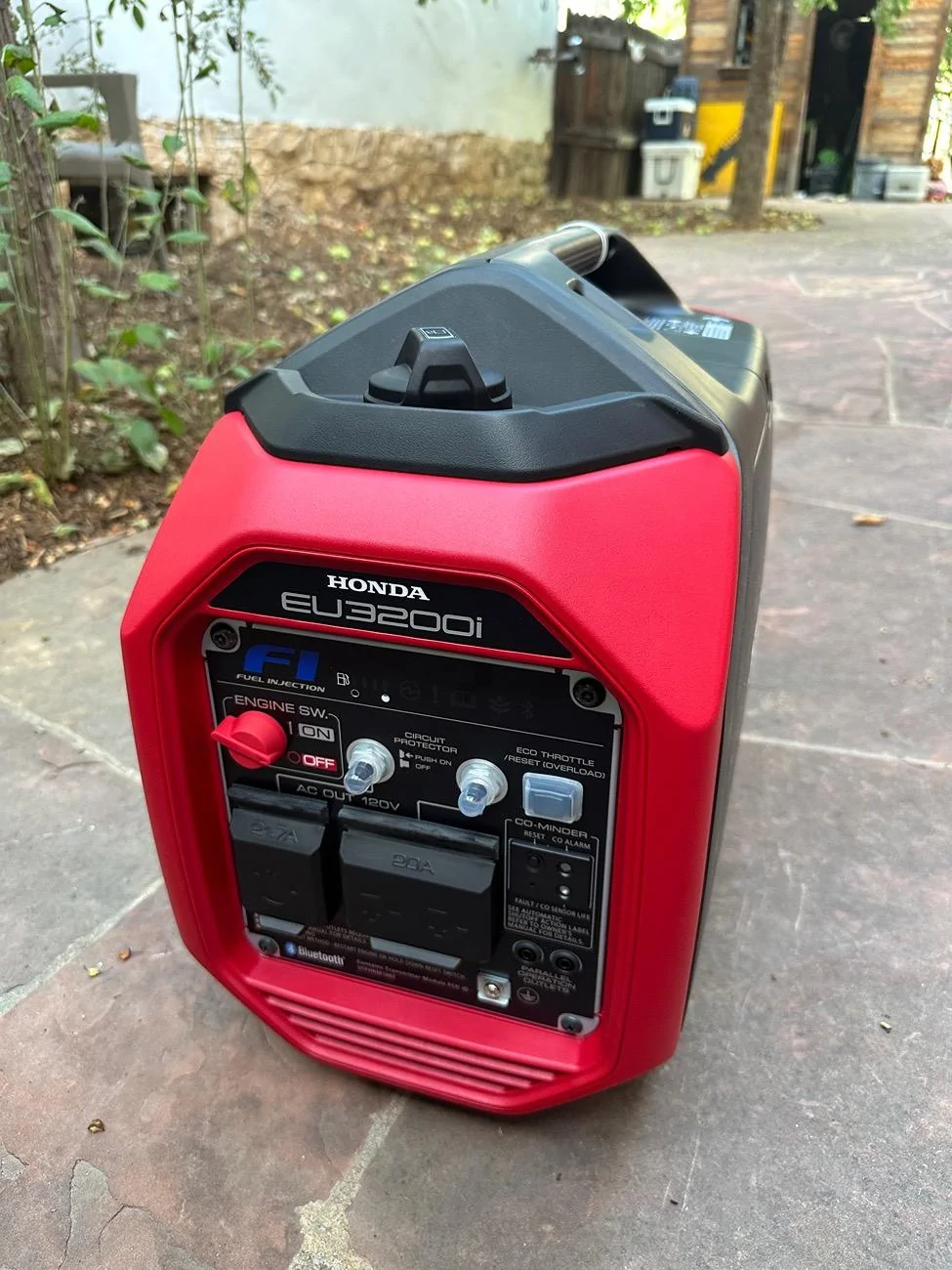
Have about 10,000 miles on my Cybertruck. Things have been fantastic.. Gone to Colorado, to Vegas, to Kanas City, to Chicago, to New Jersey and back. Never for one moment have I had any charging issues. Super Charging infrastructure is amazing. That said, I am going somewhere that is very remote and will be using the truck from some time with limited charging access. As an emergency backup plan we have purchased a generator. In addition to camping, we will be using this generator as a charging station in the unlikely event we need to. It's a honda EU3200i. It has 2 20 amp 120v outlets and 1 30 amp 120v twist plug. Done some initial testing with what I have, the 20 amp outlet only chargers at 12 amps, with my version 2, mobile connector. I want to use the 30 amp 120v instead. Not sure what exact adapter will work or what the mobile connector / Cybertruck will allow to flow. Anyone here have any suggestions, experience, adapters, websites or whatever might help me accomplish our goal?? Thanks so much.

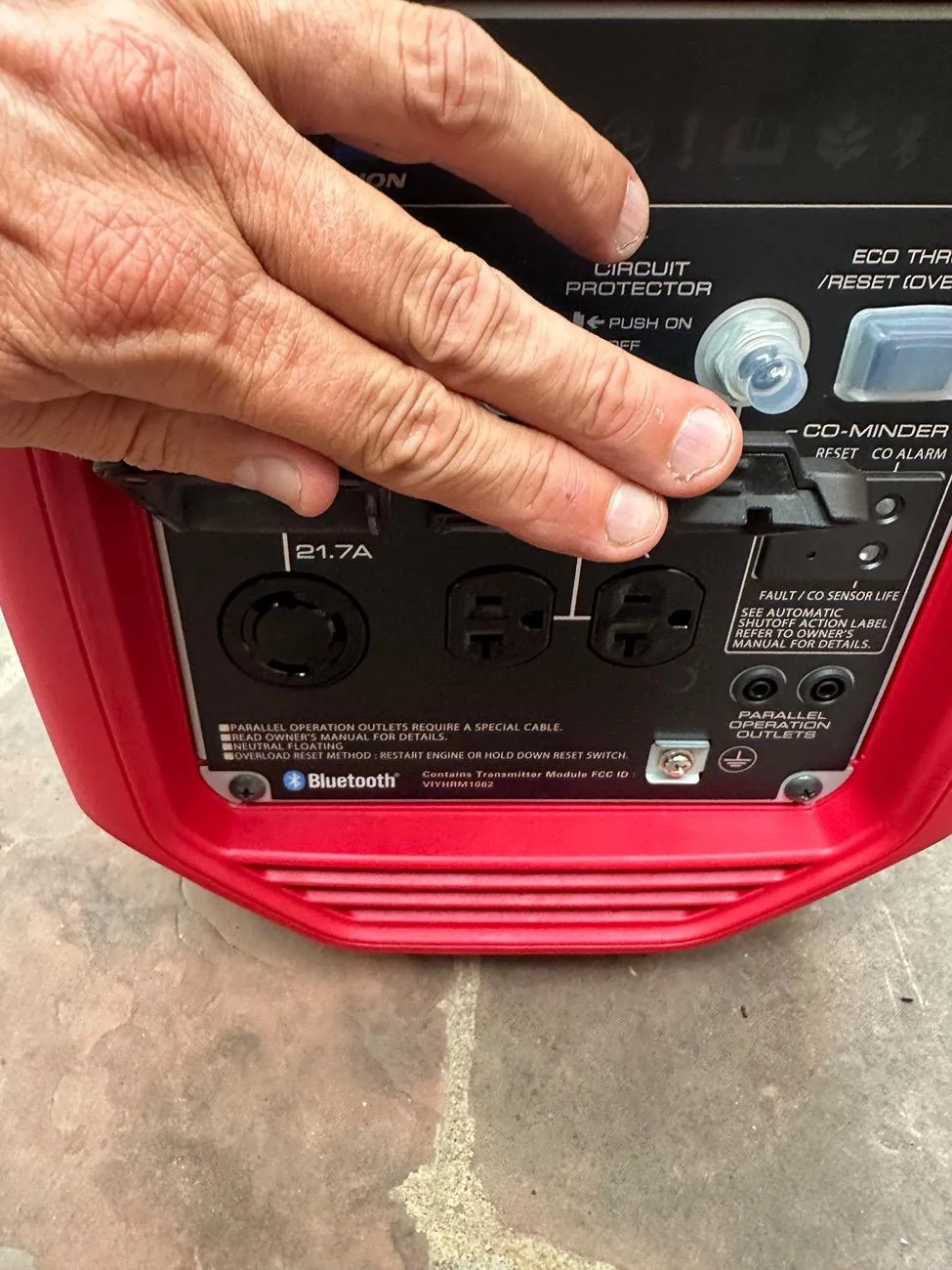
Tesla Cybertruck ADVICE - on a generator charge tempImageqXeL7I


Tesla Cybertruck ADVICE - on a generator charge tempImageGLsIWg
Sponsored


Pops

Well-known member
Joined
Dec 31, 2023
Threads
35
Messages
1,204
Reaction score
2,548
Location
Houston, TX
Vehicles
MY, CyberBeast
Country flag
I want to use the 30 amp 120v instead.
The generator you have is only rated for 21.7amps on the twist outlet. I believe that is a NEMA L5-20. Each of the other outlets are typically only able to do 15amps max individually(20 combined), and that is part of the reason you are only getting 12amps.

1) You would need a NEMA 5-20 to NEMA L5-20 to get the max amps out of your generator.
Here is one on Amazon $15: HERE

2) You will also need the Tesla NEMA 5-20 adaptor for the Mobile Charger. That will be more expensive. This adaptor alone might take you to 15amps, making the first adaptor optional.
Here is one on Amazon $62: HERE
Edit: Its cheaper from Tesla

NOTE: Save your money. Even with all these adaptors I suspect you will only get 16amps instead of your current 12amp. The limitation is the Tesla mobile charger @ 120v.
Tesla Cybertruck ADVICE - on a generator charge 1722832349774-fx
 
Last edited:

Spacenoddle

Well-known member
First Name
Nan
Joined
Jan 21, 2024
Threads
25
Messages
758
Reaction score
1,098
Location
kenmore
Vehicles
Cybertruck
Occupation
IT
Country flag
The generator you have is only rated for 21.7amps on the twist outlet. I believe that is a NEMA L5-20. Each of the other outlets are typically only able to do 15amps max individually(20 combined), and that is part of the reason you are only getting 12amps.

1) You would need a NEMA 5-20 to NEMA L5-20 to get the max amps out of your generator.
Here is one on Amazon $15: HERE

2) You will also need the Tesla NEMA 5-20 adaptor for the Mobile Charger. That will be more expensive. This adaptor alone might take you to 15amps, making the first adaptor optional.
Here is one on Amazon $62: HERE

NOTE: Save your money. Even with all these adaptors I suspect you will only get 16amps instead of your current 12amp. The limitation is the Tesla mobile charger @ 120v.
1722832349774-fx.png
Actually 1.7 kw can get you about 5 miles per hour if in remote low speed driving. Not that bad if charging 10 hours to help reaching the closest SC.
 

Pops

Well-known member
Joined
Dec 31, 2023
Threads
35
Messages
1,204
Reaction score
2,548
Location
Houston, TX
Vehicles
MY, CyberBeast
Country flag
Actually 1.7 kw can get you about 5 miles per hour if in remote low speed driving. Not that bad if charging 10 hours to help reaching the closest SC.
Valid point. OP with your generator you could charge around 30% faster than you are now for around $60-$80 in adaptors.
 
OP
OP
the43k

the43k

Banned
Well-known member
Banned
First Name
Eddie
Joined
Nov 22, 2019
Threads
35
Messages
149
Reaction score
220
Location
Boulder, Colorado
Website
www.youtube.com
Vehicles
Model S, CyberTruck
Occupation
Career Fire Fighter / Owner NJ Renewable Energy LLC
Country flag
  • Thread starter
  • Banned
  • #5
I really appreciate the effort here. I also happen to have a Version 1 mobile connector, I think that will do a high amperage. ANOTHER Question ----- I have one of these ground bonding plugs, that is needed to basically trick the GFIC. It goes in one of the 20 amp outlets. For some reason the Version 1 mobile connector wouldn't work. When I swapped it with the Version 2, it did. Any thoughts? Furthermore, I'm told the Ground Bond will still "trick" the 30 amp (aka the 21.7 outlet) plugged into the 20 amp outlet? You agree?


OP
OP
the43k

the43k

Banned
Well-known member
Banned
First Name
Eddie
Joined
Nov 22, 2019
Threads
35
Messages
149
Reaction score
220
Location
Boulder, Colorado
Website
www.youtube.com
Vehicles
Model S, CyberTruck
Occupation
Career Fire Fighter / Owner NJ Renewable Energy LLC
Country flag
  • Thread starter
  • Banned
  • #6
Actually 1.7 kw can get you about 5 miles per hour if in remote low speed driving. Not that bad if charging 10 hours to help reaching the closest SC.

Another thought.. BTW cost is of no issue. I need faster charging rate. Forgive my ignorance her, but if I bought a NEMA L5-20 to and 30 TT or NEMA 14-50, with the mobile connector adapters I have, would that somehow get me to a higher amperage than 16 amps?
 

Spacenoddle

Well-known member
First Name
Nan
Joined
Jan 21, 2024
Threads
25
Messages
758
Reaction score
1,098
Location
kenmore
Vehicles
Cybertruck
Occupation
IT
Country flag
Another thought.. BTW cost is of no issue. I need faster charging rate. Forgive my ignorance her, but if I bought a NEMA L5-20 to and 30 TT or NEMA 14-50, with the mobile connector adapters I have, would that somehow get me to a higher amperage than 16 amps?
Not really, the max you can get from this configuration is 16A. The UMC adapter has been programmed to limit to max 16A.

I would choose other inverter generator with 14-50 outlet to max out the charging rate. It might not give you full 48A due to the generator size and UMC MAX at 32A, but you can manually dial down to the max output of your generator.
 
Last edited:
OP
OP
the43k

the43k

Banned
Well-known member
Banned
First Name
Eddie
Joined
Nov 22, 2019
Threads
35
Messages
149
Reaction score
220
Location
Boulder, Colorado
Website
www.youtube.com
Vehicles
Model S, CyberTruck
Occupation
Career Fire Fighter / Owner NJ Renewable Energy LLC
Country flag
  • Thread starter
  • Banned
  • #8
Not really, the max you can get from this configuration is 16A. The UMC adapter has been programmed to limit to max 16A.

I would choose other inverter generator with 14-50 outlet to max out the charging rate. It might not give you full 48A due to the generator size and UMC MAX at 32A, but you can manually dial down to the max output of your generator.
Getting a larger generator is not an option. I guess we'll go with the Nema 5-20 in the regular 20 amp outlet. Is the Version 1 UMC max at 16A too?
 

Cybergirl

Well-known member
Joined
Jul 3, 2020
Threads
40
Messages
872
Reaction score
2,933
Location
Illinois and Arizona
Vehicles
Tesla Model Y LR, Model Y SR, Cybertruck AWD FS
Country flag
AC charging from a generator suffers the poor efficiency (around 80%) of the CT's on-board AC to DC charger. To get the same 24A charging you can get from a 120V 30A outlet at an RV campground, the generator has to output 30A (30A x 0.80 = 24A). That requires a generator with a running output of 3600W. That's why I chose the Westinghouse iGen4500 dual fuel generator instead of the Honda. Of course the iGen4500 is heavier (100 vs 59 lbs) and a bit noisier (73.5 dbA at 20 ft at 3000W), but a whole lot less expensive ($1000 vs $3000).

Running on gasoline I can charge at 24A. Running on propane, 22A, although I was able to charge at 24A for quite awhile without triggering an overload. The iGen4500 has a TT-30R outlet into which I plug the TT-30P adapter for my Gen 2 UMC and automatically get 24A at 120V. On propane I have to adjust the amps down to avoid overloading the generator.

For the EU3200i with a running power output of 2600W (21.7A), the maximum charging rate is 17 amps. What you need is a NEMA L5-30 to 30 TTR adapter and this Gen 2 UMC adapter. You'll have to limit the charging current to no more than 17A on the Charging UI screen so you don't overload the generator. Adapter cost is about $85.
 
Last edited:

mongo

Well-known member
Joined
May 27, 2024
Threads
5
Messages
4,521
Reaction score
5,499
Location
SE Michigan
Vehicles
Cyberbeast
Country flag
AC charging from a generator suffers the poor efficiency (around 80%) of the CT's on-board AC to DC charger. To get the same 24A charging you can get from a 120V 30A outlet at an RV campground, the generator has to output 30A (30A x 0.80 = 24A). That requires a generator with a running output of 3600W. That's why I chose the Westinghouse iGen4500 dual fuel generator instead of the Honda. Of course the iGen4500 is heavier (100 vs 59 lbs) and a bit noisier (73.5 dbA at 20 ft at 3000W), but a whole lot less expensive ($1000 vs $3000).

Running on gasoline I can charge at 24A. Running on propane, 22A, although I was able to charge at 24A for quite awhile without triggering an overload. The iGen4500 has a TT-30R outlet into which I plug the TT-30P adapter for my Gen 2 UMC and automatically get 24A at 120V. On propane I have to adjust the amps down to avoid overloading the generator.

For the EU3200i with a running power output of 2600W (21.7A), the maximum charging rate is 17 amps. What you need is a NEMA L5-30 to 30 TTR adapter and this Gen 2 UMC adapter. You'll have to limit the charging current to no more than 17A on the Charging UI screen so you don't overload the generator. Adapter cost is about $85.
The 80% derating is an NEC requirement for continuous loads.
20A circuit = 16A continuous
30A = 24A and so on
The Cybertruck onboard charger is better than 90% efficient.


Cybergirl

Well-known member
Joined
Jul 3, 2020
Threads
40
Messages
872
Reaction score
2,933
Location
Illinois and Arizona
Vehicles
Tesla Model Y LR, Model Y SR, Cybertruck AWD FS
Country flag
The 80% derating is an NEC requirement for continuous loads.
20A circuit = 16A continuous
30A = 24A and so on
The Cybertruck onboard charger is better than 90% efficient.
That's the general NEC and UL rule. The generator's TT-30 outlet is spec'd at 30A so I either the breaker's nominal rating is higher (40A?), or the breaker is rated at 100% which I understand is allowed for an enclosed generator with properly sized and temperature rated cables. This generator also features special overload protection warning. The breaker's purpose is to protect the generator's internal wiring. The manual for my generator says the breaker will trip at 31A.

Do you have a source on the 90% efficiency for the CT onboard charger? If true that would be great! Other Tesla vehicle on board chargers are not that efficient, and achieving 90% efficiency on 120V seems high to me.
 

Woodrick

Well-known member
First Name
Ed
Joined
Dec 30, 2023
Threads
6
Messages
4,786
Reaction score
4,762
Location
Gainesville Ga
Vehicles
Model 3, Model Y, Cybertruck AWD
Occupation
Consultant
Country flag
The generator you have is only rated for 21.7amps on the twist outlet. I believe that is a NEMA L5-20. Each of the other outlets are typically only able to do 15amps max individually(20 combined), and that is part of the reason you are only getting 12amps.

1) You would need a NEMA 5-20 to NEMA L5-20 to get the max amps out of your generator.
Here is one on Amazon $15: HERE

2) You will also need the Tesla NEMA 5-20 adaptor for the Mobile Charger. That will be more expensive. This adaptor alone might take you to 15amps, making the first adaptor optional.
Here is one on Amazon $62: HERE

NOTE: Save your money. Even with all these adaptors I suspect you will only get 16amps instead of your current 12amp. The limitation is the Tesla mobile charger @ 120v.
1722832349774-fx.png
The link to the Tesla adapter on Amazon is $62. Tesla sells it directly for $35.


As @Cybergirl indicated, you can use a third-party TT-30 adapter for the Tesla Mobile Connector, but you will have to turn the charge speed down to probably 80% of the circuit's rating or about 21A. TT-30 Adapter for Tesla Model S/X/3/Y Gen 2 – EVSE Adapters is a pretty reputable site that has been around for a long time and care about what they do.

The NEMA 5-20 is going to be limited to 16A, while the NEMA 5-15 is 12A.

And then to top it off, generators get might gas hungry at full load and they often aren't rated for long durations at that load.

In other words, the picture is not as rosy as some people would like for it to be. Especially with 120V generators.
 

mongo

Well-known member
Joined
May 27, 2024
Threads
5
Messages
4,521
Reaction score
5,499
Location
SE Michigan
Vehicles
Cyberbeast
Country flag
That's the general NEC and UL rule. The generator's TT-30 outlet is spec'd at 30A so I either the breaker's nominal rating is higher (40A?), or the breaker is rated at 100% which I understand is allowed for an enclosed generator with properly sized and temperature rated cables. This generator also features special overload protection warning. The breaker's purpose is to protect the generator's internal wiring. The manual for my generator says the breaker will trip at 31A.

Do you have a source on the 90% efficiency for the CT onboard charger? If true that would be great! Other Tesla vehicle on board chargers are not that efficient, and achieving 90% efficiency on 120V seems high to me.
A 30A breaker will supply 30A continuously, for a while. However, over a long term permanent installation time frame, they will start nuisance tripping at their nameplate value with long duration loads. At least, that's what I've read is the rationale for the 80% derating. You can get continuous rated breakers, but they're less common.

It's an overload vs time curve. Your generator will do 4500 Watts surge (37.5A) for some amount of time, so 31A isn't an instant trip point. Given that it's an inverter output, I'm guessing it also has a lot higher control and fidelity versus a thermal or magnetic trip type overload protection.

Based on the generator manual, I think you could (theoretically, not a recommendation) charge an EV at 30A using a 40A adapter and dialing down the current from the default 32A.

Confusion of terms: charger efficency vs charging efficency. The vehicle's charger is > 90% efficient (Tesla gets >90% round trip on their battery storage product). However, not all HVDC goes into charging the pack. So like you call out, 120V 12A charging is going to get less net energy into the pack than a higher power source, AKA less efficient.

That said, 30A @ 120 from a generator will give you the same charge rate as 30A @ 120 from a campground RV outlet. (When using the same adapter and vehicle settings). The generator and outlet would both be outputting 24A.
 

Cybergirl

Well-known member
Joined
Jul 3, 2020
Threads
40
Messages
872
Reaction score
2,933
Location
Illinois and Arizona
Vehicles
Tesla Model Y LR, Model Y SR, Cybertruck AWD FS
Country flag
It's an overload vs time curve. Your generator will do 4500 Watts surge (37.5A) for some amount of time, so 31A isn't an instant trip point. Given that it's an inverter output, I'm guessing it also has a lot higher control and fidelity versus a thermal or magnetic trip type overload protection.
I think the generator's maximum power output of 4500W is for all three outlets (37.5A). The 30A TT-30 will trip at 31A, or so the manual says.

I tested my iGen4500 generator charging my Model Y Std Range. I limited the amperage to 24A and the generator displayed 75% load. The car’s UI indicated that the charge time from 59% to 80% (15.75 kWh) would take 5 hr and 40 minutes. That's 2777W to the battery vs 2880W to the charger for an efficiency of approximately 96% which matches your efficiency claim. The generator consumed 1 lb of propane in 24 minutes. So, 1 lb of propane added 1.1 kWh of energy to the battery (24 ÷ 60 x 2.777 = 1.1 kWh).

1 Gallon of propane = 4.8 kWh


The full 20 lb bottle of propane will add 22 kWh of charge to the battery in 8 hours. At 500 Wh/off-road mile, that's 44 miles of added range.

If that's not enough I can fill the generator tank (3.4 gallons) with gasoline for another 44 miles of range in 8 hours (3.4 gal Ă· 0.42 gal/hr charging at 24A)

1 Gallon of gasoline = 6.5 kWh

Overlanding out west where charging stations are few and far between, often means taking along a generator and fuel to complete the trip.
 

mongo

Well-known member
Joined
May 27, 2024
Threads
5
Messages
4,521
Reaction score
5,499
Location
SE Michigan
Vehicles
Cyberbeast
Country flag
I think the generator's maximum power output of 4500W is for all three outlets (37.5A). The 30A TT-30 will trip at 31A, or so the manual says.
That's some great data on actual efficency!

Unless the manual changed from your unit to the current version, it's 31A for all outlets along with the outlet specific 20A and 30A breakers.
https://cdn.westinghouseoutdoorpower.com/owners_manuals/iGen4500_manual_web.pdf
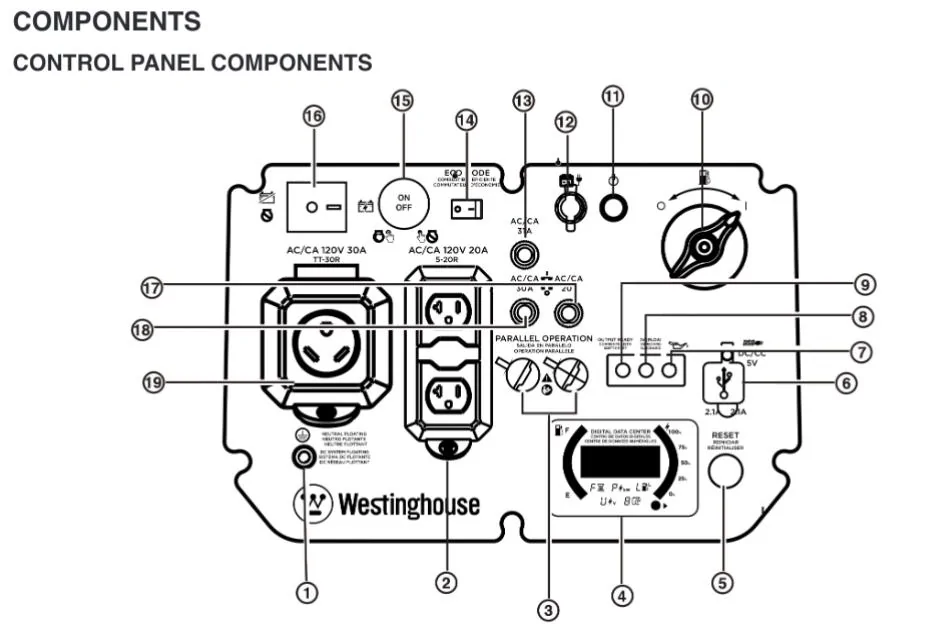
Manual:
Gasoline: 3700 Running Watts | 4500 Peak Watts
AC CIRCUIT BREAKERS
The circuit breakers will automatically switch OFF if
there is a short circuit or a significant overload of the generator at each receptacle. The main circuit breaker will automatically switch OFF if the combined load of the receptacles exceeds 31 Amps.
13. Main Circuit Breaker: The main circuit breaker controls total output of all outlets to protect the generator from overload or short circuit.
17. 20 Amp AC Circuit Breaker: Circuit breaker limits
the current that can be delivered through the NEMA
5-20R receptacle to 20 Amps.
18. 30 Amp AC Circuit Breaker: Circuit breaker limits
the current that can be delivered through the NEMA
TT-30 receptacle to 30 Amps.
Tesla Cybertruck ADVICE - on a generator charge SmartSelect_20240806_001728_Firefox
Sponsored


Top