Sponsored

Cyberbeast charging amperage changed to 48 amps

cyberjeff25

Well-known member
First Name
jeffrey
Joined
Sep 3, 2024
Threads
5
Messages
188
Reaction score
288
Location
temecula california
Vehicles
cyberbeast
Occupation
registerd investment advisor
Country flag
In the past I could only set the charging amp to 40. No issues. But it seems with the last update the charging amp max. Moved to 48 amps?

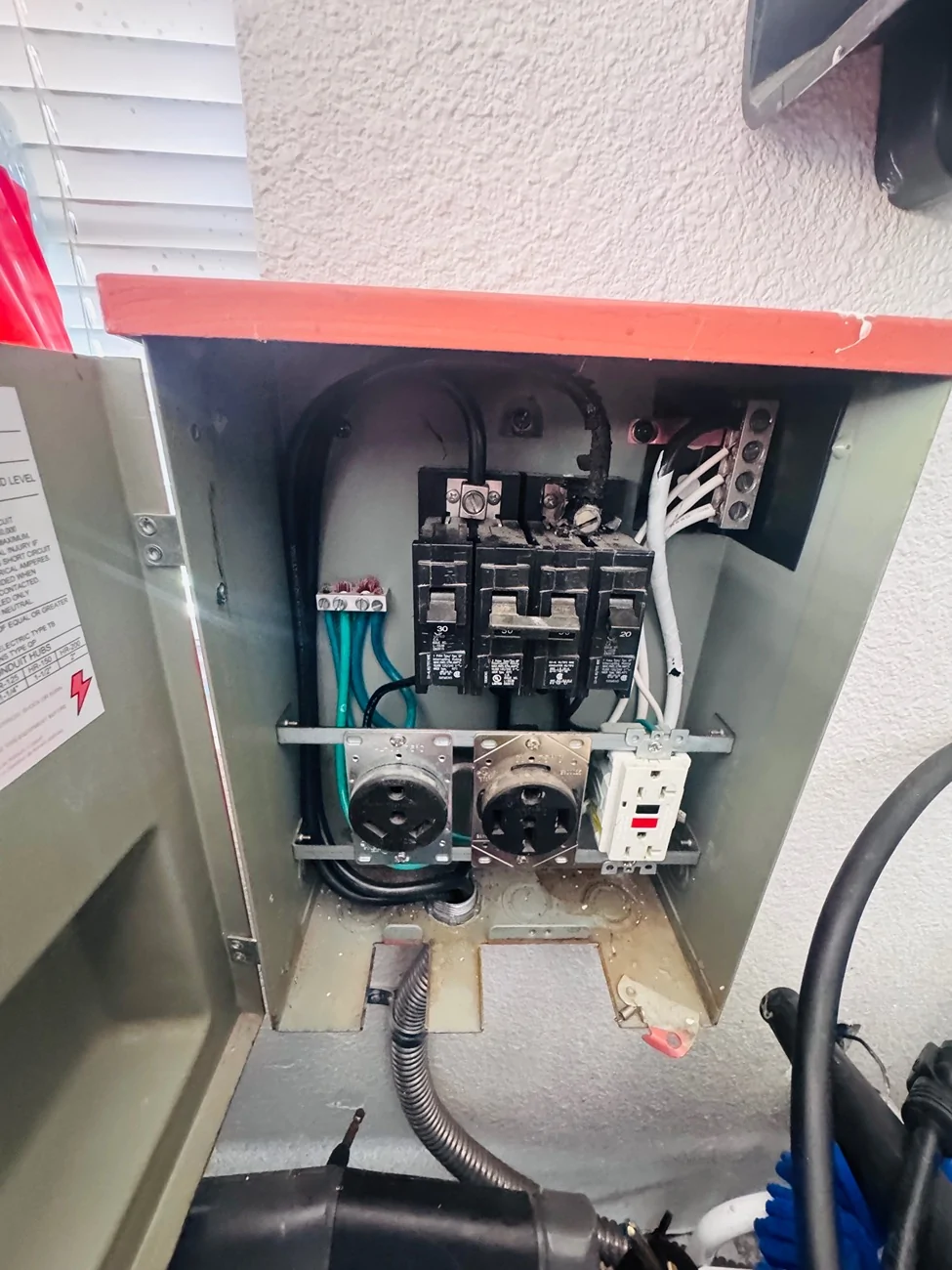
I have a RV panel with a 50,30 and 20 amp receptacle - with - breaker for each - never had a problem charging at 40 amps but usually at the charge level to 35 amps.

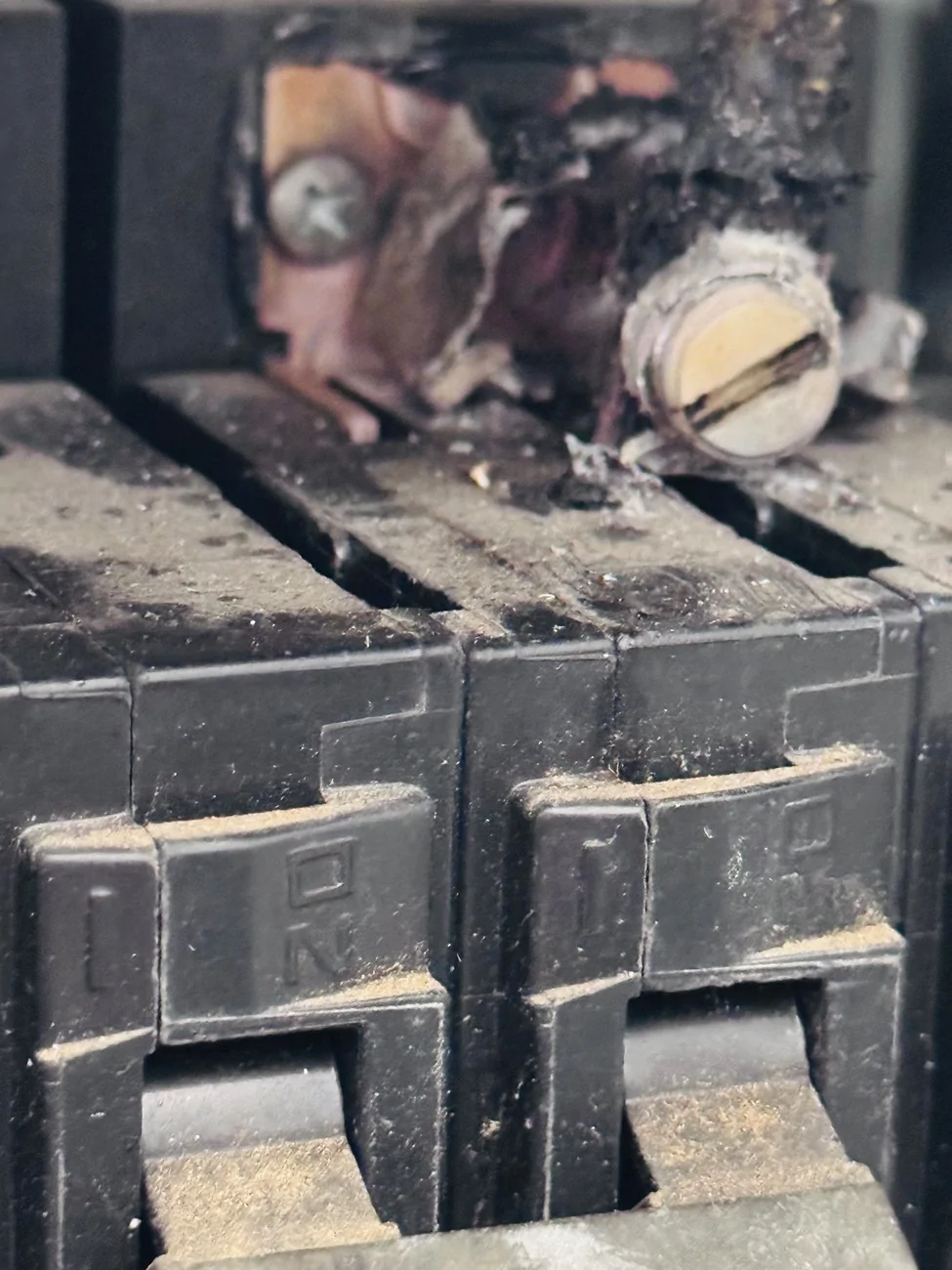
Last night it seems the charge rate was set to 48 amps- and the 50 amp breaker blew but the bus inside actually melted before the breaker blew.

This RV panel can’t handle a sustained 48 amp draw without the bus where the breakers are inserted actually melted.

This is using the Tesla charger received with the truck.

I guess an rv panel usually experiences a 48 amp draw to start the A/C units and once the compressor is running the amp draw pulls back a lot. But a Tesla charger draws 48 amps - maybe more- constantly.

I don’t recall a selection for 48 amp charging- I am using the plug in Tesla charger with a 50 amp plug on the unit.

Even most of the 50 amp receptacles are not rated for over than 50 amps - for real - guys replacing their dryer receptacles should beware as Home Depot does not even sell a 50 amp receptacle that is rated for any higher amp draw - requires going to a Amazon.

Make sure your receptacle is rated for a lot more than 50 amps.

Also if you are ever at a RV park and using your portable Tesla charger with the 50 amp plug you should set the amp charge rate way down below ;8 amps- maybe 30 amps is enough.

My installation uses number 4 wires which was large enough protect the wiring but the I assumed (wrongly) that a 48 amp draw from a 50 amp rv charge post - would have no issue charging at 48 amps. But the internal bus could not take a constant 48 amp draw

Solution was to buy the actual Wall mounted Tesla charger for $500 and have it installed directly to the number #4 220 volt and ground wires -

Moral of the story check what your charging amperage is set at in the truck and be careful not to set to 48 amps unless you have a true receptacle at 48 amps - which requires the correct breaker in your main panel - 60 amp breaker ideally- and #4 or larger wire and a receptacle rated for something more than 48 amps as the constant draw can create heat that a receptacle rated for only 48 amps cannot support- it will melt.

Tesla Cybertruck Cyberbeast charging amperage changed to 48 amps IMG_4280
Tesla Cybertruck Cyberbeast charging amperage changed to 48 amps IMG_4281
Tesla Cybertruck Cyberbeast charging amperage changed to 48 amps IMG_4279


Best

Jeff
Sponsored


mongo

Well-known member
Joined
May 27, 2024
Threads
6
Messages
4,545
Reaction score
5,532
Location
SE Michigan
Vehicles
Cyberbeast
Country flag
In the past I could only set the charging amp to 40. No issues. But it seems with the last update the charging amp max. Moved to 48 amps?

I have a RV panel with a 50,30 and 20 amp receptacle - with - breaker for each - never had a problem charging at 40 amps but usually at the charge level to 35 amps.

Last night it seems the charge rate was set to 48 amps- and the 50 amp breaker blew but the bus inside actually melted before the breaker blew.

This RV panel can’t handle a sustained 48 amp draw without the bus where the breakers are inserted actually melted.

This is using the Tesla charger received with the truck.

I guess an rv panel usually experiences a 48 amp draw to start the A/C units and once the compressor is running the amp draw pulls back a lot. But a Tesla charger draws 48 amps - maybe more- constantly.

I don’t recall a selection for 48 amp charging- I am using the plug in Tesla charger with a 50 amp plug on the unit.

Even most of the 50 amp receptacles are not rated for over than 50 amps - for real - guys replacing their dryer receptacles should beware as Home Depot does not even sell a 50 amp receptacle that is rated for any higher amp draw - requires going to a Amazon.

Make sure your receptacle is rated for a lot more than 50 amps.

Also if you are ever at a RV park and using your portable Tesla charger with the 50 amp plug you should set the amp charge rate way down below ;8 amps- maybe 30 amps is enough.

My installation uses number 4 wires which was large enough protect the wiring but the I assumed (wrongly) that a 48 amp draw from a 50 amp rv charge post - would have no issue charging at 48 amps. But the internal bus could not take a constant 48 amp draw

Solution was to buy the actual Wall mounted Tesla charger for $500 and have it installed directly to the number #4 220 volt and ground wires -

Moral of the story check what your charging amperage is set at in the truck and be careful not to set to 48 amps unless you have a true receptacle at 48 amps - which requires the correct breaker in your main panel - 60 amp breaker ideally- and #4 or larger wire and a receptacle rated for something more than 48 amps as the constant draw can create heat that a receptacle rated for only 48 amps cannot support- it will melt.
IMG_4280.webp
IMG_4281.webp
IMG_4279.webp


Best

Jeff
The vehicle + Tesla mobile connector should never allow setting the current above 32A with the 14-50 adapter. 40A should not have been possible either. The mobile connector (or its 14-50 adapter) may be bad.

If that panel is the Connecticut Electric one, it is rated to 80A (I have the same one). It looks like a bad connection at the phase input.
 

eswimm

Well-known member
Joined
Jun 6, 2024
Threads
3
Messages
558
Reaction score
1,000
Location
Charlotte, NC
Vehicles
Model Y, Cybertruck
Country flag
I still have one of the older mobile connectors that supports 40A charging (from my 2016 Model X). By the time I picked up a 2018 Model 3, the only mobile connector available were max 32A. No Tesla mobile connector released since supports anything greater than 32A regardless of the receptacle used.

What you described would represent a catastrophic failure of the mobile connector and would be something that needed to be investigated immediately and thoroughly. It is not something that could be contributed to user error.

I suspect the failure was in the panel.
 

Patriot

Well-known member
Joined
May 3, 2025
Threads
1
Messages
47
Reaction score
73
Location
Denver, CO
Vehicles
2020 M3, 2024 Jeep 392, 2024 FS CB
Country flag
I'm not an electrician, but a quick search provided this, which I believe is correct.

According to the National Electrical Code (NEC), a continuous load (running for 3 hours or more) must not exceed 80% of the circuit’s rating. For a 50-amp breaker, this limits the maximum safe continuous load to 40 amps.

  • Safety Standard: The NEC requires circuit breakers and conductors to be sized at 125% of the continuous load to prevent overheating.
  • Practical Limit: A 50-amp breaker is designed to handle 40 amps continuously; drawing 48–50 amps continuously violates code and creates a fire hazard.
  • Exception: Non-continuous loads (running less than 3 hours) may utilize the full 50-amp capacity, but this is rare for applications like EV charging or RV hookups.
If you have your new wall mounted charger connected to that 50A circuit, you still shouldn't exceed 40A on a continuous basis. I also believe eswimm is right, the newer mobile chargers only support up to 32A and the old ones went up to 40A. If you actually saw it drawing more than that, then something is wrong.

There is another discussion about this topic here.
 

Langestreet

Well-known member
First Name
Richard
Joined
Sep 24, 2024
Threads
7
Messages
60
Reaction score
107
Location
SW WA
Vehicles
Cybertruck, Model Y, Excursion,+++
Occupation
Mostly Retired :-)
Country flag
The mobile charger that plugs into a 50A RV plug is not capable of more than 32A. Let's go with bad wiring on the pedestal.


OP
OP

cyberjeff25

Well-known member
First Name
jeffrey
Joined
Sep 3, 2024
Threads
5
Messages
188
Reaction score
288
Location
temecula california
Vehicles
cyberbeast
Occupation
registerd investment advisor
Country flag
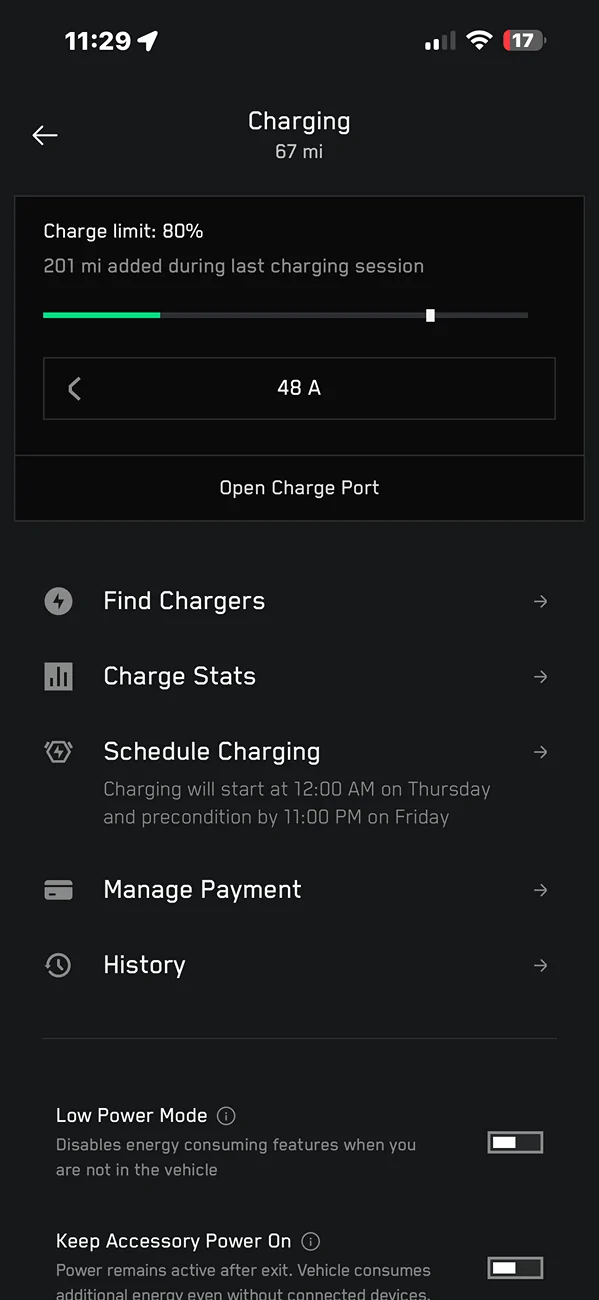
In the past - and I have been charging my cyberbeast in my garage as noted and it was set to 30 amps - and I swear I don’t recall that I could set the charge amperage at over 30 amps- yet as shown in the photo the ability to set the charge rate to 48 amps is available.

Tesla Cybertruck Cyberbeast charging amperage changed to 48 amps IMG_4301
 

mongo

Well-known member
Joined
May 27, 2024
Threads
6
Messages
4,545
Reaction score
5,532
Location
SE Michigan
Vehicles
Cyberbeast
Country flag
In the past - and I have been charging my cyberbeast in my garage as noted and it was set to 30 amps - and I swear I don’t recall that I could set the charge amperage at over 30 amps- yet as shown in the photo the ability to set the charge rate to 48 amps is available.

IMG_4301.webp
Is your charge cable plugged in?
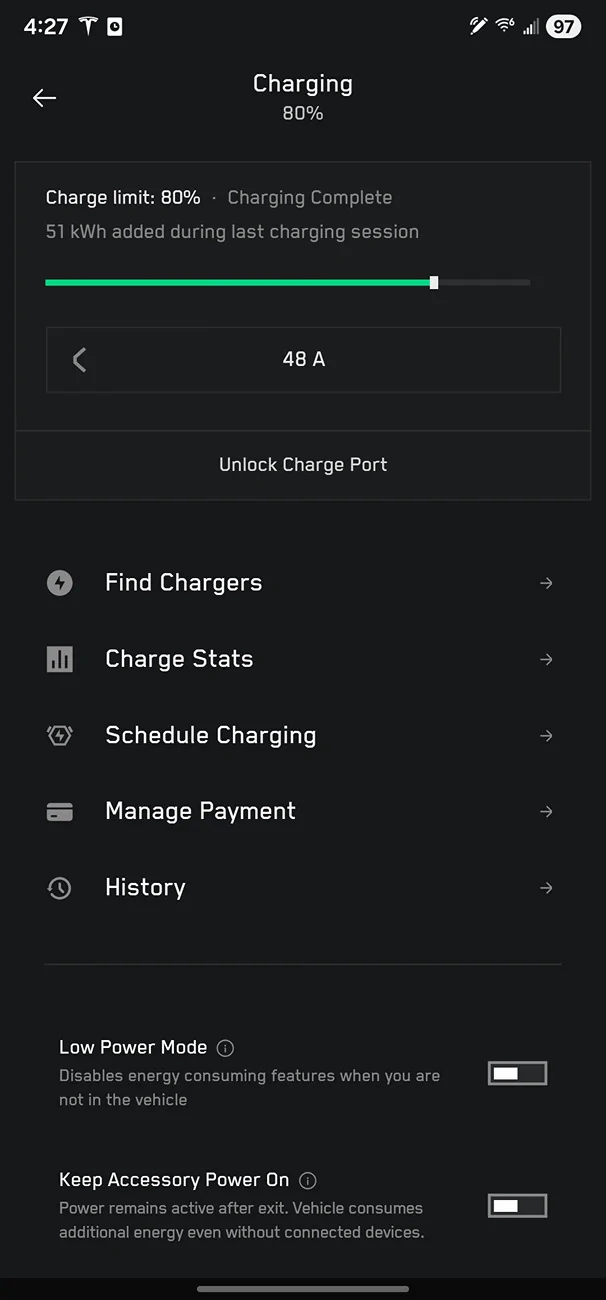
The app text matches mine when it's unplugged. It should say "Unlock Charge Port" not "Open Charge Port".
If it was not plugged in, it's normal to have the full 48A available to select. Once you plug in, the max is set to the charge cord's limit (or 48A, whichever is lower).

If it was plugged in, Mobile Connector and/or truck need service. Could try dual scroll wheel reboot and Power Off first.

Tesla Cybertruck Cyberbeast charging amperage changed to 48 amps Screenshot_20260612_042723_Tesla
 
OP
OP

cyberjeff25

Well-known member
First Name
jeffrey
Joined
Sep 3, 2024
Threads
5
Messages
188
Reaction score
288
Location
temecula california
Vehicles
cyberbeast
Occupation
registerd investment advisor
Country flag
So does “unlock charge port” actually mean to override the amp limit when using the Tesla portable charger for example which I believe has a 30 amp charging limit?

After the melting of the breaker bus bar inside I looked at the charging screen on the display and I was shocked to see it was set to 48 amps!

That label should say “override charger amp limit” but I think I now understand what might have happened. “Unlock” obviously means something different than “open” -
“Unlock” must actually mean to override the amp limit automatically set based on the charge Mr plugged in. There must be some communication from any charger to the car that sets the amp draw limit to stop from selecting an amp draw that is much to high for the charging limit of the charger being used.

My wife sometimes will “open” the charge port -from the display- I think she hit the “unlock” charge port after the 30 amp charger was plugged in thinking it was not plugged in and the default amp once unlocked must be 48 amps.

The photo of the app charger setting as seen displays 48 amps and there is no charger plugged in currently at all.

I asked her how she plugs it in at home/ and she said she opens the charger door from the display before she leaves the driver seat.

That evening I got out of the passenger side and walked around and grabbed the wand- held it near the charger door and it opened and I olugged it in.

Not knowing I had plugged it in already - hit the “unlock” button thinking she was just making the charger door swing open. She said she did not know it would open with a touch or holding the wand close to the charger door- push the release button.
 

mongo

Well-known member
Joined
May 27, 2024
Threads
6
Messages
4,545
Reaction score
5,532
Location
SE Michigan
Vehicles
Cyberbeast
Country flag
So does “unlock charge port” actually mean to override the amp limit when using the Tesla portable charger for example which I believe has a 30 amp charging limit?

After the melting of the breaker bus bar inside I looked at the charging screen on the display and I was shocked to see it was set to 48 amps!

That label should say “override charger amp limit” but I think I now understand what might have happened. “Unlock” obviously means something different than “open” -
“Unlock” must actually mean to override the amp limit automatically set based on the charge Mr plugged in. There must be some communication from any charger to the car that sets the amp draw limit to stop from selecting an amp draw that is much to high for the charging limit of the charger being used.

My wife sometimes will “open” the charge port -from the display- I think she hit the “unlock” charge port after the 30 amp charger was plugged in thinking it was not plugged in and the default amp once unlocked must be 48 amps.

The photo of the app charger setting as seen displays 48 amps and there is no charger plugged in currently at all.

I asked her how she plugs it in at home/ and she said she opens the charger door from the display before she leaves the driver seat.

That evening I got out of the passenger side and walked around and grabbed the wand- held it near the charger door and it opened and I olugged it in.

Not knowing I had plugged it in already - hit the “unlock” button thinking she was just making the charger door swing open. She said she did not know it would open with a touch or holding the wand close to the charger door- push the release button.
Unlock is for when a charger cable is inserted and locked to the vehicle.
Open is for when there is not a cable plugged in and the charge port door/flap is closed.

The 48A shown when not plugged in is the max the vehicle will do. When you plug in the latest gen mobile connector it should drop to 32A (or less depending on plug adapter) and not allow you to increase past that.

There is no connector max current override.
 

eswimm

Well-known member
Joined
Jun 6, 2024
Threads
3
Messages
558
Reaction score
1,000
Location
Charlotte, NC
Vehicles
Model Y, Cybertruck
Country flag
So does “unlock charge port” actually mean to override the amp limit when using the Tesla portable charger for example which I believe has a 30 amp charging limit?

After the melting of the breaker bus bar inside I looked at the charging screen on the display and I was shocked to see it was set to 48 amps!

That label should say “override charger amp limit” but I think I now understand what might have happened. “Unlock” obviously means something different than “open” -
“Unlock” must actually mean to override the amp limit automatically set based on the charge Mr plugged in. There must be some communication from any charger to the car that sets the amp draw limit to stop from selecting an amp draw that is much to high for the charging limit of the charger being used.

My wife sometimes will “open” the charge port -from the display- I think she hit the “unlock” charge port after the 30 amp charger was plugged in thinking it was not plugged in and the default amp once unlocked must be 48 amps.

The photo of the app charger setting as seen displays 48 amps and there is no charger plugged in currently at all.

I asked her how she plugs it in at home/ and she said she opens the charger door from the display before she leaves the driver seat.

That evening I got out of the passenger side and walked around and grabbed the wand- held it near the charger door and it opened and I olugged it in.

Not knowing I had plugged it in already - hit the “unlock” button thinking she was just making the charger door swing open. She said she did not know it would open with a touch or holding the wand close to the charger door- push the release button.
When connected, an EVSE (the mobile connector in this case) advertises it's capabilities to the vehicle. The Tesla Mobile Connector is capable of 32A maximum, but it has added safety features that caps the maximum amperage based on which pigtail plug is installed, no more than 80% of the plug rating. Use of 3rd party pigtails or adapters can fool the mobile connector, by masking what receptacle it's actually plugged into, but there is no mechanism to override the capabilities of a properly functioning mobile connector.

Hitting unlock from the screen, the app or by pressing the handle all do the same thing. They stop charging, disconnect the high voltage and release the handle lock.

There's nothing your wife did that triggered that mobile connector to charge at 48A and melt the panel. You either have a seriously defective mobile connector (unlikely) or the panel melted down under normal current. What's more, the panel melted down on the input lug, not the 50A breaker feeding the 14-50 receptacle. There's no amount of current that the 50A breaker downstream of that lug would pass that should be capable of melting the input lug. It was likely improperly torqued (or loosened over time) and started arcing and melted at 32A.
 

mongo

Well-known member
Joined
May 27, 2024
Threads
6
Messages
4,545
Reaction score
5,532
Location
SE Michigan
Vehicles
Cyberbeast
Country flag
When connected, an EVSE (the mobile connector in this case) advertises it's capabilities to the vehicle. The Tesla Mobile Connector is capable of 32A maximum, but it has added safety features that caps the maximum amperage based on which pigtail plug is installed, no more than 80% of the plug rating. Use of 3rd party pigtails or adapters can fool the mobile connector, by masking what receptacle it's actually plugged into, but there is no mechanism to override the capabilities of a properly functioning mobile connector.

Hitting unlock from the screen, the app or by pressing the handle all do the same thing. They stop charging, disconnect the high voltage and release the handle lock.

There's nothing your wife did that triggered that mobile connector to charge at 48A and melt the panel. You either have a seriously defective mobile connector (unlikely) or the panel melted down under normal current. What's more, the panel melted down on the input lug, not the 50A breaker feeding the 14-50 receptacle. There's no amount of current that the 50A breaker downstream of that lug would pass that should be capable of melting the input lug. It was likely improperly torqued (or loosened over time) and started arcing and melted at 32A.
Based on OP, seems like the mobile connector has an issue. Agree panel shouldn't have had an issue.

In the past I could only set the charging amp to 40.
never had a problem charging at 40 amps but usually at the charge level to 35 amps.
Sponsored


Top