

Sponsored

Cybertruck to use 48V instead of 12V?

JBee

Well-known member
First Name
JB
Joined
Nov 22, 2019
Threads
18
Messages
4,913
Reaction score
6,362
Location
Australia
Vehicles
Cybertruck
Occupation
. Professional Hobbyist
Country flag
JBee, you're just wrong on this.

Just like most computers don't use 12v anymore, neither will the Cybertruck.
But , but, but... I'm not until proven otherwise? ;)

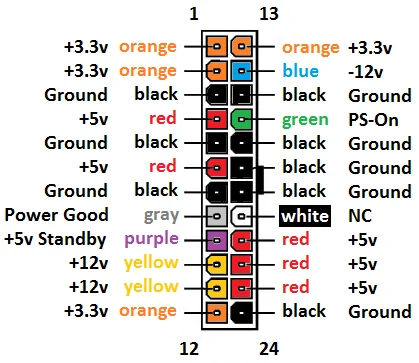
So this is a motherboard main connector pinout:
Tesla Cybertruck Cybertruck to use 48V instead of 12V? g2b7h


I see all the voltages I mentioned: 3V, 5V and 12V. Multiple circuits of each even.

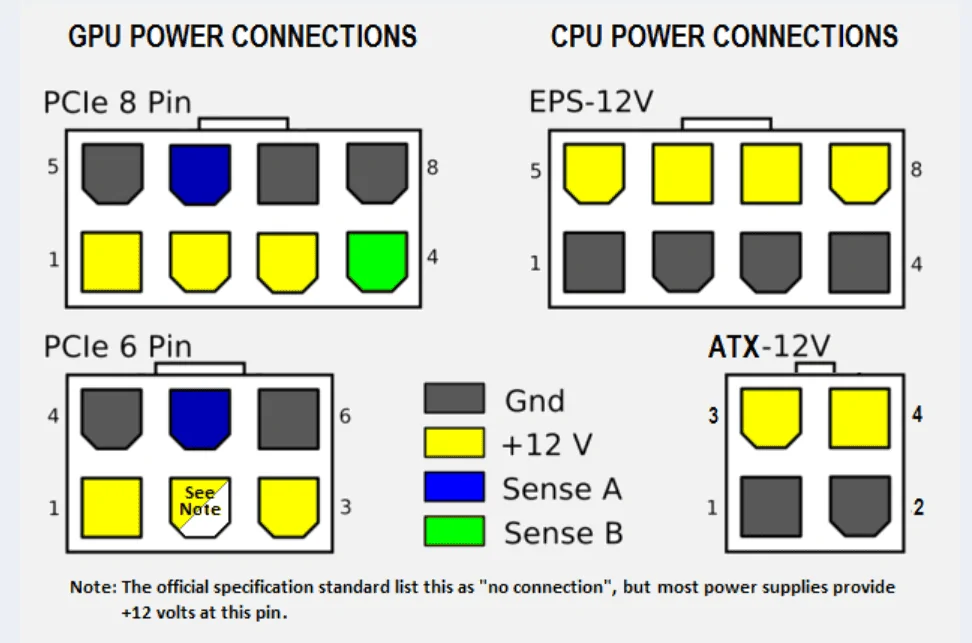
Even the high power CPU and GPU supply connectors are still 12V:
Tesla Cybertruck Cybertruck to use 48V instead of 12V? Spsgx


The 12V power that comes onto the motherboard is then sent to the VRM modules on the motherboard, right next to the CPU to avoid further losses and to ensure CPU stability. They convert the 12V supply from the PSU into the CPU voltages around 1-1.5V onboard the motherboard. An 8 pin CPU/GPU plug can supply up to 670W each, if your PSU can deliver it.

The point here is that the lower the voltage the shorter the distance you should have to reduce excessive amounts of extra copper to handle the current. :oops: You could of course also say that higher voltage requires less copper cables, but, in the case of PC hardware 48V needs to converted to 12/5/3 V first before it can be used in electronics. Like I said several posts ago.

I also included "MCU" in that post which is the "MicroController Unit". These are all the distributed controllers though out the system, and they all run on 3.3V. There is exactly zero versions that run directly on 48V, because most of the logic peripherals on the PCBs run 5/3.3V as well. Things like sensors etc.

Now the MCU's normally run on less than 1-2W, so having them on 3V is still only 0.5A, so you don't need a big cable even if they are far away, in fact a LAN cable would be overkill to power them in a car. But the CPU can be pulling a few hundred watts when it's cranking FSD with the GPU, and the GPU would pull another few hundred watts as well and all the components need 12/5/3V as above, and given their power levels AND SHORT cable lengths can easily be run on those lower voltages with negligible losses or large cable requirements.

The main CPU/GPU unit will of course be nearby to other high energy peripherals in the dash/forward firewall area. A such you'd have a high voltage feed coming from the main battery, that is then converted to 48V for the air-conditioning compressor, power steering, brake amplifier, air compressor etc. It would also have a 12V conversion there for the PC gear, and all the rest of the stuff on 12V, like the LCD, ventilation fans etc that all only need a few hundred watts or less.

The wiring harnesses are long. That itself makes it worthwhile, even if the loads are only a few watts. Munro has lists, if you want. But both Tesla and Ford have talked about how much it would save them in weight and copper. It was considerable.
Remember: Cable resistance is the result of the ohmic resistance of a cable OVER a length. That means if you make it shorter, you don't need a bigger cable to transport the current efficiently. So a cable that has half the length, also has half the resistance. Agreed?

If so then a single large power "bus" along with shorter smaller feeders, works out much better than a seperate cable from each consumer running back to the fuse box and relays. Regardless of the voltage used. This is what I meant with the statement that the bus architecture is more important than the voltage. But of course the higher voltage also helps, but only for the higher energy consumption devices and not all the little bits and bobs that can continue to run on a lower voltage. It's actually harder to run all the lower power stuff off a 48V, because you'd have to get it down to 5/3V for running electronics on the line.

Then there is of course the lighting system of the vehicle, but there are already many manufactures that use CAN bus to controll a light MCU in the light fitting, which in turn switches individual lower power LED lights. Of all things, the lights are probably the best fit for the 100W or so power capacity of a 48V PoE LAN.

Compatibility with PoE style components makes it all the better and repair easier.
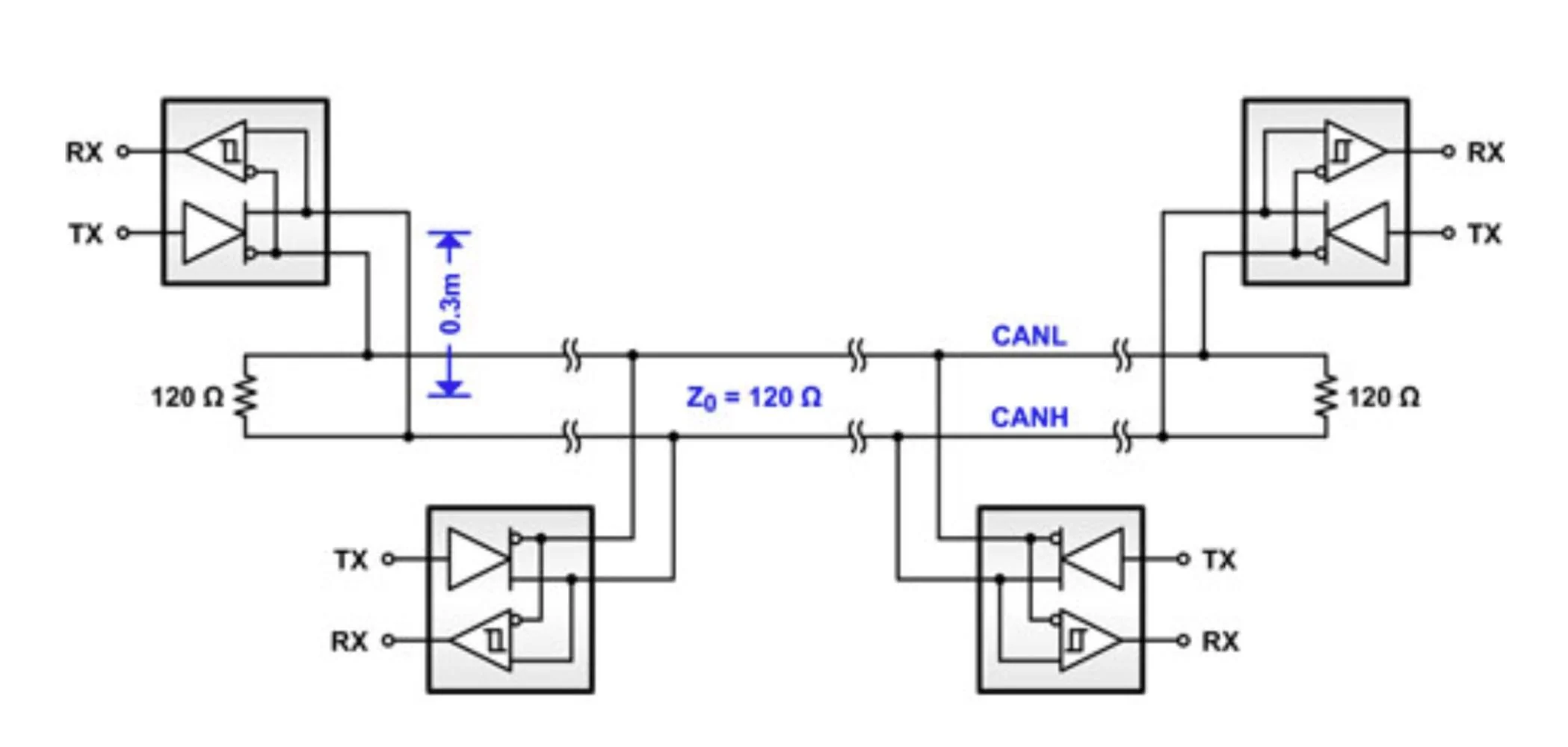
This is also a question of what MCUs you use. Many automotive rated MCU's already have CAN built in, meaning they don't need to have a router to connect to other devices on the network, as they can all address themselves and share cable timing. Each Ethernet node costs extra, plus you need to route point to point to a router. WIth CAN you can just loop one cable through all devices and even back to the original device without a router or single point of failure device. That way you can break the loop anywhere and they can still communicate via the other side of the loop.

Tesla Cybertruck Cybertruck to use 48V instead of 12V? typical-can-bus-network


Now for cameras they already have dedicated inputs direct to the mainboard, so these would likely be running at the camera voltages 5/3V as well, and you don't want them being bottlenecked through a router setup with other lower priority traffic on the same Ethernet bus.

Given the above, just how much "other stuff" needs a 48V supply?
Please do tell. Hence my proposal that people should make a list and think about it a little bit.
Sponsored

 

Coolbreeze704

Well-known member
First Name
Bruce
Joined
Nov 23, 2019
Threads
15
Messages
1,418
Reaction score
3,774
Location
Troutman,NC
Vehicles
2022 Model Y, 23 Lightning, CyberTruck (someday)
Occupation
GM Manufactured Homes
Country flag
But , but, but... I'm not until proven otherwise? ;)

So this is a motherboard main connector pinout:

g2b7h.webp


I see all the voltages I mentioned: 3V, 5V and 12V. Multiple circuits of each even.

Even the high power CPU and GPU supply connectors are still 12V:

Spsgx.webp


The 12V power that comes onto the motherboard is then sent to the VRM modules on the motherboard, right next to the CPU to avoid further losses and to ensure CPU stability. They convert the 12V supply from the PSU into the CPU voltages around 1-1.5V onboard the motherboard. An 8 pin CPU/GPU plug can supply up to 670W each, if your PSU can deliver it.

The point here is that the lower the voltage the shorter the distance you should have to reduce excessive amounts of extra copper to handle the current. :oops: You could of course also say that higher voltage requires less copper cables, but, in the case of PC hardware 48V needs to converted to 12/5/3 V first before it can be used in electronics. Like I said several posts ago.

I also included "MCU" in that post which is the "MicroController Unit". These are all the distributed controllers though out the system, and they all run on 3.3V. There is exactly zero versions that run directly on 48V, because most of the logic peripherals on the PCBs run 5/3.3V as well. Things like sensors etc.

Now the MCU's normally run on less than 1-2W, so having them on 3V is still only 0.5A, so you don't need a big cable even if they are far away, in fact a LAN cable would be overkill to power them in a car. But the CPU can be pulling a few hundred watts when it's cranking FSD with the GPU, and the GPU would pull another few hundred watts as well and all the components need 12/5/3V as above, and given their power levels AND SHORT cable lengths can easily be run on those lower voltages with negligible losses or large cable requirements.

The main CPU/GPU unit will of course be nearby to other high energy peripherals in the dash/forward firewall area. A such you'd have a high voltage feed coming from the main battery, that is then converted to 48V for the air-conditioning compressor, power steering, brake amplifier, air compressor etc. It would also have a 12V conversion there for the PC gear, and all the rest of the stuff on 12V, like the LCD, ventilation fans etc that all only need a few hundred watts or less.


Remember: Cable resistance is the result of the ohmic resistance of a cable OVER a length. That means if you make it shorter, you don't need a bigger cable to transport the current efficiently. So a cable that has half the length, also has half the resistance. Agreed?

If so then a single large power "bus" along with shorter smaller feeders, works out much better than a seperate cable from each consumer running back to the fuse box and relays. Regardless of the voltage used. This is what I meant with the statement that the bus architecture is more important than the voltage. But of course the higher voltage also helps, but only for the higher energy consumption devices and not all the little bits and bobs that can continue to run on a lower voltage. It's actually harder to run all the lower power stuff off a 48V, because you'd have to get it down to 5/3V for running electronics on the line.

Then there is of course the lighting system of the vehicle, but there are already many manufactures that use CAN bus to controll a light MCU in the light fitting, which in turn switches individual lower power LED lights. Of all things, the lights are probably the best fit for the 100W or so power capacity of a 48V PoE LAN.


This is also a question of what MCUs you use. Many automotive rated MCU's already have CAN built in, meaning they don't need to have a router to connect to other devices on the network, as they can all address themselves and share cable timing. Each Ethernet node costs extra, plus you need to route point to point to a router. WIth CAN you can just loop one cable through all devices and even back to the original device without a router or single point of failure device. That way you can break the loop anywhere and they can still communicate via the other side of the loop.

typical-can-bus-network.webp


Now for cameras they already have dedicated inputs direct to the mainboard, so these would likely be running at the camera voltages 5/3V as well, and you don't want them being bottlenecked through a router setup with other lower priority traffic on the same Ethernet bus.

Given the above, just how much "other stuff" needs a 48V supply?
Please do tell. Hence my proposal that people should make a list and think about it a little bit.
.

I don't have time to read all this but you amaze me. The wealth of knowledge and time given to inform in this forum is amazing.
 

charliemagpie

Well-known member
First Name
Charlie
Joined
Jul 6, 2021
Threads
48
Messages
2,982
Reaction score
5,369
Location
Australia
Vehicles
CybrBEAST
Occupation
retired
Country flag
.

I don't have time to read all this but you amaze me. The wealth of knowledge and time given to inform in this forum is amazing.
He missed a comma
 

CyberGus

Well-known member
First Name
Gus
Joined
May 22, 2021
Threads
91
Messages
10,255
Reaction score
33,963
Location
Austin, TX
Vehicles
1981 DeLorean, 2024 Cybertruck
Occupation
IT Specialist
Country flag
But , but, but... I'm not until proven otherwise? ;)

So this is a motherboard main connector pinout:

g2b7h.png


I see all the voltages I mentioned: 3V, 5V and 12V. Multiple circuits of each even.

Even the high power CPU and GPU supply connectors are still 12V:

Spsgx.png


The 12V power that comes onto the motherboard is then sent to the VRM modules on the motherboard, right next to the CPU to avoid further losses and to ensure CPU stability. They convert the 12V supply from the PSU into the CPU voltages around 1-1.5V onboard the motherboard. An 8 pin CPU/GPU plug can supply up to 670W each, if your PSU can deliver it.

The point here is that the lower the voltage the shorter the distance you should have to reduce excessive amounts of extra copper to handle the current. :oops: You could of course also say that higher voltage requires less copper cables, but, in the case of PC hardware 48V needs to converted to 12/5/3 V first before it can be used in electronics. Like I said several posts ago.

I also included "MCU" in that post which is the "MicroController Unit". These are all the distributed controllers though out the system, and they all run on 3.3V. There is exactly zero versions that run directly on 48V, because most of the logic peripherals on the PCBs run 5/3.3V as well. Things like sensors etc.

Now the MCU's normally run on less than 1-2W, so having them on 3V is still only 0.5A, so you don't need a big cable even if they are far away, in fact a LAN cable would be overkill to power them in a car. But the CPU can be pulling a few hundred watts when it's cranking FSD with the GPU, and the GPU would pull another few hundred watts as well and all the components need 12/5/3V as above, and given their power levels AND SHORT cable lengths can easily be run on those lower voltages with negligible losses or large cable requirements.

The main CPU/GPU unit will of course be nearby to other high energy peripherals in the dash/forward firewall area. A such you'd have a high voltage feed coming from the main battery, that is then converted to 48V for the air-conditioning compressor, power steering, brake amplifier, air compressor etc. It would also have a 12V conversion there for the PC gear, and all the rest of the stuff on 12V, like the LCD, ventilation fans etc that all only need a few hundred watts or less.


Remember: Cable resistance is the result of the ohmic resistance of a cable OVER a length. That means if you make it shorter, you don't need a bigger cable to transport the current efficiently. So a cable that has half the length, also has half the resistance. Agreed?

If so then a single large power "bus" along with shorter smaller feeders, works out much better than a seperate cable from each consumer running back to the fuse box and relays. Regardless of the voltage used. This is what I meant with the statement that the bus architecture is more important than the voltage. But of course the higher voltage also helps, but only for the higher energy consumption devices and not all the little bits and bobs that can continue to run on a lower voltage. It's actually harder to run all the lower power stuff off a 48V, because you'd have to get it down to 5/3V for running electronics on the line.

Then there is of course the lighting system of the vehicle, but there are already many manufactures that use CAN bus to controll a light MCU in the light fitting, which in turn switches individual lower power LED lights. Of all things, the lights are probably the best fit for the 100W or so power capacity of a 48V PoE LAN.


This is also a question of what MCUs you use. Many automotive rated MCU's already have CAN built in, meaning they don't need to have a router to connect to other devices on the network, as they can all address themselves and share cable timing. Each Ethernet node costs extra, plus you need to route point to point to a router. WIth CAN you can just loop one cable through all devices and even back to the original device without a router or single point of failure device. That way you can break the loop anywhere and they can still communicate via the other side of the loop.

typical-can-bus-network.jpg


Now for cameras they already have dedicated inputs direct to the mainboard, so these would likely be running at the camera voltages 5/3V as well, and you don't want them being bottlenecked through a router setup with other lower priority traffic on the same Ethernet bus.

Given the above, just how much "other stuff" needs a 48V supply?
Please do tell. Hence my proposal that people should make a list and think about it a little bit.
You seem to be saying that Tesla was wrong to switch to 48v and that it won’t help at all because “computers”.

A wiring harness weighs over 100lbs, and moving to smaller wires and connectors is a significant weight/space savings.

I’m pretty sure that basically everything was already regulating the voltage down to the desired level, even on 12v systems, and that automakers already optimized the bus architecture.
 

JBee

Well-known member
First Name
JB
Joined
Nov 22, 2019
Threads
18
Messages
4,913
Reaction score
6,362
Location
Australia
Vehicles
Cybertruck
Occupation
. Professional Hobbyist
Country flag
You seem to be saying that Tesla was wrong to switch to 48v and that it won’t help at all because “computers”.

A wiring harness weighs over 100lbs, and moving to smaller wires and connectors is a significant weight/space savings.

I’m pretty sure that basically everything was already regulating the voltage down to the desired level, even on 12v systems, and that automakers already optimized the bus architecture.
No I'm not saying that all.

I'm saying the "bus architecture", that Tesla is proposing with their new wiring system, does more than changing it from 12V to 48V, to reduce cabling.

BTW my computer comments were in regards to Crissa saying that there is no 12V in computers, when in fact there is. I just used it to highlight that wire "resistance" is also determined by wire length. Meaning a shorter bus type system has less wires, even if it still is 12V.


JBee

Well-known member
First Name
JB
Joined
Nov 22, 2019
Threads
18
Messages
4,913
Reaction score
6,362
Location
Australia
Vehicles
Cybertruck
Occupation
. Professional Hobbyist
Country flag
.

I don't have time to read all this but you amaze me. The wealth of knowledge and time given to inform in this forum is amazing.
Always happy to have an informed conversation. Thanks for the compliment.

I'll try to keep my responses byte sized from now on though, so you can find the time to read them! ;)
 

HaulingAss

Well-known member
Joined
Oct 3, 2020
Threads
28
Messages
10,342
Reaction score
20,786
Location
Western Washington, USA
Vehicles
Cybertruck DM, 2010 F-150, 2018 Performance Model 3, 2024 Performance Model 3
Country flag
Given the above, just how much "other stuff" needs a 48V supply?
Please do tell. Hence my proposal that people should make a list and think about it a little bit.
It's difficult to tell exactly what you are arguing about, even if I trouble myself to read your entire argument as most of it is just stating the obvious.

Your question above is meaningless. None of the "other stuff" needs 48 volts. Plenty of cars on the road do just fine without a lick of 48 volts to be found anywhere. This change is about reducing weight and increasing efficiency of manufacture to bring more value to new car buyers.

I could list all the components that would benefit from 48 volts like a/c compressors, electric brakes, electric steering, air compressors, coolant pumps, oil pumps, wiper motors, headlights, etc., but I won't waste my time listing them all because I don't see your point you are obviously struggling to make but not getting very far. None of these components "needs" 48 volts, Tesla is making the change to increase the value they can offer new truck buyers.

Legacy auto knew they should have done this decades ago, but they couldn't be bothered.
 

firsttruck

Well-known member
Joined
Sep 25, 2020
Threads
205
Messages
2,761
Reaction score
4,441
Location
mx
Vehicles
none
Country flag
It's difficult to tell exactly what you are arguing about, even if I trouble myself to read your entire argument as most of it is just stating the obvious.

Your question above is meaningless. None of the "other stuff" needs 48 volts. Plenty of cars on the road do just fine without a lick of 48 volts to be found anywhere. This change is about reducing weight and increasing efficiency of manufacture to bring more value to new car buyers.

I could list all the components that would benefit from 48 volts like a/c compressors, electric brakes, electric steering, air compressors, coolant pumps, oil pumps, wiper motors, headlights, etc., but I won't waste my time listing them all because I don't see your point you are obviously struggling to make but not getting very far. None of these components "needs" 48 volts, Tesla is making the change to increase the value they can offer new truck buyers.

Legacy auto knew they should have done this decades ago, but they couldn't be bothered.

Cory Steuben (former Munro Assoc president) stated that switch to 48V was decades overdue.
He thinks in the long run even the small low current devices (sensors, switches, lights) will be 48V.

----------------------------

video cued to Cory Steuben's comments about Master Plan Part 3 & 48V. (timestamp 50:02)
[ Aug 29 edit : fix the cue point ]


Cory Steuben: Investor Day, Tesla's Master Plan Part 3, and 48V Cybertruck
I interviewed President of Munro and Associates, Cory Steuben.
Mar 25, 2023
Ellie in Space

----------


----------------------------
 
Last edited:

Bill906

Well-known member
Joined
Mar 21, 2020
Threads
4
Messages
1,410
Reaction score
3,298
Location
Wisconsin
Vehicles
Jeep
Country flag
Heat Pump: Based on all the tear-downs of other vehicles, I feel extremely confident the heat pump will be powered by high voltage (400VDC - 1200VDC, wherever we land on that). I very much doubt they'll power the heat pump with low voltage (0-48VDC).

I expect all low voltage devices will be powered by 48VDC unless there is some reason it cannot. Instead of listing what would be 48VDC, I ask what wouldn't? I would bet that if the CT has a 12VDC outlet (cigarette lighter outlet) that it would be powered by 48VDC and have a 48VDC to 12VDC converter built into it. Just like the USB Ports in your car. They don't have 5V created somewhere else in the car and have a dedicated 5VDC wire to power them.

The computer argument confuses me. Yes, computers use many different voltages internally. But the main source of the power is one voltage. Every computer in a car is powered by the 12V system. There isn't a separate voltage system for the 3.3V needs, the 1.5V needs, the 5V needs etc. Each computer has a power supply that creates the needed volts. Telsa just has to design their computers with power supplies that are powered by 48VDC instead of 12VDC. It's not rocket science. And even if it was, they have that resource available. :) I believe Tesla makes all the computers in their cars. They would arguably be the easiest thing for Tesla to change to 48VDC.

Ethernet can do everything CAN can do, and do it faster, and with MUCH higher bandwidth. Ethernet does not have to use RJ-45, and will not in a car. (Other than a probable connection for a diagnostic device or Laptop). The CAN benefits like ring topology and redundancy also exist in Ethernet protocols. In the industrial world it's known as Device Level Ring (DLR). The industrial world has been moving away from CAN based protocols and toward Ethernet based protocols for quite some time. I couldn't find the quote, but I'm confident Elon at some point implied CAN will be replaced with Ethernet eventually.

https://www.hms-networks.com/news-a...rings-ethernet-ip-using-device-level-ring-dlr

https://www.electronicdesign.com/ma...whats-the-difference-between-can-and-ethernet


Crissa

Well-known member
First Name
Crissa
Joined
Jul 8, 2020
Threads
138
Messages
19,571
Reaction score
31,477
Location
Santa Cruz
Vehicles
2014 Zero S, 2013 Mazda 3
Country flag
Jeez, JBee, you have this most obtuse way of being wrong.

What actual components in the computer use 12v without stepping it down?

The fans.

That's it.

You point to outdated power connecters where the 12v power is duplicated because the modules' wattage exceeds the amperage rating of the pins and this is your use case?

I dare say there's unlikely any 12v in my last few laptops.

-Crissa
 

kbolt

Well-known member
Joined
Oct 15, 2021
Threads
16
Messages
748
Reaction score
1,101
Location
SLC
Vehicles
Model Y
Country flag
Jeez, JBee, you have this most obtuse way of being wrong.

What actual components in the computer use 12v without stepping it down?

The fans.

That's it.

You point to outdated power connecters where the 12v power is duplicated because the modules' wattage exceeds the amperage rating of the pins and this is your use case?

I dare say there's unlikely any 12v in my last few laptops.

-Crissa
When you guys are done here check out my new website computerOwnersClub.com
We can talk about computer power and whatnot. It will be a hoot (and possibly a holler or two).

(/S)
 

JBee

Well-known member
First Name
JB
Joined
Nov 22, 2019
Threads
18
Messages
4,913
Reaction score
6,362
Location
Australia
Vehicles
Cybertruck
Occupation
. Professional Hobbyist
Country flag
Jeez, JBee, you have this most obtuse way of being wrong.

What actual components in the computer use 12v without stepping it down?

The fans.

That's it.

You point to outdated power connecters where the 12v power is duplicated because the modules' wattage exceeds the amperage rating of the pins and this is your use case?

I dare say there's unlikely any 12v in my last few laptops.

-Crissa
I remember a while ago you bought yourself a new Mac notebook.

Why does that have a 11.46V battery then?

You do know that CPU/GPU/MCU have to be sub 3V because of the chip wafer they use would be destroyed otherwise?
It would just melt into a blob at 48V.

The point is 48v doesn't help for the PC parts like you claim for multiple reasons.
 

Raebrek

Well-known member
First Name
Kerry
Joined
Jul 20, 2021
Threads
5
Messages
200
Reaction score
277
Location
Florida
Vehicles
2016 Subaru Outback, 2023 Model X
Occupation
I work
Country flag
Ok, I think it will be 48v. I also think it will be drive by wire AND save more cabling by using Wifi.
 

JBee

Well-known member
First Name
JB
Joined
Nov 22, 2019
Threads
18
Messages
4,913
Reaction score
6,362
Location
Australia
Vehicles
Cybertruck
Occupation
. Professional Hobbyist
Country flag
Cory Steuben (former Munro Assoc president) stated that switch to 48V was decades overdue.
He thinks in the long run even the small low current devices (sensors, switches, lights) will be 48V.

----------------------------

video cued to Cory Steuben's comments about 48V.

Cory Steuben: Investor Day, Tesla's Master Plan Part 3, and 48V Cybertruck
I interviewed President of Munro and Associates, Cory Steuben.
Mar 25, 2023
Ellie in Space

----------


----------------------------
I watched about 10minutes and didn't see aanything about 48V?

Although it was interesting on a personal level about Cory's fast food roots I didn't find anything scrolling through.
Sponsored


Top