Sponsored

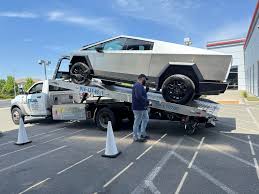
Is it possible to avoid a PCS failure with a workaround?

Outdoors

Well-known member
First Name
Outdoors
Joined
Nov 19, 2019
Threads
17
Messages
1,870
Reaction score
3,449
Location
North West Montana
Vehicles
S,3,Y,CT,CT(holding pattern) Slate is back on
Sto
From Grok today 4.25.26

Yes, the exact component failing in Cybertruck PCS (Power Conversion System, also called PCS2) issues is the MOSFETs (Metal-Oxide-Semiconductor Field-Effect Transistors)—specifically the AC charging MOSFETs/transistors on the board.


The PCS is the integrated power electronics module that combines the on-board charger (for AC Level 2/home charging) and the DC-DC converter (which steps down the high-voltage battery pack to power the truck’s 48V low-voltage systems). It also handles Powershare (V2L/V2H) capabilities.


Why MOSFETs?


Early Cybertruck PCS units (primarily Foundation Series and production up to roughly July 30, 2024) used a specific batch of MOSFETs prone to thermal fatigue. Under repeated high-load heat cycles (especially at full 48A AC charging), these transistors micro-fracture or delaminate internally, leading to failure. This is the root cause confirmed across owner forums, service data, and detailed reports.


Failures typically start with just the AC-side MOSFETs blowing (DC Supercharging usually still works, as it bypasses that circuitry). Later stages can trigger broader issues like HVDC overcurrent trips.


Common symptoms and fault codes include:


• “AC Charging Unavailable” or reduced speeds (e.g., drops to 16–32A or zero).


• Powershare (V2L/V2H) errors.


• Codes like PCS2_a094, PCS2_a095, or PCS2_a137_cycBmosfetHealthCheckFailed.


• Sometimes 48V battery drain or unrelated-looking alerts (e.g., speed limited).


Tesla replaces the entire PCS module (not just the individual MOSFETs, as it’s a sealed assembly). Parts have been backordered recently, causing repair delays (some owners waiting weeks), but Tesla is covering free Supercharging as a goodwill gesture and pushing firmware updates to restore DC fast charging in the meantime.


This is distinct from the earlier NHTSA drive inverter recall (which also involved MOSFETs but was a separate campaign for ~2,400 early trucks).


Who is affected?


It’s most common in early 2024–early 2025 builds. Later trucks (post-July 2024) use improved MOSFETs and show far fewer failures. If your truck is still under warranty (4 years/50k miles standard), replacement is covered at no cost.


Owners are tracking this closely on forums like Cybertruck Owners Club, and Tesla service is handling cases case-by-case (no full fleet recall issued yet for the PCS itself).


If you’re seeing any of the symptoms or codes, open a service request in the Tesla app right away—many are getting proactive replacements even before total failure. Monitoring AC charging rates and Service Mode alerts is the best early warning.
Stop the AI crap. We all know that.
Sponsored


BabOne

Active member
First Name
Brian
Joined
Sep 10, 2025
Threads
3
Messages
33
Reaction score
31
Location
Tucson, AZ
Vehicles
CyberTruck AWD and Ford F150 Limited
Country flag
From Grok today 4.25.26

Yes, the exact component failing in Cybertruck PCS (Power Conversion System, also called PCS2) issues is the MOSFETs (Metal-Oxide-Semiconductor Field-Effect Transistors)—specifically the AC charging MOSFETs/transistors on the board.


The PCS is the integrated power electronics module that combines the on-board charger (for AC Level 2/home charging) and the DC-DC converter (which steps down the high-voltage battery pack to power the truck’s 48V low-voltage systems). It also handles Powershare (V2L/V2H) capabilities.


Why MOSFETs?


Early Cybertruck PCS units (primarily Foundation Series and production up to roughly July 30, 2024) used a specific batch of MOSFETs prone to thermal fatigue. Under repeated high-load heat cycles (especially at full 48A AC charging), these transistors micro-fracture or delaminate internally, leading to failure. This is the root cause confirmed across owner forums, service data, and detailed reports.


Failures typically start with just the AC-side MOSFETs blowing (DC Supercharging usually still works, as it bypasses that circuitry). Later stages can trigger broader issues like HVDC overcurrent trips.


Common symptoms and fault codes include:


• “AC Charging Unavailable” or reduced speeds (e.g., drops to 16–32A or zero).


• Powershare (V2L/V2H) errors.


• Codes like PCS2_a094, PCS2_a095, or PCS2_a137_cycBmosfetHealthCheckFailed.


• Sometimes 48V battery drain or unrelated-looking alerts (e.g., speed limited).


Tesla replaces the entire PCS module (not just the individual MOSFETs, as it’s a sealed assembly). Parts have been backordered recently, causing repair delays (some owners waiting weeks), but Tesla is covering free Supercharging as a goodwill gesture and pushing firmware updates to restore DC fast charging in the meantime.


This is distinct from the earlier NHTSA drive inverter recall (which also involved MOSFETs but was a separate campaign for ~2,400 early trucks).


Who is affected?


It’s most common in early 2024–early 2025 builds. Later trucks (post-July 2024) use improved MOSFETs and show far fewer failures. If your truck is still under warranty (4 years/50k miles standard), replacement is covered at no cost.


Owners are tracking this closely on forums like Cybertruck Owners Club, and Tesla service is handling cases case-by-case (no full fleet recall issued yet for the PCS itself).


If you’re seeing any of the symptoms or codes, open a service request in the Tesla app right away—many are getting proactive replacements even before total failure. Monitoring AC charging rates and Service Mode alerts is the best early warning.
Thank you. Appreciate the information.


Top