
henchman24
Well-known member
- Joined
- Jul 19, 2023
- Threads
- 0
- Messages
- 370
- Reaction score
- 611
- Location
- Wyoming
- Vehicles
- Dual Motor Cybertruck

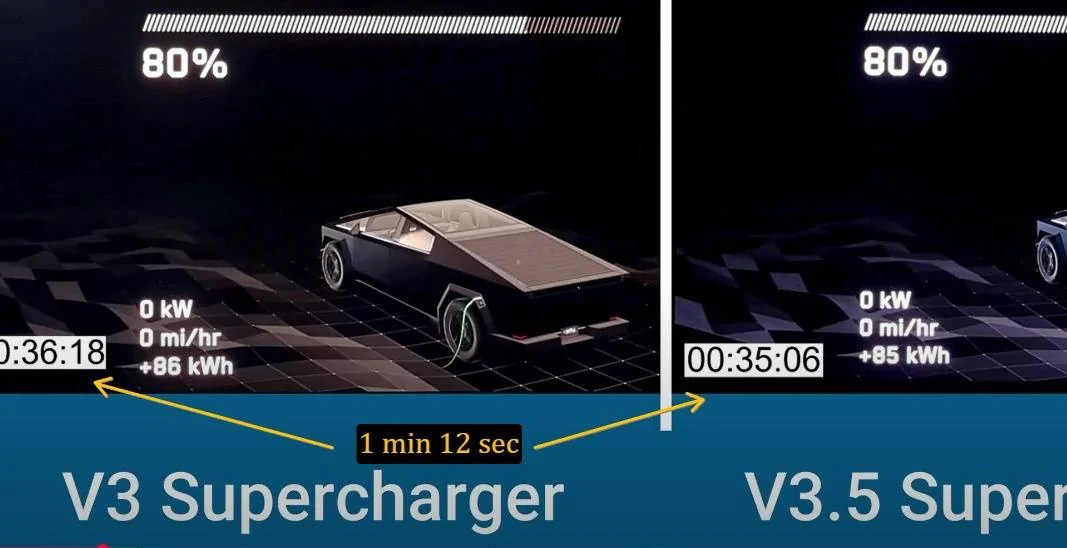
A minute improvement is still a minute improvement. We've seen a bit faster than this test, but so far we have seen roughly a 10 minute improvement of 10-80 since release. This being 10% of that. Odds are when the 500 kW charging gets released it'll be another minute or so. Maybe a bit more since there seem to be a amp boost profile related to something in the stack that we don't see on 800+v chargers. We're in the realm now that a Cybertruck is 10-80 as fast as a LG pack 3/Y. With 500kW (assuming the boost profile issue isn't there is like other higher voltage chargers) were going to be in the realm of a Panasonic pack 3/Y. A minute here or there doesn't sound like much until they are stacked. Which has happened since release here... pretty much exactly following the 3 path with V3 superchargers.V3 vs V4 (v4 ped & v3 cab = v3.5)
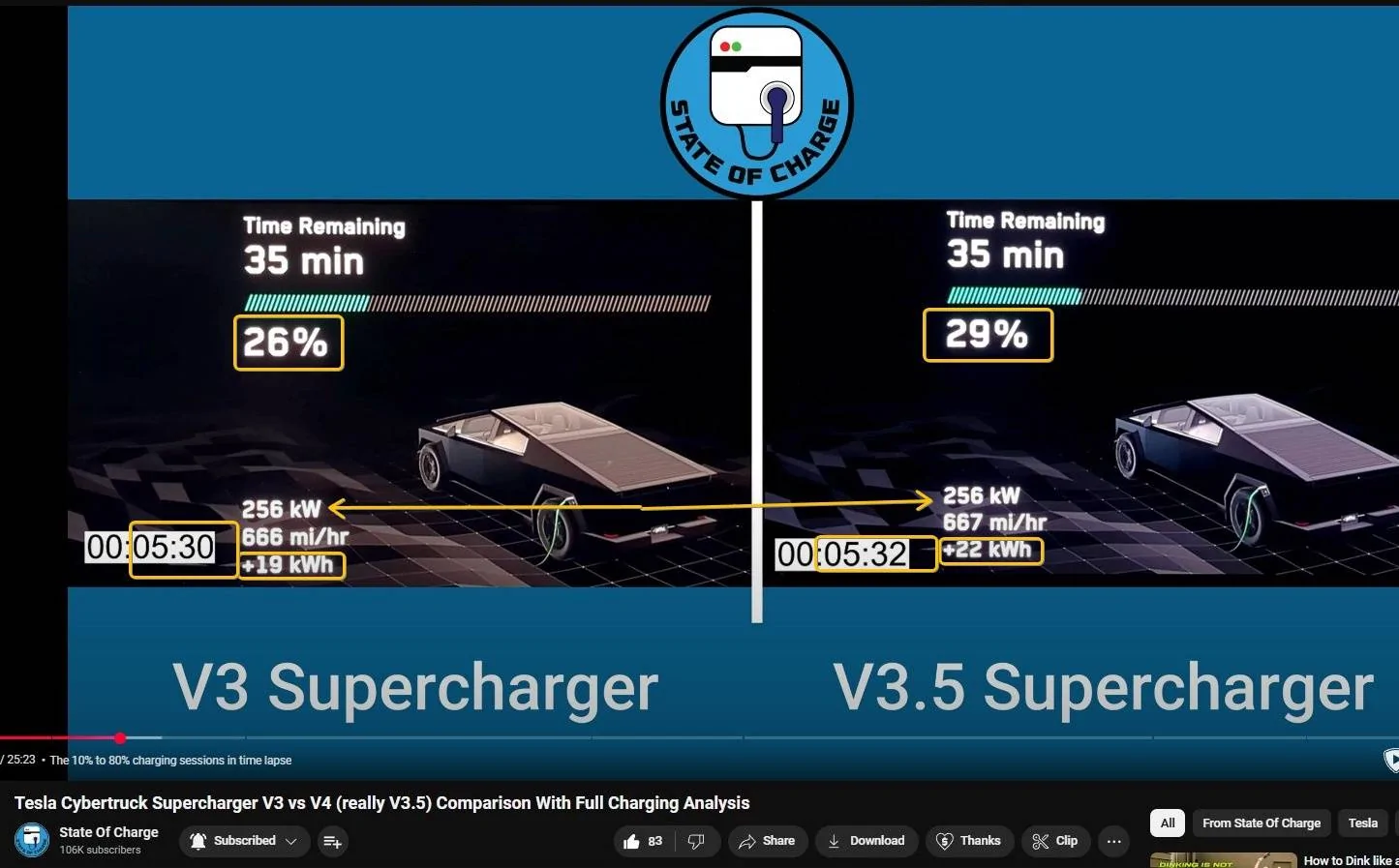
The 325 kW doesn't amount to much at all. At this point in the video (256 kW), their charging curve was virtually the same. It shows 3% diff in that screenshot but most of the time it was 2%.


The nameplate rating is for continuous current. So the V4 post is rated for a continuous 640 amps (615 amp versions are also out there too), but Tesla runs a boost profile where they will go significantly over that amperage (~860 seems to be the peak currently). The V3 superchargers have ratings between 350-425 amps (425 is a bit more common than 350, but there are a lot of 350 ones out there). They have a boost profile that goes over 650 amps. This is something that Tesla has done for a while and really isn't that unheard of in the charging industry. A lot of places have 200 amp rate cables that have a 300 amp boost... and now that NACS is the standard, we are seeing 500 amp cables with higher boosts (over 600 in many cases). CCS by the designed standard was limited to 500 amps so nobody built boost profiles above that. NACS has a bit more nuance to the rating, but 900 amps is the lowest rating. Given the size and expense of the conductors here, building a 900 amp continuous cable would be incredibly expensive. So having a boost profile that fits in that realm is the more prudent decision today (at least until the next few stages of cable cooling hit).Interesting, I just charged at a V4 pedestal in Orlando and it has a relatively new cabinet with V4 multi-connector, really thick cords.

That's doesn't appear to support 861A charging to an individual post.
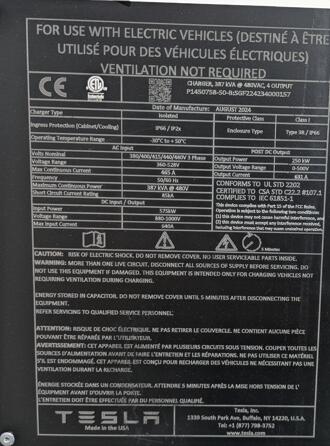
TLDR the 640 amp rating can and is exceeded.
Sponsored


