Sponsored

GnarlyDudeLive

Well-known member
First Name
Darin
Joined
Aug 26, 2020
Threads
22
Messages
560
Reaction score
1,243
Location
Chicago
Vehicles
Model Y Dual and Cyberbeast
Occupation
MSSQL Database Administrator (Retired)
Country flag
Or at least a way to plug one into the trunk to limp to a charger.

The thing is, a 5kWh battery is... Heavy. Like a hundred pounds for such a battery.

-Crissa
Today yes they are but I would not expect that in a few years time. :p
Sponsored


chlpat

Member
First Name
Chris
Joined
May 28, 2020
Threads
0
Messages
13
Reaction score
14
Location
Fairfax Virginia
Vehicles
Cybertruck
Occupation
Patent Attorney
Country flag
Well, we'll see what shakes out.

Having a swap system would certainly reduce the upfront costs for EV purchase, instead of paying upwards from $10,000 for a large battery when one buys an EV, one could sign up for a battery swap program, like a lease/rental contract.

A fleet owner of say 10 to 20 local delivery trucks might find that attractive.

Commercial fast charging on the road isn't inexpensive compared to slow (L2) charging at home, seems it costs maybe 3 times as much per kWh. Maybe for an individual EV owner, no big deal. But maybe for fleet owners, it's anther story? I think fleet vehicles may represent up to 10% of the 300 million or so vehicle on the road, so it's a substantial market.

The battery swapping companies seem to be targeting fleet owners, from what I've read. How many fast charging stations can a local delivery company afford to purchase and have on their lot. If L2 charging isn't fast enough a turn-around, the battery swapping business model makes more sense than buying a bunch of Fast charging stations perhaps.

For a relatively 'fast' one (350kW DCFC) the estimate is $140,000 according to https://propertymanagerinsider.com/how-much-do-commercial-dc-fast-chargers-cost-2/

And of course, the jury is still out on what the effects on battery life-span are with fast charging.

If a battery swapping company can have a stockpile of batteries with enough fully charged to meet demand and to use L2 charging on used batteries, then the potential accelerated degradation due to repeated fast charging is eliminated.

For that matter, the fleet owner might want to have its own supply of extra batteries and have battery swapping stations on-site to service their fleet. Might end up being a lot cheaper than the upfront costs of 'permanent' batteries in their trucks and even just one fast charging station, assuming the $140k cost for the station.

As for public fast charging stations, well besides the equipment cost, there is the real estate required and the demand on the grid for high-voltage high power fast charging stations.

It would also make servicing and/or replacing the batteries when needed more affordable reducing labor costs involved with removing and installing them, as well as the down time for a vehicle being serviced.

As with solar and other renewable energy sources, and EV's, ultimately the economics will dictate which way things go.

As I may have mentioned earlier, China seems to be making a push for the battery swapping model and China is and is going to continue to be a big market for EV's (duh).

Standardization in general makes life easier for consumers and designers, and the economy as a whole benefits from the efficiencies achieved. Companies that fail to get on-board with standardization may have a tough time competing and could end up surviving only as a niche market.

It certainly makes replacing or upgrading the HD or graphics card on my PC a breeze to have standard interfaces. I agree that getting car companies to standardize things on an ICE vehicle is an impossible task. But since EV's are relatively new, perhaps it is doable as it was in the personal computer market after a few years of chaos.

Anyone interested in the topic could read about the company AMPLE and their business model, for example at: https://www.cnet.com/roadshow/news/...ut-electric-car-batteries-from-startup-ample/

Here is one quote form the article:

"... Much faster Level III charging, like the Tesla Supercharger network, may be the answer for many drivers, but de Souza thinks Level III charge times and time to scale are still both too long. "When we started this eight years ago, people told us we would soon have (ubiquitous) 350-kilowatt chargers," he says. "Eight years later people are still telling us that next year we'll have 350-kilowatt chargers." He also says that very fast DC charging is harder on batteries and more difficult to scale with local infrastructure..."
 

Sirfun

Well-known member
First Name
Joe
Joined
Dec 28, 2019
Threads
56
Messages
2,429
Reaction score
4,961
Location
Oxnard, California
Vehicles
Tesla Model Y , Chrysler Pacifica PHEV, Ford E-250
Occupation
Retired Sheet Metal Worker
Country flag
At one time I thought swapping out batteries was a viable option as an answer to long waiting times for charging. After thinking about this, I really don't see it as much of an option. Like you said, the batteries would have to be universally accepted to be swapped, and you're talking about a service that needs to be paid for. It would have to increase the price of energy dramatically. Businesses are about making money. A swapping facility would have to house all the batteries and have their own charging infrastructure in place to keep them charged. And, they would have to have some area with robotics to do the actual swapping. That can't be cheap.
So eventually we are talking about paying a premium for energy, in order to save time. I buy gas at Costco, and it is exactly the opposite. It's about waiting in line to save money at the pump. With EVs, most people charge at home for a bargain, so the only time most people will want to swap batteries is on a road trip. It's amazing how many people don't ever take road trips, but when you are on a road trip, paying a premium for fuel as a trade for less time doesn't feel like that great of an option.
 
Last edited:

chlpat

Member
First Name
Chris
Joined
May 28, 2020
Threads
0
Messages
13
Reaction score
14
Location
Fairfax Virginia
Vehicles
Cybertruck
Occupation
Patent Attorney
Country flag
I don't think we can say for sure what will happen one way or the other.
As for standardization of batteries, there are very few players making them right now:

"...Combined, CATL, LG Energy Solution, BYD, and Panasonic make up more than 70 percent of the global market share of automotive battery sales in the first six months of 2022, with a total of 143.6 gigawatt hours worth of batteries sold. The remaining six companies that make up the top 10 global automotive battery sellers in the first half of 2021 (SK Innovation, Samsung SDI, CALB, Guoxuan, Sunwoda, and Svolt), account for 21.2 percent of the global market. Meanwhile, all other battery manufacturers account for just 8.2 percent of the global market..."

As you probably know, Panasonic, LG and CATL make Tesla battery's components.
And most EV manufacturers also use the battery cells made by these few companies.
So the basic components of EV batteries, the individual Li cells and their chemistry, are already fairly "standardized" aren't they? See: https://insideevs.com/news/587455/batteries-tesla-using-electric-cars/

Which means it would be fairly easy to make one or more types of swapable batteries for EV's on the market, just adapt the other battery components to fit a particular make and model of EV.

By the way, I just read that one of Tesla's battery makers, CATL, is looking at expanding its swapable battery business overseas from China:

-----
"...In January, the Chinese battery manufacturer launched its battery swapping business called EVOGO in China across 10 cities. The aim is to remove the need for electric cars to stop at recharging stations. Instead, drivers can rent battery packs from CATL and put them into the car when their other battery runs out. This takes a matter of minutes.

Nio , an electric car start-up in China, also has a rival battery swapping program. The company plans to expand that to building 1,000 battery swapping stations outside China by 2025, with the majority in Europe, Nio co-founder Qin Lihong, told Reuters this week.

Li Xiaoning, executive president of overseas commercial application at CATL, told CNBC in an interview on Thursday, that the company is also evaluating expansion of its battery swapping product into Europe.

“I would say this will start in China this year. We will step by step check the overseas footprint of EVOGO,” Li said..."

See: https://www.cnbc.com/2022/09/23/tes...ating-battery-swapping-business-overseas.html
-----

That's why I think is why AMPLE might have a decent business model and a chance to do well with swapable battery technology.

Nio in China has plans to expand into the US and already has a couple of swap stations in Europe
----
"As of December 12, NIO has:
  • 395 NIO Houses and NIO Spaces,
  • 1,263 Power Swap Stations,
  • 12,785 charging piles,
  • and access to over 998,000 third-party charging piles.
Several first battery swap stations were launched in Europe (including Norway, Sweden and Germany). Those stations are locally produced at a brand new NIO Power Europe Plant in Hungary."

From: https://insideevs.com/news/626174/nio-300000th-electric-car-produced/

-----
Tesla toyed with the swapable battery idea way back when (2013 or so?) but didn't pursue it (maybe it wasn't feasible back then when Li battery suppliers were few and far between?) but it is a rather obvious improvement both for consumers, manufacturers, suppliers and repairers.

Sometimes old ideas that get left behind suddenly become breakthroughs - like electric vehicles first made in the US in 1890! Ha!

"Here in the U.S., the first successful electric car made its debut around 1890 thanks to William Morrison, a chemist who lived in Des Moines, Iowa. His six-passenger vehicle capable of a top speed of 14 miles per hour was little more than an electrified wagon, but it helped spark interest in electric vehicles."

From: https://www.energy.gov/articles/history-electric-car

There's a lot to look forward to, and a lot of uncertainty about how things will evolve, so my strategy is to keep an open mind, stay informed and watch it develop.


chlpat

Member
First Name
Chris
Joined
May 28, 2020
Threads
0
Messages
13
Reaction score
14
Location
Fairfax Virginia
Vehicles
Cybertruck
Occupation
Patent Attorney
Country flag
At one time I thought swapping out batteries was a viable option as an answer to long waiting times for charging. After thinking about this, I really don't see it as much of an option. Like you said, the batteries would have to be universally accepted to be swapped, and you're talking about a service that needs to be paid for. It would have to increase the price of energy dramatically. Businesses are about making money. A swapping facility would have to house all the batteries and have their own charging infrastructure in place to keep them charged. And, they would have to have some are with robotics to do the actual swapping. That can't be cheap.
So eventually we are talking about paying a premium for energy, in order to save time. I buy gas at Costco and it is exactly the opposite. It's about waiting in line to save money at the pump. With EVs, most people charge at home for a bargain, so the only time most people will want to swap batteries is on a road trip. It's amazing how many people don't ever take road trips, but when you are on a road trip, paying a premium for fuel as a trade for less time doesn't feel like that great of an option.
Yes, good points to consider, but I think swapping batteries has already taken off in China and is probably expanding and all those issues have been dealt with by the companies making them and running the swap companies, CATL doing both, and supplying batteries to Tesla. It is working in China and Nio is competing with their own swap shops. Nio has already set up shop in Europe, and they both are considering the US market I read recently.

I say let the battery swap company deal with the battery chemistry, the life-span issues, the charging issues (they use L2 btw).

All an EV driver/owner/leasee needs is a source of electricity, i.e., a battery, for their EV that fits and has the range/capacity they need.

EV makers can make EV's a lot faster and cheaper if they don't have to source the batteries, eh?
Car companies don't provide the gasoline for ICE's - we, the world, mostly gets that from third party environment-destroying, terrorist-supporting, dictatorships and rouge regimes.

Cheaper EV's means more people can drive them which means cleaner air, water, etc. sooner.
Have the battery swap membership/lease an affordable part of the EV purchase.

I agree about road trips. My 2012 Nissan Leaf works just fine for most of my driving requirements, although I can't haul a lot of stuff with it which is why I'd love for Tesla to give me a Cybertruck soon, alas. Btw, I also reserved a Ford Lightning and a Chevy Eldorado, but again, I am not holding my breath. I found it amusing that Ford said they didn't expect such a high demand for the Lightning - I guess they don't follow the news much and missed the surge of reservations for the Cybertruck in 2019? Whoever can deliver an electric pickup truck, that won't bankrupt me, first gets my money.

If they don't come through soon, I may have to have my old Ford Ranger converted to an EV - and the way things are going that might be cheaper and faster, ha!

I use a hybrid for long trips to see grand-kids or the like.

The thing is, the newer EV's have bigger and bigger batteries and charging them at home at L2 speed to 80% is going to take longer and longer, and maybe if people really think they need all that extra range, charging at L2 may become inconvenient.

Plus think about this: some people live in Townhouses or apartments or areas where they can't install a home charger for other reasons (HOA's) - for them it is a public charger or if they are lucky one at work. So besides businesses/fleet owners, they would be potential customers for a swapping program.

The more I think about it, the more reasons I find to support it as a good idea.

c
 
OP
OP
samroy92

samroy92

Well-known member
First Name
Sam
Joined
Apr 20, 2021
Threads
14
Messages
186
Reaction score
581
Location
San Diego
Website
samroy.io
Vehicles
2018 Model 3, CT Tri/Quad FSD
Occupation
Head of Technology (SW, DevOps, IT, Security)
Country flag
If 1MW is possible, it will be short-term. I think the 4680s will be able to charge much faster than the 18650s. I am excited to see a 1,000v battery and ultra-fast V4 superchargers.
Anyone can make a 1000V battery by connecting 84 old 12V car batteries together in series. Each one can charge at 1C rate or 7.2Amps:
  • You could then charge that system at 1000V - no problem.
  • Amps x Volts = Watts
  • 7.2A * 1000 = 7200 Watts = 7.2kW charging speed.
  • If you try to charge this battery pack at 1000kW (1 MW) - call your mom, you will start a fire.
  • Number of Volts don't matter.

The only thing that matters is:
  1. What is the max power an individual cell can charge at without degrading
  2. Multiply that max power by the number of cells
  3. That is the peak charge power of the system

Example:
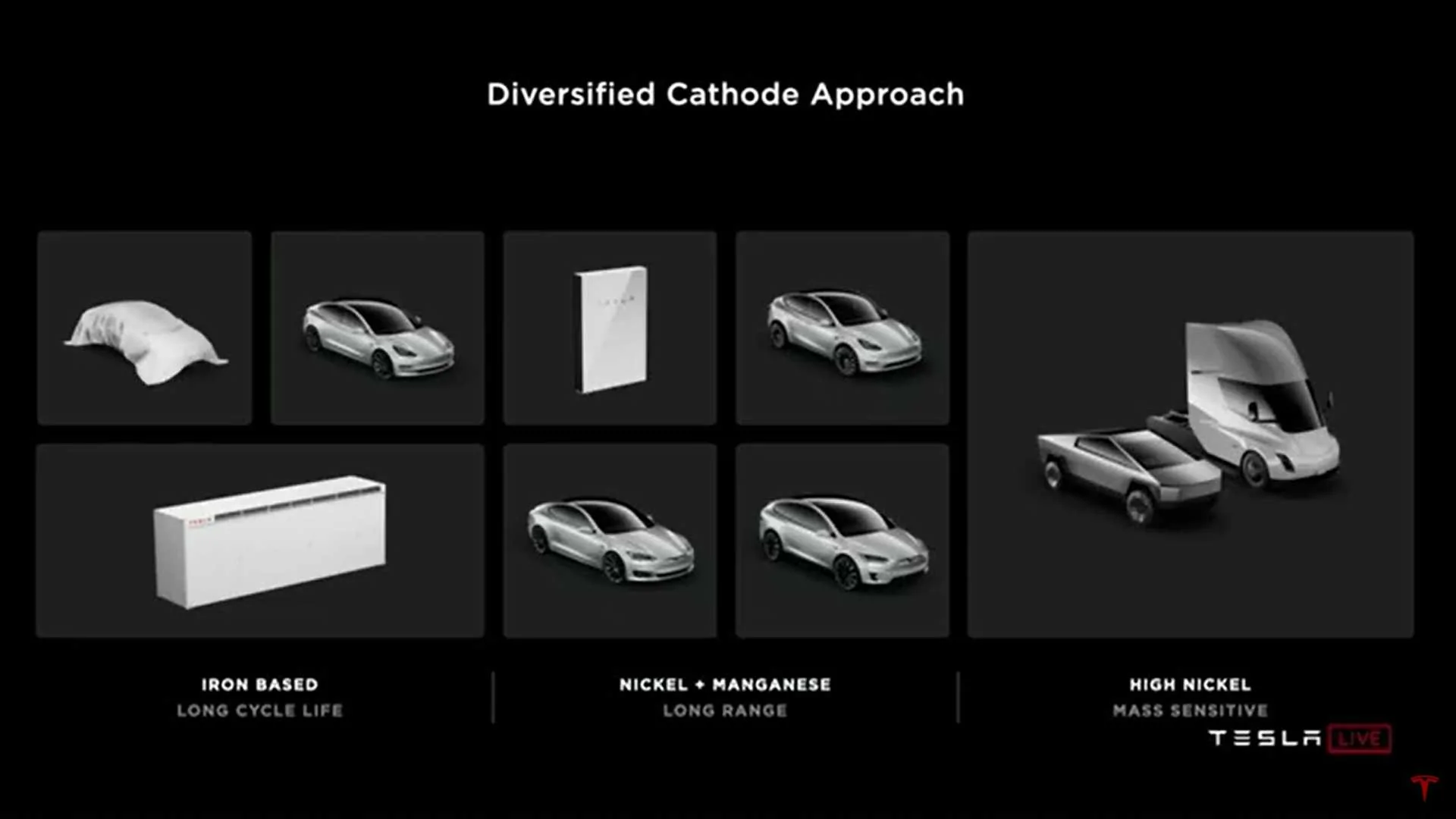
  1. A 4680 cell has around 86Wh of capacity per cell, and it can charge at a peak rate of 3C
  2. 1520 cells in a Cybertruck pack * (86Watts * 3 Rate) =
  3. 366kW

You can play with the numbers if you want but them's be the facts :). @Crissa @Dids
 

Dids

Well-known member
First Name
Les
Joined
Dec 21, 2019
Threads
10
Messages
1,792
Reaction score
3,820
Location
Massachusetts
Vehicles
04 Tacoma, 23 Cybertruck
Occupation
Self
Country flag
Anyone can make a 1000V battery by connecting 84 old 12V car batteries together in series. Each one can charge at 1C rate or 7.2Amps:
  • You could then charge that system at 1000V - no problem.
  • Amps x Volts = Watts
  • 7.2A * 1000 = 7200 Watts = 7.2kW charging speed.
  • If you try to charge this battery pack at 1000kW (1 MW) - call your mom, you will start a fire.
  • Number of Volts don't matter.

The only thing that matters is:
  1. What is the max power an individual cell can charge at without degrading
  2. Multiply that max power by the number of cells
  3. That is the peak charge power of the system

Example:
  1. A 4680 cell has around 86Wh of capacity per cell, and it can charge at a peak rate of 3C
  2. 1520 cells in a Cybertruck pack * (86Watts * 3 Rate) =
  3. 366kW

You can play with the numbers if you want but them's be the facts :). @Crissa @Dids
Yeah but what if you have 2 strings of 84 batteries? How many amps must your charger provide then? ?
Your numbers imply a knowledge of what cells they will be using.... I don't know what the 4680 high nickel specs are. On battery day they said they were producing new chemistry cells for cybertruck. As long as we can't imagine 1MW charging then we can even discuss what that would mean in terms of how many cells or C rate or voltage of a cell or how many strings in the battery. Maybe you are right and they stopped working on CT specific 4680.

Tesla Cybertruck Cybertruck 1000V Architecture + V4 Supercharging Confirmed!! ⚡️ "It's Going to be Used for Cybertruck Too" - Elon Musk 2020-tesla-shareholders-meeting-and-battery-day
 
Last edited:

Throwcomputer

Well-known member
Joined
Jul 9, 2021
Threads
26
Messages
1,168
Reaction score
2,960
Location
Staten Island, NY
Vehicles
07 Ridgeline, Vintage Vespas, 02 Harley Sportster
Occupation
TV & Film
Country flag
Yeah but what if you have 2 strings of 84 batteries? How many amps must your charger provide then?
Doesn't the y 4680 battery pack have 3 strings, shown in Munro teardown? Who knows how they will do the cybertruck packs.
 
OP
OP
samroy92

samroy92

Well-known member
First Name
Sam
Joined
Apr 20, 2021
Threads
14
Messages
186
Reaction score
581
Location
San Diego
Website
samroy.io
Vehicles
2018 Model 3, CT Tri/Quad FSD
Occupation
Head of Technology (SW, DevOps, IT, Security)
Country flag
Yeah but what if you have 2 strings of 84 batteries? How many amps must your charger provide then? ?
If you had 2 strings of 84 - for a total of 168:
  • You could then charge that system at 1000V - no problem.
  • Amps x Volts = Watts
  • 7.2A * 1000 * 2 strings = 14.4kW charging speed.
  • If you try to charge this battery pack at 1000kW (1 MW) - call your daddy, it's going to explode
  • Number of Volts don't matter.

Your numbers imply a knowledge of what cells they will be using.... I don't know what the 4680 high nickel specs are. On battery day they said they were producing new chemistry cells for cybertruck. As long as we can't imagine 1MW charging then we can even discuss what that would mean in terms of how many cells or C rate or voltage of a cell or how many strings in the battery. Maybe you are right and they stopped working on CT specific 4680.
I agree with you here - except the strings comment (strings don't matter, voltage does matter, what matters is power delivery to the cells). But play around with the 4680 specs and i'm happy to recalculate! Give me a 4680 cell spec and i'll run with it.


Crissa

Well-known member
First Name
Crissa
Joined
Jul 8, 2020
Threads
138
Messages
19,571
Reaction score
31,477
Location
Santa Cruz
Vehicles
2014 Zero S, 2013 Mazda 3
Country flag
Commercial fast charging on the road isn't inexpensive compared to slow (L2) charging at home, seems it costs maybe 3 times as much per kWh.
That's possible price, not average over time. And Tesla tries to price theirs near the retail rate locally.

Doing any comparison shopping, you avoid the expensive charging stalls - which are super expensive. Unless you really have to charge there: Like when I charge my bike at the convention center because it's gonna be there all day so the extra buck or so connection fee is worth walking several blocks.

For a relatively 'fast' one (350kW DCFC) the estimate is $140,000 according to https://propertymanagerinsider.com/how-much-do-commercial-dc-fast-chargers-cost-2/
That the non-Tesla price.

A Nio swap station - equal to about three charging stalls - is about $500k.

And of course, the jury is still out on what the effects on battery life-span are with fast charging.
This is untrue. Teslas show no degradation when charged no more than 8% and kept within the thermal tolerances.

As for public fast charging stations, well besides the equipment cost, there is the real estate required and the demand on the grid for high-voltage high power fast charging stations.
Swap stations have the same demands - they have to recharge their packs - and the same space requirements - each swapper takes 3x the space of a charging space. Sure, they can make it up in time... sortof.

As I may have mentioned earlier, China seems to be making a push for the battery swapping model and China is and is going to continue to be a big market for EV's (duh).
One company in China is doing swaps.

Anyone interested in the topic could read about the company AMPLE and their business model, for example at: https://www.cnet.com/roadshow/news/...ut-electric-car-batteries-from-startup-ample/

Here is one quote form the article:

"... Much faster Level III charging, like the Tesla Supercharger network, may be the answer for many drivers, but de Souza thinks Level III charge times and time to scale are still both too long. "When we started this eight years ago, people told us we would soon have (ubiquitous) 350-kilowatt chargers," he says. "Eight years later people are still telling us that next year we'll have 350-kilowatt chargers." He also says that very fast DC charging is harder on batteries and more difficult to scale with local infrastructure..."
EA has 350kW chargers all across the US. Their reliability is not great - but they do exist. This is either out of date or wrong.

-Crissa
 

Ogre

Well-known member
First Name
Dennis
Joined
Jul 3, 2021
Threads
166
Messages
10,735
Reaction score
27,050
Location
Ogregon
Vehicles
Model Y
Country flag
I just don’t see battery swapping for semis happening because it means doubling the number of batteries you have to produce. That halves the number of new electric trucks you can put on the road.

These packs are way too big for swapping to make sense. The whole point is to remove as many trucks from the road as you can. Swapping packs doesn’t do that. Tesla’s Strategy of focusing on short-medium haul hub based trucking initially makes the most sense. Focus on the companies that have warehouses they can home base to after a full day of deliveries. There are a LOT of these type of fleets out there. Long haul trucking can be something Tesla pilots themselves with trucking first Supercharger stations places strategically with eateries. Truck stops where the drivers spend half an hour charging for their next leg make a ton of sense.
 

Crissa

Well-known member
First Name
Crissa
Joined
Jul 8, 2020
Threads
138
Messages
19,571
Reaction score
31,477
Location
Santa Cruz
Vehicles
2014 Zero S, 2013 Mazda 3
Country flag
A 4680 cell has around 86Wh of capacity per cell, and it can charge at a peak rate of 3C
We don't know the amps of the packs, C rating of the cells, or how much heat the packs can remove to keep them at that rating.

-Crissa
Sponsored


Top