
Sponsored

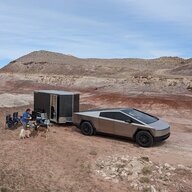
Solar Oasis - Roadhouse to Camel Trough

charliemagpie

Well-known member
First Name
Charlie
Joined
Jul 6, 2021
Threads
48
Messages
2,982
Reaction score
5,369
Location
Australia
Vehicles
CybrBEAST
Occupation
retired
Country flag
Yea, partly subsidized to allow EV travel everywhere. Maybe kWh fee and a $20 callout fee?

Govnmt is spending billions subsidizing the transition already. This ties up loose ends and makes the program 100% effective.
Sponsored


 
OP
OP

Deleted member 3316

Guest
Yea, partly subsidized to allow EV travel everywhere. Maybe kWh fee and a $20 callout fee?

Govnmt is spending billions subsidizing the transition already. This ties up loose ends and makes the program 100% effective.
The point and question I was poorly prosecuting is where to start.
 

charliemagpie

Well-known member
First Name
Charlie
Joined
Jul 6, 2021
Threads
48
Messages
2,982
Reaction score
5,369
Location
Australia
Vehicles
CybrBEAST
Occupation
retired
Country flag
The point of the post was to investigate solutions to remote charging scenarios.

Are there places in the world that are 800+Km away from anything resembling grid scale electricity. These edge cases are not going to be dealt with very quickly, but there will be adventurers pushing the boundaries.

What are the non fossil fuel powered solutions that could facilitate these trips?

Is there a place in your part of the world that you would like to see a remote charging solution?
Actually, I'd say with electrification remote places are potentially immediately better off.

You need to carry petrol to remote places, and you can run out of petrol. It happens.

Solar panels, - batteries is the final answer for remote places.

Just a matter of rolling them out. And of course, there is transition time and the machinations which comes with that.

As far as exceptions go... the sun always comes up... But it is hard to suck petrol out of sand.
 
OP
OP

Deleted member 3316

Guest
Actually, I'd say with electrification remote places are potentially immediately better off.

You need to carry petrol to remote places, and you can run out of petrol. It happens.

Solar panels, - batteries is the final answer for remote places.

Just a matter of rolling them out. And of course, there is transition time and the machinations which comes with that.

As far as exceptions go... the sun always comes up... But it is hard to suck petrol out of sand.
I agree, I’m quite sure remote communities will be better off with electrification.

The solution for a community energy would be very different to a solar oasis between towns/communities. The immediate benefit to the community would be the marginal cost of energy. When supplying energy to travellers passing through, much of the money should stay in that community after capital costs are repaid.

It’s also in the best interests of the community to maintain the highway/remote charging infrastructure between communities; maybe the costs of the highway facilities can be amortised along with the town system.
 
Last edited by a moderator:


JBee

Well-known member
First Name
JB
Joined
Nov 22, 2019
Threads
18
Messages
4,913
Reaction score
6,362
Location
Australia
Vehicles
Cybertruck
Occupation
. Professional Hobbyist
Country flag
There's this thing called 'Public infrastructure' and 'government'. Maybe you should, I dunno, band together to make sure these are available when you need them?

Like, not everything has to be individually profitable.

I understand that's an amazing an political statement.

-Crissa
This is actually the same problem with a representative democracy.

If there are no people there, there is also no representation in government to act for them. The electorates of Durak and O'conner are the biggest land mass electorates in the world, and have 2.5 million sqkm of land but only TWO representatives for 250,000 people. Each of these is more than twice the size of Texas, and they predominately all live on the coast, except Kalgoorlie.

Australia has the largest land area per capita, but also has some of the largest cities in the world that concentrate populations to the coast.

So largely the interior of Australia is empty, and with no people being there, there are no roads, no houses, no power lines, no power stations etc. Just endless miles of nothing, except maybe a dirt road, and many tracks without even that.

So there is absolutely no-one there to even ask the government to do it, let alone a representative that could organise something, let alone get enough votes from others to pass a bill through for funding.

Our problem therefore remains the same: it is not one of not enough infrastructure, or resources, it's just one of not having enough people to warrant a change. Imagine how silly one would look trying to setup a Supercharger network in Antartica. Australia, in the interior is not far behind.
 
OP
OP

Deleted member 3316

Guest
This is actually the same problem with a representative democracy.

If there are no people there, there is also no representation in government to act for them. The electorates of Durak and O'conner are the biggest land mass electorates in the world, and have 2.5 million sqkm of land but only TWO representatives for 250,000 people. Each of these is more than twice the size of Texas, and they predominately all live on the coast, except Kalgoorlie.

Australia has the largest land area per capita, but also has some of the largest cities in the world that concentrate populations to the coast.

So largely the interior of Australia is empty, and with no people being there, there are no roads, no houses, no power lines, no power stations etc. Just endless miles of nothing, except maybe a dirt road, and many tracks without even that.

So there is absolutely no-one there to even ask the government to do it, let alone a representative that could organise something, let alone get enough votes from others to pass a bill through for funding.

Our problem therefore remains the same: it is not one of not enough infrastructure, or resources, it's just one of not having enough people to warrant a change. Imagine how silly one would look trying to setup a Supercharger network in Antartica. Australia, in the interior is not far behind.

Eeek, that really does make the arguments against the coal rollers rather difficult…
 

JBee

Well-known member
First Name
JB
Joined
Nov 22, 2019
Threads
18
Messages
4,913
Reaction score
6,362
Location
Australia
Vehicles
Cybertruck
Occupation
. Professional Hobbyist
Country flag
Actually, I'd say with electrification remote places are potentially immediately better off.

You need to carry petrol to remote places, and you can run out of petrol. It happens.

Solar panels, - batteries is the final answer for remote places.

Just a matter of rolling them out. And of course, there is transition time and the machinations which comes with that.

As far as exceptions go... the sun always comes up... But it is hard to suck petrol out of sand.
So one of the biggest elements that allows Australia, in particular, to do solar, is that there is plenty of sun, all year around, everywhere in the country. Solar is energy literally falling on our head. So although this is a solution for here, it's not the same at other latitudes, where there is also generally more population. The point is that places with high populations, at least in the more developed countries, also have a lower solar insolation, with exception of India and Central Africa.

But given that, solar I believe is also a good part of the solution for remote use in Australia, and even those other sun baked areas of the planet. Higher latitudes, will need to import solar, or have alternatives to solar like wind or hydro, or even biofuels depending on just how high a latitude they are.

My little pet project is sustainability by decentralisation, distribution and diversity. That means don't connect everything together, especially not things that can be done locally instead, and don't just provide one solution, especially if you can solve more than one problem with the same system.

Given the above principle, it's pretty clear that the winning combination for remote areas is a small independent local grid that uses local movable storage and generation resources, in the form of V2X enabled EV's, that have multiple locations to connect to said local network. That way you can have household PV and even larger solar arrays on parking areas etc supply power to the local grid, and the grid uses the amount of connected V2X vehicles as a place to store the energy as well as capacity to serve intermittent Supercharger loads and even overnight household loads.

The setup would be such that EV's would become movable and dispatchable generation, and could absorb more renewable energy on the grid than the capacity of the grid could using fossils. This is a bigger deal than most realise, because especially small networks, or "thin grid infrastructure", a fossil powered grid is unable to adsorb solar for later use at all. Grid stability is achieved by realtime network balancing, which with fossils is by derating fossil generation when solar/wind is added to the grid. The above setup using V2X eliminates the storage problem at nearly no cost to the network, in that the network need only provide bidirectional power to household, which most solar enabled houses have anyway, and by having bi-directional household charging, of which you need charging for EV's at home anyway.

The largest problem here is once again time of use, so you really need to incentivise people plugging their vehicles in at work, and in particular during the day when solar is available to charge their EV's. The solution is simply to have enough EV's in storage capacity, so that it creates a stable network, enough storage for overnight use, and intermittent supercharging peak loads predominately during the day. (At night EV's are most at home and plugged in and the grid load is low and off-peak anyway). So essentially, allow for as many EV's to connect, in as many locations as possible in the local grid, and have enough EV storage capacity to run everything.
Just roughly you only need around 25% of cars in neighbourhood to be EV's with V2X to run the neighbourhood, and supply supercharging.

The requirements to make this work, anywhere there is enough annual solar insolation, is to manage the network solar and EV so that each component, in particular the owners of the "critical" infrastructure, the V2X EV's, are able to connect and be managed together to form a single homogeneous provider. This type of peer to peer energy sharing also means that everyone in the network helps everyone else reduce the cost of going renewable, to the point that without too much extra capital expenditure, because people are buying vehicles anyway, and are subsidising network infrastructure by time sharing, energy costs go from $0.07c kWh for solar, towards zero.

Now just imagine if small towns went from energy deficits and daily power outages, run off $1.00kWh fossil generators, to a few $0.01c per kWh in the dollar power hubs, all at minimal network costs? Now rinse repeat that, and do metro suburbs, etc. It is simply illogical, given the amount of energy that falls on us everyday for free, to imagine a scenario that if we have cost effective technology for conversion, storage and time of use, that with it there shouldn't be an energy cost reduction that absolutely replaces the dominance, and extreme cost of fossil in the best possible way, by making it affordable for all.

BTW this is a completely scalable solution, you can start with handheld battery banks for lighting etc, and electric bikes or scooters, in just one or two huts, for third world nations.
 
Last edited:

JBee

Well-known member
First Name
JB
Joined
Nov 22, 2019
Threads
18
Messages
4,913
Reaction score
6,362
Location
Australia
Vehicles
Cybertruck
Occupation
. Professional Hobbyist
Country flag
Eeek, that really does make the arguments against the coal rollers rather difficult…
In Australia absolutely. But there are solutions as outlined in my post above.

The question then is if there are enough "refill" stations to make it between communities that have energy sharing P2P microgrids. Those are the real ones that actually need to be developed and subsidised from elsewhere in the EV/energy landscape. A alternative is vehicles with longer range, but these also have diminishing returns, in that having a lot of battery that is hardly used, only a few days a year, is wasteful. So these would actually profit even more by being on a P2P network, in that they would be able to offer even more storage for network buffering.

Overall, there is a huge need for better real time resource management, across various seemingly disassociated industries and technology.

The other version is to use biofuels for refill locations to generate the peak loads required for EV supercharging. Biofuels produced from local broad acre farming food waste, that also power their tractors and machinery, seeing batteries don't have the energy density for that. You also reduce farming emissions, in reducing fossil fuel use for energy, also in the form of methane etc from decomposing organics etc, produce a bio-compost from the process waste that is better than fossil derived fertilisers, and have a net negative global temperature forcing contribution. (unlike solar that is still net positive, as it lacks the ability to remove green house gases from the atmosphere in the process of making energy)

Once again, it's about really drilling down and collecting as many problems into the same engineered system of concurrent solutions that is the best form of sustainable change. No matter what form of technology, or tool we use to enact our will on the environment, reducing energy cost, and it's embedded emission overhead, is the key to powering a sustainable future.
 
Last edited:
OP
OP

Deleted member 3316

Guest
In Australia absolutely. But there are solutions as outlined in my post above.

The question then is if there are enough "refill" stations to make it between communities that have energy sharing P2P microgrids. Those are the real ones that actually need to be developed and subsidised from elsewhere in the EV/energy landscape. A alternative is vehicles with longer range, but these also have diminishing returns, in that having a lot of battery that is hardly used, only a few days a year, is wasteful. So these would actually profit even more by being on a P2P network, in that they would be able to offer even more storage for network buffering.

Overall, there is a huge need for better real time resource management, across various seemingly disassociated industries and technology.

The other version is to use biofuels for refill locations to generate the peak loads required for EV supercharging. Biofuels produced from local broad acre farming food waste, that also power their tractors and machinery, seeing batteries don't have the energy density for that. You also reduce farming emissions, in reducing fossil fuel use for energy, also in the form of methane etc from decomposing organics etc, produce a bio-compost from the process waste that is better than fossil derived fertilisers, and have a net negative global temperature forcing contribution. (unlike solar that is still net positive, as it lacks the ability to remove green house gases from the atmosphere in the process of making energy)

Once again, it's about really drilling down and collecting as many problems into the same engineered system of concurrent solutions that is the best form of sustainable change. No matter what form of technology, or tool we use to enact our will on the environment, reducing energy cost, and it's embedded emission overhead, is the key to powering a sustainable future.
Yep, cool.

Where do you want to see a remote charger in Australia or anywhere in the world. What route do you want to take your Cybertruck that would be overly challenging with the infrastructure as it currently stands?

My dream trip is the shortest route between Byron Bay in NSW and Steep point in WA. I also love the idea of driving the pacific rim from Ushuaia, Tierra del Fuego Argentina to Port Arthur, Tasmania Australia.


Crissa

Well-known member
First Name
Crissa
Joined
Jul 8, 2020
Threads
138
Messages
19,571
Reaction score
31,477
Location
Santa Cruz
Vehicles
2014 Zero S, 2013 Mazda 3
Country flag
This is actually the same problem with a representative democracy.

If there are no people there, there is also no representation in government to act for them. The electorates of Durak and O'conner are the biggest land mass electorates in the world, and have 2.5 million sqkm of land but only TWO representatives for 250,000 people. Each of these is more than twice the size of Texas, and they predominately all live on the coast, except Kalgoorlie.

Australia has the largest land area per capita, but also has some of the largest cities in the world that concentrate populations to the coast.

So largely the interior of Australia is empty, and with no people being there, there are no roads, no houses, no power lines, no power stations etc. Just endless miles of nothing, except maybe a dirt road, and many tracks without even that.

So there is absolutely no-one there to even ask the government to do it, let alone a representative that could organise something, let alone get enough votes from others to pass a bill through for funding.

Our problem therefore remains the same: it is not one of not enough infrastructure, or resources, it's just one of not having enough people to warrant a change. Imagine how silly one would look trying to setup a Supercharger network in Antartica. Australia, in the interior is not far behind.
You demonstrated there are 250k people to ask.

In fact, they can *ask* the other people in the country who might want to visit, to help them afford amenities so they can share.

In the US, the more rural places not only have more representation - they tend to be mostly federally-owned land, which has a mandate to be productive for the entire country.

So the opposite of the problem you're describing.

-Crissa
 
OP
OP

Deleted member 3316

Guest
You demonstrated there are 250k people to ask.

In fact, they can *ask* the other people in the country who might want to visit, to help them afford amenities so they can share.

In the US, the more rural places not only have more representation - they tend to be mostly federally-owned land, which has a mandate to be productive for the entire country.

So the opposite of the problem you're describing.

-Crissa
Yes, the USA has a very different legal and political structure than Australia.
 
OP
OP

Deleted member 3316

Guest
So there is absolutely no-one there to even ask the government to do it, let alone a representative that could organise something, let alone get enough votes from others to pass a bill through for funding.
I would hazard a guess motoring clubs would rally support for remote communities with carefully considered campaigns targeting city dwellers that think they’re country people because they own a lifted 4x4 that they take out one weekend every few months. As soon as R1T/R1S, F-150Lightning and Cybertruck actually make it to market in Australia federal support for remote charging will be an hot election issue.
 

MisterChilidog

Well-known member
First Name
Thomas
Joined
Sep 28, 2020
Threads
2
Messages
104
Reaction score
158
Location
Lehi, Utah
Vehicles
Cybertruck
Country flag
I suppose a lot of it will come down to how much range you need to add each day. Flexible solar panels are getting pretty darn cheap, and a couple of EcoFlow Delta Pro's will give you enough 240v AC to use your mobile charger close enough to its capacity. If you were doing your driving at night, and charging during the day... Again, it probably comes down to how many miles you need to replenish each day, but this is how I envision charging on my future camp trips.
 
OP
OP

Deleted member 3316

Guest
I suppose a lot of it will come down to how much range you need to add each day. Flexible solar panels are getting pretty darn cheap, and a couple of EcoFlow Delta Pro's will give you enough 240v AC to use your mobile charger close enough to its capacity. If you were doing your driving at night, and charging during the day... Again, it probably comes down to how many miles you need to replenish each day, but this is how I envision charging on my future camp trips.
Are there any trips that you’d like to do but would be challenging in your Cybertruck with the current infrastructure on that route?

I’m interested to see the different sorts of edge cases and see if they are markedly different from each other.
Sponsored


Top