
JBee
Well-known member
- First Name
- JB
- Joined
- Nov 22, 2019
- Threads
- 18
- Messages
- 4,913
- Reaction score
- 6,362
- Location
- Australia
- Vehicles
- Cybertruck
- Occupation
- . Professional Hobbyist

The amount of motors has nothing to do with the discharge rate.Yes they can handle it, but just because you can doesn't always mean you should. Ever wonder why there is no standard range performance model 3? If you spread the stress over more cells, they last longer. And Tesla has a pretty generous battery warranty, one that i have already taken advantage of when my battery died at 61k miles..
If you have a tri or even quad motor configuration, it will be capable of higher discharge rates than dual. Plain and simple. You will need a battery capable of higher discharge rates to compensate, assuming your first design was finely tuned. This means more cells, because there is only one cell type possible: 4680. Because structure:
Are you trying to say that 4 "half-sized" motors draw as much as 4 "full-sized" motors, and not as much as 2 full size motors?
Because as I already wrote, there are many different types of motors that Tesla makes, and not all have the same power input or output. So what you say is "plain and simple" stems from your fundamental misunderstanding of how motor combinations actually work, and what determines the power draw. Simply: you can have one single motor with more power than a Plaid tri-motor, and you can have four motors, for a quad setup, with less power (or the same) as the Plaid trimotor setup.
As I wrote in my post, the structural part is not the "webbing" of the structural sandwich pack, rather it's the lower and upper skin that takes most of the force. It's not actually that complicated, no need for FEA to understand the concept. As you can see in the diagram below the main forces that go through the structural pack are compression and tension though the top and bottom skins, the core only provides the support to keep the skins in place. If both skins would not be separated by the webbing core, then the skins would not receive any load and would collapse.The 4680 is ~650 microns thick, a 2170 is ~250. Pretty sure, the steel used is also different. I don't know how the math works out on that as far as force transfer goes, pretty sure you need modeling software and a super computer for that. But there are no structural 2170 cells on the market as far as i know.. 4680 cell is designed to be. The foam is not enough, you need the whole system. We've seen structural packs in the MYs. But only using 4680 cells, for a reason.
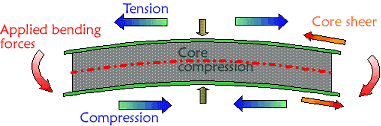
As I also said previously, even if the 2170 have half the thickness walls, it would still have twice the wall material than a 4690 pack, because you can fit 4x 2170 cells in the space of just one 4680. Plus having a closer cell density would be better again, especially given that the forces through the webbing a of a diagonal nature. Hence the structural shape of a truss and webbing:
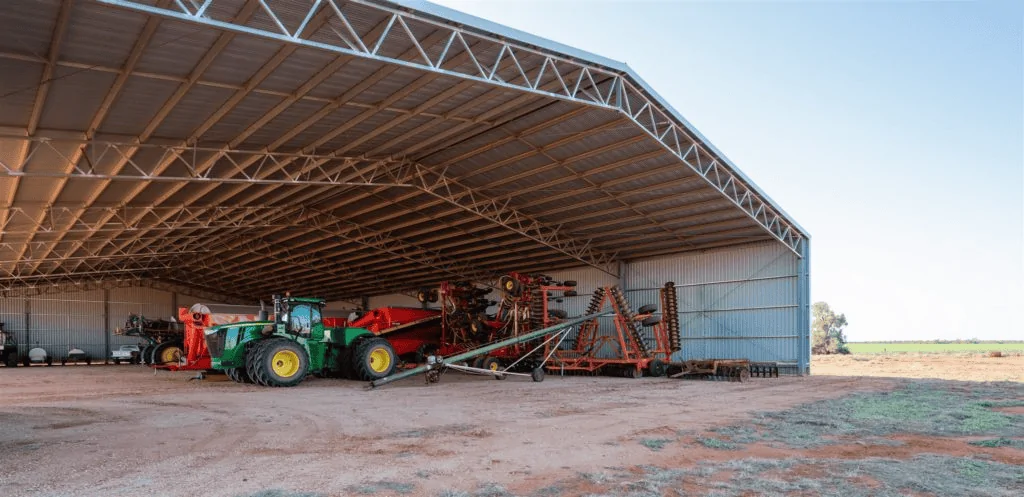
Note how the top and bottom sections are much larger than the diagonal webbing. The top and bottom sections also use much thicker steel. These trusses, as also sandwich assemblies are really good at long distance load transfers, either between columns, or car suspension springs.
So again here, you misunderstand that it is actually the size of the motor, and not just the number of motors. You then use that false assumption to say the battery "can" do three motors but not four motors. As above you can have 4x 80kW motors totalling 360kW which would be half of the plaid 720kW three motor output. If that is so then a half size 50kWh pack would suffice to run a quad motor.They would sell the Quad variant if they could. I just don't think the 4680 energy density is there yet. For Tri, sure. Need the cathode plant up and running for a few months i think, before we can start thinking of elon's favorite plaid quad model.
Your assumptions are therefore incorrect.
Sponsored