
Sponsored

Onan

Member
First Name
Owen
Joined
Jun 15, 2021
Threads
0
Messages
13
Reaction score
9
Location
1 Huntingdon Farm Dr., Glen Mills PA 19342
Vehicles
Model 3 dual motor, Cyber Truck Reservation, Camry
Occupation
Retired
Country flag
Just wanted to share some mods I have done in case it's of use to others.

One thing I've been eager to do is add solar charging capability to the Cybertruck. First order of business here though is to set expectations because when people talk about solar powered cars, their expectations are often driven by sci-fi. The truth is, given the physics governing it (1kW/m^2 of solar radiation on earth) and current efficiencies (or even theoretical efficiencies) of solar panels (~20% real world), you are not going to get a lot of onboard solar energy to fully power or charge an EV on a practical level (although I'm a fan of what Aptera is doing). My use case is boondocking (extended remote camping). That means I'm willing to take time to set up the mobile solar power system on an infrequent basis, to get a few miles a day. Keep in mind this is my early prototype, more of a proof of concept. The plan is to develop a much more elegant solution with fold-out wings using better (CIGS) solar panels (painfully expensive).

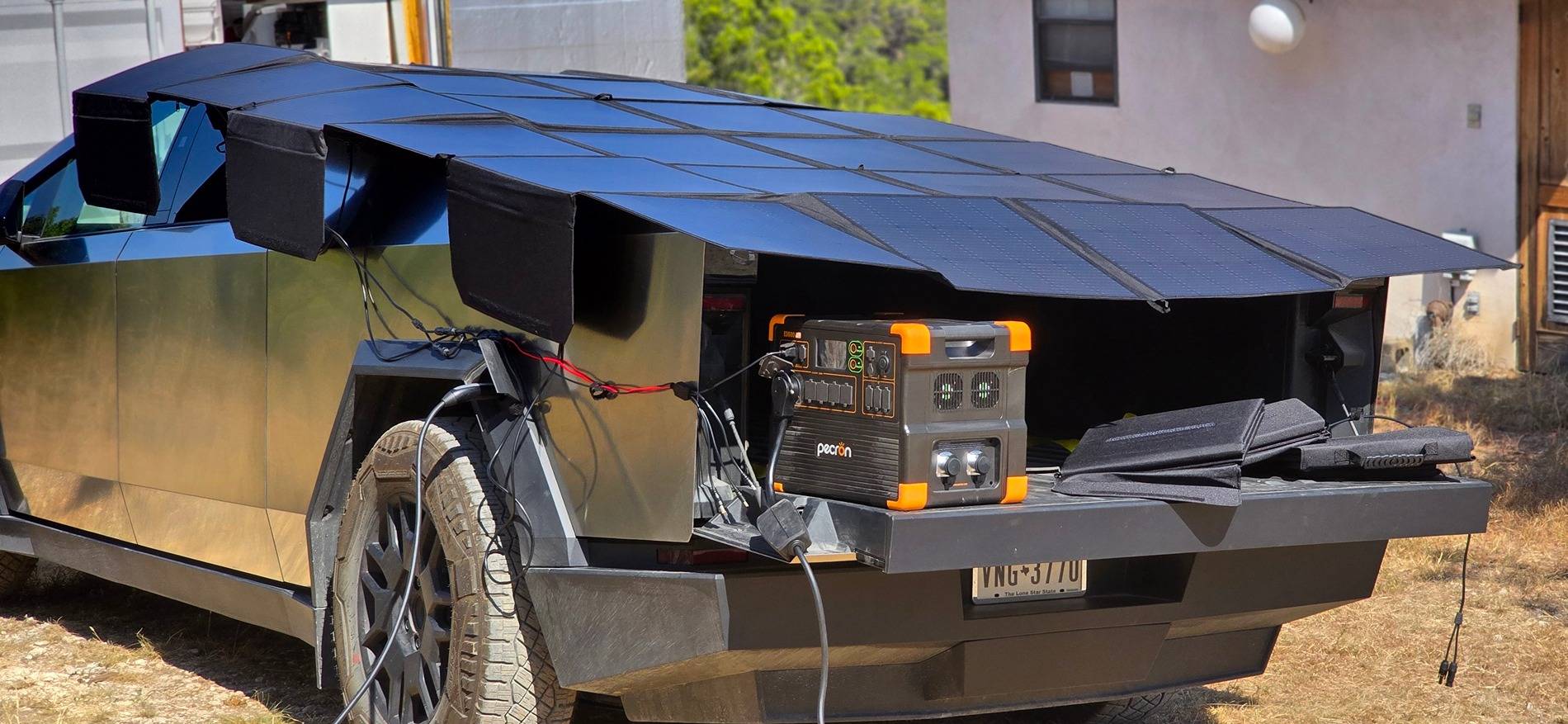
If I use only enough solar panels to lay on the backside of the Cybertruck, I can get around 800W which comes to about 4kWh/day, which is about 12 miles/day if I drive slow. Not too bad IMO.

20241015_134050.jpg


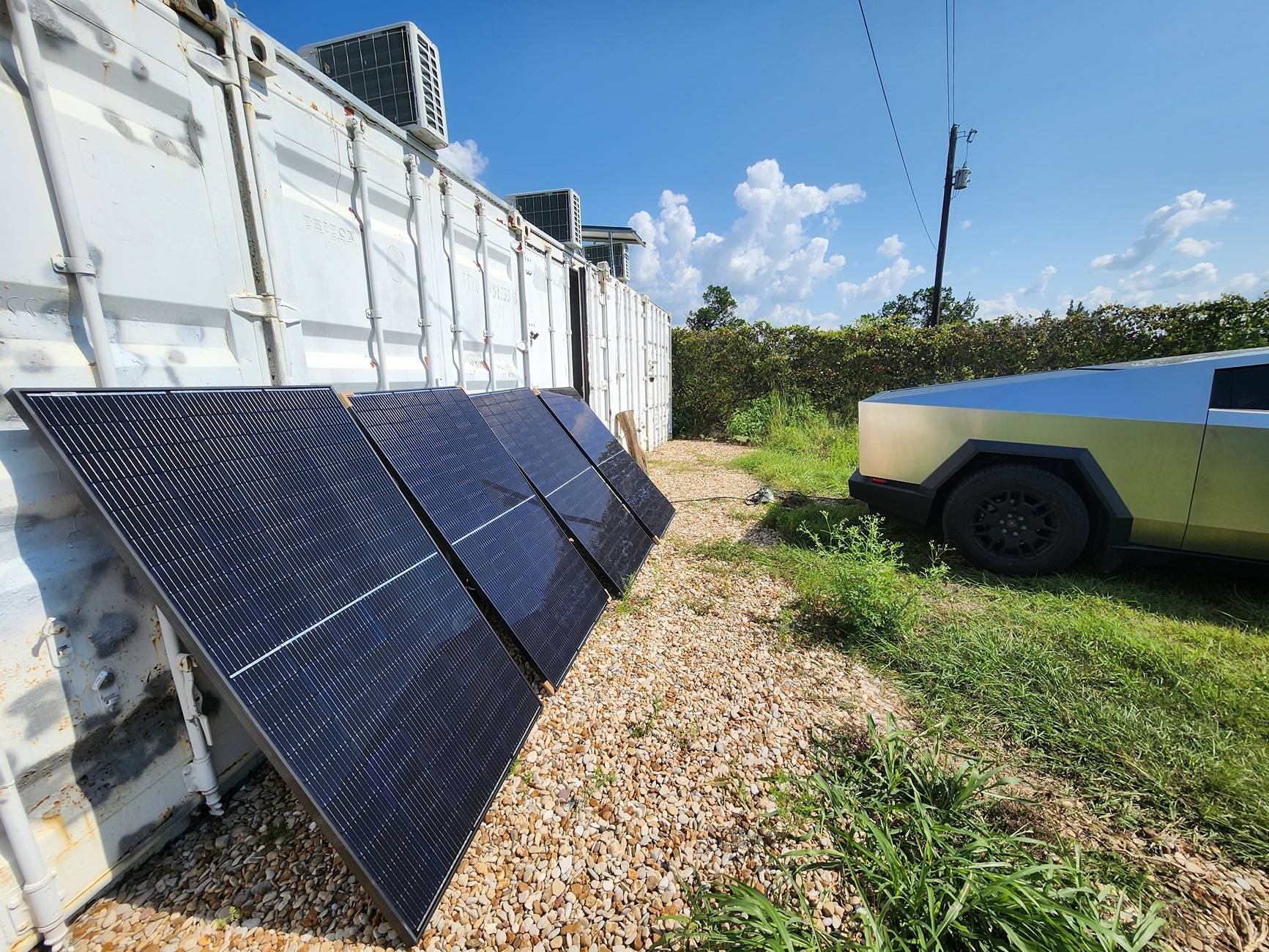
If I am willing to carry more panels and set up around the truck, I'm usually limited by the power my mobile "solar generator" can receive. In this case, I'm using a "solar generator" from Pecron which maxes out at 2550W. That translates to ~13kWh/day or about 40 miles/day.

20240805_105842.jpg


Solar charging currently isn't straightforward for EVs sadly. It gets more complicated so I'll type it up in detail at the bottom so as to not bore people who don't care about solarA lot.

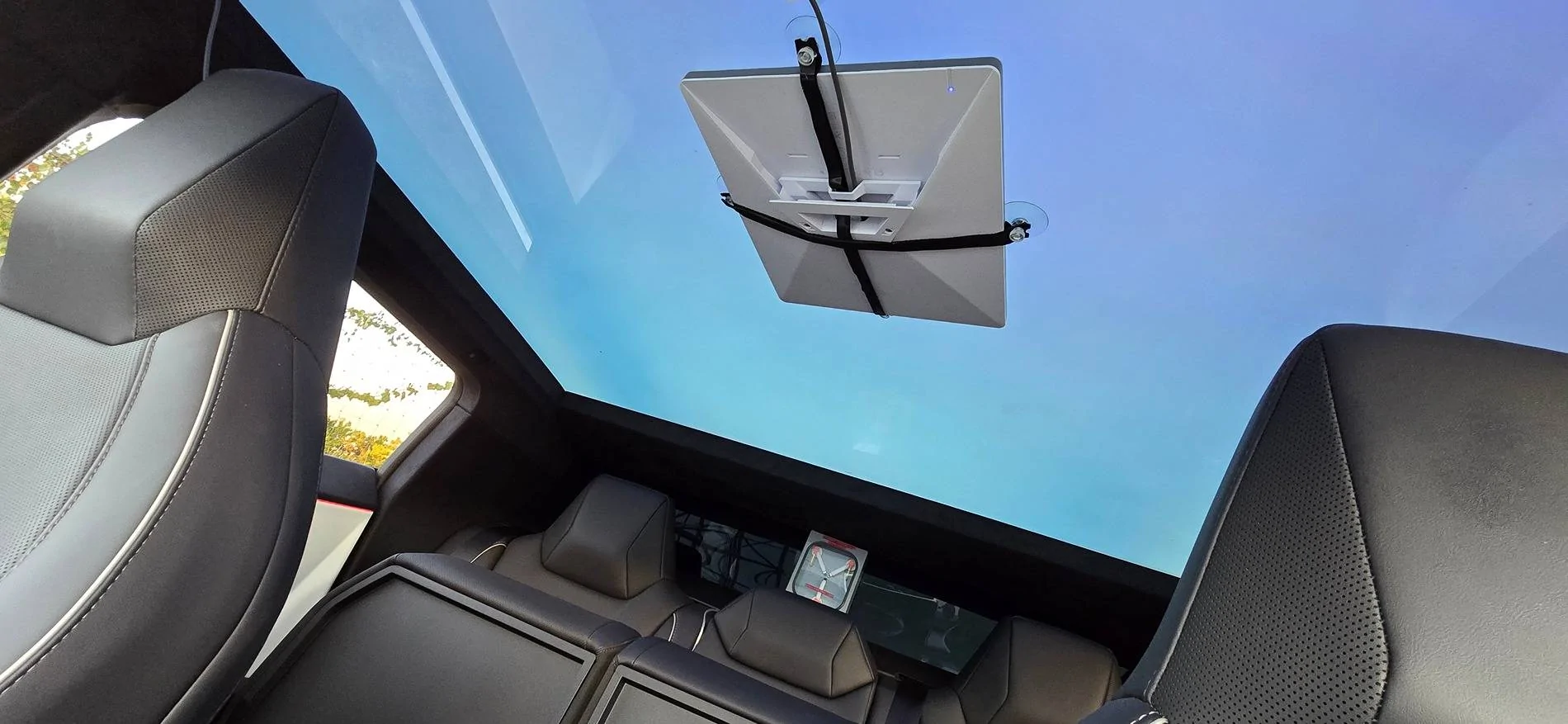
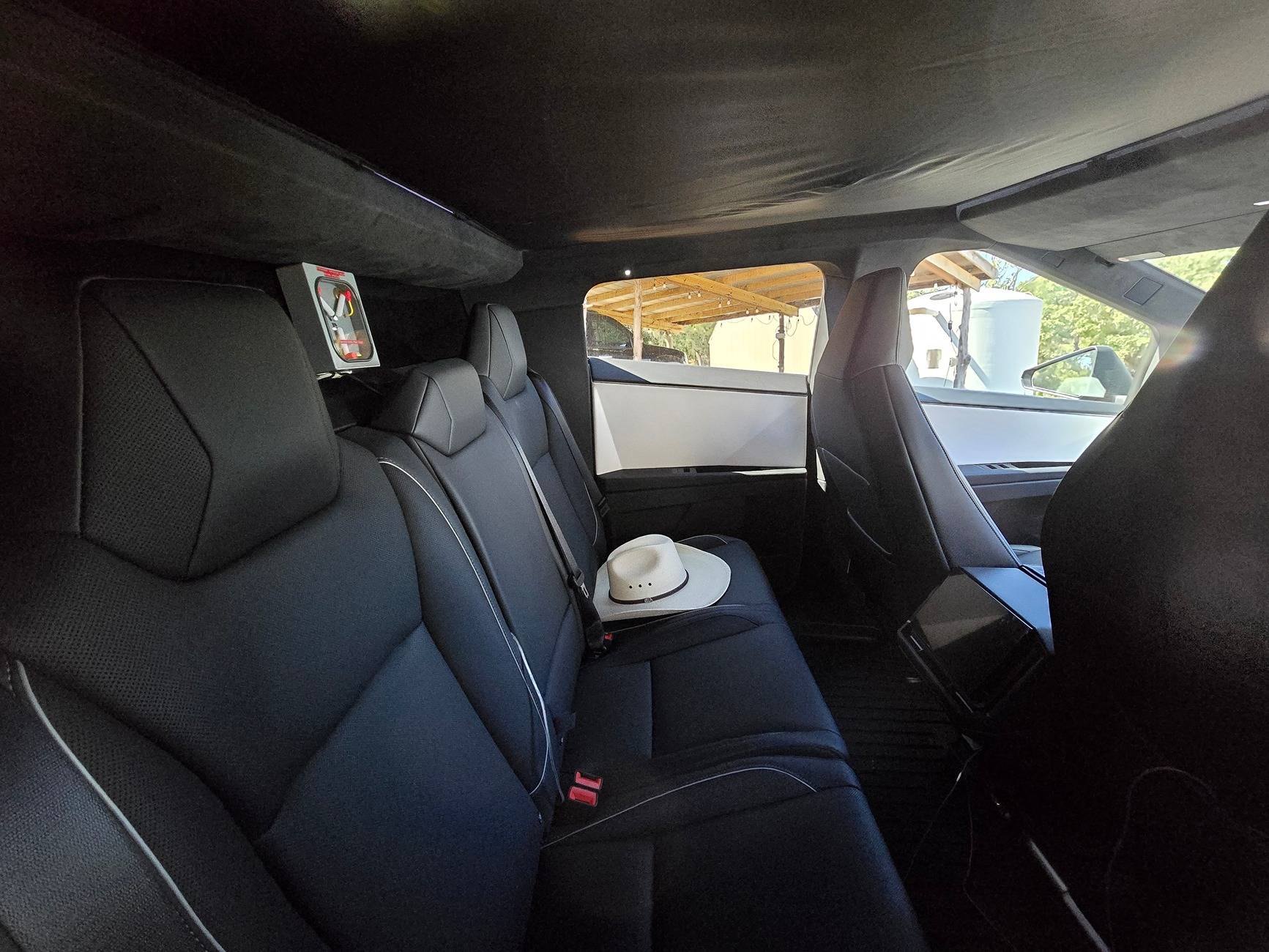
For the Starlink, nothing groundbreaking here. I paid extra for the mini, worth it for the integrated wifi and ability to backpack. Also people usually buy mounts which are ridiculously overpriced. I made my mount using velcro cable straps and suction cups from Temu, cost maybe $4, LOL. Works great. Flux capacitor from Amazon is in the back :cool:

20241009_183752.jpg


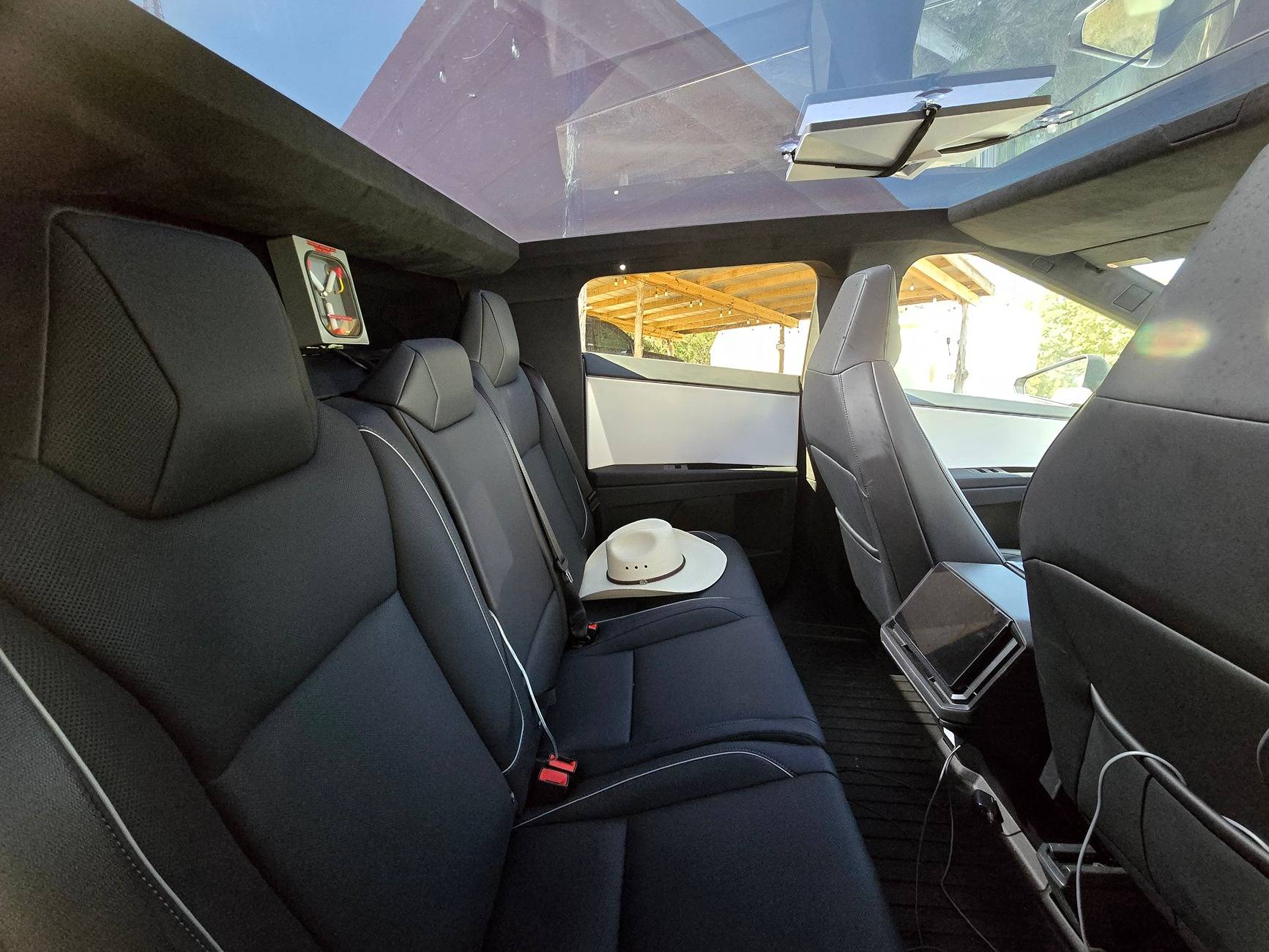
One concern though is as we all know, people are constantly peering into the CT. I wanted to hide the Starlink so used a BestEVMod roof shade which is 100% opaque (unlike the Tesla OEM shade).

20241015_131545.jpg
20241015_131921.jpg


For phone mounts, I really didn't want to mar my dash or permanently mess with the CT in any way. Then it hit me mounting to aftermarket organizers would make for a great solution. I have 2 magsafe chargers, one on the behind-the-screen organizer and the console organizer because in TX, sometimes the sun is so intense it will overheat your phone if it's on the dash so I move it to the console for shade. Organizers are from BestEVMod and work great. At first I was afraid the lip of the dash organizer would put dents into the dashboard but the contact is actually spread across a large area in the base so it's not an issue.

20241015_135413.jpg
20241015_135426.jpg


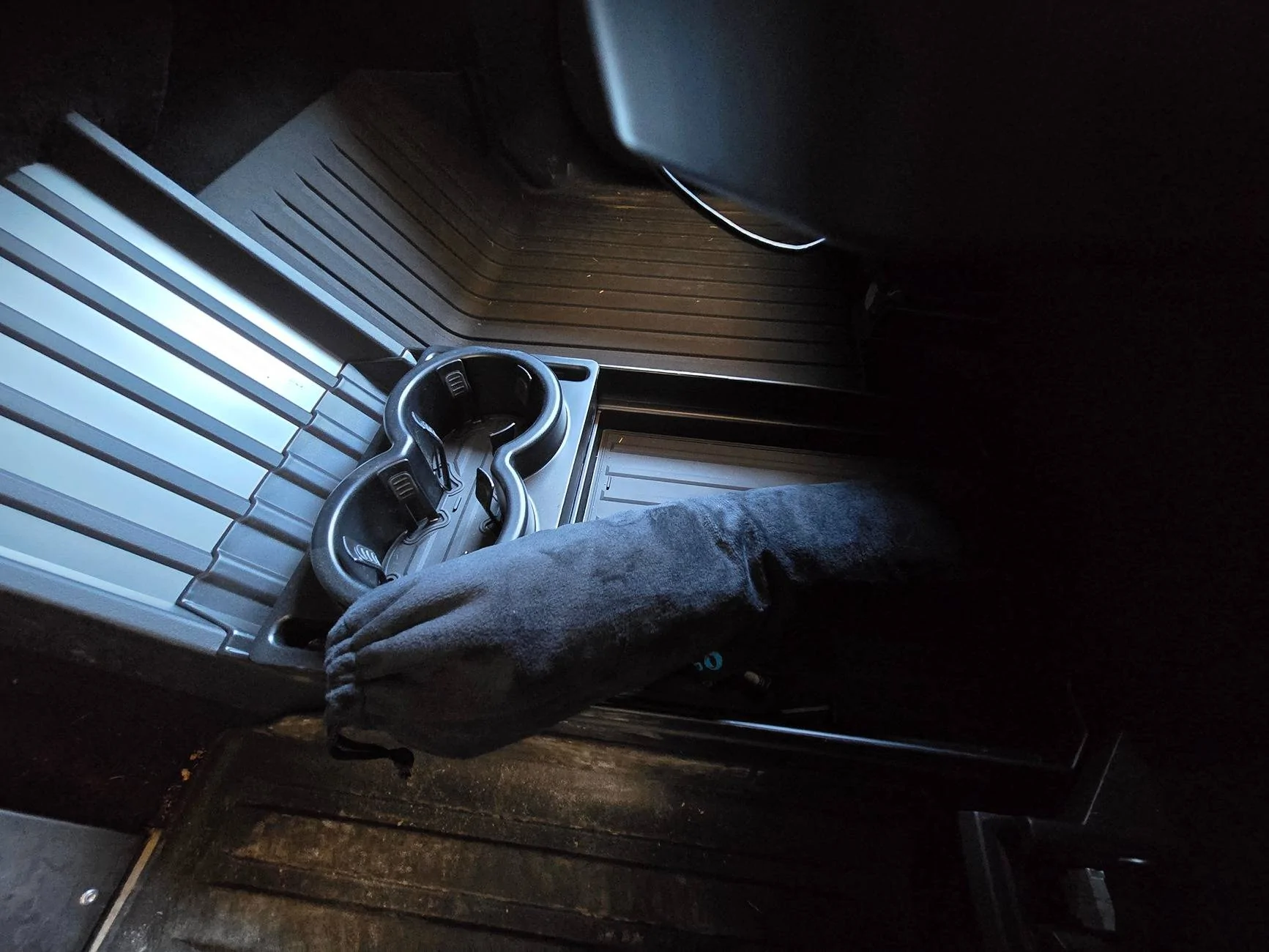
Speaking of the sun, as we all know the giant windshield turns the CT into a greenhouse. A lot of people complain about the umbrella type sun shades but I like them. Small enough collapsed to store in the center console. Just takes a little practice to get good at deploying it. My method is to get under the shade when it's partially open, point the long legs to the far corners of the windshield, and voila. Using the dash organizer is perfect with the umbrella shade, as it provides a spot for the rubber handle to rest against. Using BestEVMod here also for umbrella and consoles.

20241015_135527.jpg


Jumping back to solar for people wanting more detail.... Ideally, your EV would have a built in DC input for solar charging, and an onboard MPPT charger to directly and efficiently charge your DC batteries with DC solar input, but currently nobody does this. Therefore we have to take a convoluted path of Solar > Solar generator (DC in > charge controller > batteries > inverter) > Tesla Mobile Charger > Cybertruck. Hope Tesla changes this one day! Totally see why they don't, many would improperly wire up the panels but maybe with some current/voltage protection, it will make sense for the market. For now, we have to use "solar generators" as an intermediate step to condition and buffer the solar power for EV charging.

Complexity #1: Most solar generators won't work. I'm using the Pecron E3600LFP. I chose it because it is able to receive a lot of solar power (2550W) and output a lot in AC (3600W). Drawback with the Pecron is that the inverters are inefficient and consume 190W just idling. Don't try to small-med solar generators or power stations. You have to over-spec it because when the Tesla charger starts charging, if there is a large voltage drop, the charger will think your electrical system is overtaxed and stop for safety reasons. Smaller solar generators will typically not be able to maintain a consistent voltage during the initial surge and thus the Tesla charger will stop. I always set in the app to start charging at the minimum current (5A).

Complexity #2: Unless you go with gargantuan "solar generators" which you have to wheel around, you are limited to 110V. As most know, charging at 110V usually sucks. But it can suck less if you charge at 30A. This is especially important in my setup since if I am at peak solar power (~2550W), I want to balance the input and output since if the solar generator battery is full and I max out charging at 1600W (with a standard NEMA 5-15 plug), that excess solar power can't be used. However, the most common 30A plug is the NEMA TT-30 and is commonly found on largeish solar generators and RV parks. For reasons I don't understand, Tesla does not make a TT-30 adapter for the mobile charger so I bought the EVSE adapter.

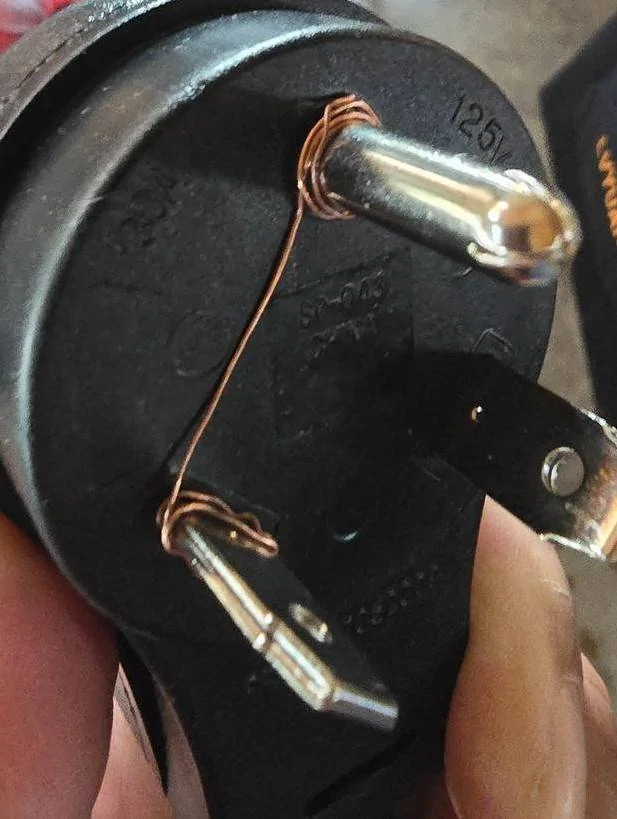
Complexity #3: The Tesla mobile charger is intelligent so it is looking to make sure your electrical outlet is properly wired. This means it's looking for the neutral line to be bonded with the ground. This would happen at the master panel if your house is wired properly. The problem is with "solar generators", there is no ground. Therefore you have to trick the charger into thinking there is a ground-neutral bond by running a wire between the 2 prongs. Make sure you get the prongs right and don't complain to me if you start a fireworks show! I use thin gauge wire just in case of a fault.

20241003_162158.jpg


As mentioned, this is a rough proof of concept for mobile solar charging. Will update here as I refine it to a more elegant solution!
Thank you for sharing all this info.
 

iamjerome

New member
First Name
Jay
Joined
Jul 4, 2024
Threads
0
Messages
2
Reaction score
1
Location
Texas
Vehicles
Cybertruck
Occupation
Aerospace Engineer
Country flag
I was thinking about a similar setup. I have two EcoFlow 400W panels and a Delta 2 Max power station which collectively weigh about 134lbs. I’m not sure if the weight hit is worth it for the charge I get and the time it takes. How much does your setup weigh?
 
OP
OP
Cybertechnical

Cybertechnical

Well-known member
First Name
Tommy
Joined
Jun 23, 2024
Threads
13
Messages
57
Reaction score
107
Location
Austin
Vehicles
AWD
Occupation
Consultant
Country flag
I was thinking about a similar setup. I have two EcoFlow 400W panels and a Delta 2 Max power station which collectively weigh about 134lbs. I’m not sure if the weight hit is worth it for the charge I get and the time it takes. How much does your setup weigh?
The 800W setup weighs about 130lbs. Definitely worth it for extended camping IMO. Even if it's just used for camp use to keep the inverters off on the car and reduce drain.

I have the Delta 2 which is smaller and it won't work. It suffers from the voltage drop mentioned in the OP and the Tesla mobile charger will stop charging.


Ray in montana

Well-known member
First Name
Ray
Joined
Jun 27, 2024
Threads
0
Messages
107
Reaction score
138
Location
59868
Vehicles
Cybertruck
Occupation
Retired
Country flag
Just wanted to share some mods I have done in case it's of use to others.

One thing I've been eager to do is add solar charging capability to the Cybertruck. First order of business here though is to set expectations because when people talk about solar powered cars, their expectations are often driven by sci-fi. The truth is, given the physics governing it (1kW/m^2 of solar radiation on earth) and current efficiencies (or even theoretical efficiencies) of solar panels (~20% real world), you are not going to get a lot of onboard solar energy to fully power or charge an EV on a practical level (although I'm a fan of what Aptera is doing). My use case is boondocking (extended remote camping). That means I'm willing to take time to set up the mobile solar power system on an infrequent basis, to get a few miles a day. Keep in mind this is my early prototype, more of a proof of concept. The plan is to develop a much more elegant solution with fold-out wings using better (CIGS) solar panels (painfully expensive).

If I use only enough solar panels to lay on the backside of the Cybertruck, I can get around 800W which comes to about 4kWh/day, which is about 12 miles/day if I drive slow. Not too bad IMO.

20241015_134050.jpg


If I am willing to carry more panels and set up around the truck, I'm usually limited by the power my mobile "solar generator" can receive. In this case, I'm using a "solar generator" from Pecron which maxes out at 2550W. That translates to ~13kWh/day or about 40 miles/day.

20240805_105842.jpg


Solar charging currently isn't straightforward for EVs sadly. It gets more complicated so I'll type it up in detail at the bottom so as to not bore people who don't care about solarA lot.

For the Starlink, nothing groundbreaking here. I paid extra for the mini, worth it for the integrated wifi and ability to backpack. Also people usually buy mounts which are ridiculously overpriced. I made my mount using velcro cable straps and suction cups from Temu, cost maybe $4, LOL. Works great. Flux capacitor from Amazon is in the back :cool:

20241009_183752.jpg


One concern though is as we all know, people are constantly peering into the CT. I wanted to hide the Starlink so used a BestEVMod roof shade which is 100% opaque (unlike the Tesla OEM shade).

20241015_131545.jpg
20241015_131921.jpg


For phone mounts, I really didn't want to mar my dash or permanently mess with the CT in any way. Then it hit me mounting to aftermarket organizers would make for a great solution. I have 2 magsafe chargers, one on the behind-the-screen organizer and the console organizer because in TX, sometimes the sun is so intense it will overheat your phone if it's on the dash so I move it to the console for shade. Organizers are from BestEVMod and work great. At first I was afraid the lip of the dash organizer would put dents into the dashboard but the contact is actually spread across a large area in the base so it's not an issue.

20241015_135413.jpg
20241015_135426.jpg


Speaking of the sun, as we all know the giant windshield turns the CT into a greenhouse. A lot of people complain about the umbrella type sun shades but I like them. Small enough collapsed to store in the center console. Just takes a little practice to get good at deploying it. My method is to get under the shade when it's partially open, point the long legs to the far corners of the windshield, and voila. Using the dash organizer is perfect with the umbrella shade, as it provides a spot for the rubber handle to rest against. Using BestEVMod here also for umbrella and consoles.

20241015_135527.jpg


Jumping back to solar for people wanting more detail.... Ideally, your EV would have a built in DC input for solar charging, and an onboard MPPT charger to directly and efficiently charge your DC batteries with DC solar input, but currently nobody does this. Therefore we have to take a convoluted path of Solar > Solar generator (DC in > charge controller > batteries > inverter) > Tesla Mobile Charger > Cybertruck. Hope Tesla changes this one day! Totally see why they don't, many would improperly wire up the panels but maybe with some current/voltage protection, it will make sense for the market. For now, we have to use "solar generators" as an intermediate step to condition and buffer the solar power for EV charging.

Complexity #1: Most solar generators won't work. I'm using the Pecron E3600LFP. I chose it because it is able to receive a lot of solar power (2550W) and output a lot in AC (3600W). Drawback with the Pecron is that the inverters are inefficient and consume 190W just idling. Don't try to small-med solar generators or power stations. You have to over-spec it because when the Tesla charger starts charging, if there is a large voltage drop, the charger will think your electrical system is overtaxed and stop for safety reasons. Smaller solar generators will typically not be able to maintain a consistent voltage during the initial surge and thus the Tesla charger will stop. I always set in the app to start charging at the minimum current (5A).

Complexity #2: Unless you go with gargantuan "solar generators" which you have to wheel around, you are limited to 110V. As most know, charging at 110V usually sucks. But it can suck less if you charge at 30A. This is especially important in my setup since if I am at peak solar power (~2550W), I want to balance the input and output since if the solar generator battery is full and I max out charging at 1600W (with a standard NEMA 5-15 plug), that excess solar power can't be used. However, the most common 30A plug is the NEMA TT-30 and is commonly found on largeish solar generators and RV parks. For reasons I don't understand, Tesla does not make a TT-30 adapter for the mobile charger so I bought the EVSE adapter.

Complexity #3: The Tesla mobile charger is intelligent so it is looking to make sure your electrical outlet is properly wired. This means it's looking for the neutral line to be bonded with the ground. This would happen at the master panel if your house is wired properly. The problem is with "solar generators", there is no ground. Therefore you have to trick the charger into thinking there is a ground-neutral bond by running a wire between the 2 prongs. Make sure you get the prongs right and don't complain to me if you start a fireworks show! I use thin gauge wire just in case of a fault.

20241003_162158.jpg


As mentioned, this is a rough proof of concept for mobile solar charging. Will update here as I refine it to a more elegant solution!
Thank you very much. I found this very useful. I am looking to build a solar charging station here at home. I'm new to solar and have been trying to educate myself. You made it easy to understand.
 

JimBuck333

Well-known member
First Name
Jim
Joined
Jul 18, 2024
Threads
0
Messages
74
Reaction score
102
Location
New York
Vehicles
Model Y, Cybertruck being processed
Occupation
Engineer
Country flag
For this sort of application, which I also have in mind to do with our CT, I think I would be liking the 2024-released "Flexible" panels from BougeRV or Allpowers, because the physical characteristics are there (thin and not too heavy), some stiffness and ruggedness is there (ETFE and fiberglass layers), space efficiency is there (~23%+ purportedly), and the pricing is WAY better and more space efficient than CIGS (very similar to glass 24v panels). In fact, I already converted our golf cart to solar with a 200 watt Flexible panel and a Renogy Boost solar charger for the onboard 48 volt lithium (LFP) battery...
 

Woodrick

Well-known member
First Name
Ed
Joined
Dec 30, 2023
Threads
6
Messages
4,786
Reaction score
4,762
Location
Gainesville Ga
Vehicles
Model 3, Model Y, Cybertruck AWD
Occupation
Consultant
Country flag
Just wanted to share some mods I have done in case it's of use to others.

One thing I've been eager to do is add solar charging capability to the Cybertruck. First order of business here though is to set expectations because when people talk about solar powered cars, their expectations are often driven by sci-fi. The truth is, given the physics governing it (1kW/m^2 of solar radiation on earth) and current efficiencies (or even theoretical efficiencies) of solar panels (~20% real world), you are not going to get a lot of onboard solar energy to fully power or charge an EV on a practical level (although I'm a fan of what Aptera is doing). My use case is boondocking (extended remote camping). That means I'm willing to take time to set up the mobile solar power system on an infrequent basis, to get a few miles a day. Keep in mind this is my early prototype, more of a proof of concept. The plan is to develop a much more elegant solution with fold-out wings using better (CIGS) solar panels (painfully expensive).

If I use only enough solar panels to lay on the backside of the Cybertruck, I can get around 800W which comes to about 4kWh/day, which is about 12 miles/day if I drive slow. Not too bad IMO.

20241015_134050.jpg


If I am willing to carry more panels and set up around the truck, I'm usually limited by the power my mobile "solar generator" can receive. In this case, I'm using a "solar generator" from Pecron which maxes out at 2550W. That translates to ~13kWh/day or about 40 miles/day.

20240805_105842.jpg


Solar charging currently isn't straightforward for EVs sadly. It gets more complicated so I'll type it up in detail at the bottom so as to not bore people who don't care about solarA lot.
Maybe post multiple messages, each with their own topics next time?

What's the most charge (actual displayed mileage change) that you have actually got in a 24 hour period? Was the Pecron's battery full to begin with? Empty to end with? How big is the battery.

Have you tried two consecutive days?


Did the charging start and stop multiple times over the day?

I'm not wanting hypothetical or engineering number, it's real life data.
 

LexusCyber

Well-known member
First Name
Marius
Joined
Sep 6, 2023
Threads
5
Messages
235
Reaction score
209
Location
Redmond, WA, USA
Vehicles
Lexus LS460 AWD V8
Country flag
Just wanted to share some mods I have done in case it's of use to others.

One thing I've been eager to do is add solar charging capability to the Cybertruck. First order of business here though is to set expectations because when people talk about solar powered cars, their expectations are often driven by sci-fi. The truth is, given the physics governing it (1kW/m^2 of solar radiation on earth) and current efficiencies (or even theoretical efficiencies) of solar panels (~20% real world), you are not going to get a lot of onboard solar energy to fully power or charge an EV on a practical level (although I'm a fan of what Aptera is doing). My use case is boondocking (extended remote camping). That means I'm willing to take time to set up the mobile solar power system on an infrequent basis, to get a few miles a day. Keep in mind this is my early prototype, more of a proof of concept. The plan is to develop a much more elegant solution with fold-out wings using better (CIGS) solar panels (painfully expensive).

If I use only enough solar panels to lay on the backside of the Cybertruck, I can get around 800W which comes to about 4kWh/day, which is about 12 miles/day if I drive slow. Not too bad IMO.

20241015_134050.jpg


If I am willing to carry more panels and set up around the truck, I'm usually limited by the power my mobile "solar generator" can receive. In this case, I'm using a "solar generator" from Pecron which maxes out at 2550W. That translates to ~13kWh/day or about 40 miles/day.

20240805_105842.jpg


Solar charging currently isn't straightforward for EVs sadly. It gets more complicated so I'll type it up in detail at the bottom so as to not bore people who don't care about solarA lot.

For the Starlink, nothing groundbreaking here. I paid extra for the mini, worth it for the integrated wifi and ability to backpack. Also people usually buy mounts which are ridiculously overpriced. I made my mount using velcro cable straps and suction cups from Temu, cost maybe $4, LOL. Works great. Flux capacitor from Amazon is in the back :cool:

20241009_183752.jpg


One concern though is as we all know, people are constantly peering into the CT. I wanted to hide the Starlink so used a BestEVMod roof shade which is 100% opaque (unlike the Tesla OEM shade).

20241015_131545.jpg
20241015_131921.jpg


For phone mounts, I really didn't want to mar my dash or permanently mess with the CT in any way. Then it hit me mounting to aftermarket organizers would make for a great solution. I have 2 magsafe chargers, one on the behind-the-screen organizer and the console organizer because in TX, sometimes the sun is so intense it will overheat your phone if it's on the dash so I move it to the console for shade. Organizers are from BestEVMod and work great. At first I was afraid the lip of the dash organizer would put dents into the dashboard but the contact is actually spread across a large area in the base so it's not an issue.

20241015_135413.jpg
20241015_135426.jpg


Speaking of the sun, as we all know the giant windshield turns the CT into a greenhouse. A lot of people complain about the umbrella type sun shades but I like them. Small enough collapsed to store in the center console. Just takes a little practice to get good at deploying it. My method is to get under the shade when it's partially open, point the long legs to the far corners of the windshield, and voila. Using the dash organizer is perfect with the umbrella shade, as it provides a spot for the rubber handle to rest against. Using BestEVMod here also for umbrella and consoles.

20241015_135527.jpg


Jumping back to solar for people wanting more detail.... Ideally, your EV would have a built in DC input for solar charging, and an onboard MPPT charger to directly and efficiently charge your DC batteries with DC solar input, but currently nobody does this. Therefore we have to take a convoluted path of Solar > Solar generator (DC in > charge controller > batteries > inverter) > Tesla Mobile Charger > Cybertruck. Hope Tesla changes this one day! Totally see why they don't, many would improperly wire up the panels but maybe with some current/voltage protection, it will make sense for the market. For now, we have to use "solar generators" as an intermediate step to condition and buffer the solar power for EV charging.

Complexity #1: Most solar generators won't work. I'm using the Pecron E3600LFP. I chose it because it is able to receive a lot of solar power (2550W) and output a lot in AC (3600W). Drawback with the Pecron is that the inverters are inefficient and consume 190W just idling. Don't try to small-med solar generators or power stations. You have to over-spec it because when the Tesla charger starts charging, if there is a large voltage drop, the charger will think your electrical system is overtaxed and stop for safety reasons. Smaller solar generators will typically not be able to maintain a consistent voltage during the initial surge and thus the Tesla charger will stop. I always set in the app to start charging at the minimum current (5A).

Complexity #2: Unless you go with gargantuan "solar generators" which you have to wheel around, you are limited to 110V. As most know, charging at 110V usually sucks. But it can suck less if you charge at 30A. This is especially important in my setup since if I am at peak solar power (~2550W), I want to balance the input and output since if the solar generator battery is full and I max out charging at 1600W (with a standard NEMA 5-15 plug), that excess solar power can't be used. However, the most common 30A plug is the NEMA TT-30 and is commonly found on largeish solar generators and RV parks. For reasons I don't understand, Tesla does not make a TT-30 adapter for the mobile charger so I bought the EVSE adapter.

Complexity #3: The Tesla mobile charger is intelligent so it is looking to make sure your electrical outlet is properly wired. This means it's looking for the neutral line to be bonded with the ground. This would happen at the master panel if your house is wired properly. The problem is with "solar generators", there is no ground. Therefore you have to trick the charger into thinking there is a ground-neutral bond by running a wire between the 2 prongs. Make sure you get the prongs right and don't complain to me if you start a fireworks show! I use thin gauge wire just in case of a fault.

20241003_162158.jpg


As mentioned, this is a rough proof of concept for mobile solar charging. Will update here as I refine it to a more elegant solution!
awesome post!

thank you for sharing.
 
OP
OP
Cybertechnical

Cybertechnical

Well-known member
First Name
Tommy
Joined
Jun 23, 2024
Threads
13
Messages
57
Reaction score
107
Location
Austin
Vehicles
AWD
Occupation
Consultant
Country flag
Thank you very much. I found this very useful. I am looking to build a solar charging station here at home. I'm new to solar and have been trying to educate myself. You made it easy to understand.
Cheers, I'm also building a solar charging station and have a regular one for the house. I would use a completely different setup if you don't plan on moving it around. Use rigid panels for one. They are cheap now and more durable. Also lots of good combined MPPT charge controllers/inverters now. Feel free to ask here if you got any Qs.


OP
OP
Cybertechnical

Cybertechnical

Well-known member
First Name
Tommy
Joined
Jun 23, 2024
Threads
13
Messages
57
Reaction score
107
Location
Austin
Vehicles
AWD
Occupation
Consultant
Country flag
For this sort of application, which I also have in mind to do with our CT, I think I would be liking the 2024-released "Flexible" panels from BougeRV or Allpowers, because the physical characteristics are there (thin and not too heavy), some stiffness and ruggedness is there (ETFE and fiberglass layers), space efficiency is there (~23%+ purportedly), and the pricing is WAY better and more space efficient than CIGS (very similar to glass 24v panels). In fact, I already converted our golf cart to solar with a 200 watt Flexible panel and a Renogy Boost solar charger for the onboard 48 volt lithium (LFP) battery...
Yeah those are their fiberglass panels and look pretty good. However I am preferring CIGS for a few reasons:

* Much better shade performance. This equates to more kWh captured over the course of the day, even if peak W is lower
* Much more durable, they are going to get knocked around transporting it in the truck. If you get a crack in the mono silicon cells, performance goes way down and you get hot spots.

Both are good options though
 
OP
OP
Cybertechnical

Cybertechnical

Well-known member
First Name
Tommy
Joined
Jun 23, 2024
Threads
13
Messages
57
Reaction score
107
Location
Austin
Vehicles
AWD
Occupation
Consultant
Country flag
Maybe post multiple messages, each with their own topics next time?

What's the most charge (actual displayed mileage change) that you have actually got in a 24 hour period? Was the Pecron's battery full to begin with? Empty to end with? How big is the battery.

Have you tried two consecutive days?


Did the charging start and stop multiple times over the day?

I'm not wanting hypothetical or engineering number, it's real life data.
Maybe get a life so you don't have to go barking orders on internet to feel important?
 

JimBuck333

Well-known member
First Name
Jim
Joined
Jul 18, 2024
Threads
0
Messages
74
Reaction score
102
Location
New York
Vehicles
Model Y, Cybertruck being processed
Occupation
Engineer
Country flag
The "flexible" one I have seems really physically tough, and has an IP68 true-waterproof rating, with the shading performance clearly not it's strong suit... Possibility of a ten-year warrantee on the BougeRV one. (I looked up the lifespan of ETFE material--the top layer--and was impressed to learn that it's actually 40 years! and UV-immune.)
My biggest concern with CIGS--aside from price--is that they seem so wibbley-wobbley, requiring some sort of flat surface or mounting structure, which is only exacerbated by their expansive size...? (I've had an RV awning do some terrible things in early-springtime unusually-strong gusts, and those memories stay with me...)
 
OP
OP
Cybertechnical

Cybertechnical

Well-known member
First Name
Tommy
Joined
Jun 23, 2024
Threads
13
Messages
57
Reaction score
107
Location
Austin
Vehicles
AWD
Occupation
Consultant
Country flag
The "flexible" one I have seems really physically tough, and has an IP68 true-waterproof rating, with the shading performance clearly not it's strong suit... Possibility of a ten-year warrantee on the BougeRV one. (I looked up the lifespan of ETFE material--the top layer--and was impressed to learn that it's actually 40 years! and UV-immune.)
My biggest concern with CIGS--aside from price--is that they seem so wibbley-wobbley, requiring some sort of flat surface or mounting structure, which is only exacerbated by their expansive size...? (I've had an RV awning do some terrible things in early-springtime unusually-strong gusts, and those memories stay with me...)
Yeah I agree there. I considered the BougeRV fiberglass for the foldout wings since it would require less structural support. Right now I am thinking part of the PV array will be CIGS bonded to the roof glass though. Better resilience to hail and performance in constantly changing lighting conditions even when driving. Maybe another panel that sits under the tonneau and can be deployed by rolling it up.

That is another reason I chose that Pecron. It was 3 different PV input channels. This allows you to mix different kinds of panels.
 

Woodrick

Well-known member
First Name
Ed
Joined
Dec 30, 2023
Threads
6
Messages
4,786
Reaction score
4,762
Location
Gainesville Ga
Vehicles
Model 3, Model Y, Cybertruck AWD
Occupation
Consultant
Country flag
Maybe get a life so you don't have to go barking orders on internet to feel important?
Who is barking orders?

I made a suggestion and asked some questions.

I'm serious, I'd like to know some real-life numbers and info.


The suggestion was to make it easier to follow your posts and other responses.
Sponsored


Top