Sponsored

utahken

Member
First Name
Ken
Joined
Mar 4, 2021
Threads
1
Messages
24
Reaction score
39
Location
MI
Vehicles
Model S
Country flag
Yeah someone posted it on my thread on FB. Looks really interesting. My only concern is this is made for large scale solar arrays, in static settings where it is more overpaneled and conditions are more stable.

For mobile, you can carry maybe 3kW max practically. Most of the time much less. When clouds blow through or panels get shaded, how will the CT's BMS react when power drops to a few dozen watts? DC charging in Teslas is typically done only with Superchargers at high current. Will the BMS stop charging below a threshold like it does with AC charging (5A minimum)? How will the BMS react to fluctuations in the power with no battery to buffer or condition the power?

If it works with big fluctuations in power from the panels, then this would be a great fit!
I have one of those on pre order. The good thing is that the Cybertruck can then be charged on DC, while supplying AC out to power an off grid Cabin, or whatever other power requirements you may have. This is less expensive than a large solar generator.
Sponsored


BoiseCT

Well-known member
First Name
Jon
Joined
Dec 25, 2023
Threads
1
Messages
84
Reaction score
100
Location
Boise, ID
Vehicles
2023 Model Y, 2024 CyberBeast
Occupation
Engineer
Country flag
Just wanted to share some mods I have done in case it's of use to others.

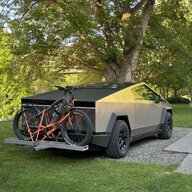
One thing I've been eager to do is add solar charging capability to the Cybertruck. First order of business here though is to set expectations because when people talk about solar powered cars, their expectations are often driven by sci-fi. The truth is, given the physics governing it (1kW/m^2 of solar radiation on earth) and current efficiencies (or even theoretical efficiencies) of solar panels (~20% real world), you are not going to get a lot of onboard solar energy to fully power or charge an EV on a practical level (although I'm a fan of what Aptera is doing). My use case is boondocking (extended remote camping). That means I'm willing to take time to set up the mobile solar power system on an infrequent basis, to get a few miles a day. Keep in mind this is my early prototype, more of a proof of concept. The plan is to develop a much more elegant solution with fold-out wings using better (CIGS) solar panels (painfully expensive).

If I use only enough solar panels to lay on the backside of the Cybertruck, I can get around 800W which comes to about 4kWh/day, which is about 12 miles/day if I drive slow. Not too bad IMO.

20241015_134050.jpg


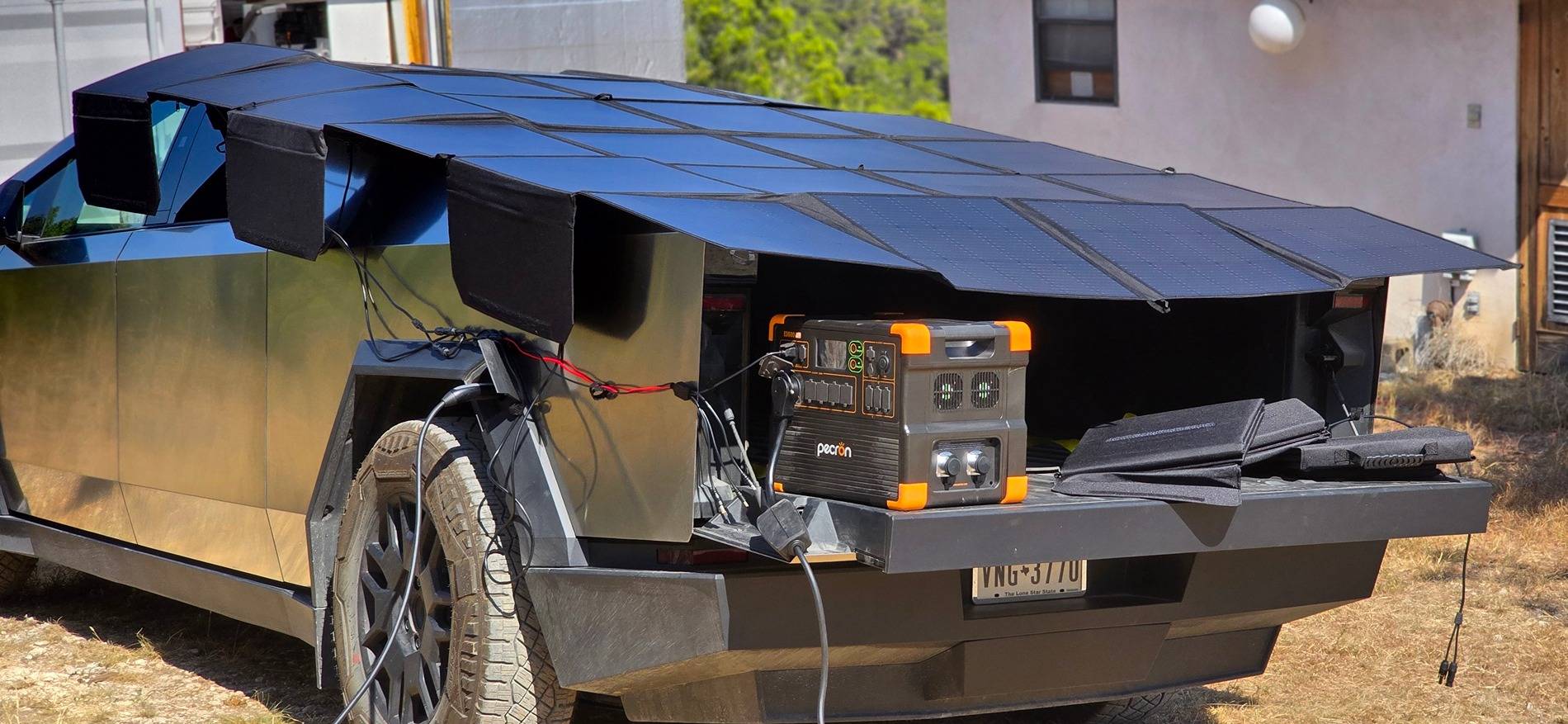
If I am willing to carry more panels and set up around the truck, I'm usually limited by the power my mobile "solar generator" can receive. In this case, I'm using a "solar generator" from Pecron which maxes out at 2550W. That translates to ~13kWh/day or about 40 miles/day.

20240805_105842.jpg


Solar charging currently isn't straightforward for EVs sadly. It gets more complicated so I'll type it up in detail at the bottom so as to not bore people who don't care about solarA lot.

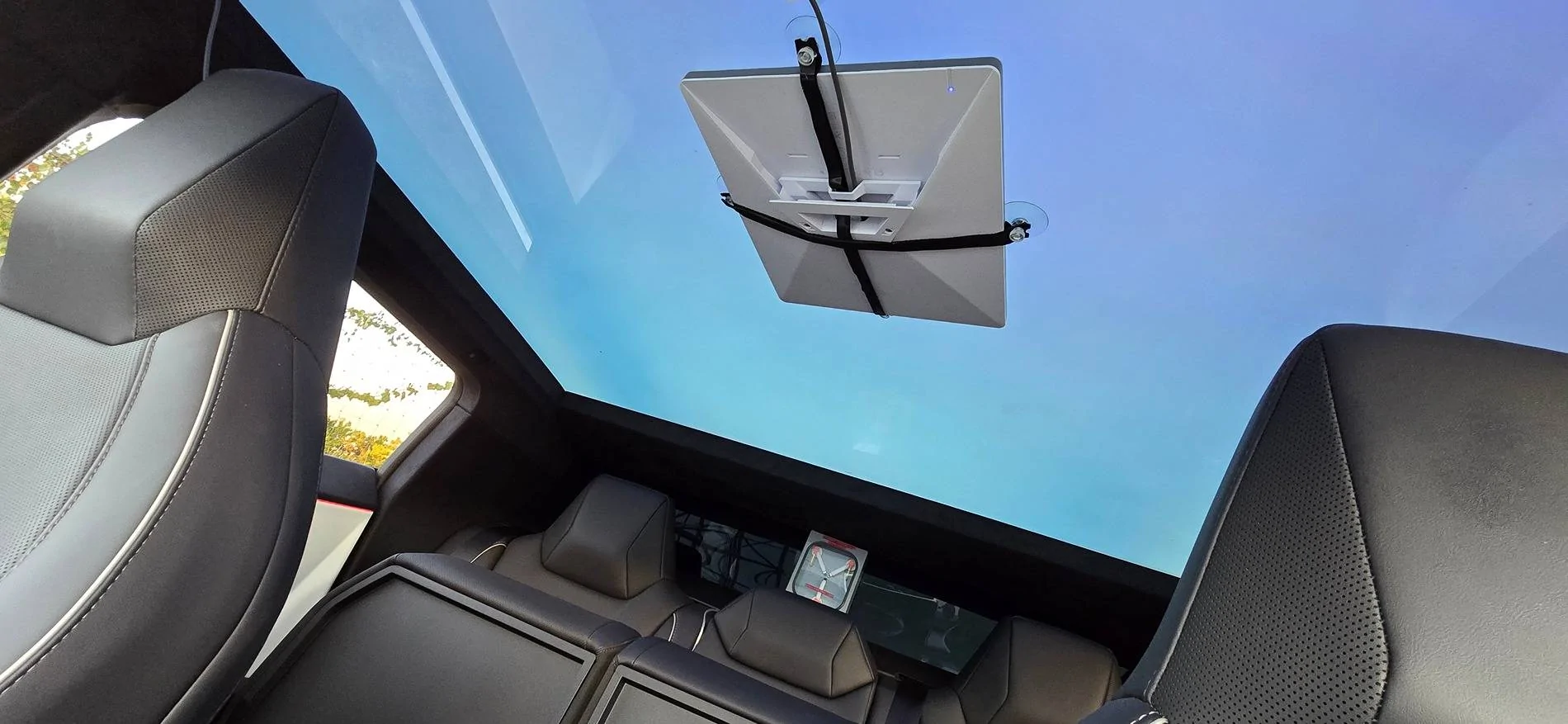
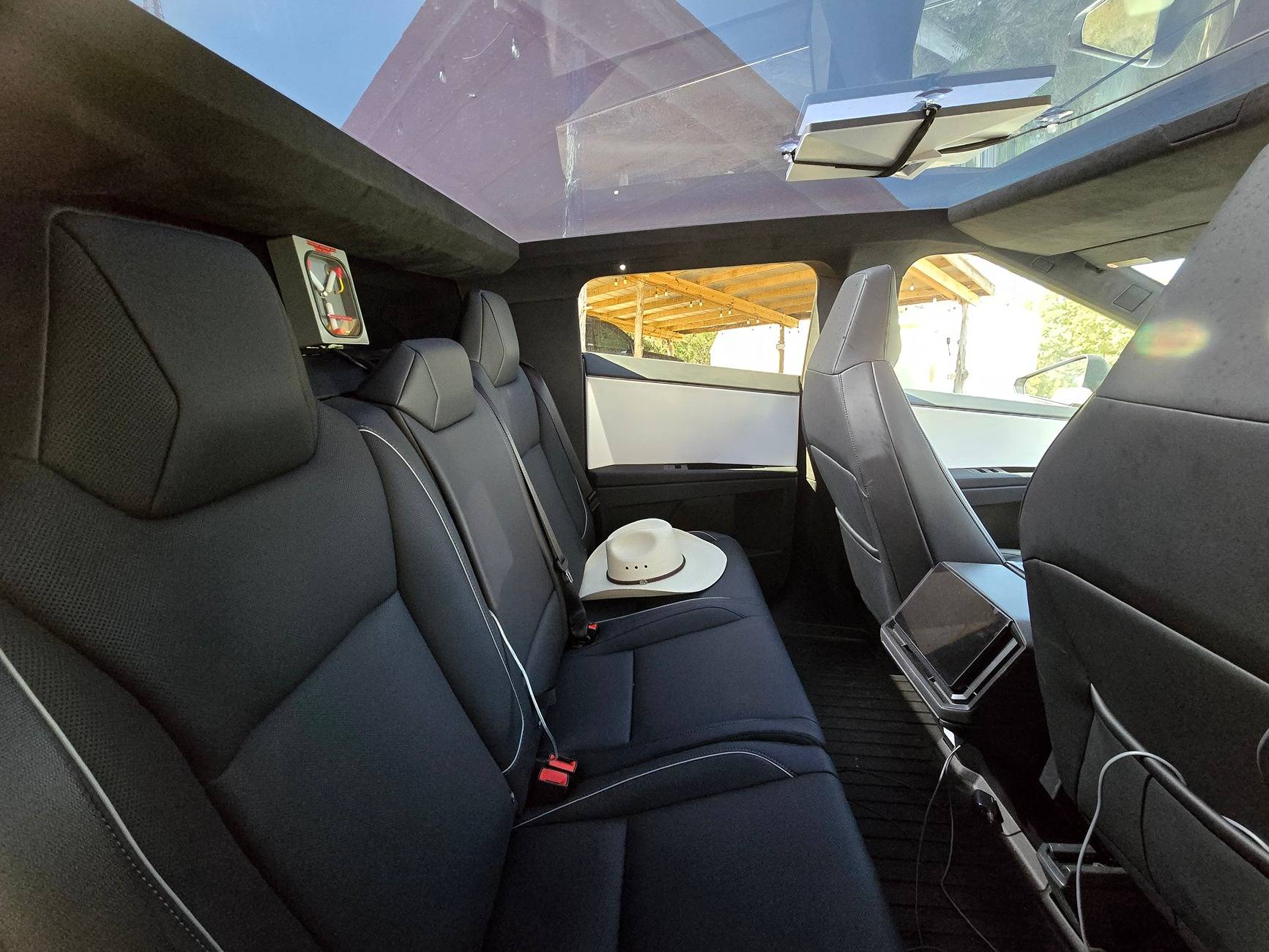
For the Starlink, nothing groundbreaking here. I paid extra for the mini, worth it for the integrated wifi and ability to backpack. Also people usually buy mounts which are ridiculously overpriced. I made my mount using velcro cable straps and suction cups from Temu, cost maybe $4, LOL. Works great. Flux capacitor from Amazon is in the back :cool:

20241009_183752.jpg


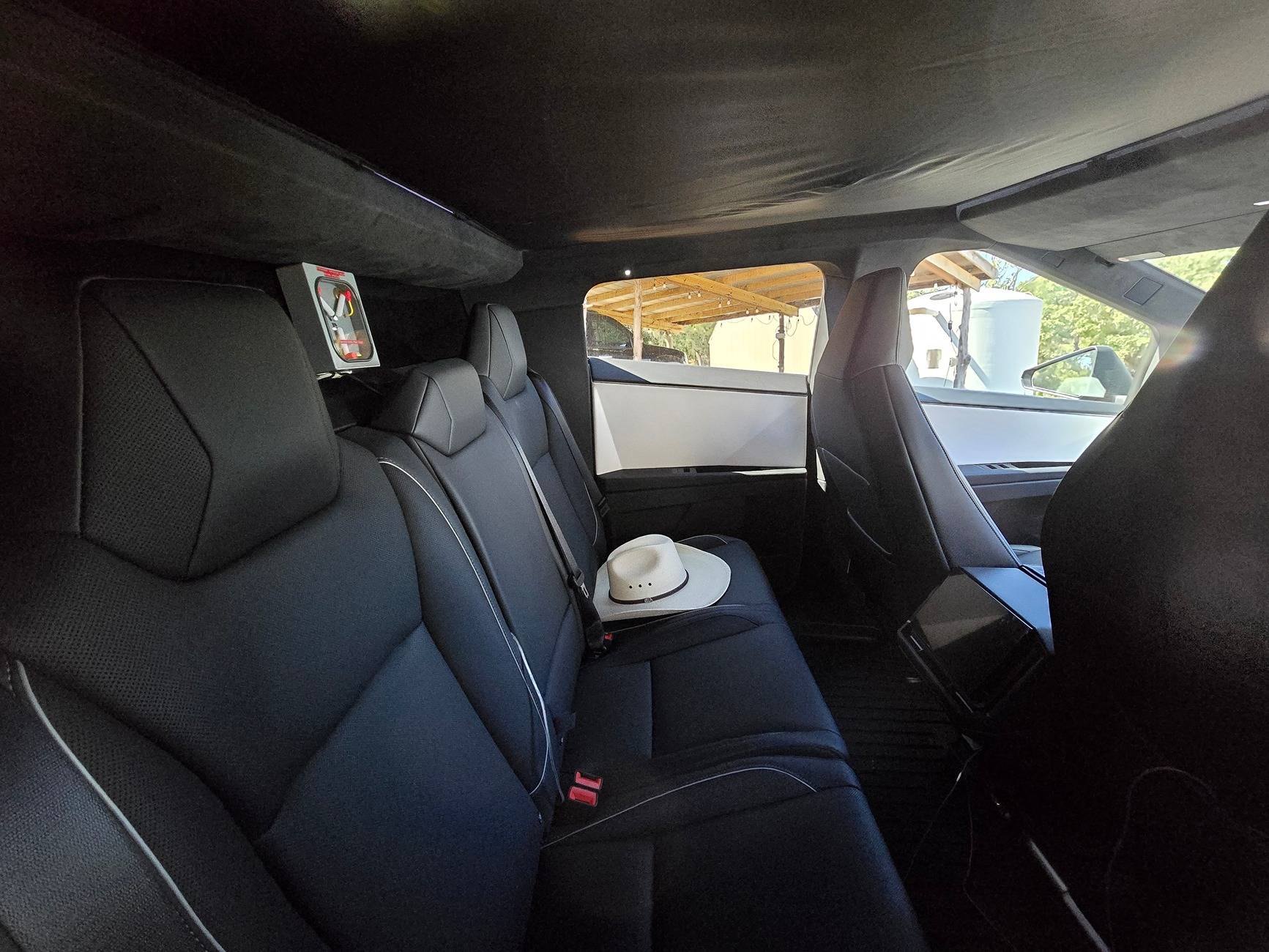
One concern though is as we all know, people are constantly peering into the CT. I wanted to hide the Starlink so used a BestEVMod roof shade which is 100% opaque (unlike the Tesla OEM shade).

20241015_131545.jpg
20241015_131921.jpg


For phone mounts, I really didn't want to mar my dash or permanently mess with the CT in any way. Then it hit me mounting to aftermarket organizers would make for a great solution. I have 2 magsafe chargers, one on the behind-the-screen organizer and the console organizer because in TX, sometimes the sun is so intense it will overheat your phone if it's on the dash so I move it to the console for shade. Organizers are from BestEVMod and work great. At first I was afraid the lip of the dash organizer would put dents into the dashboard but the contact is actually spread across a large area in the base so it's not an issue.

20241015_135413.jpg
20241015_135426.jpg


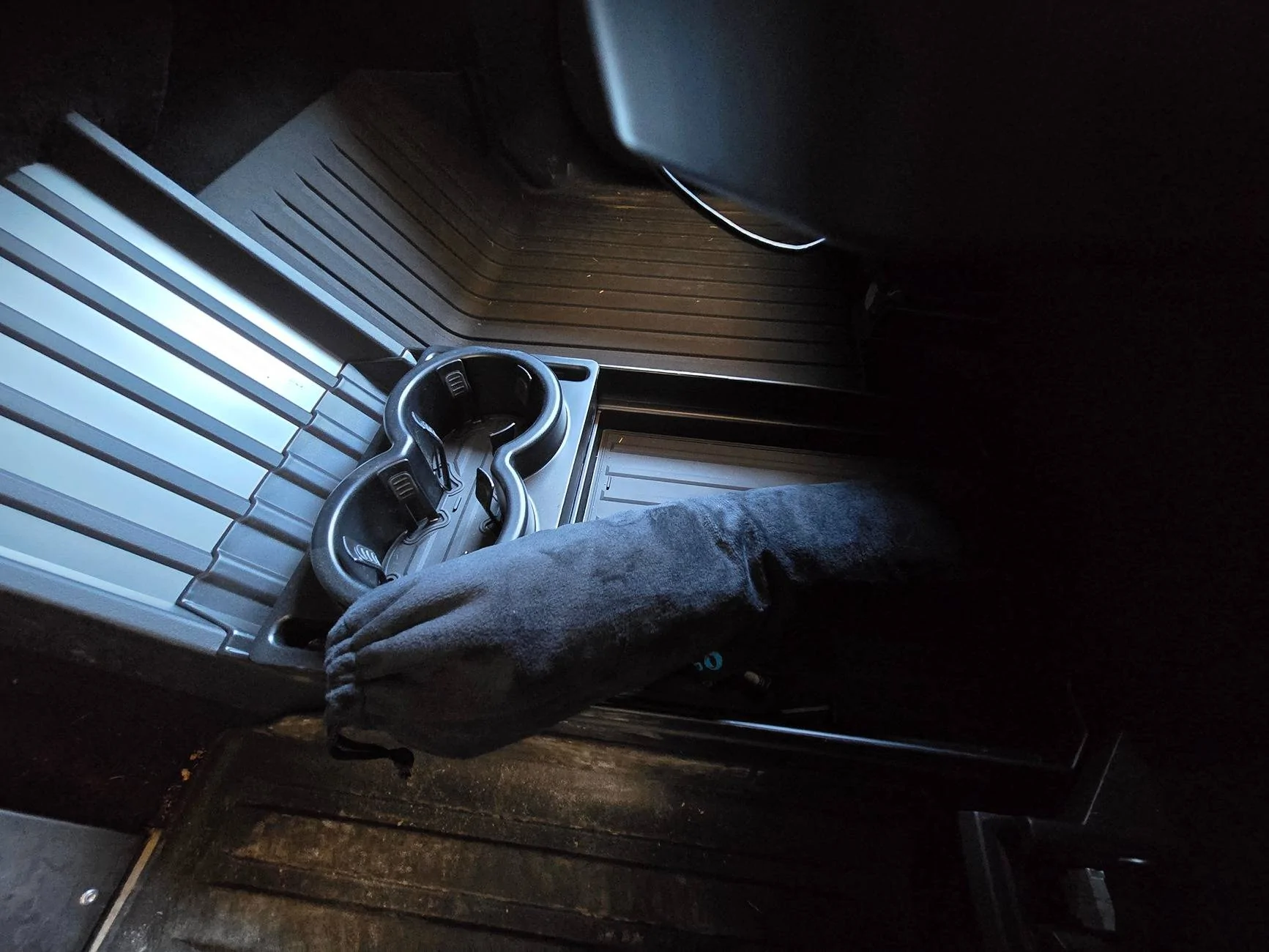
Speaking of the sun, as we all know the giant windshield turns the CT into a greenhouse. A lot of people complain about the umbrella type sun shades but I like them. Small enough collapsed to store in the center console. Just takes a little practice to get good at deploying it. My method is to get under the shade when it's partially open, point the long legs to the far corners of the windshield, and voila. Using the dash organizer is perfect with the umbrella shade, as it provides a spot for the rubber handle to rest against. Using BestEVMod here also for umbrella and consoles.

20241015_135527.jpg


Jumping back to solar for people wanting more detail.... Ideally, your EV would have a built in DC input for solar charging, and an onboard MPPT charger to directly and efficiently charge your DC batteries with DC solar input, but currently nobody does this. Therefore we have to take a convoluted path of Solar > Solar generator (DC in > charge controller > batteries > inverter) > Tesla Mobile Charger > Cybertruck. Hope Tesla changes this one day! Totally see why they don't, many would improperly wire up the panels but maybe with some current/voltage protection, it will make sense for the market. For now, we have to use "solar generators" as an intermediate step to condition and buffer the solar power for EV charging.

Complexity #1: Most solar generators won't work. I'm using the Pecron E3600LFP. I chose it because it is able to receive a lot of solar power (2550W) and output a lot in AC (3600W). Drawback with the Pecron is that the inverters are inefficient and consume 190W just idling. Don't try to small-med solar generators or power stations. You have to over-spec it because when the Tesla charger starts charging, if there is a large voltage drop, the charger will think your electrical system is overtaxed and stop for safety reasons. Smaller solar generators will typically not be able to maintain a consistent voltage during the initial surge and thus the Tesla charger will stop. I always set in the app to start charging at the minimum current (5A).

Complexity #2: Unless you go with gargantuan "solar generators" which you have to wheel around, you are limited to 110V. As most know, charging at 110V usually sucks. But it can suck less if you charge at 30A. This is especially important in my setup since if I am at peak solar power (~2550W), I want to balance the input and output since if the solar generator battery is full and I max out charging at 1600W (with a standard NEMA 5-15 plug), that excess solar power can't be used. However, the most common 30A plug is the NEMA TT-30 and is commonly found on largeish solar generators and RV parks. For reasons I don't understand, Tesla does not make a TT-30 adapter for the mobile charger so I bought the EVSE adapter.

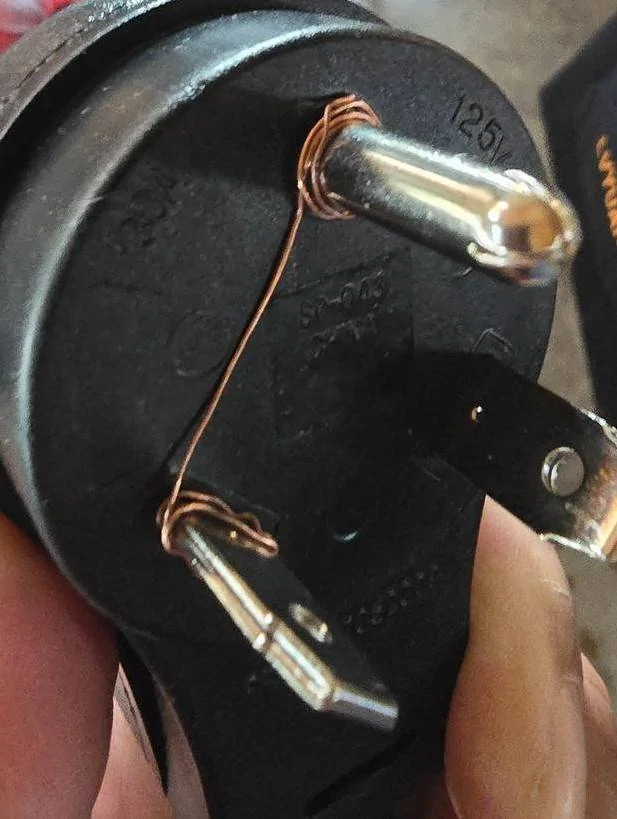
Complexity #3: The Tesla mobile charger is intelligent so it is looking to make sure your electrical outlet is properly wired. This means it's looking for the neutral line to be bonded with the ground. This would happen at the master panel if your house is wired properly. The problem is with "solar generators", there is no ground. Therefore you have to trick the charger into thinking there is a ground-neutral bond by running a wire between the 2 prongs. Make sure you get the prongs right and don't complain to me if you start a fireworks show! I use thin gauge wire just in case of a fault.

20241003_162158.jpg


As mentioned, this is a rough proof of concept for mobile solar charging. Will update here as I refine it to a more elegant solution!
I'd love to compare notes with you on this. I did the same thing with an Anker Solar Generator and 1200W of their folding panels. My goal was to have a system that could run at a trailhead while I hunted out of a backpack for the week. The challenge was to balance the charge rate such that the truck never fully drained the battery on the Anker. An issue with the Anker system is that once the battery on it dies even if the panels come up in full sun and bring it to 100%, the outlets on the unit have to be manually turned back on. SO I did some experiments to determine an average panel output with some margin, and programed a small automated light switch pusher to turn the outlets on at around 9 am and off around 8pm. At 5 amps charging this would give me in the neighborhood of 6KWH/day and, if nothing else, stay on top of phantom drain. (which was bad a the time I tried this in June), but also leave some overhead to keep the Anker Station alive.
The issue I ran into was that it appeared that during charging, the CT's BMS/charging system required more power than I was putting in. When I tried this for a day, the net result was a loss of ~5 kwh.
Maybe the recent updates that addressed phantom drain suggest I should revisit this.
 

zeke

Active member
First Name
Zeke
Joined
Mar 11, 2024
Threads
3
Messages
32
Reaction score
90
Location
New Hampshire
Vehicles
Model X Plaid, AWD Foundation Cybertruck
Occupation
Software Engineer
Country flag
@Cybertechnical first off, awesome writeup (the solar charging piece in particular). I think that given the current market of consumer grade hybrid inverters/battery banks, this is close to as good as one could get to decent off-grid charging. I definitely would have hoped a battery bank with a 240V AC output could work, but I think you're right about the limitations of the current devices available.

Now as you inevitably go deeper and come up with more custom solutions, I'm sure you'll start thinking through more creative solutions. I personally have been working with my local solar companies here in NH to solve this problem for off-grid EV charging solutions (hardwired) in places like hiking trail parking lots or remote mountainous locations were there is no electrical grid available.

As you said, the setup for a Tesla (which has no hybrid inverter capable of taking in direct solar DC power) is to use a battery bank capable of not only discharging at a decent enough rate that the mobile charger doesn't shut down, but also one that is able to charge at peak DC solar power rates upwards of 2kW.

Now, here me out. I've been following the more dedicated "off-grid solar battery" setup idea to solve the on-the-go camp charging problem. That is, a battery designed to take high amounts of DC solar power, discharge at high rates, all while being built specifically for this use case. So, a Powerwall.

If we could provision Powerwalls without Tesla's greedy micromanagement process, that would be all you'd need to replace your battery bank with the ultimate solar charging hardware. This is why the Powerwall (or similarly AC coupled batteries) are ideal, taking the Powerwall 3 as an example:
- relatively good form factor (flat), could be put up against the back of the CT and would allow the tonneau cover to close. It's less than 4 feet high, 2 feet wide so it fits perfectly
- heavy, at almost 300lbs, but that's similar to carrying 2 people with you, which honestly won't have much of an impact in range for a Cybertruck
- with its 6 MPPTs it has a whopping max solar input of 20kW, and can operate in an astoundingly large voltage range of 60V to almost 600V
- max capacity is pretty large as well, at 13.5kWh, but the point isn't to use the stored energy most of the time
- while it is only capable of discharging at 5kW, it would be doing so at 240V (20A) so the efficiency of is pretty good. It's capable of charging the car direct (without going through the battery) so you're looking at a reported 97.5% efficiency (and 89% if discharging the battery)
- locked rotor amperate (LRA) of upwards of 180A so you won't "trip" this or your mobile connector by charging at its max rate
- all in all, with it's 5kW discharge rate, you're looking at easily getting over 30kWh of solar to car energy, plus the 13.5kWh of stored energy. You'd need about 15 panels rated at 400W to get the max discharge rate, which would add another 500 pounds or so of weight. But even at half that, 8 panels, 300lbs, you're looking at 15kWh + 13.5kWh stored which is about 15% of range for the CT

Of course there are some issues with this setup, cost being high up there. But the reason I'm excited is that I can't be the only one thinking this way and call me crazy, but if there's at least 1 engineer over in the Cybertruck department that would like to solve this problem, I'd be willing to bet real money that they would design the range extender with dedicated mppts + solar input ports.

Otherwise, keep an eye out for refurbished, pre-provisioned Powerwalls!
 
OP
OP
Cybertechnical

Cybertechnical

Well-known member
First Name
Tommy
Joined
Jun 23, 2024
Threads
13
Messages
57
Reaction score
107
Location
Austin
Vehicles
AWD
Occupation
Consultant
Country flag
I have one of those on pre order. The good thing is that the Cybertruck can then be charged on DC, while supplying AC out to power an off grid Cabin, or whatever other power requirements you may have. This is less expensive than a large solar generator.
Looks promising, I'll probably jump on one if the reviews are good when they come out
 
OP
OP
Cybertechnical

Cybertechnical

Well-known member
First Name
Tommy
Joined
Jun 23, 2024
Threads
13
Messages
57
Reaction score
107
Location
Austin
Vehicles
AWD
Occupation
Consultant
Country flag
I'd love to compare notes with you on this. I did the same thing with an Anker Solar Generator and 1200W of their folding panels. My goal was to have a system that could run at a trailhead while I hunted out of a backpack for the week. The challenge was to balance the charge rate such that the truck never fully drained the battery on the Anker. An issue with the Anker system is that once the battery on it dies even if the panels come up in full sun and bring it to 100%, the outlets on the unit have to be manually turned back on. SO I did some experiments to determine an average panel output with some margin, and programed a small automated light switch pusher to turn the outlets on at around 9 am and off around 8pm. At 5 amps charging this would give me in the neighborhood of 6KWH/day and, if nothing else, stay on top of phantom drain. (which was bad a the time I tried this in June), but also leave some overhead to keep the Anker Station alive.
The issue I ran into was that it appeared that during charging, the CT's BMS/charging system required more power than I was putting in. When I tried this for a day, the net result was a loss of ~5 kwh.
Maybe the recent updates that addressed phantom drain suggest I should revisit this.
Yeah sadly, there is a lot of overhead both from the power station inverter side, and the CT charging side. Charging at 5A. 110V won't work well as you've shown. In my boondocking use case, my plan was to minimize overhead losses by minimizing charge time. Let the power station charge via solar up to 90%, then charge at max current until 10%, then repeat. Will only need to do this maybe 2x a day, but that might be a challenge if you're out backpacking in the woods.

I have Starlink on my CT and wifi on my power station. Was planning on testing remote start/stop of charging, but haven't tried it yet.

Have you thought about trying again? Phantom drain in my CT was like 4%/day w/o Sentry but is now 1% after an update in Aug.


OP
OP
Cybertechnical

Cybertechnical

Well-known member
First Name
Tommy
Joined
Jun 23, 2024
Threads
13
Messages
57
Reaction score
107
Location
Austin
Vehicles
AWD
Occupation
Consultant
Country flag
@Cybertechnical first off, awesome writeup (the solar charging piece in particular). I think that given the current market of consumer grade hybrid inverters/battery banks, this is close to as good as one could get to decent off-grid charging. I definitely would have hoped a battery bank with a 240V AC output could work, but I think you're right about the limitations of the current devices available.

Now as you inevitably go deeper and come up with more custom solutions, I'm sure you'll start thinking through more creative solutions. I personally have been working with my local solar companies here in NH to solve this problem for off-grid EV charging solutions (hardwired) in places like hiking trail parking lots or remote mountainous locations were there is no electrical grid available.

As you said, the setup for a Tesla (which has no hybrid inverter capable of taking in direct solar DC power) is to use a battery bank capable of not only discharging at a decent enough rate that the mobile charger doesn't shut down, but also one that is able to charge at peak DC solar power rates upwards of 2kW.

Now, here me out. I've been following the more dedicated "off-grid solar battery" setup idea to solve the on-the-go camp charging problem. That is, a battery designed to take high amounts of DC solar power, discharge at high rates, all while being built specifically for this use case. So, a Powerwall.

If we could provision Powerwalls without Tesla's greedy micromanagement process, that would be all you'd need to replace your battery bank with the ultimate solar charging hardware. This is why the Powerwall (or similarly AC coupled batteries) are ideal, taking the Powerwall 3 as an example:
- relatively good form factor (flat), could be put up against the back of the CT and would allow the tonneau cover to close. It's less than 4 feet high, 2 feet wide so it fits perfectly
- heavy, at almost 300lbs, but that's similar to carrying 2 people with you, which honestly won't have much of an impact in range for a Cybertruck
- with its 6 MPPTs it has a whopping max solar input of 20kW, and can operate in an astoundingly large voltage range of 60V to almost 600V
- max capacity is pretty large as well, at 13.5kWh, but the point isn't to use the stored energy most of the time
- while it is only capable of discharging at 5kW, it would be doing so at 240V (20A) so the efficiency of is pretty good. It's capable of charging the car direct (without going through the battery) so you're looking at a reported 97.5% efficiency (and 89% if discharging the battery)
- locked rotor amperate (LRA) of upwards of 180A so you won't "trip" this or your mobile connector by charging at its max rate
- all in all, with it's 5kW discharge rate, you're looking at easily getting over 30kWh of solar to car energy, plus the 13.5kWh of stored energy. You'd need about 15 panels rated at 400W to get the max discharge rate, which would add another 500 pounds or so of weight. But even at half that, 8 panels, 300lbs, you're looking at 15kWh + 13.5kWh stored which is about 15% of range for the CT

Of course there are some issues with this setup, cost being high up there. But the reason I'm excited is that I can't be the only one thinking this way and call me crazy, but if there's at least 1 engineer over in the Cybertruck department that would like to solve this problem, I'd be willing to bet real money that they would design the range extender with dedicated mppts + solar input ports.

Otherwise, keep an eye out for refurbished, pre-provisioned Powerwalls!
Thanks, I like that idea. And if you want the range extender which is delayed again, this is not a bad alternative.

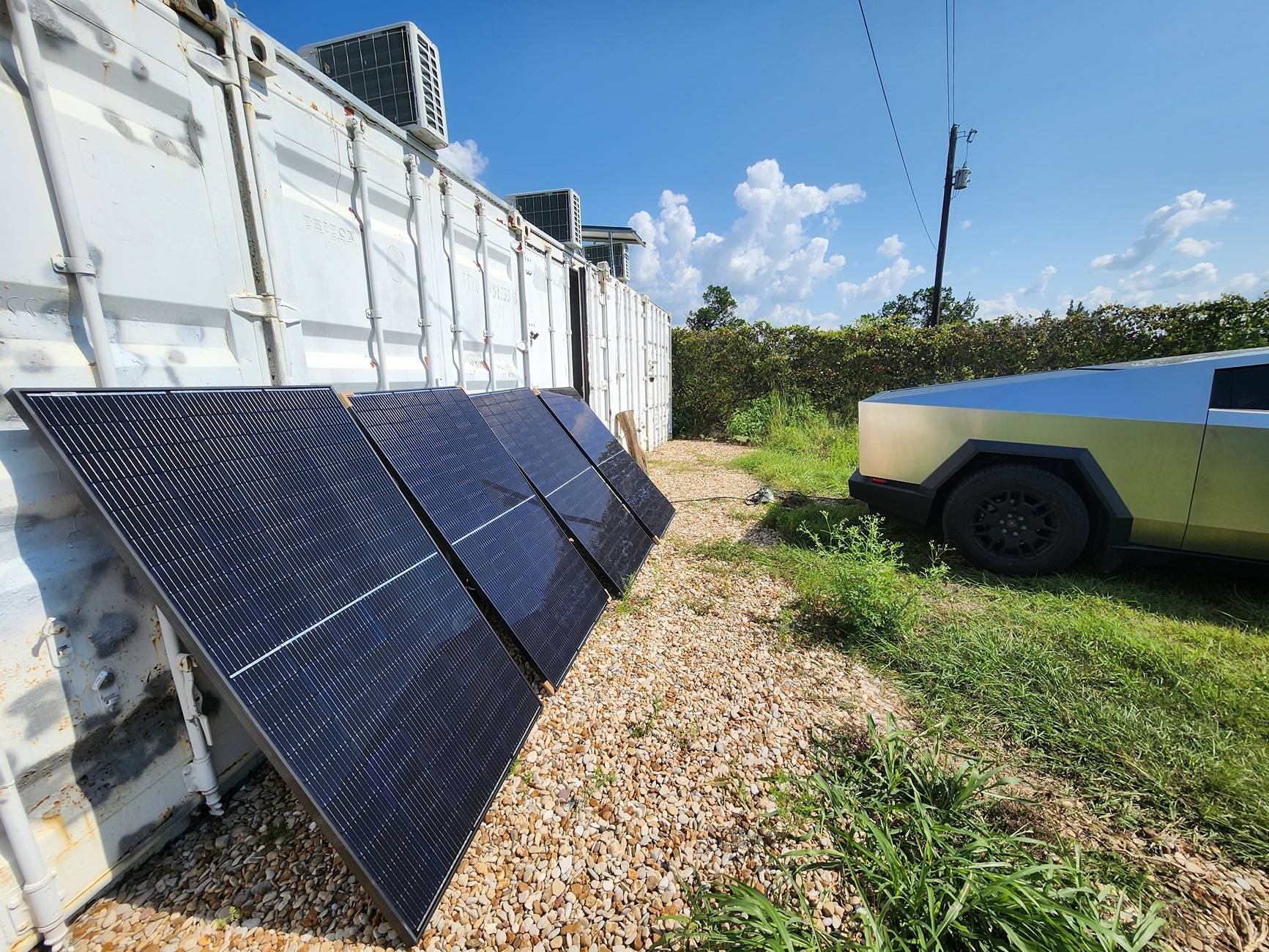
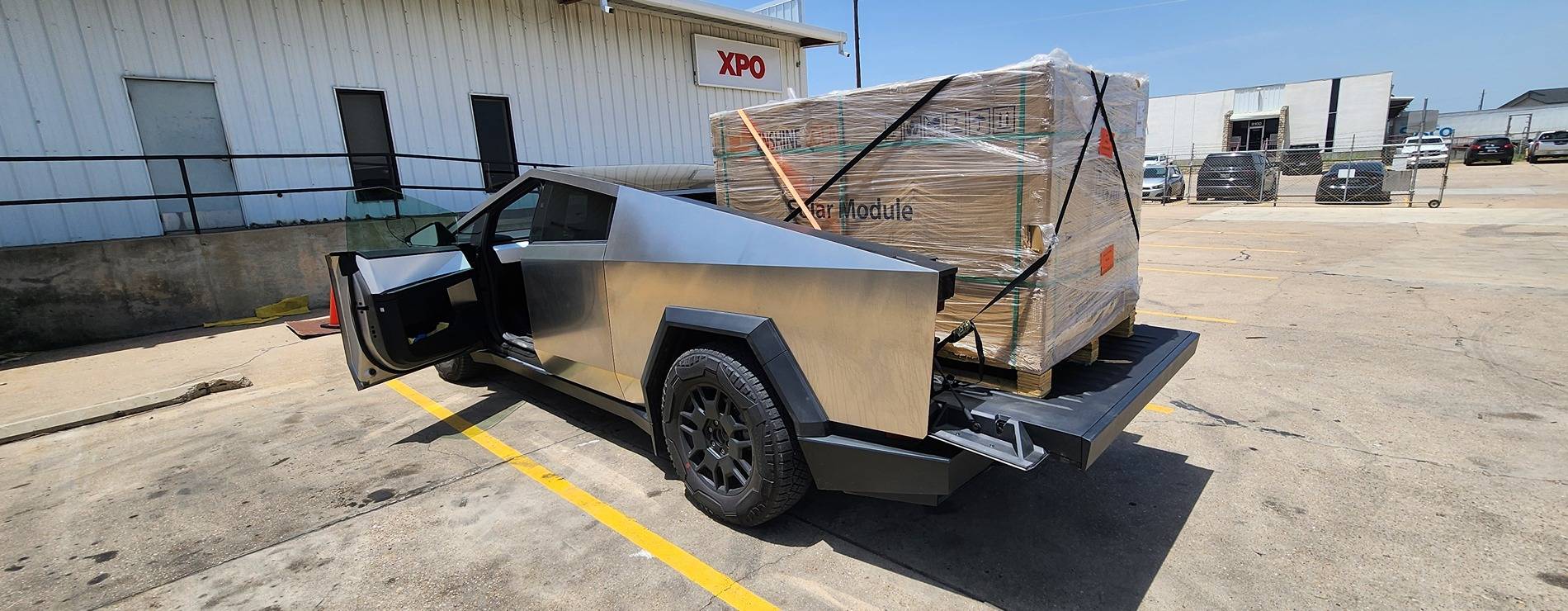
For my use case, I don't see carrying more than 3-4kW of panels max. I've hauled 31 370W panels and this was like 1600lbs with them all bundled on a pallet. I'll be using this for my home charging.

Tesla Cybertruck Homemade mobile solar charging panels, Starlink, & other mods on my Cybertruck 20240801_140057


However if you are doing a major overlanding trip or hurricane rescue, etc... I think what you are describing is a good solution.

Another option is you can get 2 of the power stations I'm using (E3600LFP). Part of the reason I chose it is I may go down this route. Here you can do 240V, 7200W total output, 5100W solar input, and 6kWh of capacity. They weigh only 80lbs each and are small enough to be placed anywhere with is a big plus.
 

BoiseCT

Well-known member
First Name
Jon
Joined
Dec 25, 2023
Threads
1
Messages
84
Reaction score
100
Location
Boise, ID
Vehicles
2023 Model Y, 2024 CyberBeast
Occupation
Engineer
Country flag
Yeah sadly, there is a lot of overhead both from the power station inverter side, and the CT charging side. Charging at 5A. 110V won't work well as you've shown. In my boondocking use case, my plan was to minimize overhead losses by minimizing charge time. Let the power station charge via solar up to 90%, then charge at max current until 10%, then repeat. Will only need to do this maybe 2x a day, but that might be a challenge if you're out backpacking in the woods.

I have Starlink on my CT and wifi on my power station. Was planning on testing remote start/stop of charging, but haven't tried it yet.

Have you thought about trying again? Phantom drain in my CT was like 4%/day w/o Sentry but is now 1% after an update in Aug.
Yeah, I'd like to try again since the update, but the days are getting pretty short here again. I wonder if the API for the Anker would allow for something like an external Arduino control, where the Arduino monitors the Anker battery condition and controls the outlet power accordingly. Were you able to get 30 amps from the TT-30 at 110V?
 
OP
OP
Cybertechnical

Cybertechnical

Well-known member
First Name
Tommy
Joined
Jun 23, 2024
Threads
13
Messages
57
Reaction score
107
Location
Austin
Vehicles
AWD
Occupation
Consultant
Country flag
Yeah, I'd like to try again since the update, but the days are getting pretty short here again. I wonder if the API for the Anker would allow for something like an external Arduino control, where the Arduino monitors the Anker battery condition and controls the outlet power accordingly. Were you able to get 30 amps from the TT-30 at 110V?
That would be really cool if you built that out, please keep us posted if you do.

Yep was pulling 30A no problem. Tesla mobile charger had no complaints.

Edit: Just to clarify, was pulling 30A with a modified NEMA 14-50 adapter, using the EVSE TT30 adapter, it's limited to 24A.
 
Last edited:

TheMachinewon

Banned
Well-known member
Banned
First Name
Peter
Joined
Aug 8, 2023
Threads
0
Messages
103
Reaction score
93
Location
Red Bank NJ
Vehicles
Cyber truck , Model 3 Tesla's rav4
Occupation
Pilot
Country flag
@Cybertechnical first off, awesome writeup (the solar charging piece in particular). I think that given the current market of consumer grade hybrid inverters/battery banks, this is close to as good as one could get to decent off-grid charging. I definitely would have hoped a battery bank with a 240V AC output could work, but I think you're right about the limitations of the current devices available.

Now as you inevitably go deeper and come up with more custom solutions, I'm sure you'll start thinking through more creative solutions. I personally have been working with my local solar companies here in NH to solve this problem for off-grid EV charging solutions (hardwired) in places like hiking trail parking lots or remote mountainous locations were there is no electrical grid available.

As you said, the setup for a Tesla (which has no hybrid inverter capable of taking in direct solar DC power) is to use a battery bank capable of not only discharging at a decent enough rate that the mobile charger doesn't shut down, but also one that is able to charge at peak DC solar power rates upwards of 2kW.

Now, here me out. I've been following the more dedicated "off-grid solar battery" setup idea to solve the on-the-go camp charging problem. That is, a battery designed to take high amounts of DC solar power, discharge at high rates, all while being built specifically for this use case. So, a Powerwall.

If we could provision Powerwalls without Tesla's greedy micromanagement process, that would be all you'd need to replace your battery bank with the ultimate solar charging hardware. This is why the Powerwall (or similarly AC coupled batteries) are ideal, taking the Powerwall 3 as an example:
- relatively good form factor (flat), could be put up against the back of the CT and would allow the tonneau cover to close. It's less than 4 feet high, 2 feet wide so it fits perfectly
- heavy, at almost 300lbs, but that's similar to carrying 2 people with you, which honestly won't have much of an impact in range for a Cybertruck
- with its 6 MPPTs it has a whopping max solar input of 20kW, and can operate in an astoundingly large voltage range of 60V to almost 600V
- max capacity is pretty large as well, at 13.5kWh, but the point isn't to use the stored energy most of the time
- while it is only capable of discharging at 5kW, it would be doing so at 240V (20A) so the efficiency of is pretty good. It's capable of charging the car direct (without going through the battery) so you're looking at a reported 97.5% efficiency (and 89% if discharging the battery)
- locked rotor amperate (LRA) of upwards of 180A so you won't "trip" this or your mobile connector by charging at its max rate
- all in all, with it's 5kW discharge rate, you're looking at easily getting over 30kWh of solar to car energy, plus the 13.5kWh of stored energy. You'd need about 15 panels rated at 400W to get the max discharge rate, which would add another 500 pounds or so of weight. But even at half that, 8 panels, 300lbs, you're looking at 15kWh + 13.5kWh stored which is about 15% of range for the CT

Of course there are some issues with this setup, cost being high up there. But the reason I'm excited is that I can't be the only one thinking this way and call me crazy, but if there's at least 1 engineer over in the Cybertruck department that would like to solve this problem, I'd be willing to bet real money that they would design the range extender with dedicated mppts + solar input ports.

Otherwise, keep an eye out for refurbished, pre-provisioned Powerwalls!
I'm on your team with that. 3 x435watt panels with micro inverters, to feed the powerwall with AC and have the AC output from P-Walls charge the truck. I know those wizards can do it.
 

TheMachinewon

Banned
Well-known member
Banned
First Name
Peter
Joined
Aug 8, 2023
Threads
0
Messages
103
Reaction score
93
Location
Red Bank NJ
Vehicles
Cyber truck , Model 3 Tesla's rav4
Occupation
Pilot
Country flag
Thanks, I like that idea. And if you want the range extender which is delayed again, this is not a bad alternative.

For my use case, I don't see carrying more than 3-4kW of panels max. I've hauled 31 370W panels and this was like 1600lbs with them all bundled on a pallet. I'll be using this for my home charging.

20240801_140057.jpg


However if you are doing a major overlanding trip or hurricane rescue, etc... I think what you are describing is a good solution.

Another option is you can get 2 of the power stations I'm using (E3600LFP). Part of the reason I chose it is I may go down this route. Here you can do 240V, 7200W total output, 5100W solar input, and 6kWh of capacity. They weigh only 80lbs each and are small enough to be placed anywhere with is a big plus.
I just installed 15 -420's maxeon's 6.3 on a awning I built, now running 3 full electric cars, wife and kids are chewing up 26,000 Kw's a year. My next move is to sell off my 315's and up grade to 435's with micro inverters...maybe its time to mount panels to my wind turbine tower.


OP
OP
Cybertechnical

Cybertechnical

Well-known member
First Name
Tommy
Joined
Jun 23, 2024
Threads
13
Messages
57
Reaction score
107
Location
Austin
Vehicles
AWD
Occupation
Consultant
Country flag
I just installed 15 -420's maxeon's 6.3 on a awning I built, now running 3 full electric cars, wife and kids are chewing up 26,000 Kw's a year. My next move is to sell off my 315's and up grade to 435's with micro inverters...maybe its time to mount panels to my wind turbine tower.
What wind turbine do you have? How well does it work?
 

Woodrick

Well-known member
First Name
Ed
Joined
Dec 30, 2023
Threads
6
Messages
4,786
Reaction score
4,762
Location
Gainesville Ga
Vehicles
Model 3, Model Y, Cybertruck AWD
Occupation
Consultant
Country flag
For those that really want to accomplish this, let me outline some of the factors that work against you.

For the Cybertruck, 120V 15A charging represents 1-2 miles per hour. But that's with 24x7 power.

The reason that the 24x7 is important it the cycling that can occur on the charger port. For a basic example, a cloud passes over.
What happens to your solution when a cloud passes over, does it reduce the voltage to the vehicle or does it just turn off (no battery case)?
If it reduces the voltage, then the Tesla will see it and roll back the charging current until you roll it back up. At 120V 15A, that's deadly.
If it turns off the power, then that's better, but you just woke the truck up from sleep and vampire charge current is going to go up and you may get less mph. And the A/C may kick on.

Now, if you add a battery, it sounds as if it solves the issue, it just moves them. As @BoiseCT indicated, in real life, some other factors popup with batteries.
So if you start with a full battery, life is good.
But what happens when a cloud passes over? It switches to the battery and you lose power from the battery. Is the solar solution big enough to charge the truck and the battery, i.e. 2400W+?
If not, then the battery eventually dies. On cloudy days, this may only take a few hours.
BTW, where is your truck? Out in the boiling sun are under some shade? Because the trees and nearby mountains decrease the amount of full-power charging time that you have, assuming that the panels were oriented in the right direction with the right tilt to begin with.

But after the battery drains, what happens? In @BoiseCT case, that was it. But let's say the battery takes some charge and turns back on. When did it turn back on? 10%? That means it won't take many clouds to kill it again.

What you end up with is a LOT of turn on / turn off events. And anytime that you get one of them, you may need to charge for 30 minutes to catchup what you lost!!!

Battery cycling kills you.

So how do you mitigate the battery cycling? Bigger batteries. How big is big enough? 150 kWh may be the answer. 75 kWh may be the answer. It depends is the answer.

But 6 kWh isn't enough. It's ends up being at least 1200 kW for the duration of your absence. Gone for 5 days? That's a 144 kWh battery!!! Which is bigger than the trucks.

How do you reduce the need? Don't charge the truck. I know, not the goal, but the draw when the vehicle is not charging is really low. At 120V 15A, the vast majority of the charging is burned up doing nothing!!!

To fix this problem, increase to 240V, preferably 32A. That's represents the fastest charging to the set charge point for the vehicle and is generally up to about 6 hours. Let it charge and then go to sleep.

At 120V and 1-2 mph, it will take the week to charge it back to your 80% (or whatever number).


And that's why I asked my question, what is the real long time charging solution? So far there's a gentleman that carries over 30 kWh of batteries and panels with him and he has shown some success.

A 6 kW Anker pack, that's about 15 miles.
 
OP
OP
Cybertechnical

Cybertechnical

Well-known member
First Name
Tommy
Joined
Jun 23, 2024
Threads
13
Messages
57
Reaction score
107
Location
Austin
Vehicles
AWD
Occupation
Consultant
Country flag
For those that really want to accomplish this, let me outline some of the factors that work against you.

For the Cybertruck, 120V 15A charging represents 1-2 miles per hour. But that's with 24x7 power.

The reason that the 24x7 is important it the cycling that can occur on the charger port. For a basic example, a cloud passes over.
What happens to your solution when a cloud passes over, does it reduce the voltage to the vehicle or does it just turn off (no battery case)?
If it reduces the voltage, then the Tesla will see it and roll back the charging current until you roll it back up. At 120V 15A, that's deadly.
If it turns off the power, then that's better, but you just woke the truck up from sleep and vampire charge current is going to go up and you may get less mph. And the A/C may kick on.

Now, if you add a battery, it sounds as if it solves the issue, it just moves them. As @BoiseCT indicated, in real life, some other factors popup with batteries.
So if you start with a full battery, life is good.
But what happens when a cloud passes over? It switches to the battery and you lose power from the battery. Is the solar solution big enough to charge the truck and the battery, i.e. 2400W+?
If not, then the battery eventually dies. On cloudy days, this may only take a few hours.
BTW, where is your truck? Out in the boiling sun are under some shade? Because the trees and nearby mountains decrease the amount of full-power charging time that you have, assuming that the panels were oriented in the right direction with the right tilt to begin with.

But after the battery drains, what happens? In @BoiseCT case, that was it. But let's say the battery takes some charge and turns back on. When did it turn back on? 10%? That means it won't take many clouds to kill it again.

What you end up with is a LOT of turn on / turn off events. And anytime that you get one of them, you may need to charge for 30 minutes to catchup what you lost!!!

Battery cycling kills you.

So how do you mitigate the battery cycling? Bigger batteries. How big is big enough? 150 kWh may be the answer. 75 kWh may be the answer. It depends is the answer.

But 6 kWh isn't enough. It's ends up being at least 1200 kW for the duration of your absence. Gone for 5 days? That's a 144 kWh battery!!! Which is bigger than the trucks.

How do you reduce the need? Don't charge the truck. I know, not the goal, but the draw when the vehicle is not charging is really low. At 120V 15A, the vast majority of the charging is burned up doing nothing!!!

To fix this problem, increase to 240V, preferably 32A. That's represents the fastest charging to the set charge point for the vehicle and is generally up to about 6 hours. Let it charge and then go to sleep.

At 120V and 1-2 mph, it will take the week to charge it back to your 80% (or whatever number).


And that's why I asked my question, what is the real long time charging solution? So far there's a gentleman that carries over 30 kWh of batteries and panels with him and he has shown some success.

A 6 kW Anker pack, that's about 15 miles.
Ummm all your points have not only been addressed but called out in the OP. Some people create, some are reply guys who got no life so they do what you do.
 

TheMachinewon

Banned
Well-known member
Banned
First Name
Peter
Joined
Aug 8, 2023
Threads
0
Messages
103
Reaction score
93
Location
Red Bank NJ
Vehicles
Cyber truck , Model 3 Tesla's rav4
Occupation
Pilot
Country flag
What wind turbine do you have? How well does it work?
It’s only a 1500watt HyE-1500L. 54 ft up , need some serious help programing the aurora inverter.
What wind turbine do you have? How well does it work?
HYE-1500, Not worth the money,, Stay with Solar,,,this HWT in NJ, average wind speed is only 13kts. I dumped about 12k putting that up in the air, I did all the welding & wiring. I did the complete install. The amount of wind here sucks. It produced 100kws in a year so far. pay back is in another 40 years. ROI. I did it, just to have one..Call me crazy,,but it's cool having one. Kids love climbing the tower. Worth every cent.
 
OP
OP
Cybertechnical

Cybertechnical

Well-known member
First Name
Tommy
Joined
Jun 23, 2024
Threads
13
Messages
57
Reaction score
107
Location
Austin
Vehicles
AWD
Occupation
Consultant
Country flag
It’s only a 1500watt HyE-1500L. 54 ft up , need some serious help programing the aurora inverter.

HYE-1500, Not worth the money,, Stay with Solar,,,this HWT in NJ, average wind speed is only 13kts. I dumped about 12k putting that up in the air, I did all the welding & wiring. I did the complete install. The amount of wind here sucks. It produced 100kws in a year so far. pay back is in another 40 years. ROI. I did it, just to have one..Call me crazy,,but it's cool having one. Kids love climbing the tower. Worth every cent.
Thanks for that info. Almost every review I've read for consumer grade wind turbines was negative. At least you kids are getting value out of it, lol
Sponsored


Top