jpend
Well-known member
- First Name
- Jeff
- Joined
- Jan 15, 2024
- Threads
- 8
- Messages
- 67
- Reaction score
- 105
- Location
- Georgia
- Vehicles
- CT

- Thread starter
- #1
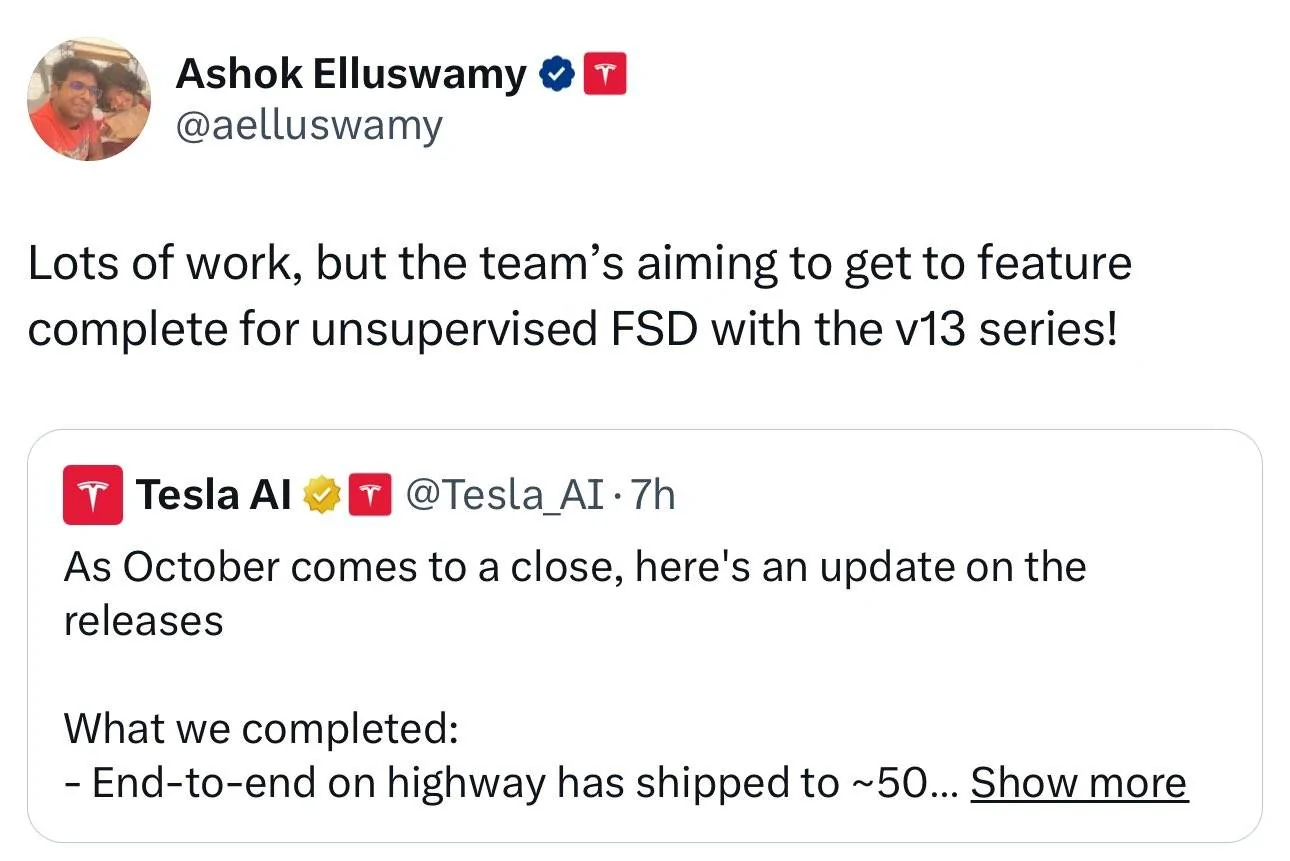
Here's a breakdown of the Tesla FSD V13 upgrades in simple terms:
1. **36 Hz, full-resolution AI4 video inputs** -
—Imagine your car's eyes (cameras) can now see much faster and clearer than before. Instead of taking a picture every few seconds, they're now taking 36 pictures every second. This helps the car understand what's happening around it more quickly and accurately.
2. **Native AI4 inputs and neural network architectures** -
—The car's brain (AI system) now speaks the same language as its new eyes (AI4 cameras). This means the brain can understand what it sees more naturally without needing translations, making the car's reactions smoother and more precise.
3. **3x model size scaling** -
—Think of the car's brain as a library. This upgrade means we've added three times more books to this library. More books (data) mean the car can learn and remember more about how to drive safely and efficiently.
4. **3x model context length scaling** -
—Now, not only does the car have more books, but each book is three times longer. This means when the car looks at something, it can remember what it saw much longer ago, helping it make better decisions based on more history.
5. **4.2x data scaling** -
—The car has been given a lot more homework! It has four times more examples to learn from, making it smarter at handling different driving situations.
6. **5x training compute scaling (enabled by the Cortex training cluster)** -
—Imagine the car's brain now has a supercomputer to teach it. This computer works five times faster than before, so the car learns its lessons much quicker.
7. **Much improved reward predictions for collision avoidance, following traffic controls, navigation, etc.** -
—The car now gets better at guessing what will make a good or bad outcome. It's like playing a game where you learn how to score points (good driving) and avoid penalties (accidents or traffic violations).
8. **Efficient representation of maps and navigation inputs** -
—The car now understands maps like you understand your neighborhood. It can find its way and know what's coming up ahead much more efficiently.
9. **Audio inputs for better handling of emergency vehicles** -
—Now, the car can hear sirens too. If there's an ambulance or fire truck coming, it knows to make way for them, just like you would.
10. **Redesigned controller for smoother, more accurate tracking** -
—The car's steering, braking, and accelerating are now like having a very smooth, highly skilled driver. It can follow the road's path more accurately and comfortably.
11. **Integrated unpark, reverse, and park capabilities** -
—The car can now do a three-point turn, back into a parking spot, or even park itself without your help, making parking much easier for you.
12. **Support for destination options including pulling over, parking in a spot, driveway, or garage** -
—When you tell your car where to go, it can now decide how to get there in the best way possible, whether that means pulling over, finding a parking spot, or driving into your garage.
13. **Improved camera cleaning and handling of camera occlusions** -
—If something like rain, mud, or a leaf covers the car's cameras, it now knows better how to clean them or work around the problem, keeping its vision clear.
These upgrades collectively make the car's AI system more capable, more aware, and more responsive to the driving environment, aiming to enhance safety and convenience for users.
1. **36 Hz, full-resolution AI4 video inputs** -
—Imagine your car's eyes (cameras) can now see much faster and clearer than before. Instead of taking a picture every few seconds, they're now taking 36 pictures every second. This helps the car understand what's happening around it more quickly and accurately.
2. **Native AI4 inputs and neural network architectures** -
—The car's brain (AI system) now speaks the same language as its new eyes (AI4 cameras). This means the brain can understand what it sees more naturally without needing translations, making the car's reactions smoother and more precise.
3. **3x model size scaling** -
—Think of the car's brain as a library. This upgrade means we've added three times more books to this library. More books (data) mean the car can learn and remember more about how to drive safely and efficiently.
4. **3x model context length scaling** -
—Now, not only does the car have more books, but each book is three times longer. This means when the car looks at something, it can remember what it saw much longer ago, helping it make better decisions based on more history.
5. **4.2x data scaling** -
—The car has been given a lot more homework! It has four times more examples to learn from, making it smarter at handling different driving situations.
6. **5x training compute scaling (enabled by the Cortex training cluster)** -
—Imagine the car's brain now has a supercomputer to teach it. This computer works five times faster than before, so the car learns its lessons much quicker.
7. **Much improved reward predictions for collision avoidance, following traffic controls, navigation, etc.** -
—The car now gets better at guessing what will make a good or bad outcome. It's like playing a game where you learn how to score points (good driving) and avoid penalties (accidents or traffic violations).
8. **Efficient representation of maps and navigation inputs** -
—The car now understands maps like you understand your neighborhood. It can find its way and know what's coming up ahead much more efficiently.
9. **Audio inputs for better handling of emergency vehicles** -
—Now, the car can hear sirens too. If there's an ambulance or fire truck coming, it knows to make way for them, just like you would.
10. **Redesigned controller for smoother, more accurate tracking** -
—The car's steering, braking, and accelerating are now like having a very smooth, highly skilled driver. It can follow the road's path more accurately and comfortably.
11. **Integrated unpark, reverse, and park capabilities** -
—The car can now do a three-point turn, back into a parking spot, or even park itself without your help, making parking much easier for you.
12. **Support for destination options including pulling over, parking in a spot, driveway, or garage** -
—When you tell your car where to go, it can now decide how to get there in the best way possible, whether that means pulling over, finding a parking spot, or driving into your garage.
13. **Improved camera cleaning and handling of camera occlusions** -
—If something like rain, mud, or a leaf covers the car's cameras, it now knows better how to clean them or work around the problem, keeping its vision clear.
These upgrades collectively make the car's AI system more capable, more aware, and more responsive to the driving environment, aiming to enhance safety and convenience for users.
Sponsored