
Sponsored

Anyone concerned about the sunlight and heat build up under the large windshield surface?

CyberC

Well-known member
Joined
Nov 17, 2022
Threads
2
Messages
84
Reaction score
268
Location
Texas
Vehicles
2020 Model X LR+, 2021 Model Y P
Occupation
Legal
Country flag
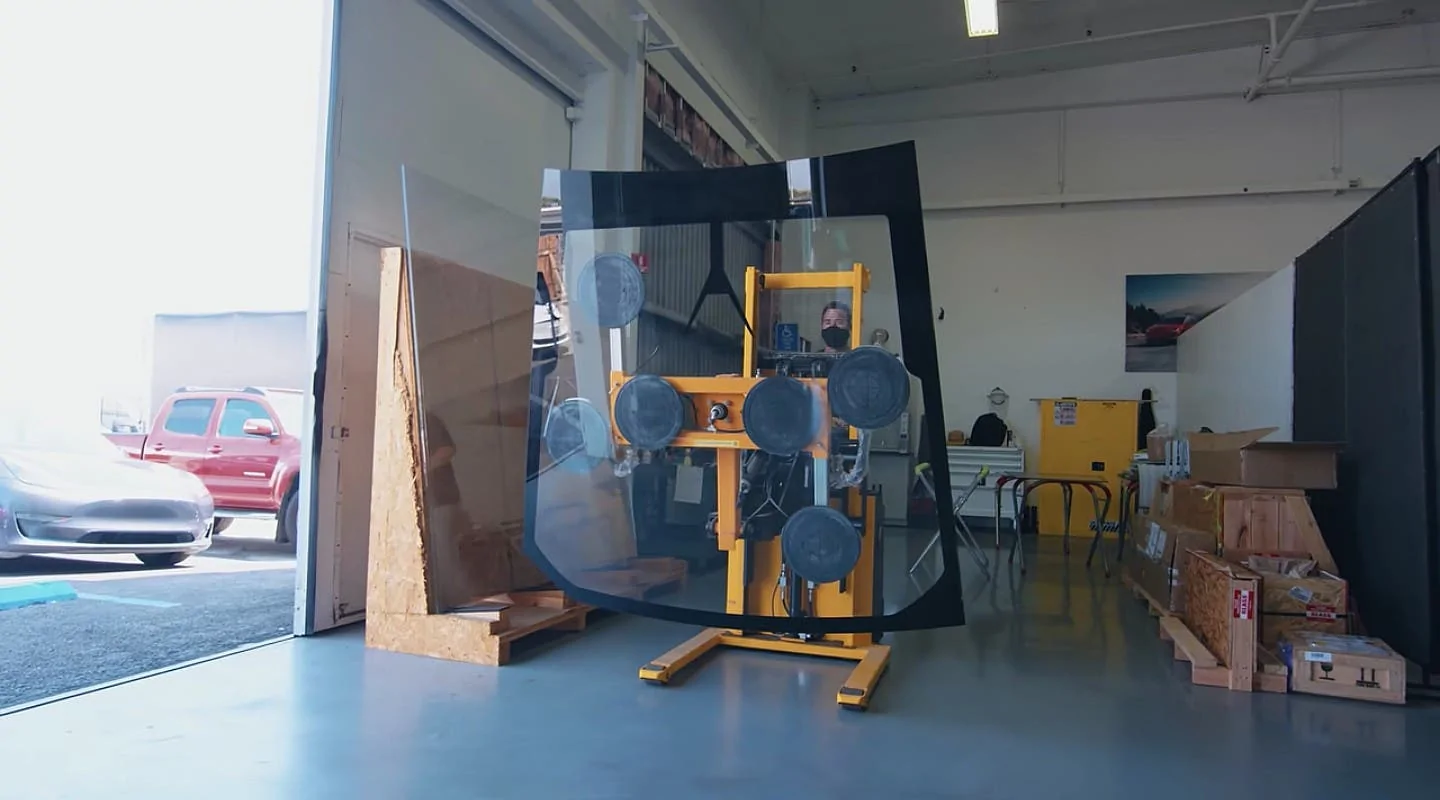
On one hand, this seems conjecture that is possibly incongruent with the available information. It is easy to underestimate the size differences in both the overall vehicle, and the windshield design. Here's a photo of a person standing behind a CT windshield - is anyone really willing to bet that the Model X front windshield is larger than this!?

Tesla-Cybertruck-windshield-glass.jpg


On the other hand, however, the Model X has a rear windshield that likely makes up for overall area of upward-facing glass.

Fact is, the CyberTruck is purported to be using new ""armored" glass, with qualities yet unknown - including exactly it's UVA/B/C and infrared absorption. To say nothing of whether the CT may end up having switchable glass on its roof - as many videos suggest could be the case. If so, one might wonder if this new approach is due to the new glass not being amenable to the lamination Tesla uses in its other roofs?

If we use the current models as example, there are differences in Tesla's treatments of roof panels, vs side windows, vs windshields, vs rear glass. Which means that even in current models, a discussion of UV/infrared absorption has to distinguish between roof panels, front and rear windshields, and all side/door windows.

If anyone can find explicit details from Tesla, would be interested to see them. But the seemingly informed guides I can find online suggest that modern Teslas:

  • windshields are already good at blocking most UV (because they are laminated by law), and Tesla does not give their windshield additional UV/infrared treatment
  • side windows are typical in Teslas, blocking some but not all UV (nor infrared)
  • rear roof panel: does not get special treatment (other than being a died glass/tint)
  • roof gets all the UV bells and whistles, but the website no longer describes infrared protection (for whatever that's worth)

absent tesla giving reliable and clear details about the UVA/B/C and infrared quallities of each panel of glass, I'll be coating all of it

AND i'll be making it dark where i can, because (1) i like the interior of my vehicles dark and cozy, and (2) despite claims elsewhere in this thread, any visible wavelength of light (not just infrared) contributes to greenhouse heating within the cabin - and in any event, TEsla gives no information on infrared blocking of even the roof, much less the other glass
Your post is well thought-out, but I think we may be talking past each other.

Regardless of the relative size comparison between windshields (specifically), Tesla has been offering a vehicle with a windshield that covers almost half of its cabin space since 2016, and no one has died from a heatstroke while driving a Model X yet.

I'm mostly confused as to why people are comparing the CT to the 3 and Y, not the most obvious / closest example in the X.
Sponsored
 

cvalue13

Well-known member
Joined
Aug 17, 2022
Threads
74
Messages
7,153
Reaction score
13,769
Location
Austin, TX
Vehicles
F150L
Occupation
Fun-employed
Country flag
I'm mostly confused as to why people are comparing the CT to the 3 and Y, not the most obvious / closest example in the X.
agree all-around, sorry if it wasn’t clear that most of my post was directed to the ether, despite the initial @

With you, was only taking marginal exception to the comparison of the size of the windshields proper - but other use in agreement on the all-glass-considered comparison

Had made the point myself earlier

it, plus the glass roof, does seem to make for a rather large solar collection in the cabin

though unclear how much more significant that will be compared to the panoramic roofs in other models, which also have sloping rear windows
 

rudedawg78

Well-known member
First Name
Ernie
Joined
Jun 8, 2020
Threads
46
Messages
1,814
Reaction score
3,019
Location
South Carolina
Vehicles
2024 AWD Cybertruck (Foundation Series) "Wraith"
Occupation
Retired USAF, Emergency Manager
Country flag
I got creamed by a 1.5 inch rock which hit the roof. No real damage. I got hit with a much smaller rock on the front windshield a few days later which gave me a star crack. I had that fixed so it would not spread. It is mostly about the angle of incidence.
I think we are fine with our "bulletproof" glass on the Cybertruck...as long as a steel ball isn't being thrown at it. :ROFLMAO:
 

SolarWizard

Well-known member
First Name
MB
Joined
Nov 18, 2020
Threads
22
Messages
1,255
Reaction score
2,202
Location
San Diego
Vehicles
AWD
Occupation
solar, DCFC & battery biz owner
Country flag
has this been posted before and I just missed it? Certainly thats a $2k plus windshield even if its ‘just’ glass. Imagine Safelite trying to do that while you work ?


On one hand, this seems conjecture that is possibly incongruent with the available information. It is easy to underestimate the size differences in both the overall vehicle, and the windshield design. Here's a photo of a person standing behind a CT windshield - is anyone really willing to bet that the Model X front windshield is larger than this!?

Tesla-Cybertruck-windshield-glass.jpg


On the other hand, however, the Model X has a rear windshield that likely makes up for overall area of upward-facing glass.

Fact is, the CyberTruck is purported to be using new ""armored" glass, with qualities yet unknown - including exactly it's UVA/B/C and infrared absorption. To say nothing of whether the CT may end up having switchable glass on its roof - as many videos suggest could be the case. If so, one might wonder if this new approach is due to the new glass not being amenable to the lamination Tesla uses in its other roofs?

If we use the current models as example, there are differences in Tesla's treatments of roof panels, vs side windows, vs windshields, vs rear glass. Which means that even in current models, a discussion of UV/infrared absorption has to distinguish between roof panels, front and rear windshields, and all side/door windows.

If anyone can find explicit details from Tesla, would be interested to see them. But the seemingly informed guides I can find online suggest that modern Teslas:

  • windshields are already good at blocking most UV (because they are laminated by law), and Tesla does not give their windshield additional UV/infrared treatment
  • side windows are typical in Teslas, blocking some but not all UV (nor infrared)
  • rear roof panel: does not get special treatment (other than being a died glass/tint)
  • roof gets all the UV bells and whistles, but the website no longer describes infrared protection (for whatever that's worth)

absent tesla giving reliable and clear details about the UVA/B/C and infrared quallities of each panel of glass, I'll be coating all of it

AND i'll be making it dark where i can, because (1) i like the interior of my vehicles dark and cozy, and (2) despite claims elsewhere in this thread, any visible wavelength of light (not just infrared) contributes to greenhouse heating within the cabin - and in any event, TEsla gives no information on infrared blocking of even the roof, much less the other glass
 

cvalue13

Well-known member
Joined
Aug 17, 2022
Threads
74
Messages
7,153
Reaction score
13,769
Location
Austin, TX
Vehicles
F150L
Occupation
Fun-employed
Country flag
has this been posted before and I just missed it? Certainly thats a $2k plus windshield even if its ‘just’ glass. Imagine Safelite trying to do that while you work ?
:ROFLMAO: first I’ve seen it, too

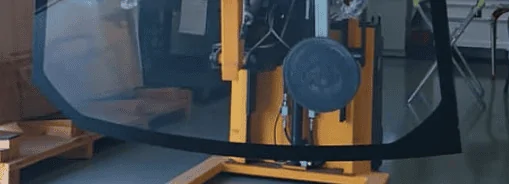
the suggestions here of Tesla having 360° magic auto glass had me on the google for any details direct from Tesla. only found the owner’s manual (said almost nothing) and a short video put out by Tesla’s glass engineering dept

in that video there’s an ‘around the shop’ montage including a ~3 second clip of this guy forklifting the CT windshield. No mention of it, no CT in background, just a rando easter-egg for CT psychos

or is it psyCTos?


HaulingAss

Well-known member
Joined
Oct 3, 2020
Threads
28
Messages
10,404
Reaction score
20,912
Location
Western Washington, USA
Vehicles
Cybertruck DM, 2010 F-150, 2018 Performance Model 3, 2024 Performance Model 3
Country flag
I think I will see what it will take to put a layer on windshield to stop the heat from getting in, I am having it put on my S now while it's getting coated with ceramic, suppose to reduce what heat gets in by at least 70%
People don't understand thermodynamics anymore. Did they stop teaching thermodynamic principles in public schools these days? I went to high school in the 1970's and it was one of the more interesting subjects taught.

The thermal rejection coatings Tesla uses reject over 90% of the infra-red heat energy, I don't know the exact figure but it's probably closer to 98%. Yes, the glass itself still gets hot but most of the radiant heat is blocked. Radiant heat is what you feel when the sun shines on your lap through the glass in a car without infra-red rejecting coatings. These coatings are popular and somewhat common on European cars, especially higher end cars like Porsche, Audi, BMW, etc and not so popular on American cars and trucks (they are sometimes offered on higher end trims as an expensive option package). The coatings add significant cost to cars which is why so many cars do not have them. The better solar films address this problem but typically not as well as the high quality coatings used on better auto glass. Tesla already builds them into all their models so additional films on the roof will only make it transmit less light, not less heat, at least not to any significant degree.

Because even glass that rejects most of the heat energy still becomes hot, it will still radiate heat into the cabin. It can also heat the cabin air through convection curents. Niether of these can be significantly reduced by applying additional films to the glass but both of them can be reduced with a solar shade that is not applied directly to the glass, but sits at least a short distance away from it. Tesla sells fabric shades like this at reasonable prices for all their cars. It will add an additional layer of heat protection and significantly reduce the load on the A/c during hot, sunny weather. Additional solar films will NOT!

The insulation in the headliners of most cars helps reduce peak temperatures and re-radiated heat, but a thin layer can only do so much. That is why all cars become dangerously hot when parked in direct sun, even on relatively mild days that never exceed 75 or 80 degrees F. A lack of breezes cooling the exterior surface of the car via conduction will allow peak temperatures to climb much higher than the ambient temperature. Driving the car helps reduce the skin temperature and the amount of heat radiated into the car.

Some Land Rovers designed for safari duty (or for people who wanted the "safari look"), had a double roof to shade the metal cabin. Ambient air could flow between the shaded metal cabin roof and the metal skin held about 1/2 inch above the metal cabin roof. They did this because metal roofs and a thin layer of insulation are not sufficient to provide occupant comfort in warm sunny conditions. A single metal roof is not a panacea to the heat gain problem that all cars have and the double roof comes with significant aerodynamic and weight penalty by making the vehicle taller and heavier than it would otherwise be.

Glass is really a pretty amazing material, especially with modern coatings, and Tesla has leveraged it's use to increase occupant safety, increase headroom while reducing aerodynamic drag on the highway by reducing the thickness of the roof. If you can give up an inch of headroom, and want less load on the A/C, then the fabric solar roof shades offered by Tesla are your ticket.
 

PilotPete

Well-known member
First Name
Pete
Joined
May 8, 2023
Threads
12
Messages
1,578
Reaction score
3,969
Vehicles
Porsche, BMW, M3LR on order
Occupation
Chief Pilot
Country flag
I am having it put on my S now while it's getting coated with ceramic, suppose to reduce what heat gets in by at least 70%
That’s a pretty bold claim, especially since they don’t know the application use.

But then again, if I believed every gadget in the golf magazine (” lowers your score by 6 strokes!”), and used all of them, I could shoot 18 holes in 12 strokes!

See the excellent physics discussion above. I couldn’t have said it better.
 

cvalue13

Well-known member
Joined
Aug 17, 2022
Threads
74
Messages
7,153
Reaction score
13,769
Location
Austin, TX
Vehicles
F150L
Occupation
Fun-employed
Country flag
The thermal rejection coatings Tesla uses reject over 90% of the infra-red heat energy, I don't know the exact figure but it's probably closer to 98%.
no, You don’t - provide any backup wrt IR specifically in the roof panel

but more relevant to the thread, provide that backup also regarding the glass panels that aren’t the roof
 

HaulingAss

Well-known member
Joined
Oct 3, 2020
Threads
28
Messages
10,404
Reaction score
20,912
Location
Western Washington, USA
Vehicles
Cybertruck DM, 2010 F-150, 2018 Performance Model 3, 2024 Performance Model 3
Country flag


cvalue13

Well-known member
Joined
Aug 17, 2022
Threads
74
Messages
7,153
Reaction score
13,769
Location
Austin, TX
Vehicles
F150L
Occupation
Fun-employed
Country flag
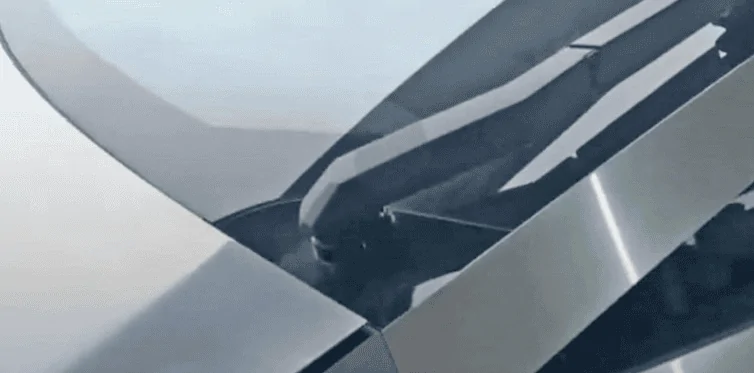
The video doesn't show a "BAW cutout" so I have no idea what you mean.
yes it does

the windshield is bottom side towards camera, so the lower left corner of the windshield is cutout for the location of the BAW attachment plate
 

HaulingAss

Well-known member
Joined
Oct 3, 2020
Threads
28
Messages
10,404
Reaction score
20,912
Location
Western Washington, USA
Vehicles
Cybertruck DM, 2010 F-150, 2018 Performance Model 3, 2024 Performance Model 3
Country flag
1686667587634.png


Left Side in this picture.

1686667672515.png
That's not even part of the swept area, not an area you look through.

I was told the concern was that there was a problem with debris suddenly obscuring the driver. That Tesla engineers had a problem and drivers would have a problem seeing where they were going.


Top