
Sponsored
Headlight visibility recall for snow / ice issues?
- Thread starter Empty tank
- Start date
- Watchers 22
Brucewatts1
New member
- First Name
- Bruce
- Joined
- Jul 24, 2020
- Threads
- 0
- Messages
- 4
- Reaction score
- 7
- Location
- Woodland, CA
- Vehicles
- 2024 Two motor Foundation Edition Cybertruck
- Occupation
- Pilot/Aircraft Sales

Great idea - very refreshing to hear a positive suggested solution - problem solving rather than complaining!! : - )I would just line the bumper with heat tape lol
https://www.amazon.com/Freeze-Prote...lpcontext&ref_=fplfs&smid=A39YZYZSFCJUAA&th=1
Depending on how thick the bumper is the tape could even go on the inside of the bumper for a cleaner look
wtibbit
Well-known member
- First Name
- Wayne
- Joined
- Aug 27, 2020
- Threads
- 12
- Messages
- 819
- Reaction score
- 1,617
- Location
- DFW
- Vehicles
- Cybertruck AWD FS, Mercedes sedan, Corvette coupe, 1968 Cougar XR-7
- Occupation
- Retired Engineering Program Director
The root cause of this problem is frozen precipitation collecting in front of headlights due to freezing rain building up on the surface of the lights and/or snow collecting in front of the headlights. Contributing factors include the geometries of the headlights and surrounding surfaces, relative wind velocity, precipitation type and rate, temperature of the air and vehicle surfaces, and power of any heat sources that affects the temperature of the collected precipitation.This is a real issue that I've experienced firsthand. The problem is not because of cooler running LEDs but rather because of the design of the headlights being inset and on the snow-collecting shelf that the bumper creates. I would wager that even the heat of Halogens would be unable to keep snow from accumulating in this place while driving.
Another issue is the DRL. Having the DRL on while it was snowing, with snow covering the headlights, was a dangerous combination. There should be a way to turn off the DRL with the headlights on. Having it on while it was snowing was like driving with your brights on while it was snowing. The snow reflected off the snowflakes, creating glare, making it even harder to see.
We can't control the weather factors and probably can't afford to heat up the problem areas, leaving only the geometry factor. I'd like to test the effect of geometry-changing, clear "snow shields" placed in front of the headlights to eliminate the snow-collecting shelf and cavities. Unfortunately that's very unlikely to happen around Dallas, TX.
Perhaps someone in the snow belt could cheaply test this idea by taping a thin, stiff, clear plastic sheet in front of one headlight. Extend the sheet from the front edge of the bumper to the lower front edge of the frunk lid. Make sure to block snow, using tape perhaps, from entering from the sides of the sheet. Drive in weather bad enough that snow collects in front of the other headlight. If the shielded headlight remains adequately clear this approach may have some potential to at least mitigate the problem.
OP
OP
Empty tank
Well-known member
- First Name
- Chic
- Joined
- Aug 26, 2024
- Threads
- 26
- Messages
- 129
- Reaction score
- 225
- Location
- Texas
- Vehicles
- Cybertruck
- Occupation
- Retired
- Thread starter
- #49
Now we're thinking and not word fighting. This maybe a temporary work around if it's angled to where the sleat and snow can run off or forced off while driving.The root cause of this problem is frozen precipitation collecting in front of headlights due to freezing rain building up on the surface of the lights and/or snow collecting in front of the headlights. Contributing factors include the geometries of the headlights and surrounding surfaces, relative wind velocity, precipitation type and rate, temperature of the air and vehicle surfaces, and power of any heat sources that affects the temperature of the collected precipitation.
We can't control the weather factors and probably can't afford to heat up the problem areas, leaving only the geometry factor. I'd like to test the effect of geometry-changing, clear "snow shields" placed in front of the headlights to eliminate the snow-collecting shelf and cavities. Unfortunately that's very unlikely to happen around Dallas, TX.
Perhaps someone in the snow belt could cheaply test this idea by taping a thin, stiff, clear plastic sheet in front of one headlight. Extend the sheet from the front edge of the bumper to the lower front edge of the frunk lid. Make sure to block snow, using tape perhaps, from entering from the sides of the sheet. Drive in weather bad enough that snow collects in front of the other headlight. If the shielded headlight remains adequately clear this approach may have some potential to at least mitigate the problem.
oisiaa
Well-known member
- Joined
- May 12, 2024
- Threads
- 14
- Messages
- 186
- Reaction score
- 256
- Location
- California
- Vehicles
- 2018 Model 3 LR RWD, 2021 Model 3 LR
Assuming this is a problem, the solution is a quite simple recall. A purpose built transparent resistive heating layer rated to about 60 Watts per side should be enough to keep the lamps clear. Would need integrated thermocouples to make sure you don't melt the plastic lens and to keep the surface temperature high enough to melt snow without overheating. Could likely be tapped off of the existing power source and controlled via etherloop. Marginal cost of $30/bulb ignoring engineering costs.
Cali5268
Active member
i lived in Colorado for 3 years. I promise, driving in the snow is a normal thing in many places.Where did I write that? Heavy snow accumulation on your vehicle is illegal to drive around with anyhow.
Weird, but pretty much all trucks are incapable of driving through a storm given specific weather.
You don't know of any? Geez. I guess trucks are never disabled by weather and all of those I see rolled over on the side of the road or stuck trying to ford a puddle or crushed in a snow drift or ...were mirages.
-Crissa
I’ve driven my CT in LIGHT snow and have had to stop and pull out ice scraper to clear…
im amazed at how some of the folks here think this isn’t a design issue. Giving advice like “don’t drive” isn’t helpful. We want the best product so it’s important to point out flaws/defects.
if a vehicle had an issue with rain leaking through I wouldn’t tell the person don’t drive in the rain. Pretty unhelpful.
wtibbit
Well-known member
- First Name
- Wayne
- Joined
- Aug 27, 2020
- Threads
- 12
- Messages
- 819
- Reaction score
- 1,617
- Location
- DFW
- Vehicles
- Cybertruck AWD FS, Mercedes sedan, Corvette coupe, 1968 Cougar XR-7
- Occupation
- Retired Engineering Program Director
Temporary, definitely, even if it works.Now we're thinking and not word fighting. This maybe a temporary work around if it's angled to where the sleat and snow can run off or forced off while driving.
Imagine a simple, hollow, transparent filler that snaps into the cavity (hopefully - I haven't looked at the 'snap' thing, yet). It might need to be made with some fresnel lens magic on the inside face of the device to keep the beam pointed in the right vertical direction, but even then it would have some negative effect on the projected light.
Assuming it works well enough....
Once the optical and manufacturability design work is done, it could be farmed out to some (likely you-know-where) production facility to manufacture it.
Assuming the market is large enough....
Maybe someone can market it at a reasonable price and make a profit.
wtibbit
Well-known member
- First Name
- Wayne
- Joined
- Aug 27, 2020
- Threads
- 12
- Messages
- 819
- Reaction score
- 1,617
- Location
- DFW
- Vehicles
- Cybertruck AWD FS, Mercedes sedan, Corvette coupe, 1968 Cougar XR-7
- Occupation
- Retired Engineering Program Director
I’m a retired engineering director and product manager.Assuming this is a problem, the solution is a quite simple recall. A purpose built transparent resistive heating layer rated to about 60 Watts per side should be enough to keep the lamps clear. Would need integrated thermocouples to make sure you don't melt the plastic lens and to keep the surface temperature high enough to melt snow without overheating. Could likely be tapped off of the existing power source and controlled via etherloop. Marginal cost of $30/bulb ignoring engineering costs.
I can assure you there is no such thing as a “simple recall”.
The technical solution is, in this case, almost certainly the least complex part the problem and cost of the added hardware is less than the rest of the cost impacts.
No executive or manager in the decision process ignores engineering costs. Neither do they ignore manufacturing process or procedures costs, manufacturing facilities costs, suppliers and contracts costs, inventory management costs, assembly team training costs, maintenance team training costs, documentation costs, delivery and installation costs and more…. And, don’t forget, the CFO’s profit assurance team (whatever its name-of-the-quarter) will insist on including overhead rates and some profit % to prevent diluting the profit to total-cost-of-goods-sold metric.
All of those costs reflect significant labor hours, which wouldn’t then be spent on other more profitable or more important projects - lost profits and missed opportunities.
No. I doubt there will be a recall for this.
Ahh. After reading the preview before posting this, I see that I’ve thought and written too much about someone’s honest opinion. But, it reminded me of both good and “interesting” times, so I’m posting it anyway.
Last edited:

Jack27
Well-known member
- First Name
- Randy
- Joined
- Aug 13, 2024
- Threads
- 16
- Messages
- 1,283
- Reaction score
- 1,462
- Location
- Los Angeles
- Vehicles
- BMX Mongoose/tony hawk skate board/ roller blades
- Occupation
- None
If this was a regular thing to drive in for some then they do have heated lights you could mount some
where that claim to melt the snow before someone says “I shouldn’t have to do that “ many trucks and cars need to do things after market to suit there area such as snow tires , off road lights , suspension and so on
https://upcarparts.com/products/ult...-eD38nUbAAFLFl9fz6rKJhrnDIkMEn7kUnrL4lQfAuAzk
where that claim to melt the snow
before someone says “I shouldn’t have to do that “ many trucks and cars need to do things after market to suit there area such as snow tires , off road lights , suspension and so on https://upcarparts.com/products/ult...-eD38nUbAAFLFl9fz6rKJhrnDIkMEn7kUnrL4lQfAuAzk
Last edited:

Crissa
Well-known member
- First Name
- Crissa
- Joined
- Jul 8, 2020
- Threads
- 138
- Messages
- 19,571
- Reaction score
- 31,475
- Location
- Santa Cruz
- Vehicles
- 2014 Zero S, 2013 Mazda 3
Noted, there is rainfall heavier than you should drive in, too. And no, you should not drive with snow accumulation on your vehicle. It can be thrown and kill people.if a vehicle had an issue with rain leaking through I wouldn’t tell the person don’t drive in the rain. Pretty unhelpful.
Don't drive if it's unsafe. Period. Your vehicle comes with camp mode at the very worst.
If you want to make empty straw-man arguments, I guess, be my guest. At no point did I say this wasn't a weakness in the truck. Just this pretending it's unique is completely unfounded.
-Crissa
Mad4sax
Member
- First Name
- Tom
- Joined
- Oct 20, 2024
- Threads
- 1
- Messages
- 19
- Reaction score
- 43
- Location
- Camillus, NY
- Vehicles
- Model 3, soon Cybertruck (Waiting on delivery)
- Occupation
- Retired
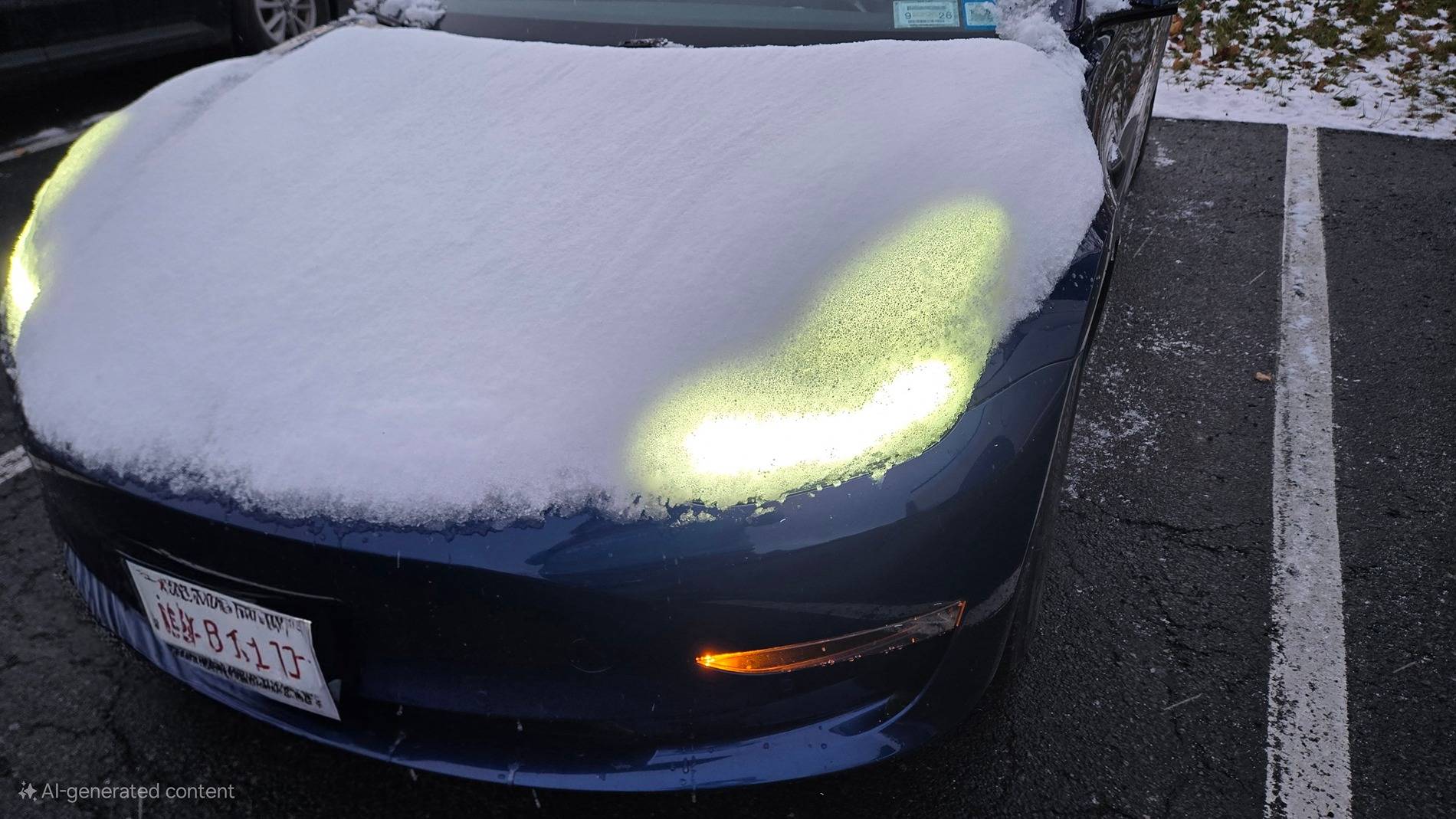
My Model 3 when I reached my destination tonight. Live in Central New York. So driving in snow is a normal thing for us. Maybe a recall of the Model 3 LOL.
OP
OP
Empty tank
Well-known member
- First Name
- Chic
- Joined
- Aug 26, 2024
- Threads
- 26
- Messages
- 129
- Reaction score
- 225
- Location
- Texas
- Vehicles
- Cybertruck
- Occupation
- Retired
- Thread starter
- #57
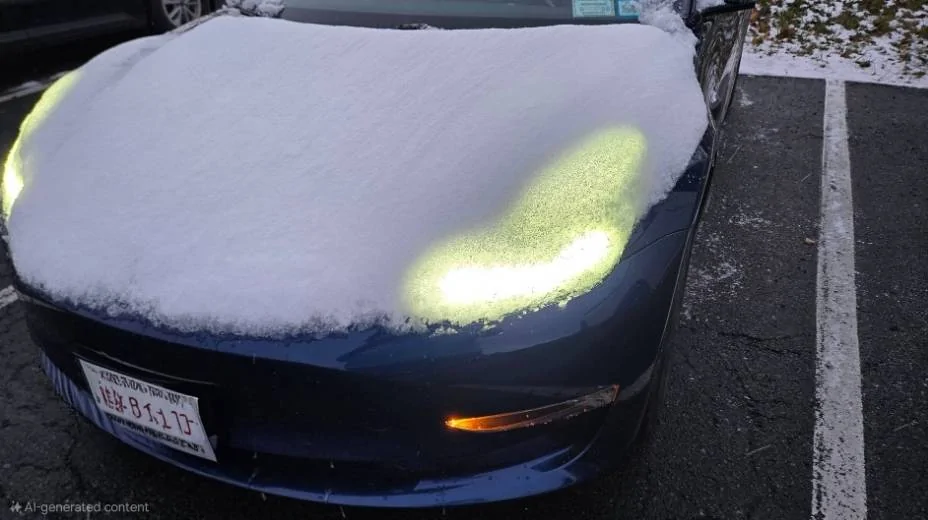
This photo looks like it's AI generated, even the Japanese plates is out of place.
My Model 3 when I reached my destination tonight. Live in Central New York. So driving in snow is a normal thing for us. Maybe a recall of the Model 3 LOL.
Mad4sax
Member
- First Name
- Tom
- Joined
- Oct 20, 2024
- Threads
- 1
- Messages
- 19
- Reaction score
- 43
- Location
- Camillus, NY
- Vehicles
- Model 3, soon Cybertruck (Waiting on delivery)
- Occupation
- Retired
I blanked out my real plate with my photo app. Not sure why I did it matches my User name.
This photo looks like it's AI generated, even the Japanese plates is out of place.


rtiql8n
Active member
- First Name
- Kirt
- Joined
- Sep 29, 2024
- Threads
- 1
- Messages
- 31
- Reaction score
- 29
- Location
- Escondido
- Vehicles
- Tesla Model 3, Cybertruck on order
- Occupation
- Copier Technician
A pneumatic air blast would work if Tesla would allow us to use the onboard air system.Why would this be a recall? There is nothing wrong with the vehicle, it is a problem with the design of the ledge that accumulates the snow/ice. Any vehicle with LED lights is going to form ice on it, there needs to be heated light covers and/or heating elements on the top of the ledge.
bigmoose70
Well-known member
- First Name
- Thomas
- Joined
- Jan 12, 2024
- Threads
- 8
- Messages
- 244
- Reaction score
- 376
- Location
- Colorado
- Vehicles
- Cybertruck, 23' Model X
- Occupation
- Engineer
Another nice thing other than aftermarket lights or heated headlights would be able to turn off the lightbar so a fog light mode. Which I would think could be controlled via software. Or make it amber and not white.
Sponsored
Similar threads
- Replies
- 193
- Views
- 36,649


- Replies
- 141
- Views
- 26,133
