
Outdoors
Well-known member
- First Name
- Outdoors
- Joined
- Nov 19, 2019
- Threads
- 18
- Messages
- 1,962
- Reaction score
- 3,552
- Location
- North West Montana
- Vehicles
- S,CT,R2, Slate (order)
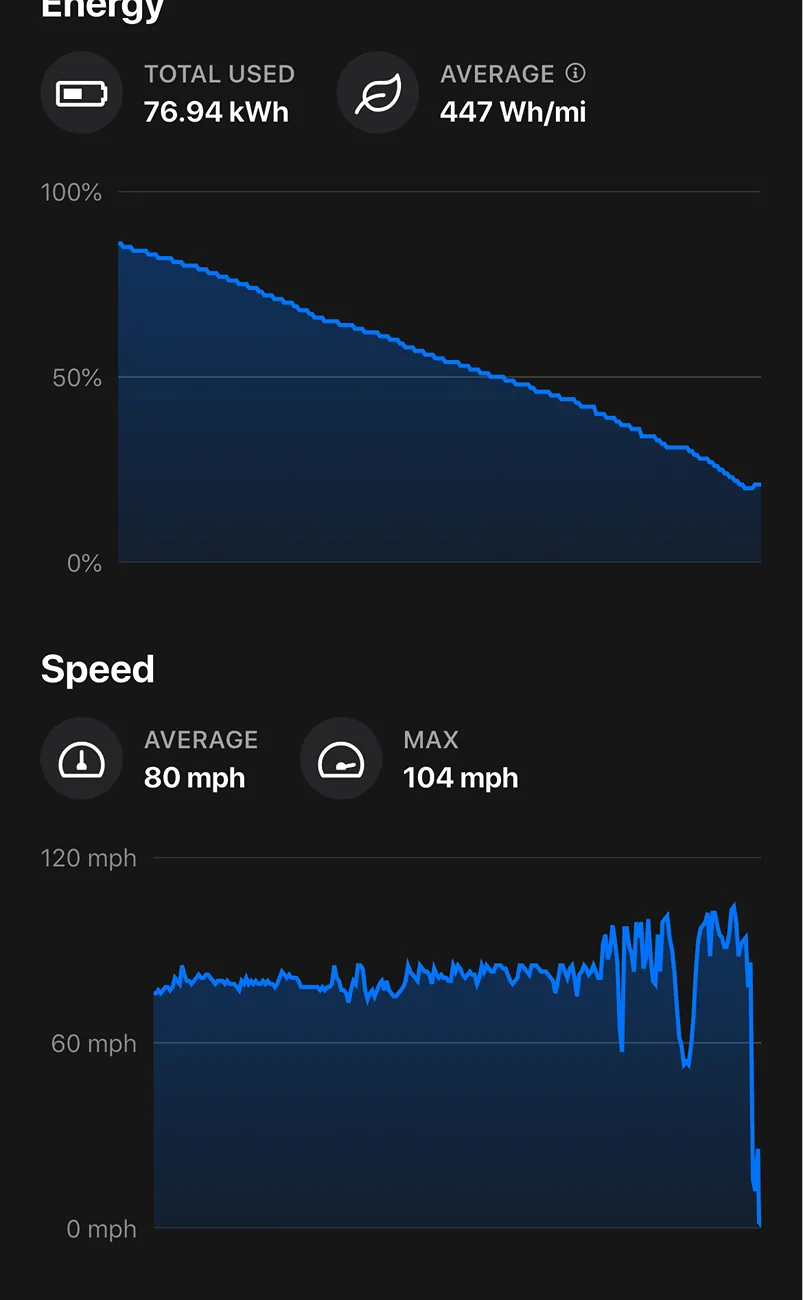
Maybe rather than all the reading of research. One actually gives it a go. Academic work comes to no answer except for get off the couch, and away from the typewriter and drive.Your firm stance on "peddle to the metal" and your earlier post referencing the cannonball run got me thinking. So, here's what I found:
Porsche record Cannonball did not run wide open
https://www.thedrive.com/news/38578...esla-for-the-fastest-ev-cannonball-run-record
Key text from the article:
“Remember that EVs are more efficient at lower speeds. In fact, the average speed of the run was right around 64 MPH, though that accounts for charging time as well, so it may have been a little bit higher. That’s not to say that they didn’t push the car either. Kyle told me that his team did use speed to their advantage, but not necessarily aimed at getting from A-to-B faster. It was also used to precondition the battery when approaching a charging station since the software problems with the car prevented it from automatically taking place. At their height, they hit around 160 MPH, which is incredibly close to the Taycan’s top speed.”
Tesla Model S Cannonball record also did not run wide open and used a charging strategy of arrive at 10% leave at 50% (in general)
https://www.roadandtrack.com/news/a38095522/ev-cannonball-record-tesla-model-s/
Key text to that article:
“But the sustained speeds weren't quite as high, as there's still a benefit to driving slightly more efficiency”
Reading about each of these record runs, they used super high speed sprints nearing certain charging situations to pre-condition the battery faster, but in cruised slower than that in general.
Finally, here's an academic research paper on the same subject, published on the IEEE site titled, “The Nature and Strategy of Minimizing the Total Travel Time for Long-Distance Driving of an EV” available (with subscription) at: https://ieeexplore.ieee.org/abstract/document/10431811 (warning- the site will go down for maintenance today (23 Sep 2025) from 1PM to 5PM Eastern). I can't post this in a public forum as it's licensed and would be unethical. But, it says the same: minimizing total transit time in an EV is a balance between speed and charge time and optimum speed is slower than max speed.
I don't think all the comparisons mean anything if all one does is spout napkin math, and then apply to a truck sitting in ones garage. Each route and environment make each situation different. No cross country run is the same. It may have some rough guidelines, but they are all different.
Again. Give it a go.
Sponsored