
Sponsored

Solar → Battery →← Powershare - How to this?

JBee

Well-known member
First Name
JB
Joined
Nov 22, 2019
Threads
18
Messages
4,913
Reaction score
6,362
Location
Australia
Vehicles
Cybertruck
Occupation
. Professional Hobbyist
Country flag
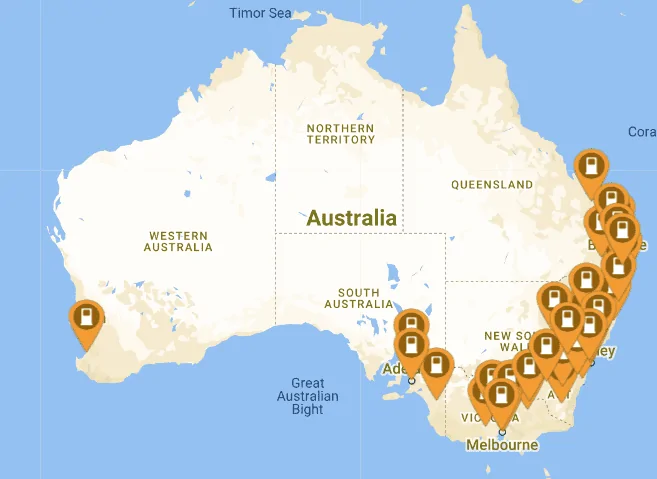
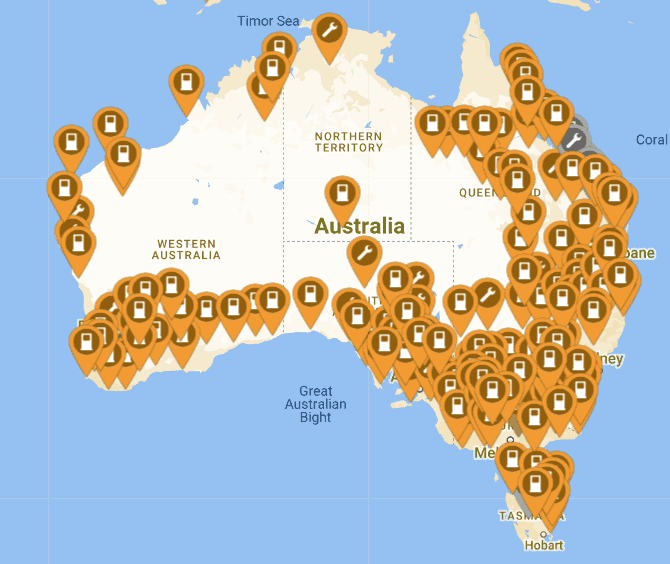
So, I'm not going to let you off saying that there are only 5 Superchargers in the country. Like Europe, you're a CCS country.
1704034817026.png


And a great number of those locations have Tesla connectors as well
1704034874696.webp


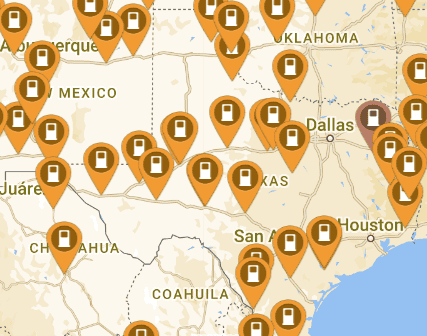
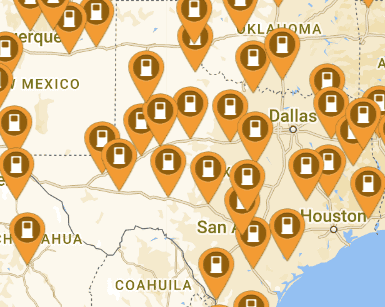
So sure, if you are going inland, it's an issue.

But you may have a lot more than Texas does.
1704035035758.png


And yes, like I did my generator, oversizing your controllers is never a bad thing to do.

1704034988330.png
Lol ok.

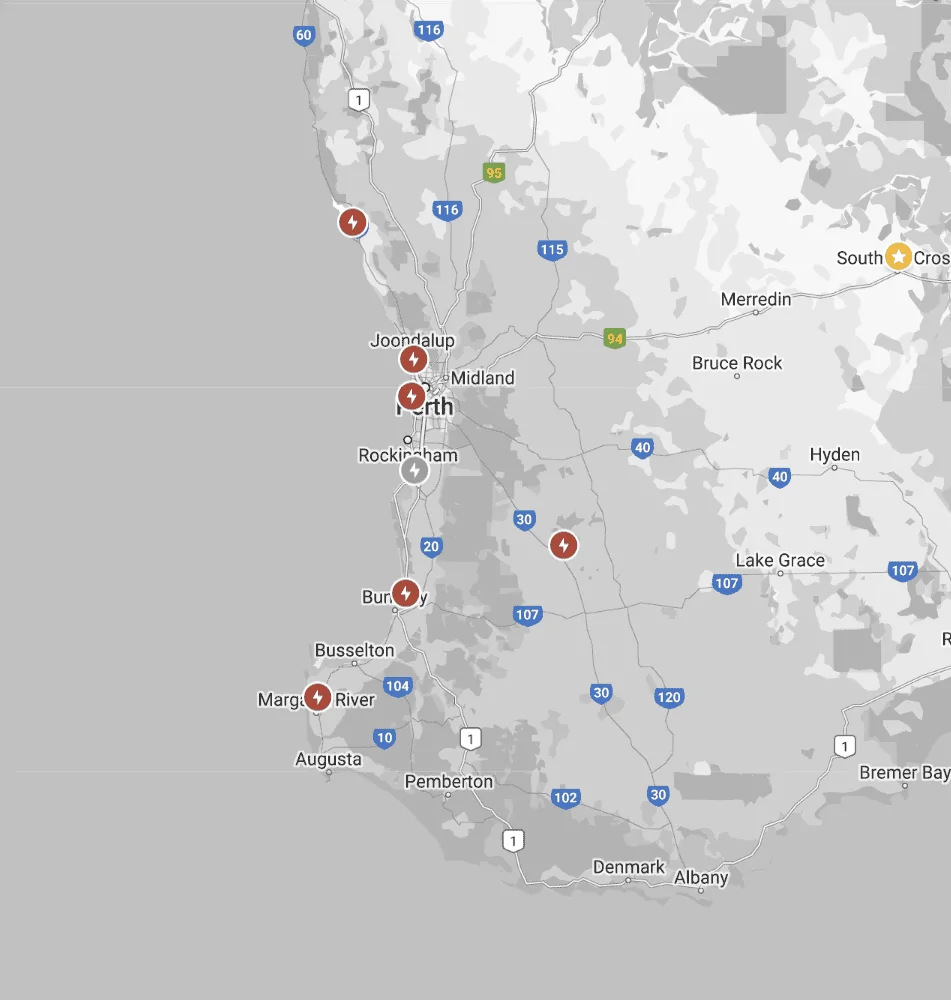
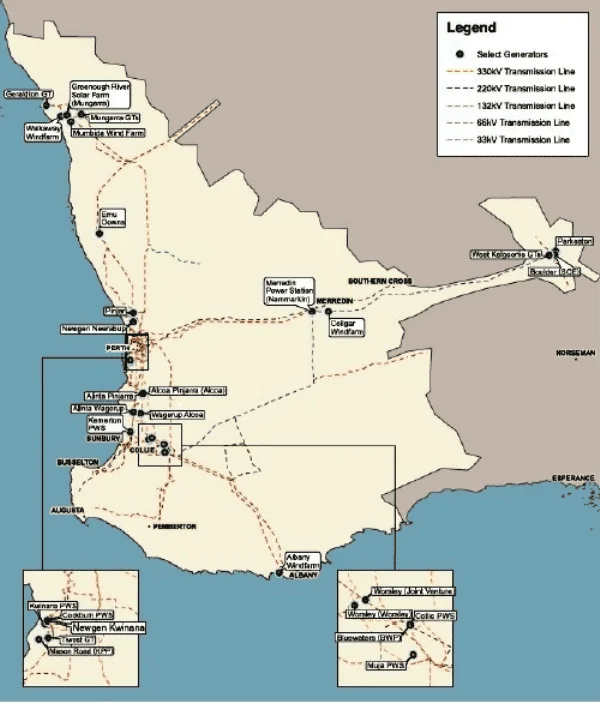
State is Western Australia that is 3.6 times the size of Texas by itself. Australia is the same size as the contagious USA, so much larger than 3.6times the size of Texas. CSS is a connector type but far from a "Supercharger" let alone a Tesla one. These are the now 6 Tesla Superchargers in Western Australia. There's a few recent non-Tesla Horizon Power installs that have gone in late this year under the national EV charger expansion program, but many of those are only 50kW, and top out at 150kW in regional areas because the grid can't cope with more.

Tesla Cybertruck Solar → Battery →← Powershare - How to this? 1704037010134


This is the extent of the WA SWIS grid:

Tesla Cybertruck Solar → Battery →← Powershare - How to this? 1704037861530
Sponsored


JBee

Well-known member
First Name
JB
Joined
Nov 22, 2019
Threads
18
Messages
4,913
Reaction score
6,362
Location
Australia
Vehicles
Cybertruck
Occupation
. Professional Hobbyist
Country flag
And yes, like I did my generator, oversizing your controllers is never a bad thing to do.
I'm not sure what you mean here with oversize my controllers?

I did the opposite, my inverter has less kW capacity, than the PV I have connected to the built in MPPT controllers. The built in MPPT controller has the ability to throttle the PV input, which is oversized for the inverter. This results in a much better energy collection profile that starts earlier and ends later in the day.
 
Last edited:

Woodrick

Well-known member
First Name
Ed
Joined
Dec 30, 2023
Threads
6
Messages
4,786
Reaction score
4,762
Location
Gainesville Ga
Vehicles
Model 3, Model Y, Cybertruck AWD
Occupation
Consultant
Country flag
I'm not sure what you mean here with oversize my controllers?

I did the opposite, my inverter has less kW capacity, than the PV I have connected to the built in MPPT controllers. The built in MPPT controller has the ability to throttle the PV input, which is oversized for the inverter. This results in a much better energy collection profile that starts earlier and ends later in the day.
Anytime anything is throttled, something is probably lost.
I'm trying to remember if you had batteries in your setup, since you didn't mention here, I'm assuming no.
I'm assuming by built-in MPPT controller, you are indicating that it is built-in t the inverter. And with that said, I think it make sense to me.

If the MPPT is in the inverter and the inverter is undersized, then the MPPT may not be up to the job of optimization. That's why an external oversized MPPT would be advantageous.
But if the inverter was right-sized, or oversized, then it should be able to give you an even better profile.

But with an oversized array, I would have expected some batteries to soak up the differential. And I'm not sure what "oversized" means in your configuration. Does it provide more capability than your house use in a day? (if so, then there should be batteries) or does i provide more than your average/peak load during the day.

I'll admit that I'm not a solar expert, definitely not a Tesla Solat/Powerwall one. But I can usually stay in the conversation.
 
OP
OP

Tanquen

Well-known member
Joined
Dec 9, 2023
Threads
37
Messages
394
Reaction score
235
Location
CA
Vehicles
Cybertruck
Country flag
Average bill cost for electricity is about $250 a month. That's with no EV at the moment and a rental unit that is not currently in use.

Not sure if I want to go totally off grid but utilities are pushing to charge more just to be connected.

If I do get the truck (on my second VIN) it seems like it's easiest just to let them install the gateway and the universal charger and have battery backup.

I did get a call from Tesla about the power share installation and they were mentioning that if I had this hardware now and got batteries and solar later, I could save a little money because they would not need to add the gateway.

It seems like the next level up would be to get a 3rd gen Powerwall and solar. Then I'd maybe be able to recoup the investment after a number of years saving on electricity. The way the person from Tesla described it, with just one power wall, you have the ability to run devices with high startup requirements and then the truck can backfeed that one Powerwall. And worst case you could go to a supercharger and fill up the truck and then bring it back to keep stuff going if the utilities were down for a prolonged period. ?

Not sure if I have any high start demand devices. The AC maybe but I do plan to get a newer heat pump type unit.
 

Dubes

Member
First Name
Daniel
Joined
Jun 7, 2025
Threads
0
Messages
7
Reaction score
11
Location
Tennessee
Vehicles
2019 X and 2024 Foundation Cybertruck
Occupation
Physician, Retired
Country flag
I've run off-grid for over a decade now, but it really depends on what you want to achieve and how much it costs.

Grid power in the USA is fairly cheap so the price difference to solar is not that high in some locations. But if you are motivated to go off-grid for self sustainability, energy security, or too reduce your environmental impact, and your willing to invest for that, then that is different.

In my situation it was a no brainer because of the distance to the nearest power line to our house meant the line would have cost as much as our off-grid system. In fact if you are building new that is often the case, provided your sub-division didn't come with power already installed, because then you are still paying for it through your land purchase from the land developer.

But just in broad strokes to get your bearings:

Off-grid:

Means you have to either charge your CT during the day when the solar is running, or have enough house battery storage to collect the solar during the day, and charge the CT at night when you come home.

The difference between the two is the cost of the batteries, with the solar and inverter costs remaining largely the same. Which btw is a substantial portion of the cost. With Powerwall you are paying a fortune atm, but there are various other choices out there that give you a bit more design and optimization freedom.

For off-grid use the main components would be solar panels>off-grid inverter/charger> batteries fr the house setup, and then the Universal Charger and Tesla Gateway to connect the CT to the house supply. You could just charge from the house using the charger alone, but you wouldn't be able to use the bi-directional V2H without the gateway that would switch automatically between charge and discharging the CT depending on your house energy levels. Obviously there is a bunch of wiring and safety switchgear dependent on your location and standards.

On -Grid

Essentially you could use the same setup as above, but with the difference that you could get away with little to no battery and rely on the grid for energy storage" instead. Depending on your power provider this might work to your advantage if they pay more for your solar power during peak periods and you can buy it back cheaper off peak at night, or maybe they do net tariffs or something similar. This would need to form part of your financial modelling.

The bit of extra hardware you need here is the Tesla backup Switch which needs to be accepted by your provider to meet their specification. This switch allows the system to disconnect from the grid in a power failure, so that you can run your house isolated from the grid. That obviously only works though if your inverter is capable of both on and off-grid modes.

Obviously, once in off-grid mode again, like above, you only really have the option to charge during the day from solar, if you don't have a large battery pack to store it all. So adding a bunch of batteries to a primarily "on-grid" setup could be a costly option, unless you have a method of participating in VPP or similar to make use of those batteries whilst you are also connected to the grid and get paid for it. Just having them waiting in standby would be a bit of a waste, considering your CT has a bunch of battery you could use in those situations instead.

In fact the cheapest way to get "powerwalls" is to buy them in the form of a CT. There you get 123kWh of batteries, and it all comes packaged in a nice Cybertruck you can drive around as well!

So depending on which way you want to go, the first thing would be to figure out what your house loads are, how much solar you can install in your location, and then from that we can form a energy budget of what will be left to charge the CT.

You can get an idea for solar production for your location by using this simple calculator:

https://pvwatts.nrel.gov/

The NREL also do a full RE modelling suite that you can download for free called SAM.

https://sam.nrel.gov/

Happy to point you in the right direction regarding equipment etc.
Wow! Great overview.
I will be building my off grid home in about 2 years. My Powershare "voucher" money will be expiring in a couple of months, so I need to decide whether to buy it now or not.
I would like it to begin drawing power from my Cybertruck automatically when my house batteries drop below 10% or so. I would like this to happen without interrupting the house power. Does the Powershare system have this capability?
Thanks!


Dubes

Member
First Name
Daniel
Joined
Jun 7, 2025
Threads
0
Messages
7
Reaction score
11
Location
Tennessee
Vehicles
2019 X and 2024 Foundation Cybertruck
Occupation
Physician, Retired
Country flag
Sounds like you need your own nuclear plant...60kW is 1/6 of the baseload power of our entire town with 1k people.

Why are you using so much power and then all at once? Our off grid passive home runs under a 500W average (12kWh day) with heat pump, induction cooking etc. With two gaming PCs making up the bulk of it every night.

The CT would run our house for 10days easy, without me switching it into sleep mode. With that it goes down to 70W overnight, with intermittent 150W spikes from the inverter fridge, with ambient house lighting on, IP cameras and network and security etc on. In sleep mode the CT would run the house for two months including lights. That's if the CT didn't use it itself with vampire drain.
Sounds like a nice system! I will be building an off grid passive house in about a year. I plan to have similar power consumption.
I want to use my CT to recharge my home 30 kWh batteries when they get low. I'm trying to decide if Powershare is the best way to accomplish this automatically?
Would love to hear more about your systems. Thanks!
 

mongo

Well-known member
Joined
May 27, 2024
Threads
6
Messages
4,549
Reaction score
5,537
Location
SE Michigan
Vehicles
Cyberbeast
Country flag
Wow! Great overview.
I will be building my off grid home in about 2 years. My Powershare "voucher" money will be expiring in a couple of months, so I need to decide whether to buy it now or not.
I would like it to begin drawing power from my Cybertruck automatically when my house batteries drop below 10% or so. I would like this to happen without interrupting the house power. Does the Powershare system have this capability?
Thanks!

Sounds like a nice system! I will be building an off grid passive house in about a year. I plan to have similar power consumption.
I want to use my CT to recharge my home 30 kWh batteries when they get low. I'm trying to decide if Powershare is the best way to accomplish this automatically?
Would love to hear more about your systems. Thanks!
Powershare switchover isn't glitchless. There might be a way to kick it on via API hooks from your own server...

Powershare could provide 11.5kW, but might be overkill along with unneeded complexity.
If your inverter+charger has a generator input, you could feed that from the truck bed's 240V outlet at up to 9.6kW.
Or via the Powershare Mobile Connector and 14-20 outlet adapter at 2.4kW.
 

Dubes

Member
First Name
Daniel
Joined
Jun 7, 2025
Threads
0
Messages
7
Reaction score
11
Location
Tennessee
Vehicles
2019 X and 2024 Foundation Cybertruck
Occupation
Physician, Retired
Country flag
Big help Mongo. I would prefer to do an automatic setup but the Powershare doesn't sound like it fits the bill. I will use the 240 volt bed outlet if necessary, but that needs to be turned on manually every 12 hours.
I was planning on not using Powerwall because I can buy and install Signature Solar batteries myself for much, much less expense and headache. Though I suspect that Tesla is working on Powerwall software to automate this?
Thanks so much for your expertise!
 

mongo

Well-known member
Joined
May 27, 2024
Threads
6
Messages
4,549
Reaction score
5,537
Location
SE Michigan
Vehicles
Cyberbeast
Country flag
Big help Mongo. I would prefer to do an automatic setup but the Powershare doesn't sound like it fits the bill. I will use the 240 volt bed outlet if necessary, but that needs to be turned on manually every 12 hours.
I was planning on not using Powerwall because I can buy and install Signature Solar batteries myself for much, much less expense and headache. Though I suspect that Tesla is working on Powerwall software to automate this?
Thanks so much for your expertise!
I wouldn't expect time shifting type software support from Tesla. That usage is specifically excluded in the truck's warranty.

What is the overall home design concept?
Sponsored


Top