
Sponsored

More Tesla price cuts === cheaper Cybertruck (6 oct)

Ehninger1212

Well-known member
First Name
Jake
Joined
Dec 18, 2019
Threads
4
Messages
1,222
Reaction score
2,512
Location
Houston, TX
Vehicles
Audi A3 E-Tron - 2005 Land Rover LR3 - T-Bucket - 1951 chevy 3100
Occupation
Architect/Fabricator
Country flag
Tesla does need to expand service centers for sure but it will never be at the level of ice dealer currently imo

And I don't think they want to be
You will be surprised.
Sponsored


S.H.Peterson

Well-known member
First Name
Scott
Joined
Mar 23, 2023
Threads
11
Messages
270
Reaction score
453
Location
Alabama
Vehicles
Currently Dodge Truck owner
Occupation
Insurance
Country flag
Now THIS is proper discussion!

Just to add:
if dealerships are to remain, a LOT has to change. No more BS price gouging and slick sales tactics- it hurts vehicle sales overall and THAT is their primary function ahead of service. Yes, price is the foremost consdiration of the consumer. Dealerships are the gatekeeprs to the decision of the consumer. There needs to be greater quality control of dealerships. The modern customer thought process wants easy, uncomplicated and fully disclosed transactions. Yes there are upsides to dealerships. However, they are becoming more and more overhsadowed by the downsides. Think of this: name ANY other consumer product that is SOLELY sold like vehicles are. There isnt any. Name any other consumer product that has as much annoyance and complication in their sales as automotive. Dealerships will HAVE to move to a more 'Salon' like business model. Business is FAR more Darwinian than biology.

Tesla's sales in China are skyrocketing. Their closest competitor is BYD who is cutting prices and still behind in sales. Tesla is the MOST popular selling EV in China. Chinese governent support or not.

Tesla is not truly interested in post sales service as much as it should be. This is a self evident problem. I am in the warranty, repair, and warranteed repair industry. This is what I get my paycheck from. They MUST increase the quality of the post sales warranted repair experience.

There will be a LOT of non Tesla Tesla service centers arising. There is going to be a HUGE secondary market for Tesla parts. Think LKQ but for Tesla only. LOTS of money to be made here. Insurance companies will figure hugely into this.
 

Ehninger1212

Well-known member
First Name
Jake
Joined
Dec 18, 2019
Threads
4
Messages
1,222
Reaction score
2,512
Location
Houston, TX
Vehicles
Audi A3 E-Tron - 2005 Land Rover LR3 - T-Bucket - 1951 chevy 3100
Occupation
Architect/Fabricator
Country flag
To sum up many of the responses to my comment. The Dealers are pivoting, I think some individually will go under and some will break out of the mold. Many of them are laying conduit and installing infrastructure to expand and grow as the industry evolves for example. I see this almost across the board. The brands will work with the dealers to keep them open and profitable, they are essential to the network and business of the over all brand.
 

charliemagpie

Well-known member
First Name
Charlie
Joined
Jul 6, 2021
Threads
48
Messages
2,982
Reaction score
5,369
Location
Australia
Vehicles
CybrBEAST
Occupation
retired
Country flag
Tesla could run its distribution centers at cost.., they are the last part of the delivery route to the customer.

Dealerships on the other hand are privately owned businesses. Owners want ROI, and the more the better.

They can be distribution centers by name only.. They are owner profit centers.

While others thrive, Legacy auto using dealerships will bleed and die.
 

cvalue13

Well-known member
Joined
Aug 17, 2022
Threads
74
Messages
7,153
Reaction score
13,769
Location
Austin, TX
Vehicles
F150L
Occupation
Fun-employed
Country flag
They can be distribution centers by name only.. They are owner profit centers.
Which is why eg “Ford’s” margins appear so low compared to to Tesla’s. Tesla effectively takes both types of margin, then pays for 100% of distribution etc. Legacy take an only part of the margin, then pays Pennie’s in dollar for distribution etc.

Tesla has a good and interesting model, not without its challenges. Legacy have a model that presently creates a lot of drag, but can be easily and cost-effectively reconnoitered.

This line of thinking that legacy dealership models necessarily entail doom requires assuming that legacy have no levers to pull. They have a lot of levers.

the actual available critique is whether they’ll understand which levers to pull, in time.


OP
OP
Gurule92

Gurule92

Well-known member
Joined
Sep 2, 2021
Threads
201
Messages
3,825
Reaction score
7,373
Location
Colorado Springs
Vehicles
MYP
Occupation
"Cyber" stuff
Country flag
Which is why eg “Ford’s” margins appear so low compared to to Tesla’s. Tesla effectively takes both types of margin, then pays for 100% of distribution etc. Legacy take an only part of the margin, then pays Pennie’s in dollar for distribution etc.

Tesla has a good and interesting model, not without its challenges. Legacy have a model that presently creates a lot of drag, but can be easily and cost-effectively reconnoitered.

This line of thinking that legacy dealership models necessarily entail doom requires assuming that legacy have no levers to pull. They have a lot of levers.

the actual available critique is whether they’ll understand which levers to pull, in time.
I think it might be a contributing factor to low margins but we can't act like that's the reason. What about all the benefits that were laid out earlier? Advertising, and things like that. Shouldn't those offset that difference because the dealers are generating those sales more than a tesla like center would?

I don't think the dealership model means doom for oems, I think a good chunk of dealers are doomed though.

I predict direct sales centers popping up soon or at least cutting ties with a good chunk of dealers. Ford is already walking that path.
 

cvalue13

Well-known member
Joined
Aug 17, 2022
Threads
74
Messages
7,153
Reaction score
13,769
Location
Austin, TX
Vehicles
F150L
Occupation
Fun-employed
Country flag
if dealerships are to remain, a LOT has to change. No more BS price gouging and slick sales tactics- it hurts vehicle sales overall and THAT is their primary function ahead of service. Yes, price is the foremost consdiration of the consumer. Dealerships are the gatekeeprs to the decision of the consumer. There needs to be greater quality control of dealerships.
100%

and what people under-appreciate, is that the BEV revolution gives legacy a context in which to reconnoiter in many of these issues. That’s not to say they will do so or will do so without error. But only that there have been historical reasons that are hard to shake in ICE sales. But the BEV revolution provides an opportunity for legacy to clean house.

Just look at ford’s model e division and the gauntlet they laid down to dealers: you can opt in to being part of this new business, only if you agree to X, Y, and Z, etc. Many of Ford’s conditions for participation strike at the bullseye of your comments. Ford’s conditions include transparent pricing with online configuration by customers, dealers acting as a delivery point with set margin per model, etc., etc., etc.

And then many Ford dealerships are (so far) opting out. I’d guess that sort of culling was part of Ford’s plan, not an unexpected result.

Still again it bares repeating to not draw the ire of those misunderstanding the nuance: none of this to say legacy are guaranteed to fix their problems, only instead to say that the “problems” are ripe with solutions that are available at low cost.
 

cvalue13

Well-known member
Joined
Aug 17, 2022
Threads
74
Messages
7,153
Reaction score
13,769
Location
Austin, TX
Vehicles
F150L
Occupation
Fun-employed
Country flag
I think it might be a contributing factor to low margins but we can't act like that's the reason. What about all the benefits that were laid out earlier? Advertising, and things like that. Shouldn't those offset that difference because the dealers are generating those sales more than a tesla like center would?

I don't think the dealership model means doom for oems, I think a good chunk of dealers are doomed though.
it’s been discussed elsewhere that the one-to-one margins comparisons are chalked full of disingenuous errors

people eg quip “ha ha! Tesla’s margins in 2022 were astronomical, like +30%, while Ford’s BEV margins are wildly negative, like -40%” … but there are a half dozen reasons this type of comparison is wildly incorrect, including but not limited to:

• looking at Tesla’s 2022 margins ignores it’s prior 10+ year history of never making a net dollar on its vehicles - not because Tesla is bad at anything, but because that’s how building a manufacturing business works (and same goes for legacy business-building)

• one cannot compare Tesla’s at-customer margins to Ford’s at-wholesale margins to any accurate conclusion. Ford’s -40% wholesale margin means that the at-customer margin (after accounting for dealer margins) may be nearer -20% or better

• in exchange for Ford sharing these margins with dealers, dealers absorb inordinate market pricing risk (eg when sales slow, dealer margins get hit for a long time before Ford feels any margin pain)

the list of distinctions goes on and on, such that these one-to-one figures comparisons are about as accurate, meaningful, and myopic as similar comparisons between the cost/benefit distinctions amongst homeowners and renters.

“haha! Homeowners pay $2,000/mo to the bank, and get all the equity upside! Stupid renters pay $2,000/mo and are throwing their money away!”

That sort of homeowner/renter analogy is similarly thrown around, by people similarly uninterested in important nuances and assumptions of context. (I suspect some are amongst us and may chime in to assert this homeowner/renter analysis is unequivocally true.” :ROFLMAO:
 

Arctic_White

Well-known member
First Name
Ray
Joined
Feb 8, 2021
Threads
4
Messages
372
Reaction score
605
Location
Edmonton, AB
Vehicles
Model S Plaid; CT on order
Country flag
nor Is it reasonable to imply that legacy dealers view their BEV dealership future or footprint to look identical to the present ICE dealership environment

The whispers of this are already apparent in how Ford is bifurcating its business and letting dealers opt in/out of the model e unit. It’s still an elevator pitch of a storyboard of a first draft, but it’s directionally indicative

and it points to one of the broader tools legacy have in adapting their future dealership/distribution model.

for every FUD quip of modern dealerships being bloated and ill-suited to a BEV future, the answer to that “problem” is right there: it’s easier to carve back at a hog than to grow a piglet.

buried in that dynamic is the type of pricing and distribution power the dealership model allows Ford: if Ford feels they have more distribution centers than needed, the market itself will absorb that risk and cost - because it’s the losing dealerships that fold up shop, not Ford’s own properties. And if the market needs a nudge, fire has the power to tweak the marker incentives, such as their model e opt in/out step.

and when a dealership goes to fold up for market reasons but Ford decides it still wants it for strategic reasons, their franchise agreements have ROFRs and takeover rights - Ford merely absorb the location for fire sale prices.

None of which is to suggest legacy dealership models are a slam dunk to legacy future. Only instead to point out that it’s a fallacy to effectively say “what legacy is doing today necessarily entails they’ll be doing it in the future.”
So... you're still maintaining that if given a choice, legacy autos would prefer to have dealerships vs. not?

I mean I could definitely be wrong, but I get the distinct feeling that most legacy autos would prefer to not have dealerships being the middle-men eating into their profits. But what do I know. LOL.


Arctic_White

Well-known member
First Name
Ray
Joined
Feb 8, 2021
Threads
4
Messages
372
Reaction score
605
Location
Edmonton, AB
Vehicles
Model S Plaid; CT on order
Country flag
Which is why eg “Ford’s” margins appear so low compared to to Tesla’s. Tesla effectively takes both types of margin, then pays for 100% of distribution etc. Legacy take an only part of the margin, then pays Pennie’s in dollar for distribution etc.

Tesla has a good and interesting model, not without its challenges. Legacy have a model that presently creates a lot of drag, but can be easily and cost-effectively reconnoitered.

This line of thinking that legacy dealership models necessarily entail doom requires assuming that legacy have no levers to pull. They have a lot of levers.

the actual available critique is whether they’ll understand which levers to pull, in time.
But as a Shareholder, I only care about my company's actual net profit. What the dealership takes as a cut by no means adds any value to me, as a shareholder.

That's why the legacy automakers will all have either a) higher prices or b) lower profit margins compared to Tesla, assuming they all can make cars as efficiently as Tesla can (they can't).
 

cvalue13

Well-known member
Joined
Aug 17, 2022
Threads
74
Messages
7,153
Reaction score
13,769
Location
Austin, TX
Vehicles
F150L
Occupation
Fun-employed
Country flag
So... you're still maintaining that if given a choice, legacy autos would prefer to have dealerships vs. not?

I mean I could definitely be wrong, but I get the distinct feeling that most legacy autos would prefer to not have dealerships being the middle-men eating into their profits. But what do I know. LOL.
I guess I’m maintaining two different things, limited:

first, that assuming Ford has dealerships, it prefers them to be good not bad. I merely take exception to assertions that all dealerships are, and are inherently doomed to remain, bad.

second, assuming “good” dealerships (broadly construed), yes Ford and other legacies derive a lot of benefit and corporate streamlining from that model.

those benefits, as with anything in the real world, come attendant with downsides.

Which is to say these are complex systems, wherein there are no solutions only trade-offs. Tesla’s model has trade-offs. Legacy model has trade-offs.

So I find it disingenuous when discussions are framed by essentially plucking a benefit of Tesla’s model and comparing it to a cost of legacy’s model.


But as a Shareholder, I only care about my company's actual net profit. What the dealership takes as a cut by no means adds any value to me, as a shareholder.

That's why the legacy automakers will all have either a) higher prices or b) lower profit margins compared to Tesla, assuming they all can make cars as efficiently as Tesla can (they can't).
but this is missing the obvious piece:

Ford’s “loss” of margin to dealers must be offset by its “gains” from the dealership model.

Without delving into the details of the offsetting calculation, one may as well be saying:

• “why do Tesla/Ford purchase aluminum from 3rd parties when they could just integrate an entire mining vertical and keep the margins of the unit ore price?”

Fundamentally these are issues of CapEx vs OpEx. Like the instances above, the Tesla model takes the at-customer margins because it also assumes all the risk and expense of CapEx through to the customer. Meanwhile Ford takes only the wholesale margins because it is shielded from many of those risks and costs up much the value chain - and as such, Ford can control these issues as OpEx.

Both approaches to CapEx vs OpEx are widely common across across industries, both approaches have their strengths and weaknesses, and without observing the distinctions one may as well be saying:

• “look how brilliant Tesla is for paying in $0.02/gallon of water at the tap because it built and operates its own water utility, while Ford is over there paying $0.06/gallon at the tap to a 3rd party utility.”

On that quip alone, one can tell nothing about who is making the better business decision as to ensuring water supply at reasonable prices.
 

Arctic_White

Well-known member
First Name
Ray
Joined
Feb 8, 2021
Threads
4
Messages
372
Reaction score
605
Location
Edmonton, AB
Vehicles
Model S Plaid; CT on order
Country flag
I guess I’m maintaining two different things, limited:

first, that assuming Ford has dealerships, it prefers them to be good not bad. I merely take exception to assertions that all dealerships are, and are inherently doomed to remain, bad.

second, assuming “good” dealerships (broadly construed), yes Ford and other legacies derive a lot of benefit and corporate streamlining from that model.

those benefits, as with anything in the real world, come attendant with downsides.

Which is to say these are complex systems, wherein there are no solutions only trade-offs. Tesla’s model has trade-offs. Legacy model has trade-offs.

So I find it disingenuous when discussions are framed by essentially plucking a benefit of Tesla’s model and comparing it to a cost of legacy’s model.


but this is missing the obvious piece:

Ford’s “loss” of margin to dealers must be offset by its “gains” from the dealership model.

Without delving into the details of the offsetting calculation, one may as well be saying:

• “why do Tesla/Ford purchase aluminum from 3rd parties when they could just integrate an entire mining vertical and keep the margins of the unit ore price?”

Fundamentally these are issues of CapEx vs OpEx. Like the instances above, the Tesla model takes the at-customer margins because it also assumes all the risk and expense of CapEx through to the customer. Meanwhile Ford takes only the wholesale margins because it is shielded from many of those risks and costs up much the value chain - and as such, Ford can control these issues as OpEx.

Both approaches to CapEx vs OpEx are widely common across across industries, both approaches have their strengths and weaknesses, and without observing the distinctions one may as well be saying:

• “look how brilliant Tesla is for paying in $0.02/gallon of water at the tap because it built and operates its own water utility, while Ford is over there paying $0.06/gallon at the tap to a 3rd party utility.”

On that quip alone, one can tell nothing about who is making the better business decision as to ensuring water supply at reasonable prices.
You have raised some great points about the pros & cons of dealerships. I learned something new in that manufacturers do prefer some dealerships as they have pros which I never ever considered.

Great discussion, as always!
 

S.H.Peterson

Well-known member
First Name
Scott
Joined
Mar 23, 2023
Threads
11
Messages
270
Reaction score
453
Location
Alabama
Vehicles
Currently Dodge Truck owner
Occupation
Insurance
Country flag
I guess I’m maintaining two different things, limited:

first, that assuming Ford has dealerships, it prefers them to be good not bad. I merely take exception to assertions that all dealerships are, and are inherently doomed to remain, bad.

second, assuming “good” dealerships (broadly construed), yes Ford and other legacies derive a lot of benefit and corporate streamlining from that model.

those benefits, as with anything in the real world, come attendant with downsides.

Which is to say these are complex systems, wherein there are no solutions only trade-offs. Tesla’s model has trade-offs. Legacy model has trade-offs.

So I find it disingenuous when discussions are framed by essentially plucking a benefit of Tesla’s model and comparing it to a cost of legacy’s model.


but this is missing the obvious piece:

Ford’s “loss” of margin to dealers must be offset by its “gains” from the dealership model.

Without delving into the details of the offsetting calculation, one may as well be saying:

• “why do Tesla/Ford purchase aluminum from 3rd parties when they could just integrate an entire mining vertical and keep the margins of the unit ore price?”

Fundamentally these are issues of CapEx vs OpEx. Like the instances above, the Tesla model takes the at-customer margins because it also assumes all the risk and expense of CapEx through to the customer. Meanwhile Ford takes only the wholesale margins because it is shielded from many of those risks and costs up much the value chain - and as such, Ford can control these issues as OpEx.

Both approaches to CapEx vs OpEx are widely common across across industries, both approaches have their strengths and weaknesses, and without observing the distinctions one may as well be saying:

• “look how brilliant Tesla is for paying in $0.02/gallon of water at the tap because it built and operates its own water utility, while Ford is over there paying $0.06/gallon at the tap to a 3rd party utility.”

On that quip alone, one can tell nothing about who is making the better business decision as to ensuring water supply at reasonable prices.

BRILLIANT!
 

Crissa

Well-known member
First Name
Crissa
Joined
Jul 8, 2020
Threads
138
Messages
19,571
Reaction score
31,475
Location
Santa Cruz
Vehicles
2014 Zero S, 2013 Mazda 3
Country flag
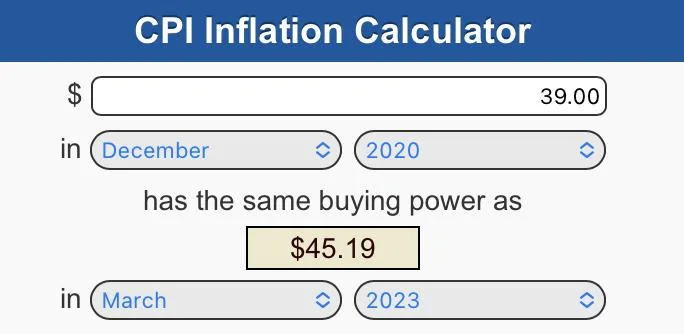
That’s a fair point. Just took a long time to get there and with recent inflation which wasn’t much of the dialog pre 2020.

Still doesn’t explain why people think 2019 launch prices will stay the same and ignore inflation
...Because inflation of ~12% had to be baked into the original prices and we only experienced ~15%? Remember, 2020 had negative inflation on most raw materials.

Tesla is for profit and has acted accordingly. Have we ever seen an auto company change prices so quickly and frequently? Nope.

Reservation holders don’t have a contract at a price. Just a spot in line.
You still haven't cited where Tesla has raised prices on reservation holders before. Seems they try not to.

On this thread? I don’t think people are championing “hella expensive”. They just think it’s an inevitability, not a desirable outcome.
Literally at least four posters - yourself included - saying the 'market clearing' price is up 50% from launch.

Inflation adjusted even the old entry level price is $50K. Adjust for the rise in battery material costs the basis is even higher. A 300 mile CT will likely have a 110+ kWh battery.
This is just flat incorrect, even giving the worst view that Tesla built no inflation predictions into their price. (Which would expose them to legal liability with the SEC.)

Tesla Cybertruck More Tesla price cuts === cheaper Cybertruck (6 oct) 0F5738CB-8664-4119-B672-42C828E74F9C


CT getting 2.5 miles per kWh would be an impressive feat. The model Y is 3 miles. Rivain/Lightning closer to 2 mi/kWh.
This is also incorrect.

https://insideevs.com/news/556395/2022-tesla-modely-epa-range/

Even user-sourced averages have the Model Y over 3.5 miles per kilowatt-hour. When you have seventy kilowatts to spend, those tenths of a mile matter.

If Tesla priced cost plus they would not have raised vehicle prices last year. If they take a modest markup on CT it will be the first time they have followed that pricing practice.
Yes, they would have, since as we've pointed out, the raised prices only get delivered six to twelve months later. Then they'd have lowered it as the predicted prices settled back down.

Tesla lowered prices because demand for the 3/Y faltered.
Citation not included. Again.

*sigh*

-Crissa
Sponsored

 
Last edited:


Top