
Sponsored

Pops

Well-known member
Joined
Dec 31, 2023
Threads
35
Messages
1,204
Reaction score
2,548
Location
Houston, TX
Vehicles
MY, CyberBeast
Country flag
A lot of people do not count the logistical time involved in charging while towing. A bigger battery saves a lot of time due to reduced logistical overhead.

1) Pulling off the highway into the charging station (5 mins)
2) Finding a free charger (1-2 mins)
3) Very likely parking and disconnecting the trailer (10 mins)
4) Charging (Wont count as its not overhead)
5) Reattaching trailer (10 mins)

You are adding between 15 to 30 minutes each charging stop. It adds up quick for a road trip. After 6 charge stops you could lose 2-3 hours per day. This is exactly what happened to me when I did a long distance trip with a 24ft cargo trailer. If you are on unlimited time like full-time RVing or retired, its no big deal. If your vacation time is limited its a huge problem.
Sponsored

 

henchman24

Well-known member
Joined
Jul 19, 2023
Threads
0
Messages
370
Reaction score
611
Location
Wyoming
Vehicles
Dual Motor Cybertruck
Country flag
A lot of people do not count the logistical time involved in charging while towing. A bigger battery saves a lot of time due to reduced logistical overhead.

1) Pulling off the highway into the charging station (5 mins)
2) Finding a free charger (1-2 mins)
3) Very likely parking and disconnecting the trailer (10 mins)
4) Charging (Wont count as its not overhead)
5) Reattaching trailer (10 mins)

You are adding between 15 to 30 minutes each charging stop. It adds up quick for a road trip. After 6 charge stops you could lose 2-3 hours per day. This is exactly what happened to me when I did a long distance trip with a 24ft cargo trailer. If you are on unlimited time like full-time RVing or retired, its no big deal. If your vacation time is limited its a huge problem.
Eventually 3 and 5 will be phased out, but that isn't today... and it is a crapshoot if you get the trailer friendly stalls today. 1 and 2 aren't really any different than a gas station or any other charging stop. You still have to pull off the highway and find a place. Sometimes that is more convenient for ICE, sometimes more for EVs... it leans easier for ICE, but not a dramatic difference in my area (and I don't find Wyoming all that EV friendly, Colorado very much is). It has been a few years since I owned a diesel, but I recall that being more inconvenient than finding charging stall. Mostly because the trailer friendly sections are with the semis.
 

dalton108

Well-known member
First Name
Dalton
Joined
Oct 17, 2020
Threads
131
Messages
3,964
Reaction score
7,907
Location
USA
Vehicles
‘24 FS/CB; ‘24 MX; ‘23 MS PLAID (Prior: ‘20-MY; ‘21-M3P) (Also: ‘14-FJ; ‘21-C8)
Occupation
Lawyer
Country flag
A lot of people do not count the logistical time involved in charging while towing. A bigger battery saves a lot of time due to reduced logistical overhead.

1) Pulling off the highway into the charging station (5 mins)
2) Finding a free charger (1-2 mins)
3) Very likely parking and disconnecting the trailer (10 mins)
4) Charging (Wont count as its not overhead)
5) Reattaching trailer (10 mins)

You are adding between 15 to 30 minutes each charging stop. It adds up quick for a road trip. After 6 charge stops you could lose 2-3 hours per day. This is exactly what happened to me when I did a long distance trip with a 24ft cargo trailer. If you are on unlimited time like full-time RVing or retired, its no big deal. If your vacation time is limited its a huge problem.
It’s a huge problem. I’m neither retired nor patient.

AND if you’ve got friends and/or family you’ll be traveling with (who don’t have EV’s or have far more efficient EV’s) then you can’t keep up with the group and that will create unneeded complications and friction.
 

mongo

Well-known member
Joined
May 27, 2024
Threads
5
Messages
4,522
Reaction score
5,502
Location
SE Michigan
Vehicles
Cyberbeast
Country flag
A lot of people do not count the logistical time involved in charging while towing. A bigger battery saves a lot of time due to reduced logistical overhead.

1) Pulling off the highway into the charging station (5 mins)
2) Finding a free charger (1-2 mins)
3) Very likely parking and disconnecting the trailer (10 mins)
4) Charging (Wont count as its not overhead)
5) Reattaching trailer (10 mins)

You are adding between 15 to 30 minutes each charging stop. It adds up quick for a road trip. After 6 charge stops you could lose 2-3 hours per day. This is exactly what happened to me when I did a long distance trip with a 24ft cargo trailer. If you are on unlimited time like full-time RVing or retired, its no big deal. If your vacation time is limited its a huge problem.
While slow, traveling ~100 miles a day and recharging at the campground may be the most cost effective method (assuming they allow EV charging).
 

PungoteagueDave

Well-known member
First Name
David
Joined
Mar 2, 2025
Threads
2
Messages
932
Reaction score
1,009
Location
Boynton Beach
Vehicles
‘25 Tesla Cybertruck, ‘26 Tesla MY Launch, ‘13 Porsche C4S, ‘26 BMW R1300 GSA
Occupation
retired
Country flag
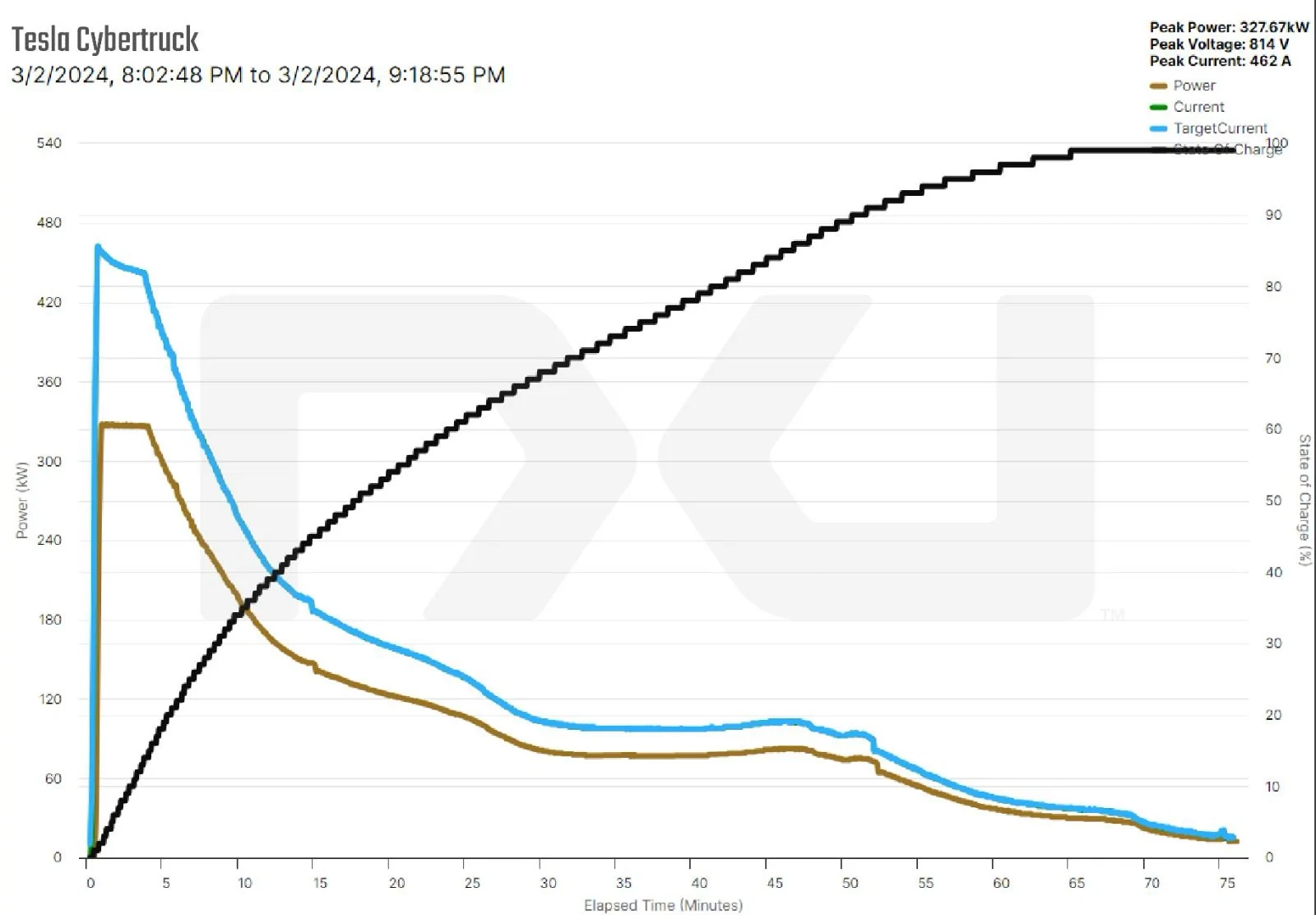
Big batteries do charge faster (in terms of kW, not SOC), up to the limits of the charger. Charge limit is proportional to pack size, double the pack and you double the charge curve. That means nearly double the miles of range added per minute of charging. Followed by being able to go twice as far and cut charge stops in half. It also means you can travel at a higher speed and still make it to the charging stop.

Here is the Cybertruck charge curve on a 500kW post:
GH72HU3aMAAyKvh(1).webp

Only in the sub 7% zone would a double sized pack not charge at twice the power.

I am aware of that but point out two factors: First, the quality (charger generation and grid condition at the location) of the Supercharger is the key determining factor for charging speed, far more important than battery size, and second, if you stay in the bottom 50-60%, the charging curve difference is negligible. Yes, a bigger battery CAN charge faster than a smaller battery - but we hardly ever see chargers that supply whatever a battery can take - so at most Tesla chargers there would be little or no difference in uptake. That’s certainly my experience along I-95 - the kWh added per minute isn’t different between my vehicles at the same charger because the speed is charger-limited, not battery-limited.

On two 1,000+-mile trips I was shocked at the new charger proliferation and how fast charging was below 60%. It was tough to leave a perfectly good brand new charger at 50% SOC, but if that’s what the trip planner suggested, it’s what I did. It was very good at knowing my current usage profile based on the trailer I was towing, and never got close to 10% SOC, even though I had it set for 5% on arrival. Interestingly, the MY did way better towing the exact same trailer (4-place 32-ft. four-place jet ski trailer weighing about 4,500 pounds) north on the same 1,100-mile route - about 200 kWh per mile better. That’s relative, and the battery is much smaller, but adding the identical trailer affected range less in the MY than in the CT. As a result it easily went 125 miles per charge (at about 650 wh/mi vs the CT’s average over 900) and I charged only 9 times to the CT’s 11 times on the same route.
Tesla Cybertruck F-150 Lighting EV Cancelled. To be Replaced by EREV Hybrid Lightning IMG_4496


Leo Snow

Well-known member
First Name
Leo
Joined
Nov 3, 2024
Threads
26
Messages
128
Reaction score
235
Location
Kelowna
Vehicles
Cybertruck AWD, Model Y
Country flag
A couple of thoughts:

1. Sad, as it was a good electric truck and it could become even better and find more customers over time. Gas cars are a short-term solution that'll ruin their business.

2. Good, because it'll give some necessary boost to Cybertruck sales, especially from smarter-than-average people.
 

PungoteagueDave

Well-known member
First Name
David
Joined
Mar 2, 2025
Threads
2
Messages
932
Reaction score
1,009
Location
Boynton Beach
Vehicles
‘25 Tesla Cybertruck, ‘26 Tesla MY Launch, ‘13 Porsche C4S, ‘26 BMW R1300 GSA
Occupation
retired
Country flag
While slow, traveling ~100 miles a day and recharging at the campground may be the most cost effective method (assuming they allow EV charging).
I almost never have to disconnect the trailer on a road trip while towing. - about 1 or 2 out of ten times. However, that’s partly because there are so many open chargers that I sometimes can block a few without inconveniencing anyone.
 
Last edited:

SCTesla

Well-known member
Joined
Jun 11, 2024
Threads
6
Messages
2,470
Reaction score
3,686
Location
USA
Vehicles
22 Model S, 24 CT
Country flag
The only thing that matters is how long the trip takes. If you have a large battery, you will go further on every leg between chargers, BUT you will spend far longer at each charger because the battery is bigger. It works out to about the same as long as you don’t have to unhitch, to stop every 75-100 miles. You simply charge-and-go in 15 minutes instead of 45 minutes - yes, you do it more often but the time works out close to the same. A big battery simply isn’t going to save much travel time.
The Silverado EV 0-100% is about the same as the CT 0-100% currently (CT is 15 min faster) for a lot more range. In a 500 mile towing test the Silverado won by almost 4 hours.

This test was prior to the CT increased speeds at V4 chargers, but that slight bump wouldn't close the gap by much (maybe 15 min).
 

PungoteagueDave

Well-known member
First Name
David
Joined
Mar 2, 2025
Threads
2
Messages
932
Reaction score
1,009
Location
Boynton Beach
Vehicles
‘25 Tesla Cybertruck, ‘26 Tesla MY Launch, ‘13 Porsche C4S, ‘26 BMW R1300 GSA
Occupation
retired
Country flag
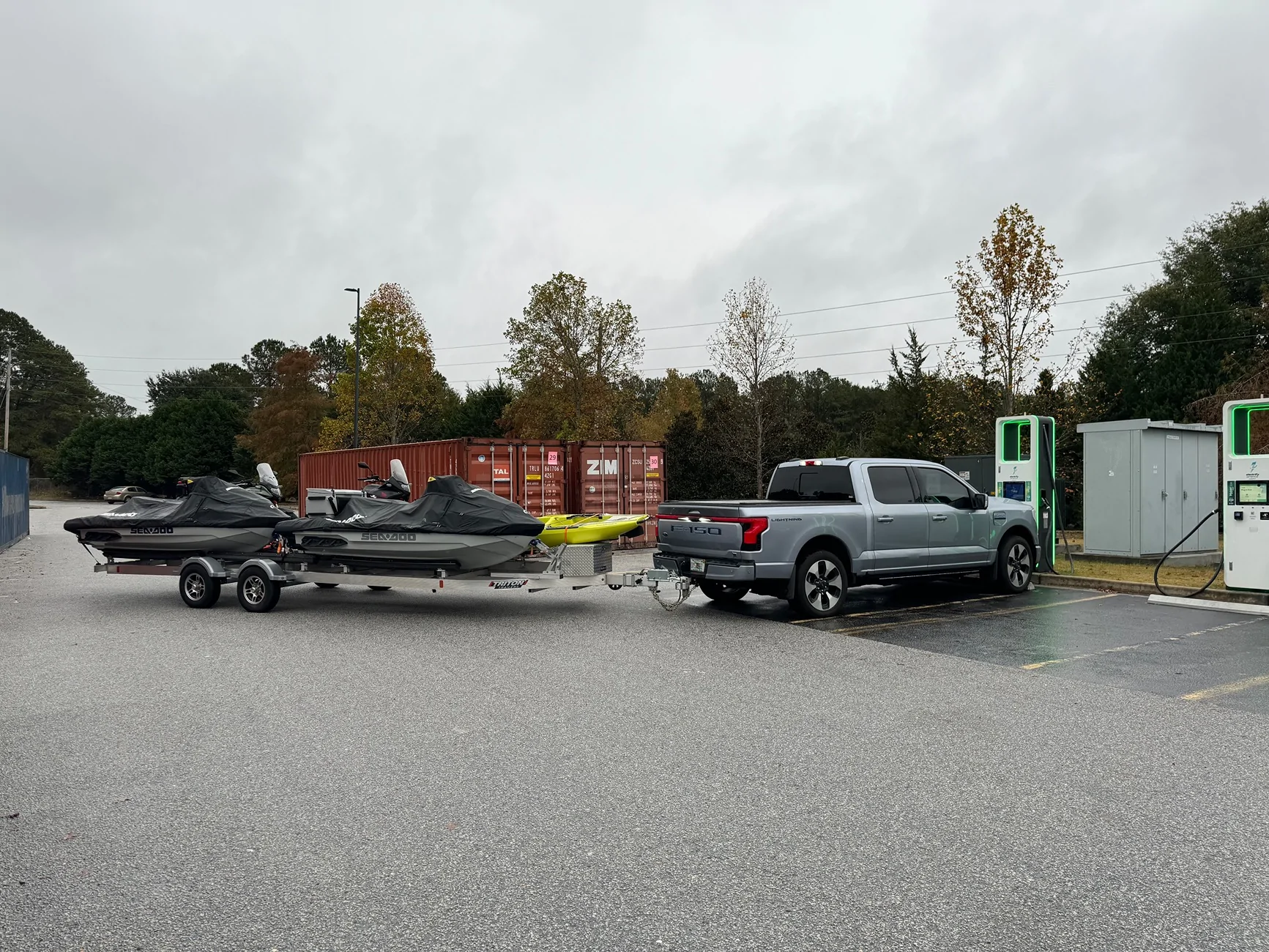
This was my Lightning two years ago doing the exact same I-95 run with a slightly difference trailer configuration (no equipment pod and two motorcycles instead of the six kayaks on the CT run, but the same jet skis) - It actually did better range-wise than the CT, could make 150 miles no problem, while the CT struggles with 120 - but here the issue is charger quality - the Supercharger network is so superior to EA that I have to do zero planning - while range anxiety was a huge deal with the Lightning because you never knew what you were going to find upon arrival at the charger.

Tesla Cybertruck F-150 Lighting EV Cancelled. To be Replaced by EREV Hybrid Lightning IMG_0348
 

PungoteagueDave

Well-known member
First Name
David
Joined
Mar 2, 2025
Threads
2
Messages
932
Reaction score
1,009
Location
Boynton Beach
Vehicles
‘25 Tesla Cybertruck, ‘26 Tesla MY Launch, ‘13 Porsche C4S, ‘26 BMW R1300 GSA
Occupation
retired
Country flag
The Silverado EV 0-100% is about the same as the CT 0-100% currently (CT is 15 min faster) for a lot more range. In a 500 mile towing test the Silverado won by almost 4 hours.

This test was prior to the CT increased speeds at V4 chargers, but that slight bump wouldn't close the gap by much (maybe 15 min).
But who does 0-100%? Link to the towing test?


SCTesla

Well-known member
Joined
Jun 11, 2024
Threads
6
Messages
2,470
Reaction score
3,686
Location
USA
Vehicles
22 Model S, 24 CT
Country flag
But who does 0-100%? Link to the towing test?
0-100% is the most extreme case.

This first video is the race:
(Silverado, Rivian, F150L, then CT in this race)

Results:

They drove ~500 miles from Denver, Colorado to Grand Junction, Colorado and back to Denver. OVER THE ROCKY MOUNTAINS TWICE!


Silverado EV - 1st. 1 Stop. 1.3mi/kwh

R1T - 2nd. 4 Stops. ~1.3mi/kwh*

F150 - 3rd. 4 Stops. ~1.3mi/kwh*

Cybertruck - 4th. 5 Stops. ~1.3mi/kwh*


The Silverado made the 500 mile drive over the Rockies twice with only one charging stop! The others had to stop 4 times (the Cybertruck likely could have made 4 stops work). The Silverado finished about 4 hours ahead of the rest.

Times weren't given, but they started at ~2:30pm. The Silverado returned at 12:10am. The rest returned around 4am. A snow storm on the return trip did slow everyone down.


This is the video of just towing range:
(This wasn't a race, but the Silverado got 250 miles with this load and the CT got 124 miles)
 
Last edited:

tingmo13

Well-known member
First Name
tashi
Joined
Apr 10, 2024
Threads
0
Messages
532
Reaction score
1,005
Location
Colorado
Vehicles
tesla model Y
Occupation
teacher
Country flag
Hybrid is for insecure & unsure people. Now, I feel so brave for switching to EV since 2016.
 

PungoteagueDave

Well-known member
First Name
David
Joined
Mar 2, 2025
Threads
2
Messages
932
Reaction score
1,009
Location
Boynton Beach
Vehicles
‘25 Tesla Cybertruck, ‘26 Tesla MY Launch, ‘13 Porsche C4S, ‘26 BMW R1300 GSA
Occupation
retired
Country flag
0-100% is the most extreme case.

This first video is the race:
(Silverado, Rivian, F150L, then CT in this race)

Results:

They drove ~500 miles from Denver, Colorado to Grand Junction, Colorado and back to Denver. OVER THE ROCKY MOUNTAINS TWICE!


Silverado EV - 1st. 1 Stop. 1.3mi/kwh

R1T - 2nd. 4 Stops. ~1.3mi/kwh*

F150 - 3rd. 4 Stops. ~1.3mi/kwh*

Cybertruck - 4th. 5 Stops. ~1.3mi/kwh*


The Silverado made the 500 mile drive over the Rockies twice with only one charging stop! The others had to stop 4 times (the Cybertruck likely could have made 4 stops work). The Silverado finished about 4 hours ahead of the rest.

Times weren't given, but they started at ~2:30pm. The Silverado returned at 12:10am. The rest returned around 4am. A snow storm on the return trip did slow everyone down.


This is the video of just towing range:
(This wasn't a race, but the Silverado got 250 miles with this load and the CT got 124 miles)
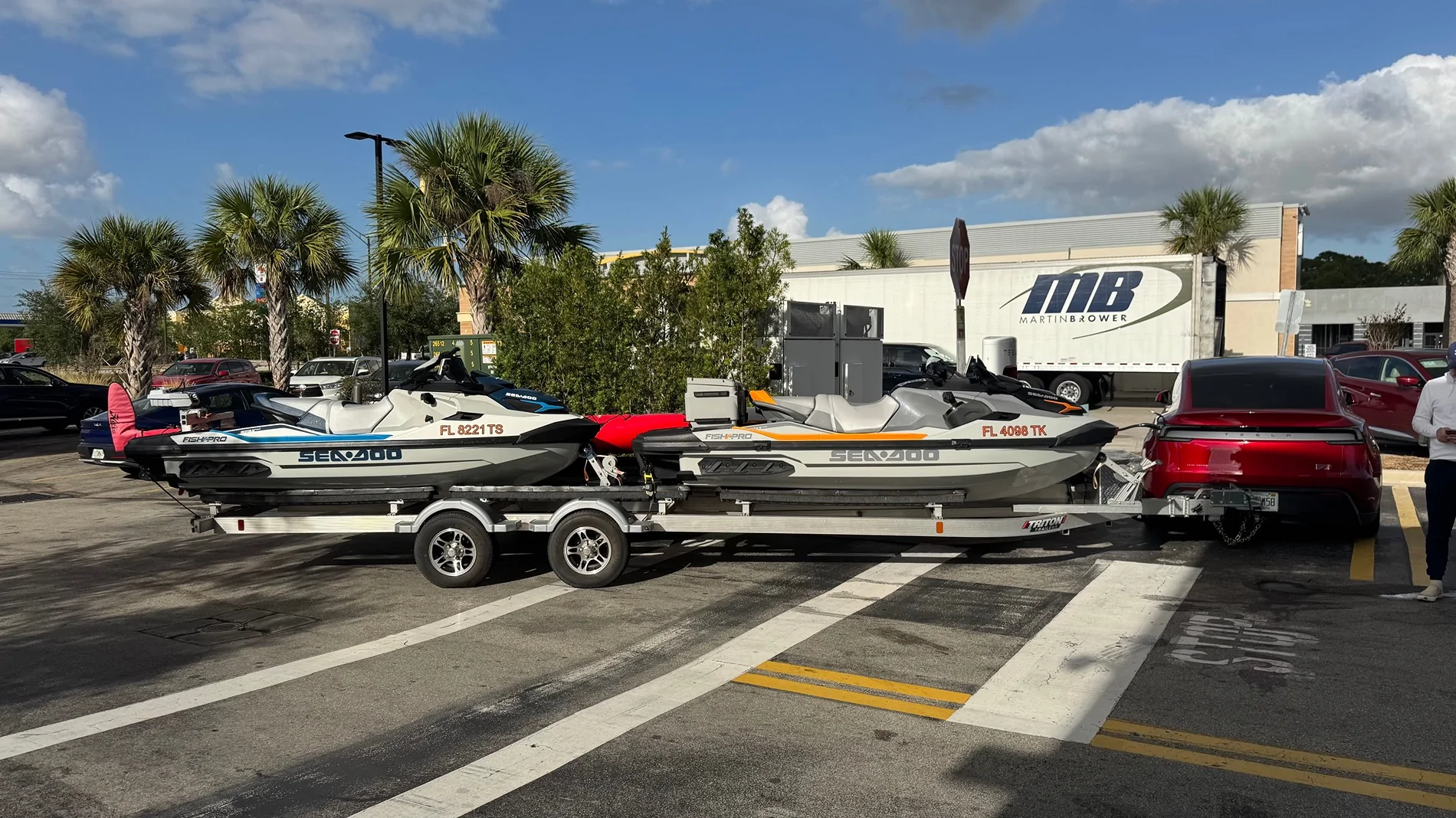
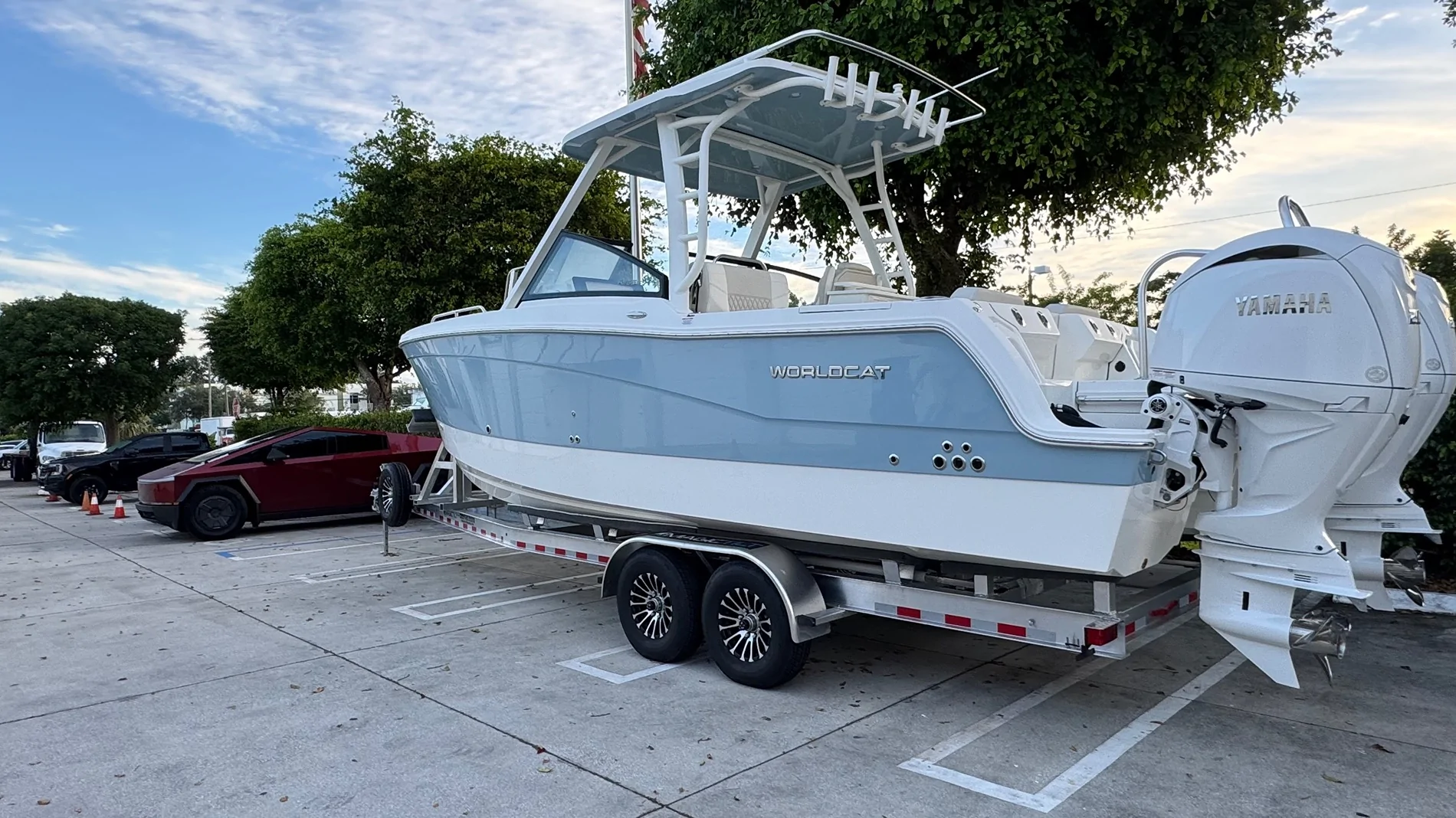
Thanks. I agree that bigger is better. I could really use the promised range extender…. I plan to tow the new boat up I-95 next spring. It did fine last week for a 50-mile run from Ft. Lauderdale to Boynton Beach - but it’s 13’4” tall and is like pulling a parachute. Local hauls are no issue. Florida to Maryland may be an adventure. The boat dwarfs the truck. I’ll probably miss the F-350 and expect it may cost 6-7 hours added to a 14 hour trip, but at one time per season, I’ll take it.

Our Florida HOA disallows parking anything over a half-ton truck, so I had switched to a Ford F-150 PowerBoost hybrid in 2020 that also got only 150 miles max range at 4.5 mpg, and then the Lightning in 2022 while awaiting the CT. The Ford turbo sixes in the PowerBoost F-150’s are very efficient when empty, but the least efficient trucks on the road when doing actual truck things.

Not having access to FSD will be a bigger loss than the added charging time. This picture’s perspective only slightly skews the size difference - the CT is made tiny by this trailer. I took it to scales on the way up - exactly 10,300 pounds with fuel. I have a weight equalizing hitch and electric over hydraulic brakes on both axles, so within specs, but towing with a CT probably doesn’t get more extreme than this if done within the Tesla-spec limits.

Interestingly, Ford publishes charts that down-rate towing limits for trailer frontal area, and has separate specs for towing with weight equalizing hitches, but Tesla provides no guidance for either. I am therefore choosing to presume there are no added limiting factors in Tesla’s engineering process and towing specs beyond what they officially publish. And I refuse to watch any whistlindiesel videos a second time!
Tesla Cybertruck F-150 Lighting EV Cancelled. To be Replaced by EREV Hybrid Lightning IMG_6420
 

2000prerunner

Well-known member
First Name
Steve
Joined
May 11, 2021
Threads
0
Messages
85
Reaction score
156
Location
San Diego, CA
Vehicles
2018 Toyota Tacoma
Occupation
BSer
Country flag
It was for me and many others. The Cybertruck is a far better work truck than the F-150 gas burner it replaced. The fact that my Model 3 Performance mostly just sits there, when it was my main driver pre-Cybertruck, is just a side-effect of being not only good as a truck, but also as a nice car. My F-150 couldn't satisfy both roles and it was a worse truck in every single way except for range, which isn't even a real consideration for how I use a truck.
I actually miss driving my model 3P whenever I’m in the cyber. My wife drives the cyber most of the time. I guess the steer by wire is definitely a much better experience in the CT vs the model 3P … but , that 4,000lb go kart makes the CT feel like a FedEx truck in terms of handling and braking. I also have aftermarket coil overs, aftermarket sway bars, 18” wheels , and Michelin cup2 tires on the M3P… so the poor CT seems like a tank in comparison. I’d actually rather modify a model 3 into a Baja buggy for off road because that super heavy cyber truck definitely likes to flop around in the desert when you start driving faster. However, as a normal truck and for camping, CT obviously the best vehicle ever created.
 

dalton108

Well-known member
First Name
Dalton
Joined
Oct 17, 2020
Threads
131
Messages
3,964
Reaction score
7,907
Location
USA
Vehicles
‘24 FS/CB; ‘24 MX; ‘23 MS PLAID (Prior: ‘20-MY; ‘21-M3P) (Also: ‘14-FJ; ‘21-C8)
Occupation
Lawyer
Country flag
I actually miss driving my model 3P whenever I’m in the cyber. My wife drives the cyber most of the time. I guess the steer by wire is definitely a much better experience in the CT vs the model 3P … but , that 4,000lb go kart makes the CT feel like a FedEx truck in terms of handling and braking. I also have aftermarket coil overs, aftermarket sway bars, 18” wheels , and Michelin cup2 tires on the M3P… so the poor CT seems like a tank in comparison. I’d actually rather modify a model 3 into a Baja buggy for off road because that super heavy cyber truck definitely likes to flop around in the desert when you start driving faster. However, as a normal truck and for camping, CT obviously the best vehicle ever created.
I don’t talk about it often, but I agree with you. The M3P really was Tesla’s 3 series destroyer (until BMW fubard it themselves). And that might not mean a lot to a lot of guys on this forum (who have convinced themselves against all reason that the CT is the automotive end all be all but, other than having two extra doors that it doesn’t need the M3P is almost the perfect sports sedan. My Model S Plaid is faster and bigger, but you cannot beat the handling.
Sponsored

 
Last edited:


Top