Sponsored

Breakover / Departure Angle stats?

cvalue13

Well-known member
Joined
Aug 17, 2022
Threads
74
Messages
7,153
Reaction score
13,769
Location
Austin, TX
Vehicles
F150L
Occupation
Fun-employed
Country flag
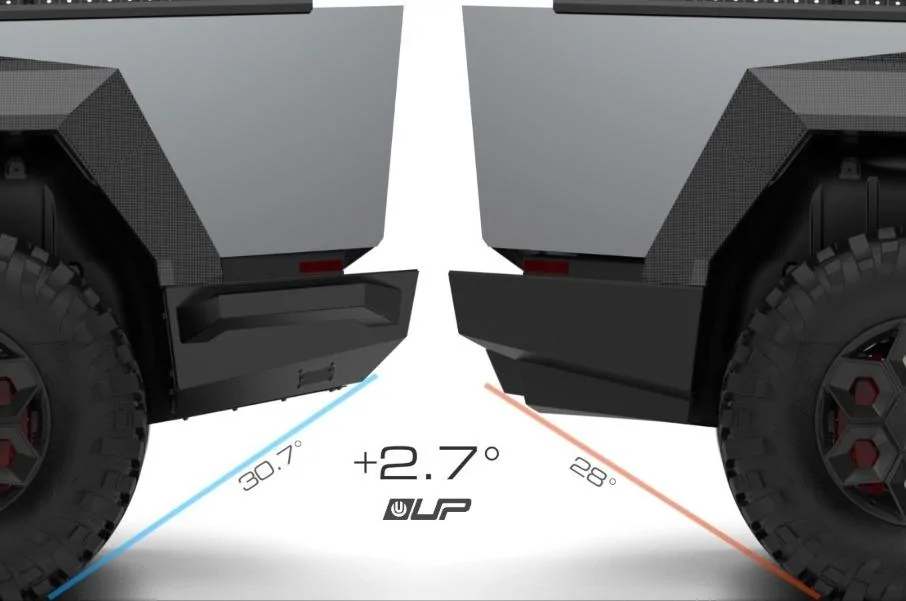
Has anyone seen reliable and detailed brakeover and departure angle calcs?

I’m hoping for someone who’s done the math on each of high and very high settings at least (because I personally ignore extract mode for basic functionality)

I haven’t had time to watch but one in depth review, and also haven’t noticed it clearly posted anywhere here
Sponsored


 
OP
OP
cvalue13

cvalue13

Well-known member
Joined
Aug 17, 2022
Threads
74
Messages
7,153
Reaction score
13,769
Location
Austin, TX
Vehicles
F150L
Occupation
Fun-employed
Country flag
No, no truck or overlanding review yet. Are you seriously considering CT for offroading?
no, not me.

I’m instead only seriously considering completing a part of my chart that attempts to give a balanced and thoughtful comparison between the relative stats of the CT vs Rivian vs Lightning.

my chart has a placeholder for brakeover, etc., un-filled. Makes my eye twitch.

meanwhile, *other* charts out there are flashing the CT’s ground clearance next to the Rivian’s, which is to me a misleading side-by-side comparison. If you care about ground clearance for overlanding/off-roading, then you should generally be caring not just about the ground clearance alone, but instead the intersection of ground clearance and wheelbase.

those other folks’ charts, in my book, gloss over the fact that the Rivian’s 14.9” ground clearance (with a 136” wheelbase) can offer far more functioal clearance than the CT’s “ultra high” 14.4”** (with a 143” wheelbase).

Put differently, the brakeover/approach/departure stats side-by-side will do a better job of highlighting the real functional compare.


**Side note: I don’t want to completely under-play or ignore the CT’s “extract” mode 17” ground clearance, as there are certain limited ~emergency scenarios where that particular form of clearance could be critical. Eg wading.

But I think it might otherwise be a misleading stat, insofar as the CT stretched to that height may not have great articulation, and still has a 143” wheelbase.
 

JBee

Well-known member
First Name
JB
Joined
Nov 22, 2019
Threads
18
Messages
4,913
Reaction score
6,362
Location
Australia
Vehicles
Cybertruck
Occupation
. Professional Hobbyist
Country flag
Time to do some up to date 3D models... ;)

The 17" clearance could be used for approach/departure and ramp over extremes. This would not occur often in a track, so intermittently using extract mode is really a fully deployable function.

A lot of 4x4 driving is dependent on the drivers chosen path, in many situations there is some flexibility on how to tackle and obstacle.

The more pressing concern when tackling large obstacle is disconnecting those front and rear stabilizer bars, and having those airbag springs crossed linked. Without proper suspension articulation it will not have proper traction, even if the diff locks are engaged.

I can see from the build photos that the stabilizer bar is NOT detachable, but this can be fixed with an aftermarket pin that can be removed manually before attempting difficult terrain.

But I fully expect the current configuration of the CT, that we have seen in tests does not have a cross linked airbag setup.... yet. Depending on the plumbing layout of the air system and regulating valves, this might be as simple as a OTA software update that allows for each wheel regulator valve to stay open. If not then one would have to add a 4 way valve to the existing pluming to add this feature, and technically this could be done DIY as well like the stabilizer disconnect.

This would allow for air circuit pressure to self balance across all the wheels, meaning that the highest wheel would deflate and push up the other lower wheels, as pressure self equalizes between the bags. This allows for the best wheel articulation possible, and also so that each wheel gets some downforce and contact with the ground for better traction. This is in no way a new feature, Land and Range Rover, Mercedes, etc have been doing this for decades, hence their off-road prowess.

That leads me to the next point and that is if the CT will feature an "active" air suspension, where it uses internal gyro sensors to self level or optimise each individual suspension height. Technically, if they do off road 3D terrain modeling using the FSD computer, it could even use that date to lean away from the obstacle to increase the approach/departure angles. If they replicate the Mercedes system and fast enough it could even predict and change suspension settings to respond to incoming bumps using the cameras.

I really hope they do this properly. ?
 
OP
OP
cvalue13

cvalue13

Well-known member
Joined
Aug 17, 2022
Threads
74
Messages
7,153
Reaction score
13,769
Location
Austin, TX
Vehicles
F150L
Occupation
Fun-employed
Country flag
The 17" clearance could be used for approach/departure and ramp over extremes. This would not occur often in a track, so intermittently using extract mode is really a fully deployable function.
to expand on my hesitation here: getting the CT up to 17” takes a few minutes (the bottle has to charge repetitively), and then after the truck is let back down it may be several more minutes before the truck can be re-raised to any height (basically, getting into extract runs risk of over-working the system, so it is forced by software into a time-out)

which Is why I say and view it as more of an emergency type function - you’ll use it if you have to to get out of a pickle - but not a sort of mode you’ll go in/out of all casually during a course.

and that’s all before we get t things like…


The more pressing concern when tackling large obstacle is disconnecting those front and rear stabilizer bars, and having those airbag springs crossed linked. Without proper suspension articulation it will not have proper traction, even if the diff locks are engaged.
I wouldn’t be expecting much of any articulation in extract mode. The fender flair Is 10” (!?) above the tire in this mode.

it’s on it’s damn tippy-toes

which I think is great for certain pickles like a last effort at getting off of high-centered, wading water that is deep (if not too terribly uneven a surface), etc.

But rock crawling etc while on tippy-toes, esp if it involves roll, is less than ideal

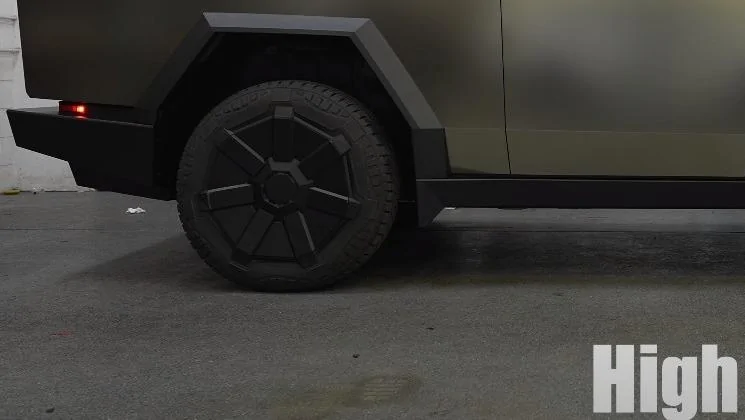
that’ll be done I think at the high (or maybe or ultra-high) setting - (12.8 or 14.4 respectively), for their to be material articulation available


scottf200

Well-known member
Joined
Jul 31, 2021
Threads
53
Messages
2,221
Reaction score
3,241
Location
Western NC
Vehicles
X; immed family 3 & Y
Country flag
Has anyone seen reliable and detailed brakeover and departure angle calcs?

I’m hoping for someone who’s done the math on each of high and very high settings at least (because I personally ignore extract mode for basic functionality)

I haven’t had time to watch but one in depth review, and also haven’t noticed it clearly posted anywhere here
Some comparisons. See article at the end of this post as well.
https://www.cybertruckownersclub.co...e-angle-longer-control-arms.8070/#post-205852
 

JBee

Well-known member
First Name
JB
Joined
Nov 22, 2019
Threads
18
Messages
4,913
Reaction score
6,362
Location
Australia
Vehicles
Cybertruck
Occupation
. Professional Hobbyist
Country flag
to expand on my hesitation here: getting the CT up to 17” takes a few minutes (the bottle has to charge repetitively), and then after the truck is let back down it may be several more minutes before the truck can be re-raised to any height (basically, getting into extract runs risk of over-working the system, so it is forced by software into a time-out)
That may well be that it takes time to refill the tank with the compressor. But given the tank volume and the relatively low pressure of the airbags in comparison, I would be surprised if the tank can't do several full repetitive airbag inflations even without the compressor running at all. For example our 16ton truck might only have twice the air volume in tanks, but can do at least 5-6 airbag lifts of those tanks without the engine air compressor running, before it runs out of steam.

In fact by design I would actually expect then to optimise tank recharges for normal on road use, where not much air is used at all, to only recharge air when it is plugged in for charging. The air tank probably could store 0,5kWh of energy in itself, just in expended energy for compressed air. I also note the tank forms part of the CT structure, like in the MS, so having a large volume tank doing double duty doesn't come with much penalty.

Instead I think the main reason for the slow inflation, would be due to the regulators and feed line restrictions. The regulators might only be pin hole size, so they have finer pressure control, which needs to be corrected every time load is added to maintain height.

Point of interest on airbags: It is not "only" the air that is compressed in a air spring, but rather also the rubber bag that expands under compression of the suspension. The difference here is that in an ideal world air pressure dictates ride height but the airspring rubber vessel dictates spring rate. Obviously at the extremes this changes so one influences the other, but with a cross linked system, much of this can be overcome without adding pressure to all the airsprings at the same time.

In the airspring design phase the spring rate and expected load would determine the correct airbag parameters, like airbag rubber thickness, bag volume and pressure area etc. This is required so that a unladen vehicle is set at the right configuration, and that payload can be added which is only a proportion of that.

it’s on it’s damn tippy-toes
The above leads to this not necessarily being the case, because at full suspension articulation, being one suspension up against the stop, and the opposite side at full droop, the ride height pressure would only have to be at the middle ride height pressure setting.

Simply you don't need full pressure on the airbags in the recovery setting, to achieve full suspension articulation.

But....(but, but, but!) technically, if the CT allowed you to, it would be possible to push up the whole vehicle on just two diagonally opposite wheels, that are both on the top stop in articulation. In that case you would create a precarious see-saw effect by balancing it on just two wheels. However, I strongly doubt they will set the max airbag pressure high enough to ever allow this to happen, so it will try to keep three wheels on the ground.

BTW weight balance unloaded is 50/50, which is sport car level good for onroad. For offroad you'd probably want to fill the trunk with lead, or something at least, for uphill rock climbing, but for loose surfaces and sand put something more in the back, to keep the steering wheels from digging in whilst turning.

---

Another point to maybe mention here, seeing that we have come this far in talking airbag details, is that the it "could" well be that the payload capacity of the CT suspension far exceeds the stated 2500lbs payload in the specs, as EM has alluded to in his presentation.

It is even likely that this payload capacity, up to 3500lbs is in fact closer to the designed capacity being built into the production CT's. It would not be out of the question for these loads to be handled by what we have seen as suspension parts in the build photos.

If so, the most obvious conclusion here would be that he payload specs are being sandbagged, and upon further real world testing results these restrictions could be relieved. They have done the similar thing with battery capacity etc, when the 2170 cells were used in the M3, so I wouldn't put it past them to design and make the vehicles at one performance level but change that over time as they get feedback and it matures. I'm not sure how the payload change will be addressed administratively with DOT.

I also wonder if the current government incentives might be conditional on total vehicle mass.
I'm not up to date on the state of available US rebates, or classifications and how this might persuade Teslas specifications to accommodate them.
 
OP
OP
cvalue13

cvalue13

Well-known member
Joined
Aug 17, 2022
Threads
74
Messages
7,153
Reaction score
13,769
Location
Austin, TX
Vehicles
F150L
Occupation
Fun-employed
Country flag
Another point to maybe mention here, seeing that we have come this far in talking airbag details, is that the it "could" well be that the payload capacity of the CT suspension far exceeds the stated 2500lbs payload in the specs, as EM has alluded to in his presentation.
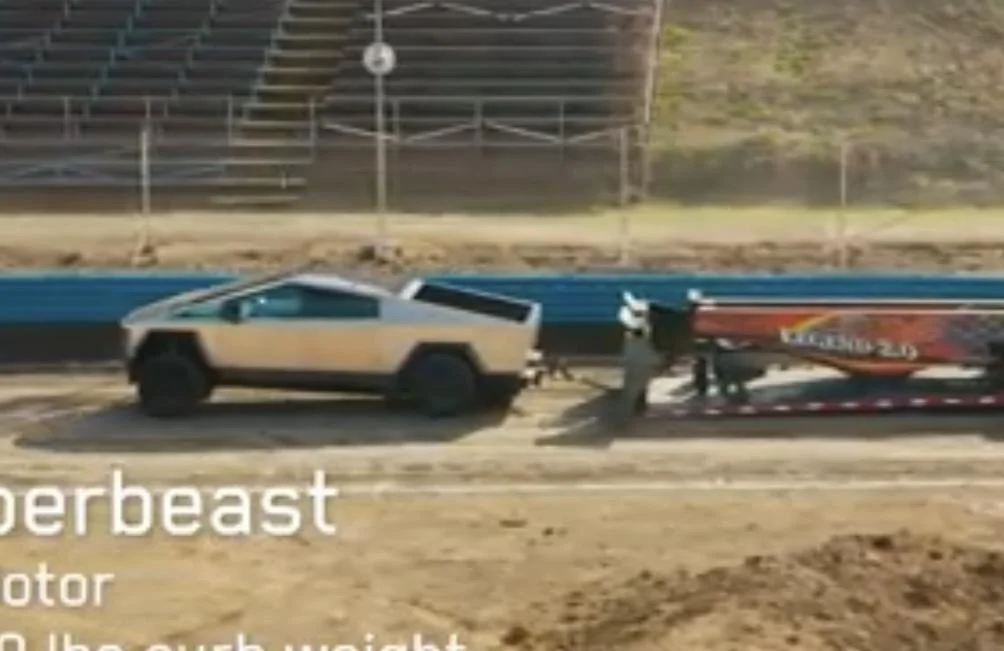
curious about your thoughts on how the CT looked in the sled pull video

more than any other vehicle, it appeared to completely swamp out in the rear once it began that pull. Surprised me a bit for a system supposed to have load leveling etc

Tesla Cybertruck Breakover / Departure Angle stats? 1E92D20B-BBAB-4EFF-8D5E-66BE3EAB681B
 

Coolbreeze704

Well-known member
First Name
Bruce
Joined
Nov 23, 2019
Threads
15
Messages
1,418
Reaction score
3,774
Location
Troutman,NC
Vehicles
2022 Model Y, 23 Lightning, CyberTruck (someday)
Occupation
GM Manufactured Homes
Country flag
@cvalue13, @JBee

You two are really amazing. Thanks for the time, thought and effort you both and many others put into this community.
 

JBee

Well-known member
First Name
JB
Joined
Nov 22, 2019
Threads
18
Messages
4,913
Reaction score
6,362
Location
Australia
Vehicles
Cybertruck
Occupation
. Professional Hobbyist
Country flag
curious about your thoughts on how the CT looked in the sled pull video

more than any other vehicle, it appeared to completely swamp out in the rear once it began that pull. Surprised me a bit for a system supposed to have load leveling etc

1E92D20B-BBAB-4EFF-8D5E-66BE3EAB681B.webp
Well this might well lead to that same conclusion that the payload capacity is higher than the 2500lbs. ;)

In the tractor pull there are a few reasons for the seemingly "poor posture" of the self leveling suspension here.

First up that tow hitch was connected to the top of the hitch rail, which means when it pulls the sled, there is a force that is trying to rotate the CT around the axis of the rear wheels, in the direction of the tensioned connecting chain.

This is not necessarily bad, in that this force lifts the front of the CT into the air, as well as lift the front of the sled up at the same time, reducing the sled drag, and both puts as much mass on the rear axle as possible. Down force x friction gives you maximum traction on the rear motors, which are doing over 80-90% of the work in this situation as the front axle is severely traction limited, with only a partial downforce.

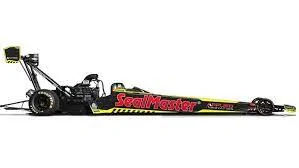
The longer wheel base here also helps the CT, as it does with the F350, in that the longer lever arm in front of the rear axle produces more rear axle down force, than the shorter wheel base vehicles with similar mass. This is also a reason why the beast version has such good acceleration, because like a top fuel dragster, it uses this long wheel base leverage effect to it's advantage to create more traction in the rear where the two motors are, without adding more mass.

Tesla Cybertruck Breakover / Departure Angle stats? 1701700591717


In this scenario the effect of trying to lift the sled by pulling the front up is primarily caused by the motor wheel torque that is twisting those rear tyres, Which is trying to do a "wheelie" and by doing so it is compressing the suspension as the front CT mass and the sled try to align. This angle looks more extreme on the Rivian and CT because in part of the airbags that are bulging the bags beyond their rating, despite being pumped up with pressure. This doesn't happen on the F150 seeing they are steel coil sprung in the rear, have less suspension travel in comparison and are potentially already sitting on or close the stops with a compressed steel spring. The F350 is live axle with progressive leaf springs which will not compress as much, it will also be rated for a higher rear payload. It also has a long wheel base that helps with a heavy ICE and gearbox in the front that gives it more front and rear axle traction. The EV's having the battery mass in the floor, is probably not helping that much in this situation.

Now in this scenario with the CT, with virtually fully compressed springs in the rear, I would say there is at least the half the mass of the front of the CT, so 1500lbs, plus the back CT mass 3400lbs, and the same 1500lbs amount from the sled to balance it, on the rear axle. So around 6400lbs on the rear axle alone. That is fairly substantial if correct, and nearly twice the rear axle capacity, I'd have to do some math to confirm how much exactly, but it would be somewhere in the ballpark.

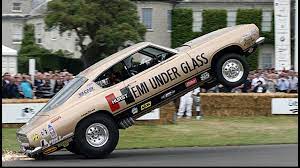
In the case of the wheelie below all of the vehicle mass is on the rear axle, except those couple of sparks on the bumper.

Tesla Cybertruck Breakover / Departure Angle stats? 1701700549458


Given that some of that 2500lbs payload is meant to be in the frunk, and in the passenger compartment as well, I'd say that the whole vehicle could handle another 600-750lbs in the bed and another 250-400lbs extra in the front to get it to the 3500lbs total payload.

But this is likely true for all the vehicles in the group, depending on how far they got. This is because it's typical to add factors of 2-3 on top of dynamic loads when designing structural elements, and the dynamic loads on the suspension themselves could be several times greater than the static load in the bed as well. So a payload rating of 2500lbs could be anywhere near 7500-10,000lbs before failures result on the weakest link, if in turn your drove it nicely down a smooth road without bumps.

Is that is still covered under warranty? Probably not. Is it safe? Sort of. Should you do it? Absolutely not, unless you don't care about insurance cover, road rules, or be charged with wreckless behavior and potential manslaughter when your brakes fail going down a hill.

Tesla Cybertruck Breakover / Departure Angle stats? overloaded-vehicles-around-the-world-fb2__700


But 700lbs in the back and another 300lbs is likely not going to be much of a problem, so long you don't go touring the baja with jumps and sharp boggy corners. I fully expect the payload rating to go up still and I'm wondering if the battery extension pack "reduces" the payload officially or not when it comes out.


scottf200

Well-known member
Joined
Jul 31, 2021
Threads
53
Messages
2,221
Reaction score
3,241
Location
Western NC
Vehicles
X; immed family 3 & Y
Country flag
Has anyone seen reliable and detailed brakeover and departure angle calcs?

I’m hoping for someone who’s done the math on each of high and very high settings at least (because I personally ignore extract mode for basic functionality)

I haven’t had time to watch but one in depth review, and also haven’t noticed it clearly posted anywhere here
Tesla Cybertruck Breakover / Departure Angle stats? ruapnwX

Tesla Cybertruck Breakover / Departure Angle stats? o8KtU4A


scottf200

Well-known member
Joined
Jul 31, 2021
Threads
53
Messages
2,221
Reaction score
3,241
Location
Western NC
Vehicles
X; immed family 3 & Y
Country flag

scottf200

Well-known member
Joined
Jul 31, 2021
Threads
53
Messages
2,221
Reaction score
3,241
Location
Western NC
Vehicles
X; immed family 3 & Y
Country flag
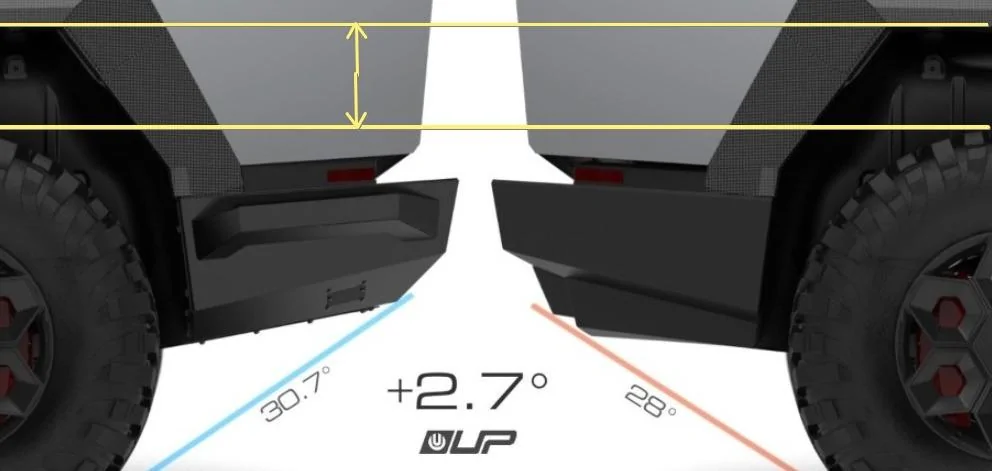
PS: how do they not mention the height setting at which this is based
I guess this measurement (visual or estimated based on other things) between the yellow lines needs to be compared to various places where people are showing all heights.
My guess is High.

Tesla Cybertruck Breakover / Departure Angle stats? peyusd


Tesla Cybertruck Breakover / Departure Angle stats? mON3p8t

Tesla Cybertruck Breakover / Departure Angle stats? GwJdKZx


Sponsored


Top