

Sponsored

Is wrapping our only option? Patina

TickTock

Well-known member
Joined
Jul 27, 2023
Threads
41
Messages
861
Reaction score
1,837
Location
Phoenix, AZ
Vehicles
`11 Nissan Leaf; '18 Model 3; '18 Model S; '24 Beast
Occupation
Electrical Engineer
Country flag
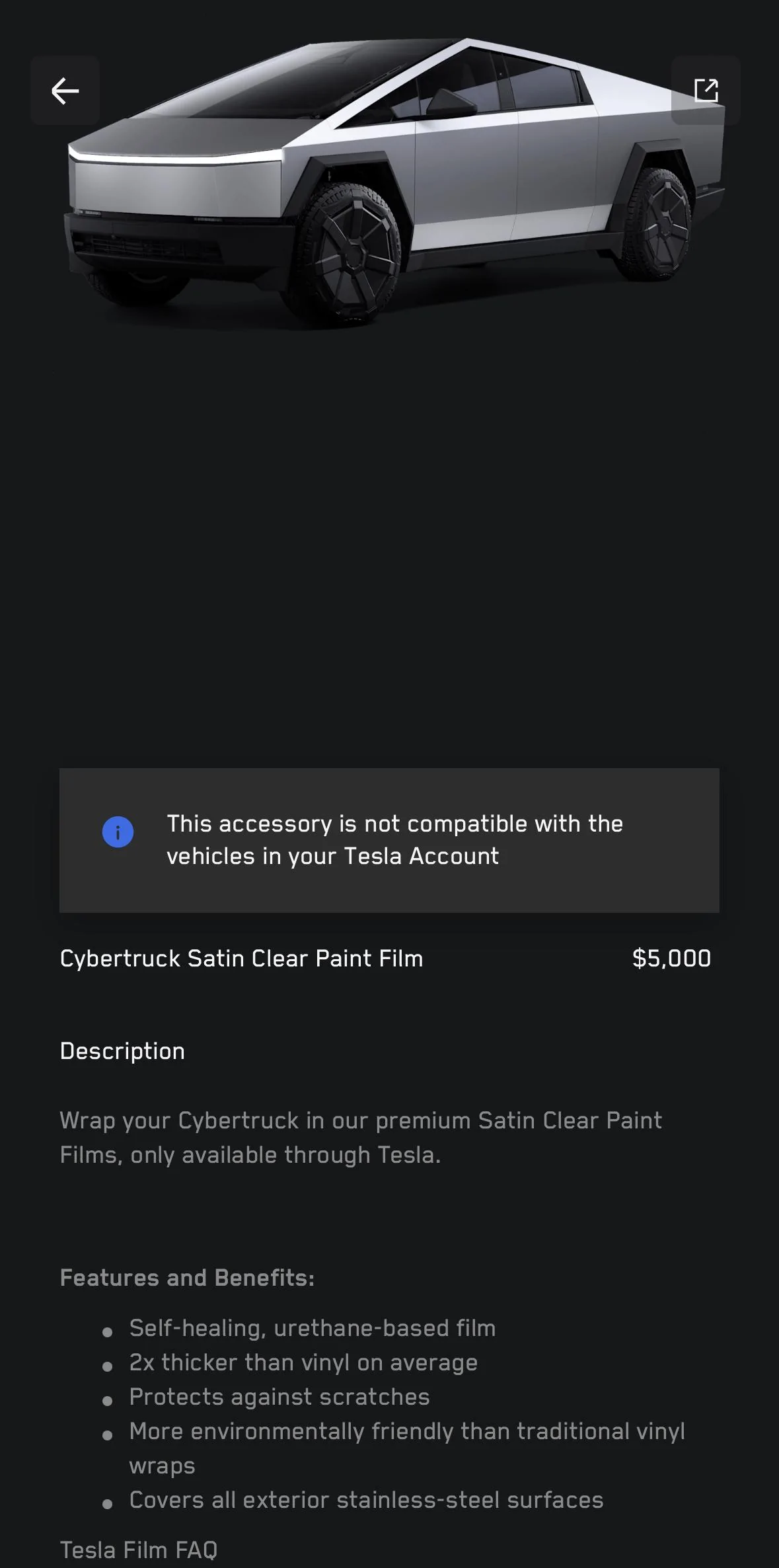
I’m guessing they will let me buy this once I receive a VIN
IMG_3035.webp
I want to do this but will not based on the lack of uniformity of the patina I've seen on the trucks delivered so far. One had a door significantly more brown/orange than the rest of the truck. I don't trust Tesla to do it right. They to a lot of things right, but fit and finish is not their strong point. So I am thinking Bartender's Friend/WIndex treatment, *then* clear coat.

Another thought I had was to put it in an automotive paint oven after BF/Windex treatment to accelerate the patina growth in a controlled environment. I like the look of the patina - but only if it is uniform.
 

ideaXfactory

Well-known member
First Name
IdeaX
Joined
Jan 8, 2024
Threads
6
Messages
339
Reaction score
429
Location
MO
Vehicles
Many trucks, and a Porsche
Occupation
Stainless, metals, art, polymath
Some relevant info:

Primarily on a vehicle I think Chlorides (think sodium chloride - salted streets), and transplanted steel will cause the greatest potential surface problems.

Don't try cleaning it with steel wool :)

I think wraps are fine, some may be better or easier to remove than others, but don't intend to wrap mine...


What corrodes stainless steel?
  1. Acid Immersion
  2. Strong Chlorides
  3. Galvanic Reactions
  4. Transplanted Plain Iron or Steel
  5. Lack of Oxygen
Stainless steel is an alloy made from iron, chromium, and other metals. This material is well-known for its resistance to environmental factors like corrosion. However, its increased resistance doesn’t mean that it is completely impervious — under certain circumstances, this material can corrode, and cause many problems for its users. This post dives into what corrodes stainless steel, and what factors and practices you should avoid when using this metal product.

How Stainless Steel Can Resist Corrosion
There are multiple stainless steel alloys and grades that differ in their metal composition, alloying process, and manufacturing methods. The one trait that all stainless steel alloys share is their passivation layer. This layer is made of chromium oxide and is formed when the surface of the metal is exposed to oxygen.

The passivation layer is impervious to water, is self-generating, and helps to protect the stainless steel from rust and corrosion. It can also withstand high heat without melting — though it can get discolored over time.

This passivation layer is not invincible, and corrosion may still occur under the right environmental circumstances. Furthermore, as there are various alloys of stainless steel, the factors that may cause one alloy to corrode may not affect another one.

Acid Immersion

Generally, stainless steel alloys are resistant to acid. However, the levels of resistance will depend on the alloy being used, the concentration and type of acid, and environmental temperature.

When stainless steel is immersed in acid, the passivation layer may be affected. When this occurs, the layer is eaten away uniformly, and corrosion will occur over the entire surface of the metal. Sulphuric and hydrochloric acids can be particularly aggressive against most stainless steel alloys, especially when in high concentration.

One way to avoid this is to choose a grade of stainless steel that is appropriate to the acidic environment you want to use it in. For example, when working with hydrochloric acids using 304 stainless steel is not recommended. Instead, using a 400 series stainless steel would be more acid-resistant.

Strong Chlorides

Pitting corrosion can occur when stainless steel is exposed to chloride-rich environments. For example, stainless steel plates used in cargo ships experience pitting over time, which is a result of being in constant contact with seawater and sea breezes — both of which contain high levels of salt.

To avoid corrosion due to strong chlorides, you can choose a grade of stainless steel that is specifically designed to resist the chemical — such as 316 stainless steel. Avoid using grades that are known for their weak resistance to chlorides — like 304 stainless steel. Aside from that, specialized coating to decrease direct contact with chlorides can also be used.

Galvanic Reactions

When two metals with different galvanic potentials are welded or in contact with one another, it can cause corrosion. This happens when the connection via electrolytic material leads to an unbalanced flow of electrical current from one metal to another. One metal will accept more electrons, turning it into an anode, which then causes corrosion.

While problems with galvanic reactions seldom happen between two stainless steel of different grades, they can still occur depending on the grades used. This reaction can also happen when using this material with another metal, such as graphite.

The rate of corrosion is affected by the type of stainless steel used, welding filler used, temperature and humidity, and the surface area of the metals in contact with the other.

The best way to prevent this is to avoid using two dissimilar metals in one project. Another way is to add a protective coating to the metals in order to prevent the flow of electrons from one metal to another. You can also break this connection using insulation, which separates the two metals from each other.

Transplanted Plain Iron or Steel
Plain iron and steel residue may accidentally be transferred onto a stainless steel part in the manufacturing process. These particles can affect the quality of the stainless steel, and disrupt its natural resistances to environmental factors — including corrosion.

One way that this can happen is when equipment is used to process multiple kinds of materials and is not properly cleaned or inspected in between batches. Residue from a previously processed batch can stick on the tool’s surface, and transfer onto stainless steel.

To prevent this from happening, it is important that manufacturers thoroughly clean equipment after each batch is done processing. Additionally, it is advisable to never use certain equipment for different metal types — such as steel brushes. This is because it is difficult to fully remove all particles of one material from the surface.

Lack of Oxygen

The passivation layer needs a constant supply of oxygen to sustain itself. In tight and small crevices, it is not possible for enough oxygen to reach inside. This oxygen deprivation can cause the stainless steel to be vulnerable to attack.
 

FarAway

Well-known member
First Name
I.
Joined
Mar 30, 2022
Threads
65
Messages
866
Reaction score
1,980
Location
Central Virginia
Vehicles
TVR, Jeep Jk Sahara, Audi Q7, FS CyberBeast
Country flag
I was asked not to post pics. This is an early vin that has gone through some abuse. may be a one-off situation
Sorry, I am not angry about the post, but I DO NEED an emoji "thumbs down" to rate it.

No one needs a picture of anything but the "alleged" corrosion.
Tesla Cybertruck Is wrapping our only option? Patina 1705669374848
 
Last edited:


FarAway

Well-known member
First Name
I.
Joined
Mar 30, 2022
Threads
65
Messages
866
Reaction score
1,980
Location
Central Virginia
Vehicles
TVR, Jeep Jk Sahara, Audi Q7, FS CyberBeast
Country flag

Steve-O

Well-known member
First Name
Steve
Joined
Jan 12, 2024
Threads
9
Messages
63
Reaction score
198
Location
Lake Tahoe, NV
Vehicles
2013 Model S, 2024 Foundation Series Cybertruck
Country flag
Is Corrosion really an issue…a DeLorean with inferior stainless that sat outside abandoned for 32-years….stainless easily brought back to new!?


BannedByTMC

Well-known member
Joined
Dec 19, 2023
Threads
22
Messages
813
Reaction score
1,141
Location
NYS
Vehicles
Model 3
Country flag
Out of Spec Detailing is working with a company to come up with a ceramic coating that doesn't change the color of the SS. I think the existing ceramic coatings would work if you don't mind a change in the color.
 

HaulingAss

Well-known member
Joined
Oct 3, 2020
Threads
28
Messages
10,337
Reaction score
20,763
Location
Western Washington, USA
Vehicles
Cybertruck DM, 2010 F-150, 2018 Performance Model 3, 2024 Performance Model 3
Country flag
I was asked not to post pics. This is an early vin that has gone through some abuse. may be a one-off situation
Let me get this straight. Your friend has an early VIN that he requested you not post post actual pictures but said it was fine to describe your observations on a public forum?

It makes no sense. If you are not posting pictures out of respect for your friend, then why are you posting your description? I have three good answers:

1) The corrosion is so minor and normal as to be laughable if we could actually see a photo.
2) It's made up out of thin air.
3) It's not corrosion at all, but discoloring from laser welding that was not fully removed at the factory.

Tesla laser welds the inner and outer door panels together using tightly controlled laser heating at the very edge of the door panels. Afterwords they do a cosmetic cleaning up of the heat discoloration on the door edges. This is not corrosion, and the cleanup is only for aesthetic reasons. A photo would have let us judge for ourselves whether what you are reporting is credible.

The only kinds of corrosion I would take seriously enough to even consider on a Cybertruck would be crevice corrosion or galvinic corrosion. In both these cases, you would be very unlikely to even be able to see it already in exposed areas and neither of these conditions have any reason to manifest first at the door edges.

Please note that I am not accusing you of dishonesty, because I don't have enough information to say one way or another. But I'm not stupid, and it would be stupid to entirely discount dishonesty since I have no way to know what your level of honesty/dishonesty may be.

I just find it suspicious that your friend would request no photos while not having any issue with you publically describing your visual observations. Would it not have been just as easy for your friend to request not reporting on the condition at all?
 
Last edited:

Tony Roe

Well-known member
Joined
Nov 26, 2023
Threads
2
Messages
66
Reaction score
57
Location
Putnam Valley NY
Vehicles
Cybertruck
Occupation
retired
Country flag
I to think, stainless steel should be literally indestructible .
AND maintenance “ FREE “ !
I need to see some Real Evidence before I cancel my CT.
I can’t afford to buy an $80k rust bucket ?‍♂

T
Sponsored


Top