
hemiarch
Well-known member
- First Name
- Ace
- Joined
- Jan 22, 2025
- Threads
- 114
- Messages
- 8,353
- Reaction score
- 9,582
- Location
- Arizona
- Vehicles
- 2024 foundation AWD, 2024 model x
- Occupation
- Trauma Surgeon

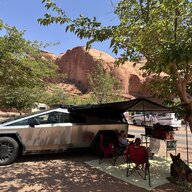
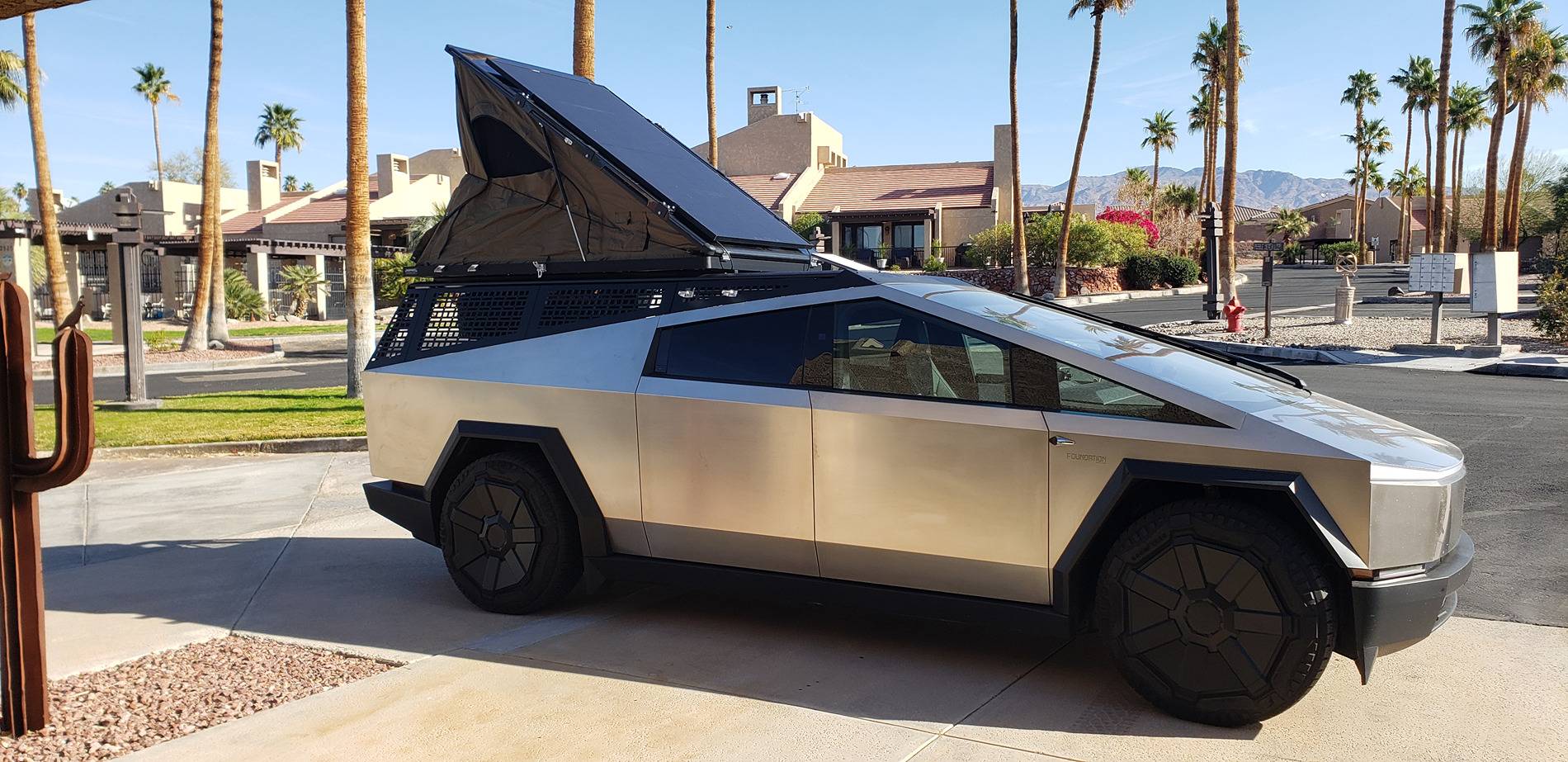
That’s exactly right. Then name of the game is keeping the truck asleep as much as possible.I ran another test charging my CT from the solar power station's 2.5kWh fully charged LFP battery (two EcoWorthy 12.8V 100Ah batteries wired in series). At 64degF ambient, it took 1 hr and 40 min to put 1 kWh of charge into the truck battery consuming 1.58 kWh of energy from the solar battery, reducing its SOC to 34%. That turns out to be an efficiency of 63% charging with the Gen 2 mobile connector at 950W (8A). I'm sure that the loss of efficiency is mainly due to the power conversion losses going from DC to AC and then from AC to DC into the truck. Recovering that energy via solar on a clear day takes 5 to 8 hours depending on whether I'm in camp with the tent open or on the road. My REC 420W Alpha Pure 2 panel was putting out 410W at noon today in full sun with the tent opened up.

Having solar energy generation on overland trips isn't going to significantly extend driving range, but it does help to preserve driving range by isolating electrical loads. Any time I plug something into one of the truck's power outlets, I'm reducing the driving range of the truck. Camp Mode is a huge range reducer. The more I can avoid draining the HV battery, the less stress I feel when located miles from the next charging station. There's no substitute for carefully planning trip charging stops, but having solar does help to make trip planning easier and safer.
Every time you run the inverter the entire thing has to wake up and do things which cost a lot more energy than whatever measley kettle or grill you happen to be running. Even the two Ecoflow AC/heaters we use because we’re ultra bougie are by themselves not that big of a range drain, it’s the truck itself.
Like one of the previous posters, I also use a delta pro 3 as range insurance. I live in Arizona and camp with small kids so this is a genuine concern my wife and I have.
It accepts up to 2600w solar supposedly but I run it with 4 allpowers 600w panels. Two in series on one input and two in parallel on the other.
It has two major advantages. One, it can provide pretty high current 240v output while all the solar is coming in without breaking a sweat or overheating (I’m charging at about 5-8mph in the middle of an Arizona day)
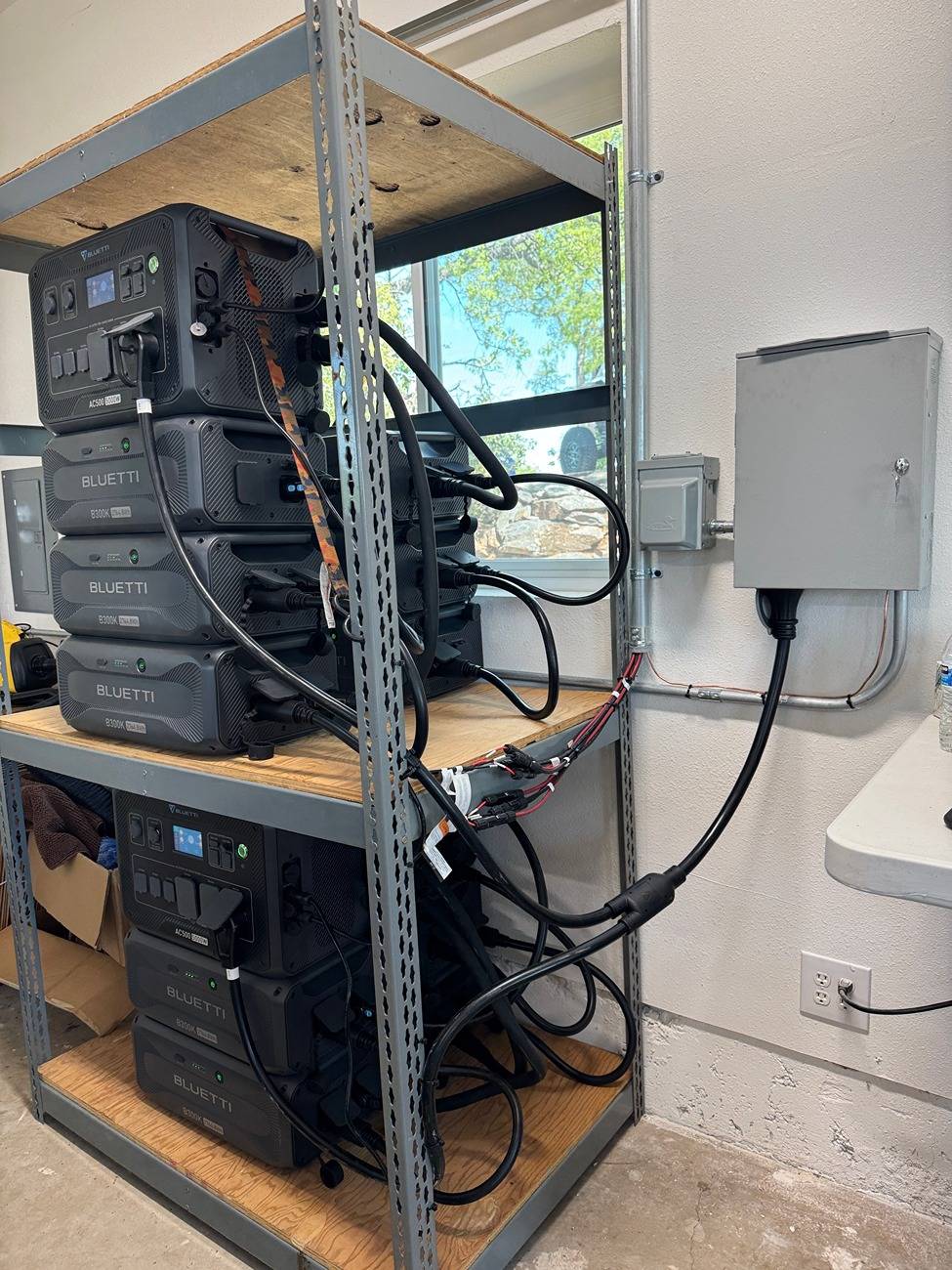
Allmost as important though, it can be charged up with a 240v EV charger in under an hour. What this means is that if I need to refill it for camp use, the truck inverter only needs to be on for under an hour and then the truck goes right back to sleep.
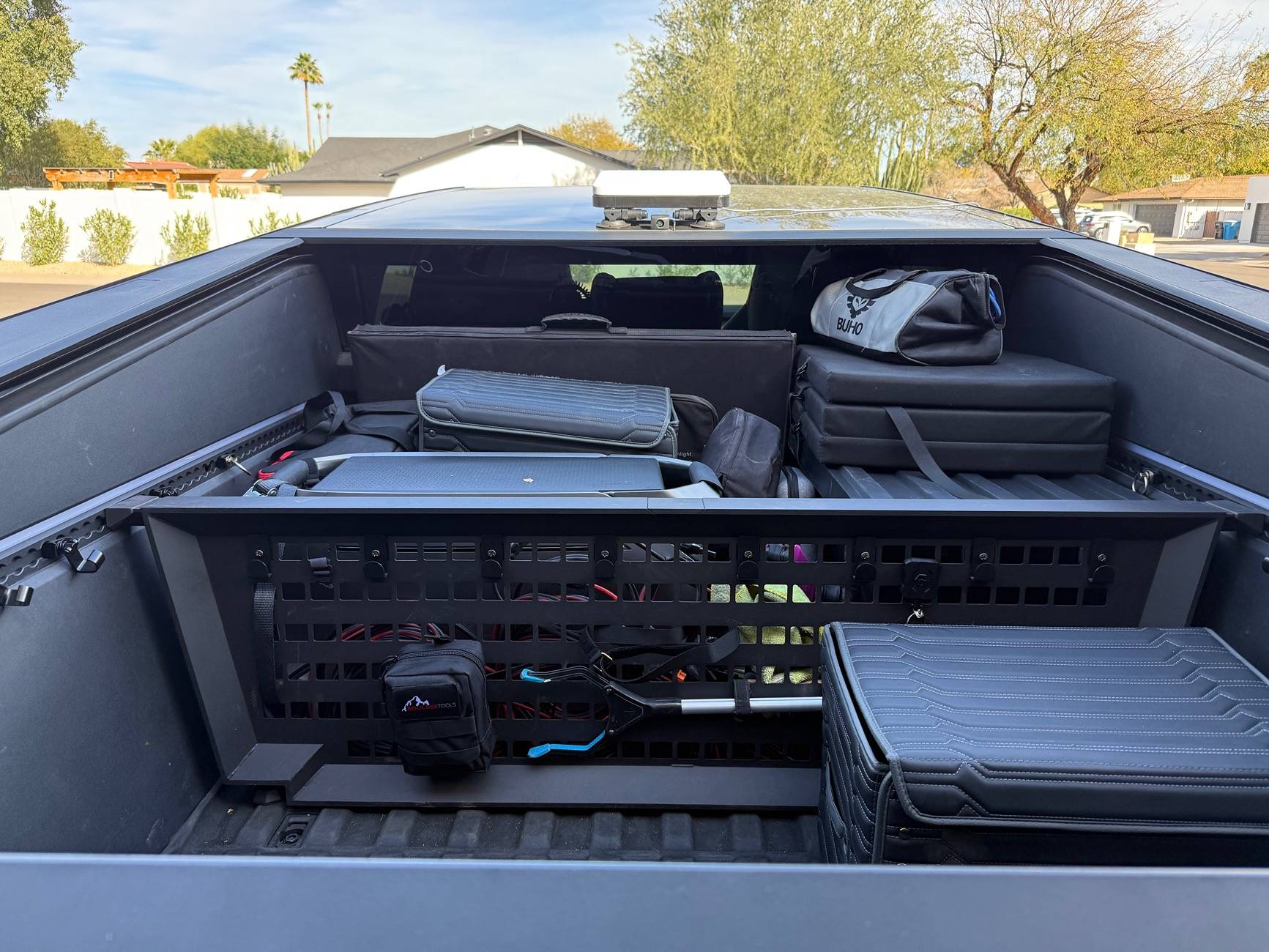
The picture of my bed shows my “daily carry”. It includes the generator strapped to the divider and the solar panels folded at the very back.
In my view that takes up less room than any range extender and potentially can add significantly more range if used intelligently.
I have wondered before if anyone has considered putting something like a delta pro ultra at the very back of the bed.
It’s a bigger battery with a MUCH bigger solar input and would still take a lot less room than a range extender. Probably also cheaper all told but I’m not 100% sure about that.
Sponsored