
CyberSleuth
Well-known member
- Joined
- Feb 19, 2023
- Threads
- 25
- Messages
- 287
- Reaction score
- 843
- Location
- US
- Vehicles
- Hot Wheels 1:10 Cybertruck

- Thread starter
- #1
Here's the full article from Barron's:
With the Cybertruck, Tesla Faces Its Edsel Moment

Tesla’s Avant-Garde Cybertruck is coming any day now. It’s the most important vehicle for the company since the 2017 introduction of its more affordable Model 3 electric vehicle.
The 3 helped usher in an era of growth, profits, and incredible stock gains for Tesla. The Cybertruck could do the same, or it could end up being Elon Musk’s Edsel.
The Edsel, named after Edsel Ford, the son of Henry Ford, is the notorious automotive failure, the one that stands out above the rest. It was more of a brand, like Pontiac or Saturn, than a single car. Ford Motor (F) launched a seven-model lineup in 1958. The company killed Edsel off in late 1959. Weak demand, weak reviews, weak customer reaction, all following weak product development processes, conspired to doom the nameplate.
Car buyers have been waiting for the oddly shaped Cybertruck since 2019. Now that it’s about to arrive, investors are wondering if the long-delayed pickup will be as big a flop.
It won’t be. Not by a long shot. Edsels never really found a market niche. They were large and launched during a recession and at a time when customers were beginning to look for more fuel-efficient options.
Price isn’t a barrier for Cybertruck either. It was designed to cost roughly $40,000 to $70,000. That was a price list set in 2019, however. Inflation has impacted everything. Still, the Cybertruck won’t be priced out of the mainstream truck market. New model year 2023 pickup trucks cost an average of about $64,000, Cox Automotive tells Barron’s. The average transaction price for a new 2023 F-150 Lightning is almost $87,000.
The market isn’t an issue, but what about the product? The Cybertruck will have new technology. It’s based on an “exoskeleton-based” design, says Elon Musk. That’s essentially a unibody design, explains Munro and Associates President Corey Steuben. Munro is a go-to source for manufacturing, design, and cost data for both auto investors and industry denizens.
Unibody isn’t very common. Most vehicles body-on-frame, which is exactly what it sounds like. The car body is dropped on a chassis. A unibody integrates the chassis and frame together, making it stronger and lighter. Lighter for an EV means more miles of range per unit of battery capacity.
The Cybertruck will be unique. While there are smaller truck models such as the Ford Maverick and Honda Motor (HMC) Ridgeline, large ones are typically body-on-frame. So Tesla is pushing the envelope on weight, strength, and efficiency. Cybertruck will also be able to accept one megawatt direct current charging, which means it will charge very fast with hundreds of miles of range delivered in minutes.
The market is there, the technology is solid, but what about that design? It looks like something out of a mediocre sci-fi film. Future Fund Active ETF (FFND) co-founder and Tesla shareholder Gary Black believes the design works and says it will serve as a rolling billboard for Tesla.
Gerber Kawasaki Wealth and Investment Management CEO Ross Gerber, who also owns the stock, agrees. “It’s super dope,” he says. “This is a game changer and [Tesla] will sell even more trucks once people see them on the road.”
As Tesla shareholders, both men are inclined to be bullish. Still, initial sales shouldn’t be a problem. Tesla has taken hundreds of thousands of preorders for the vehicle. Not all of those will become sales, but the order backlog should be more than enough to meet expectations for 2023 and 2024 deliveries.
Wall Street expects less than 10,000 Cybertrucks to be delivered in 2023 and fewer than 100,000 in 2024. That isn’t a high bar and Tesla can likely hit those numbers. The Cybertruck might be harder to make, but Tesla produced roughly 84,000 Model Ys in 2020, the first year of that vehicle. It made more than 400,000 Ys in 2021.
What Tesla should do after launching the Cybertruck is produce a more conventional-looking truck on the same tooling to expand Tesla trucks’ addressable market, says Black. It’s a sound idea. Tesla makes multiple cars on each of its platforms. It makes the S and X on the same platform and the 3 and Y on the same platform.
The 3 and the Y were smaller and cheaper than the S and X. After the Cybertruck and its companion product should also come a smaller truck, like a Ford Ranger. That would be Tesla’s global truck. The market for trucks outside the U.S. demands smaller vehicles. The Tacoma-sized Hilux from Toyota Motor (TM) is one of the best-selling trucks in the world.
Trucks are a good long-term opportunity for Tesla. Cybertruck won’t be anything like the Edsel.
With the Cybertruck, Tesla Faces Its Edsel Moment
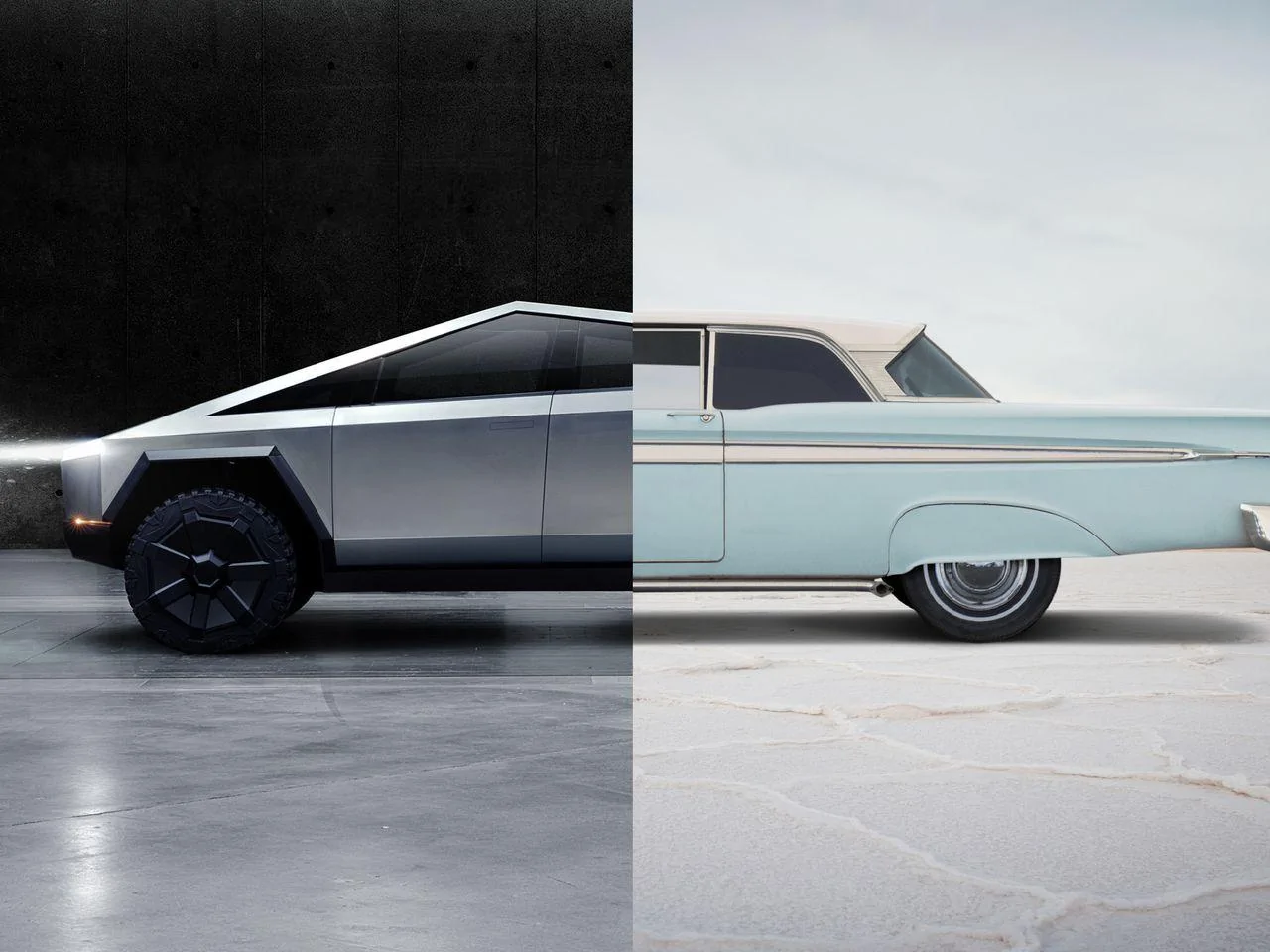
Tesla’s Avant-Garde Cybertruck is coming any day now. It’s the most important vehicle for the company since the 2017 introduction of its more affordable Model 3 electric vehicle.
The 3 helped usher in an era of growth, profits, and incredible stock gains for Tesla. The Cybertruck could do the same, or it could end up being Elon Musk’s Edsel.
The Edsel, named after Edsel Ford, the son of Henry Ford, is the notorious automotive failure, the one that stands out above the rest. It was more of a brand, like Pontiac or Saturn, than a single car. Ford Motor (F) launched a seven-model lineup in 1958. The company killed Edsel off in late 1959. Weak demand, weak reviews, weak customer reaction, all following weak product development processes, conspired to doom the nameplate.
Car buyers have been waiting for the oddly shaped Cybertruck since 2019. Now that it’s about to arrive, investors are wondering if the long-delayed pickup will be as big a flop.
It won’t be. Not by a long shot. Edsels never really found a market niche. They were large and launched during a recession and at a time when customers were beginning to look for more fuel-efficient options.
Price isn’t a barrier for Cybertruck either. It was designed to cost roughly $40,000 to $70,000. That was a price list set in 2019, however. Inflation has impacted everything. Still, the Cybertruck won’t be priced out of the mainstream truck market. New model year 2023 pickup trucks cost an average of about $64,000, Cox Automotive tells Barron’s. The average transaction price for a new 2023 F-150 Lightning is almost $87,000.
The market isn’t an issue, but what about the product? The Cybertruck will have new technology. It’s based on an “exoskeleton-based” design, says Elon Musk. That’s essentially a unibody design, explains Munro and Associates President Corey Steuben. Munro is a go-to source for manufacturing, design, and cost data for both auto investors and industry denizens.
Unibody isn’t very common. Most vehicles body-on-frame, which is exactly what it sounds like. The car body is dropped on a chassis. A unibody integrates the chassis and frame together, making it stronger and lighter. Lighter for an EV means more miles of range per unit of battery capacity.
The Cybertruck will be unique. While there are smaller truck models such as the Ford Maverick and Honda Motor (HMC) Ridgeline, large ones are typically body-on-frame. So Tesla is pushing the envelope on weight, strength, and efficiency. Cybertruck will also be able to accept one megawatt direct current charging, which means it will charge very fast with hundreds of miles of range delivered in minutes.
The market is there, the technology is solid, but what about that design? It looks like something out of a mediocre sci-fi film. Future Fund Active ETF (FFND) co-founder and Tesla shareholder Gary Black believes the design works and says it will serve as a rolling billboard for Tesla.
Gerber Kawasaki Wealth and Investment Management CEO Ross Gerber, who also owns the stock, agrees. “It’s super dope,” he says. “This is a game changer and [Tesla] will sell even more trucks once people see them on the road.”
As Tesla shareholders, both men are inclined to be bullish. Still, initial sales shouldn’t be a problem. Tesla has taken hundreds of thousands of preorders for the vehicle. Not all of those will become sales, but the order backlog should be more than enough to meet expectations for 2023 and 2024 deliveries.
Wall Street expects less than 10,000 Cybertrucks to be delivered in 2023 and fewer than 100,000 in 2024. That isn’t a high bar and Tesla can likely hit those numbers. The Cybertruck might be harder to make, but Tesla produced roughly 84,000 Model Ys in 2020, the first year of that vehicle. It made more than 400,000 Ys in 2021.
What Tesla should do after launching the Cybertruck is produce a more conventional-looking truck on the same tooling to expand Tesla trucks’ addressable market, says Black. It’s a sound idea. Tesla makes multiple cars on each of its platforms. It makes the S and X on the same platform and the 3 and Y on the same platform.
The 3 and the Y were smaller and cheaper than the S and X. After the Cybertruck and its companion product should also come a smaller truck, like a Ford Ranger. That would be Tesla’s global truck. The market for trucks outside the U.S. demands smaller vehicles. The Tacoma-sized Hilux from Toyota Motor (TM) is one of the best-selling trucks in the world.
Trucks are a good long-term opportunity for Tesla. Cybertruck won’t be anything like the Edsel.
Sponsored