Sponsored

henchman24

Well-known member
Joined
Jul 19, 2023
Threads
0
Messages
370
Reaction score
611
Location
Wyoming
Vehicles
Dual Motor Cybertruck
Country flag
I hadn't heard of this. Exactly what battery (or batteries) are we talking about here? During the COVID supply chain chaos, Tesla had to move mountains to keep pumping out more cars, so not surprising there were some issues. Elon even commented during that time that their production involved too many different battery variations and managing them all was less than ideal. He said they needed to standardize on fewer different battery types.
Panasonic 2170s with the higher density chemistry. Started in the Ys and move to the 3s in 2021. All US versions had those cells until late the swapped to LFP in the standard range (and that is the model most impacted). By the end of the year the software had been tweaked enough to no longer hurt the batteries and they made some manufacturing tweaks. It was also the final nail in using other company cells in the US where LG is now a common supplier. Really strained the Panasonic/Tesla relationship, nearly broke it.

If you search 2021 Tesla battery failure you’ll see it all over the various places. It would be my recommendation to never buy a standard range 2021 3 and I personally would avoid the whole year. It still isn’t a huge number of failures, but we’re talking 4-5x the rate of the other years of the 2170 (a very reliable cell otherwise).
Sponsored


 

HaulingAss

Well-known member
Joined
Oct 3, 2020
Threads
28
Messages
10,341
Reaction score
20,785
Location
Western Washington, USA
Vehicles
Cybertruck DM, 2010 F-150, 2018 Performance Model 3, 2024 Performance Model 3
Country flag
Panasonic 2170s with the higher density chemistry. Started in the Ys and move to the 3s in 2021. All US versions had those cells until late the swapped to LFP in the standard range (and that is the model most impacted). By the end of the year the software had been tweaked enough to no longer hurt the batteries and they made some manufacturing tweaks. It was also the final nail in using other company cells in the US where LG is now a common supplier. Really strained the Panasonic/Tesla relationship, nearly broke it.

If you search 2021 Tesla battery failure you’ll see it all over the various places. It would be my recommendation to never buy a standard range 2021 3 and I personally would avoid the whole year. It still isn’t a huge number of failures, but we’re talking 4-5x the rate of the other years of the 2170 (a very reliable cell otherwise).
The failure of the 2170 cells in general is so low I'm not sure we can call a batch of 4-5x that rate exactly an epidemic. We have two 2018 and one 2024 Model 3's with 2170 cells and of course the Cybertruck with 4680s. All have admirable performance, no issues.

By the way, it's pretty much a given that any real battery failure in a Tesla (and some that are not real) will be posted repeatedly "all over the various places".
 
  • Like
Reactions: REM

CTOWannabe

Well-known member
First Name
CTO
Joined
Feb 28, 2024
Threads
8
Messages
148
Reaction score
140
Location
US
Vehicles
2025 Cybertruck AWD
Country flag
I guess we really need new battery chemistry to receive a faster fill up.

I think filing up from 20-80% in less than 15 minutes will really be a game changer when it happens. That means you drive up before you start "hurting" the battery, and fill up to the point where you're also not "hurting" the battery, and do so in the time it takes to get a drink, go to the bathroom, so there really is no real delay to your longer trips.

One thing I wonder is why can't you RAID 0 a battery charge. Meaning if you treat the CT battery as say 4 separate batteries where each can take say 80kw sustained charge in parallel, and get effective 320kw throughput charging?
 
  • Like
Reactions: REM

henchman24

Well-known member
Joined
Jul 19, 2023
Threads
0
Messages
370
Reaction score
611
Location
Wyoming
Vehicles
Dual Motor Cybertruck
Country flag
The failure of the 2170 cells in general is so low I'm not sure we can call a batch of 4-5x that rate exactly an epidemic. We have two 2018 and one 2024 Model 3's with 2170 cells and of course the Cybertruck with 4680s. All have admirable performance, no issues.

By the way, it's pretty much a given that any real battery failure in a Tesla (and some that are not real) will be posted repeatedly "all over the various places".
It is though. Tesla friendly spots have it and can guess the year. I was charging in the middle of no where Wyoming this weekend, BSing about the truck… he said his battery failed. I simply asked 21? Yup. A buddy who used to be an engineer at GF Nevada talks about it (and the craziness of that time). Chat up the local service guys, you’ll hear similar. 2170 is a reliable cell, except 2021… mostly because of permanent damage done while fast charging. Tesla made a mistake a skipped some steps. Paying for it in repairs now.

I expect that curve will be updated or the preconditioning wasn’t quite right. 2:15 off the curve with just that shows what peak can do. Now it’s about getting it extended out a bit. That would knock off a good chunk more. Maybe they won’t and the cells can’t take it, but slight improvement can make a big difference.
 
Last edited:


hemiarch

Well-known member
First Name
Ace
Joined
Jan 22, 2025
Threads
116
Messages
8,405
Reaction score
9,658
Location
Arizona
Vehicles
2024 foundation AWD, 2024 model x
Occupation
Trauma Surgeon
Country flag
I guess we really need new battery chemistry to receive a faster fill up.

I think filing up from 20-80% in less than 15 minutes will really be a game changer when it happens. That means you drive up before you start "hurting" the battery, and fill up to the point where you're also not "hurting" the battery, and do so in the time it takes to get a drink, go to the bathroom, so there really is no real delay to your longer trips.

One thing I wonder is why can't you RAID 0 a battery charge. Meaning if you treat the CT battery as say 4 separate batteries where each can take say 80kw sustained charge in parallel, and get effective 320kw throughput charging?
That’s what I was suggesting too but it sounds like the smaller batteries heat up faster based on what I was told above.
 

henchman24

Well-known member
Joined
Jul 19, 2023
Threads
0
Messages
370
Reaction score
611
Location
Wyoming
Vehicles
Dual Motor Cybertruck
Country flag
That’s what I was suggesting too but it sounds like the smaller batteries heat up faster based on what I was told above.
The cells heat and cool faster in smaller form factors. The 4680 cell is thermally pretty stable, but when it gets hot, it is hard to cool down fast. Smaller battery packs as a whole heat up a lot faster with higher C rates. 250kW is a lot more stressful on 30kWh pack than a 90kWh pack because of the C rate difference.

The next step for 4680s is silicon carbide anode. That’ll provide more density and thermal stability while protecting against dendrites a bit better. We will probably see this in 2170 form factor soon (and will be the daily charge to 90% battery)… with 4680 by the end of 26.
 

mongo

Well-known member
Joined
May 27, 2024
Threads
6
Messages
4,545
Reaction score
5,532
Location
SE Michigan
Vehicles
Cyberbeast
Country flag
The next step for 4680s is silicon carbide anode. That’ll provide more density and thermal stability while protecting against dendrites a bit better. We will probably see this in 2170 form factor soon (and will be the daily charge to 90% battery)… with 4680 by the end of 26.
I thought Tesla was working on polymer coated pure silicon. When did they speak to silicon carbide?
 

CyberGus

Well-known member
First Name
Gus
Joined
May 22, 2021
Threads
91
Messages
10,253
Reaction score
33,952
Location
Austin, TX
Vehicles
1981 DeLorean, 2024 Cybertruck
Occupation
IT Specialist
Country flag
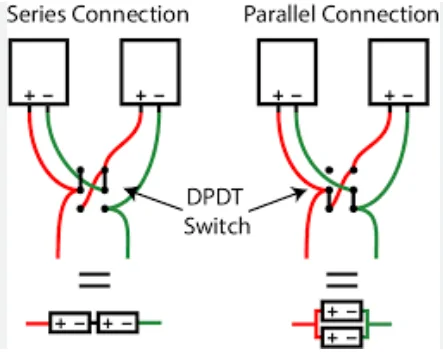
One thing I wonder is why can't you RAID 0 a battery charge. Meaning if you treat the CT battery as say 4 separate batteries where each can take say 80kw sustained charge in parallel, and get effective 320kw throughput charging?
The CT already does this. The 800V pack is actually two 400V packs.
 

henchman24

Well-known member
Joined
Jul 19, 2023
Threads
0
Messages
370
Reaction score
611
Location
Wyoming
Vehicles
Dual Motor Cybertruck
Country flag
I thought Tesla was working on polymer coated pure silicon. When did they speak to silicon carbide?
Tesla hasn't announced anything on SiC, but they are working on both. SiC is the one closest to production, and is simply a step toward pure silicon (probably 2030-2032 for that). There are 4 new cells in development for mass production right now by Tesla. NC05, NC20, NC30 and NC50.

NC05 is the LFP version of the 4680. Energy density is low, but this is designed for the Cybercab (and maybe the cheap Y). LFP cell for durability and longevity, while density won't matter a ton since we're talking ~50kWh is all that is needed. Test runs have already been completed. Might be in production today, but at latest Q1 26.

NC20 is a variant on the current Cybercell moving to a 973 chemistry from 955. Attempt for a little more thermal stability, especially in the cold. Should drive down the cost a bit more since there is less cobalt. This will have the full dry process and should have ~3% more density. This could already be in production or is very close. Will likely be in the Semi first and depending on NC30, may not ever make it in the CT.

NC30 is the 4680 silicon carbide anode cell. Meant for CT and maybe the Y if there is enough production capability. This is the battery that will likely increase density by ~15% and provide a lot more thermal stability. How much scrap they have will likely determine the ramp of this cell, but should be end of 26/beginning of 27. Probably see this first on a 'refresh' or new model CT.

NC50 is the 2170 cell destined for the Roadster. It incorporates the tabless design and has a silicon carbide anode. It is a cell designed around maximum current and cooling capabilities. Smaller form factor allows for better ribbon cooling in the pack and higher discharge current capability. While the silicon carbide allows more density and stability. Test runs have been completed and testing is ongoing. This is probably a Q2/Q3 26 production out of GF NV.

Pure silicon is still a ways from being solved at the scale Tesla needs. You can produce cells today that are ~35% more dense and stable, but the scrap rate on a manufacturing line is way too high. Lots of problems to solve and at the rate they are going, 5-7 years is about as good as it gets.


TyPope

Well-known member
First Name
Ty
Joined
Mar 31, 2020
Threads
33
Messages
3,221
Reaction score
4,939
Location
Chesapeake Beach, MD
Vehicles
'23 MYLR, FS Cyberbeast 280xx
Occupation
Current Operations for... an organization
Country flag
In my experience, which is not in heavy density areas, another important factor to consider is "time from highway to charger". Which, on one stop of mine, was over 10 minutes to the charger and 10 minutes back from the charger to the highway. The gas station was about a minute from the highway as they tend to be. I know this isn't always the case and more and more stations are being put close to highways.

Thinking about it, this is probably a nothing burger in most areas. PLUS, as more charge locations are built in high-traffic highway areas, this time will drop a lot.

But, at the time of that stop, probably in 2021, my wife said, "We spend more time looking for the charger than we do charging." Not quite accurate but close.
 
  • Like
Reactions: REM

HaulingAss

Well-known member
Joined
Oct 3, 2020
Threads
28
Messages
10,341
Reaction score
20,785
Location
Western Washington, USA
Vehicles
Cybertruck DM, 2010 F-150, 2018 Performance Model 3, 2024 Performance Model 3
Country flag
The CT already does this. The 800V pack is actually two 400V packs.
That is not done for faster charging, it's done because an 800V pack could otherwise never charge at all at a 400V charger.

One thing I wonder is why can't you RAID 0 a battery charge. Meaning if you treat the CT battery as say 4 separate batteries where each can take say 80kw sustained charge in parallel, and get effective 320kw throughput charging?
The limiting factor is each individual cell. Most EVs, on most 250 kW DCFC, quickly reach the maximum C rate of the cell. Splitting the pack isn't going to change that. The C rate limit is why bigger batteries can take more kW (at the same 250 kW DCFC), because they spread that over more cells.
 

Sjohnson20

Well-known member
Joined
Nov 30, 2023
Threads
8
Messages
1,438
Reaction score
2,439
Location
Florida
Vehicles
Cybertruck AWD, Model Y
Country flag
This is cool but saves what 3-4 minutes overall from the 250kw chargers?

A few weeks ago I was stopped at a 250kw Supercharger that's right off the highway. Another Tesla owner was like why didn't you go to the 325kw chargers? So I told him it saves like 1-2 minutes and it's further off the highway. Not worth it. I choose quick on and off the highway every time.
Sponsored


Top