pae1andonly
Well-known member
- First Name
- Paul
- Joined
- Apr 29, 2025
- Threads
- 19
- Messages
- 322
- Reaction score
- 327
- Location
- ? ??
- Vehicles
- 2024 RAM 2500
- Occupation
- Retired

- Thread starter
- #1
... new life to the range extender concept?
https://www.notateslaapp.com/news/3...-trailer-with-battery-according-to-new-patent
Tesla May Release Trailer With Battery, According to New Patent
March 22, 2026

While the Cybertruck Range Extender was officially cancelled last year, a newly published patent application reveals that Tesla’s engineering team has been hard at work developing the software architecture required to support secondary battery packs.
Titled “Electric Vehicle Range Extender Integration,” patent application US2026/0048683 outlines a highly sophisticated control system designed to seamlessly manage power flow, thermal conditioning, and high-speed charging between a vehicle’s primary high-voltage battery and an auxiliary Range Extender battery pack.
By detailing how these two distinct battery packs communicate and share the load, the patent provides a fascinating look into how Tesla plans to solve the complex physics of a dual-battery EV.
Dual-Battery Balancing Act
Adding a second, independent battery pack to an EV isn’t as simple as plugging it in and driving away. The primary battery (800V in the Cybertruck and the patent’s case) and the auxiliary battery (which operates at 400V) must be carefully managed to prevent voltage mismatches, inefficient power drain, and thermal imbalances.
To solve this, Tesla outlines a dynamic control system that automatically switches between two primary power management strategies depending on what the vehicle is doing: State of Energy (SoE) Balancing and Open Circuit Voltage (OCV) Matching.
Everyday Driving: SoE Balancing
During normal, unnavigated driving, the vehicle’s control system relies on SoE Balancing. In this mode, the primary battery and auxiliary battery controllers constantly communicate to ensure both battery packs are draining at a proportional rate.
For example, if the auxiliary battery has a higher relative State of Energy than the main pack, the vehicle will actively draw more power from the auxiliary pack to balance them out. The patent notes that if the driver suddenly demands massive power, such as with rapid acceleration or when conducting a heavy tow, the system can momentarily override this balance to draw maximum output from both packs simultaneously.
Once the high-power event is over, the system initiates a catch-up mechanism, drawing heavily from the auxiliary pack until the energy levels are balanced once again.
Preparing to Charge: OCV Matching
The true brilliance of Tesla’s patented system activates when the driver navigates to a Supercharger.
When a charging stop is routed, the system abandons the SoE Balancing strategy and immediately switches over to the OCV Matching method instead. Because the two battery packs operate at different voltages (800V and 400V), connecting them directly to a high-speed charger simultaneously could cause catastrophic in-rush currents or component damage if their voltages aren't perfectly aligned.
To prepare for the charge, the vehicle actively manages the discharge rates of both packs as it approaches the station, forcing their Open Circuit Voltages (OCVs) to equalize. Once the vehicle plugs in, if the OCVs are matched, the system closes a series of high-voltage contactors, connecting the primary and auxiliary packs in parallel. This allows the Supercharger to dump energy into both battery packs simultaneously, drastically reducing the time spent at the plug.
If the vehicle arrives and the voltages are not matched, the system is smart enough to isolate the packs, utilizing bypass contactors to charge the lower-voltage pack independently until it catches up to the main pack's voltage.

Beyond the Bed
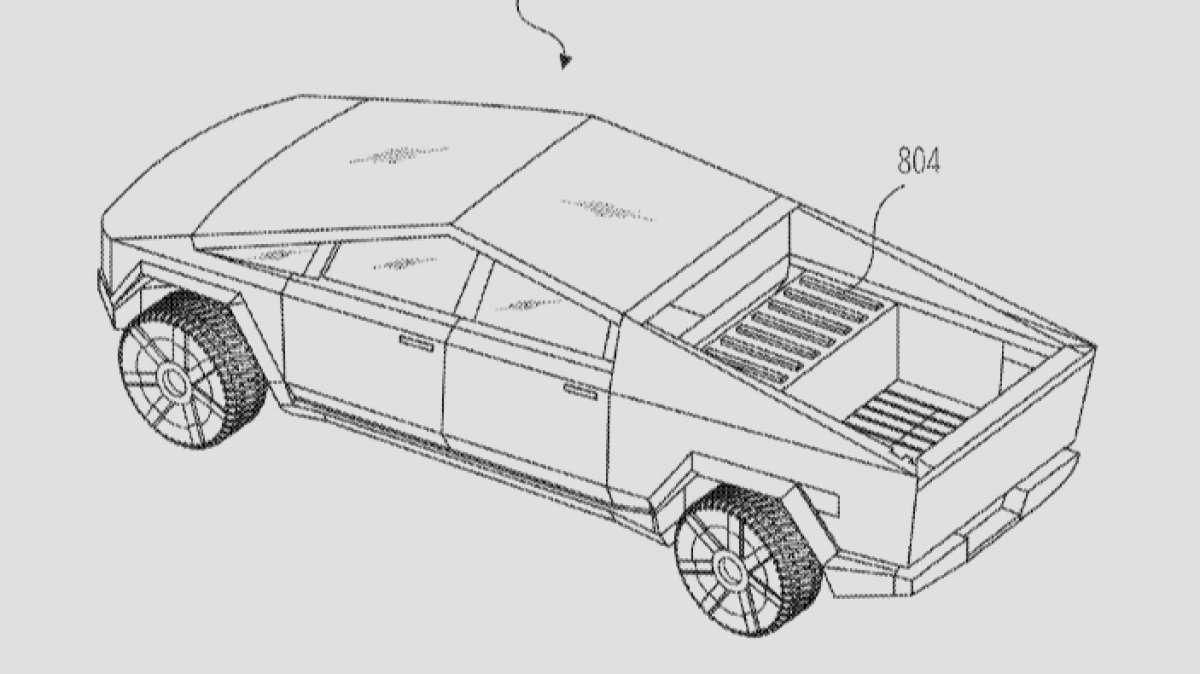
While the patent explicitly references mounting the auxiliary battery in the bed of the Cybertruck, the implications of this software architecture go much, much further.
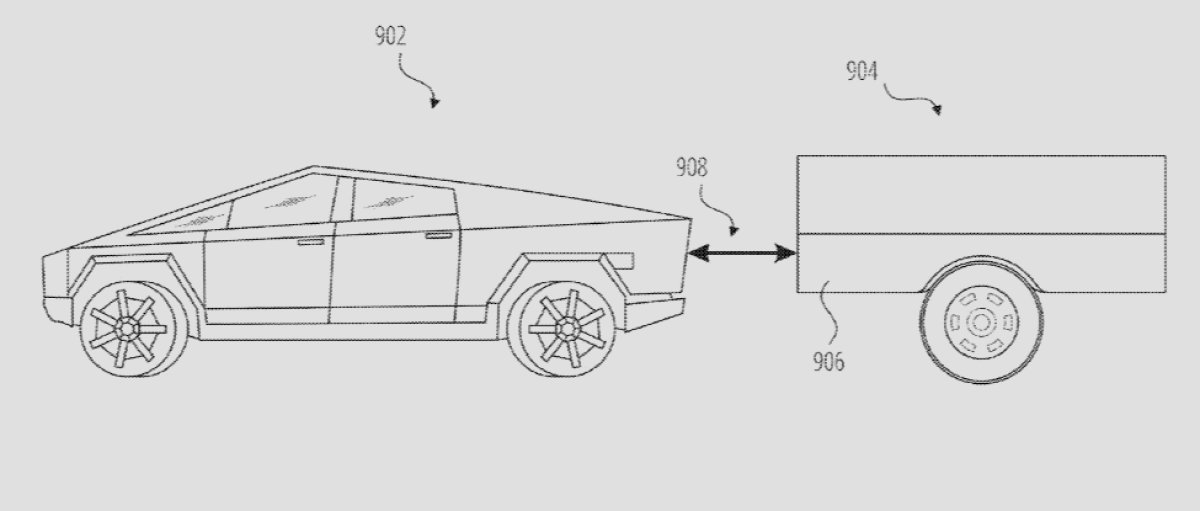
The patent includes specific drawings and use cases for installing the auxiliary battery pack inside a trailer being towed by the vehicle. Connected via a specialized high-voltage interface, a trailer equipped with this technology could effectively power the towing vehicle, completely eliminating the massive range degradation typically associated with towing heavy loads.
The patent even mentions the inclusion of an MC4 connector, allowing solar panels mounted on the truck or trailer to trickle-charge the auxiliary pack. While the Cybertruck Range Extender has been shelved, Tesla has clearly put a massive amount of engineering effort into conceptualizing and testing the systems behind this patent.
https://www.notateslaapp.com/news/3...-trailer-with-battery-according-to-new-patent
Tesla May Release Trailer With Battery, According to New Patent
March 22, 2026
While the Cybertruck Range Extender was officially cancelled last year, a newly published patent application reveals that Tesla’s engineering team has been hard at work developing the software architecture required to support secondary battery packs.
Titled “Electric Vehicle Range Extender Integration,” patent application US2026/0048683 outlines a highly sophisticated control system designed to seamlessly manage power flow, thermal conditioning, and high-speed charging between a vehicle’s primary high-voltage battery and an auxiliary Range Extender battery pack.
By detailing how these two distinct battery packs communicate and share the load, the patent provides a fascinating look into how Tesla plans to solve the complex physics of a dual-battery EV.
Dual-Battery Balancing Act
Adding a second, independent battery pack to an EV isn’t as simple as plugging it in and driving away. The primary battery (800V in the Cybertruck and the patent’s case) and the auxiliary battery (which operates at 400V) must be carefully managed to prevent voltage mismatches, inefficient power drain, and thermal imbalances.
To solve this, Tesla outlines a dynamic control system that automatically switches between two primary power management strategies depending on what the vehicle is doing: State of Energy (SoE) Balancing and Open Circuit Voltage (OCV) Matching.
Everyday Driving: SoE Balancing
During normal, unnavigated driving, the vehicle’s control system relies on SoE Balancing. In this mode, the primary battery and auxiliary battery controllers constantly communicate to ensure both battery packs are draining at a proportional rate.
For example, if the auxiliary battery has a higher relative State of Energy than the main pack, the vehicle will actively draw more power from the auxiliary pack to balance them out. The patent notes that if the driver suddenly demands massive power, such as with rapid acceleration or when conducting a heavy tow, the system can momentarily override this balance to draw maximum output from both packs simultaneously.
Once the high-power event is over, the system initiates a catch-up mechanism, drawing heavily from the auxiliary pack until the energy levels are balanced once again.
Preparing to Charge: OCV Matching
The true brilliance of Tesla’s patented system activates when the driver navigates to a Supercharger.
When a charging stop is routed, the system abandons the SoE Balancing strategy and immediately switches over to the OCV Matching method instead. Because the two battery packs operate at different voltages (800V and 400V), connecting them directly to a high-speed charger simultaneously could cause catastrophic in-rush currents or component damage if their voltages aren't perfectly aligned.
To prepare for the charge, the vehicle actively manages the discharge rates of both packs as it approaches the station, forcing their Open Circuit Voltages (OCVs) to equalize. Once the vehicle plugs in, if the OCVs are matched, the system closes a series of high-voltage contactors, connecting the primary and auxiliary packs in parallel. This allows the Supercharger to dump energy into both battery packs simultaneously, drastically reducing the time spent at the plug.
If the vehicle arrives and the voltages are not matched, the system is smart enough to isolate the packs, utilizing bypass contactors to charge the lower-voltage pack independently until it catches up to the main pack's voltage.
Beyond the Bed
While the patent explicitly references mounting the auxiliary battery in the bed of the Cybertruck, the implications of this software architecture go much, much further.
The patent includes specific drawings and use cases for installing the auxiliary battery pack inside a trailer being towed by the vehicle. Connected via a specialized high-voltage interface, a trailer equipped with this technology could effectively power the towing vehicle, completely eliminating the massive range degradation typically associated with towing heavy loads.
The patent even mentions the inclusion of an MC4 connector, allowing solar panels mounted on the truck or trailer to trickle-charge the auxiliary pack. While the Cybertruck Range Extender has been shelved, Tesla has clearly put a massive amount of engineering effort into conceptualizing and testing the systems behind this patent.
Sponsored