
Sponsored

CyberTruckyWucky

Active member
First Name
T
Joined
Jan 3, 2026
Threads
3
Messages
39
Reaction score
52
Location
Los Angeles
Vehicles
2026 long range cybertruck
Country flag
Tesla Cybertruck CYBERTRUCK RWD — (FSD) REAL-WORLD INTERSTATE ENERGY CONSUMPTION OBSERVATION ~4,700-Mile Test 19839

INSTALLER INFORMATION

High Tech Motorsports & Fabrication
(470) 545-0859

https://maps.app.goo.gl/ry7ZPtXWR4mY4mXt9

SUMMARY

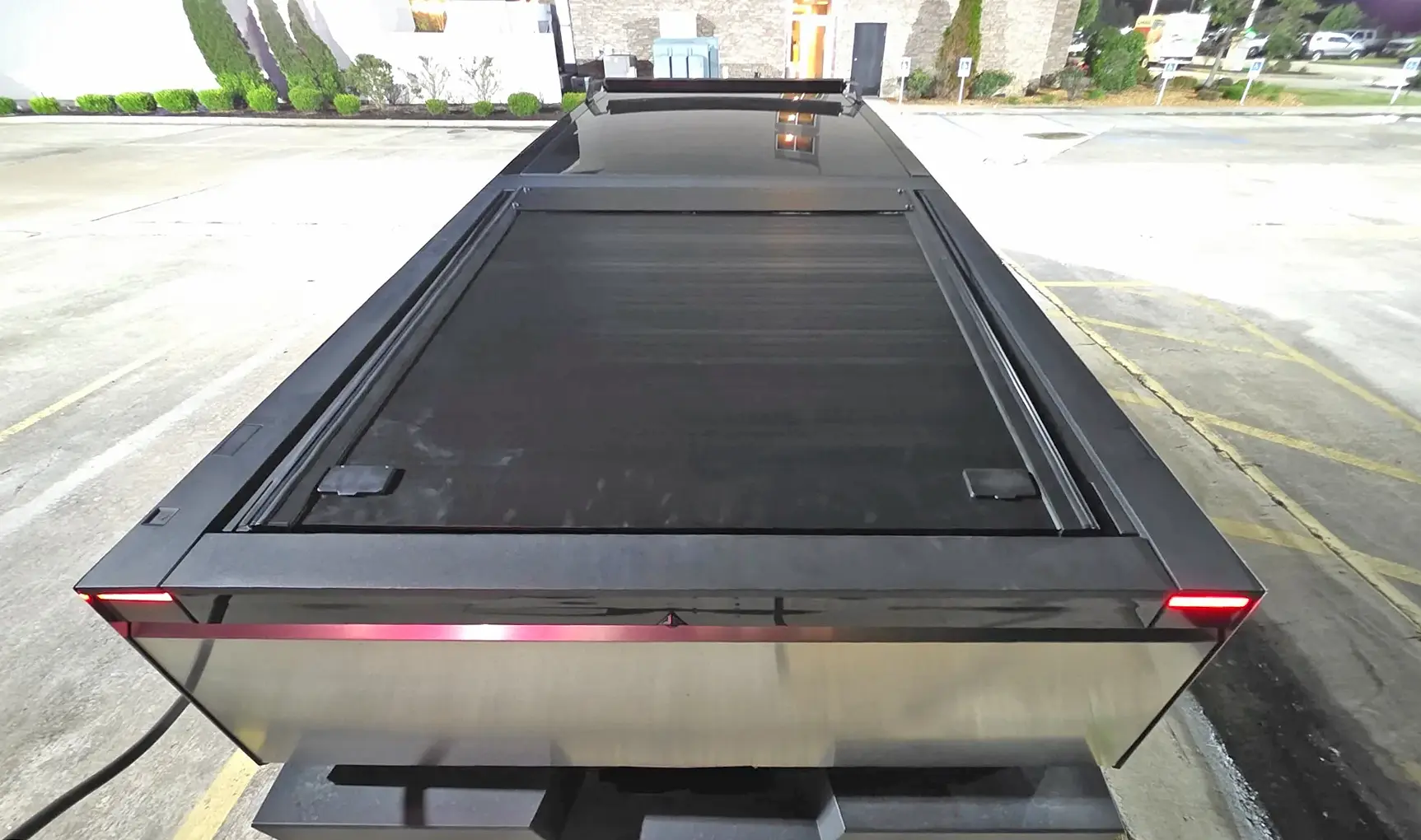
No Tonneau Cover
• 2,347 mi
423.9 Wh/mi

Manual Tonneau Installed
• 2,347 mi
382.2 Wh/mi

Observed Reduction in Energy Consumption
~9.84%

~4,700-Mile Long-Haul Operational Evaluation (100% FSD)


2026 Cybertruck RWD | California ⇄ Georgia | I-40 Corridor

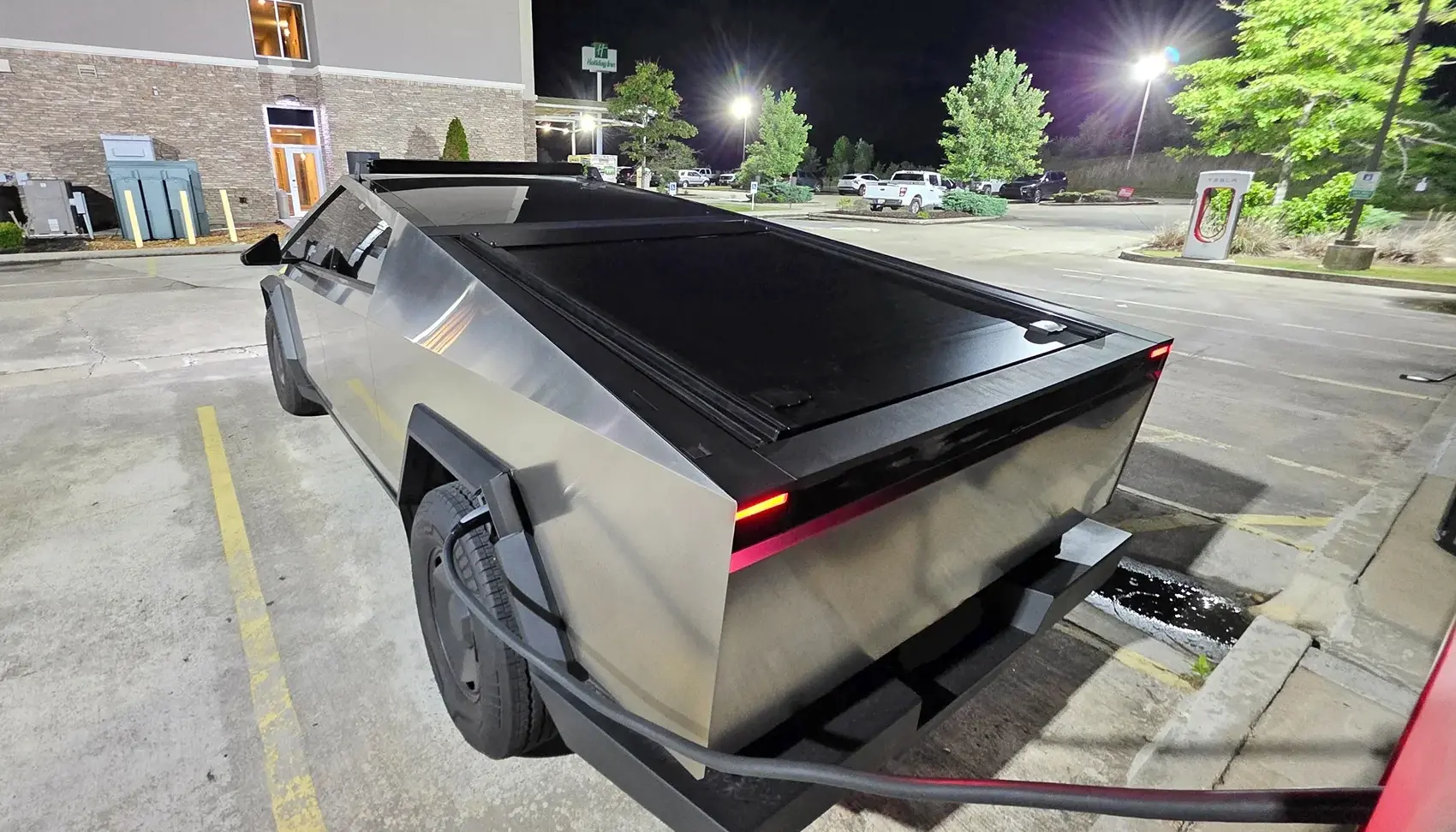
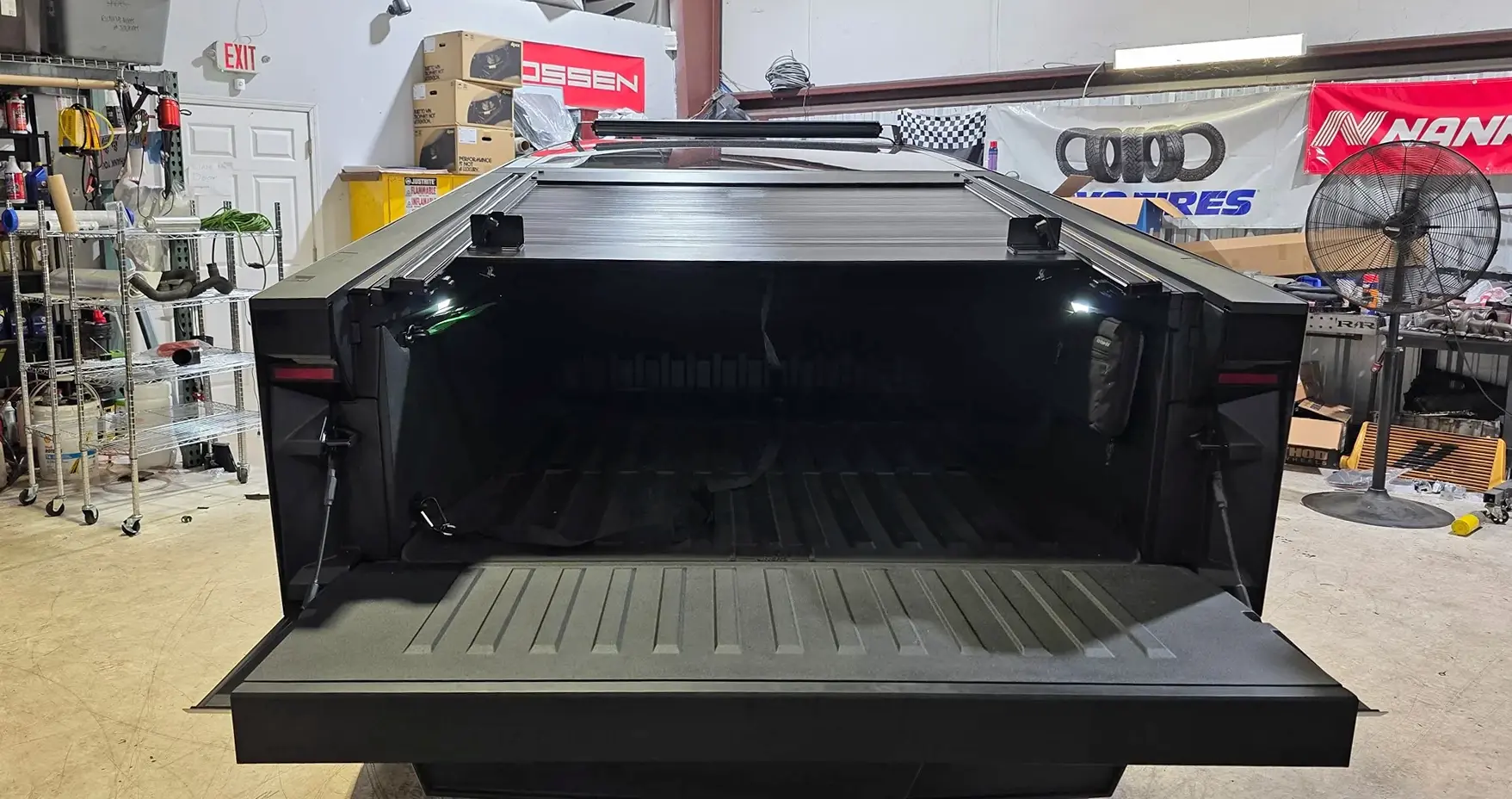
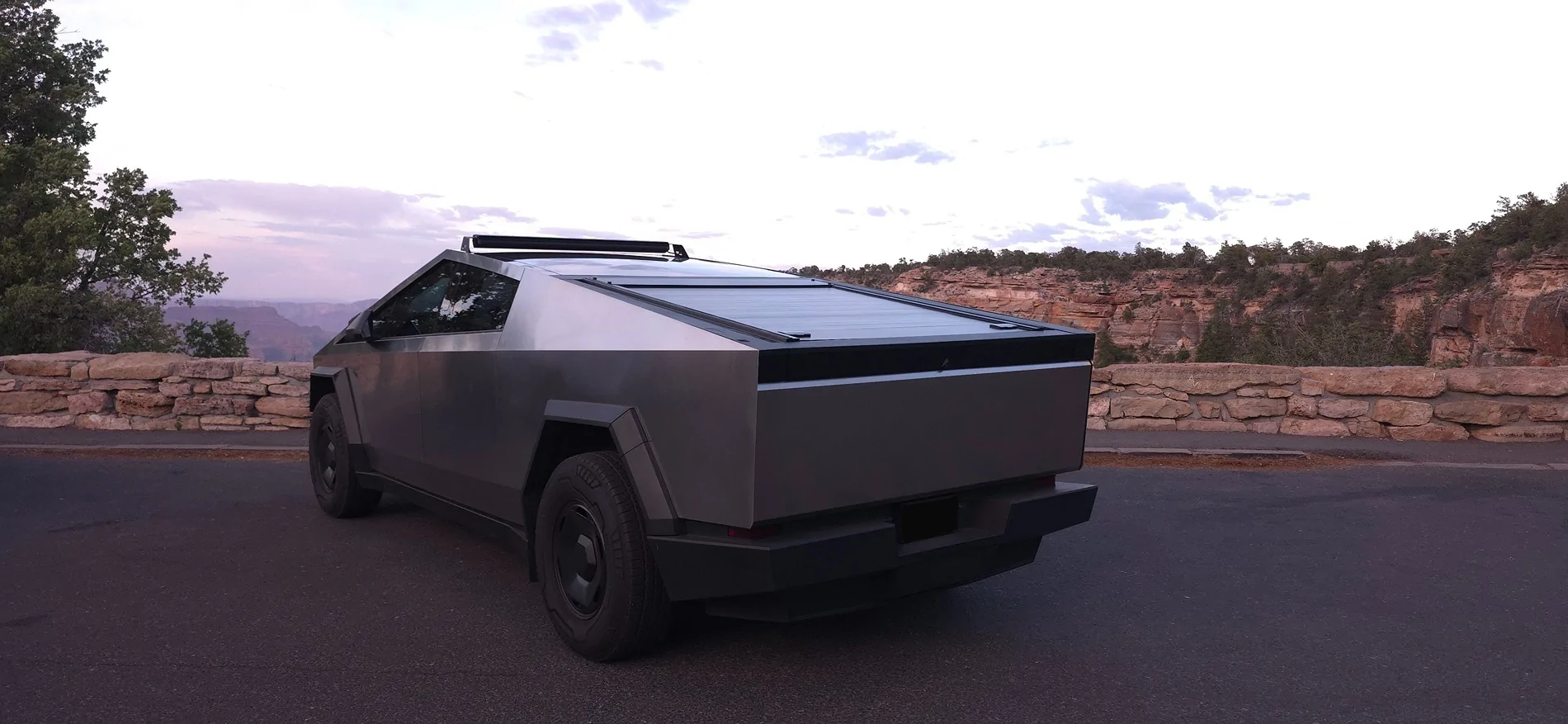
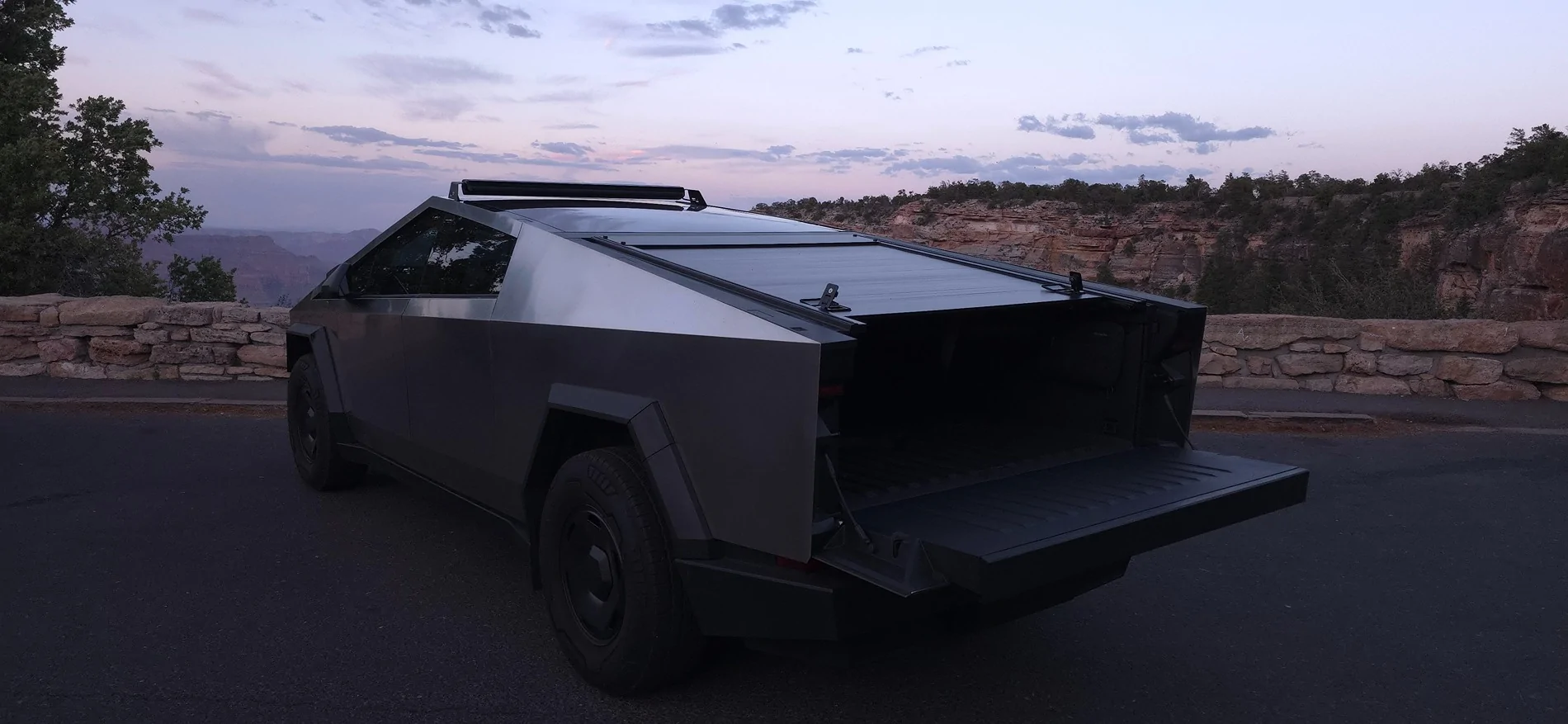
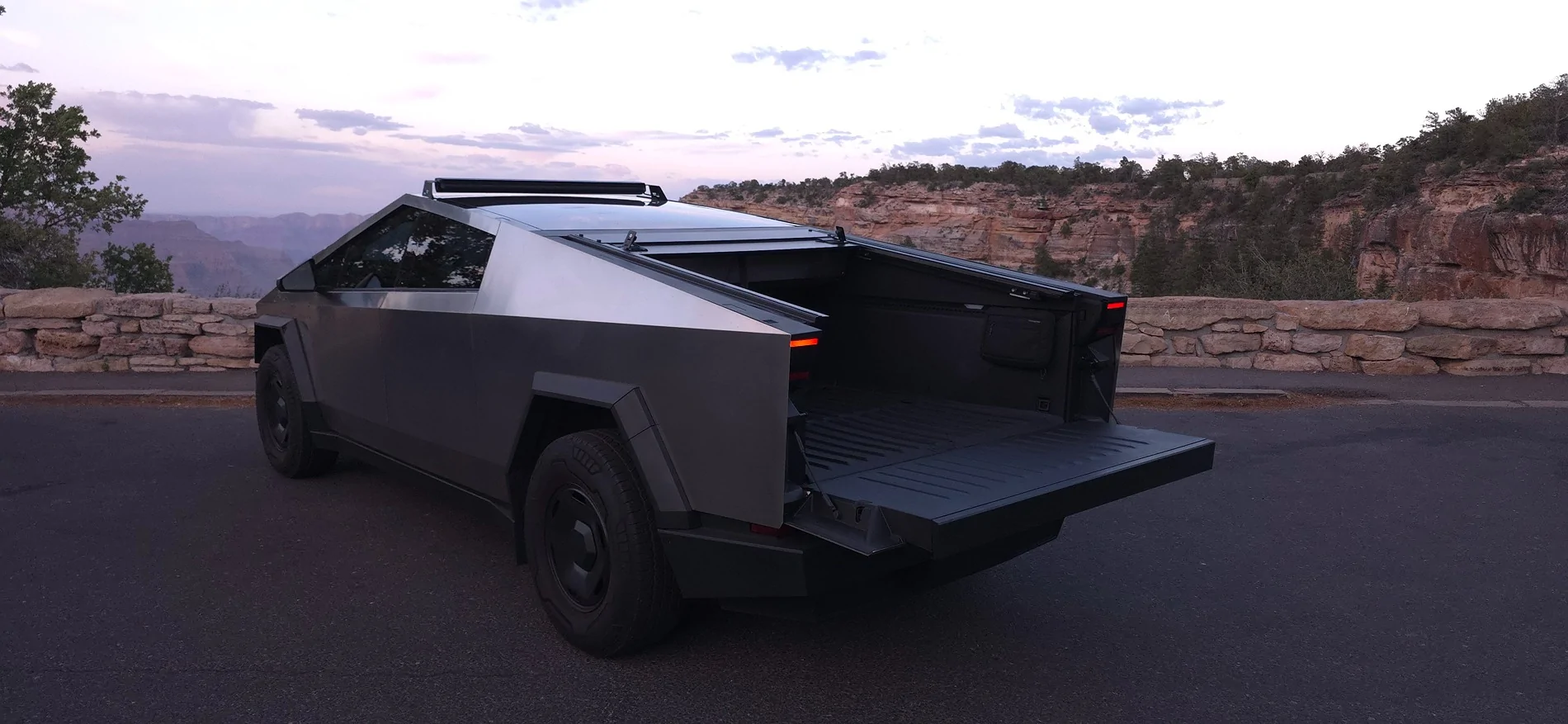
Recently completed an approximately 4,700-mile interstate trip in a 2026 Cybertruck RWD and observed a measurable reduction in highway-speed energy consumption after installing a manual tonneau cover for the return leg.

This was not a laboratory-controlled aerodynamic study.
This was normal owner-operated interstate driving under practical long-haul conditions.

Full observational report in the following link:


VEHICLE CONFIGURATION

• 2026 Cybertruck RWD
• Goodyear Territory HT tires
• Tire size: 285/70R18 116H
• OEM wheels with factory aero covers installed
• Stock ride height maintained
• No aerodynamic body modifications
• Only external accessory: UP performance light bar
• Vehicle load: ~200 lb occupant + ~20 lb food/water
• No heavy cargo load carried

INTERSTATE COMPARISON

Trip A
— Outbound Baseline
• Distance: 2,347 mi
• Configuration: No tonneau cover
• Average consumption: 423.9 Wh/mi

Trip B — Return Comparison
• Distance: 2,347 mi
• Configuration: Manual tonneau cover installed
• Average consumption: 382.2 Wh/mi

Observed Reduction in Energy Consumption:
~9.84%

Calculation:
(423.9 − 382.2) ÷ 423.9 = 9.84%

PROJECTED ENERGY SAVINGS

Per 1,000 miles: ~41.7 kWh saved
Per 5,000 miles: ~208.5 kWh saved
Per 10,000 miles: ~417 kWh saved
Per 15,000 miles: ~625.5 kWh saved
Per 20,000 miles: ~834 kWh saved

Estimated annual electricity savings:

At $0.15/kWh: 10,000 mi/year = ~$63 saved
15,000 mi/year = ~$94 saved
20,000 mi/year = ~$125 saved

At $0.25/kWh: 10,000 mi/year = ~$104 saved
15,000 mi/year = ~$156 saved
20,000 mi/year = ~$209 saved

At $0.40/kWh: 10,000 mi/year = ~$167 saved
15,000 mi/year = ~$250 saved
20,000 mi/year = ~$334 saved

OPERATING CONDITIONS

Both interstate legs included:

• Sustained ~70–75 mph highway cruising
• Rain exposure
• Crosswinds
• HVAC operation
• Night driving
• Interstate charging cycles
• Mixed traffic density
• Elevation variation
• Extended-duration operation

Testing conditions were not laboratory-controlled and better represent practical owner usage.

KEY OBSERVATIONS

Interstate Stability

The lower return-leg Wh/mi trend remained comparatively stable across thousands of interstate miles rather than appearing only during isolated segments.

Potential Aerodynamic Influence

Observed results may suggest reduced rear-bed turbulence during sustained highway-speed operation when the tonneau cover is installed.

At interstate speeds, aerodynamic drag becomes increasingly dominant relative to lower-speed urban driving.

Long-Haul Operational Impact

Over multi-thousand-mile travel distances, even moderate reductions in Wh/mi compound into meaningful operational differences including:
• Reduced charging frequency
• Lower total trip energy demand
• Increased route flexibility
• Reduced charging dwell dependency
Dataset Characteristics

Most public tonneau efficiency discussions currently rely on:
• Short-duration testing
• Estimated projections
• Low-mileage comparisons
• Modified vehicle setups

This observation instead came from:
• ~4,700 interstate miles
• The same vehicle
• The same driver
• Similar route profiles
• Similar cruise-speed ranges
• Stock wheel/tire configuration maintained throughout testing

PRELIMINARY CONCLUSION

Observed real-world interstate data suggests the manual tonneau cover configuration may provide measurable reductions in highway-speed energy consumption on the Cybertruck RWD platform during sustained long-haul operation.

The observed ~9.84% reduction in average energy consumption across approximately 2,347 interstate miles appears sufficiently large to warrant additional controlled testing and broader owner dataset comparison.

LONG TERM FOLLOW UP

Additional efficiency and operational updates will be recorded every ~3 months under normal daily driving conditions to evaluate long-term stability of the observed interstate efficiency gains.

3 MONTH WAYPOINT

6 MONTH WAYPOINT

9 MONTH WAYPOINT

Tesla Cybertruck CYBERTRUCK RWD — (FSD) REAL-WORLD INTERSTATE ENERGY CONSUMPTION OBSERVATION ~4,700-Mile Test 119926-6314b386b62756f25efcfcebb68d7c0a


Tesla Cybertruck CYBERTRUCK RWD — (FSD) REAL-WORLD INTERSTATE ENERGY CONSUMPTION OBSERVATION ~4,700-Mile Test 119925-dfc7e3871ed00d6c3f326a5aad0638d4


Tesla Cybertruck CYBERTRUCK RWD — (FSD) REAL-WORLD INTERSTATE ENERGY CONSUMPTION OBSERVATION ~4,700-Mile Test 119923-dc234793e42ecbb87670c1d00c0d1e10
Sponsored

 
Last edited:


OP
OP
CyberTruckyWucky

CyberTruckyWucky

Active member
First Name
T
Joined
Jan 3, 2026
Threads
3
Messages
39
Reaction score
52
Location
Los Angeles
Vehicles
2026 long range cybertruck
Country flag
UPDATE

Still collecting return-trip data.
The manual tonneau + real-world interstate driving is producing surprisingly consistent efficiency gains over the return run.

Current observations:
  1. Significant highway efficiency improvement
  2. Night driving efficiency notably better
  3. Stable cruising speed matters heavily
  4. Human fatigue became the limiting factor before range

Will post full outbound vs return dataset once the trip is complete.
 

CyberWalrus

Well-known member
Joined
Sep 6, 2025
Threads
1
Messages
120
Reaction score
239
Location
FL
Vehicles
CYBERTRUCK
Country flag
That is really nice cover you added!! I hope can make more for the rest of the RWD drive community.

The efficiency improvement is impressive!

When I had my RWD, I drove from FL to NY twice ~2k miles round trip each. 1st trip was Thanksgiving time, got ~380Wh/mi, then Christmas trip ~425Wh/mi. I think colder weather took a hit.

If I had your cover, I think it would be close to 350Wh/mi on warm weather.

The RWD efficiency is excellent, I remember driving around town and can get down to 220Wh/mi.


HaulingAss

Well-known member
Joined
Oct 3, 2020
Threads
28
Messages
10,293
Reaction score
20,697
Location
Western Washington, USA
Vehicles
Cybertruck DM, 2010 F-150, 2018 Performance Model 3, 2024 Performance Model 3
Country flag
Tesla Cybertruck CYBERTRUCK RWD — (FSD) REAL-WORLD INTERSTATE ENERGY CONSUMPTION OBSERVATION ~4,700-Mile Test {filename}

INSTALLER INFORMATION

High Tech Motorsports & Fabrication
(470) 545-0859

https://maps.app.goo.gl/ry7ZPtXWR4mY4mXt9

SUMMARY

No Tonneau Cover
• 2,347 mi
423.9 Wh/mi

Manual Tonneau Installed
• 2,347 mi
382.2 Wh/mi

Observed Reduction in Energy Consumption
~9.84%

~4,700-Mile Long-Haul Operational Evaluation (100% FSD)


2026 Cybertruck RWD | California ⇄ Georgia | I-40 Corridor

Recently completed an approximately 4,700-mile interstate trip in a 2026 Cybertruck RWD and observed a measurable reduction in highway-speed energy consumption after installing a manual tonneau cover for the return leg.

This was not a laboratory-controlled aerodynamic study.
This was normal owner-operated interstate driving under practical long-haul conditions.

Full observational report in the following link:


VEHICLE CONFIGURATION

• 2026 Cybertruck RWD
• Goodyear Territory HT tires
• Tire size: 285/70R18 116H
• OEM wheels with factory aero covers installed
• Stock ride height maintained
• No aerodynamic body modifications
• Only external accessory: UP performance light bar
• Vehicle load: ~200 lb occupant + ~20 lb food/water
• No heavy cargo load carried

INTERSTATE COMPARISON

Trip A
— Outbound Baseline
• Distance: 2,347 mi
• Configuration: No tonneau cover
• Average consumption: 423.9 Wh/mi

Trip B — Return Comparison
• Distance: 2,347 mi
• Configuration: Manual tonneau cover installed
• Average consumption: 382.2 Wh/mi

Observed Reduction in Energy Consumption:
~9.84%

Calculation:
(423.9 − 382.2) ÷ 423.9 = 9.84%

PROJECTED ENERGY SAVINGS

Per 1,000 miles: ~41.7 kWh saved
Per 5,000 miles: ~208.5 kWh saved
Per 10,000 miles: ~417 kWh saved
Per 15,000 miles: ~625.5 kWh saved
Per 20,000 miles: ~834 kWh saved

Estimated annual electricity savings:

At $0.15/kWh: 10,000 mi/year = ~$63 saved
15,000 mi/year = ~$94 saved
20,000 mi/year = ~$125 saved

At $0.25/kWh: 10,000 mi/year = ~$104 saved
15,000 mi/year = ~$156 saved
20,000 mi/year = ~$209 saved

At $0.40/kWh: 10,000 mi/year = ~$167 saved
15,000 mi/year = ~$250 saved
20,000 mi/year = ~$334 saved

OPERATING CONDITIONS

Both interstate legs included:

• Sustained ~70–75 mph highway cruising
• Rain exposure
• Crosswinds
• HVAC operation
• Night driving
• Interstate charging cycles
• Mixed traffic density
• Elevation variation
• Extended-duration operation

Testing conditions were not laboratory-controlled and better represent practical owner usage.

KEY OBSERVATIONS

Interstate Stability

The lower return-leg Wh/mi trend remained comparatively stable across thousands of interstate miles rather than appearing only during isolated segments.

Potential Aerodynamic Influence

Observed results may suggest reduced rear-bed turbulence during sustained highway-speed operation when the tonneau cover is installed.

At interstate speeds, aerodynamic drag becomes increasingly dominant relative to lower-speed urban driving.

Long-Haul Operational Impact

Over multi-thousand-mile travel distances, even moderate reductions in Wh/mi compound into meaningful operational differences including:
• Reduced charging frequency
• Lower total trip energy demand
• Increased route flexibility
• Reduced charging dwell dependency
Dataset Characteristics

Most public tonneau efficiency discussions currently rely on:
• Short-duration testing
• Estimated projections
• Low-mileage comparisons
• Modified vehicle setups

This observation instead came from:
• ~4,700 interstate miles
• The same vehicle
• The same driver
• Similar route profiles
• Similar cruise-speed ranges
• Stock wheel/tire configuration maintained throughout testing

PRELIMINARY CONCLUSION

Observed real-world interstate data suggests the manual tonneau cover configuration may provide measurable reductions in highway-speed energy consumption on the Cybertruck RWD platform during sustained long-haul operation.

The observed ~9.84% reduction in average energy consumption across approximately 2,347 interstate miles appears sufficiently large to warrant additional controlled testing and broader owner dataset comparison.

Tesla Cybertruck CYBERTRUCK RWD — (FSD) REAL-WORLD INTERSTATE ENERGY CONSUMPTION OBSERVATION ~4,700-Mile Test {filename}


Tesla Cybertruck CYBERTRUCK RWD — (FSD) REAL-WORLD INTERSTATE ENERGY CONSUMPTION OBSERVATION ~4,700-Mile Test {filename}


Tesla Cybertruck CYBERTRUCK RWD — (FSD) REAL-WORLD INTERSTATE ENERGY CONSUMPTION OBSERVATION ~4,700-Mile Test {filename}
Thanks for the trip report. Sounds like a good one!

I noticed you said the outbound trip was "primarily 70-75 mph" and the return trip was simply "sustained freeway speeds". Small changes in cruising speed will have a relatively large impact on efficiency. So, regardless of the many miles logged, I think a short test (30-50 miles for each configuration) that better controlled for wind, speed and temperature would provide more reliable results.

My $0.02


Top