Sponsored

Harvester Gas-Powered Range Extender for Cybertruck

Tinker71

Well-known member
First Name
Ray
Joined
Aug 8, 2020
Threads
93
Messages
1,610
Reaction score
2,102
Location
Utah
Vehicles
1976 VW EV bus, 2007 Sienna, Tesla M3, Cancelled CT2 rez - holding for $65k
Occupation
Project Manager
Country flag
The Scout Harvester concept is intriguing. It has the ability to add 150 miles of range to a 350 mile range BEV pack. I want to hear more. How big, what ICE tech? I am thinking this is the ~ 12 HP ICE that I have been lobbying for forever. It just needs to be big enough to take advantage of the onboard charger.

This is how this would work. If you tell your vehicle that you intend to take a long trip, as soon as battery level drops below ~95% the range extender kicks in. It won't turn off until you are sure you can get to the next supercharger. For example if you are driving 70 mph your 'harvester will run for the next 7 hours. The range extender will add 20 miles of range for each hour of operation. You will still run out of juice at ~500 miles and will need to stop and charge to keep going, but as long as you have some fuel in your tank you won't be completely stranded. Just wait an hour and you can drive another 20 miles.

The Ram Range extender is a full on v6 gas motor, which is heavy. Like a giant battery this is something you need to haul around every day when you only need it occasionally. The harvester range extender or similar could weigh as little as 250#. Imagine being able to add this to the CT on a little removable skid.

Packaged right, this could be fairly light and removable even. This could be especially awesome if the little ICE could heat the rig with waste heat through the battery conditioning loop and heat pump which would almost eliminate winter range loss.

Hackers unite.
Sponsored
 

agordon117

Well-known member
Joined
Jan 11, 2024
Threads
7
Messages
1,196
Reaction score
2,039
Location
Ohio
Vehicles
cybertruck foundation awd
Country flag
I don't think anyone will be able to accomplish this. Because, sure, you can:

-Unlock the limits that prevent charging while driving
-Put a generator in the bed
-Figure out a way to charge without a big charge handle dangling over the edge of the truck


But we don't know if the batteries, or BMS are happy charging and discharging at the same time. And the generator itself will never be capable of the same power that the battery pack is, so you can't just figure out how to bypass the batteries (which I imagine would require a lot of hardware changes)...

but you'd also have to have a generator that's outputting, or being converted to, DC charging. 11.5kW AC charging is not enough to keep the truck at a given SoC while on the highway.

The math is a little complicated, because you don't just need to know the Wh/mi, but also the mph to get real numbers. But let's take a few scenarios. I'm just making them up off of the top of my head, but they aren't far from reality. In fact, during winter, I imagine there will be far worse numbers.


378Wh/mi @ 75mph requires 29kW charging to match the drain

450Wh/mi @ 75mph requires 33.8kW

500Wh/mi @ 85mph requires 42.5kW


So, for normal road tripping, in any situation, you basically need 50kW DC charging at the same time as driving. But if you're towing, you may need double that.


The reason the ram range extender is a full on V6 is because that's what you need to generate that kind of power. I'm helping a relative put a generator at their house, and the size and power of a 38kW unit is pretty insane. Let alone 48kW or 96kW.
 

mongo

Well-known member
Joined
May 27, 2024
Threads
5
Messages
4,521
Reaction score
5,499
Location
SE Michigan
Vehicles
Cyberbeast
Country flag
But we don't know if the batteries, or BMS are happy charging and discharging at the same time.
They wouldn't do both at the same time though. Either the generator puts out more power than the drive load and they battery gets charged (like regen) or it puts out less and the battery is draining (like normal driving, but at a lower power level).

My question: does the HVAC take advantage of the generator's waste heat?
 

Pops

Well-known member
Joined
Dec 31, 2023
Threads
35
Messages
1,204
Reaction score
2,548
Location
Houston, TX
Vehicles
MY, CyberBeast
Country flag
I am not an electrical engineer, but from my understanding if you match the voltage you can simply connect to any line in parallel and pump in amps. Batterie's voltage will raise and fall based on their charge. If the voltages between the extender and the battery are not close, there will be a HUGE surge of AMPs... think of an arc welder.

So it would look like this: Range Extender/Generator > Voltage Converter/Transformer > High Voltage CT lines.

Getting this wrong could result in explosions, fire, and or death.

A guy did this with the F150 Lightning. He had a trailer with a battery pack and as soon as he got the voltages close, he would open the circuit and connect directly to the trucks main High-Voltage line.

 
Last edited:
OP
OP
Tinker71

Tinker71

Well-known member
First Name
Ray
Joined
Aug 8, 2020
Threads
93
Messages
1,610
Reaction score
2,102
Location
Utah
Vehicles
1976 VW EV bus, 2007 Sienna, Tesla M3, Cancelled CT2 rez - holding for $65k
Occupation
Project Manager
Country flag
But we don't know if the batteries, or BMS are happy charging and discharging at the same time. And the generator itself will never be capable of the same power that the battery pack is, so you can't just figure out how to bypass the batteries (which I imagine would require a lot of hardware changes)...

but you'd also have to have a generator that's outputting, or being converted to, DC charging. 11.5kW AC charging is not enough to keep the truck at a given SoC while on the highway.

The point of a small range extender is you don't need to try to match the drain, you just have to slow the rate of drain while in operation.

I am not an EE but if the onboard charger exceeds battery pack voltage it will flow to the battery pack. If it is used by the CT before it gets to the battery pack that is ok too.

This same set up would be awesome in a towed power assist camper. Puting 10 HP equivalent to one wheel of a bumper pull will offset most of the wind resistance.


MeadowShade

Well-known member
First Name
Fred
Joined
Jan 29, 2024
Threads
7
Messages
362
Reaction score
367
Location
VA
Vehicles
Bike
Country flag
I don't think anyone will be able to accomplish this. Because, sure, you can:

-Unlock the limits that prevent charging while driving
-Put a generator in the bed
-Figure out a way to charge without a big charge handle dangling over the edge of the truck


But we don't know if the batteries, or BMS are happy charging and discharging at the same time. And the generator itself will never be capable of the same power that the battery pack is, so you can't just figure out how to bypass the batteries (which I imagine would require a lot of hardware changes)...

but you'd also have to have a generator that's outputting, or being converted to, DC charging. 11.5kW AC charging is not enough to keep the truck at a given SoC while on the highway.

The math is a little complicated, because you don't just need to know the Wh/mi, but also the mph to get real numbers. But let's take a few scenarios. I'm just making them up off of the top of my head, but they aren't far from reality. In fact, during winter, I imagine there will be far worse numbers.


378Wh/mi @ 75mph requires 29kW charging to match the drain

450Wh/mi @ 75mph requires 33.8kW

500Wh/mi @ 85mph requires 42.5kW


So, for normal road tripping, in any situation, you basically need 50kW DC charging at the same time as driving. But if you're towing, you may need double that.


The reason the ram range extender is a full on V6 is because that's what you need to generate that kind of power. I'm helping a relative put a generator at their house, and the size and power of a 38kW unit is pretty insane. Let alone 48kW or 96kW.
Hold on. We have the technology to do this blending of power sources already.

20 years ago I had a dc windmill and dc solar panels. Two sources of charge and an inverter that managed the power and outputs to both ac and dc loads.

so we don’t have to replace the entire load but rather reduce the load on the batteries by mixing with supplemental power from the Harvester.

it is just some math!
 
OP
OP
Tinker71

Tinker71

Well-known member
First Name
Ray
Joined
Aug 8, 2020
Threads
93
Messages
1,610
Reaction score
2,102
Location
Utah
Vehicles
1976 VW EV bus, 2007 Sienna, Tesla M3, Cancelled CT2 rez - holding for $65k
Occupation
Project Manager
Country flag
I am not an electrical engineer, but from my understanding if you match the voltage you can simply connect to any line in parallel and pump in amps. Batterie's voltage will raise and fall based on their charge. If the voltages between the extender and the battery are not close, there will be a HUGE surge of AMPs... think of an arc welder.
There would need to be some sophisticated circuitry to be sure, but the voltages should match close without a lot of effort. Heavy regen braking while running the range extender comes to mind as a problem.

Scout is figuring it out, unless they are putting in a larger motor than I think. Maybe it is a 2 liter as some hypothesis, but if they did that,range should be even longer like the Ram Charger.
 

mongo

Well-known member
Joined
May 27, 2024
Threads
5
Messages
4,521
Reaction score
5,499
Location
SE Michigan
Vehicles
Cyberbeast
Country flag
I am not an electrical engineer, but from my understanding if you match the voltage you can simply connect to any line in parallel and pump in amps. Batterie's voltage will raise and fall based on their charge. If the voltages between the extender and the battery are not close, there will be a HUGE surge of AMPs... think of an arc welder.

So it would look like this: Range Extender/Generator > Voltage Converter/Transformer > High Voltage CT lines.

Getting this wrong could result in explosions, fire, and or death.

A guy did this with the F150 Lightning. He had a tailer with a battery pack and as soon as he got the voltages close, he would open the circuit and connect directly to the trucks main High-Voltage line.

It's easier if you think in terms of power rather than voltage. A generator can only output as much power as its chemical input * efficency allows. Voltage difference between pack and generator results in current flow. Current * voltage = power. So a 20kW generator will only ever supply 20kW to the pack and the voltage will be whatever it is. Though the generator would prefer a voltage that keeps the current in a safe range as well as RPM.

A battery can output a lot of power in a short circuit condition and it's power is multiples of normal usage. Standard car battery with 800 CCA will output > 5.8kW at 0 F.
 

Pops

Well-known member
Joined
Dec 31, 2023
Threads
35
Messages
1,204
Reaction score
2,548
Location
Houston, TX
Vehicles
MY, CyberBeast
Country flag
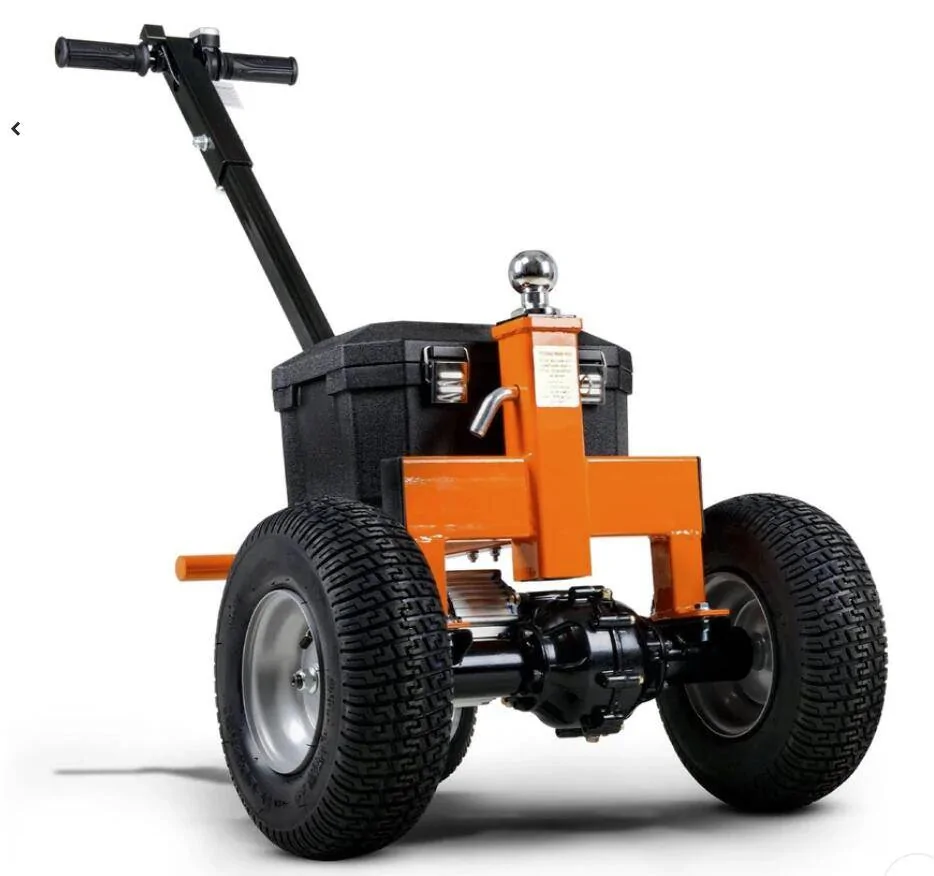
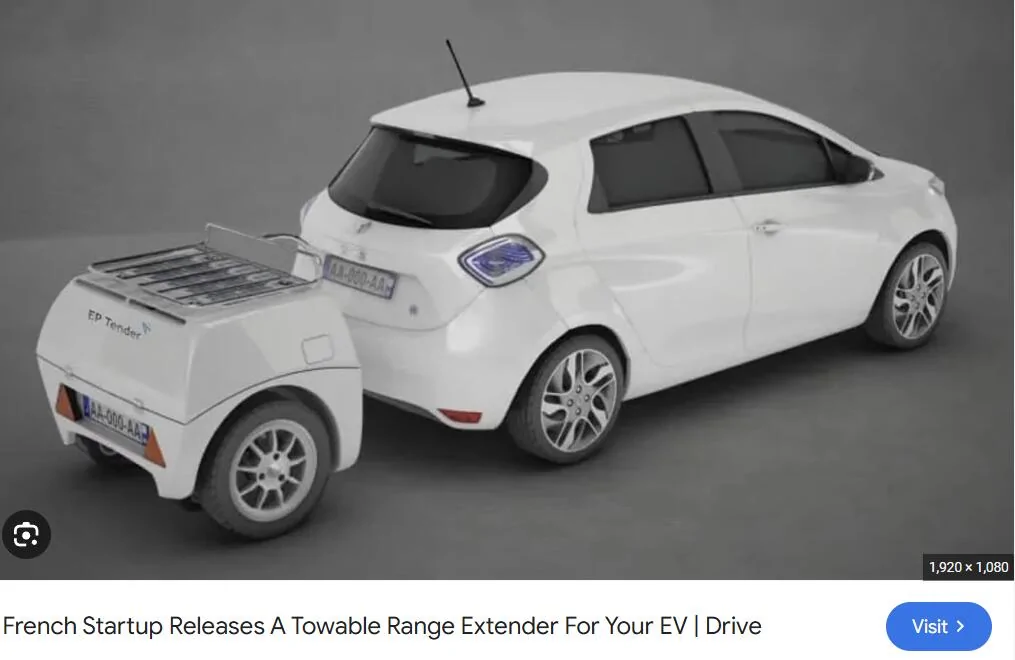
A mechanical range extender is also worth considering. A powered dolly that would assist pushing the CT while connected to the tow hitch. Its been attempted by others, I dont know if a product exists yet.

Tesla Cybertruck Harvester Gas-Powered Range Extender for Cybertruck 1730046216588-gl

Tesla Cybertruck Harvester Gas-Powered Range Extender for Cybertruck 1730046281633-c4
 
OP
OP
Tinker71

Tinker71

Well-known member
First Name
Ray
Joined
Aug 8, 2020
Threads
93
Messages
1,610
Reaction score
2,102
Location
Utah
Vehicles
1976 VW EV bus, 2007 Sienna, Tesla M3, Cancelled CT2 rez - holding for $65k
Occupation
Project Manager
Country flag
A mechanical range extender is also worth considering. A powered dolly that would assist pushing the CT while connected to the tow hitch. Its been attempted by others, I dont know if a product exists yet.

1730046216588-gl.jpg

1730046281633-c4.jpg
you first :)


MeadowShade

Well-known member
First Name
Fred
Joined
Jan 29, 2024
Threads
7
Messages
362
Reaction score
367
Location
VA
Vehicles
Bike
Country flag
Just seems like math to me.

Look at the two new camper trailers that “carry their own weight”. That is they push with their own motors and batteries.

Some smart soul can figure this out and maybe Scout already has!
 
OP
OP
Tinker71

Tinker71

Well-known member
First Name
Ray
Joined
Aug 8, 2020
Threads
93
Messages
1,610
Reaction score
2,102
Location
Utah
Vehicles
1976 VW EV bus, 2007 Sienna, Tesla M3, Cancelled CT2 rez - holding for $65k
Occupation
Project Manager
Country flag
So you want to make an extra stop to top up your generator, while also having to carry said generator, for a hundred miles more range?

-Crissa
It is 150. And I think it will have enough tank to run 15 hours. You just can't drive more than 500 before it needs time to catch up. Just a guess though.
 

MeadowShade

Well-known member
First Name
Fred
Joined
Jan 29, 2024
Threads
7
Messages
362
Reaction score
367
Location
VA
Vehicles
Bike
Country flag
Not sure we have all the facts
15 hours may be too long. Assume sustained driving is where they get the 500 miles. The harvester is adding 150 miles and if we assume 400 wpm then that is the Harvester adding 60 kw.

So a 10 kw generator is about 1 gallon per hour. 6 gallons could do it

we have to remember weight and space considerations too. Also, like Tesla, range will always include a strong “tale wind”!
Sponsored


Top