
ModelAZ
Well-known member
- First Name
- Joe
- Joined
- Nov 15, 2019
- Threads
- 335
- Messages
- 650
- Reaction score
- 4,836
- Location
- Marin County
- Vehicles
- Cybertruck Ordered

- Thread starter
- #1
From https://www.notateslaapp.com/news/2...-you-when-youre-overloaded-with-update-202526
Tesla Cybertruck Can Now Warn You When You’re Overloaded (With Update 2025.26)
August 5, 2025
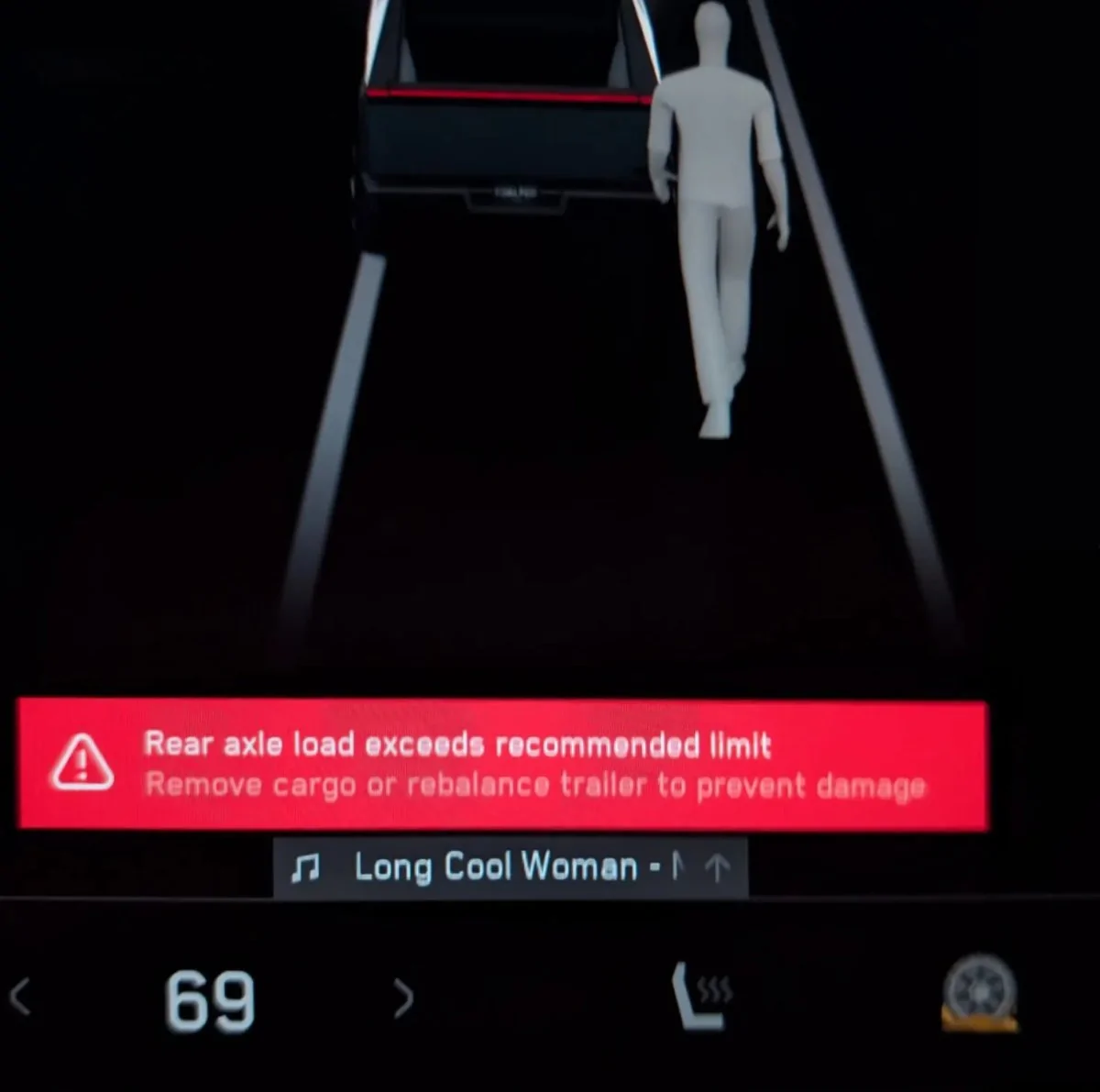
In the latest software update, 2025.26, Tesla has added another new, undocumented feature that helps to improve the Cybertruck’s utility. When towing heavy objects, you need to be sure you balance the trailer and stay within the weight limits of the vehicle. Now, your Cybertruck can detect and warn you if the vehicle’s load rating is being exceeded.
Smart Warning System
This new utility feature goes beyond just having a simple weight sensor. When the Cybertruck detects an overloaded rear axle, it provides a specific and actionable warning to the driver.
Rear axle load exceeds recommended limit.
Remove cargo or rebalance trailer to prevent damage
Tesla is providing two suggestions: either remove weight to help reduce the trailer tongue weight, or move the weight elsewhere on the trailer, which would also remove weight off the tongue. Of course, using a weight-distributing hitch would also have a positive impact on the weight and the balance of tow forces, so make sure you always tow safely.
How Does It Work?
As this feature was undocumented in the release notes, we’re not quite sure exactly how it works just yet. However, there are two likely methods, both of which leverage the Cybertruck’s existing hardware.
The first, and most likely, is through air suspension data. By measuring the pressure and effort required to keep the vehicle level (something ordinary trucks without OEM air suspension cannot do), the Cybertruck can infer the load being placed on the rear axle.
The second is through motor feedback from the rear motors. Measuring torque and strain can be used to help calculate weight.
Tesla probably uses a mixture of both of these methods to determine whether or not the rear axle is being overloaded, and then displays the warning on screen. Regardless of the exact process, this is a prime example of how Tesla uses their sensor-laden vehicles and over-the-air updates to make their vehicles better over time. This feature didn’t need a new model year or additional sensors - instead, it just uses some engineering smarts to keep owners safe. Although Tesla should really give itself some credit here, and include it in the release notes.
Definitely a practical addition, and we hope to see more of these types of changes, clearly driven by user input and experience, arrive in Tesla’s software updates in the future.
Sponsored