Sponsored

Texarado

Well-known member
Joined
Jan 19, 2024
Threads
18
Messages
307
Reaction score
547
Location
Dallas TX
Vehicles
’24 CT AWD FS; ’18 Model 3 AWD
Country flag
Multi axle trailers is an easy way to get distracted from the root of the question. Sure, if loaded in an ideal fashion a double axle trailer (triple axles are completely out of context here) could reduce the downward force during braking though again it would be very difficult to estimate that on a napkin. But consider a possibility that it's not loaded in an ideal fashion, like when most of the cargo weight is above the front axle.
I don’t understand what you are trying to accomplish. I feel confident we can come up with a set of assumptions that will achieve failure. 100% confident. But I don’t know how that is useful. An ICE vehicle has an increased risk of explosion if you push a lit cigarette into the gas tank. ICE vehicles by definition are combustion engines, which have fires, so why do we even allow them near gas stations, which could explode? We should ban all cigarettes and gas stations because of these risks. [Edit to say I’m being sarcastic.]

Of course someone could improperly load a trailer or have some unusually high center of gravity, but what are the rules when applying assumptions? At what point do you put limits so that the scenarios are actually helpful?

A better question… why do your traditional GM/Ford/etc. SUVs (or trucks) often boast towing capacities of 8000+ lbs, but never truly get called out that their payloads are so horrendous? They often have payload capacities in the mid-1000’s. Put a normal expected tongue weight on that hitch plus people in the vehicle and you have no realistic way to tow 8000 pounds because you are WAY out of spec on the payload capacity of the vehicle. Unless you’re deep in the towing boards, that stuff NEVER gets called out on the half ton pickups.

As I said earlier, I think it’s fair to ask a question about stress fatigue and inquire about composition of the aluminum alloy, but it’s all presented in a way that begs questions of an agenda. I’ll of course continue to watch information that comes through, but I’ll take my Cybertruck over an F150/Rivian/Silverado 1500 hitch setup any day of the week.
Sponsored

 

cybercricket

Well-known member
Joined
Oct 31, 2024
Threads
13
Messages
652
Reaction score
797
Location
Oregon
Vehicles
Cybertruck
Country flag
I don’t understand what you are trying to accomplish. I feel confident we can come up with a set of assumptions that will achieve failure. 100% confident. But I don’t know how that is useful. An ICE vehicle has an increased risk of explosion if you push a lit cigarette into the gas tank. ICE vehicles by definition are combustion engines, which have fires, so why do we even allow them near gas stations, which could explode? We should ban all cigarettes and gas stations because of these risks. [Edit to say I’m being sarcastic.]

Of course someone could improperly load a trailer or have some unusually high center of gravity, but what are the rules when applying assumptions? At what point do you put limits so that the scenarios are actually helpful?

A better question… why do your traditional GM/Ford/etc. SUVs (or trucks) often boast towing capacities of 8000+ lbs, but never truly get called out that their payloads are so horrendous? They often have payload capacities in the mid-1000’s. Put a normal expected tongue weight on that hitch plus people in the vehicle and you have no realistic way to tow 8000 pounds because you are WAY out of spec on the payload capacity of the vehicle. Unless you’re deep in the towing boards, that stuff NEVER gets called out on the half ton pickups.

As I said earlier, I think it’s fair to ask a question about stress fatigue and inquire about composition of the aluminum alloy, but it’s all presented in a way that begs questions of an agenda. I’ll of course continue to watch information that comes through, but I’ll take my Cybertruck over an F150/Rivian/Silverado 1500 hitch setup any day of the week.
The only thing I am trying to accomplish is to call out the people who "got it figured out." You brought up the multi-axle trailers implying they somehow are immune to the potential extremes that the author of the video discusses, and I suggested that multi-axle trailers aren't really solving as much as some may think.
 

Cyber Man

Well-known member
Joined
Dec 30, 2023
Threads
11
Messages
1,049
Reaction score
2,259
Location
California
Vehicles
BMW X1, Porsche Cayenne, R1T Perf max, Cyberbeast
Country flag
The only thing I am trying to accomplish is to call out the people who "got it figured out."
Why are you so blindly believing in what the author of this video says? You mentioned in the previous post that Steel is superior to Aluminum as Steel has higher margin of error and low fatigue point. “Margin of error” is highly nuanced - it’s not a simple “bend” or “break”. In some circumstances, “breaking” is highly needed to prevent fatality. This is one of the important reasons Tesla went with Aluminum alloy for CT.

Please truly understand the science behind what’s happening here.

Vertical loads higher than 10,000 lbs on the hitch == high danger and severe accident zone, including fatality.

This is an extremely important point to understand. In this circumstance, you are looking at a crash, probably fatal. When you are towing, do you prefer a Steel chassis that “bends” and hangs on to the trailer, sucking everything else into the impact, including people in tow vehicle, or do you prefer aluminum chassis that “decouples” and lowers the probability of fatality?

Please checkout full tear down video of CT chassis. The breakpoints are so well thought through - they have the right crumble and detachment zones. Recently the entire CT bed was decoupled from a Range Rover accident. If passengers were sitting in an ICE truck that took the same impact, it would have been 100% fatal.

Please know that “bending” is not better than “breaking” in steel vs aluminum material choice when it comes to severe impact. That’s a layman way of thinking, and aluminum alloys last same or probably longer than Steel as they don’t rust. Fatigue point is another nuanced topic. Alloys don’t work this way. If you still want to follow YouTubers who spread FUD about CT, by all means please follow. Just don’t think that people on the other camp are just Tesla fanboys who blindly believe in whatever Tesla does.
 

BannedByTMC

Well-known member
Joined
Dec 19, 2023
Threads
22
Messages
813
Reaction score
1,141
Location
NYS
Vehicles
Model 3
Country flag
When you are towing, do you prefer a Steel chassis that “bends” and hangs on to the trailer, sucking everything else into the impact, including people in tow vehicle, or do you prefer aluminum chassis that “decouples” and lowers the probability of fatality?
Everyone else on the road would prefer the trailer stay attached to the tow vehicle, not become "decoupled" flying down the road on it's own. There is a reason trailers have safety chains as backups for the hitch coupler. Your attempted line of "reasoning" is insane.
 

mongo

Well-known member
Joined
May 27, 2024
Threads
5
Messages
4,520
Reaction score
5,495
Location
SE Michigan
Vehicles
Cyberbeast
Country flag
But it still will be less than a trailer without brakes.
Yeah, trailer brakes increase the vertical tongue load because they impart additional moment below and away from the hitch which adds to the inertial moment above and toward the hitch.

Basically, the further offset the braking force is from the CG, the more torque is produced.


Cyber Man

Well-known member
Joined
Dec 30, 2023
Threads
11
Messages
1,049
Reaction score
2,259
Location
California
Vehicles
BMW X1, Porsche Cayenne, R1T Perf max, Cyberbeast
Country flag
Everyone else on the road would prefer the trailer stay attached to the tow vehicle, not become "decoupled" flying down the road on it's own. There is a reason trailers have safety chains as backups for the hitch coupler. Your attempted line of "reasoning" is insane.
I have towed for several years. As I said above, we are looking at extreme cases. Do you even understand what 10,000 lbs vertical load on hitch means? Think of someone doing 5 feet jump with a trailer that weighs 10,000 lbs. Think of severe sway that completely twists the trailer, thereby turning tow vehicle upside down. Think of a 10K Trailer hanging from a bridge while attached to the Tow vehicle. Even chains will snap. Some random person draws 25% trailer load plus 3G forces and you believe that 10,000lbs vertical load happens on the hitch with normal driving? That’s insane!!
 

DJAlan2000

Well-known member
First Name
Alan
Joined
Jul 9, 2024
Threads
4
Messages
504
Reaction score
397
Location
Oxnard, CA
Vehicles
Tesla Model Y-LR and our CyberTruck FS
Country flag
tl;dr: The design meets SAE specifications, but the hitch could theoretically exceed the 10K vertical load if you're pulling max-load with a high center-of-gravity on a single-axle trailer while braking at 1G downhill while hitting a pothole
On the third Tuesdays of each month, while backing up...
 

mongo

Well-known member
Joined
May 27, 2024
Threads
5
Messages
4,520
Reaction score
5,495
Location
SE Michigan
Vehicles
Cyberbeast
Country flag
Like how does one get 3G vertical acceleration unless they hit the jounce bumpers and probably collapse the sidewalls?
Air suspension gets a lower acceleration factor in the European test spec, but both values are sub 1/4G.
 

Deleted member 22486

Guest
The Society of Automotive Engineers (SAE) guidelines typically suggest that the vertical load on a trailer hitch should not exceed 10% of the trailer’s gross weight. For an 11,000-pound trailer, this would mean a maximum vertical load of 1,100 pounds on the hitch point. Specific standards like SAE J2807 emphasize testing with tongue weights at 10% of the trailer weight for conventional towing. Real-world scenarios, however, may require hitches to withstand dynamic forces beyond static ratings, especially during braking or road irregularities. Those real world scenarios involve some of the very things that Jason talked about in his video. He noted in the video that most manufacturers, including RAM, test tongue weights at 15%, not 10%, of the trailer weight for conventional towing in order to accommodate for some of these dynamic forces. He also said that there are some real world scenarios where the entire weight of the trailer could be transferred to a vertical load for a brief period of time (and demonstrating at mathematically, showed how that could happen). Then there’s the whole discussion about how brittle aluminum vs steel and how the fatigue rating is very different between the two materials.

All good reasons why I believe his analysis to be a thorough one.

So even though many of us thought Jerry‘s video was bullshit at first… it has SOME validity to it


BannedByTMC

Well-known member
Joined
Dec 19, 2023
Threads
22
Messages
813
Reaction score
1,141
Location
NYS
Vehicles
Model 3
Country flag
As I said above, we are looking at extreme cases. Do you even understand what 10,000 lbs vertical load on hitch means? Think of someone doing 5 feet jump with a trailer that weighs 10,000 lbs.
It's not, as was explained in the video. A high CG load, going down hill, hitting the brakes, and a pothole at the same time, is not impossible. Think of a trailer with a 10k lb excavator, that would have a high CG.
 

Cyber Man

Well-known member
Joined
Dec 30, 2023
Threads
11
Messages
1,049
Reaction score
2,259
Location
California
Vehicles
BMW X1, Porsche Cayenne, R1T Perf max, Cyberbeast
Country flag
It's not, as was explained in the video. A high CG load, going down hill, hitting the brakes, and a pothole at the same time, is not impossible. Think of a trailer with a 10k lb excavator, that would have a high CG.
Even a 6G vertical load after hitting a pothole will be 6600 lbs. How can another extra 3400 lbs of centrifugal force come purely from a trailer that has break controller just because it has high CG? The whole point of break controller is to reduce this downward force.

I’m not saying this is impossible. It’s just very reckless Mad max wild chase towing! Your rig will have suspension, axle load, under steer/over steer, and stability issues before worrying about hitch snapping off.

I guess we just have to settle this simply by saying “let’s see in the future”.

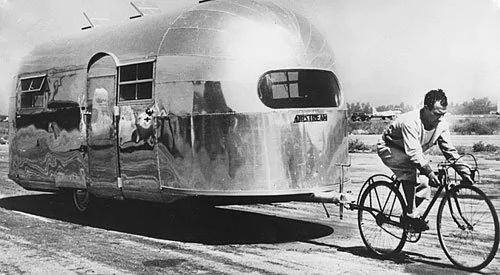
If you still need more answers, then ask someone like this guy on how he built a bicycle that can handle insane dynamic load. Now please don’t say it’s because of Steel spokes ?

Tesla Cybertruck Cybertruck hitch analysis by Engineering Explained 1744669130482-j
 
Last edited:

mongo

Well-known member
Joined
May 27, 2024
Threads
5
Messages
4,520
Reaction score
5,495
Location
SE Michigan
Vehicles
Cyberbeast
Country flag
It's not, as was explained in the video. A high CG load, going down hill, hitting the brakes, and a pothole at the same time, is not impossible. Think of a trailer with a 10k lb excavator, that would have a high CG.
E48 mini excavator has a CG likely under 3 feet.
A 10k utility trailer is going to be 20 foot long or more, say 15 foot axle to tongue, 10% tongue puts CG at 1.5 feet from axle, so the vertical loading due to deceleration (ignoring trailer brakes) is 3/13.5 or 22% of braking force.
 

BannedByTMC

Well-known member
Joined
Dec 19, 2023
Threads
22
Messages
813
Reaction score
1,141
Location
NYS
Vehicles
Model 3
Country flag
The whole point of break controller is to reduce this downward force.
Imagine the trailer by itself traveling down the road, what happens when it applies it's brakes? The tongue will be forced down. Trailer brakes do not eliminate that force.
Sponsored


Top