
Sponsored

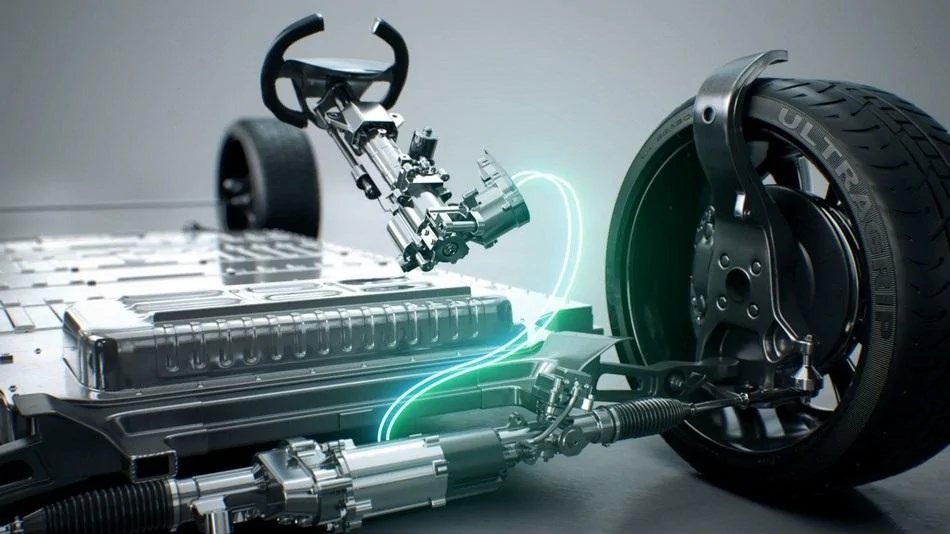
Some very apparent steer-by-wire action!

JBee

Well-known member
First Name
JB
Joined
Nov 22, 2019
Threads
18
Messages
4,913
Reaction score
6,362
Location
Australia
Vehicles
Cybertruck
Occupation
. Professional Hobbyist
Country flag
it’s steer-by-wire

I’ve been 20’ away from one making a u-turn, able to see the driver/wheel through the entire maneuver

and driver turned the wheel from straight to maybe 130° left (would put lock-to-lock at ~270°)

While you the viewer can’t see it because of lighting conditions in this video, IRL I could just fine (was watching for it)


Front and rear steer by wire or just rear?

Could it just be a variable speed front steering box and SBW in the rear?

I think that's more likely, and I don't think you would be able to tell the difference just from a video were you could see both steering wheel and wheel angles, because you would have to compare that at different vehicle speeds as well? The point is the front could still be mechanically connected that way without having to jump through compliance issues, and the rear could be SBW as it is limited steering angle can be overcome by the front steering angle.
Sponsored
 

cvalue13

Well-known member
Joined
Aug 17, 2022
Threads
74
Messages
7,153
Reaction score
13,769
Location
Austin, TX
Vehicles
F150L
Occupation
Fun-employed
Country flag
The point is the front could still be mechanically connected that way without having to jump through compliance issues, and the rear could be SBW as it is limited steering angle can be overcome by the front steering angle.
good point!

if there’s a mechanical system that allows for progressive steering at like 270°, then you’re right there’d be no way to tell vs SBW just by watching

but FTY, there’s apparently no compliance issue, only a cost issue

compliance is met merely by independent redundant system, which can be mechanical or electronic redundant - the latter being the more expensive option
 

JBee

Well-known member
First Name
JB
Joined
Nov 22, 2019
Threads
18
Messages
4,913
Reaction score
6,362
Location
Australia
Vehicles
Cybertruck
Occupation
. Professional Hobbyist
Country flag
good point!

if there’s a mechanical system that allows for progressive steering at like 270°, then you’re right there’d be no way to tell vs SBW just by watching

but FTY, there’s apparently no compliance issue, only a cost issue

compliance is met merely by independent redundant system, which can be mechanical or electronic redundant - the latter being the more expensive option
Admittedly, I'm a bit unfamiliar with compliance around SBW, but I'd expect that it varies in different countries, and that a mechanical system might just be the path of least resistance to get the model up and running?

The term "redundant" might at first seem comforting, but if done electronically then redundant would mean at least 3 systems. The reason for this is simple in that if you have only two, how can you tell which system is correct and not failing, and which system is wrong? With three, you end up with at least one extra control to poll from. All avoidable with a mechanical linkage.

Honestly, I'd prefer mechanical front steering and hydraulic brakes, until a decade or so from now until someone else has figured out and dealt with all the safety related bugs. I get that we have FBW passenger aircraft etc (I have even developed and flown our own eVTOL autopilot etc) but from a risk standpoint, they tend to have much higher standards for maintenance and pre-flight checks, and are in the hands of professionals with 100's hours of training, and are only a "few" in number in comparison to mass adoption in the millions by everyday drivers.

I think a RSBW is probably the best way to get some experience and feedback, without the steeper risk of FSBW. I say this after personally experiencing an un-commanded acceleration event in a MY whilst parking in Texas. :eek:
 

wanders

Well-known member
Joined
Sep 14, 2023
Threads
2
Messages
213
Reaction score
309
Location
earth
Vehicles
CRVEX-LAWD
Country flag
I've been working on an idea regarding this. The Wander Special.

If it's steer by wire, presumptuously you could change the location of the steering wheel, right? Like, it doesn't have to be in front of the driver's seat? For instance it could be on a control panel like an RC car?

Now, driving your Cybertruck around like an RC car may not be the best idea. However the truck bed you have is pretty spacious... you could install a throne accessory and drive with a 3rd person view. ?‍♂ Bonus: Hook up a boat motor and drive into the lake, now you've got a CyberBoat....




WHIZZARD OF OZ

Well-known member
First Name
Ivan
Joined
Mar 11, 2021
Threads
1
Messages
2,288
Reaction score
2,090
Location
Australia
Vehicles
VW Up!
Occupation
Electric Wheelchair Builder
Country flag
I was going to ask kind of the same question. Why do Teslas sound like space ships when they are in reverse?
Tesla don't want to run over Marvin The Martian or 'Old dogs, children, and watermelon wine' ( Tom T. Hall )
 

PilotPete

Well-known member
First Name
Pete
Joined
May 8, 2023
Threads
12
Messages
1,578
Reaction score
3,969
Vehicles
Porsche, BMW, M3LR on order
Occupation
Chief Pilot
Country flag
The term "redundant" might at first seem comforting, but if done electronically then redundant would mean at least 3 systems. The reason for this is simple in that if you have only two, how can you tell which system is correct and not failing, and which system is wrong? With three, you end up with at least one extra control to poll from. All avoidable with a mechanical linkage.
Not always. 3 system redundancy involves a command system getting 3 answers to the problem and shutting off the system that is the “odd man out”. But more modern redundant systems don’t require a command system or a 3rd system. Rather each system has sufficient internal data checks to know when it is wrong internally. And that internal check has a backup in the feedback loop to make sure it agrees. So the feedback loop system becomes more like the original command system and validates the internal data checks and throws out any bad calculations, solutions, and commands. Kinda like “show your work” on a math problem. If you get two different answers, you look at how they came to the solution and catch the error. By making each system ”smarter” you eliminate a 3rd system and incorporate system checks into the feedback system. I think someone posted either the patent or regulation on here a few months ago, and it looked like that was the way they were going. You can incorporate all sorts of additional checks (like reasonableness and out of bounds checking) that can even better replace a 3rd redundant system as a method of ensuring data integrity.
 

JBee

Well-known member
First Name
JB
Joined
Nov 22, 2019
Threads
18
Messages
4,913
Reaction score
6,362
Location
Australia
Vehicles
Cybertruck
Occupation
. Professional Hobbyist
Country flag
Not always. 3 system redundancy involves a command system getting 3 answers to the problem and shutting off the system that is the “odd man out”. But more modern redundant systems don’t require a command system or a 3rd system. Rather each system has sufficient internal data checks to know when it is wrong internally. And that internal check has a backup in the feedback loop to make sure it agrees. So the feedback loop system becomes more like the original command system and validates the internal data checks and throws out any bad calculations, solutions, and commands. Kinda like “show your work” on a math problem. If you get two different answers, you look at how they came to the solution and catch the error. By making each system ”smarter” you eliminate a 3rd system and incorporate system checks into the feedback system. I think someone posted either the patent or regulation on here a few months ago, and it looked like that was the way they were going. You can incorporate all sorts of additional checks (like reasonableness and out of bounds checking) that can even better replace a 3rd redundant system as a method of ensuring data integrity.
Agreed. But now we are talking about redundancies inside of redundant systems that are performing their own internal checks, which is by definition more that 3, if 2 complete systems have at least 2 systems that are checked, being 4 control systems? ;)

Sorry for being pedantic here, but that is likely because I wrote that comment way to loosely, in that I didn't define what I meant by "system" in hardware. My concerns were more so, because the likelihood of failure of a FBW/SBW system increases if you exponentially raise the numbers of vehicles in the fleet, and compound them with poor maintenance and training, as apposed to commercial aircraft that use FBW, and that even "if" we still end up with redundant SBW systems that are as equally reliable (at a much lower cost).

In the context of SBW, you could have two electrical actuators/motors to move the steering, but each of those could have redundant control systems integrated, with own dedicated sensors and power etc. that would perform the checks. The "control" part of the system could be made redundant at little to no extra cost (rotary encoders, MCUs etc) but the actuating part would be more expensive. Either of these, being electric could still be susceptible to electric power loss or interference.

You could also add another redundancy layer by adding a self centering spring, or even better by using the brakes/motors and ESP/ABS sensors to steer if the SBW failed. You can even use the motor controller RPM if you had a trimotor to detect steering response. You could also use
accelerometers/gyros/compass sensors ($5) to check if the steering input resulted in the required steering output, likewise the steering wheel position from the interior camera etc etc. There's a whole range of sensors and control methods you could use to layer up on redundancies, all at no or very low cost, mostly in the form of software, if you already have the systems onboard.

But, the question is, and always has been, at what level of redundancy is reliability improved, as each layer of complexity brings with it it's own additional risk of failure? A steel steering rod to mechanically actuate the steering, does the opposite, in that the complexity is very low and yet the reliability is very, very high. The cost is also low, but so is the "added" functionality, in that progressive steering rates are really the only benefit from SBW system, which could easily also be achieved by implementing them in the rear SBW alone, without adding complexity or much additional risk, that a mechanical front steering can compensate for.

If EM is heavy handed with forcing FSD "no matter what" then we might see SBW forced on us anyway, but I do wonder, given the above just how "beneficial" a front SBW setup is at all, if a rear SBW would suffice and offer the same benefits.
 
Last edited:

Baldey

Well-known member
First Name
Jenia
Joined
Feb 24, 2023
Threads
10
Messages
387
Reaction score
666
Location
Colorado
Vehicles
tesla M3, 2025 CT
Occupation
QA automation
Country flag
Front and rear steer by wire or just rear?

Could it just be a variable speed front steering box and SBW in the rear?
This doesn't make sense. SBW will have latency. Hopefully not much, but its unavoidable. Having the rear wheels turn at different times from the front, would introduce instability i would think.. It would make a lot more sense to me if both front and back had the same lock-stop SBW system.

SBW and progressive steering ratios are all but required for the rear wheels. Therefore, i think the front will have the feature as well. Not to mention how useful something like this would be in a truck... Imagine hooking up a trailer or some tight parking, the amount of direction changes you'd have to make and crank the wheel is immense.. SBW would help with this greatly.


gc2488

Well-known member
First Name
Gary
Joined
Jan 25, 2022
Threads
1
Messages
49
Reaction score
39
Location
Utah
Vehicles
R1S
Occupation
software engineer
Country flag
I wanna see auto-park with good use of rear steering including crabwalk. Great potential here.
 

IJNYamato

Well-known member
Joined
Mar 10, 2023
Threads
0
Messages
147
Reaction score
653
Location
USA
Vehicles
Horse & Buggy
it’s steer-by-wire

I’ve been 20’ away from one making a u-turn, able to see the driver/wheel through the entire maneuver

and driver turned the wheel from straight to maybe 130° left (would put lock-to-lock at ~270°)

While you the viewer can’t see it because of lighting conditions in this video, IRL I could just fine (was watching for it)


This comment is extremely accurate
 

ikwill

Well-known member
Joined
Sep 1, 2023
Threads
0
Messages
58
Reaction score
91
Location
Georgia
Vehicles
'22 MS LR
Occupation
Retired
Country flag
We have a new model s and it sounds the same. It is the Tesla version of the NHTSA-required low speed audible warning.
So does mine, it became louder with refresh model. Sounds like an alien ship, says dear husband.
 

JWass

Well-known member
First Name
Jonathan
Joined
Apr 18, 2023
Threads
0
Messages
95
Reaction score
229
Location
Chestertown, Maryland, USA
Vehicles
Volvo XC90
Occupation
Engineer
Country flag
Wouldn't you have to be able to see the driver and specifically the steering wheel/oval to know if it is steer by wire or not? I.e. in order to see how far he turns it (or not) compared to the angle of the tires?
I think the rear steering has to be steer-by-wire. Given no tunnel in the chassis and the structural battery pack.

Whether the front is can be debated. But since the rear has to be steer-by-wire. There’s a good chance the front is too.
 

JBee

Well-known member
First Name
JB
Joined
Nov 22, 2019
Threads
18
Messages
4,913
Reaction score
6,362
Location
Australia
Vehicles
Cybertruck
Occupation
. Professional Hobbyist
Country flag
This doesn't make sense. SBW will have latency. Hopefully not much, but its unavoidable. Having the rear wheels turn at different times from the front, would introduce instability i would think.. It would make a lot more sense to me if both front and back had the same lock-stop SBW system.

SBW and progressive steering ratios are all but required for the rear wheels. Therefore, i think the front will have the feature as well. Not to mention how useful something like this would be in a truck... Imagine hooking up a trailer or some tight parking, the amount of direction changes you'd have to make and crank the wheel is immense.. SBW would help with this greatly.
Not quite sure what doesn't make sense, but maybe it's because you think SBW has latency? It doesn't, in fact to have a progressive variable rate steering, you have to accelerate the wheel angle faster than the steering wheel itself.

The point of it is to have finer angle control when going fast and straight, and more angle at lock for turning around when slow.

The main reason to have the rear SBW is to avoid long mechanical shafts going from the steering wheel to the rear rack. Also the rear steering has much less angle than the front, and it changes steering direction depending on vehicle speed. At slower speeds it steers opposite to the front for a smaller turning radius, and in parallel with front at highway speeds up until a certain angle. This also helps get rid of steering induced trailer sway. Plenty of videos about it on utube.
Sponsored


Top