Sponsored

How much would you pay for a range extender.

HaulingAss

Well-known member
Joined
Oct 3, 2020
Threads
28
Messages
10,308
Reaction score
20,724
Location
Western Washington, USA
Vehicles
Cybertruck DM, 2010 F-150, 2018 Performance Model 3, 2024 Performance Model 3
Country flag
I wouldn't pay a dime for a gas/propane/diesel generator for my truck. I wouldn't take it if it were free. I am driving electric for many reasons but one of them is to stop using petroleum (or related products). For me, Tesla has to produce a vehicle that meets my needs in terms of range, cargo, and towing, and it needs to provide a charging network to get to places, in any climate, season, or altitude to do so. Tesla knows what we need because it has designed a truck to meet those needs. But the range and infrastructure have to go along with all these neat features. I am not willing to give up on range and I definitely don't think Tesla will sell a tri or quad motor with 300 miles of range when it quoted 500. If they sell a dual at 300, then fine, I will hope that by next summer they have the tri/quad at 500 (at least) miles ready when my number comes up.
Tesla did say they were adding a Quad-motor configuration to the Cybertruck offerings, but did they say it would also have 500+ miles of range or was that only your assumption?
Sponsored

 
OP
OP
Tinker71

Tinker71

Well-known member
First Name
Ray
Joined
Aug 8, 2020
Threads
93
Messages
1,610
Reaction score
2,102
Location
Utah
Vehicles
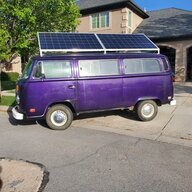
1976 VW EV bus, 2007 Sienna, Tesla M3, Cancelled CT2 rez - holding for $65k
Occupation
Project Manager
Country flag
Tesla did say they were adding a Quad-motor configuration to the Cybertruck offerings, but did they say it would also have 500+ miles of range or was that only your assumption?
It is always a time component that people miss. Eventually battery tech will improve and a 500 mile range quad will be offered. I have been saying for months Tesla doesn't what to double stack the whole battery pack. They can't get 500 without doing that.
 

HaulingAss

Well-known member
Joined
Oct 3, 2020
Threads
28
Messages
10,308
Reaction score
20,724
Location
Western Washington, USA
Vehicles
Cybertruck DM, 2010 F-150, 2018 Performance Model 3, 2024 Performance Model 3
Country flag
It is always a time component that people miss. Eventually battery tech will improve and a 500 mile range quad will be offered. I have been saying for months Tesla doesn't what to double stack the whole battery pack. They can't get 500 without doing that.
I have not seen any convincing analysis that supports the claim that the Cybertruck cannot get over 500 miles of range without double-stacking two battery packs on top of one another. Might some batteries end up either above one another or higher up than most of the pack in the skateboard? Sure, why not, as long as it doesn't require the passenger floor be raised. But will Tesla make a double-stacked Cybertruck pack that raises the cabin floor by over 4 inches? I think the answer to that is "absolutely not".

The analyses that claim to prove that a double-stacked pack is required to achieve 500+ miles of EPA range use overly pessimistic assumptions about the energy density of the batteries Tesla will use, as well as overly pessimistic assumptions about the EPA efficiency of the Cybertruck.

I believe that the 500+ mile range was always based on future battery energy density and vehicle efficiency estimates as applied to what was possible with a single layer battery. It may be the case with the roughly 3% downsizing, that Tesla would have to add a supplementary module in addition to the skateboard, but it goes against Tesla's design philosophy to raise the cabin by enough to fit an additional battery layer in the skateboard so any such added module or modules would have to be added in an area that didn't raise the floor of the cabin. This is based on solid analysis of what we do know, unlike the many predictions of a double-stacked battery and raised cabin floor.

But my question to you was to point out that Tesla has never publicly announced a Quad motor with a 500+ mile range. Tesla has only ever associated the 500+ mile range Cybertruck with the Tri-motor and anyone dissappointed if a Quad-motor is not offered in an ultra-long range (500+ miles) version has only their own unsupported assumptions to blame. There very well could be a 500+ mile Quad-motor, I'm just saying, don't blame Tesla if only a Tri-motor is offered with that range. We simply don't know yet, because Tesla has not told us.
 

Crissa

Well-known member
First Name
Crissa
Joined
Jul 8, 2020
Threads
138
Messages
19,571
Reaction score
31,475
Location
Santa Cruz
Vehicles
2014 Zero S, 2013 Mazda 3
Country flag
Tesla did say they were adding a Quad-motor configuration to the Cybertruck offerings, but did they say it would also have 500+ miles of range or was that only your assumption?
Tesla hasn't said at all.

But the performance model generally has the largest battery, as a bigger battery can provide the most kW and that's what performance requires.

It isn't always the longest range model, though.

-Crissa
 

schkorpio

New member
First Name
Hank
Joined
Aug 7, 2023
Threads
0
Messages
3
Reaction score
3
Location
Brisbane
Vehicles
Cybertruck
Occupation
Engineer
Country flag
Your bladder range is going to be more of a limiting factor than any battery range :)

I guess the key really is to get Tesla or a third party to install those 1000w chargers within range of camping spots. So that while you relieve yourself, stretch, and have a bite to eat you've charged the car back to near full again.

I'm assuming there's already diners and gas stations in these pockets.


schkorpio

New member
First Name
Hank
Joined
Aug 7, 2023
Threads
0
Messages
3
Reaction score
3
Location
Brisbane
Vehicles
Cybertruck
Occupation
Engineer
Country flag
Does anyone make a thin/aerodynamic trailer that can be towed by the CT and holds enough batteries for 50% more range? (Maybe you'd lose too much range just by towing it to make it worth while)
 

JBee

Well-known member
First Name
JB
Joined
Nov 22, 2019
Threads
18
Messages
4,913
Reaction score
6,362
Location
Australia
Vehicles
Cybertruck
Occupation
. Professional Hobbyist
Country flag
If anything a fuel powered range extending trailer/camper would be the easiest way to add range as a rental. No EV mods required, no extra batteries or connections, no need to modify the EV controller, just needs a standard trailer brake input. Hook it up, drive long distance non-stop with the fuel pushing you along directly like an ICE, and then drop it off with the EV fully charged by the time you get there. U-haul for EVs.
 
OP
OP
Tinker71

Tinker71

Well-known member
First Name
Ray
Joined
Aug 8, 2020
Threads
93
Messages
1,610
Reaction score
2,102
Location
Utah
Vehicles
1976 VW EV bus, 2007 Sienna, Tesla M3, Cancelled CT2 rez - holding for $65k
Occupation
Project Manager
Country flag
Does anyone make a thin/aerodynamic trailer that can be towed by the CT and holds enough batteries for 50% more range? (Maybe you'd lose too much range just by towing it to make it worth while)
That would be fairly easy except you would be limited in that towing another trailer would be difficult. Might as well cap it with solar cells and fold our solar wings for stops.
 

FutureBoy

Well-known member
First Name
Reginald
Joined
Oct 1, 2020
Threads
215
Messages
3,556
Reaction score
6,062
Location
Kirkland WA USA
Vehicles
Toyota Sienna
Occupation
Financial Advisor
Country flag
If anything a fuel powered range extending trailer/camper would be the easiest way to add range as a rental. No EV mods required, no extra batteries or connections, no need to modify the EV controller, just needs a standard trailer brake input. Hook it up, drive long distance non-stop with the fuel pushing you along directly like an ICE, and then drop it off with the EV fully charged by the time you get there. U-haul for EVs.
Sounds like an EV jumper cable.
 

JBee

Well-known member
First Name
JB
Joined
Nov 22, 2019
Threads
18
Messages
4,913
Reaction score
6,362
Location
Australia
Vehicles
Cybertruck
Occupation
. Professional Hobbyist
Country flag
I thought about it some more, and you could take it a step further and make it a single wheel drive that is directly attached to the tow hitch receiver instead. You then put a shroud around it to improve aero even more, and use it's own air suspension to make it deployable at cruise speed. A variation of a "fifth wheeler". Also doubles as a bike rack.

Control system would consist of plugging in a OBD port reader to see the current power draw of the CT and it's speed, and then deploy and match that power output until it goes to zero, and to maintain that speed. You can then decide how much it pushes it into the regen range for charging. Brake controller turns it off, as does slow speed in town when it doesn't help to run it.

Obviously, having something that just charges the CT would likely be more efficient and integrated, but this thing could be used on any EV model without modification.


John K

Well-known member
First Name
John
Joined
Jan 2, 2020
Threads
41
Messages
2,802
Reaction score
5,776
Location
Los Angeles
Vehicles
Volt, CT reserve day 2
Country flag
Just put hamsters on treadmills. When males and females are added, self replicating will a little food and out a trap door to dump wast as you drive.
 

JBee

Well-known member
First Name
JB
Joined
Nov 22, 2019
Threads
18
Messages
4,913
Reaction score
6,362
Location
Australia
Vehicles
Cybertruck
Occupation
. Professional Hobbyist
Country flag
I don't disagree on the inconvenience of the propane/generator solution. The Obrist is an elegant engineering solution for EV range extension, no argument there. But for the Cybertruck owner who takes an occasional trip into the wild where charging opportunities are scarce, the Obrist seems a mite impractical.
Some questions:
Where can I purchase an Obrist range extender? What's the price? How much does it weigh? How easy is it to install? Is it permanently installed in a vehicle? Can it be easily removed? Does installation void Tesla's warranty? Where is it serviced? What warranty does Obrist include?
I haven't looked at it since it came out, but the intention is that a Obrist hybrid would cost less than a normal EV because it would have less batteries. This together with the simple low vibration opposing piston, single speed design would indicate that it would have to be quite low, to keep below the cost of the batteries it replaces. The generation unit itself is meant to cost less than $2500, but has a 40kW output (Enough to drive a CT directly (27kW) and charge it at the same time). The M3 they converted to hybrid also weighs less than a standard M3 because it only has a 17kWh battery installed instead.

It is also multifuel compatible, so you could run it off biofuels or regular fossil. System weight is around 95kg 200lbs and due to the high voltage nature it would likely need to be permanently installed. You could make it removable, as say a unit to put into the bed, but you'd struggle to lift it out by hand. You could make a lifting frame and use the CT air-suspension to get it out though. The mass wouldn't add reduce EV range by much as it's only adding a couple of % of mass, which would equate to less than 1% of range loss from having it installed. Take the CT mirrors off, and you're in front...

This is not really a negative however, in that in order to get a decent return on that investment, you'd want to buy one because you use and need it often. Actually, given its weight, you could use it mounted on the rear tow hitch receiver of the CT and do a plug-in mod.

As for warranty, this depends on how it is operated, and what Tesla would allow. Given that it is essentially a high power generator, you could also just plug it in when stationary like any L2/L3 charger. But at 40kW you would be charging about 100mph, so you could get at least 3 full EV batteries per day with 2 charging sessions, so over 1000miles in daylight without any mods to the vehicle or warranty implications at all.

Obviously, charging whilst driving would be better, in that you would no longer have to stop to plug it in. To do this it could be as simple as a "double adapter" install on the battery output terminals and integration into the CT CAN bus for control. This install would then be easily completely reversible, but would need to be done by a trained technician and is not DIY due to the voltages/disassembly involved. However, once the adaptor is installed, you could then run this to a external connector to where you put the generator, where the user can plug it in and remove the generator as they desire.

Technically, Tesla would see in their logs that the battery was disconnected at one point, but after that the only thing they will notice is that the battery performs way better than it should, because of course energy is coming from the generator instead. There might be other connectors that could be used, and you could also avoid the disconnection log if you really wanted to. Of course you wouldn't be able to use the range estimates on the Tesla screen initially, but over time the learning function might let it get closer at least. I don't know what the bounds of the algorithm are so hard to tell, but it's easy to use ABR with custom values instead.

Control wise there would be a couple of things the Obrist would have to do, which they already do on their own models. One is obviously to make sure the battery is properly maintained whilst it is charging, which is essentially to de-rate the charge rate slowly until it switches off at the top, like a SC would. Otherwise it would be up to the operator to engage the charging and range extending system as needed. You could obviously continue to use the SC network and only use it when heading off grid, or for the convenience of driving past a SC to get to destination faster.

That leads us to fuel consumption estimates. They claim that their M3 only uses 2l per 100km of fuel (117MPG) but I am sure this is only in conjunction with also depleting the 17kWh battery pack at the same time. This is how all PHEV consumption figures are normally done, but is not directly helpful for calculating the CT range or fuel use. You could just double this, as the CT is expected to use around twice that of a M3, and although I did this on one of my previous post, it's likely to be higher as I did some actual calculations, at around 6-7l per hour, due to the conversion efficiency and specific fuel energy density. For simplicity, lets say around 1 liter per 10 miles, or 100l (25gallon) per 1000miles, running just from fuel without recharging from another source. With a 350mile effective range CT you would only need 650miles from fuel or 65l (17gallons).

Now in saying all this, it needs to be understood that these estimates are for on-road highway use only, and not for off-road use in boggy terrain. Overall, one would need to carefully consider the use case if there isn't another solution, that offers similar performance at lower cost in conversion, but might cost you some extra time. Driving slow for example can add range as well, so one would need to factor in the available charging options and how fast they are. For example charging at 9kW would mean you charge for 3 times longer than you actually drive. But driving at half the speed could more than double your range, if it is under 40mph, resulting in you getting there faster overall than stopping and using a 9kW generator charger. The same applies for when travelling in areas with no SC availability, in that L2 charging will always add travel time in comparison to a slower travel speed that uses less energy. So unless you can bundle the L2 charging session with something else you need or want to do, then a SC or charging whilst driving, or a larger output generator is a must to keep the travel times down. Obviously in some cases, like "remote" overlanding you don't have an option and just need to plan your trip around your charging options and just expect to travel less miles per day.

There is one more factor to raise here and that is human activity cycles. Now given we all tend to rest/sleep at least 8 hours a day, that means the available time for travelling, on a long haul "need to get there now" type basis is about 16hours a day. Now 350miles takes nearly 6 hours at 60mph, which at a minimum would need to be charged from a >18kW unit over an 8hour overnight stay. A 9kW unit would take twice as long.

Now even if you could manage to drive nearly non-stop for 16hours, using more than one driver, and sub 2-3 minute toilet breaks, you still end up with a maximum daily range of under 1000miles per day at an "average" of 62mph (without charging times). This is both a significant distance and high average speed over that distance and fairly difficult to achieve in real world driving with traffic etc. I'd imagine less than 0.1% of CT drivers would do this, and of those only seldomly. But, there are places with off-road overlanding it takes more than a 1000miles at less than 20mph average but at the same kWh per mile energy use. That's a multi day trip and 50 hours of driving. At that point you simply need a large fuel powered range extender, because there are no towns or ways to charge nearby. In those sort of conditions it's further compounded that you don't want to travel at night, meaning a larger capacity charger is the only thing that will make an EV useful at a comparable rate to a stock standard ICE vehicle with just a few extra jerry cans.

This is simply because the energy density is much higher with fuel, and each single jerry can of fuel can be converted in a generator to about 70kWh of electricity, the equivalent of a M3 battery pack.
 

cvalue13

Well-known member
Joined
Aug 17, 2022
Threads
74
Messages
7,153
Reaction score
13,769
Location
Austin, TX
Vehicles
F150L
Occupation
Fun-employed
Country flag
Trip from Flagstaff, AZ to Regent, ND to go pheasant hunting with dogs kennels, and associated gear-1254 miles, 2508 round trip. Round trip figures below:
Ford F150 Lightning with extended range -52 hours 42 minutes, 14 stops to charge
Rivian RT1 51 hours 18 minutes 12 stops
Tesla Model 3 to compare 46 hours 26 minutes 18 stops
Ram Diesel 37 hours 38 minutes 6 stops.

…
I assert if your use a truck like a truck often, EV trucks are not there yet.
What mph assumption did you/ABRP use?

In any event, let’s assume these ABRP times/stops are correct.

What the ABRP data obscures is the realities of these different approaches, if done with any intelligence. those time and ā€˜stop’ deltas, particularly between the diesel and an EV, are far closer than the ABRP suggests. Long story short: only a sadist diesel driver is doing only 6 stops over 38hrs of driving, while only a dunce Lightning driver isn’t multi-tasking stops (including overnight charging to/from and at the destination).


All that said, anyone who is regularly doing 3-4day drives to the high plains for pheasant isn’t going to be compelled, nor will their range in those temps (especially mid/late season) be great.

But for mortals who make such a trip only once a season, they should variously be:

• wondering if that’s why they *need* a truck
• carpooling in their buddy’s diesel
• renting the diesel for that annual trip

But what is most ironic to me is this sort of mentality:

I assert if your use a truck like a truck often, EV trucks are not there yet.
Friends in my pheasant group have been going for decades, one will mark his 50th straight year this coming September - longest consecutive for any non-resident of SD.

You should sit around a fire and ask them what traveling in a ā€œreal truckā€ used to be like, even as recent as the late ā€˜90s, much less early ā€˜70s.

They’d have been champing at the bit for a ride as fast and easy as provided by the Lightning.

Which is all to say: it’s strange to me when people say, in effect, ā€œthe only real trucks are those built in the last 20 years, and with an optional [38] gallon tank installedā€

As if the old heads never drove a real truck, didn’t have to carefully plan refueling, all without GPS. and all at 60-65mph, while getting beat to hell by those trucks.

FWIW, I’m not taking my Lightning to SD for pheasant this year. I’m carpooling in my buddy’s diesel, so that I can drive and spend time with his old ass to his 50th consecutive season.

And with as many historical markers we have to stop and get educated on, ain’t no way we’ll make it in less than 2X what ABRP says
 

Crissa

Well-known member
First Name
Crissa
Joined
Jul 8, 2020
Threads
138
Messages
19,571
Reaction score
31,475
Location
Santa Cruz
Vehicles
2014 Zero S, 2013 Mazda 3
Country flag
This is the car that inspired Tesla: https://en.wikipedia.org/wiki/AC_Propulsion_tzero

Notice the trailer.

The vehicle would have to accept an input while driving, and so far Tesla has never offered such access to their drivetrain. It's possible to mod it in, though.

-Crissa
 

dw321

Well-known member
Joined
Jun 10, 2023
Threads
4
Messages
73
Reaction score
97
Location
Arizona
Vehicles
Ram 2500, Toytota 4 Runner, Bikonit Ebike
Country flag
What mph assumption did you/ABRP use?

In any event, let’s assume these ABRP times/stops are correct.

What the ABRP data obscures is the realities of these different approaches, if done with any intelligence. those time and ā€˜stop’ deltas, particularly between the diesel and an EV, are far closer than the ABRP suggests. Long story short: only a sadist diesel driver is doing only 6 stops over 38hrs of driving, while only a dunce Lightning driver isn’t multi-tasking stops (including overnight charging to/from and at the destination).


All that said, anyone who is regularly doing 3-4day drives to the high plains for pheasant isn’t going to be compelled, nor will their range in those temps (especially mid/late season) be great.

But for mortals who make such a trip only once a season, they should variously be:

• wondering if that’s why they *need* a truck
• carpooling in their buddy’s diesel
• renting the diesel for that annual trip

But what is most ironic to me is this sort of mentality:


Friends in my pheasant group have been going for decades, one will mark his 50th straight year this coming September - longest consecutive for any non-resident of SD.

You should sit around a fire and ask them what traveling in a ā€œreal truckā€ used to be like, even as recent as the late ā€˜90s, much less early ā€˜70s.

They’d have been champing at the bit for a ride as fast and easy as provided by the Lightning.

Which is all to say: it’s strange to me when people say, in effect, ā€œthe only real trucks are those built in the last 20 years, and with an optional [38] gallon tank installedā€

As if the old heads never drove a real truck, didn’t have to carefully plan refueling, all without GPS. and all at 60-65mph, while getting beat to hell by those trucks.

FWIW, I’m not taking my Lightning to SD for pheasant this year. I’m carpooling in my buddy’s diesel, so that I can drive and spend time with his old ass to his 50th consecutive season.

And with as many historical markers we have to stop and get educated on, ain’t no way we’ll make it in less than 2X what ABRP says
So A BETTER ROUTE PLANNER does not work - that is what you are telling me..The rest is your rationalizations on why EV's are the only way to go. That my friend - is a sad mentallity
Sponsored


Top