
Sponsored
WADE MODE will let Cybertruck drive through water by raising ride height and pressurizing battery 🤿 💦

Bakeram1
New member
- First Name
- Andy
- Joined
- Aug 9, 2021
- Threads
- 0
- Messages
- 3
- Reaction score
- 8
- Location
- Hollywood, Maryland
- Vehicles
- 2004 F-150, VW Passat
- Occupation
- Engineer

There is an onboard compressor to run the suspension. I assume they can use pressurized air from there.How to do you "pressurize the battery" without an air compressor?
JWass
Well-known member
- First Name
- Jonathan
- Joined
- Apr 18, 2023
- Threads
- 0
- Messages
- 95
- Reaction score
- 229
- Location
- Chestertown, Maryland, USA
- Vehicles
- Volvo XC90
- Occupation
- Engineer
They run coolant through the battery to regulate the temp. Maybe they can just pressurize that and the positive pressure (greater) than the pressure of the water being exerted, from the outside, on the seals will keep the water out.How to do you "pressurize the battery" without an air compressor?
Deleted member 17810
Guest
I'm not the first nor the only one to refer to the cladding on the rear bumper as that.DIaper?

wanders
Well-known member
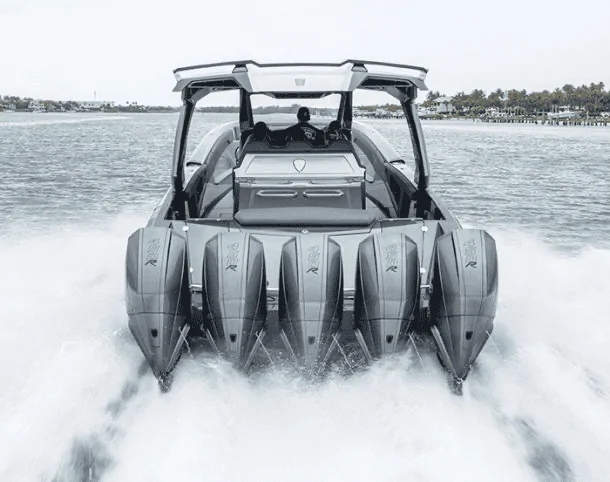
Attaching a boat motor to the bed. I've had this idea for two years now lolWhat's the propulsion mechanism gonna be like?

Rutrow
Well-known member
- First Name
- Dan
- Joined
- May 25, 2021
- Threads
- 8
- Messages
- 1,031
- Reaction score
- 2,441
- Location
- Little Rock, Arkansas
- Vehicles
- Model S, Model 3, CyberTruck Tri-motor reservation
- Occupation
- Firefighter
Pressurizing the battery pack seems like introducing complexity. If pressure can be added, it stands to reason that the battery has to have a port to add pressure via. If it were a sealed battery pack there'd be no need for a valve that would be susceptible to failure.
Dive watches, cameras, computers, etc. maintain their water resistance best by being totally sealed off, not by having a Rube Goldbergian mechanism for fluctuating the internal pressure.
Dive watches, cameras, computers, etc. maintain their water resistance best by being totally sealed off, not by having a Rube Goldbergian mechanism for fluctuating the internal pressure.

Seth Watson
New member
- First Name
- Seth
- Joined
- Jul 25, 2023
- Threads
- 0
- Messages
- 2
- Reaction score
- 2
- Location
- Boulder Colorado
- Vehicles
- 97 jeep
- Occupation
- Healing arts
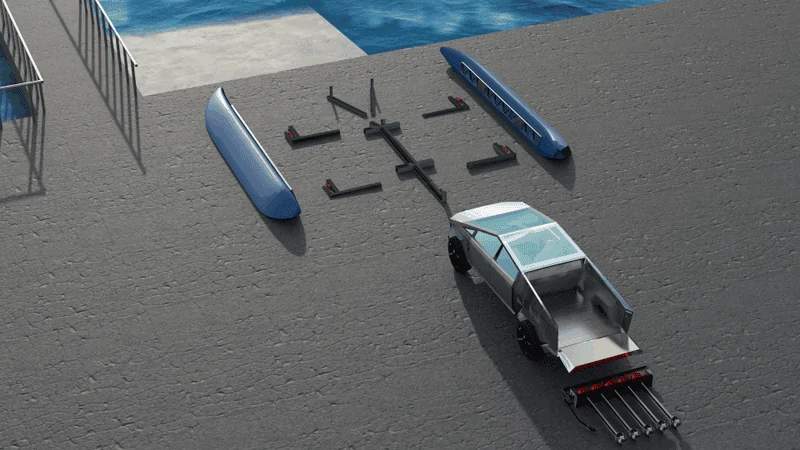
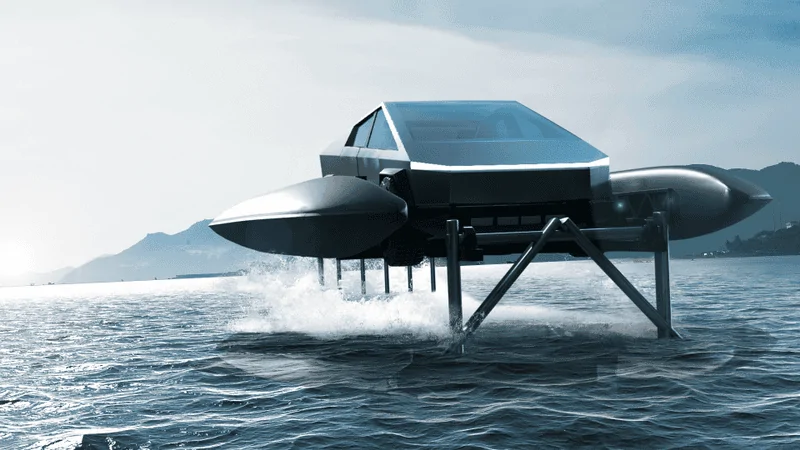
Probably more like this:Maybe something hanging off the tailgate? I'm thinking it will require another kit from the accessory group...


FutureBoy
Well-known member
- First Name
- Reginald
- Joined
- Oct 1, 2020
- Threads
- 215
- Messages
- 3,556
- Reaction score
- 6,062
- Location
- Kirkland WA USA
- Vehicles
- Toyota Sienna
- Occupation
- Financial Advisor
Um.... Only 13 year olds are still triggered by the word diaper. The rest of us have lived life, experienced diapers (both providing, and possibly even using). Nothing weird about the word diaper. The sensitivity to the word went out with little kid potty humor.What are you, 13?
So are you 13? Or do you just have a diaper fetish?
tidmutt
Well-known member
- First Name
- Daniel
- Joined
- Feb 25, 2020
- Threads
- 8
- Messages
- 606
- Reaction score
- 1,002
- Location
- Somewhere hot and humid
- Vehicles
- Model Y Performance, Model X P100D
- Occupation
- Software Architect
Unless that complexity was already present for another more important reason.Pressurizing the battery pack seems like introducing complexity. If pressure can be added, it stands to reason that the battery has to have a port to add pressure via. If it were a sealed battery pack there'd be no need for a valve that would be susceptible to failure.
Dive watches, cameras, computers, etc. maintain their water resistance best by being totally sealed off, not by having a Rube Goldbergian mechanism for fluctuating the internal pressure.
- Banned
- #26
The BYD suv that floats says it can go 3kmph just by spinning it's wheels. Not gonna be wakeboarding behind that.
https://www.inverse.com/tech/byd-yanwang-u8-hybrid-suv-can-float-water
https://www.inverse.com/tech/byd-yanwang-u8-hybrid-suv-can-float-water
FutureBoy
Well-known member
- First Name
- Reginald
- Joined
- Oct 1, 2020
- Threads
- 215
- Messages
- 3,556
- Reaction score
- 6,062
- Location
- Kirkland WA USA
- Vehicles
- Toyota Sienna
- Occupation
- Financial Advisor
What the eff are you talking about? Good lord. Get a life.

mhaze
Well-known member
- First Name
- mhike
- Joined
- Jul 17, 2021
- Threads
- 5
- Messages
- 414
- Reaction score
- 450
- Location
- Texas
- Vehicles
- Tesla 3; Smartcar; F150 Raptor; Avalanche 2500 4x4
One could partially close the outflow valve for the battery coolant. That would leave the pump pushing coolant into a fixed volume.How to do you "pressurize the battery" without an air compressor?

tmeyer3
Well-known member
- First Name
- Trevor
- Joined
- Jun 27, 2021
- Threads
- 31
- Messages
- 2,036
- Reaction score
- 3,615
- Location
- CA
- Website
- www.meyerwine.com
- Vehicles
- Model 3, '73 GMC truck, Wrangler, Tractors
- Occupation
- Computer Scientist, Vintner
I'm unsure what the battery pressurizing note is all about either. Unless the truck is going at least 10' under, I don't understand the need to increase the pressure inside a sealed battery and cooling loop. But I'm not an amphibious automotive engineer, so there's that ?

JBee
Well-known member
- First Name
- JB
- Joined
- Nov 22, 2019
- Threads
- 18
- Messages
- 4,913
- Reaction score
- 6,362
- Location
- Australia
- Vehicles
- Cybertruck
- Occupation
- . Professional Hobbyist

The problem is the size of the battery pack, and the likelihood, through thermal expansion of such large pieces, of having a leak. A lot easier to pressurize it, and in the process bilge the accumulated water. This might also keep it from sinking, even though the pack is negatively buoyant by itself.Pressurizing the battery pack seems like introducing complexity. If pressure can be added, it stands to reason that the battery has to have a port to add pressure via. If it were a sealed battery pack there'd be no need for a valve that would be susceptible to failure.
Dive watches, cameras, computers, etc. maintain their water resistance best by being totally sealed off, not by having a Rube Goldbergian mechanism for fluctuating the internal pressure.
They might also air purge other parts of the vehicle to keep it afloat.
Given the extent they are doing air purging now, it's highly likely they are getting serious about extended periods of in water use, in boat mode. So pretty exciting!
Sponsored
Similar threads

- Replies
- 62
- Views
- 23,462

- Replies
- 38
- Views
- 11,696


- Replies
- 21
- Views
- 5,981


- Replies
- 66
- Views
- 6,295


- Replies
- 82
- Views
- 55,100