Sponsored

Solar → Battery →← Powershare - How to this?

Tanquen

Well-known member
Joined
Dec 9, 2023
Threads
37
Messages
394
Reaction score
235
Location
CA
Vehicles
Cybertruck
Country flag
I was just wondering if there is a good guide on how one would want to use solar with a battery and Tesla Powershare.

I've been looking to get solar panels and a battery backup for some time but am not sure about what all hardware is needed and the best way to go for each part.

If Powershare works well, I'm guessing you would still want at least one battery so you can store power that is generated when the Powershare vehicle is not at home.

Any known issues actually using the Powerwall vehicle to power the house. Should it only be used when there is a power outage, or could you go mostly off-grid if the Powershare vehicle and a Powerwall could get you through the night and then charge them both back up the next day?

If I were to go for a new solar and Powerwall installation now, what should I look out for? Type of panel and so on. Are the SPAN ones worth it?

The garage has a sub-panel, and I think I need to run new conduit so I can get closer to 100 amps at the sub-panel.
Sponsored

 

Gigahorse

Well-known member
Joined
Dec 19, 2023
Threads
19
Messages
2,837
Reaction score
3,198
Location
USA
Vehicles
AWD
TBH might want to give it a little time, nothing set in stone from the manufactures with a lot of "coming soon" stuff.
Time will tell how Enphase, Solar Edge, Tesla, Generac etc actually integrate with V2H
 

mitochondria

Well-known member
First Name
Matt
Joined
Dec 6, 2023
Threads
10
Messages
66
Reaction score
188
Location
North Idaho
Vehicles
DM CT, S Plaid
Country flag
I will be powering my FS AWD CT 100% off the grid. In the summer I'll have so much excess from my 40+ panels that I can use the CT as an external battery bank so nothing is wasted. In the winter it will be fueled by propane / Kohler generator (1000x better than Generac)

The PowerShare unit for the house doesn't make sense being fully off grid so I'll use the manual transfer switch to charge my 10 200Ah Eclipse batteries to run through my 2X 10kW Victron inverters.
 

Outdoors

Well-known member
First Name
Outdoors
Joined
Nov 19, 2019
Threads
18
Messages
1,893
Reaction score
3,482
Location
North West Montana
Vehicles
S,3,Y,CT,CT(holding pattern) Slate is back on
Did anyone get the survey from Tesla about the install of the equipment yet? I did, and I am off grid as well.

Sorry if it has been mentioned elsewhere.


JBee

Well-known member
First Name
JB
Joined
Nov 22, 2019
Threads
18
Messages
4,913
Reaction score
6,362
Location
Australia
Vehicles
Cybertruck
Occupation
. Professional Hobbyist
Country flag
I was just wondering if there is a good guide on how one would want to use solar with a battery and Tesla Powershare.

I've been looking to get solar panels and a battery backup for some time but am not sure about what all hardware is needed and the best way to go for each part.

If Powershare works well, I'm guessing you would still want at least one battery so you can store power that is generated when the Powershare vehicle is not at home.

Any known issues actually using the Powerwall vehicle to power the house. Should it only be used when there is a power outage, or could you go mostly off-grid if the Powershare vehicle and a Powerwall could get you through the night and then charge them both back up the next day?

If I were to go for a new solar and Powerwall installation now, what should I look out for? Type of panel and so on. Are the SPAN ones worth it?

The garage has a sub-panel, and I think I need to run new conduit so I can get closer to 100 amps at the sub-panel.
I've run off-grid for over a decade now, but it really depends on what you want to achieve and how much it costs.

Grid power in the USA is fairly cheap so the price difference to solar is not that high in some locations. But if you are motivated to go off-grid for self sustainability, energy security, or too reduce your environmental impact, and your willing to invest for that, then that is different.

In my situation it was a no brainer because of the distance to the nearest power line to our house meant the line would have cost as much as our off-grid system. In fact if you are building new that is often the case, provided your sub-division didn't come with power already installed, because then you are still paying for it through your land purchase from the land developer.

But just in broad strokes to get your bearings:

Off-grid:

Means you have to either charge your CT during the day when the solar is running, or have enough house battery storage to collect the solar during the day, and charge the CT at night when you come home.

The difference between the two is the cost of the batteries, with the solar and inverter costs remaining largely the same. Which btw is a substantial portion of the cost. With Powerwall you are paying a fortune atm, but there are various other choices out there that give you a bit more design and optimization freedom.

For off-grid use the main components would be solar panels>off-grid inverter/charger> batteries fr the house setup, and then the Universal Charger and Tesla Gateway to connect the CT to the house supply. You could just charge from the house using the charger alone, but you wouldn't be able to use the bi-directional V2H without the gateway that would switch automatically between charge and discharging the CT depending on your house energy levels. Obviously there is a bunch of wiring and safety switchgear dependent on your location and standards.

On -Grid

Essentially you could use the same setup as above, but with the difference that you could get away with little to no battery and rely on the grid for energy storage" instead. Depending on your power provider this might work to your advantage if they pay more for your solar power during peak periods and you can buy it back cheaper off peak at night, or maybe they do net tariffs or something similar. This would need to form part of your financial modelling.

The bit of extra hardware you need here is the Tesla backup Switch which needs to be accepted by your provider to meet their specification. This switch allows the system to disconnect from the grid in a power failure, so that you can run your house isolated from the grid. That obviously only works though if your inverter is capable of both on and off-grid modes.

Obviously, once in off-grid mode again, like above, you only really have the option to charge during the day from solar, if you don't have a large battery pack to store it all. So adding a bunch of batteries to a primarily "on-grid" setup could be a costly option, unless you have a method of participating in VPP or similar to make use of those batteries whilst you are also connected to the grid and get paid for it. Just having them waiting in standby would be a bit of a waste, considering your CT has a bunch of battery you could use in those situations instead.

In fact the cheapest way to get "powerwalls" is to buy them in the form of a CT. There you get 123kWh of batteries, and it all comes packaged in a nice Cybertruck you can drive around as well!

So depending on which way you want to go, the first thing would be to figure out what your house loads are, how much solar you can install in your location, and then from that we can form a energy budget of what will be left to charge the CT.

You can get an idea for solar production for your location by using this simple calculator:

https://pvwatts.nrel.gov/

The NREL also do a full RE modelling suite that you can download for free called SAM.

https://sam.nrel.gov/

Happy to point you in the right direction regarding equipment etc.
 

Woodrick

Well-known member
First Name
Ed
Joined
Dec 30, 2023
Threads
6
Messages
4,786
Reaction score
4,762
Location
Gainesville Ga
Vehicles
Model 3, Model Y, Cybertruck AWD
Occupation
Consultant
Country flag
I was just wondering if there is a good guide on how one would want to use solar with a battery and Tesla Powershare.
There are a LOT of variables that go into the decision, as well as a lot of money to satisfy those variables.

The first thing to understand is that any backup unit must be sized to handle the max load. And depending on where you live and the size of your house, this can vary tremendously.
While I'm a little oversized, I've got a 60kW propane generator sitting outside. I KNOW that the Cybertruck won't be able to power the house, at 11kW. I'm probably using 20-30kW at max. (That's when all 3 heat pumps and the ovens and the water pump are on)

When you have a small supply, like the Cybertruck or a smaller generator, what is commonly done is that some of the circuits are moved to a different panel and only those are provided emergency power. This is probably what a majority of the homes will have to do.

Many solar installations are just to reduce the amount of electricity required from the utility during the day. It is the most cost effective installation. It doesn't matter on the size of the house, like backup does.

If you want emergency backup, then you need batteries, that's where the truck or Powerwalls come into play.
 

FrankJones217

New member
First Name
Frank
Joined
Dec 20, 2023
Threads
0
Messages
4
Reaction score
5
Location
SoCal
Vehicles
Cybertruck
Occupation
SPFX
Country flag
I have a tesla system 60 panels and two power walls. I have two more power walls to be installed on Jan 9th using the SGIP program. Before I dod my solar, I had to re roof my house and I needed to upgrade my electrical. I went with the SPAN panel and a SPAN drive. I also pre wired for a second EV charger but have not purchased a charger yet. I have a Cyberbeast on order. It was news to me that we can use the truck s a battery back up, so looks like the second charger will be the Tesla unit. I recently filled out the questionnaire about power share, but have not heard back.
So when I am using the Cybertruck as back up, are you saying that it provides 11 KW of power? The power walls seem to not care, but maybe its because the charger is capable of 11.5kw, that becomes the limit...?
 

JBee

Well-known member
First Name
JB
Joined
Nov 22, 2019
Threads
18
Messages
4,913
Reaction score
6,362
Location
Australia
Vehicles
Cybertruck
Occupation
. Professional Hobbyist
Country flag
There are a LOT of variables that go into the decision, as well as a lot of money to satisfy those variables.

The first thing to understand is that any backup unit must be sized to handle the max load. And depending on where you live and the size of your house, this can vary tremendously.
While I'm a little oversized, I've got a 60kW propane generator sitting outside. I KNOW that the Cybertruck won't be able to power the house, at 11kW. I'm probably using 20-30kW at max. (That's when all 3 heat pumps and the ovens and the water pump are on)

When you have a small supply, like the Cybertruck or a smaller generator, what is commonly done is that some of the circuits are moved to a different panel and only those are provided emergency power. This is probably what a majority of the homes will have to do.

Many solar installations are just to reduce the amount of electricity required from the utility during the day. It is the most cost effective installation. It doesn't matter on the size of the house, like backup does.

If you want emergency backup, then you need batteries, that's where the truck or Powerwalls come into play.
Sounds like you need your own nuclear plant...60kW is 1/6 of the baseload power of our entire town with 1k people.

Why are you using so much power and then all at once? Our off grid passive home runs under a 500W average (12kWh day) with heat pump, induction cooking etc. With two gaming PCs making up the bulk of it every night.

The CT would run our house for 10days easy, without me switching it into sleep mode. With that it goes down to 70W overnight, with intermittent 150W spikes from the inverter fridge, with ambient house lighting on, IP cameras and network and security etc on. In sleep mode the CT would run the house for two months including lights. That's if the CT didn't use it itself with vampire drain.
 

Woodrick

Well-known member
First Name
Ed
Joined
Dec 30, 2023
Threads
6
Messages
4,786
Reaction score
4,762
Location
Gainesville Ga
Vehicles
Model 3, Model Y, Cybertruck AWD
Occupation
Consultant
Country flag
Sounds like you need your own nuclear plant...60kW is 1/6 of the baseload power of our entire town with 1k people.

Why are you using so much power and then all at once? Our off grid passive home runs under a 500W average (12kWh day) with heat pump, induction cooking etc. With two gaming PCs making up the bulk of it every night.

The CT would run our house for 10days easy, without me switching it into sleep mode. With that it goes down to 70W overnight, with intermittent 150W spikes from the inverter fridge, with ambient house lighting on, IP cameras and network and security etc on. In sleep mode the CT would run the house for two months including lights. That's if the CT didn't use it itself with vampire drain.
You said the magic word "baseline" But you can't run your town on baseline, you have to be able to supply MAX. Down here in the South, a power outage in the summer means that when power comes on, and all the sudden EVERY A/C unit turns on full. All that inrush current has to come from somewhere.

500W average isn't realistic for most homes in most parts of the country. And for those reading, JBee would probably have a $50 electric bill.

So great for you, but not nominal numbers for the rest of the world. The average usage is about 30kWH per day.

And no, no nuclear reactor. I'm overbuilt, but on purpose. As many new houses have today, I've got 400A service. In my office I have a couple of computers and monitors, those alone use about 500W average.


JBee

Well-known member
First Name
JB
Joined
Nov 22, 2019
Threads
18
Messages
4,913
Reaction score
6,362
Location
Australia
Vehicles
Cybertruck
Occupation
. Professional Hobbyist
Country flag
You said the magic word "baseline" But you can't run your town on baseline, you have to be able to supply MAX. Down here in the South, a power outage in the summer means that when power comes on, and all the sudden EVERY A/C unit turns on full. All that inrush current has to come from somewhere.

500W average isn't realistic for most homes in most parts of the country. And for those reading, JBee would probably have a $50 electric bill.

So great for you, but not nominal numbers for the rest of the world. The average usage is about 30kWH per day.

And no, no nuclear reactor. I'm overbuilt, but on purpose. As many new houses have today, I've got 400A service. In my office I have a couple of computers and monitors, those alone use about 500W average.
30kWh only in the USA where you have cheap fuel and power.

18kWh average in Australia, so I'm only 50% 6kWh under the AVERAGE here.

Most central European countries are around 5-6kWh per person, which is less per household on average than here.

My question is though WHY do you need the capacity of 60kW x 24 hours = 1440kWh per day to run you house???

You could charge nearly 12 CT from zero to full with that. I expect your idle consumption on that genset will be 3-4 times the average needed for you house consumption when you run that monster.

The point is your house seems WAY over consuming, and over dimensioned for peak compared to the rest of the world, and it also seems your proud of it too, because you think more is good, and are advising everyone else to follow you?

Less is more.

If it's because of your heating or cooling demand, Ixd invest in double/triple glazed, and more insulation instead. No point converting fuel into electricity to run a heat pump, just so the heat can leak out or in anyway.

BTW I'm well versed in peak vs baseload, there are ways to peak lop instead, which has been rolling out through our grids here for decades as DSM. That way you don't have to install excessive and expensive peak generation and still keep everything running by time sharing loads.

So out of interest what do you actually use per day when you have 70F outside? What latitude? You near Atlanta?

Maybe I could help your consumption profile?
 

Woodrick

Well-known member
First Name
Ed
Joined
Dec 30, 2023
Threads
6
Messages
4,786
Reaction score
4,762
Location
Gainesville Ga
Vehicles
Model 3, Model Y, Cybertruck AWD
Occupation
Consultant
Country flag
30kWh only in the USA where you have cheap fuel and power.

18kWh average in Australia, so I'm only 50% 6kWh under the AVERAGE here.

Most central European countries are around 5-6kWh per person, which is less per household on average than here.

My question is though WHY do you need the capacity of 60kW x 24 hours = 1440kWh per day to run you house???

You could charge nearly 12 CT from zero to full with that. I expect your idle consumption on that genset will be 3-4 times the average needed for you house consumption when you run that monster.

The point is your house seems WAY over consuming, and over dimensioned for peak compared to the rest of the world, and it also seems your proud of it too, because you think more is good, and are advising everyone else to follow you?

Less is more.

If it's because of your heating or cooling demand, Ixd invest in double/triple glazed, and more insulation instead. No point converting fuel into electricity to run a heat pump, just so the heat can leak out or in anyway.

BTW I'm well versed in peak vs baseload, there are ways to peak lop instead, which has been rolling out through our grids here for decades as DSM. That way you don't have to install excessive and expensive peak generation and still keep everything running by time sharing loads.

So out of interest what do you actually use per day when you have 70F outside? What latitude? You near Atlanta?

Maybe I could help your consumption profile?
Sorry, missed your flag and made a bad assumption of your location.
I mentioned that I was overbuilt. I'm probably peaking well below 30kW, but if I ever get my L2 chargers installed, they'll pull 23kW by themselves. As an Electrical Engineer, I like to be very conservative and I end up with better fuel efficiency and frequency/voltage stability being overbuilt.

I'm in a relatively new house. It's probably huge by your standards. It's pretty big even here in the states. I'm in Atlanta, so I have to be serious with air conditioning.

Surem there are ways to peak lop, Tesla is doing it in both Texas and California right now with their Powerwalls and it has paid off. I've had some projects in my life where I worked closely with the Power Company and know how much they try to shed load, It's built into the Time of Day rates available in many states. But try as hard as they may, those 4 hours during the summer are expensive as hell for them. They can't shed enough load to offset the air conditioners.
 

JBee

Well-known member
First Name
JB
Joined
Nov 22, 2019
Threads
18
Messages
4,913
Reaction score
6,362
Location
Australia
Vehicles
Cybertruck
Occupation
. Professional Hobbyist
Country flag
Sorry, missed your flag and made a bad assumption of your location.
I mentioned that I was overbuilt. I'm probably peaking well below 30kW, but if I ever get my L2 chargers installed, they'll pull 23kW by themselves. As an Electrical Engineer, I like to be very conservative and I end up with better fuel efficiency and frequency/voltage stability being overbuilt.

I'm in a relatively new house. It's probably huge by your standards. It's pretty big even here in the states. I'm in Atlanta, so I have to be serious with air conditioning.

Surem there are ways to peak lop, Tesla is doing it in both Texas and California right now with their Powerwalls and it has paid off. I've had some projects in my life where I worked closely with the Power Company and know how much they try to shed load, It's built into the Time of Day rates available in many states. But try as hard as they may, those 4 hours during the summer are expensive as hell for them. They can't shed enough load to offset the air conditioners.
No worries.

Spinning reserve and peak load is the bane of networks everywhere. Our local town is actually running a Hybrid microgrid with around 450kW of solar, 1.2MW of wind and about 1.8MW of diesel baseload, and there are lots of those types of towns in Australia, simply because it's not worth running networks between towns for the little load they have. A lot of the network is actually being removed and small local hybrid micro-grid plants installed instead, primarily using solar and battery with diesel backup.

One of the big problems here now with lots of solar is grid defection as network profits go to zero from being offset by home solar, nobody wants to install or maintain networks anymore, because you can't make money on them. Essentially a regressing death spiral for grids, as more defect as network costs increase. Will be interesting to see how it goes when we get higher uptakes of EV.

Hence my interest in using V2G as a mirco-grid buffer, so that we could support at least one or two SC in small rural towns for travellers. You wouldn't even need that many EV's connected, provided that a high percentage of them can be plugged in at work or home for most of the time of the day.

There's some RE grid legislation going through here atm where I'm hoping to highlight this more to get some traction. It should really open up rural EV use and traveling. My nearest SC is currently 300miles away, and there is only 5 in the whole state, which is some 3.6times the size of Texas, but only 3 million people. So lots of nothing and no-one in between.

Not the smallest house with some 5000sqft, but the house parts are divided (8bed/5bath) so that the less traffic areas can be put to sleep when not in use. We are completely off-grid btw and several miles away from the nearest grid, so it was a no brainer to go solar off-grid. Used SIP panels, built in myself with my boys except some of the plumbing, and only has the a slab as thermal mass, which we use with hydronic heating/cooling to buffer thermal changes. Also moderate climate, so not much heating or cooling with the heat pump. Cheaper to store heat in concrete rather than batteries, plus means we can use excess solar to dump energy into the pad on sunny days. Have 30kW in PV in preparation of some EV's, but also have a PHEV and hybrids in the family already. Primary long range trips done with 2L turbo diesels seeing our location an inadequate charging infrastructure atm.

The big thing I've found over the decades of doing renewable energy, is that people get to focused on battery size and peak availability, which is the most expensive part of a system and produces exactly ZERO energy. Instead our systems, in our latitudes, have all started to focus on connecting some 2-3x as much PV panels instead, meaning that even on a overcast rainy day you get more than you use in a day with a passive home. Panels are cheap as chips, plus if you install them with enough of a roof gap, you get some free cooling effects for the panels and the house as well. That way you only have to have enough battery for peak loads and enough to store just one day of power.

Another interesting "trick" is that many off/on grid inverter have a much higher PV MPPT controller rating than the inverter itself. With SMA inverters for example, this means you can install nearly twice the PV modules as the inverter rating, so 20kW on just a 10kW inverter. The MPPT just regulates the input down to match the inverter output, but what it means is that you have many more hours each day at full PV output, resulting in a inexpensive net gain in energy without the cost and overhead of a large inverter, or battery. Then if you dump any extra PV into a thermal resistive load for heating water or house, you are very cost effectively using every bit of energy you bring in...well in our case with some considerable excess until we all get EV's. I actually have a few CT's on order, and planned from the outset to use one as a revolving battery buffer for the house and in particular the workshop. Cheaper than buying the equivalent in Powerwals, and comes with a free car. ;)
 

Tiberius

Well-known member
Joined
Sep 2, 2023
Threads
0
Messages
198
Reaction score
422
Location
Texas
Vehicles
Model 3
Occupation
Chief cook and bottlewasher
Country flag
I was just wondering if there is a good guide on how one would want to use solar with a battery and Tesla Powershare.

I've been looking to get solar panels and a battery backup for some time but am not sure about what all hardware is needed and the best way to go for each part.

If Powershare works well, I'm guessing you would still want at least one battery so you can store power that is generated when the Powershare vehicle is not at home.

Any known issues actually using the Powerwall vehicle to power the house. Should it only be used when there is a power outage, or could you go mostly off-grid if the Powershare vehicle and a Powerwall could get you through the night and then charge them both back up the next day?

If I were to go for a new solar and Powerwall installation now, what should I look out for? Type of panel and so on. Are the SPAN ones worth it?

The garage has a sub-panel, and I think I need to run new conduit so I can get closer to 100 amps at the sub-panel.
Probably worth realizing that what you're really talking about is a solar/battery system that occasionally has PowerShare use, but most of the time the PowerShare has nothing to do with powering your home.
Start at the solar/battery part first, especially looking at what you need to use batteries like powerwalls etc
As others have covered in here, off grid is a significant step up from a normal installation, so answer your wants first, get a price before factoring in PowerShare.
In Texas we found that the breakeven for installing a reasonable system with just two powerwalls was waaay longer than we wanted. Same configuration for offgrid was double that for us.
 

Woodrick

Well-known member
First Name
Ed
Joined
Dec 30, 2023
Threads
6
Messages
4,786
Reaction score
4,762
Location
Gainesville Ga
Vehicles
Model 3, Model Y, Cybertruck AWD
Occupation
Consultant
Country flag
There's some RE grid legislation going through here atm where I'm hoping to highlight this more to get some traction. It should really open up rural EV use and traveling. My nearest SC is currently 300miles away, and there is only 5 in the whole state, which is some 3.6times the size of Texas, but only 3 million people. So lots of nothing and no-one in between.
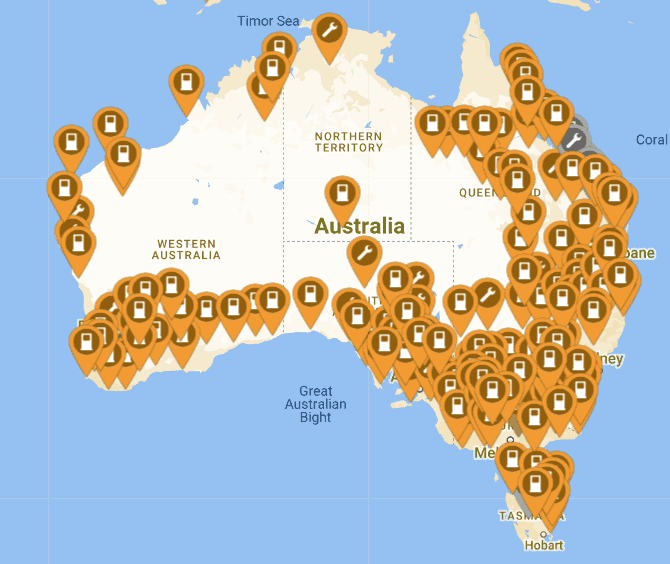
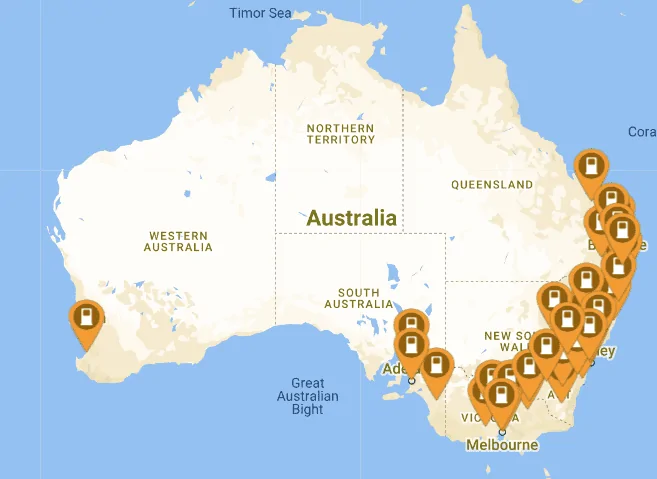
So, I'm not going to let you off saying that there are only 5 Superchargers in the country. Like Europe, you're a CCS country.
Tesla Cybertruck Solar → Battery →← Powershare - How to this? 1704034817026


And a great number of those locations have Tesla connectors as well
Tesla Cybertruck Solar → Battery →← Powershare - How to this? 1704034874696


So sure, if you are going inland, it's an issue.

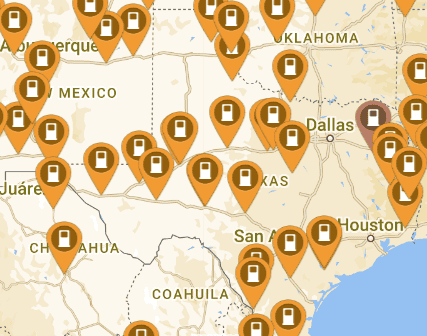
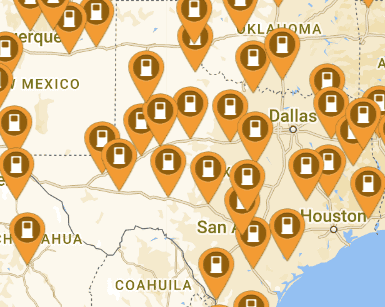
But you may have a lot more than Texas does.
Tesla Cybertruck Solar → Battery →← Powershare - How to this? 1704035035758


And yes, like I did my generator, oversizing your controllers is never a bad thing to do.

Tesla Cybertruck Solar → Battery →← Powershare - How to this? 1704034988330
Sponsored


Top