
Sponsored

Air suspension fails. Second Time in two years!

CallsignVega

Well-known member
Joined
Jan 13, 2026
Threads
5
Messages
103
Reaction score
185
Location
Colorado
Vehicles
Cybertruck, Brightdrop 600
Country flag
One good thing about air suspension is it's not hard to repair. Easy to get to the air struts and pump if you are handy.

And of course disable lower on exit, that's probably half the pump cycles gone right there.
Sponsored

 

SCTesla

Well-known member
Joined
Jun 11, 2024
Threads
6
Messages
2,485
Reaction score
3,704
Location
USA
Vehicles
22 Model S, 24 CT
Country flag
Open system
120 psi shop air is only 8.2 bar, system refill is 18 bar or 261 psi so high pressure nitrogen tanks are used to quick fill the system after servicing.
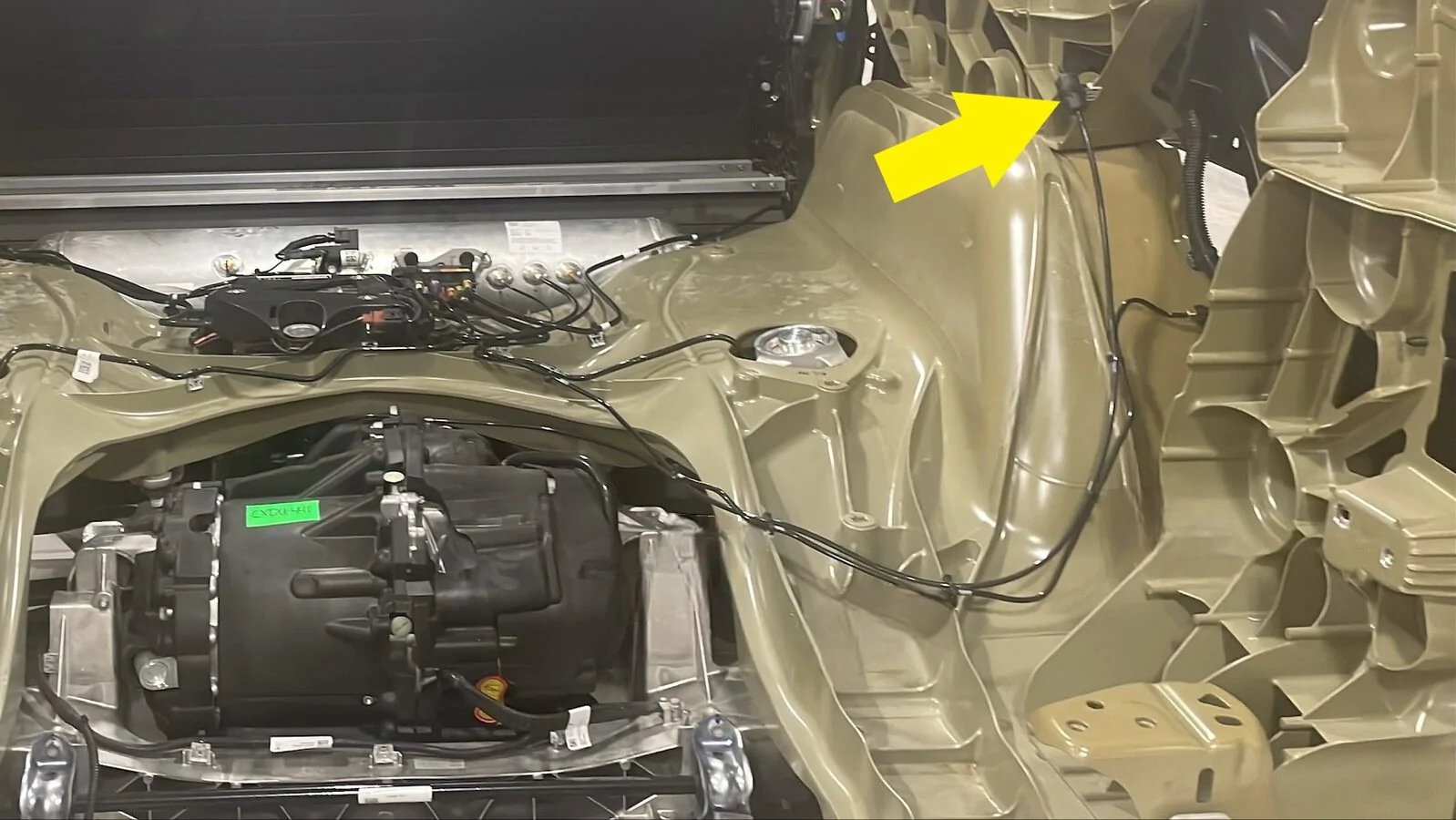
In operation, it pulls from ambient air here:
GUID-060E32F9-F8E9-4156-890F-C405DEAA00E7-online-en-US(2).webp
This is why I tagged you.
 

HaulingAss

Well-known member
Joined
Oct 3, 2020
Threads
28
Messages
10,336
Reaction score
20,763
Location
Western Washington, USA
Vehicles
Cybertruck DM, 2010 F-150, 2018 Performance Model 3, 2024 Performance Model 3
Country flag
It dumps the to ambient. Otherwise, the compressor would need to run when the reservoir is higher pressure than the air spring.
Not if the high pressure reservoir has an internal separator. Yes, it's dumping ambient air, but if it has a separator it's not dumping the nitrogen charge. I have never seen this definitively answered so I asked Grok and, FWIW, this is what he said:


The high-pressure suspension reservoir (often called the accumulator or air tank) in the Tesla Cybertruck's adaptive air suspension system is not a simple open tank exposed directly to ambient air without separation. It functions as a pressurized accumulator charged with nitrogen (dry and inert to minimize moisture/contamination issues over time), particularly for service fills and system integrity.Tesla service documentation repeatedly specifies using a nitrogen refill kit (part 1083876-00-A) to pressurize or refill the reservoir to around 18-21 bar (~261-305 psi), explicitly warning against using shop air due to potential contaminants that could damage the system. This indicates it's designed as a sealed or semi-sealed high-pressure vessel, not one that freely mixes with ambient atmosphere in normal operation without controls.In typical automotive air suspension systems (including Tesla's implementations in other models and aligned with Cybertruck descriptions), the high-pressure reservoir is a gas-charged accumulator with an internal separator — most commonly a bladder (rubber diaphragm) or sometimes a piston — to keep the compressed nitrogen (or dry air) separate from the hydraulic fluid or the air being transferred to/from the air springs/struts. This prevents mixing, reduces oxidation/moisture ingress, and maintains consistent performance.Evidence supporting a separator (likely bladder):
  • Munro & Associates teardown/analysis describes the Cybertruck's air suspension as using "simpler, cost-effective air ride technology" with a standalone reservoir, but notes bladder-like elements in related contexts (e.g., contaminant protection in dampers).
  • Discussions in Cybertruck owner forums (e.g., cybertruckownersclub.com) and service procedures describe it as nitrogen-charged, with venting to atmosphere in some cases but refill/service using nitrogen — consistent with bladder/piston accumulators where the gas side is pre-charged/separated, while the system side handles dry air flow.
  • No sources describe it as a plain empty tank without internal separation; simple tanks wouldn't require nitrogen-specific refills or risk contaminant warnings.
It's not purely "ambient air" mixed without barrier — the nitrogen charge is separated via an internal piston or (more likely in compact automotive designs) bladder to isolate the pre-charge gas from the working air. This is standard for high-pressure accumulators in air suspensions to enable quick response (using stored high-pressure gas) without the compressor running constantly. If you're looking at service procedures or a teardown photo, the reservoir appears as a cylindrical tank with fittings (Schrader valve for nitrogen fill, lines to valve block/compressor/struts), but the internal design includes that separator. No public teardown explicitly shows a cutaway of the Cybertruck's exact reservoir internals, but the engineering and service details point away from a "simple tank."
 

mongo

Well-known member
Joined
May 27, 2024
Threads
5
Messages
4,531
Reaction score
5,512
Location
SE Michigan
Vehicles
Cyberbeast
Country flag
Not if the high pressure reservoir has an internal separator. Yes, it's dumping ambient air, but if it has a separator it's not dumping the nitrogen charge. I have never seen this definitively answered so I asked Grok and, FWIW, this is what he said:


The high-pressure suspension reservoir (often called the accumulator or air tank) in the Tesla Cybertruck's adaptive air suspension system is not a simple open tank exposed directly to ambient air without separation. It functions as a pressurized accumulator charged with nitrogen (dry and inert to minimize moisture/contamination issues over time), particularly for service fills and system integrity.Tesla service documentation repeatedly specifies using a nitrogen refill kit (part 1083876-00-A) to pressurize or refill the reservoir to around 18-21 bar (~261-305 psi), explicitly warning against using shop air due to potential contaminants that could damage the system. This indicates it's designed as a sealed or semi-sealed high-pressure vessel, not one that freely mixes with ambient atmosphere in normal operation without controls.In typical automotive air suspension systems (including Tesla's implementations in other models and aligned with Cybertruck descriptions), the high-pressure reservoir is a gas-charged accumulator with an internal separator — most commonly a bladder (rubber diaphragm) or sometimes a piston — to keep the compressed nitrogen (or dry air) separate from the hydraulic fluid or the air being transferred to/from the air springs/struts. This prevents mixing, reduces oxidation/moisture ingress, and maintains consistent performance.Evidence supporting a separator (likely bladder):
  • Munro & Associates teardown/analysis describes the Cybertruck's air suspension as using "simpler, cost-effective air ride technology" with a standalone reservoir, but notes bladder-like elements in related contexts (e.g., contaminant protection in dampers).
  • Discussions in Cybertruck owner forums (e.g., cybertruckownersclub.com) and service procedures describe it as nitrogen-charged, with venting to atmosphere in some cases but refill/service using nitrogen — consistent with bladder/piston accumulators where the gas side is pre-charged/separated, while the system side handles dry air flow.
  • No sources describe it as a plain empty tank without internal separation; simple tanks wouldn't require nitrogen-specific refills or risk contaminant warnings.
It's not purely "ambient air" mixed without barrier — the nitrogen charge is separated via an internal piston or (more likely in compact automotive designs) bladder to isolate the pre-charge gas from the working air. This is standard for high-pressure accumulators in air suspensions to enable quick response (using stored high-pressure gas) without the compressor running constantly. If you're looking at service procedures or a teardown photo, the reservoir appears as a cylindrical tank with fittings (Schrader valve for nitrogen fill, lines to valve block/compressor/struts), but the internal design includes that separator. No public teardown explicitly shows a cutaway of the Cybertruck's exact reservoir internals, but the engineering and service details point away from a "simple tank."
/snark mode ON

Dear Grok,
If the tank has a sealed bladder that gets precharged to 18 bar, how can the pressure read less than 18?
If there is a sealed bladder, how can the service procedure depressurize the tank?
How does having a sealed nitrogen pocket prevent moisture and contamination in the system if the working side is fed by an air sourced compressor?
If it is a sealed system, why are there air inlet and exhaust ports?

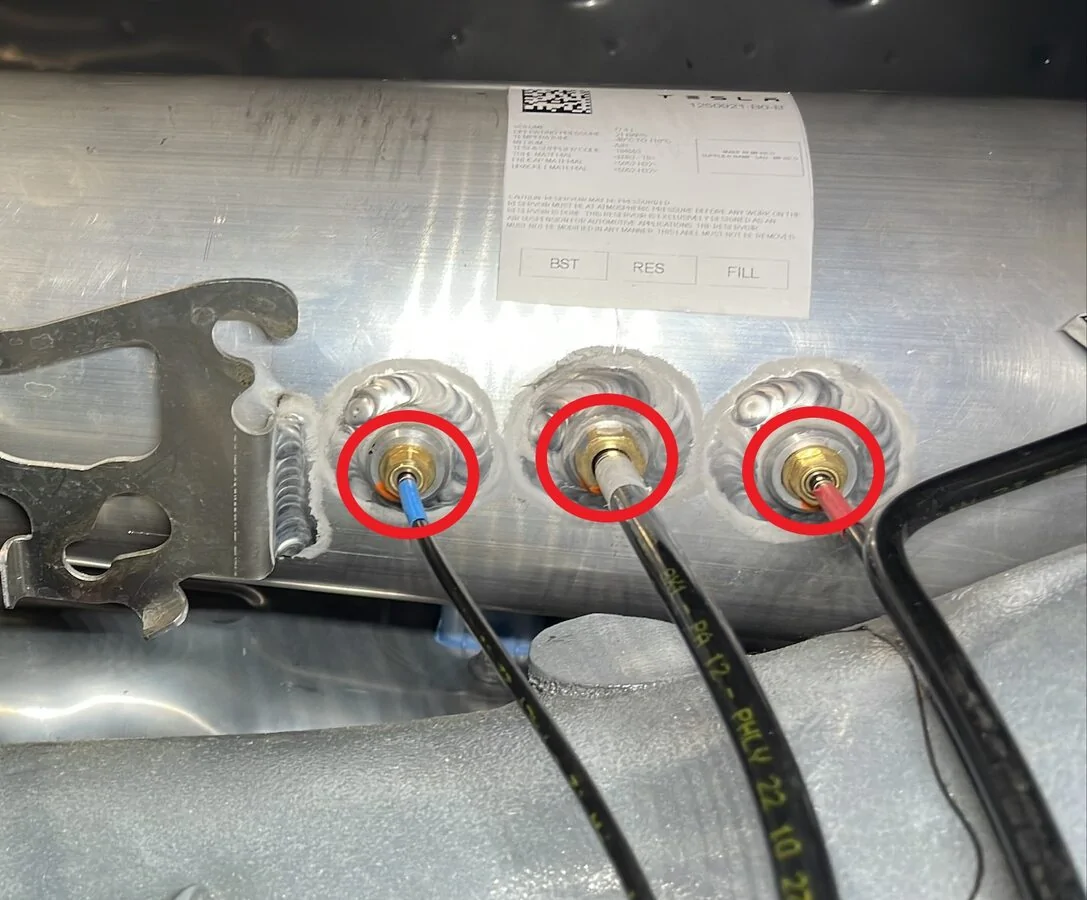
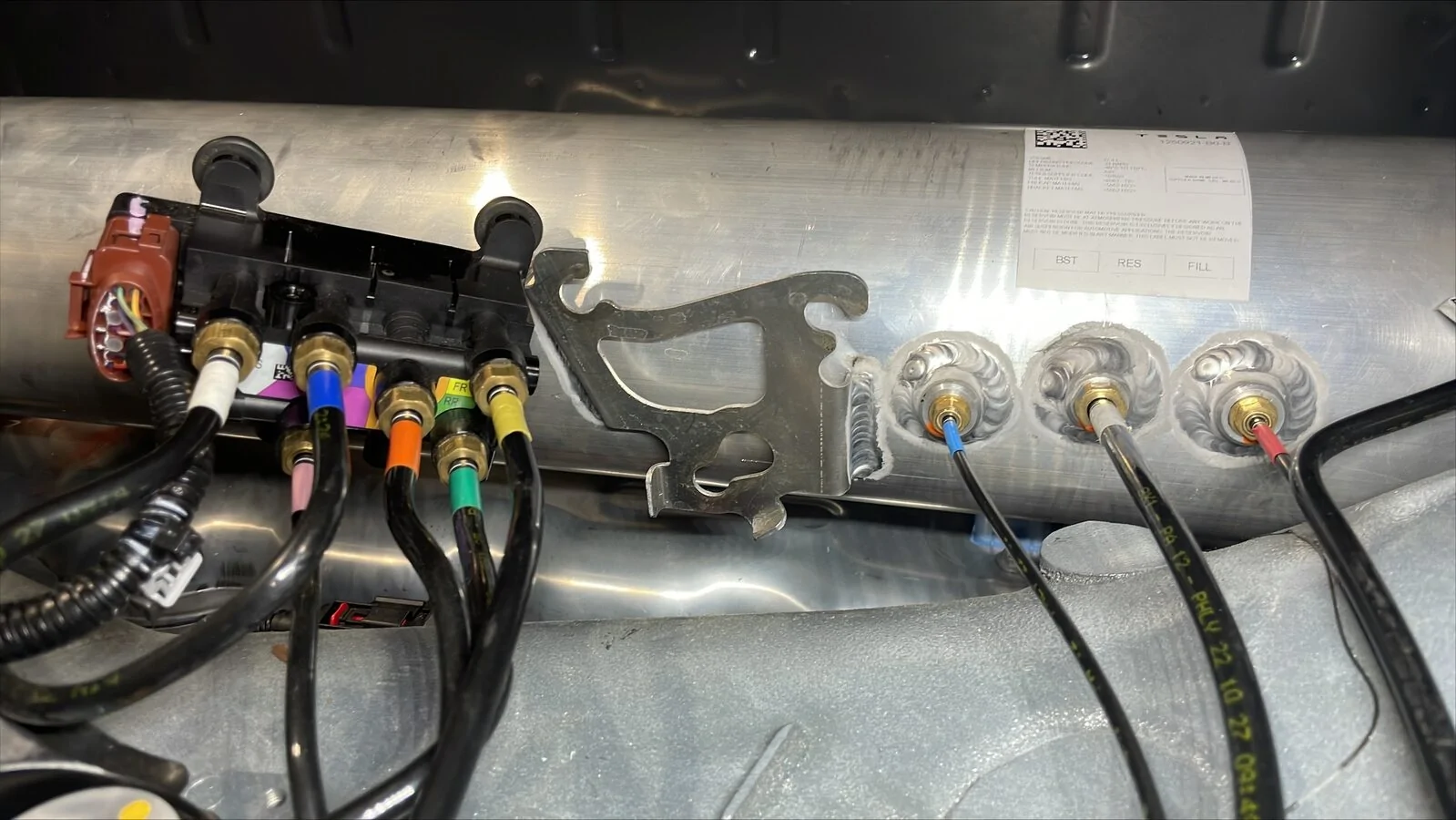
How does this hypothetical bladder separate the fill port from the reservoir feed to the valve block ?

Tesla Cybertruck Air suspension fails. Second Time in two years! GUID-B8FC156B-1CBF-4142-87E3-6AABD2C2AC67-online-en-US


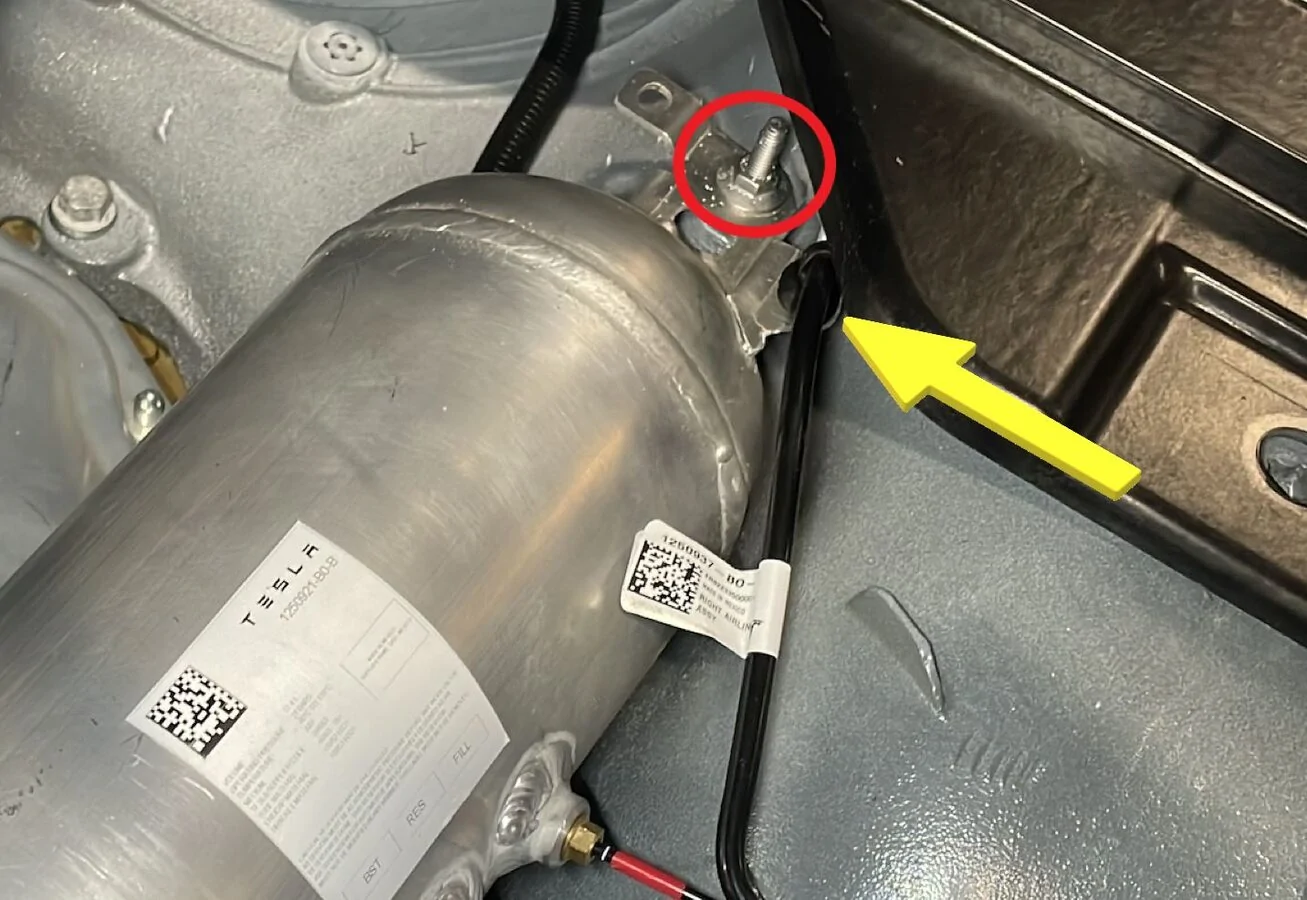
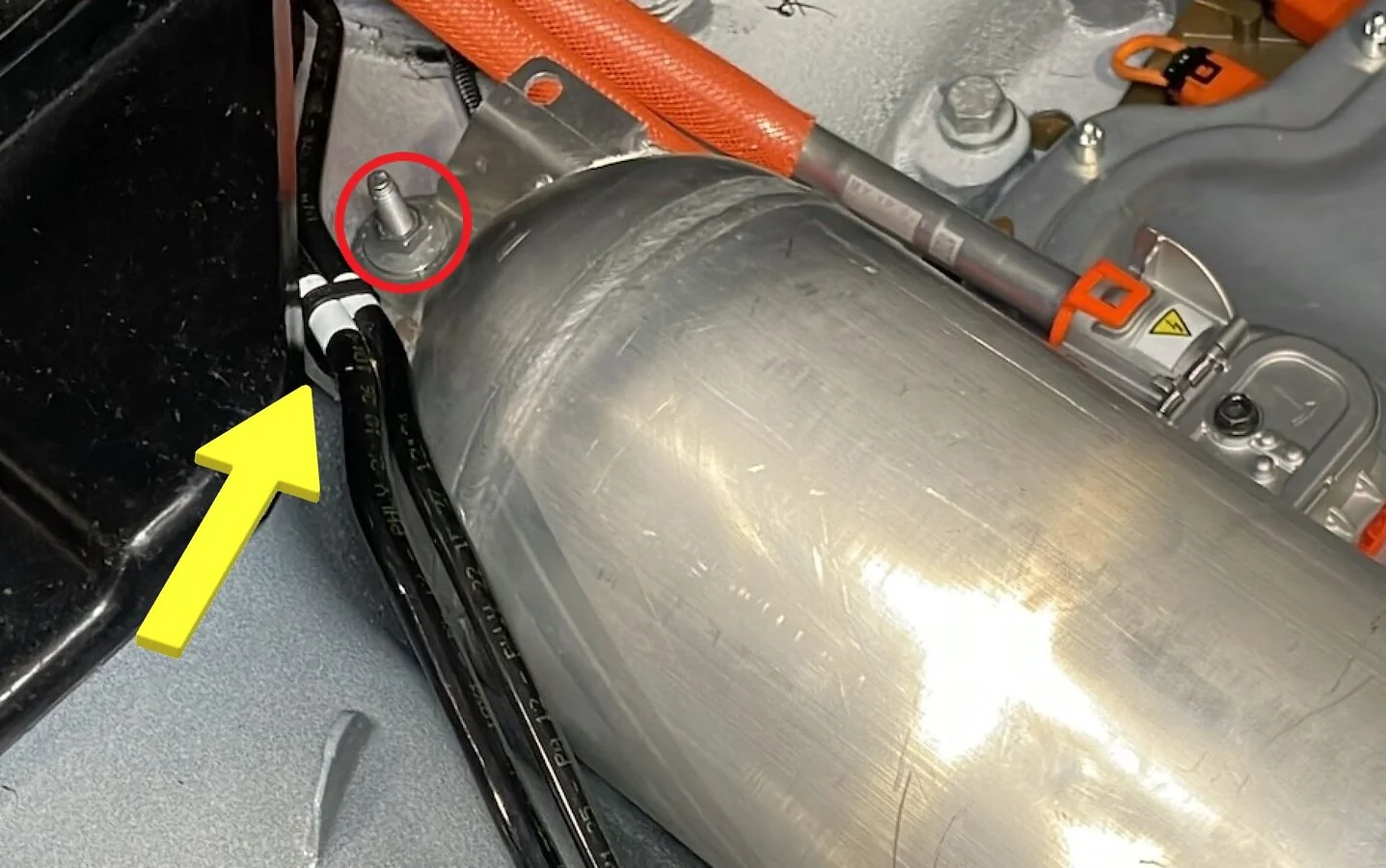
How is the bladder sealed to the tank which lacks any appropriate retention features?
Tesla Cybertruck Air suspension fails. Second Time in two years! GUID-4815044E-9A55-4458-BBE0-0B34D069DB0E-online-en-US
Tesla Cybertruck Air suspension fails. Second Time in two years! GUID-54B72364-7DDC-40AC-B413-CF08139896DF-online-en-US
Tesla Cybertruck Air suspension fails. Second Time in two years! GUID-13C44972-7B93-40E1-8EB2-A6DB47B352D2-online-en-US

/snark mode OFF


Top