Sponsored

Solar panels and battery to get unlimited range ...

Woodrick

Well-known member
First Name
Ed
Joined
Dec 30, 2023
Threads
6
Messages
4,786
Reaction score
4,762
Location
Gainesville Ga
Vehicles
Model 3, Model Y, Cybertruck AWD
Occupation
Consultant
Country flag
Here is a suggestion to reduce phantom drain.

Place a flexible 100-200w solar panel on the CT 40 acre dash connected to a 48v MPPT solar controller with the out put going to the CT 48v battery.

Leave the system connected 24/7
Use the solar panel as a sun shade when parked
Now the 400/800v battery loses less power keeping the 48v battery charged

N.ICE
That may be a way to get the vehicle's charge controller upset with you. Tesla is constantly monitoring the battery voltage.
Sponsored


Woodrick

Well-known member
First Name
Ed
Joined
Dec 30, 2023
Threads
6
Messages
4,786
Reaction score
4,762
Location
Gainesville Ga
Vehicles
Model 3, Model Y, Cybertruck AWD
Occupation
Consultant
Country flag
I've been toying with the idea of how to get unlimited range, albeit slowly, in my CT.

I have concluded that a battery and foldable solar panels may be the way to go.

However, which ones?

  • Bluetti
  • Ecoflow
  • Jackery

The idea is to have a battery+solar for longer off grid trips, of which there are fewwr as the days go by. I suppose on such a trip, I would charge up before the last leg to the remote outpost and once there, deploy the panels, plug it into the battery and plug the truck into the battery.

In theory, the charge would be a trickle but mostly we would be sitting around so this would not be a big deal.

Also the charge is to the battery that can power the truck at 50 amps so the battery capacity is the limitation. So if I charge the battery during the day then at night, in can get some charge back into the truck.

Thoughts?
It's not of a problem.

Since solar panels don't put out full voltage all the time, you'll need a battery to store the charge before going to the vehicle. a 150 kWH battery should suffice.
It you are using 500W panels and keeping them pointed into the sun, you should get about 4 kWH per day per panel. So that's about 75 panels that you'll need.

But then again you may want to double or quadruple this, so that you can get more then 300 miles per day.
 
OP
OP

Zantosh76

Well-known member
First Name
Santosh
Joined
Apr 26, 2024
Threads
13
Messages
120
Reaction score
171
Location
Denver
Vehicles
Model S, model x, cybertruck
Occupation
Consultant
Country flag
I wouldn’t say futile, I’d say future… distant future. PV panels aren’t efficient or large enough in vehicle applications to power mobility for most normal use cases.
Normal use cases. Actually what I'm trying to see is if there's an option where, when we go camping or hiking or something else in the car is parked, I can park it in the sun and have a way to charge it from the Sun preferably, and right now I haven't found an option for that and everything else that I've found is just not reasonable at all.
 

Woodrick

Well-known member
First Name
Ed
Joined
Dec 30, 2023
Threads
6
Messages
4,786
Reaction score
4,762
Location
Gainesville Ga
Vehicles
Model 3, Model Y, Cybertruck AWD
Occupation
Consultant
Country flag
Normal use cases. Actually what I'm trying to see is if there's an option where, when we go camping or hiking or something else in the car is parked, I can park it in the sun and have a way to charge it from the Sun preferably, and right now I haven't found an option for that and everything else that I've found is just not reasonable at all.
Solar just provides too little power to be useful when charging a vehicle.

At campground that support "big rigs" they will have NEMA 14-50 plugs that is easy to use. The 30A TT plug is 30A @120V and Tesla does not have an adapter for it, although some do make the adapter. The Amazon ones can be worthless though.
 

Crissa

Well-known member
First Name
Crissa
Joined
Jul 8, 2020
Threads
138
Messages
19,571
Reaction score
31,477
Location
Santa Cruz
Vehicles
2014 Zero S, 2013 Mazda 3
Country flag
I wouldn’t say futile, I’d say future… distant future. PV panels aren’t efficient or large enough in vehicle applications to power mobility for most normal use cases.
It depends on two things: The power consumption of the mobility, and the frequency of the mobility.

For a vehicle left in the sun every day, that 130 square feet could be 1.9kW of panels getting an average of 9.7kWh per day which even at 400 watthours per mile (Cybertruck) is 24 miles a day - which is just over half the average mileage of a car in the US.

But for an Aptera (100 Watthours per mile), that would be nearly a hundred miles a day!

Of course, panels aren't perfect, nor is the angle, and you're left with not a full footprint. But they could easily handle the amount of power of vampire drain, a percent or two a day.

So it's a reasonable assumption, but needs to be integral to the vehicle, except for say, a camping use-case.

-Crissa
 
Last edited:


Darthamerica

Well-known member
Joined
Apr 28, 2024
Threads
3
Messages
137
Reaction score
105
Location
Los Angeles
Vehicles
Cyberbeast and Model S P90D
Occupation
Engineer
Country flag
Normal use cases. Actually what I'm trying to see is if there's an option where, when we go camping or hiking or something else in the car is parked, I can park it in the sun and have a way to charge it from the Sun preferably, and right now I haven't found an option for that and everything else that I've found is just not reasonable at all.
To get straight to the point, not really. You could possibly cobble together something, but you’d probably be better off taking a diesel generator and 5 gallon fuel can. Solar is just not efficient enough yet and some of the numbers being thrown around here are wildly optimistic in the best case scenarios in my opinion.

If you find something let us know!
 

JBee

Well-known member
First Name
JB
Joined
Nov 22, 2019
Threads
18
Messages
4,913
Reaction score
6,362
Location
Australia
Vehicles
Cybertruck
Occupation
. Professional Hobbyist
Country flag
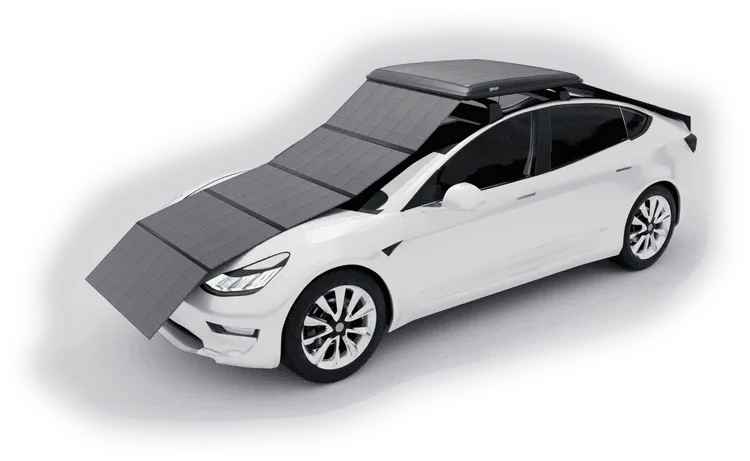
That Gosun roofrack solar product looks like it uses more energy to drive 30-40miles on a CT, from aerodynamic drag, than it can produce in a day from solar.

So you pay $3000 to make your EV lose range, so you have to leave it parked all day and can't drive it during the day, all just to get back what energy you lost from drag from driving the solar Gosun roof rack there over 30miles?

The only time this makes sense is if you plan on parking it during the whole day where you can't charge it otherwise, and plan on only using it less than 10miles a day/3700miles annually.

Buy a ebike (or 2 for the same price) instead if that is the commute, you don't even need to buy a car at all then.

Tesla Cybertruck Solar panels and battery to get unlimited range ... 1718600272118-mm
 
Last edited:
OP
OP

Zantosh76

Well-known member
First Name
Santosh
Joined
Apr 26, 2024
Threads
13
Messages
120
Reaction score
171
Location
Denver
Vehicles
Model S, model x, cybertruck
Occupation
Consultant
Country flag
Actually you're right but if you're able to remove it and stow it in the back then you won't lose range and can deploy it when stationary.

For example if to plan on going to Mesa Verde, you'll need something as there's nothing there.

I would say the "ease" of removing it will allow you to do this and gain some change while chilling out in the park.
 

HaulingAss

Well-known member
Joined
Oct 3, 2020
Threads
28
Messages
10,337
Reaction score
20,763
Location
Western Washington, USA
Vehicles
Cybertruck DM, 2010 F-150, 2018 Performance Model 3, 2024 Performance Model 3
Country flag
I wouldn’t say futile, I’d say future… distant future. PV panels aren’t efficient or large enough in vehicle applications to power mobility for most normal use cases.
That's true for most normal use cases, but the use case being discussed is boondocking for extended periods. There's no way to do the solar thing on the cheap, but if the off-grid boondocking has a big enough budget, it can make sense in a sunny area, you know, where people tend to like to spend extended periods. You might want to run a Dometic cooler and boil some water on an induction element for coffee or whatever. A decent solar array like 5 or 6 200W panels, paired with a suitable battery "generator", can provide basic camp needs, keep devices charged, and cause the CT battery to slowly increase, rather than slowly decline.

The most efficient way to add vehicle charge is to charge during the day, so the battery generator is only acting as a pass-through and charge controller/voltage converter, not so much a storage device. As the middle of the afternoon passes and solar output starts drawing the battery generator down, stop charging the vehicle and store the generation of the remaining daylight in the battery generator.

It's important to have an efficient MPPT charge controller, probably built into the battery generator. Not all panels and controller equipment with similar basic specs will perform the same, so buy carefully. This is not a general solution for most travelers trying to cover ground each day, it's for someone wanting to boondock extensively, without having the battery gradually decline from normal phantom drain or incidental use of the various doors, lights, etc.
 

Crissa

Well-known member
First Name
Crissa
Joined
Jul 8, 2020
Threads
138
Messages
19,571
Reaction score
31,477
Location
Santa Cruz
Vehicles
2014 Zero S, 2013 Mazda 3
Country flag
...some of the numbers being thrown around here are wildly optimistic in the best case scenarios in my opinion.
What post with numbers?

And yeah, the GoSun doesn't seem like a good solution. It might be okay for a Cybertruck, sitting over the vault it might not interrupt the airflow as much, but... Their prior version that stowed in the trunk was a better design.

-Crissa


Darthamerica

Well-known member
Joined
Apr 28, 2024
Threads
3
Messages
137
Reaction score
105
Location
Los Angeles
Vehicles
Cyberbeast and Model S P90D
Occupation
Engineer
Country flag
That's true for most normal use cases, but the use case being discussed is boondocking for extended periods. There's no way to do the solar thing on the cheap, but if the off-grid boondocking has a big enough budget, it can make sense in a sunny area, you know, where people tend to like to spend extended periods. You might want to run a Dometic cooler and boil some water on an induction element for coffee or whatever. A decent solar array like 5 or 6 200W panels, paired with a suitable battery "generator", can provide basic camp needs, keep devices charged, and cause the CT battery to slowly increase, rather than slowly decline.

The most efficient way to add vehicle charge is to charge during the day, so the battery generator is only acting as a pass-through and charge controller/voltage converter, not so much a storage device. As the middle of the afternoon passes and solar output starts drawing the battery generator down, stop charging the vehicle and store the generation of the remaining daylight in the battery generator.

It's important to have an efficient MPPT charge controller, probably built into the battery generator. Not all panels and controller equipment with similar basic specs will perform the same, so buy carefully. This is not a general solution for most travelers trying to cover ground each day, it's for someone wanting to boondock extensively, without having the battery gradually decline from normal phantom drain or incidental use of the various doors, lights, etc.
Meh… for the non-mobility stuff maybe. But it’s such a niche use case that I don’t see it as a viable product with current PV technologies. Could it be built? Yup, probably. But the cost and trade offs would probably be unacceptable today. We’re talking about a very low volume product.

I think this is more of a DIY project for now.
 

Darthamerica

Well-known member
Joined
Apr 28, 2024
Threads
3
Messages
137
Reaction score
105
Location
Los Angeles
Vehicles
Cyberbeast and Model S P90D
Occupation
Engineer
Country flag
It depends on two things: The power consumption of the mobility, and the frequency of the mobility.

For a vehicle left in the sun every day, that 130 square feet could be 1.9kW of panels getting an average of 9.7kWh per day which even at 400 watthours per mile (Cybertruck) is 24 miles a day - which is just over half the average mileage of a car in the US.

But for an Aptera (100 Watthours per mile), that would be nearly a hundred miles a day!

Of course, panels aren't perfect, nor is the angle, and you're left with not a full footprint. But they could easily handle the amount of power of vampire drain, a percent or two a day.

So it's a reasonable assumption, but needs to be integral to the vehicle, except for say, a camping use-case.

-Crissa

Hi Crissa,

Your numbers seem a bit optimistic to me. Here’s a more conservative take:

1. Efficiency: Real-world conditions often reduce solar panel efficiency. Assuming 15% average peak efficiency might be more realistic.
2. Sunlight Hours: Peak sunlight hours vary. Using 4 hours is a safer bet.

My Estimate:

- Solar Panel Area: 130 sq ft (~12.08 sq m)
- Efficiency: 15% average
- Energy Generation: ~7.24 kWh/day
- Cybertruck Energy Consumption: ~400 Wh/mile
- Daily Mileage: ~approx 18 miles/day

One additional caveat, 400 Wh/mile is
an average when the truck is cruising for a while on the road. However in real life that number is more like 500-700 Wh/mile if you’re doing less than 5-10 miles and the battery isn’t at an ideal temp. Also keep in mind this solar setup requires the truck to sit all day in the right position. Here’s what Elon Musk said about solar panels…

 
Last edited:

Woodrick

Well-known member
First Name
Ed
Joined
Dec 30, 2023
Threads
6
Messages
4,786
Reaction score
4,762
Location
Gainesville Ga
Vehicles
Model 3, Model Y, Cybertruck AWD
Occupation
Consultant
Country flag
That Gosun roofrack solar product looks like it uses more energy to drive 30-40miles on a CT, from aerodynamic drag, than it can produce in a day from solar.

So you pay $3000 to make your EV lose range, so you have to leave it parked all day and can't drive it during the day, all just to get back what energy you lost from drag from driving the solar Gosun roof rack there over 30miles?

The only time this makes sense is if you plan on parking it during the whole day where you can't charge it otherwise, and plan on only using it less than 10miles a day/3700miles annually.

Buy a ebike (or 2 for the same price) instead if that is the commute, you don't even need to buy a car at all then.

1718600272118-mm.png
I don't see a battery here. Without a battery, you will only be able to charge for a very few hours a day. And that's only when it can put out 120V @12A.
 

Woodrick

Well-known member
First Name
Ed
Joined
Dec 30, 2023
Threads
6
Messages
4,786
Reaction score
4,762
Location
Gainesville Ga
Vehicles
Model 3, Model Y, Cybertruck AWD
Occupation
Consultant
Country flag
Everyone seems to be missing some basics here.

Teslas charge off of AC voltage (except for the humongous DC Fast Charging).
The slowest acceptable charge is 120V @ 12A AFAIK, without manually dropping the charge current.

The charge current really won't automatically adjust itself (yes, there are exceptions) and that ends up meaning that the solar charging solution will need to pick effectively one and only one charging rate. For the sake of argument, let's say that's 120V @12A, 1440 watts.

Solar production caries throughout the day. As the sun comes up, the voltage on the array slowly increases, as clouds pass over, the voltage decreases. To charge the car, you will need enough voltage to power the inverter to get to AC. If the voltage drops below this, the vehicle will stop charging. If the voltage goes above this amount, power will be lost.

So even if the panels were enough to do something useful to charge the car, you probably have to derate them by 50%, for either not enough sun, or too much sun and energy loss.

If Tesla's allowed DC charging, it could be a different story, it still wouldn't make sense though.
 

HaulingAss

Well-known member
Joined
Oct 3, 2020
Threads
28
Messages
10,337
Reaction score
20,763
Location
Western Washington, USA
Vehicles
Cybertruck DM, 2010 F-150, 2018 Performance Model 3, 2024 Performance Model 3
Country flag
Meh… for the non-mobility stuff maybe. But it’s such a niche use case that I don’t see it as a viable product with current PV technologies. Could it be built? Yup, probably. But the cost and trade offs would probably be unacceptable today. We’re talking about a very low volume product.

I think this is more of a DIY project for now.
Incorrect, you can buy portable solar generator systems now, off the shelf, that do what I described. Plug and play. They have been available for years, but they keep getting more capable and less expensive. It's more a question of whether someone would want to spend the thousands of dollars they cost, give up some of the space in the bed, and it's one more thing to set up and take down when moving camp.

For boon dockers in sunny climates, who don't mind spending that kind of money, it's a viable option.
Sponsored


Top