Sponsored

4680 charging issues???

RVAC

Well-known member
Joined
Aug 11, 2021
Threads
1
Messages
864
Reaction score
1,291
Location
-
Vehicles
-
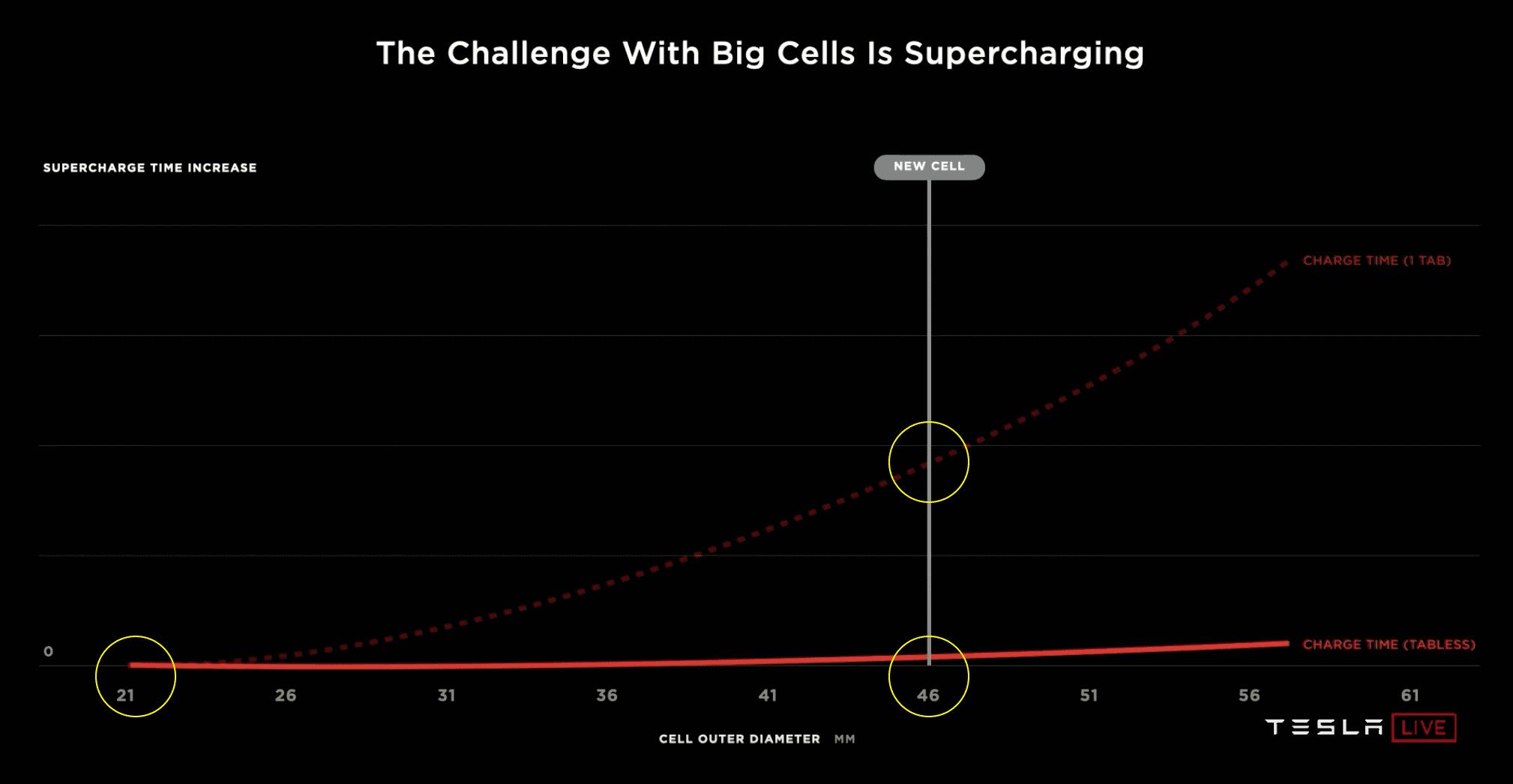
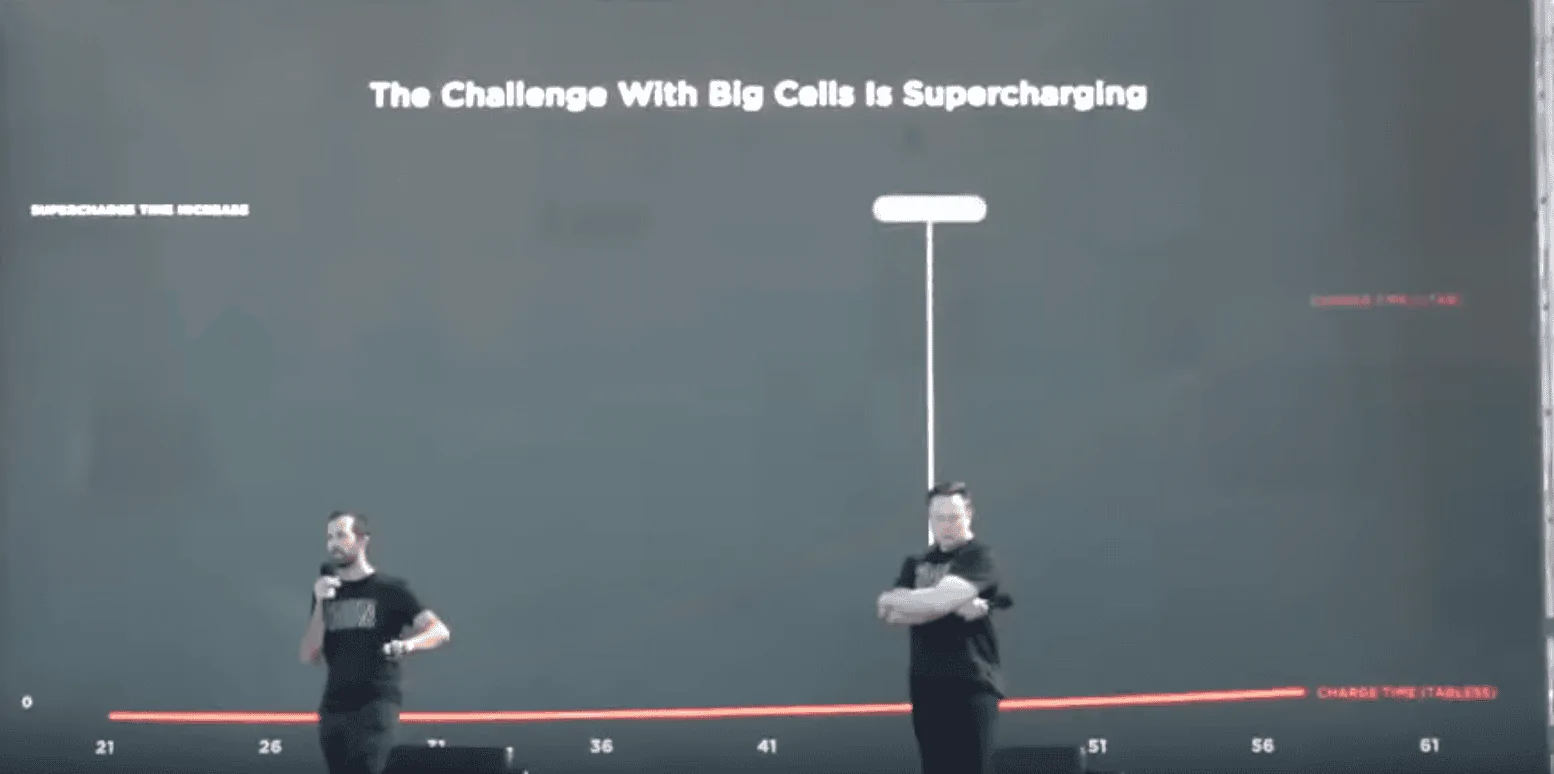
No, you have completely misunderstood the point of this chart. The 2170 cells are not the baseline, they are the dashed red line that grows significantly ("1 TAB"), showing that they have a much longer charge time than the tabless design.

The purpose of this entire presentation was to tout the features of the new cell.
That's not correct, the dashed line does not represent the 2170 cell. The dashed and solid lines only represent "1 tab" and "tabless", they're not specific to any single cell diameter, that is determined by the value on the x axis.

What the graph indicates is that a 4680 cell with a single tab charges significantly slower than a single tab 2170 cell and a tabless 4680 cell charges slightly slower than a single tab 2170 cell. We just can't quantify it given the lack of labeling on the y axis.

Which is not to say that Tesla cannot decrease 4680 supercharging time by improving other aspects at pack or cell level. However all else being equal a tabless 4680 will charge slightly slower than a single tab 2170. Also, just to clarify, I'm not saying the 10min difference (10-80%) we're seeing in the above videos can be entirely attributed to this. There could be, and likely are, other factors at play but it may, at least partly, explain why we're seeing a worse charging curve.
Sponsored

 

CyberGus

Well-known member
First Name
Gus
Joined
May 22, 2021
Threads
91
Messages
10,238
Reaction score
33,893
Location
Austin, TX
Vehicles
1981 DeLorean, 2024 Cybertruck
Occupation
IT Specialist
Country flag
That's not correct, the dashed line does not represent the 2170 cell. The dashed and solid lines only represent "1 tab" and "tabless", they're not specific to any single cell diameter, that is determined by the value on the x axis.

What the graph indicates is that a 4680 cell with a single tab charges significantly slower than a single tab 2170 cell and a tabless 4680 cell charges slightly slower than a single tab 2170 cell. We just can't quantify it given the lack of labeling on the y axis.

Which is not to say that Tesla cannot decrease 4680 supercharging time by improving other aspects at pack or cell level. However all else being equal a tabless 4680 will charge slightly slower than a single tab 2170. Also, just to clarify, I'm not saying the 10min difference (10-80%) we're seeing in the above videos can be entirely attributed to this. There could and likely are other factors at play but it may, at least partly, explain why we're seeing a worse charging curve.
I’m sorry but you’re completely wrong on this.
  1. The dashed line shows an INCREASE in charge times as cell diameter increases for SINGLE TAB cells
  2. The solid line shows the charge times DO NOT INCREASE with diameter for the TABLESS cells
  3. ALL previous cells were SINGLE TAB
  4. ALL 4680 cells are TABLESS
  5. A RISE on the Y axis is WORSE since it correlates to a LONGER charge time
Can you please explain to me which of the above statements is incorrect?
 

CyberGus

Well-known member
First Name
Gus
Joined
May 22, 2021
Threads
91
Messages
10,238
Reaction score
33,893
Location
Austin, TX
Vehicles
1981 DeLorean, 2024 Cybertruck
Occupation
IT Specialist
Country flag
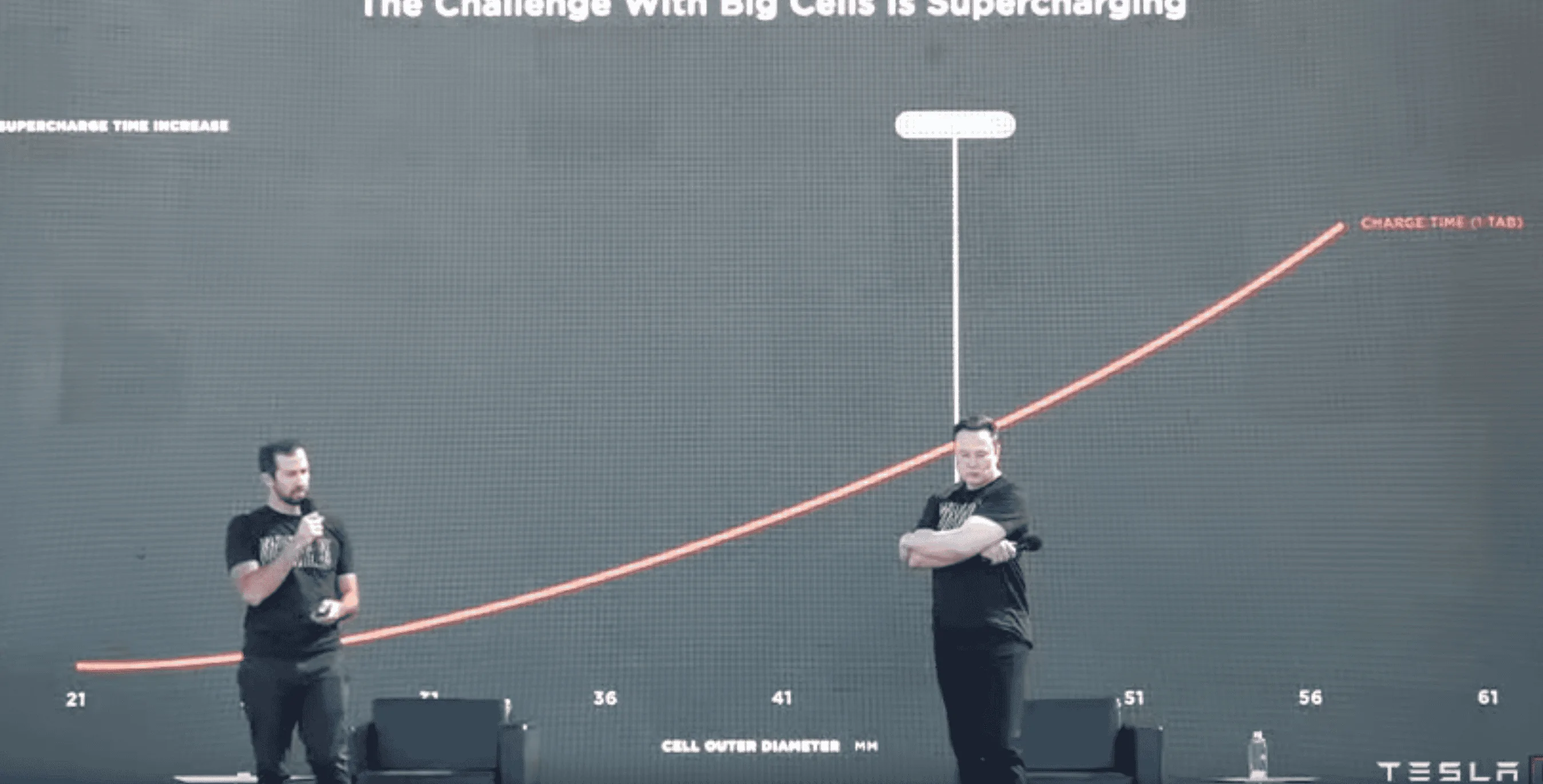
the tabless design does reduce internal resistance but it is negated by the increase in cell diameter. This graph from battery day actually shows a slight supercharge time increase, although it's hard to quantify given the y axis is not labeled.

tesla-challenge-large-cell-supercharging.png
There is no scale on the Y axis, but it is labeled as “charge time”.

The tabless design solves the thermal issue with larger cells that would otherwise limit charge speed. But don’t take my word for it! I invite you to watch this clip from the Battery Day presentation that explains:


JBee

Well-known member
First Name
JB
Joined
Nov 22, 2019
Threads
18
Messages
4,913
Reaction score
6,362
Location
Australia
Vehicles
Cybertruck
Occupation
. Professional Hobbyist
Country flag
I'll try with images since words aren't working:

Screenshot 2023-08-26 at 19.31.57.png


Screenshot 2023-08-26 at 19.31.52.png
The graph is not really representative of much without charge time values, and shouldn't be considered evidence of the 4680 being slower at charging.

There are two factors here, one is that the max charge rate is limited by cell temperature, because making the cells hot causes irreparable degradation, and two; cell temperature whilst charging is created through a combination of conductor and chemical heating that is commonly expressed as battery resistance.

The tabless design lowers the resistance by offering much shorter conductor length, in that every layer of the cell jelly roll has at least its own tab. A tabbed cell only has one at either end of the roll making the conductor much longer, and therefore has more resistance that increases heat generation.

Because of this a tabless battery doesn't create as much heat as a tabbed cell. Meaning, that technically it shouldn't degrade with temperature as fast as a tabbed cell. It also means that it should be able to sustain a higher charge rate for longer. But, because the 4680 is also bigger, it also has less exterior surface area compared to its volume than a smaller cell like the 2170. This means that the 4680 surface has less capacity to remove heat from the cell.

Luckily, the tabbed design doesn't create as much heat in the first place, which is also better for efficiency, and cooling loads, and therefore doesn't need much cooling over the whole pack. This reduces energy loss and means the cars HVAC can cool the battery with less power and avoid thermal throttling of the max charge rate. (Hence the battery preconditioning before arriving at a SC). Unlike the tabbed cell, the tabless design also provides a highly conductive path for heat to escape directly from the interior of the cell to the outside where it can be cooled which helps significantly.

The net effect of the design is that they can do what they previously couldn't, because of thermal issues with tabbed cells, and that is build a larger diameter cell, which performed the same, but was significantly higher capacity, but at much lower overall pack cost.

There needs to be distinction here, in that a single 4680 cell has some 5.5 times the energy capacity of a 2170 but is expected to be less than double the cost per cell. That's a huge cost improvement per cell.

For the customer this means that they can also afford to have more battery cells for the same money, and therefore a larger pack with more range. The CT will likely have double the MY 4680 pack to achieve even 350miles. It's likely though that the CT will only use 50% more or so than a MY per mile.

A larger pack also means faster MPH charge times, and less charge ramp down on high battery levels, resulting in overall faster travel times when you include charging times, from point A to point B. Even if the 4680 cell charges at the same rate as a 2170., like some claim. This is not self evident in the graph or release literature, but the net effect for the CT should be better travel times when including charging stops.


CyberGus

Well-known member
First Name
Gus
Joined
May 22, 2021
Threads
91
Messages
10,238
Reaction score
33,893
Location
Austin, TX
Vehicles
1981 DeLorean, 2024 Cybertruck
Occupation
IT Specialist
Country flag
I'll try with images since words aren't working:

Screenshot 2023-08-26 at 19.31.57.png


Screenshot 2023-08-26 at 19.31.52.png
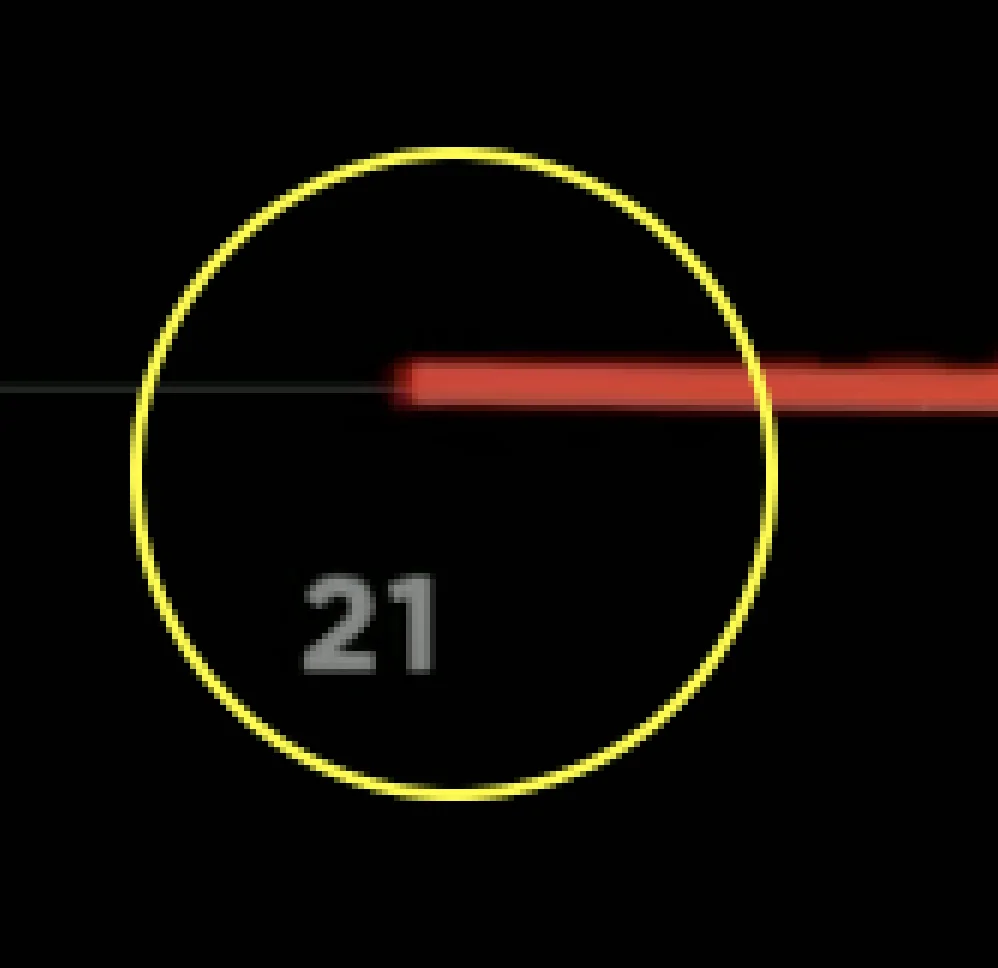
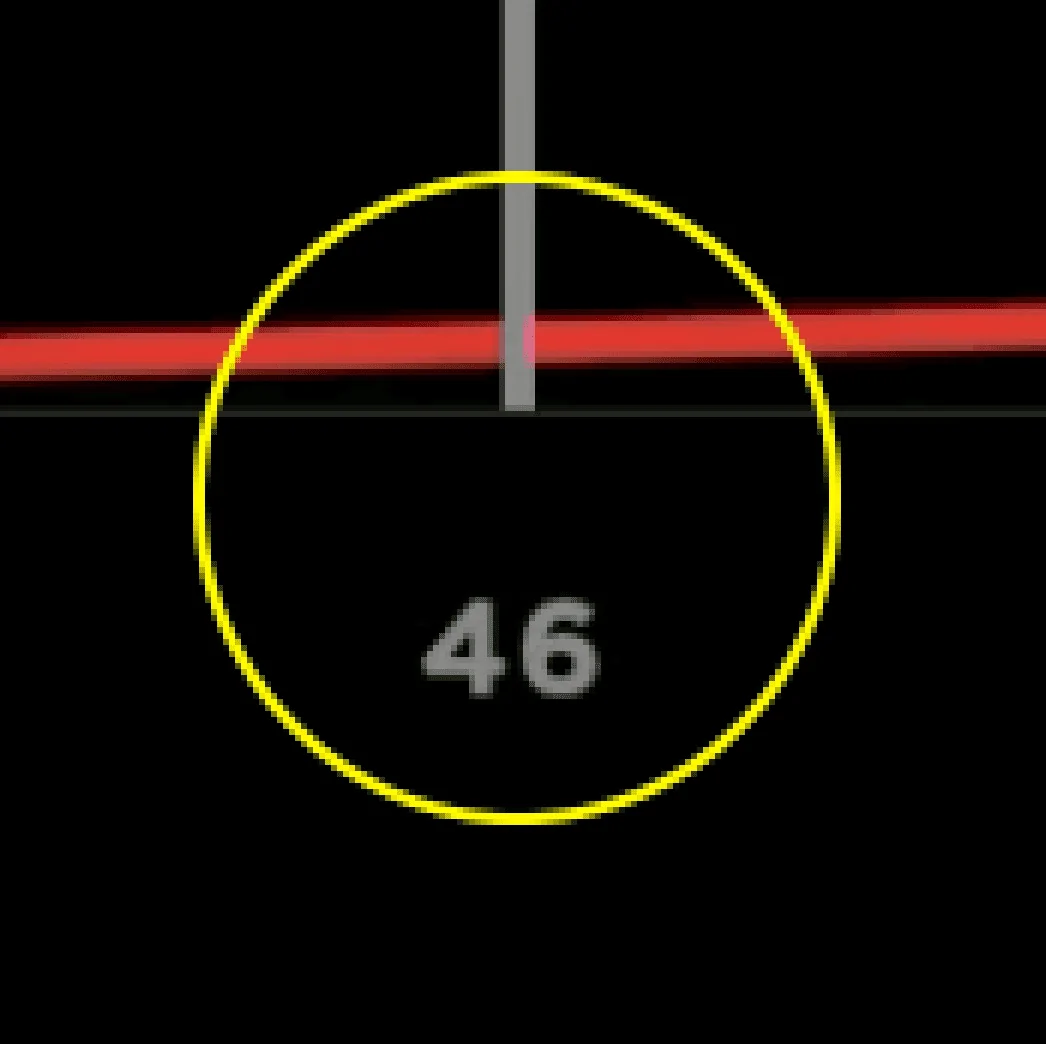
Thank you for proving my point! Charge time for a tabless cell increases negligibly as diameter increases from 21mm to 46mm.

Note the dashed red line, representing a tabbed cell, increases significantly over that same span.
 

Don Kedick

Well-known member
Joined
Jul 22, 2022
Threads
2
Messages
131
Reaction score
445
Location
Fort Worth
Vehicles
M3LR, Escalade
Country flag
I’m choosing to not learn any of this but from the conversation it sounds like the chart could have been done better.
 

HaulingAss

Well-known member
Joined
Oct 3, 2020
Threads
28
Messages
10,308
Reaction score
20,724
Location
Western Washington, USA
Vehicles
Cybertruck DM, 2010 F-150, 2018 Performance Model 3, 2024 Performance Model 3
Country flag
Internal resistance of the 4680 is actually much lower. The tabless design dissipates heat more effectively and should allow for higher charge rates, so IDK why the software is tapering the charge curve for these 1st gen cells.
I was jumped on, as were others here, when we said the advantage of the 4680 cells will not be a significant increase in charging speed. Yes, the tabless design should dissipate heat better, but the larger can diameter requires this extra heat dissipation just to stay even with the much smaller 2170 and 18760 cells. In the end, it should roughly equal out. But something else is going on here to make the first generation 4680 cells ramp down so much more quickly.


HaulingAss

Well-known member
Joined
Oct 3, 2020
Threads
28
Messages
10,308
Reaction score
20,724
Location
Western Washington, USA
Vehicles
Cybertruck DM, 2010 F-150, 2018 Performance Model 3, 2024 Performance Model 3
Country flag
I’m choosing to not learn any of this but from the conversation it sounds like the chart could have been done better.
I don't see anything wrong with the design of the chart. People are simply not reading it at face value. It shows a 46 mm diameter battery charges much, much slower if it has one tab and only a little slower if it has a tabless design.

However, the first gen 4680's are charging much slower than mature 2170 cells, so I can only assume there is something else going on here. It's important to remember that the presentation was touting the benefits of a fully mature 4680 cell and the same presentation said they expected that to take 6 years. It's only been three years.
 

JBee

Well-known member
First Name
JB
Joined
Nov 22, 2019
Threads
18
Messages
4,913
Reaction score
6,362
Location
Australia
Vehicles
Cybertruck
Occupation
. Professional Hobbyist
Country flag
As others have posted, the poor charging rate on the 4680 MY's is just the consequence of a conservative charging algorithm so they don't produce premature failures on 4680 test MY's.

This could either be intentional as a hard rate limit, or because the cells are hitting the thermal constraints which in turn derates it. It would be interesting to see a plotted charge graph, preferably with a battery temp value.
 

Dusty

Well-known member
First Name
Mike
Joined
Jul 29, 2021
Threads
7
Messages
704
Reaction score
2,220
Location
Lorton VA
Vehicles
2023 Model Y Performance
Occupation
Creator
Country flag
I’m choosing to not learn any of this but from the conversation it sounds like the chart could have been done better.
EXACTLY.

Pro tip...

Never. . . EVER bother using a chart with a blank axis as a source of information.

It's virtually useless and may as well be titled "It's Kind of Like This (Sorta)" .

Seriously, what is the Y-axis supposed to be, "Tacos per Quarter Parsecs"? To do this someone has to literally put in the data, and after the software you're using spits it out—intentionally delete the labels and numbers on the axis. You don't know if the units are scaled to exaggerate the curve, or what. It's an indicator that the chart is a marketing piece, not a source for meaningful data.

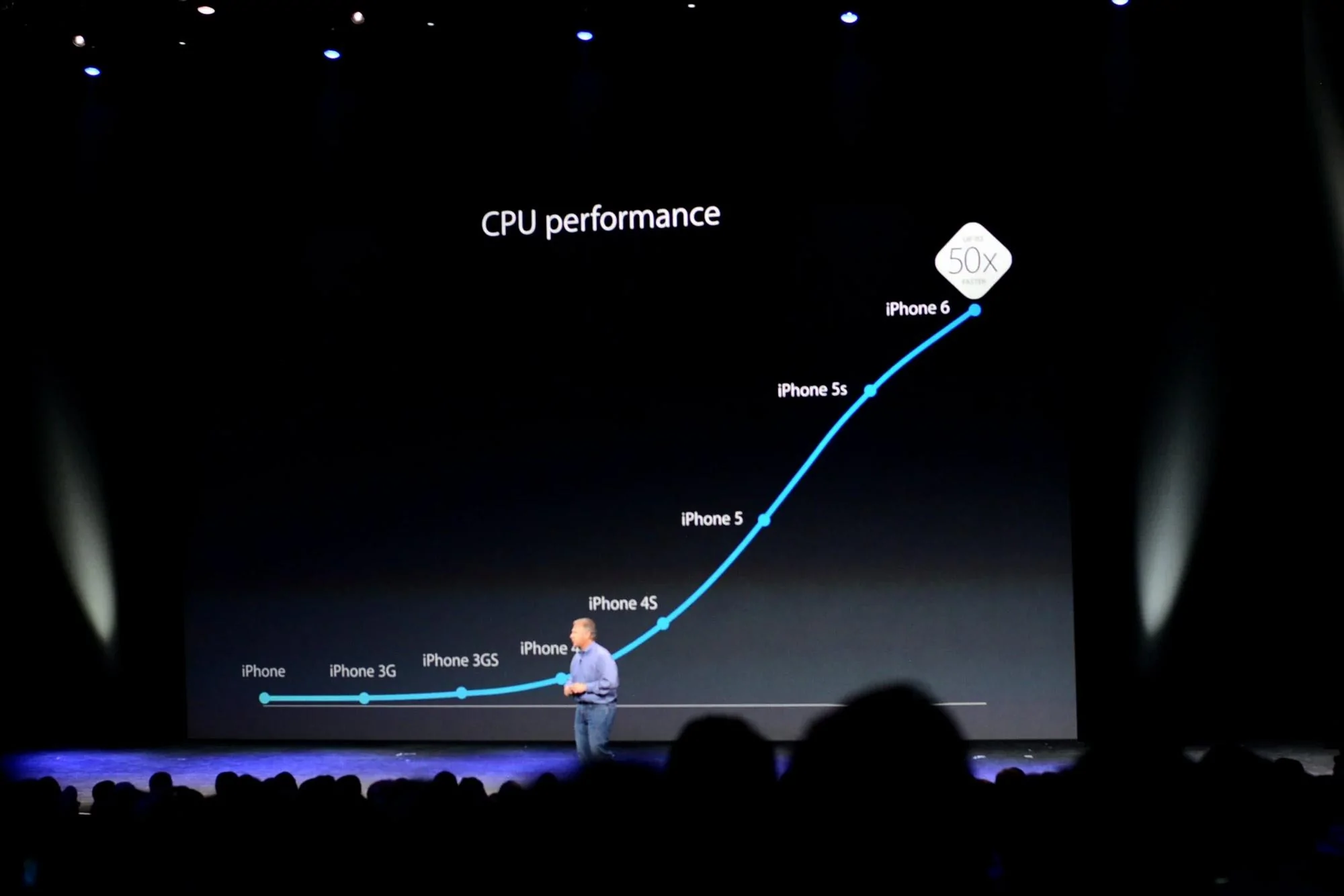
I wouldn't use it as something to get wrapped around the axle about. Apple does this constantly. I think this chart indicates "Cheetos per Lunar Minutes Cubed". . .

Tesla Cybertruck 4680 charging issues??? bunkchart
 
Last edited:

CyberGus

Well-known member
First Name
Gus
Joined
May 22, 2021
Threads
91
Messages
10,238
Reaction score
33,893
Location
Austin, TX
Vehicles
1981 DeLorean, 2024 Cybertruck
Occupation
IT Specialist
Country flag
I was jumped on, as were others here, when we said the advantage of the 4680 cells will not be a significant increase in charging speed. Yes, the tabless design should dissipate heat better, but the larger can diameter requires this extra heat dissipation just to stay even with the much smaller 2170 and 18760 cells. In the end, it should roughly equal out. But something else is going on here to make the first generation 4680 cells ramp down so much more quickly.
Jordan Giesige has a detailed analysis of the 4680, and this clip is about thermal management specifically:


In essence, the larger cell volume is offset by the reduced overall heat generated and better dissipation from the tabless design.
 

HaulingAss

Well-known member
Joined
Oct 3, 2020
Threads
28
Messages
10,308
Reaction score
20,724
Location
Western Washington, USA
Vehicles
Cybertruck DM, 2010 F-150, 2018 Performance Model 3, 2024 Performance Model 3
Country flag
Pro tip...

Never. . . EVER bother using a chart with a blank axis as a source of information.
The chart was illustrating a relative relationship between charging time and diameter (with and without the tabless design feature). It's not an absolute graph with numbers, even the charge time of 2170 cells is not fixed, it has steadily improved as the format has been updated with chemistry and construction tweaks. The 4680 cell will improve too.

The chart is useful without numbers to illustrate Tesla's expectation for the tabless design in a 4680 format when the format is mature.

It's virtually useless and may as well be titled "It's Kind of Like This (Sorta)" .

Seriously, what is the Y-axis supposed to be, "Tacos per Quarter Parsecs"? To do this someone has to literally put in the data, and after the software you're using spits it out—intentionally delete the labels and numbers on the axis.
The Y-axis represents charging time, obviously. There are no units because the chart is illustrative of Tesla's expectations for the design, not absolute. It would be based upon early thermal testing of a tabless design in a 4680 format or theoretical thermal properties of the materials in the envisioned design.

People should have been paying more attention to this, not less, as it would have avoided all the false claims that the 4680 tabless would charge much faster than the 2170 format. The chart makes it clear the tabless 4680 was expected to charge slightly slower than a single tab 2170 but people ignored this. Everytime in 2020 and 2021 that I pointed out that I expected 4680 tabless cells to not be charge meaningfully faster than 2170 cells (due to the larger diameter cancelling out the benefits of the tabless thermal benefits), I was shouted down by people who had not used this very chart to inform themselves better.

That illustrates how useful this chart really was, it could have prevented a lot of self-proclaimed experts of the 4680 tabless design from spouting nonsense about faster charge speeds that Tesla had already told us wouldn't be one of the benefits. I said the primary advantage of tabless 4680 cells would be lower cost, not performance benefits beyond the small energy density benefits Tesla led us to expect.

Your criticism of this chart is extremely off-base. It clearly shows slightly slower, not faster charging speeds of the 4680 tabless design (vs. single tab 2170's). Hopefully the second and third generation 4680 tabless will show some real improvements in charging speeds (but don't expect them to charge faster than the best packs using 2170 cells).
Sponsored

 
Last edited:


Top