Sponsored

DrPhyzx

Well-known member
Joined
Dec 28, 2023
Threads
0
Messages
125
Reaction score
248
Location
Santa Cruz Mountains
Vehicles
Bolt EV, Ariel Atom
Occupation
particle physicist
Country flag
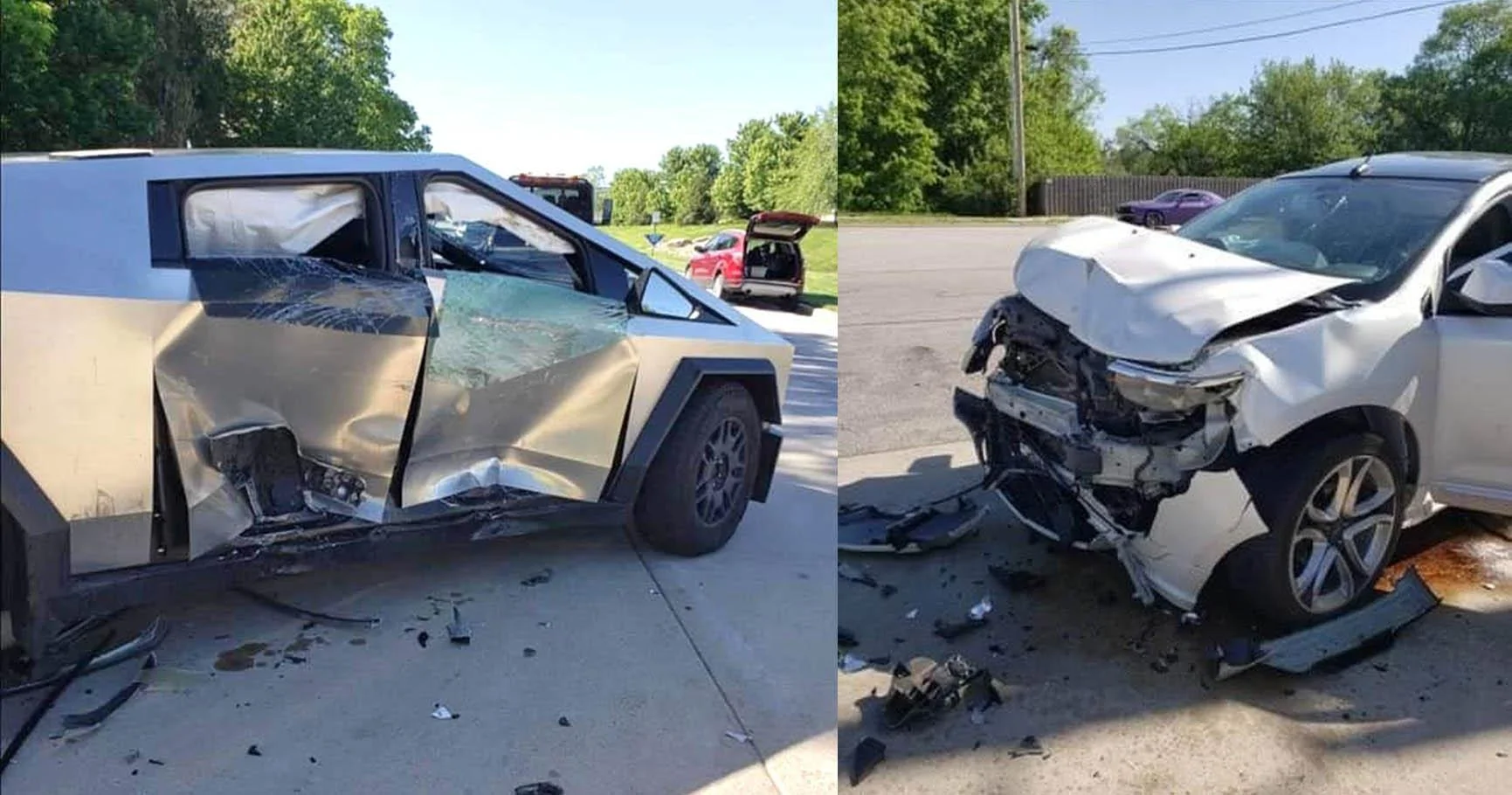
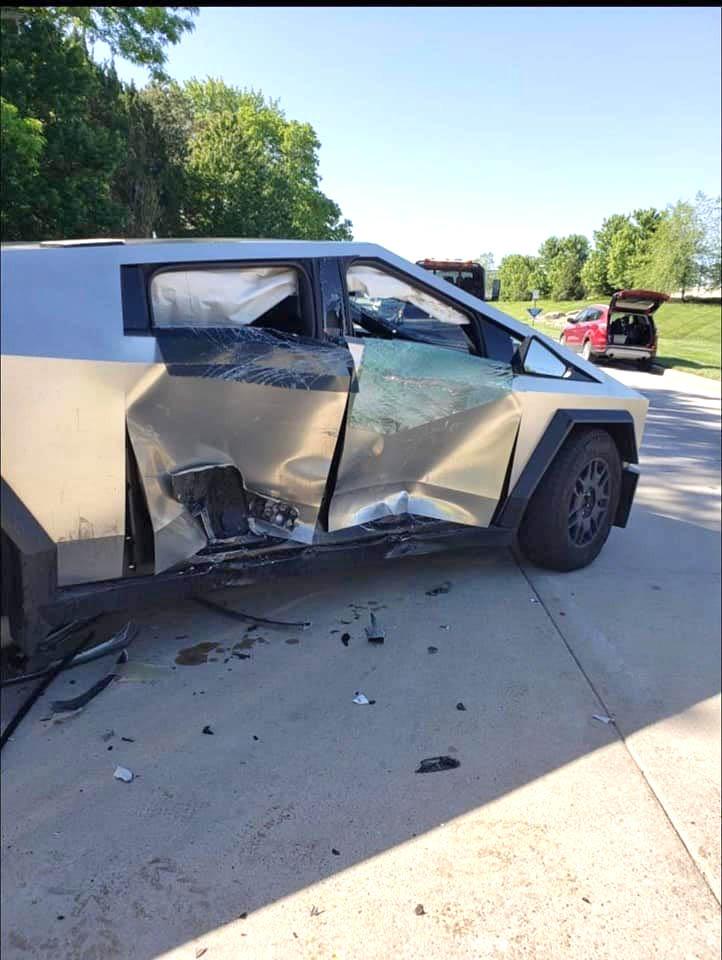
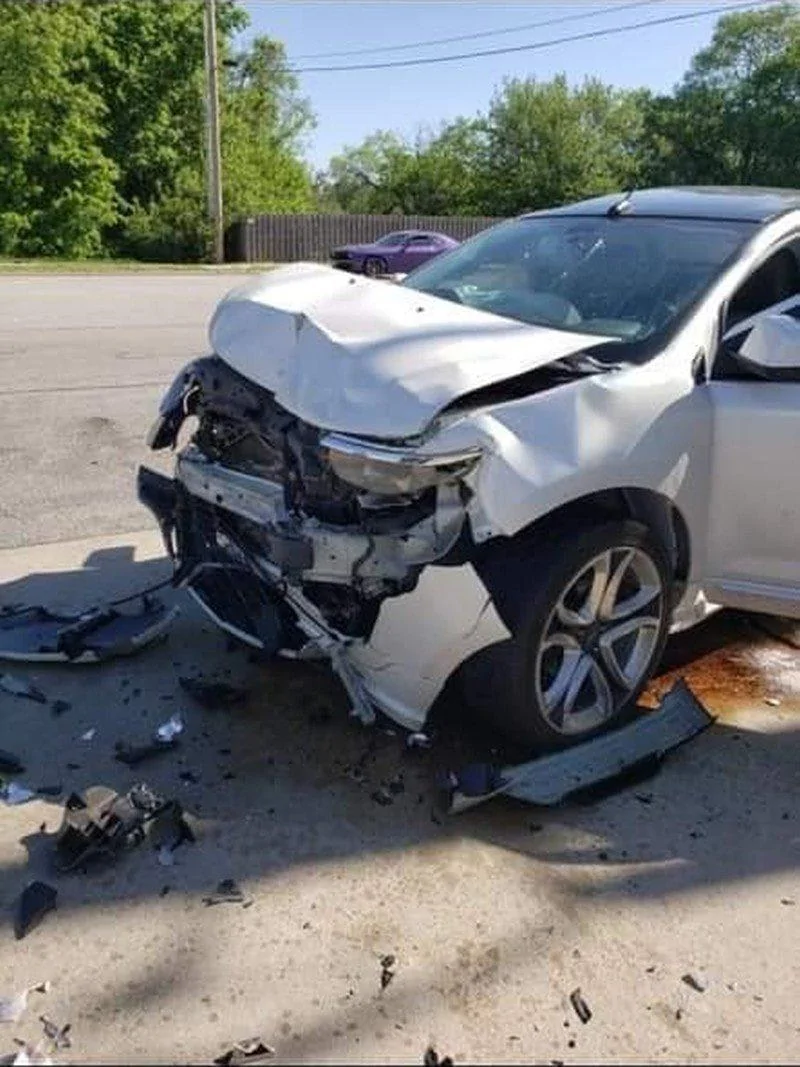
Count me in the camp of saying the other car did not come out of this well. As others have said the front end crumpled to engine block. What nobody else has said is....look at the pavement below the car: oil and maybe battery acid and and maybe transmission fluid or coolant have spilled out indicating significant damage. I think the amount of intrusion of the cybertruck door seems pretty minimal and if crash speed was 50 mph + I would be super impressed.
The damage on the Ford Edge looks is far too mild to be 50+ mph. This is a lot more like what you see at 30-ish mph.

Here is 50kph (31 mph) into a stationary barrier (starting at about :045)


This is somewhat more damage than shown in the pictures. Since an Edge weighs about half of the CT (not quite a solid barrier but 2/3 of way there in center of mass frame), I'd guess this was a 30-35 mph crash, which is definitely a severe crash, but far less than 50+ mph (E \propto v^2 is a killer!).

Tim
Sponsored
 

DrPhyzx

Well-known member
Joined
Dec 28, 2023
Threads
0
Messages
125
Reaction score
248
Location
Santa Cruz Mountains
Vehicles
Bolt EV, Ariel Atom
Occupation
particle physicist
Country flag
So looking it up, there's a 2,300 lb weight difference with the edge(4500) and the ct(6800).


Side tests are tested with a ~3K lbs dummy (regardless of class).

Head on crashes are tested @ 35mph to an immovable object.


neat.
You are correct... had it wrong that CT/Edge is 2:1. However, it's easy enough to translate from an immovable barrier to center-of-mass to get an approximate sense of relative damage and I still think this looks like a 30-35 mph crash. NCAP tests are at 50kph as in link to video, which is 31 mph. Sounds negligible but the difference in energy is 27%.


shaneaus

Well-known member
First Name
Martin
Joined
Jun 24, 2020
Threads
0
Messages
109
Reaction score
185
Location
Austin, TX, United States
Vehicles
Chevy 1500 Z71
Country flag
My opinion, for what it is worth and because many others seem to be expressing theirs:

I was LE for 26 years and for over seven years of those I was a traffic officer -someone whose primary job is to respond to and investigate collisions. I am actually pretty impressed with the lack of intrusion into the CT.

From a cursory look at the photos and without taking measurements, etc - it looks to me that the CT was turning to it's left at a low rate of speed (due to the scrub from the CT's front left tire) (the front right tire, likely left little to no scrub due to being lifted off the ground by the force off the collision). The other vehicle was, likely, traveling at about 50 mph (damage collapsed the entire crush zone and only stopped at the engine - but, did not push the CT farther than occurred and the striking vehicle didn't travel post impact). This was not a 90 degree angle side impact. This paragraph is based upon looking at the background roadway, the damage, the location and dispersion of vehicle's debris.

The front left of the other vehicle struck the center of the CT's rear passenger door first with the main bumper rail above the lower pan/structure of the CT. Due to the angle of impact the other vehicle, likely, rotated counter clockwise during the impact, and the vehicle stopped at the point of collision. The B pillar didn't collapse and was the apex of the other vehicle's rotation. The intrusion into the front passenger door was less because of those dynamics.

Considering that the majority of the force from the other vehicle was transferred into the rear passenger door at that door's weakest point - I'm quite impressed! And, the B pillar did NOT collapse -despite being struck laterally.

Due to the being no major injuries (unless, they further develop post collision) the LEO's probably didn't conduct a collision reconstruction (take measurements to determine collision forces, vehicle speeds, etc).

I don't think it would be possible to have a better outcome for the CT occupants relative to other vehicles in a similar collision.

Just my humble opinion for what it's worth.


65SoYoLO

Well-known member
First Name
Keith
Joined
Feb 9, 2021
Threads
53
Messages
2,008
Reaction score
2,637
Location
Long Island NY
Vehicles
2024 CyberTruck
Occupation
Retired truck driver
Country flag
My opinion, for what it is worth and because many others seem to be expressing theirs:

I was LE for 26 years and for over seven years of those I was a traffic officer -someone whose primary job is to respond to and investigate collisions. I am actually pretty impressed with the lack of intrusion into the CT.

From a cursory look at the photos and without taking measurements, etc - it looks to me that the CT was turning to it's left at a low rate of speed (due to the scrub from the CT's front left tire) (the front right tire, likely left little to no scrub due to being lifted off the ground by the force off the collision). The other vehicle was, likely, traveling at about 50 mph (damage collapsed the entire crush zone and only stopped at the engine - but, did not push the CT farther than occurred and the striking vehicle didn't travel post impact). This was not a 90 degree angle side impact. This paragraph is based upon looking at the background roadway, the damage, the location and dispersion of vehicle's debris.

The front left of the other vehicle struck the center of the CT's rear passenger door first with the main bumper rail above the lower pan/structure of the CT. Due to the angle of impact the other vehicle, likely, rotated counter clockwise during the impact, and the vehicle stopped at the point of collision. The B pillar didn't collapse and was the apex of the other vehicle's rotation. The intrusion into the front passenger door was less because of those dynamics.

Considering that the majority of the force from the other vehicle was transferred into the rear passenger door at that door's weakest point - I'm quite impressed! And, the B pillar did NOT collapse -despite being struck laterally.

Due to the being no major injuries (unless, they further develop post collision) the LEO's probably didn't conduct a collision reconstruction (take measurements to determine collision forces, vehicle speeds, etc).

I don't think it would be possible to have a better outcome for the CT occupants relative to other vehicles in a similar collision.

Just my humble opinion for what it's worth.
what he said
 

Its4kito

Guest
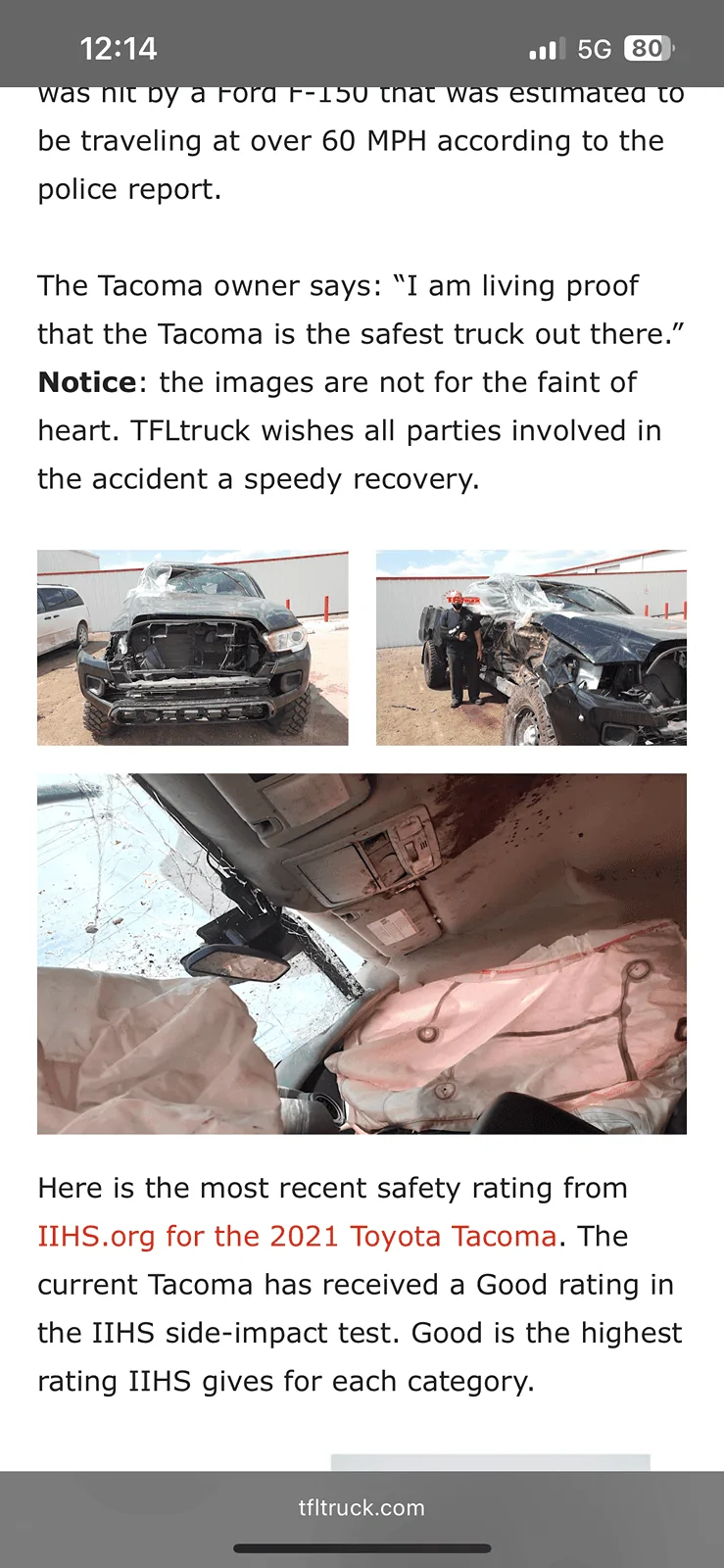
As a comparison, and without knowledge of speed parameters, I saw this Toyota truck accident on the internet search:

Tesla Cybertruck Cybertruck T-Bone accident at high speed - damage photos IMG_2091
 

kpanda17

Well-known member
Joined
Jun 8, 2023
Threads
25
Messages
1,030
Reaction score
1,064
Location
USA
Vehicles
Tesla Model 3RWD, Tesla Model MYP
Country flag
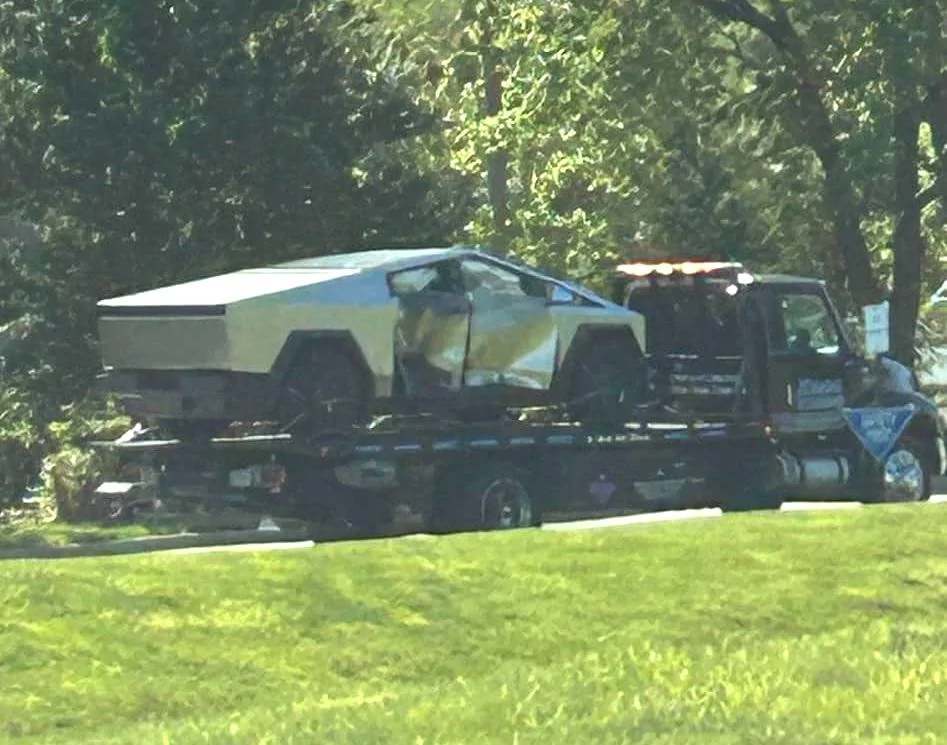
That damage is intense, but it’s impressive how well the structure held up. Honestly curious about the repair cost and whether replacement panels are easy to swap out.
Just having an M3 Tbone, it does not take much in repair cost estimate to total a vehicle these days. Our Tbone, we are all safe and the M3 did amazing, was $22K, therefore the 2023 was totaled.

Lars, Tesla engineering architect, did an amazing job with these passenger boxes that are inside all Teslas. Seeing the damage on our M3 vs this Cybertruck, i'd imagine the other vehicle was traveling in excess of 70 mph. For what speed on impact does Lars design for? At some point, you cannot protect at such extreme speeds, sadly to say.

btw

The Insurance Institute for Highway Safety (IIHS) is considered the most difficult grader in the car safety industry. This independent, nonprofit organization conducts crash tests and evaluates crash avoidance and mitigation technology.


" The Insurance Institute for Highway Safety (IIHS) uses a 37 mph side impact speed for its updated test. The test uses a 4,200-pound striking rig that hits the driver's side of the test vehicle. "
" According to NHTSA standards, the side impact crash test speed for a vehicle is 38.5 mph (62 km/h), simulating an intersection-type collision where a deformable barrier strikes the vehicle's side at that speed. "

in summary, the cybertruck did amazing, now we can only pray the passengers and driver are ok
Sponsored


Top