
Sponsored

How much would you pay for a range extender.

Crissa

Well-known member
First Name
Crissa
Joined
Jul 8, 2020
Threads
138
Messages
19,571
Reaction score
31,475
Location
Santa Cruz
Vehicles
2014 Zero S, 2013 Mazda 3
Country flag
... You can't charge while driving and...
...Which means you failed in reading comprehension with 'range extender'. Something that uses the standard charging port or system wouldn't be a range extender. It's just a portable charging solution.

-Crissa
Sponsored


fhteagle

Well-known member
Joined
Sep 28, 2022
Threads
5
Messages
305
Reaction score
689
Location
Telluride, CO
Vehicles
2013 Volt, CT Res x2
Country flag
On an 11 hour trip, I'm stopping at least 3 times to let go of some energy drink anyway. So solution 1 is more well spaced and powerful charging stations.

If that's not practical for some reason, solution 2 is a rentable range extender trailer. Been talking to the Telo guys about that in their discord. But apparently there's some bad verbiage in FMVSS that needs changed before that can implemented by an OEM.

There are combustion engine form factor options that become available when you don't need an engine to make any torque, only power. Again, I'd rather have a combustion REX trailer than trying to load and unload the kind of weight that comes along with a 20+kW class biodiesel genset or methane fuel cell. Forget hydrogen, it's a chimera.

The idea was floated more than a decade ago for rentable, swappable range extender trailers. It was way ahead of its time, no OEMs bought in etc. But we're at a point where a high throughout DC port can enable V2* applications, range extender trailers, etc all in one receptacle. Time to start demanding this from OEMs if this is really what we want.
 
Last edited:

dw321

Well-known member
Joined
Jun 10, 2023
Threads
4
Messages
73
Reaction score
97
Location
Arizona
Vehicles
Ram 2500, Toytota 4 Runner, Bikonit Ebike
Country flag
I went to A BETTER ROUTE PLANNER.
Trip from Flagstaff, AZ to Regent, ND to go pheasant hunting with dogs kennels, and associated gear-1254 miles, 2508 round trip. Round trip figures below:
Ford F150 Lightning with extended range -52 hours 42 minutes, 14 stops to charge
Rivian RT1 51 hours 18 minutes 12 stops
Tesla Model 3 to compare 46 hours 26 minutes 18 stops
Ram Diesel 37 hours 38 minutes 6 stops.
And of course, those figures are for an empty vehicle, except for passengers.
And of course, there are no super charges anywhere near Regent, ND
I assert if your use a truck like a truck often, EV trucks are not there yet. Maybe when I see a Super Charger in small towns I might reconsider.
 

Ryan95738

Well-known member
First Name
Ryan
Joined
Jan 24, 2020
Threads
2
Messages
192
Reaction score
130
Location
Skagit Valley
Vehicles
CyberTruck
Occupation
CNA
Country flag
There should be a standard setup for all trucks to hookup additional rental batteries with their own BMS with a standard communication protocol so BEV can verify battery is OK and won’t blow up with standard secure locking system. Just rent one for the length of your vacation like a U-Haul. The vendor put it in bed and remove it. I would definitely rent one for my occasional long distance travel and enjoy maximum payload and a higher acceleration all other time. $20-$30K saving for a lower range trim can pay for a lot of rentals. And level 2 charging at home and destination on a larger pack can offset some of the cost of rental. If the system works OK and is not too expensive, it can save a lot of batteries and unnecessary wear on tires and roads.
Yeah, I would pay quite a bit to rent one but I wouldn't spend too much buying one since they require maintenance
 

mggoulet

Well-known member
First Name
Michel Goulet
Joined
Dec 5, 2019
Threads
0
Messages
93
Reaction score
46
Location
Lac Massawippi
Vehicles
cybertruck with 3 motors
Occupation
retired
Country flag
As we are snowbirds and staying in fl 2 months twice a year, we really need at least 600 miles range and to stop for 20 minutes to get 200 miles range. Also, in Québec we pay $0.07 (CAD) per kw... and we travel in Québec and Ontario within 350 miles... and we want to charge in our home... And the full serf driving will help us very much as we get older...!!!


JBee

Well-known member
First Name
JB
Joined
Nov 22, 2019
Threads
18
Messages
4,913
Reaction score
6,362
Location
Australia
Vehicles
Cybertruck
Occupation
. Professional Hobbyist
Country flag
Cybertruck Truck Guy has a solution for Cybertruck off-road overland range anxiety. Interesting.
huh??

His video is not helpful. Why use 25 bottles of propane if a diesel generator would get you further?
And his 20miles charge per lunch or dinner break is well...useless.
He also doesn't understand that going off-road significantly increases energy use and reduces range.
 

HaulingAss

Well-known member
Joined
Oct 3, 2020
Threads
28
Messages
10,298
Reaction score
20,703
Location
Western Washington, USA
Vehicles
Cybertruck DM, 2010 F-150, 2018 Performance Model 3, 2024 Performance Model 3
Country flag
It defeats the purpose of having ears.
It defeats the purpose of having a brain. The trip could have easily been completed in two days instead of three if he had just used Superchargers. He even had to make four gas stops (I wonder why that didn't bother him). I bet those hotels he stayed at even had destination chargers, he barely would have even needed Superchargers.

After 7 days of running 24/7, that engine is ready for an oil and filter change too.

What an idiot!
 

HaulingAss

Well-known member
Joined
Oct 3, 2020
Threads
28
Messages
10,298
Reaction score
20,703
Location
Western Washington, USA
Vehicles
Cybertruck DM, 2010 F-150, 2018 Performance Model 3, 2024 Performance Model 3
Country flag
He also doesn't understand that going off-road significantly increases energy use and reduces range.
My Model 3 gets more range off-road, not less, on hard, rocky surfaces. The speeds are much slower. This is in contrast to an ICE engine that burns fuel at idle and can't regen down steep grades - it's still burning fuel to run the steering and brakes and keep the battery charged. And it's really inefficient at doing those tasks.

My 2018 Model 3 Performance can drive all day long on steep and rocky mountain roads without running low on charge!
 
Last edited:


HaulingAss

Well-known member
Joined
Oct 3, 2020
Threads
28
Messages
10,298
Reaction score
20,703
Location
Western Washington, USA
Vehicles
Cybertruck DM, 2010 F-150, 2018 Performance Model 3, 2024 Performance Model 3
Country flag
I went to A BETTER ROUTE PLANNER.
Trip from Flagstaff, AZ to Regent, ND to go pheasant hunting with dogs kennels, and associated gear-1254 miles, 2508 round trip. Round trip figures below:
Ford F150 Lightning with extended range -52 hours 42 minutes, 14 stops to charge
Rivian RT1 51 hours 18 minutes 12 stops
Tesla Model 3 to compare 46 hours 26 minutes 18 stops
Ram Diesel 37 hours 38 minutes 6 stops.
And of course, those figures are for an empty vehicle, except for passengers.
And of course, there are no super charges anywhere near Regent, ND
I assert if your use a truck like a truck often, EV trucks are not there yet. Maybe when I see a Super Charger in small towns I might reconsider.
I agree. When the Supercharger density is not built out optimally, you need to charge for excessively long times because you need to use almost all the battery range which ruins the speed of the charge curve between 10% and 60% SoC, increasing charge times by over 200%.

So of course planning a route to North Dakota is going to take longer in an EV! But the reason for that is Tesla is building out the Supercharger Network in a capitally efficient manner, not all at once. Remember, Tesla has to compete with ICE vehicles on pricing, vehicles that don't have to contribute a dime to build out oil rigs, refineries and fueling stations. On the other hand, Tesla has to phase the charging network build-out with the adoption of EV's (which is still below 3% in the US, in terms of the entire fleet). Tesla uses fleet data to figure out where Tesla owners live and drive and builds out the Superchargers to provide the best service.

What Tesla has accomplished accomplished already in terms of providing EV fast charging for road trips, only in the last 11 years and starting from scratch, is astounding! Even Ford and GM, who didn't contribute a dime of capital costs, want to use it! The best part for Tesla drivers is that Tesla will add about as many Superchargers this year as they did in the previous 11 years put together! The buildout of the charging network is accelerating!

What this means is the trip times calculated above will continue to improve as the Network continues to expand, even if Tesla doesn't upgrade all the 150 kW chargers to 250 kW and higher chargers. But they will do that too.

The point of all this is to try to convey that the current technology is ready to provide seamless and convenient road tripping anywhere there is optimum density of Superchargers. Charging is super fast when you have 250 kW and are in the bottom 60% of the battery. All we need are more Superchargers on more remote routes. You just happened to pick a route with the lowest density of Superchargers in the entire country.
 

HaulingAss

Well-known member
Joined
Oct 3, 2020
Threads
28
Messages
10,298
Reaction score
20,703
Location
Western Washington, USA
Vehicles
Cybertruck DM, 2010 F-150, 2018 Performance Model 3, 2024 Performance Model 3
Country flag
One thing people on EV forums like to forget is that biofuels are a thing. A big thing. The biggest issue surrounding them is their fuel feedstock resource, like consuming food reserves for making fuel instead. But if you use anaerobic digestion you can make biomethane from waste instead, which reduces biomass emissions and makes fuel at the same time resulting in a net reduction of global warming forcing. Which is better than an EV can do on its own.

The only problem with biomethane is then where can you get it along the way, and how much can you store in a cryogenic LNG tank, or high pressure CNG tank onboard. This applies to a NG setup as well btw.

For vehicles the easier storage method for fuels well as significantly more energy dense, is in a longer hydrocarbon chain fuels like biodiesel or ethanol. Both of these can be produced sustainably as well, but typically require a food based feedstock, which is achievable with more diverse cropping.
That seems awfully capital intensive and expensive compared to simply installing Superchargers at a density appropriate for the expected use. The error of your analysis is thinking we need more energy density to go off-road instead of simply having a higher density of Superchargers in areas that people might want to drive off the beaten path.

The market has a way of meeting market needs without resorting to producing and transporting biofuels to remote areas. That gets expensive. And you still have tailpipe emissions and engine oil changes and repairs vs. electric motors. Powerlines already crisscross the country with surprising density.
 

Jhodgesatmb

Well-known member
First Name
Jack
Joined
Dec 1, 2019
Threads
89
Messages
6,486
Reaction score
9,022
Location
San Francisco Bay area
Website
www.arbor-studios.com
Vehicles
Tesla Cybertruck FS AWD, Tesla Model Y LR
Occupation
Retired AI researcher
Country flag
If the rumors are true and the first released models only have 300 is miles of range. First of all I called it. Second there are going to be some disappointed reservation holders.

Most of us won't need 500 miles of range except for 10?? days per year.

Personally our big family vacation is driving from Salt Lake to an undisclosed lake in Northern Idaho. It is 749 miles and 11:20 per Google. I am not retired so every vacation day is precious, so we drive the whole way to avoid the hassle and expense and time of a hotel.

With a 500 mile range with a fairly small aero trailer I could do it in one long stop for a late lunch.
With a 300 mile range, same trailer it would be at least 3 supercharging stops that would have to align. (range anxiety definition)

Personally I don't want to drive a 7000 lb behemoth 355 days per year, but the 10 days I need it for road trips is pretty important to me. I have also done the math and for a $20k premium I could split up the drive with many nice meals and hotels before I use up $20k. I have literally been tormenting myself with spending this $20k or whatever it ends up being.

_____________________________________________________________________________________________

In theory if the on board charge draws 9600 watts and you could size a nice compact natural gas genset to provide that power to the charger while driving you could extend your range by 35 mile per hour of driving. This is roughly 15 HP. Turn it on after you leave after about 20 miles and leave it on for the duration of the trip, unless you are supercharging or plugged into a level 2 charger. This could be placed under the tonneau with some clever intake/exhaust ports that get closed on by the cover. get. So gain 350 is miles over 11 hours of driving. With this I would be back to a single supercharging stop.

Current natural gas tech or better yet a fuel cell would minimize the need for emissions or worrying about stinkly exhaust. A quality unit with nice sound/ vibration isolation on a skid that quick connects to a bed or in the case of an RV or other trailer could be trailer mounted. In cold weather a heater loop would further extend the normal range taking the waste heat off the genset for keeping the cab and batteries warm. If Tesla could build an integrated plug that works with the BMS and battery conditioning this would be really cool. Regen might need to be modified somehow.

There have been several small engine innovations that look ideal for a single speed light weight and efficient motor. I am not sure if this is FUD or if they are real., but this skid might be the size of a small desk with fuel tanks.

I think this skid could easily be produced in mass quantities for $10k for the genset anyway. $15,000 for a well integrated TSLA unit.

I wonder what the environmental payback foot print for something like this would be. Lighter truck 90% of the time, less batteries produced etc.

How much would you pay? If this could be rented even better.
I wouldn't pay a dime for a gas/propane/diesel generator for my truck. I wouldn't take it if it were free. I am driving electric for many reasons but one of them is to stop using petroleum (or related products). For me, Tesla has to produce a vehicle that meets my needs in terms of range, cargo, and towing, and it needs to provide a charging network to get to places, in any climate, season, or altitude to do so. Tesla knows what we need because it has designed a truck to meet those needs. But the range and infrastructure have to go along with all these neat features. I am not willing to give up on range and I definitely don't think Tesla will sell a tri or quad motor with 300 miles of range when it quoted 500. If they sell a dual at 300, then fine, I will hope that by next summer they have the tri/quad at 500 (at least) miles ready when my number comes up.
 

Haopec

Well-known member
Joined
Dec 10, 2022
Threads
0
Messages
77
Reaction score
131
Location
Northern California
Vehicles
Tesla MX P100d, Rivian R1T
Occupation
Project Manager
Country flag
Yeah, I would pay quite a bit to rent one but I wouldn't spend too much buying one since they require maintenance
This..... I tow something pretty muchh every week, maybe twice a week (boat, dump trailer, RV, Car trailer) with my R1T, but I only need a range extender when pulling my RV for weekend long trips.
I could see being OK with 350-400mile CT to handle weekend boating trips, but renting a battery pack for those long trips to the coast would be ideal so I don't have to drag around 500mile battery pack all the time..
Wieght kills tires, 21" Road tires on R1t netted a whopping 18K mile before needing replacement..

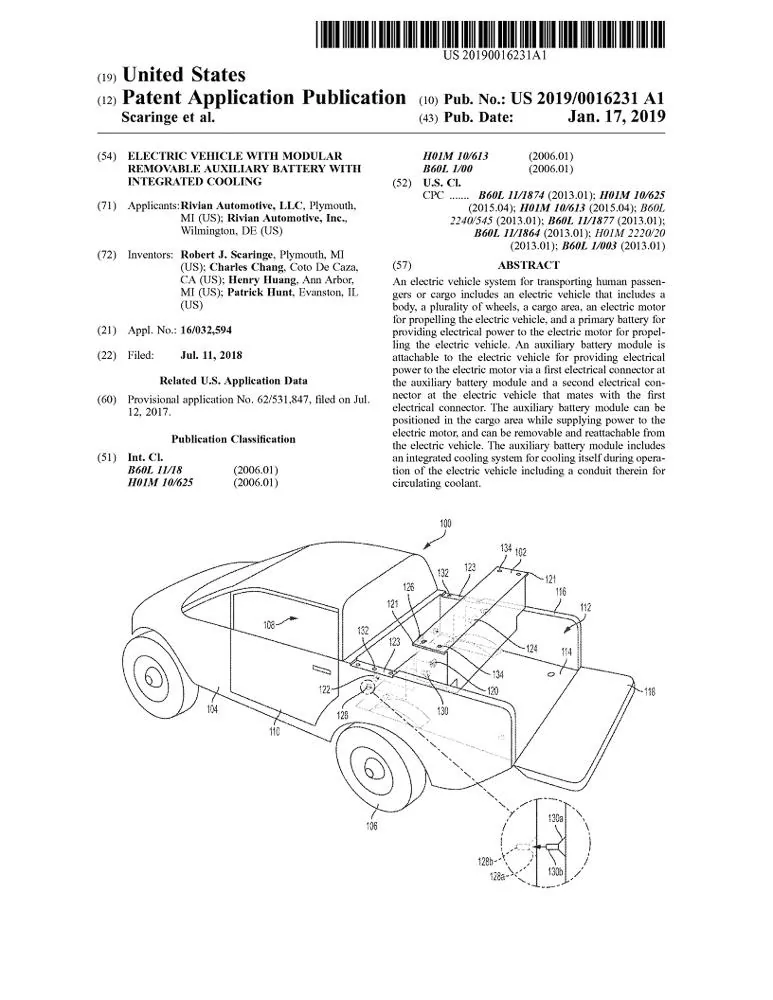
Tesla Cybertruck How much would you pay for a range extender. ivian-auxiliary-battery-module-patent-filing-1-jpg

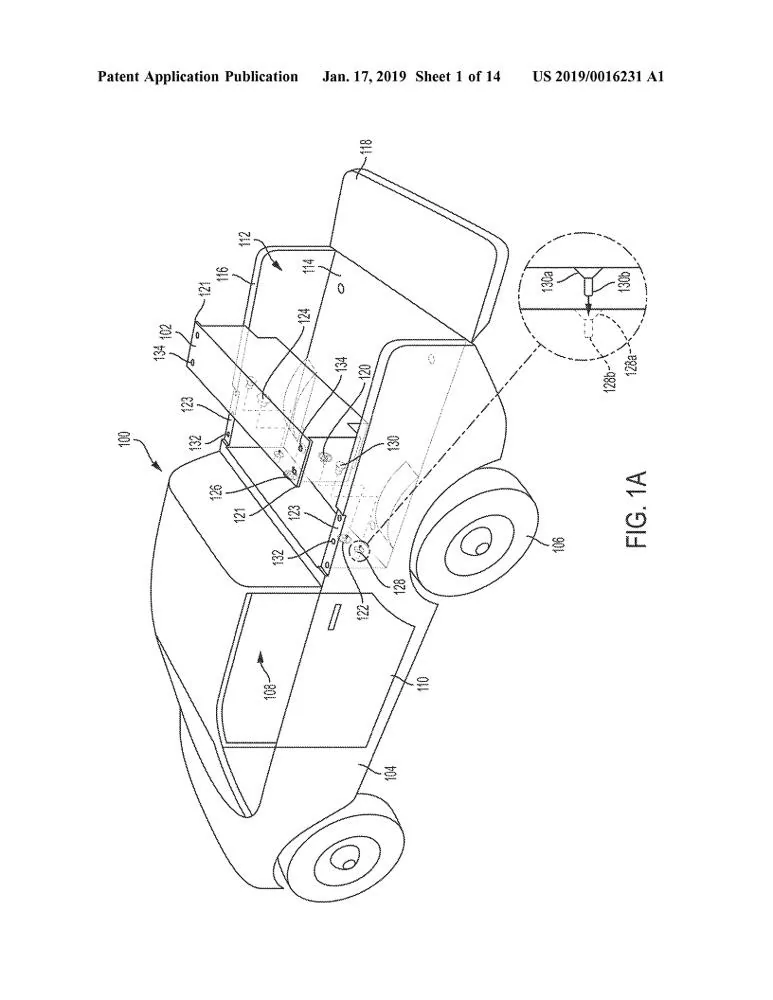
Tesla Cybertruck How much would you pay for a range extender. ivian-auxiliary-battery-module-patent-filing-2-jpg

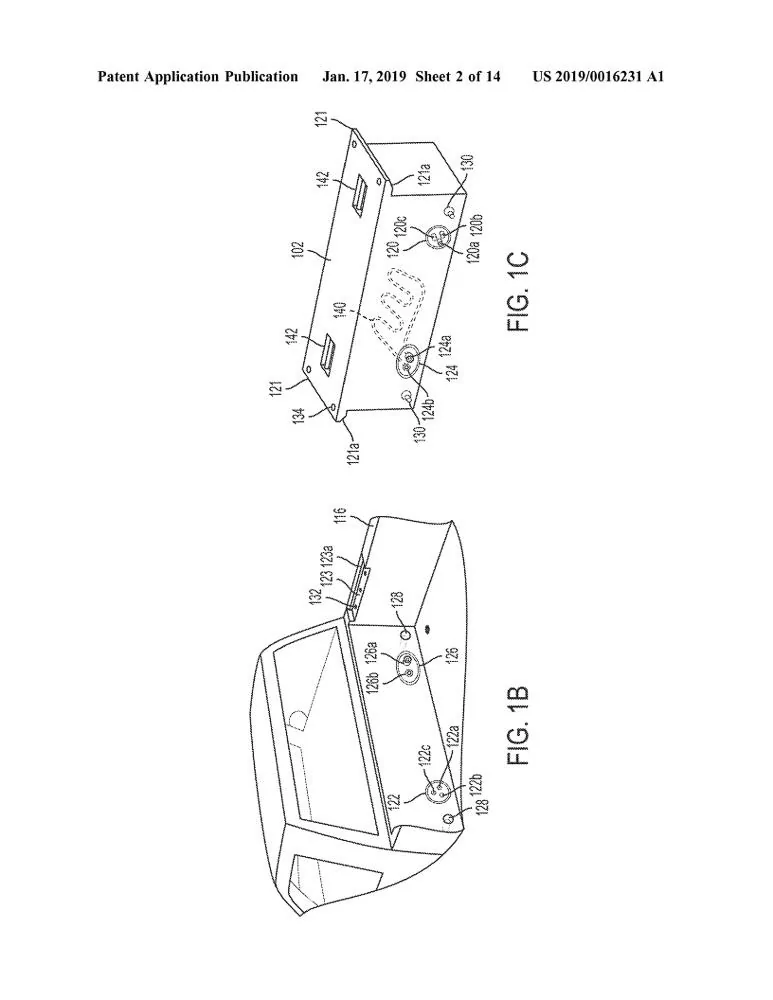
Tesla Cybertruck How much would you pay for a range extender. ivian-auxiliary-battery-module-patent-filing-3-jpg


https://www.rivianforums.com/forum/...battery-module-to-achieve-400-miles-range.53/
 

Cybergirl

Well-known member
Joined
Jul 3, 2020
Threads
40
Messages
872
Reaction score
2,933
Location
Illinois and Arizona
Vehicles
Tesla Model Y LR, Model Y SR, Cybertruck AWD FS
Country flag
huh??

His video is not helpful. Why use 25 bottles of propane if a diesel generator would get you further?
And his 20miles charge per lunch or dinner break is well...useless.
He also doesn't understand that going off-road significantly increases energy use and reduces range.
I think he makes a lot of sense, and he's an experienced off-roader.

A diesel generator is very heavy and expensive. We're talking around 400 lbs minimum for a 7KW generator costing at least $2000. A 9000W propane fueled unit with greater output is half the weight and price. The propane tanks add to the overall weight, but tanks can be individually lifted out of the truck, and the propane generator, too, with some effort, so the CT bed can be used for sleeping. Moving a 400 lb diesel generator would not be fun.

Diesel generators are about 40% efficient. A gallon of #2 diesel will produce about 16 kWh for 32 miles of range at 2 mi/kWh, and weighs 7 pounds + the weigh of the container. A 4 gallon tank of diesel will extend range by 126 miles at the expense of reducing CT's remaining load capacity by about 428 lbs.

By comparison a propane generator will give you about 9 miles of range per gallon of propane. That's 41 miles per 20 lb tank of propane. It will take 3 tanks of propane to extend driving range by 123 miles for a total weight of 200 + 60 = 260 lbs.

If you carry an extra 4 gallons of diesel the weight increases to 456 lbs vs 320 lbs for propane for ~250 extra miles of range.

Switching to 30 lb propane tanks (7 gallons), a diesel generator doesn't provide a weight advantage until extending range by more than 500 miles.

500 miles would require eight 30lb propane tanks vs just three extra 5 gal cans of diesel fuel, so volume-wise the diesel generator would be better for 800 miles of combined range (300 CT range + 500 extended range).

To extend CT's range by a couple of hundred miles, a propane generator is a better choice:
1. Less weight
2. Less smell
3. Less noise
4. Faster charging
5. Less cost
Sponsored


Top