Sponsored

How much would you pay for a range extender.

OP
OP
Tinker71

Tinker71

Well-known member
First Name
Ray
Joined
Aug 8, 2020
Threads
93
Messages
1,610
Reaction score
2,102
Location
Utah
Vehicles
1976 VW EV bus, 2007 Sienna, Tesla M3, Cancelled CT2 rez - holding for $65k
Occupation
Project Manager
Country flag
I think he makes a lot of sense, and he's an experienced off-roader.

A diesel generator is very heavy and expensive. We're talking around 400 lbs minimum for a 7KW generator costing at least $2000. A 9000W propane fueled unit with greater output is half the weight and price. The propane tanks add to the overall weight, but tanks can be individually lifted out of the truck, and the propane generator, too, with some effort, so the CT bed can be used for sleeping. Moving a 400 lb diesel generator would not be fun.

Diesel generators are about 40% efficient. A gallon of #2 diesel will produce about 16 kWh for 32 miles of range at 2 mi/kWh, and weighs 7 pounds + the weigh of the container. A 4 gallon tank of diesel will extend range by 126 miles at the expense of reducing CT's remaining load capacity by about 428 lbs.

By comparison a propane generator will give you about 9 miles of range per gallon of propane. That's 41 miles per 20 lb tank of propane. It will take 3 tanks of propane to extend driving range by 123 miles for a total weight of 200 + 60 = 260 lbs.

If you carry an extra 4 gallons of diesel the weight increases to 456 lbs vs 320 lbs for propane for ~250 extra miles of range.

Switching to 30 lb propane tanks (7 gallons), a diesel generator doesn't provide a weight advantage until extending range by more than 500 miles.

500 miles would require eight 30lb propane tanks vs just three extra 5 gal cans of diesel fuel, so volume-wise the diesel generator would be better for 800 miles of combined range (300 CT range + 500 extended range).

To extend CT's range by a couple of hundred miles, a propane generator is a better choice:
1. Less weight
2. Less smell
3. Less noise
4. Faster charging
5. Less cost
I was thinking compressed natural gas. Don't forget the new ice motors they keep claiming.
Sponsored

 
OP
OP
Tinker71

Tinker71

Well-known member
First Name
Ray
Joined
Aug 8, 2020
Threads
93
Messages
1,610
Reaction score
2,102
Location
Utah
Vehicles
1976 VW EV bus, 2007 Sienna, Tesla M3, Cancelled CT2 rez - holding for $65k
Occupation
Project Manager
Country flag
I wouldn't pay a dime for a gas/propane/diesel generator for my truck. I wouldn't take it if it were free. I am driving electric for many reasons but one of them is to stop using petroleum (or related products). For me, Tesla has to produce a vehicle that meets my needs in terms of range, cargo, and towing, and it needs to provide a charging network to get to places, in any climate, season, or altitude to do so. Tesla knows what we need because it has designed a truck to meet those needs. But the range and infrastructure have to go along with all these neat features. I am not willing to give up on range and I definitely don't think Tesla will sell a tri or quad motor with 300 miles of range when it quoted 500. If they sell a dual at 300, then fine, I will hope that by next summer they have the tri/quad at 500 (at least) miles ready when my number comes up.
I understand being a purest, but in a battery constrained world a generator for very occasional use might be better for the environment. Less batteries to product, less weight, less tire wear most of the time.
 

JBee

Well-known member
First Name
JB
Joined
Nov 22, 2019
Threads
18
Messages
4,913
Reaction score
6,362
Location
Australia
Vehicles
Cybertruck
Occupation
. Professional Hobbyist
Country flag
My Model 3 gets more range off-road, not less, on hard, rocky surfaces. The speeds are much slower. This is in contrast to an ICE engine that burns fuel at idle and can't regen down steep grades - it's still burning fuel to run the steering and brakes and keep the battery charged. And it's really inefficient at doing those tasks.

My 2018 Model 3 Performance can drive all day long on steep and rocky mountain roads without running low on charge!
One day I hope you learn to read other people's posts and then read your own as well to make sure its a response. Do you just post to hear yourself or to converse?

You changed the offroad surface to a hard "rocky" from a soft "sand" and go on about how its more efficient because you travel slower off road and because of regen, which everyone knows barely works at slow speeds anyway? We have sand and no hills, what are we going to regen from? A roo sleigh?

Then you claim you go "off-roading" in you M3P?? Are you the Tesla court jester? ?

And then you have power lines running where people are not? You are obviously not even leaving town then and don't know what overlanding means.

Do you know that all Supershargers can ONLY run of distribution networks and can't run off transmission lines without a multi million dollar substation? There is no power company in the world that runs powerlines to no-one. The world is bigger than Washington, our state is 14 times the size and less than half the population. So we have NO state connected grid as a result, everything outside of the SWIS is RE microgrids, and we aren't even connected to the eastern states and never will be. If you travel accross the Nullarbor, to get from WA to the east, you have 2000km of L2 charging from diesel generators, with no network in sight, and you haven't even left Highway 1. Go north and you can have 100's miles with no petrol stations (let alone a town) but drive on a sealed road. From there you then go "off-road". I'd love to see you even make it to the spot I turn off the sealed road in your M3P!

All this despite the fact we need to have 4x the grid, everywhere, according to EM for electrification. Who's going to build all that infrastructure where nobody is, or only a few pass through every year?

Just more rubbish from the king of fanboi fiction. Get your ducks in a row before you press the submit button mate. Beyond a joke.
 

JBee

Well-known member
First Name
JB
Joined
Nov 22, 2019
Threads
18
Messages
4,913
Reaction score
6,362
Location
Australia
Vehicles
Cybertruck
Occupation
. Professional Hobbyist
Country flag
I was thinking compressed natural gas. Don't forget the new ice motors they keep claiming.
Did you happen to miss my post on the bottom of the 1st page? I think a few did. :)

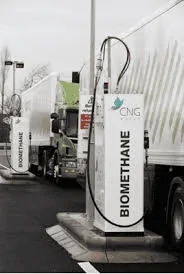
Anyways, problem with NG is that you need to either store it as CNG or LNG. Both of which requires special tanks on a vehicle. At home with a NG pipeline they work straight off a low pressure pipe, but to get enough into a tank for driving a vehicle you need high compression or to cryogenic freezing.

There are heaps of CNG vehicles in Europe, and you can even buy Biomethane at petrol stations there, so they run off net negative biofuels.

Tesla Cybertruck How much would you pay for a range extender. 1691201938367
 

JBee

Well-known member
First Name
JB
Joined
Nov 22, 2019
Threads
18
Messages
4,913
Reaction score
6,362
Location
Australia
Vehicles
Cybertruck
Occupation
. Professional Hobbyist
Country flag
I think he makes a lot of sense, and he's an experienced off-roader.

A diesel generator is very heavy and expensive. We're talking around 400 lbs minimum for a 7KW generator costing at least $2000. A 9000W propane fueled unit with greater output is half the weight and price. The propane tanks add to the overall weight, but tanks can be individually lifted out of the truck, and the propane generator, too, with some effort, so the CT bed can be used for sleeping. Moving a 400 lb diesel generator would not be fun.

Diesel generators are about 40% efficient. A gallon of #2 diesel will produce about 16 kWh for 32 miles of range at 2 mi/kWh, and weighs 7 pounds + the weigh of the container. A 4 gallon tank of diesel will extend range by 126 miles at the expense of reducing CT's remaining load capacity by about 428 lbs.

By comparison a propane generator will give you about 9 miles of range per gallon of propane. That's 41 miles per 20 lb tank of propane. It will take 3 tanks of propane to extend driving range by 123 miles for a total weight of 200 + 60 = 260 lbs.

If you carry an extra 4 gallons of diesel the weight increases to 456 lbs vs 320 lbs for propane for ~250 extra miles of range.

Switching to 30 lb propane tanks (7 gallons), a diesel generator doesn't provide a weight advantage until extending range by more than 500 miles.

500 miles would require eight 30lb propane tanks vs just three extra 5 gal cans of diesel fuel, so volume-wise the diesel generator would be better for 800 miles of combined range (300 CT range + 500 extended range).

To extend CT's range by a couple of hundred miles, a propane generator is a better choice:
1. Less weight
2. Less smell
3. Less noise
4. Faster charging
5. Less cost
You can get much lighter diesel or petrol generators. There's also a whole range of DC ones (used in marine) and of course the dedicated range extending one like the Obrist one I posted, that all weigh less, and have much more output.

The same applies for NVH, in that there are quiet ones out there as well, and if they're 40% efficient, which no generators that size are, then it would need to be quiet and smooth to do so.

I don't think going down to your local hardware store to buy a geny is going to result in equipment that is fit for purpose as a range extender.

The main issue with any form of range extending using a generator is being able to charge whilst you drive. Otherwise if you can only charge whilst stationary, that means most 9kW gensets will only give you something meaningful with an overnight charge.

That could work if you only want to travel 200miles offroad with a 350mile CT, but as soon as you want to do more you will get stuck fairly quickly. In the video he carries on as if 350miles is a hard number, it's most definitely not, and a lot of people won't achieve that even onroad in ideal conditions.

This is because electric vehicles are much more sensitive to load variations, because they have much less energy reserves than a liquid fuel vehicle.

This is the price you pay for efficiency. If you want to use less energy for commuting or onroad travel, you can't expect to do the same whilst transversing difficult terrain that simply needs more energy to do.

This is not a slight on EV's, rather, simply the consequence of physics.

So in the context of trying to get a range extender to work, particular attention needs to be paid to what type of generation is used and what fuel type as energy density and weight plays a role. An ICE vehicle has none of those concerns as it forms part of the vehicle and is compared to a genset, already highly optimised.

In this case a dedicated range extender, like the Obrist, that fits in the frunk of even a M3, along with just 2x 5gallon jerry cans of fuel, that could also fit in the frunk volume wise, could get you another 500miles on top of the 350 in the CT. Especially if it charged whilst driving like it is designed to do. All at a fraction of the weight and at much less loss in utility overall, let alone practicality of having manage all those bottles and swapping them over, or trying to refill that many propane cylinders. All just seems ridiculous to me for 20miles of range over lunch or for overnight charging. It's just way to "jerry-rigged" to be really useful.

Hence my comments.
 
Last edited:


HaulingAss

Well-known member
Joined
Oct 3, 2020
Threads
28
Messages
10,298
Reaction score
20,704
Location
Western Washington, USA
Vehicles
Cybertruck DM, 2010 F-150, 2018 Performance Model 3, 2024 Performance Model 3
Country flag
One day I hope you learn to read other people's posts and then read your own as well to make sure its a response. Do you just post to hear yourself or to converse?

You changed the offroad surface to a hard "rocky" from a soft "sand" and go on about how its more efficient because you travel slower off road and because of regen, which everyone knows barely works at slow speeds anyway? We have sand and no hills, what are we going to regen from? A roo sleigh?

Then you claim you go "off-roading" in you M3P?? Are you the Tesla court jester? ?

And then you have power lines running where people are not? You are obviously not even leaving town then and don't know what overlanding means.

Do you know that all Supershargers can ONLY run of distribution networks and can't run off transmission lines without a multi million dollar substation? There is no power company in the world that runs powerlines to no-one. The world is bigger than Washington, our state is 14 times the size and less than half the population. So we have NO state connected grid as a result, everything outside of the SWIS is RE microgrids, and we aren't even connected to the eastern states and never will be. If you travel accross the Nullarbor, to get from WA to the east, you have 2000km of L2 charging from diesel generators, with no network in sight, and you haven't even left Highway 1. Go north and you can have 100's miles with no petrol stations (let alone a town) but drive on a sealed road. From there you then go "off-road". I'd love to see you even make it to the spot I turn off the sealed road in your M3P!

All this despite the fact we need to have 4x the grid, everywhere, according to EM for electrification. Who's going to build all that infrastructure where nobody is, or only a few pass through every year?

Just more rubbish from the king of fanboi fiction. Get your ducks in a row before you press the submit button mate. Beyond a joke.
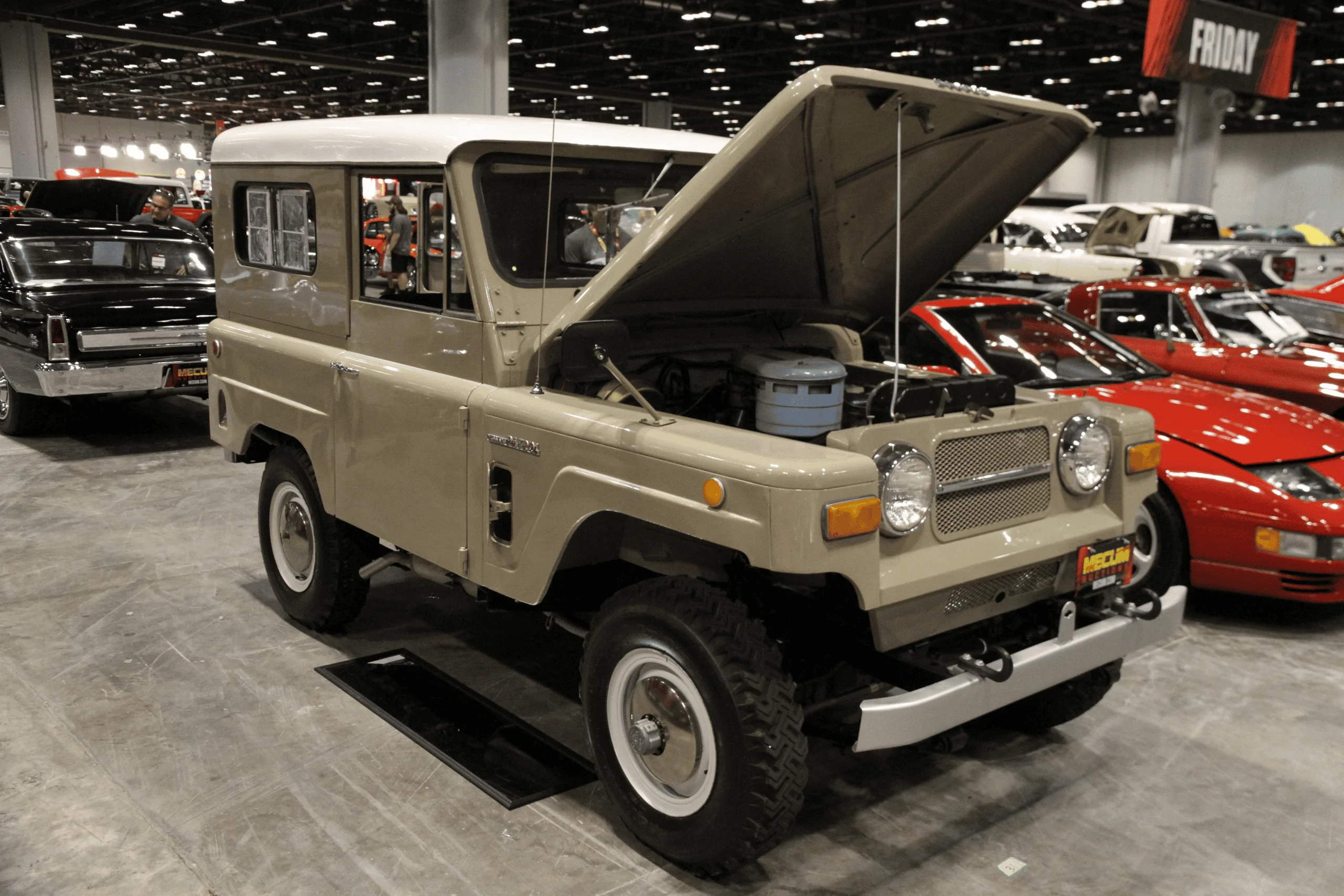
I've been off-roading all over the Western areas of Canada, the USA and Mexico for decades. My first off-road vehicle was a 1969 Nissan Patrol, of which I've owned three over the years. This was an inexpensive way for me to explore the wilds of North America on a budget. Here is what they look like with the hard top on:

Tesla Cybertruck How much would you pay for a range extender. 1691202604487


That hard top unbolts from the lower body and the windshield flips forward onto the hood. I ran two of them to Mexico on different off-raod adventures. They both had oil bath air filters and a 4L cast-iron straight six-cylinder engines with a three on the floor and dual-range high-low transmissions and Warn manual locking hubs. One trip my buddy and I took the roof off in Washington State in May and drove throught the American Rockies, through New Mexico and deep into Mexico, returning via a ferry out of Mazatlan to the Baja Peninsula. We off-roaded some of the most remote areas we could find, including making the first crossing of a high off-road pass in New Mexico of the spring. We know we were first because there were no tracks in the remaining snowpack. Central Mexico had numerous and lengthy backroad and off-road routes to high altitudes near the Volcan de Colima and down to sea-level south of Acapulco and we travelled roads in Baja off the mainline highway, crossing the mountains several times (once after being told by an off-road motorcyclist that there was no way we could through the slide he just rode through) and driving to numerous beaches accessible only by high-clearnace 4x4's or pack animals (or lengthy hikes).

Of all the miles of off-road travel I've done, soft surfaces have made up far less than 10% of the trail. Others might choose to specialize in only beaches or only mudding, depending upon your preferences and the goegraphy you travel in, your experiences will obviously be different. I'm speaking from mine. Laugh all you want..

I also owned a Subaru wagon which, while not a dedicated off-road vehicle (it was bone stock), it saw plenty of wheeling. One day my wife and I decided to take the "scenic" route across the Washington Cascades at the end of a road trip in our new-looking Subaru with OEM all-season tires. I told her it might not be passable and there was a chance we would have to turn back, greatly increasing the length of our return trip but she was game. After about two hours of very slippery and tricky driving, we broke out onto the top of a high ridge and the driving became less technical. Soon we came across a group of lifted Jeeps, the local off-road club on one of their Sunday off-road outings. They looked at us like we were in a spaceship from another planet. I greeted them and one of the first things they wanted to know was how we got up there. Being a smart-ass, I think I told them "we drove". He said he understood that but wanted to know if we knew of an easier route to the top. I told him we came up the main trail that we were on, that our map didn't show any alternate routes. They were dumb-founded that an un-lifted Subaru could traverse the same trail they had come up in their purpose built, lifted off-road Jeeps, all high and mighty.

I have a long history of wheeling, and not always in purpose-built vehicles. My VW bug and my VW rabbit also took me to many places they didn't really belong. Obviously, the Model 3 is not an off-road vehicle, but that doesn't mean it can't go off-road. I've done routes in my Model 3 that the 1978 VW Rabbit and the 1972 VW Bug could not have dreamed of doing. The Model 3 can climb slippery steep hills better than my previous Subaru, although the Subaru could traverse more rugged terrain (but not by as much as you might assume). My Performance Model 3 is an early Performance version and has the same suspension and wheels as the AWD Model, later versions were lowered and had less optimal tire fitments for off-roading.

Many of the high trailheads in the North Cascades "require" high clearance vehicles to access and the snow-free season is short. Some of the high routes don't open up until late July in normal years. They are not passable in any 4x4 due to old snowpack. But, when the snow melts, I've been using my Model 3 to climb these steep, rugged and rocky routes with numerous washouts. Occasionally I have to turn back, if I encounter a washout or landslide that is too extreme, but mostly I get through. I often need to relocate a key rock or two. In the high-country I only run into high clearance vehicles, and they often voice complete astonishment that a Tesla made it up there.

Is that off-roading? Well, I've been told multiple times by off-road enthusiasts discussing routes in the bar that you would need an off-road capable vehicle to make it to where they just descended from. The same route I had just done in my Performance Model 3! And the efficiency it returns is astounding, compared to what I'm accustomed to in a gas vehicle.

I've been told by a guy in a lifted Toyota that I needed a high-clearance vehicle to make it to the spot he was returning from with 5 gallons of high mountain huckleberries. He was in disbelief when I told him I had just returned from where I saw his truck parked at the end of the road while he was off picking berries. He thought I was mistaken. I was not. His truck and my Model 3 were the only vehicles for many miles. Call me a "court jester" if you like. I have a little experiece off the beaten path all over the western half of North America. Yes, laugh all you want...

The power grid in the US is extensive. It's not uncommon to be in the middle of nowhere and have the off-road route run under the high-tension lines or cross them multiple times. The reach of power transmission lines in the US exceeds the reach of gas stations, by a fair amount. The grid is constantly being built-out and modernized and the next decade will see an acceleration of this to take advantage of new solar and wind coming on-line, to move the electricity to where it is needed.

My belief is that areas that are too remote for EV's are so few and far between that they will be served by regular gasoline or diesel vehicles for decades to come, not by biofuels. Too expensive and not enough demand to create the needed refining and distribution networks. There is a higher chance of solid-state batteries becoming real and affordable than there is for biofuels to become a real thing, something that off-roaders actually use. Laugh all you want...

The fact is, Australia is far behind the rest of the developed world when it comes to electrification. I'm not talking about wheeling in Australia, I'm talking about the home of the Cybertruck, North America. The first million Cybertrucks will be delivered right here, not in Australia, so sit back, chill out, crack a stubby and relax. You have quite a wait before you need to worry how to charge a Cybertruck in the Australian Outback or what all that dry sand will do to your efficiency.
 

charliemagpie

Well-known member
First Name
Charlie
Joined
Jul 6, 2021
Threads
48
Messages
2,982
Reaction score
5,369
Location
Australia
Vehicles
CybrBEAST
Occupation
retired
Country flag
I watch a lot of caravaning video's and have come across places where diesel is the only form of electricity (e.g. Gibb River road.)

But I am of the view electricity will be easier to deliver once innovation comes into play.

I envisage a network of portable chargers, delivered by autonomous Semi's to service the route for far far remote places.

It will not cost a great deal to service the more seldom route. Accelerating the transition brings a different value. The Tesla charging network did not come last, but has grown in parallel with EV production. Packs on trailers will just service the last places to get attention.

Once upon a time, barrels of petrol were placed along a route by the early car enthusiasts, we may have something like that.
 

JBee

Well-known member
First Name
JB
Joined
Nov 22, 2019
Threads
18
Messages
4,913
Reaction score
6,362
Location
Australia
Vehicles
Cybertruck
Occupation
. Professional Hobbyist
Country flag
I've been off-roading all over the Western areas of Canada, the USA and Mexico for decades. My first off-road vehicle was a 1969 Nissan Patrol, of which I've owned three over the years. This was an inexpensive way for me to explore the wilds of North America on a budget. Here is what they look like with the hard top on:

1691202604487.webp


That hard top unbolts from the lower body and the windshield flips forward onto the hood. I ran two of them to Mexico on different off-raod adventures. They both had oil bath air filters and a 4L cast-iron straight six-cylinder engines with a three on the floor and dual-range high-low transmissions and Warn manual locking hubs. One trip my buddy and I took the roof off in Washington State in May and drove throught the American Rockies, through New Mexico and deep into Mexico, returning via a ferry out of Mazatlan to the Baja Peninsula. We off-roaded some of the most remote areas we could find, including making the first crossing of a high off-road pass in New Mexico of the spring. We know we were first because there were no tracks in the remaining snowpack. Central Mexico had numerous and lengthy backroad and off-road routes to high altitudes near the Volcan de Colima and down to sea-level south of Acapulco and we travelled roads in Baja off the mainline highway, crossing the mountains several times (once after being told by an off-road motorcyclist that there was no way we could through the slide he just rode through) and driving to numerous beaches accessible only by high-clearnace 4x4's or pack animals (or lengthy hikes).

Of all the miles of off-road travel I've done, soft surfaces have made up far less than 10% of the trail. Others might choose to specialize in only beaches or only mudding, depending upon your preferences and the goegraphy you travel in, your experiences will obviously be different. I'm speaking from mine. Laugh all you want..

I also owned a Subaru wagon which, while not a dedicated off-road vehicle (it was bone stock), it saw plenty of wheeling. One day my wife and I decided to take the "scenic" route across the Washington Cascades at the end of a road trip in our new-looking Subaru with OEM all-season tires. I told her it might not be passable and there was a chance we would have to turn back, greatly increasing the length of our return trip but she was game. After about two hours of very slippery and tricky driving, we broke out onto the top of a high ridge and the driving became less technical. Soon we came across a group of lifted Jeeps, the local off-road club on one of their Sunday off-road outings. They looked at us like we were in a spaceship from another planet. I greeted them and one of the first things they wanted to know was how we got up there. Being a smart-ass, I think I told them "we drove". He said he understood that but wanted to know if we knew of an easier route to the top. I told him we came up the main trail that we were on, that our map didn't show any alternate routes. They were dumb-founded that an un-lifted Subaru could traverse the same trail they had come up in their purpose built, lifted off-road Jeeps, all high and mighty.

I have a long history of wheeling, and not always in purpose-built vehicles. My VW bug and my VW rabbit also took me to many places they didn't really belong. Obviously, the Model 3 is not an off-road vehicle, but that doesn't mean it can't go off-road. I've done routes in my Model 3 that the 1978 VW Rabbit and the 1972 VW Bug could not have dreamed of doing. The Model 3 can climb slippery steep hills better than my previous Subaru, although the Subaru could traverse more rugged terrain (but not by as much as you might assume). My Performance Model 3 is an early Performance version and has the same suspension and wheels as the AWD Model, later versions were lowered and had less optimal tire fitments for off-roading.

Many of the high trailheads in the North Cascades "require" high clearance vehicles to access and the snow-free season is short. Some of the high routes don't open up until late July in normal years. They are not passable in any 4x4 due to old snowpack. But, when the snow melts, I've been using my Model 3 to climb these steep, rugged and rocky routes with numerous washouts. Occasionally I have to turn back, if I encounter a washout or landslide that is too extreme, but mostly I get through. I often need to relocate a key rock or two. In the high-country I only run into high clearance vehicles, and they often voice complete astonishment that a Tesla made it up there.

Is that off-roading? Well, I've been told multiple times by off-road enthusiasts discussing routes in the bar that you would need an off-road capable vehicle to make it to where they just descended from. The same route I had just done in my Performance Model 3! And the efficiency it returns is astounding, compared to what I'm accustomed to in a gas vehicle.

I've been told by a guy in a lifted Toyota that I needed a high-clearance vehicle to make it to the spot he was returning from with 5 gallons of high mountain huckleberries. He was in disbelief when I told him I had just returned from where I saw his truck parked at the end of the road while he was off picking berries. He thought I was mistaken. I was not. His truck and my Model 3 were the only vehicles for many miles. Call me a "court jester" if you like. I have a little experiece off the beaten path all over the western half of North America. Yes, laugh all you want...

The power grid in the US is extensive. It's not uncommon to be in the middle of nowhere and have the off-road route run under the high-tension lines or cross them multiple times. The reach of power transmission lines in the US exceeds the reach of gas stations, by a fair amount. The grid is constantly being built-out and modernized and the next decade will see an acceleration of this to take advantage of new solar and wind coming on-line, to move the electricity to where it is needed.

My belief is that areas that are too remote for EV's are so few and far between that they will be served by regular gasoline or diesel vehicles for decades to come, not by biofuels. Too expensive and not enough demand to create the needed refining and distribution networks. There is a higher chance of solid-state batteries becoming real and affordable than there is for biofuels to become a real thing, something that off-roaders actually use. Laugh all you want...

The fact is, Australia is far behind the rest of the developed world when it comes to electrification. I'm not talking about wheeling in Australia, I'm talking about the home of the Cybertruck, North America. The first million Cybertrucks will be delivered right here, not in Australia, so sit back, chill out, crack a stubby and relax. You have quite a wait before you need to worry how to charge a Cybertruck in the Australian Outback or what all that dry sand will do to your efficiency.
Lol.

So how do you connect a 400V super charger to a 300,000 Volt transmission line then?
Please do tell. Nice fast charger that also launches you to kingdom come? ?

I know you have transmission lines running all over your states, BUT, like in places like in New Mexico, Arizona, Utah etc around Lake Powell and south of Hoover Dam, (both super low atm btw) there is nearly no one out there, so accordingly there is no "distribution" network to support all the extra chargers you propose.

BTW our state interconnected network still covers more area than Washington state, but serves less than half the people. And this is exactly the problem in many countries. Cybertruck is on sale in Australia, and I have multiple orders, of which one will be based in the states. But the EV range problem ISN'T just looking for a solution in America. The whole world needs to become sustainable or should everyone else be forced to live in the dark?

So coming in with the statement "nobody needs it anyway" is just plain old ignorant of others situation. You aren't the rule, nor the norm, nor the solution for everyone. So with that nugget of information, could we have a normal conversation on how best to provide a solution to these problems, rather than hand waving a Tesla wand over problems they have yet to address in earnest?

As for your off-roading credentials, I don't have to doubt them in any way, you are a superhuman, the best driver off the beaten track I know...but even you can't do what's physically impossible with a M3, 4wd or not. I suppose the proof is in the pudding though, in that you actually met another driver whilst going offroading, whilst when we go offroading, we hope to see no one for weeks. ;)

I expect your biofuel statements are from the lack of exposure to them. In Germany nearly 10% of electricity comes from biofuels, in Denmark 23%, all of Swedens busses run on biomethane and 25% of their grid run on biofuels that, in turn charge their EVs!! I haven't even mentioned Brazil and ethonol or biodiesel use elsewhere. Go and have a look yourself how big the market already is, and has been for years before EV's were are thing. Plus over there they use CHP (combined heat power generation) with distributed heat, that more than doubles the conversion efficiency up to over 85% using an ICE. They aren't going anywhere, and in fact are a part of Tesla's vision for the future according to their last plan. Go look, then you won't need to worry about playing the court jester anymore...unless of course you want to entertain us. Which is fun...sometimes. :p
 
Last edited:

HaulingAss

Well-known member
Joined
Oct 3, 2020
Threads
28
Messages
10,298
Reaction score
20,704
Location
Western Washington, USA
Vehicles
Cybertruck DM, 2010 F-150, 2018 Performance Model 3, 2024 Performance Model 3
Country flag
Lol.

So how do you connect a 400V super charger to a 300,000 Volt transmission line then?
Please do tell. Nice fast charger that also launches you to kingdom come? ?

I know you have transmission lines running all over your states, BUT, like in places like in New Mexico, Arizona, Utah etc around Lake Powell and south of Hoover Dam, (both super low atm btw) there is nearly no one out there, so accordingly there is no "distribution" network to support all the extra chargers you propose.

BTW our state interconnected network still covers more area than Washington state, but serves less than half the people. And this is exactly the problem in many countries. Cybertruck is on sale in Australia, and I have multiple orders, of which one will be based in the states. But the EV range problem ISN'T just looking for a solution in America. The whole world needs to become sustainable or should everyone else be forced to live in the dark?

So coming in with the statement "nobody needs it anyway" is just plain old ignorant of others situation. You aren't the rule, nor the norm, nor the solution for everyone. So with that nugget of information, could we have a normal conversation on how best to provide a solution to these problems, rather than hand waving a Tesla wand over problems they have yet to address in earnest?

As for your off-roading credentials, I don't have to doubt them in any way, you are a superhuman, the best driver off the beaten track I know...but even you can't do what's physically impossible with a M3, 4wd or not. I suppose the proof is in the pudding though, in that you actually met another driver whilst going offroading, whilst when we go offroading, we hope to see no one for weeks. ;)

I expect your biofuel statements are from the lack of exposure to them. In Germany nearly 10% of electricity comes from biofuels, in Denmark 23%, all of Swedens busses run on biomethane and 25% of their grid run on biofuels that, in turn charge their EVs!! I haven't even mentioned Brazil and ethonol or biodiesel use elsewhere. Go and have a look yourself how big the market already is, and has been for years before EV's were are thing. Plus over there they use CHP (combined heat power generation) with distributed heat, that more than doubles the conversion efficiency up to over 85% using an ICE. They aren't going anywhere, and in fact are a part of Tesla's vision for the future according to their last plan. Go look, then you won't need to worry about playing the court jester anymore...unless of course you want to entertain us. Which is fun...sometimes. :p
How to connect a Supercharger to a transmission line? Oh, it's really beyond our current technology. You need to have a beer and chill out. I think your current angst is caused by the increasing realization that the uptake of Cybertrucks in the USA is going to be so enthusiastic, that you will not be able to take delivery of one in Australia for many years! While we are driving our new Cybertrucks to wild and wonderful places, you will still be doing what we have all been doing for almost 4 years!

Don't take it out on the good people here just because us N. Americans are going to get the goods first. Maybe GM can re-start Holden and make you Aussies an EV truck with a bio-fuel range extender to get you through the endless sand downunder. :p


JBee

Well-known member
First Name
JB
Joined
Nov 22, 2019
Threads
18
Messages
4,913
Reaction score
6,362
Location
Australia
Vehicles
Cybertruck
Occupation
. Professional Hobbyist
Country flag
How to connect a Supercharger to a transmission line? Oh, it's really beyond our current technology. You need to have a beer and chill out. I think your current angst is caused by the increasing realization that the uptake of Cybertrucks in the USA is going to be so enthusiastic, that you will not be able to take delivery of one in Australia for many years! While we are driving our new Cybertrucks to wild and wonderful places, you will still be doing what we have all been doing for almost 4 years!

Don't take it out on the good people here just because us N. Americans are going to get the goods first. Maybe GM can re-start Holden and make you Aussies an EV truck with a bio-fuel range extender to get you through the endless sand downunder. :p
Once again you don't read.

The point is that it costs too much to connect a SC to a transmission line. If you don't understand the difference between and transmission and distribution line, then google is your friend.

Besides, I'm probably getting one of my Cybertrucks before you in Austin in the USA.
(depending where you are in the line)

All the rest is just made up nonsense to deflect the point you don't know much about biofuels and don't want to be proven wrong. Go and have a look at these things and come back then, with an argument of substance, that we can then discuss.
 

Crissa

Well-known member
First Name
Crissa
Joined
Jul 8, 2020
Threads
138
Messages
19,571
Reaction score
31,475
Location
Santa Cruz
Vehicles
2014 Zero S, 2013 Mazda 3
Country flag
The idea was floated more than a decade ago for rentable, swappable range extender trailers. It was way ahead of its time, no OEMs bought in etc. But we're at a point where a high throughout DC port can enable V2* applications, range extender trailers, etc all in one receptacle. Time to start demanding this from OEMs if this is really what we want.
One of the founders of Tesla went on to make them instead of staying to see Tesla make a BEV.

...You can probably guess how successful he's been.

...Ram Diesel...
...Did you really just compare a truck that has one of the highest ranges of ICE vehicles, to EVs? And completely ignore the required stops for the driver's biology?

Also, with a 26 gallon tank you're standing there for at least five minutes filling, plus a minute paying for gas, right? So six stops, you've spent more than 30 minutes standing there holding it like some buzzed-out guy at the bar...

...While the Lightning driver with 18 stops only spent, well, 18 different minutes plugging in and then wandering off to actually go pee instead of thinking about it.

-Crissa
 
Last edited:
OP
OP
Tinker71

Tinker71

Well-known member
First Name
Ray
Joined
Aug 8, 2020
Threads
93
Messages
1,610
Reaction score
2,102
Location
Utah
Vehicles
1976 VW EV bus, 2007 Sienna, Tesla M3, Cancelled CT2 rez - holding for $65k
Occupation
Project Manager
Country flag
Did you happen to miss my post on the bottom of the 1st page? I think a few did. :)

Anyways, problem with NG is that you need to either store it as CNG or LNG. Both of which requires special tanks on a vehicle. At home with a NG pipeline they work straight off a low pressure pipe, but to get enough into a tank for driving a vehicle you need high compression or to cryogenic freezing.

There are heaps of CNG vehicles in Europe, and you can even buy Biomethane at petrol stations there, so they run off net negative biofuels.

1691201938367.png
We have a cng station in my town.but really haven't paid attention to the network. The special tanks are not prohibitive it would be the refill on the road trip.
 
OP
OP
Tinker71

Tinker71

Well-known member
First Name
Ray
Joined
Aug 8, 2020
Threads
93
Messages
1,610
Reaction score
2,102
Location
Utah
Vehicles
1976 VW EV bus, 2007 Sienna, Tesla M3, Cancelled CT2 rez - holding for $65k
Occupation
Project Manager
Country flag
You can get much lighter diesel or petrol generators. There's also a whole range of DC ones (used in marine) and of course the dedicated range extending one like the Obrist one I posted, that all weigh less, and have much more output.

The same applies for NVH, in that there are quiet ones out there as well, and if they're 40% efficient, which no generators that size are, then it would need to be quiet and smooth to do so.

I don't think going down to your local hardware store to buy a geny is going to result in equipment that is fit for purpose as a range extender.

The main issue with any form of range extending using a generator is being able to charge whilst you drive. Otherwise if you can only charge whilst stationary, that means most 9kW gensets will only give you something meaningful with an overnight charge.

That could work if you only want to travel 200miles offroad with a 350mile CT, but as soon as you want to do more you will get stuck fairly quickly. In the video he carries on as if 350miles is a hard number, it's most definitely not, and a lot of people won't achieve that even onroad in ideal conditions.

This is because electric vehicles are much more sensitive to load variations, because they have much less energy reserves than a liquid fuel vehicle.

This is the price you pay for efficiency. If you want to use less energy for commuting or onroad travel, you can't expect to do the same whilst transversing difficult terrain that simply needs more energy to do.

This is not a slight on EV's, rather, simply the consequence of physics.

So in the context of trying to get a range extender to work, particular attention needs to be paid to what type of generation is used and what fuel type as energy density and weight plays a role. An ICE vehicle has none of those concerns as it forms part of the vehicle and is compared to a genset, already highly optimised.

In this case a dedicated range extender, like the Obrist, that fits in the frunk of even a M3, along with just 2x 5gallon jerry cans of fuel, that could also fit in the frunk volume wise, could get you another 500miles on top of the 350 in the CT. Especially if it charged whilst driving like it is designed to do. All at a fraction of the weight and at much less loss in utility overall, let alone practicality of having manage all those bottles and swapping them over, or trying to refill that many propane cylinders. All just seems ridiculous to me for 20miles of range over lunch or for overnight charging. It's just way to "jerry-rigged" to be really useful.

Hence my comments.
Yes a range extender that does not charge while driving is almost useless. It needs to be compact and quiet and have fuel easily obtainable.
 

Cybergirl

Well-known member
Joined
Jul 3, 2020
Threads
40
Messages
872
Reaction score
2,933
Location
Illinois and Arizona
Vehicles
Tesla Model Y LR, Model Y SR, Cybertruck AWD FS
Country flag
You can get much lighter diesel or petrol generators. There's also a whole range of DC ones (used in marine) and of course the dedicated range extending one like the Obrist one I posted, that all weigh less, and have much more output.

The same applies for NVH, in that there are quiet ones out there as well, and if they're 40% efficient, which no generators that size are, then it would need to be quiet and smooth to do so.

I don't think going down to your local hardware store to buy a geny is going to result in equipment that is fit for purpose as a range extender.

The main issue with any form of range extending using a generator is being able to charge whilst you drive. Otherwise if you can only charge whilst stationary, that means most 9kW gensets will only give you something meaningful with an overnight charge.

That could work if you only want to travel 200miles offroad with a 350mile CT, but as soon as you want to do more you will get stuck fairly quickly. In the video he carries on as if 350miles is a hard number, it's most definitely not, and a lot of people won't achieve that even onroad in ideal conditions.

This is because electric vehicles are much more sensitive to load variations, because they have much less energy reserves than a liquid fuel vehicle.

This is the price you pay for efficiency. If you want to use less energy for commuting or onroad travel, you can't expect to do the same whilst transversing difficult terrain that simply needs more energy to do.

This is not a slight on EV's, rather, simply the consequence of physics.

So in the context of trying to get a range extender to work, particular attention needs to be paid to what type of generation is used and what fuel type as energy density and weight plays a role. An ICE vehicle has none of those concerns as it forms part of the vehicle and is compared to a genset, already highly optimised.

In this case a dedicated range extender, like the Obrist, that fits in the frunk of even a M3, along with just 2x 5gallon jerry cans of fuel, that could also fit in the frunk volume wise, could get you another 500miles on top of the 350 in the CT. Especially if it charged whilst driving like it is designed to do. All at a fraction of the weight and at much less loss in utility overall, let alone practicality of having manage all those bottles and swapping them over, or trying to refill that many propane cylinders. All just seems ridiculous to me for 20miles of range over lunch or for overnight charging. It's just way to "jerry-rigged" to be really useful.

Hence my comments.
I don't disagree on the inconvenience of the propane/generator solution. The Obrist is an elegant engineering solution for EV range extension, no argument there. But for the Cybertruck owner who takes an occasional trip into the wild where charging opportunities are scarce, the Obrist seems a mite impractical.
Some questions:
Where can I purchase an Obrist range extender? What's the price? How much does it weigh? How easy is it to install? Is it permanently installed in a vehicle? Can it be easily removed? Does installation void Tesla's warranty? Where is it serviced? What warranty does Obrist include?
Sponsored


Top